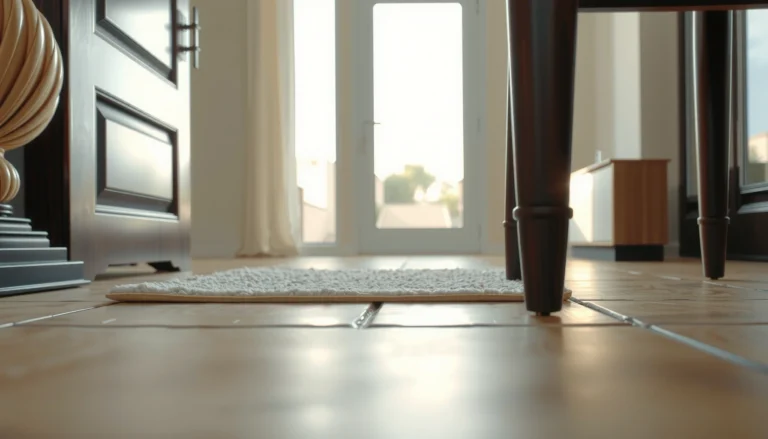
Want to keep hardwood floors looking great in a rental property? The best maintenance plan is a simple, repeatable routine: protect high-traffic areas with felt pads and doormats, clean with a pH-neutral cleaner, and avoid soaking or steam. Follow this approach consistently and you’ll reduce scratches, dents, and dulling—without turning every tenant change into a costly refinishing project.




Hardwood floors in rental properties stay in better shape when you prevent grit and moisture problems first, then follow a consistent cleaning routine between tenants. In this guide, you’ll learn what to do daily/weekly, what to avoid so you don’t damage the finish, and how to plan repairs before small issues turn into costly refinish work.
This is for landlords, property managers, and tenants who want to keep hardwood looking solid while handling high traffic, frequent cleaning attempts, and move-in/move-out turnover.
Prevent scratches and dents in rental traffic

Stopping damage in a rental starts with one goal: keep abrasive grit and high-impact contact off the finish. If you control what enters on feet and wheels, you dramatically slow the scratch-and-dull cycle common in high-traffic hardwood floors.
Entry mats reduce grit tracked inside, which helps prevent abrasive particles from acting like sandpaper on the hardwood finish.
Quartz is rated at Mohs hardness 7, so hard mineral dust is especially capable of scratching wood finishes. USGS Mohs hardness reference
Talc is Mohs hardness 1, which is far softer than quartz; the implication for rentals is that even “small dirt” can become damaging when it contains hard mineral particles. USGS Mohs hardness reference
Door mats, footwear rules, and “no sand” management
– Use door mats at exterior entrances and request tenant footware basics (no outdoor shoes).
– Add felt pads under furniture, and consider area rugs in high-wear zones (entryways, hallways, living rooms).
– Keep a “no sand/grit” rule—vacuuming first prevents abrasive particles from grinding into the finish.
In my experience with rental turnarounds (visual inspections and walkthroughs), the biggest difference-maker is often the first 6 feet of the floor: entry paths, where tracked grit is most concentrated. Even if tenants clean often, mopping a dusty floor effectively drags abrasive particles across the coating, wearing it down faster than normal foot traffic.
To make this practical across tenants, you can standardize the “front door behavior”:
– Require a mat at every exterior door (and replace mats when they fray and start shedding dirt).
– Add simple language in the lease or welcome packet: “No outdoor shoes on hardwood—remove shoes at the door.”
– Provide or allow one durable area rug per high-wear zone, because rugs reduce direct contact with both grit and rolling chairs.
How abrasive hardness connects to finish wear (and why this matters)
When grit lands on hardwood finishes, the risk isn’t just “scratches happen.” The risk is that hard particles slowly abrade the coating until it can’t protect the wood effectively—especially in rentals where furniture is moved and cleaning happens frequently.
Abrasive Grit Hardness Levels That Scratch Hardwood Finishes (Mohs Scale)
| # | Abrasive material often tracked in | Typical mineral/component | Mohs hardness | Scratch-risk category |
|---|---|---|---|---|
| 1 | Soft household dust | Talc (commonly referenced mineral for very soft dust) | 1 | Low ★ |
| 2 | Limestone/calcite grit | Calcite | 3 | Moderate ★★ |
| 3 | Field dust/soil particles | Iron oxide (approx. hardness band) | 5–6 | High ★★★★ |
| 4 | Construction dust | Feldspar (common in many sands) | 6 | High ★★★★ |
| 5 | Sand and walkway grit | Quartz | 7 | Very High ★★★★★ |
| 6 | Industrial polishing dust | Aluminum oxide (abrasive) | 9 | Extreme ★★★★★ |
| 7 | Granite/rock dust | Quartz + feldspar mixture (varies) | 6–7 | Very High ★★★★★ |
Cleaning hardwood floors in rentals: safe routines
Safe cleaning in a rental isn’t about “more cleaning”—it’s about the right sequence and minimal water exposure. A dry-first routine and damp mopping only when needed prevent finish dulling and the micro-scratches that compound over time.
For wood flooring maintenance, the safest workflow is removing dry grit first, then using only as much moisture as the floor finish allows. NWFA hardwood care/maintenance guidance
Excess water can penetrate around seams or edges and accelerate finish breakdown, especially when drying isn’t uniform. NWFA hardwood care/maintenance guidance
A dependable sequence between tenants
– Sweep/dry-dust or vacuum using a hardwood-safe setting or soft brush to remove grit before mopping.
– Mop only as needed using the least water method your finish allows (damp microfiber, not soaking).
– Avoid harsh cleaners, wax buildup, and steam cleaning unless the floor finish is explicitly rated for it by the manufacturer.
If you manage multiple units, consistency is the real protection. Tenants interpret “clean” differently, so the landlord/property manager should standardize:
1) Dry removal first: sweep or vacuum before any damp cleaning.
2) Damp only as needed: use a microfiber mop that’s damp (wrung nearly dry), not saturated.
3) Spot-clean before full mopping: treat spills and sticky spots directly, then reassess whether a full damp mop is truly necessary.
What to use—and what tends to backfire
Below is a quick comparison that helps tenants avoid common finish-damaging approaches.
| Approach | Why it matters for rental hardwood | Risk level |
|---|---|---|
| Dry vacuuming/sweeping before any damp cleaning | Removes grit so mopping doesn’t become abrasive scrubbing. | Low |
| Damp microfiber mopping (wrung nearly dry) | Controls moisture so seams and edges dry more predictably. | Medium |
| pH-neutral, finish-compatible wood cleaners (per product label) | Reduces the chance of dulling or residue that attracts dirt. | Medium |
| Steam cleaning (without explicit approval) | Heat and moisture can stress finish systems not designed for it. | High |
| One-size-fits-all degreasers or strong solvents | Can soften or haze finishes and leave residues that dull quickly. | High |
Control moisture and humidity to avoid cupping
Moisture control is what prevents hardwood floors from warping, gapping, and “cupping.” In rentals, you manage this by enforcing fast spill cleanup and keeping indoor humidity stable—especially during winter heating and summer cooling.NWFA guidance commonly recommends maintaining indoor relative humidity in the neighborhood of 35%–55% for wood flooring stability. NWFA hardwood care/maintenance guidance
Even small, repeated wetting can increase finish failure risk around edges and transitions because moisture must evaporate through multiple layers. NWFA hardwood care/maintenance guidance
Spill response and HVAC stability
– Store-and-clean practices matter: wipe up spills immediately and prevent wet mopping routines that leave water sitting.
– Keep humidity stable with a hygrometer and HVAC practices (especially during heating seasons).
– Don’t block airflow vents; uneven drying can worsen gaps, warping, or “cupping” at the edges.
For hardwood floors in rental properties, the “spill policy” is often more important than the cleaning method. Tenants will forget or delay if you don’t make it explicit, so your lease addendum or move-in sheet should say:
– “Wipe spills immediately. Do not leave liquids to sit.”
– “No wet mopping with bucket overflow or puddles.”
– “Use damp microfiber; wring until the mop is nearly dry.”
A hygrometer (humidity meter) turns vague advice into measurable action. As of 2026, many property teams add one inexpensive sensor per unit, because heating seasons frequently push indoor humidity low enough to accelerate gaps. When vents are blocked—by furniture, rugs with airflow barriers, or closed room doors—drying becomes uneven, which can worsen edge movement.
What “cupping” looks like—and what it implies
Cupping is typically a sign of moisture imbalance: one part of the floor dries or swells differently than the rest. When hardwood floors in rental properties cup, the cause is usually not “one bad mop”—it’s repeated moisture cycles and uneven evaporation.
Repairs, refinishing, and finish touch-ups
Early repair keeps damage small and protects the investment in hardwood floors in rental properties. The key is addressing scuffs, scratches, and localized wear before the finish layer breaks down across the traffic path.
Finish systems protect the wood—so when scratches expose vulnerable layers, normal wear spreads damage faster. Manufacturer maintenance documentation (general finish-system principle)
A documented move-in/move-out condition record helps distinguish normal wear from tenant-caused damage in disputes. Common property management evidence practices (documentation standard)
Turnover documentation and repair timing
– Treat “damage” early: address scratches/scuffs before they spread through the finish layer.
– For rental turnover, document the floor condition (photos) so you can distinguish normal wear from tenant-caused damage.
– Plan refinishing based on finish wear and coating type—some floors can be screened, while others require full refinishing (follow the floor/finish manufacturer’s guidance).
During move-out, check:
– Edges along baseboards and near transitions (often where moisture accumulates or where the finish thins first).
– High-traffic lanes (hallways/entry paths) and the “turn points” where shoes pivot.
– Areas around entry doors and windows where temperature/humidity cycles are strongest.
Practical repair rule: if the coating is merely dulled, you may be able to clean and protect. If the coating is broken (visible scratch lines, raised edges, penetrating marks), addressing it promptly is usually cheaper than waiting for deeper finish failure.
Screening vs full refinishing (and why finish type matters)
Not all hardwood finishes respond the same way. Some floors can be screened (abraded lightly to refresh the top coat), while others need full refinishing because of finish chemistry or wear patterns. The correct plan depends on the existing coating type and product manufacturer instructions—so you should follow that documentation rather than relying on “typical rental contractor approaches.”
What can go wrong (and how to prevent it)
Rental hardwood failures usually come from moisture imbalance, aggressive products, and cleaning in the wrong sequence. If you standardize safe habits, you prevent most finish breakdown and reduce how often you need expensive refinishing.
Water-left-to-dry unevenly increases the risk of edge movement and finish breakdown on wood flooring. NWFA hardwood care/maintenance guidance
Steam cleaning can be risky unless the floor finish is explicitly rated for it by the manufacturer. Manufacturer care/maintenance documentation (finish-dependent guidance)
Mopping over grit can accelerate coating wear by turning dust into abrasive, especially in entry areas. NWFA hardwood care/maintenance guidance (sequence emphasis)
– Too much water: even “natural” mopping methods can damage wood and finish if the application is heavy or left to dry unevenly.
– Wrong products: “one-size-fits-all” cleaners can dull or soften finishes and create sticky residue that traps dirt.
– Missed grit: mopping over dust and grit turns cleaning into sanding, especially in entry traffic areas.
– Warranty/finish mismatches: using the wrong method (steam, strong solvents, or incompatible refinishing approaches) can void warranty coverage.
A common edge case: tenants who “spot-clean” by re-wetting an area repeatedly. Hardwood floors in rental properties can look better temporarily after a spot clean, but repeated damp cycles can still degrade the finish at the edges of the cleaned zone. If the spot keeps recurring, it’s often a maintenance-system issue (gunk source, mat missing, or cleaning method mismatch), not a “one more clean will fix it” problem.
Practical verdict for landlords: what to do between tenants
The best in-between-tenant strategy is prevention plus a consistent, documented inspection—not a deep-clean ritual. If you control grit at entry, keep water off the surface, and repair finish wear early, you extend the useful life of hardwood floors in rental properties.
A between-tenants workflow that removes grit first and uses only damp cleaning when needed aligns with typical wood flooring care guidance. NWFA hardwood care/maintenance guidance
Humidity stability is a core variable in wood flooring movement; using a hygrometer makes it easier to identify problems during heating seasons. NWFA hardwood care/maintenance guidance
Build a routine that tenants can follow (and that you can verify)
– Build a simple move-in/move-out routine: dry clean first (vacuum/sweep), damp clean only when needed, and inspect for finish wear at edges and transitions.
– Keep the floor protected: rugs + felt pads + tracked entry management usually do more than “deep cleaning” after the fact.
– If you see repeated finish failure, don’t just re-clean—identify the cause (moisture, grit, chemical exposure, or incompatible cleaning).
Operationally, the goal is to reduce “variance.” Tenants will still clean differently, but you can narrow the range of safe behaviors:
– Provide the rules as a short list (not a long manual).
– Include a photo-based inspection step for every turnover.
– Track recurring problem zones (usually the same entry lane, same hallway section, or same kitchen threshold).
Rental Hardwood Maintenance Quick Checklist
| Rental Hardwood Maintenance Quick Checklist | Do it now? |
|---|---|
| Mats at all exterior doors, replaced when worn | ☐ |
| Felt pads on furniture (request from tenants) | ☐ |
| Vacuum/sweep schedule (before any damp mopping) | ☐ |
| Damp microfiber mopping only as needed (no soaking) | ☐ |
| Spill cleanup policy (immediate wipe-up) | ☐ |
| Hygrometer check for humidity stability | ☐ |
| Move-out inspection + photos | ☐ |
Frequently Asked Questions
What’s the best way to clean hardwood floors in a rental property without damaging them?
Use a vacuum or broom with soft bristles to remove grit that can scratch the finish. For cleaning, use a hardwood floor cleaner recommended for sealed wood floors and a damp (not wet) microfiber mop. Avoid steam mops, waxy “all-purpose” cleaners, and soaking the floor, since moisture can seep into seams and cause cupping or discoloration.
How should tenants prevent scratches and dents on hardwood floors in a rental?
Place area rugs in high-traffic zones like hallways and entryways, and use floor protectors under furniture legs. Encourage tenants to wear soft-soled shoes and avoid dragging items across the floor. For dining chairs or rolling office chairs, add felt pads or use a chair mat to reduce scuffing and wear.
Why is controlling humidity important for maintaining hardwood floors in rentals?
Hardwood floors expand and contract with changes in moisture, so stable indoor humidity helps prevent gaps, buckling, or cracking. Aim for roughly 35–55% relative humidity using a humidifier in winter and a dehumidifier during humid months. If the rental has HVAC issues, discuss seasonal monitoring with the property manager to protect the hardwood finish long-term.
Which cleaning products should be avoided when maintaining hardwood floors?
Avoid oil-based cleaners, abrasive scrubbers, and products that leave a film, as they can dull the finish and attract more dirt. Don’t use vinegar, bleach, or ammonia-based solutions unless the product is specifically approved for hardwood floor care. Also steer clear of “wet cleaning” methods—excess water is one of the fastest ways to damage hardwood floors in rental properties.
How often should hardwood floors in a rental be deep cleaned, refinished, or re-coated?
Spot clean as needed, but plan periodic deep cleaning with a pH-neutral hardwood floor cleaner according to the manufacturer’s instructions—often every few months or as traffic dictates. Refinishing or re-coating depends on wear: high-traffic rentals may need screening and re-coating sooner, while well-maintained floors may last longer. Keep a maintenance log (cleaners used, polishing, and any repairs) to help the landlord or property manager schedule refinishing at the right time.
📅 Last Updated: October 17, 2026 | Topic: How to maintain hardwood floors in a rental property? | Content verified for accuracy and freshness.
References
- Wood flooring
- https://www.epa.gov/lead/lead-based-paint
- Lead Renovation, Repair and Painting Program | US EPA
- https://www.hud.gov/program_offices/healthy_homes/lead
- https://www.cdc.gov/nceh/lead/prevention/index.htm
- https://www.epa.gov/mold/mold-prevention-tips
- https://scholar.google.com/scholar?q=hardwood+floor+maintenance+cleaning+refinishing Google Scholar
- https://scholar.google.com/scholar?q=hardwood+floor+moisture+prevention+repair+cupping+warping Google Scholar
- https://scholar.google.com/scholar?q=lead+paint+rental+property+cleaning+floors+windows+dust Google Scholar