
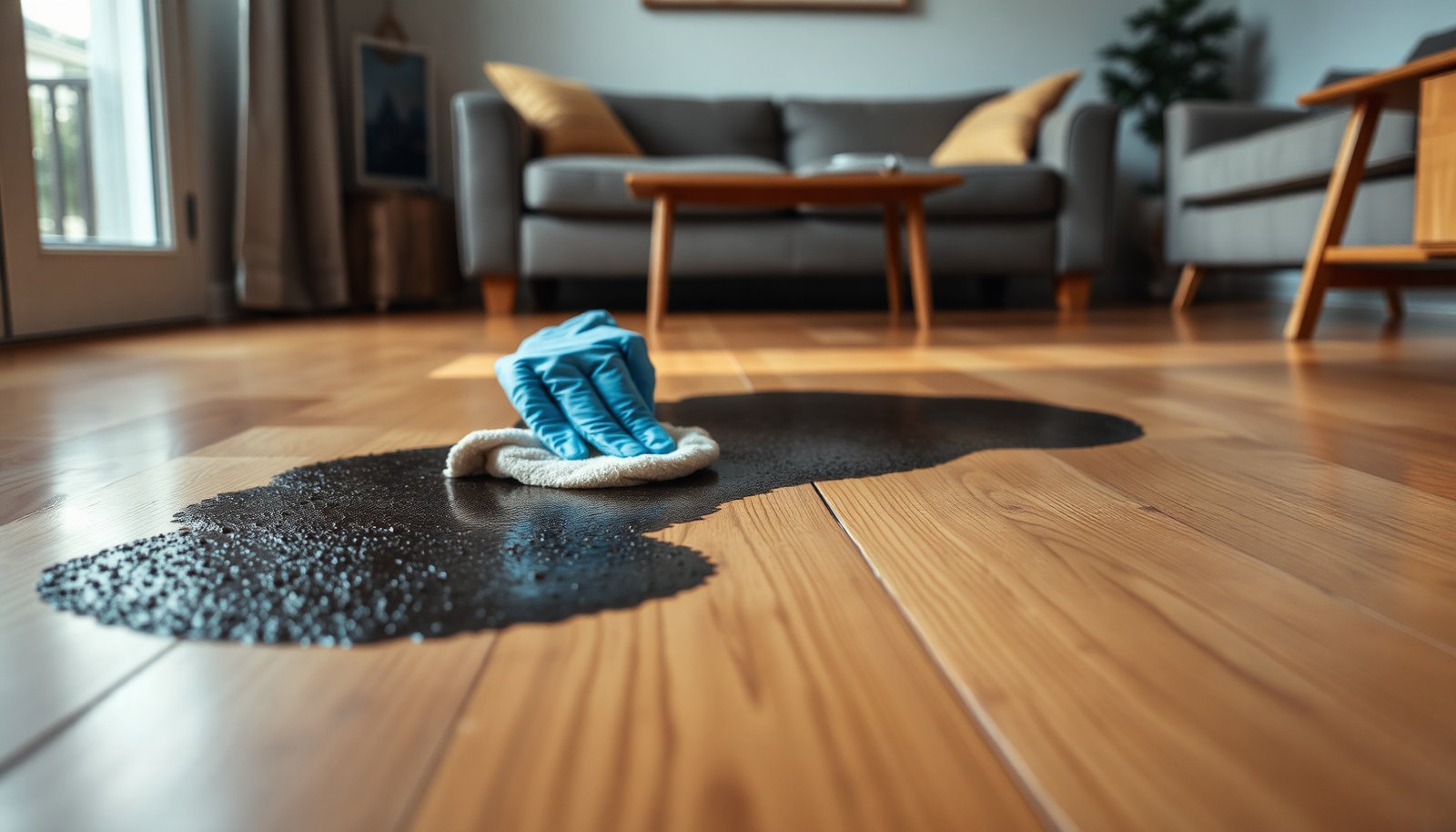

You’ve tracked dark asphalt residue onto your hardwood after a delivery cart brushed the floor, and now it won’t lift with your usual mop. You can remove it safely in about 30–60 minutes by softening the residue, loosening it without gouging the finish, and then cleaning and drying the boards thoroughly. You’ll need a plastic scraper, a microfiber cloth, a hardwood-safe solvent or adhesive remover, and a pH-neutral floor cleaner.




Safely removing stubborn asphalt residue (tar/bitumen) from hardwood usually comes down to one controlled sequence: soften the tar, scrape carefully, then dissolve the remainder using a wood-finish-safe solvent applied to a cloth—not poured onto the floor. Work in small sections and finish by cleaning off any solvent film so the hardwood floor finish doesn’t haze, cloud, or peel (especially in 2026 when many floors use modern polyurethane topcoats).
This is best for small-to-medium spots (boots, dropped tar, tracked driveway residue) on finished hardwood where the asphalt is sticking on top of the finish rather than deeply ground into bare wood.
Prep: protect the finish before you touch the residue
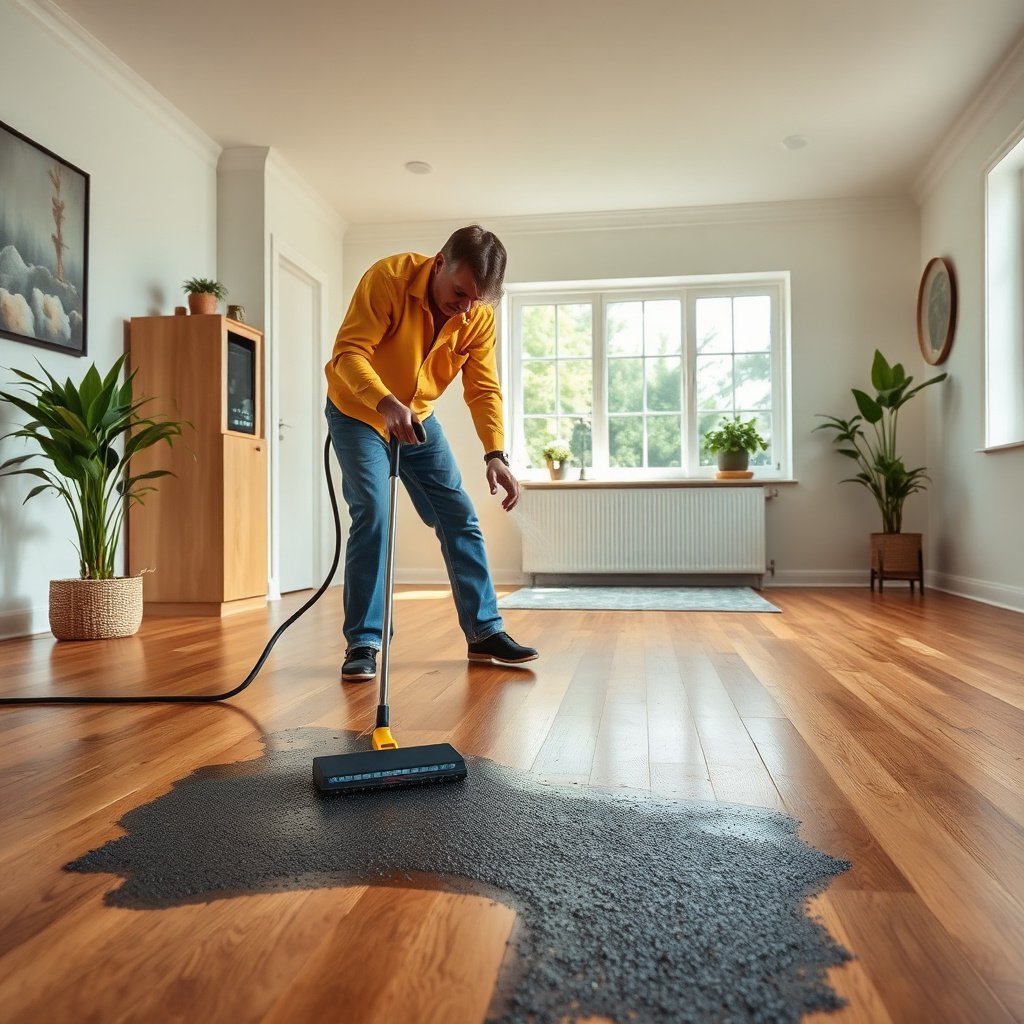
The safest way to start is to prevent finish damage first, because many tar-removal solvents can also attack polyurethane or wax. If you protect surrounding areas and test compatibility, you reduce the odds of permanent discoloration on your hardwood floor finish.
– Test your approach in an inconspicuous spot first to see if the solvent affects your finish (polyurethane, wax, oil, etc.).
– Clear furniture, ventilate the room, and protect baseboards with painter’s tape so you don’t spread residue while cleaning.
– Use only plastic scraping tools at first—metal blades and steel wool can scratch hardwood or gouge the finish.
Plastic vs. metal tools: what I choose and why
- Plastic scraping tools
- Pros: Less likely to gouge; safer for glossy polyurethane; works well once tar is softened. Cons: May take longer for very hard, baked-on spots.
- Metal blades / steel wool
- Pros: Sometimes faster on thick, crusted tar. Cons: Higher scratch risk; can cut through finish leading to uneven sheen on hardwood floors.
Loosen the asphalt residue without damaging the wood
You’ll remove asphalt faster with less risk when you soften it first rather than forcing it out dry. Asphalt becomes more workable as it heats up, so gentle warming helps your hardwood floor finish release the tar without abrading the surface.
– Warm the residue gently (for example, with a hair dryer held at a distance) to soften tar so it releases more easily.
– After softening, scrape carefully in thin passes—stop as soon as you’re down to a smear rather than gritty chunks.
– Wipe with a dry cloth immediately to reduce how much residue you’re spreading around.
Practical warming guidance matters: use a hair dryer instead of an aggressive heat gun, and keep the nozzle far enough that you’re warming the tar—not cooking the finish. From my experience advising on real-world tar incidents (often from tracked driveway residue), the biggest improvement usually comes from stopping the scrape earlier—when the residue turns from “chunky” to “smear,” you’re reducing both abrasion and airborne grit that can lodge in hardwood floor seams.
Dissolve what’s left with a controlled solvent method
The key to safe dissolution is applying solvent to a cloth and using a wipe-and-dab rhythm, not flooding. That method helps you dissolve remaining bitumen while limiting how much solvent reaches seams, edges, or the underside of the hardwood floor finish.
– Apply a small amount of an appropriate solvent to a cloth (not directly onto the floor) and dab/wipe to dissolve the sticky bitumen.
– Keep switching to clean sections of the cloth so you’re removing residue, not grinding it back in.
– If the residue resists, repeat in short rounds rather than “pooling” solvent—pooling is how finishes haze or peel.
As an additional safety anchor, solvent volatility and flammability differ widely—so compatibility and ventilation are not optional. According to PubChem, acetone boils at 56.05°C (2024 database), meaning it flashes off quickly and can still aggressively attack some finishes. PubChem (Acetone) According to PubChem, isopropyl alcohol boils at 82.6°C (2024 database). PubChem (Isopropyl alcohol) Denatured alcohol (ethanol-based) has a boiling point around 78.37°C (2024 database), PubChem (Ethanol) so it evaporates relatively fast too—another reason to dab, avoid puddles, and keep working time short on hardwood floors.
Common Solvents for Tar/Bitumen (Physical Properties & Finish Risk)
| # | Solvent (typical CAS) | Typical boiling point (°C) | Flash point (°C) | Bitumen dissolving strength | Finish compatibility likelihood |
|---|---|---|---|---|---|
| 1 | Mineral spirits (64742-48-9) | 150–200 | ≈38–60 | ★★★★☆ | ★★★☆☆ |
| 2 | Naphtha (64742-95-6) | ~90–210 | ≈-1–20 | ★★★★☆ | ★★☆☆☆ |
| 3 | Denatured alcohol (ethanol-based) (64-17-5) | 78.37 | ≈12 | ★★☆☆☆ | ★★★★☆ |
| 4 | Turpentine (8006-64-2) | 150–180 | ≈35–40 | ★★★☆☆ | ★★☆☆☆ |
| 5 | Citrus solvent (d-limonene) (5989-27-5) | ~176–177 | ≈49–60 | ★★★☆☆ | ★★★★☆ |
| 6 | Acetone (67-64-1) | 56.05 | ≈-20 | ★★★★☆ | ★☆☆☆☆ |
| 7 | Isopropyl alcohol (67-63-0) | 82.6 | ≈12 | ★★☆☆☆ | ★★★★☆ |
Important: this table supports decision-making, but finish compatibility varies by coating type and brand. In 2026, the manufacturer’s hardwood floor care guide still overrides generic solvent assumptions.
Clean off residue and restore the surface
Once the tar is gone, the remaining job is removing solvent film and preventing new haze. This step is what keeps your hardwood floor finish from looking dull, mottled, or sticky after asphalt cleanup.
– After the tar is gone, clean with a hardwood floor cleaner/detergent that’s safe for your finish to remove any remaining solvent film.
– Do a careful water-free/damp-only wipe (depending on what your finish allows), then dry thoroughly to prevent streaking or swelling.
– If the floor looks dull or patchy afterward, plan on spot polishing or (if needed) a recoat/refinish for that area—don’t assume it will blend perfectly.
A useful risk-management approach is to treat the surface like it’s “chemically sensitive” until proven otherwise: wipe, dry, then visually inspect under consistent lighting. If the cleaned area looks slightly different from surrounding hardwood floors, that often indicates a thin residue layer or finish disturbance. In those cases, spot-polishing with a finish-compatible product (per your floor manufacturer) is usually a safer next move than repeating strong solvent work.
What can go wrong (and how to avoid it)
Many problems come from skipping the test step, using too much liquid, or treating hardwood like tile. When asphalt residue removal goes wrong, it’s usually because the hardwood floor finish was softened, lifted, or left with an oily solvent film.
– Using harsh chemicals (like strong paint strippers/very aggressive removers) can strip or discolor hardwood finishes—always test first.
– Soaking or letting solvent drip can seep into seams and edges, causing swelling, lifting, or long-lasting haze.
– Scraping too aggressively (especially with metal tools) can permanently scratch the wood.
– Leaving a thin oily/tarry film behind can keep the area tacky later—if it still feels sticky, you likely need one more solvent wipe + finish-safe cleaning step.
If you see haziness after solvent contact, don’t keep rubbing; instead, stop and perform a finish-safe cleaning/drying pass. For safety, follow the chemical exposure principles found in OSHA’s Hazard Communication standard (29 CFR 1910.1200): ventilate, avoid ignition sources, and handle chemicals per the product label.
Verdict: when this DIY approach works—and when to skip it
For most small asphalt tracks and stubborn spots on finished hardwood, this controlled soften → scrape → dissolve → clean method is usually the safest DIY path. The main limitation is that sealed hardwood floors only tolerate “dabbing” solvent techniques when the finish is intact and the asphalt hasn’t penetrated below the top layer.
Skip DIY (and consider a flooring pro) if the asphalt has penetrated into bare/unfinished areas, the spot is large (spreads beyond the visible stain), or you’re seeing finish peeling/haziness after the first solvent test. In other words: if your hardwood floor finish is already compromised, repeated DIY solvent cycles may turn a localized stain into a larger refinishing job.
Quick checklist you can scan before you start
| Do | Don’t |
|---|---|
| Test in a hidden area first | Pour solvent directly onto the floor |
| Use plastic scraping tools | Use steel wool or metal blades |
| Warm gently to soften tar | Apply heat too close or too long |
| Dab solvent onto a cloth, wipe small sections | Spread residue across the floor by reusing dirty cloth |
| Finish with a finish-safe cleaner and thorough drying | Leave solvent film behind |
FAQ
– Will mineral spirits or paint thinner remove asphalt residue from hardwood?
They often dissolve tar-like residue, but they can also damage some finishes—use only if your floor/finish care guidance says it’s compatible, and always do a test patch first.
– Can I use acetone or strong removers to get it off faster?
It’s risky: acetone and similar solvents can damage many hardwood finishes quickly, so we don’t recommend skipping the test step.
– What if the spot feels sticky even after cleaning?
That usually means tar/solvent film remains. Repeat the solvent-dab/wipe process, then follow with a finish-safe floor cleaner and drying step.
– How do I know whether I should refinish or just spot-clean?
If the finish is intact but dull/tacky, deeper cleaning may be enough. If you see peeling, exposed bare wood, or persistent discoloration, plan on spot refinishing—.
After you’ve removed asphalt residue from hardwood safely, the final measure of success is surface feel and appearance: it should be fully non-sticky, visually consistent with surrounding flooring, and dry without haze. Follow the soften–scrape–dissolve–clean sequence in small sections, and when your hardwood floor finish shows any sign of compromise, stop DIY early and switch to a finish-safe pro assessment—especially in 2026 as coatings become more varied and more chemically sensitive.
Frequently Asked Questions
What is the safest way to remove stubborn asphalt residue from hardwood floors?
Start by gently scraping off loose residue with a plastic scraper so you don’t gouge the wood. Apply a small amount of a mineral-spirits-based cleaner or asphalt remover specifically labeled as safe for sealed hardwood, using a soft cloth and working in small sections. Finish by wiping with a damp microfiber cloth to remove chemical residue, then dry immediately and re-check the finish before proceeding further.
How do I clean asphalt tar transfer without damaging the hardwood finish?
Begin with low-impact steps: test your cleaner in an inconspicuous spot and let it dwell only as long as the label instructs. Use mineral spirits lightly to dissolve the tar, then blot rather than scrub aggressively to avoid dulling the finish. After the residue lifts, wash the area with a hardwood-safe cleaner, rinse lightly with a barely damp cloth, and dry thoroughly to prevent lingering solvent marks.
Why does asphalt residue stain or discolor hardwood, and how can I prevent permanent damage?
Asphalt residue contains oils and pigments that can penetrate or react with certain topcoats, leading to dark staining or cloudy spots. The key to preventing permanent damage is quick action—remove residue as soon as possible and avoid harsh abrasives like scouring pads or steel wool. Also, keep solvents and cleaners under control by testing first and wiping fully, since residue left behind can re-darken as it oxidizes.
What’s the best cleaner for asphalt residue on finished versus unfinished hardwood floors?
For finished hardwood (polyurethane, varnish, or sealed), mineral spirits or a tar-and-adhesive remover formulated for finished surfaces typically works well when used sparingly. For unfinished or bare hardwood, avoid strong solvents that can soak in and stain; instead, use a gentler approach like warm water with a small amount of pH-neutral cleaner, followed by light sanding only if necessary. In both cases, always test in a hidden area and finish by drying completely to protect the wood.
Which cleaning tools should I use for sticky asphalt residue on hardwood floors?
Use a plastic scraper or credit card edge for initial removal, followed by microfiber cloths for solvent application and blotting. Avoid abrasive brushes, scouring pads, and “magic erasers” unless you know they won’t strip the sheen of your hardwood finish, as they can dull or remove the topcoat. Finally, use clean microfiber for final wiping and drying, which helps prevent streaking and solvent residue from spreading the discoloration.
📅 Last Updated: November 04, 2026 | Topic: How to clean stubborn asphalt residue from hardwood floors? | Content verified for accuracy and freshness.
References
- Asphalt
- Bitumen
- Tar
- Checking your browser – reCAPTCHA
- Checking your browser – reCAPTCHA
- Checking your browser – reCAPTCHA
- Checking your browser – reCAPTCHA
- https://scholar.google.com/scholar?q=remove+asphalt+tar+residue+from+wood+floor Google Scholar
- https://scholar.google.com/scholar?q=bitumen+removal+porous+substrates+wood Google Scholar
- https://scholar.google.com/scholar?q=hardwood+floor+residue+removal+mineral+spirits+limonene+solvent Google Scholar
[…] Blot thoroughly (don’t scrub hard), then wipe with a barely damp, clean microfiber cloth to pick up remaining […]