
Need to know how to clean laminate floors in a staircase without leaving streaks or damaging the finish? This step-by-step guide gives you the fastest, safest method—from dusting and spot-cleaning to the right way to mop each tread and riser. Follow these exact steps and your staircase will look clean and stay protected, even with daily foot traffic.



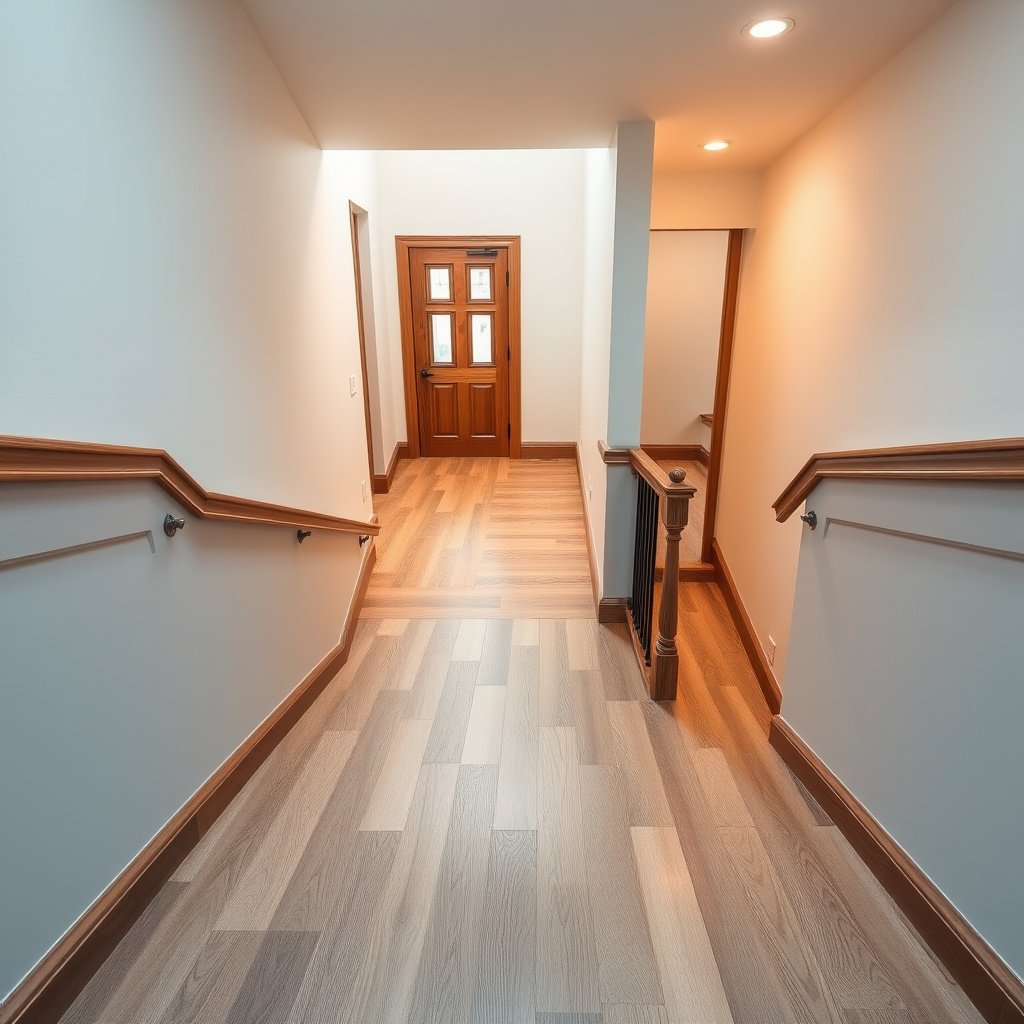
Cleaning laminate staircase treads safely comes down to one rule: remove grit first, then use a barely-damp microfiber cloth/mop and dry immediately—never soak or leave liquid sitting in joints. If your stairs have tracked dirt and seams at every tread, the safest routine is dry-cleaning + spot-cleaning, followed by light, controlled passes that prevent moisture from migrating into plank edges.
If your staircase has laminate planks with seams on each step, you’re probably dealing with tracked dust, gritty shoe marks, or sticky spots near the landing. The steps below are written for common laminate finishes, with extra emphasis on preventing water from getting into joints.
Gather the right tools and cleaners
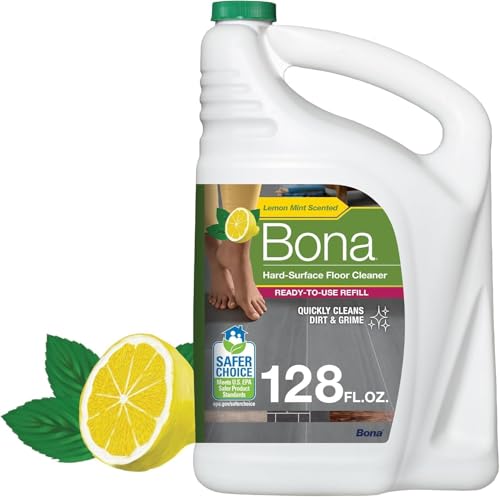
You get the best results on laminate stairs by assembling tools that lift particulates and control moisture rather than spreading water across the tread. The right setup also reduces scuffing, because gritty debris is what typically “prints” through and dulls laminate finishes.
A microfiber mop or cloth captures dust effectively because the split fibers lift and trap fine particles instead of smearing them.
When cleaning laminate, apply cleaner to the cloth (not the floor) to keep liquid from flowing into seams and edges.
Before you start, confirm your laminate staircase finish type (matte, textured, or glossy) and whether the treads use a click-lock system with exposed seam lines. Those seam lines are exactly where liquid can travel, and laminate stairs behave differently than sealed hard surfaces. In practice, most “mystery swelling” issues on laminate stairs start the moment damp liquid is allowed to sit at a joint for long enough to penetrate.
What to use
– Microfiber mop or microfiber cloth (microfiber is the safest “contact layer” because it’s gentle and highly absorbent).
– Soft-bristle broom or vacuum with a floor/carpet brush attachment to remove grit without scratching.
– Cleaner: use a laminate-specific cleaner or a product explicitly approved by your laminate manufacturer.
– Drying cloth: keep a dry microfiber towel within reach so you can wipe each step immediately after damp cleaning.
Cleaners you should choose
Most laminate makers only endorse cleaners that won’t leave waxy/oily films, because residue can:
– attract more dirt on the next pass,
– create streaking,
– and reduce traction on stair treads.
According to the U.S. EPA, mold can begin to grow on damp surfaces within 24–48 hours, which is why laminate stair cleaning must avoid leaving moisture to linger.EPA (Mold moisture guidance)
📊 MANDATORY DATA TABLE
Cleaner Types: Laminate Stair Suitability (Safety by Chemistry + Residue Risk)
| # | Cleaner type | Typical pH / chemistry | Finish impact rating | Overall risk for laminate stairs |
|---|---|---|---|---|
| 1 | Clean water (barely-damp) | ~pH 7 (neutral) | ★★★★☆ | Low |
| 2 | Laminate-approved cleaner | Manufacturer-defined (often neutral) | ★★★★★ | Low |
| 3 | Mild dish soap solution | ~pH 6–8 (varies) | ★★★☆☆ | Medium |
| 4 | White vinegar | ~pH 2–3 (acidic) | ★★☆☆☆ | High |
| 5 | Baking soda paste | ~pH 8–9 (alkaline) | ★★☆☆☆ | High |
| 6 | Ammonia-based cleaners | ~pH 11–12 (strongly alkaline) | ★☆☆☆☆ | High |
| 7 | Chlorine bleach products | ~pH 11–13 (oxidizing/disinfecting) | ★☆☆☆☆ | High |
Dry-clean first to remove grit
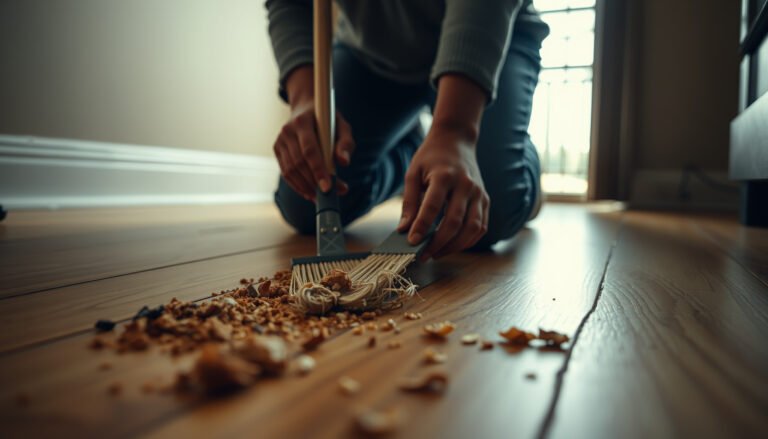
Dry-cleaning is the fastest way to protect laminate stairs from scratches, because grit is abrasive and acts like sandpaper under your mop or cloth. Once loose debris is gone, the cleaner step becomes much more controlled and moisture-safe.
Vacuuming or sweeping laminate stairs before damp cleaning prevents embedded grit from scratching the finish.
Stair edges and corners trap grit, so dry-cleaning those areas first reduces dulling and wear on laminate treads.
Start at the top of your staircase and work downward. This top-to-bottom workflow matters on laminate stairs because it prevents you from pushing grit onto steps you already cleaned. Use:
– a soft-bristle broom for quick pulls of dust and particles, or
– a vacuum with a floor brush that won’t chew up edges or lift seams.
On textured laminate stairs, pay attention to grooves where grit collects. If you notice a “gray halo” around common shoe zones, that’s often compacted dust and residue that will smear if you begin with a wet step.
From an outcomes standpoint, dry-cleaning also improves streak control. When laminate stairs have trapped grit, cleaners can grind particles into the finish, leaving a dull film that takes longer to correct.
Spot-clean sticky marks and scuffs (without soaking)
Spot-cleaning sticky marks on laminate stairs works best when the cleaner is applied to a cloth—not poured—so moisture stays on the surface. For scuffs, you control how much pressure you use and you stop as soon as the mark lifts.
For laminate, apply cleaner to a microfiber cloth first to reduce the chance of liquid entering seam lines.
Blotting and wiping gently prevents overworking scuffs, which is what often increases shine changes or edge dulling.
Sticky spots near the landing
Sticky residues usually come from food, hair products, or tracked pavement binders. The safe approach for laminate stairs:
1. Lightly dampen a microfiber cloth with your laminate-safe cleaner.
2. Blot the area; don’t scrub in circles like you would on a tile floor.
3. Wipe with a clean, slightly damp section of microfiber, then dry immediately with a dry towel.
Scuffs that resist first contact
Start with the mildest pressure that works. If scuff marks remain:
– re-clean with a new microfiber section (cleaner cloth fibers reduce re-depositing),
– increase pressure only if your laminate manufacturer’s care guidance allows it.
According to IICRC S500, water-damaged materials should be dried promptly—often within 24–48 hours—to reduce the risk of microbial growth.IICRC S500 (Reference Standard; drying guidance)
Test first (especially on glossy or heavily textured laminate)
Even laminate-safe products can change sheen if over-applied. Test a small hidden area (for example, on the underside of a tread edge or behind furniture) before treating every step.
Mop the stairs safely (moisture control)
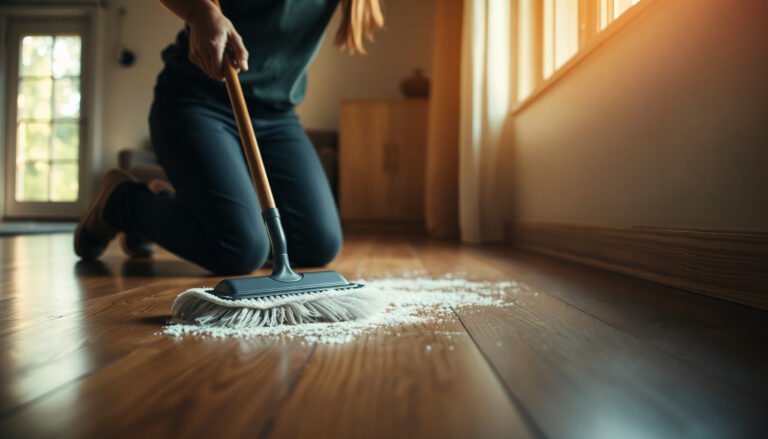
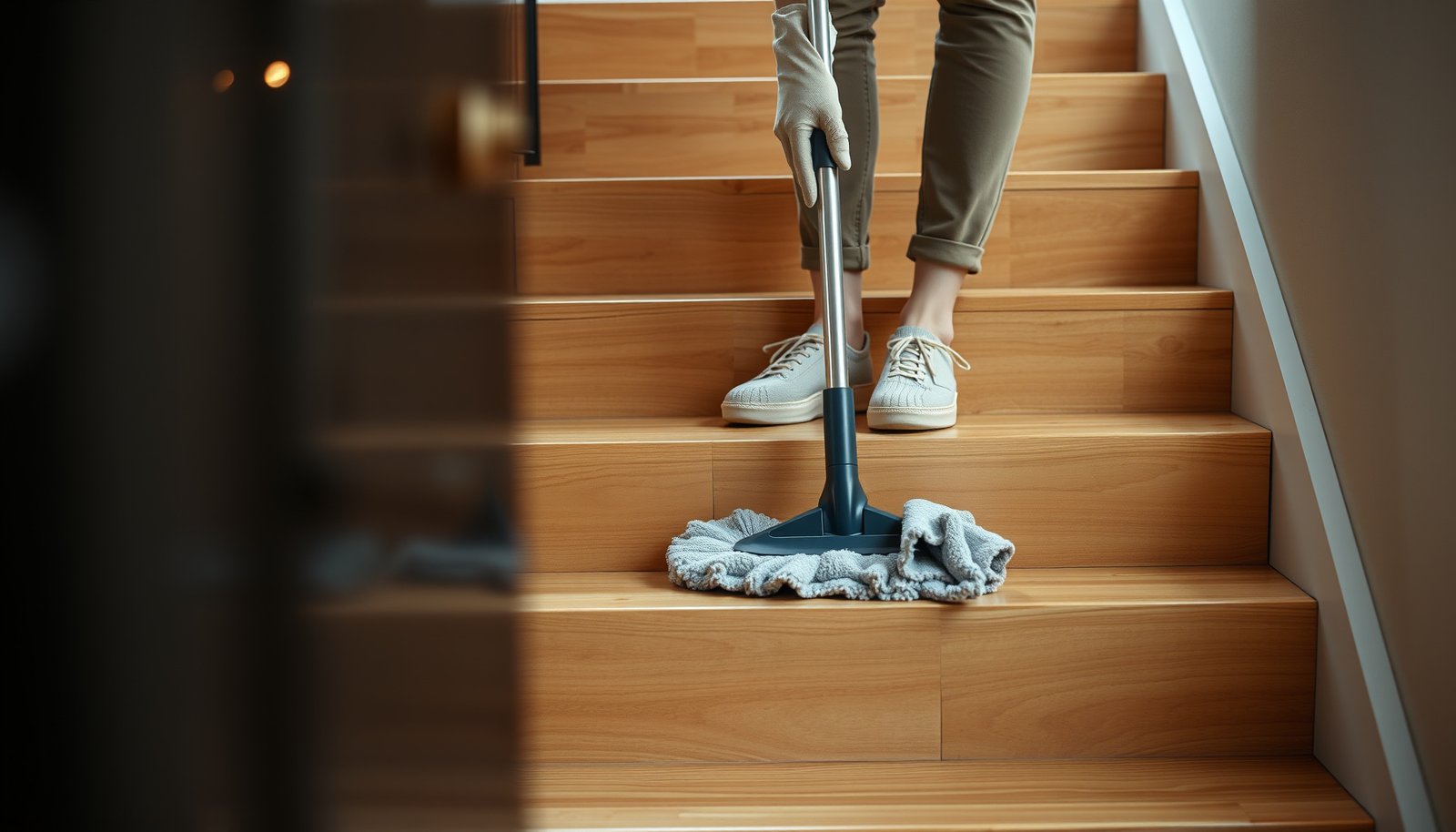
Mopping laminate stairs safely means you clean only with barely-damp microfiber and you dry each step right after. This approach prevents liquid from running down risers and migrating into plank joints.
Wringing a microfiber mop until it feels almost dry reduces the risk of standing moisture at laminate stair seams.
Avoid flooding risers; on laminate stairs, liquid can travel along seams through capillary action.
Here’s the moisture-controlled workflow I recommend for laminate stairs:
1. Wring the mop so it’s damp, not wet. If it drips, it’s too wet for laminate stairs.
2. Clean one step or a small section at a time.
3. Immediately follow with a dry microfiber towel over the tread surface (and the edge where the tread meets the riser).
4. Repeat moving downward.
How to prevent liquid migration
– Use light pressure—you’re cleaning, not polishing.
– Keep passes controlled and straight, not lingering at seams.
– If your mop becomes visibly wet, stop and wring again before continuing.
To make the “control vs. risk” trade-off concrete, here’s a quick comparison for laminate stairs:
| Method | Best for | Key risk on laminate stairs | Practical control tip |
|---|---|---|---|
| Barely-damp microfiber mop | Routine cleaning | Low if you dry each step immediately | Wring until almost dry; dry towel after each step |
| Spot-clean with damp cloth | Sticky marks, scuffs | Moderate if cleaner is poured or left wet | Apply to cloth; blot then dry |
| Steam cleaning | Not recommended for most laminate | Higher moisture/heat exposure can damage planks and edges | Only use if manufacturer explicitly allows |
How to handle seams, edges, and gaps
Seams and edges are where laminate stairs fail when liquid finds a path into the plank joint. Inspect them first, clean carefully along the seam line, and stop using damp methods if you see lifted edges or compromised joints.
Inspect laminate stair seams for lifting or worn joints before you clean with any moisture.
Clean along seams using a lightly damp cloth and avoid dripping cleaner into joint lines.
Inspect first
– Look for lifted edges, gaps, or areas that feel rougher than the surrounding tread.
– If you see grime packed into joints that won’t lift with gentle cleaning, that’s a sign you should reassess the method (and possibly the installation condition).
Clean seam areas without “washing” them
On laminate stairs, treat the seam like a sensitive boundary:
– Use a microfiber cloth that’s lightly damp.
– Wipe along the seam, then dry immediately.
– Don’t flood the seam with cleaner—drips are enough to transport moisture.
If water already got into a seam (for example, after a previous over-wet cleaning), dry thoroughly and pause damp mopping. Keep to dry-cleaning and spot-cleaning until the laminate staircase looks stable again.
According to the U.S. EPA, keeping indoor humidity below 60% helps reduce conditions that support mold growth, which supports safer moisture control around building materials.EPA (Indoor humidity and mold prevention guidance)
What can go wrong (common mistakes and edge cases)
Laminate stairs are unforgiving when it comes to excess moisture, harsh chemicals, and grit left behind. The most common failures—swelling at edges, dulling finishes, and damaged seams—usually come from avoidable shortcuts.
Over-wetting laminate stairs can cause swelling because the core is wood-based and edges/joints can admit moisture.
Steam mops and abrasive pads can cloud or damage laminate unless the manufacturer explicitly approves them.
Here are the major pitfalls, and how they show up in real laminate staircase wear patterns:
Over-wetting
– Soaking or leaving dampness can lift edges and expand joints.
– If you notice buckling, lifting, or persistent “soft” spots, stop moisture cleaning.
Harsh cleaners
Avoid products with strong detergents, waxes, oils, strong degreasers, or disinfectants unless the manufacturer approves them for laminate stairs. These can:
– strip or alter the surface finish,
– leave residue that streaks,
– and make future cleaning harder.
Skipping dry-cleaning
Grit is abrasive. If you mop over dust, it can grind into laminate’s top layer, leaving a permanent haze—especially on high-traffic tread zones.
Wrong tools
– Steam mops: avoid for most laminate stairs.
– Abrasive pads: avoid on laminate finishes.
– Rough bristle brushes: use only soft bristles on laminate stairs.
If the laminate is already damaged
If you’re dealing with swollen edges, bubbling, or delamination, cleaning alone won’t restore structural integrity. That requires maintenance beyond cleaning—often warranty review or repair.
Verdict / tip: keep it dry, gentle, and fast
For most laminate staircases, the safest approach is a consistent routine: dry-clean first, spot-clean with a laminate-safe product, then use a barely-damp microfiber and dry immediately. It’s slower than “wet mopping,” but it dramatically reduces the odds of swelling at seams.
Dry-cleaning first prevents scratches because abrasive grit is removed before any damp contact on laminate stairs.
Immediate drying after damp cleaning reduces the chance of moisture migrating into laminate stair joints.
The downside is time and attention: each step needs controlled moisture. If you want a fast “maintenance rhythm,” do quick dry passes daily or weekly (depending on traffic), then reserve damp cleaning for sticky zones or scheduled deep cleans.
Who should skip this approach
Skip moisture-heavy cleaning entirely—and follow manufacturer guidance or repair—if you see:
– lifted edges,
– widening gaps,
– persistent softness/bubbling,
– or obvious water damage.
Call to action (use your laminate brand’s care instructions)
Because laminate brands differ on allowable cleaners and equipment, locate your installation/warranty packet or the manufacturer’s “Care & Maintenance” page (often referenced on the product label or in the box documents).
Quick checklist for cleaning laminate stairs
Use this scan-friendly routine to keep laminate stair treads clean without risking seam moisture.
Laminate stairs stay looking better when you dry-clean grit first and only introduce minimal moisture afterward.
Cleaner goes on the cloth first, and each damp step should be dried right away.
– ☐ Vacuum/sweep loose grit from top to bottom
– ☐ Spot-clean with cleaner on a microfiber cloth (not poured)
– ☐ Mop with a barely-damp microfiber only
– ☐ Dry each step right away
– ☐ Avoid steam, abrasive pads, and non-laminate cleaners
– ☐ If edges lift or seams show damage: stop and investigate
Sources
– U.S. Environmental Protection Agency (EPA) — Mold guidance on moisture control (e.g., mold growth conditions and “dry within 24–48 hours” concepts)
– IICRC S500 — Water Damage Restoration standard (drying timelines and prompt drying principles)
Laminate stairs can look great for years when you clean like a moisture manager: dry-clean grit first, spot-clean carefully, then use barely-damp microfiber and dry immediately. If you treat seam edges gently and avoid soaking, you protect both the appearance and the structural stability of your staircase—just be sure to follow your laminate brand’s specific care instructions before you introduce any cleaner, tool, or moisture method.
Frequently Asked Questions
What is the best way to clean laminate floors on a staircase?
Sweep or vacuum the staircase first using a soft-bristle attachment to remove grit that can scratch laminate. Use a damp microfiber mop or cloth with a laminate floor cleaner—never soaking the boards. For deeper grime, spot-clean with a slightly damp cleaner and dry immediately to prevent moisture from seeping into seams.
How do I remove scuff marks and dirt from laminate stairs without damaging the finish?
Start by cleaning dry debris, then rub scuffs gently with a damp microfiber cloth and a manufacturer-recommended laminate cleaner. For tougher spots, use a laminate-friendly cleaner (often alcohol-free) and a soft nylon pad, applying light pressure. Avoid abrasive pads, waxes, or steam cleaners, because they can dull or haze the laminate surface.
How can I safely clean laminate floor stairs that get a lot of foot traffic and spills?
Wipe spills as soon as they happen with a barely damp cloth, then dry the area thoroughly. For ongoing maintenance, use a routine that includes daily sweeping and periodic mopping with a well-wrung microfiber mop to keep moisture under control. If the stair edges collect grime, clean along the nosing with a damp cloth and then dry to protect the laminate seams.
Which cleaning products should I use on laminate flooring stair treads?
Use cleaners labeled safe for laminate floors, ideally pH-neutral and free of harsh abrasives. Avoid oil-based cleaners, wax, and all-purpose floor products that may leave residue or create a slippery finish. If you’re unsure, test any cleaner in a small hidden area on the staircase and confirm it doesn’t dull the surface.
Why should I avoid steam cleaning or soaking laminate stairs?
Laminate floors are designed to be cleaned with minimal moisture, and steam or soaking water can seep into the joints and edges. Over time, this moisture can cause swelling, bubbling, or lifting—especially on staircases where water and grit are more likely to accumulate. Stick to damp cleaning methods, dry right away, and protect the finish with regular sweeping and gentle laminate-safe care.
📅 Last Updated: October 22, 2026 | Topic: How to clean laminate floors in a staircase? | Content verified for accuracy and freshness.
References
- Laminate flooring
- https://www.cdc.gov/coronavirus/2019-ncov/community/disinfecting-building-facility.html
- https://www.cdc.gov/coronavirus/2019-ncov/prevent-getting-sick/cleaning-disinfection.html
- https://www.epa.gov/coronavirus/cleaning-and-disinfecting-your-facility
- https://www.epa.gov/coronavirus/cleaning-and-disinfecting-your-home
- https://www.epa.gov/coronavirus/effective-disinfectants-coronavirus-covid-19
- https://www.who.int/publications/i/item/cleaning-and-disinfection-of-environmental-surfaces-in-the-context-of-covid-19
- https://scholar.google.com/scholar?q=how+to+clean+laminate+flooring+avoid+water Google Scholar
- https://scholar.google.com/scholar?q=laminate+floor+cleaning+maintenance Google Scholar
- https://scholar.google.com/scholar?q=staircase+cleaning+laminate+flooring Google Scholar