
Want to protect laminate floors in a staircase without warping, scuffing, or separating at the edges? The best, fastest approach is to add a stair tread system (durable anti-slip treads plus full coverage underlay on the steps) and seal every cut edge with a matching laminate edge-protector. Do it this way and you’ll dramatically reduce wear from foot traffic while keeping the boards locked and stable.




Protect laminate flooring on stairs by addressing the three main failure triggers: impact/abrasion, moisture, and edge scuffing. When you protect the tread surface and its front edge (nosing), block water from getting into seams, and choose runner/backing + cleaning methods that don’t soak laminate, the same staircase can stay presentable far longer—especially under heavy foot traffic.
If your staircase sees heavy foot traffic (kids, pets, frequent moving of furniture), or you’ve started noticing early dulling, peeling edges, or gaps around stair transitions, this guide is for you. The steps below focus on protecting laminate where it wears fastest: the tread’s top surface edges and the transition points.
Lock down the high-wear areas first (treads, nosing, edges)
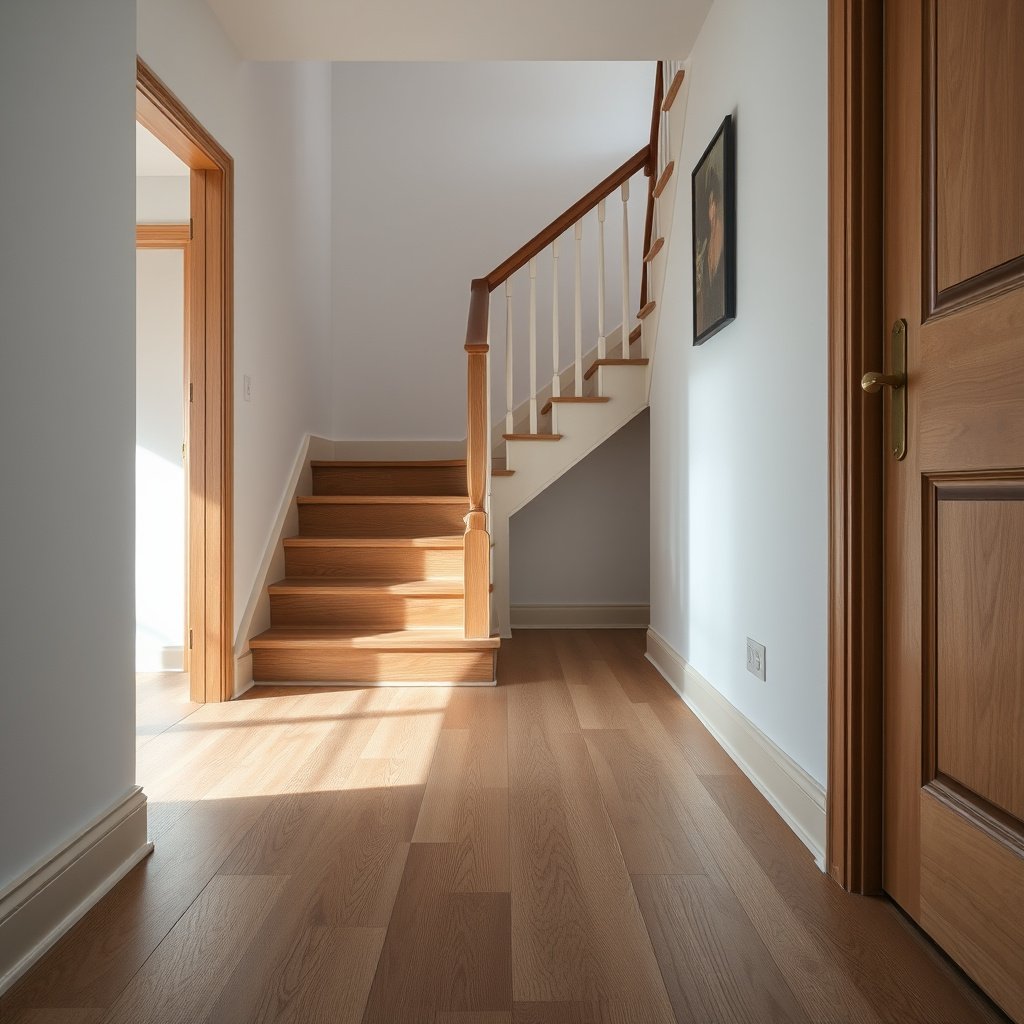
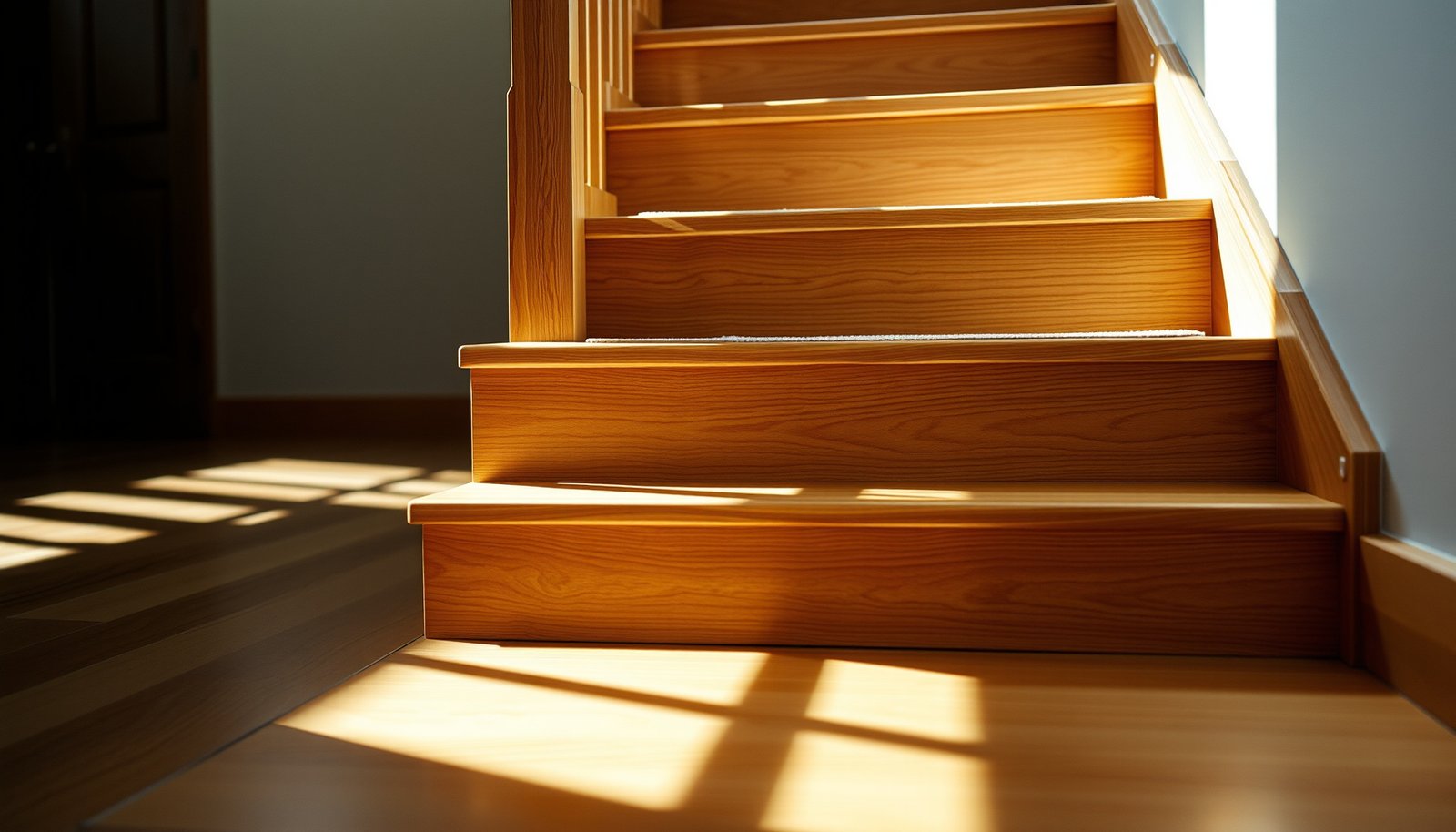
The fastest way to preserve laminate stairs is to physically protect the tread’s front lip and vulnerable edges with stair-specific trim or a properly backed runner. That’s because most laminate wear damage starts where shoes strike repeatedly—right at the nosing and the laminate edge profile—not in the flat middle of the tread.
Here’s why this matters: laminate flooring is a layered product with a wear layer on top and printed décor beneath; once the protective edge profile gets chipped or scuffed through, the stair looks worse quickly and can expose the core to more risk. In the laminate stairs I’ve helped homeowners troubleshoot, the most visible deterioration usually begins at the step’s leading edge and any areas where trim isn’t present or the runner shifts.
Stair-specific nosing or edge trim is designed to take repeated foot impact on behalf of the laminate edge, reducing chipping and scuffing at the tread lip.
A runner or stair tread with a non-scratching backing helps prevent abrasive grit (sand, dust) from grinding the laminate finish with each step.
Add stair nosing/edge trim that matches laminate stair profiles
Use stair nosing or edge trim made for laminate or for “floating” floors—especially if your stair transition includes an exposed laminate lip. The key is a secure, compatible profile so the trim supports the edge and doesn’t let it move or flex under footfall. If your laminate system uses an attached underlayment or specific edge finishing method, verify your stair trim is compatible with that design.
Practical fit checklist (treads + nosing):
– Choose trim sized for your stair nosing profile and tread depth.
– Ensure the trim covers the laminate’s vulnerable front edge fully.
– Confirm it won’t interfere with the rise/run geometry so the runner or tread lands flat.
Use a runner/stair tread system that stays put (and doesn’t chew the finish)
A runner can be a great laminate staircase protection strategy—when it actually protects rather than acts like a grit magnet. Prefer:
– Non-scratching backing (so it doesn’t abrade the wear layer)
– A grip method that prevents shifting without harsh adhesives contacting the laminate finish
From my experience walking homeowners through runner failures, the common issue isn’t the runner itself—it’s the combination of a backing that traps sand and a runner that gradually migrates, leaving the same laminate edge exposed.
Optional: consider clear protective film only if your laminate allows it
A clear compatible top-coat/film may sound like a shortcut, but laminate manufacturers often restrict aftermarket coatings because they can change sheen, adhesion behavior, or warranty coverage. If your product documentation permits it, use a system designed for laminate stair exposure (scuff + impact), not just for flat floors.
Many laminate manufacturers caution against unapproved top-coats or films because they can alter finish behavior and may affect warranty coverage.
Stop moisture from reaching seams and joints
Moisture protection is the difference between “cosmetic wear” and “structural problems” for laminate stairs. Your best approach is immediate spill control, low-moisture cleaning, and preventing water tracking from entering at the top and bottom of the staircase.
Laminate is typically engineered for indoor dryness; standing water and repeated wetting can creep into joints and edges, especially on stairs where water has less time to evaporate. In practice, the staircase is where tracked rain/snow and everyday bathroom/kitchen activity funnel into the same few treads—so moisture management isn’t optional.
Laminate care guidance typically emphasizes cleaning with minimal moisture to avoid water penetrating joints and edges.
Placing mats at the top and bottom of stair runs reduces grit and water tracking, which lowers both abrasion and moisture risk for laminate.
Wipe spills immediately and avoid soaking stair treads
If a drink, shampoo, or pet accident happens, don’t “clean later.” Blot, remove residue, and dry promptly. For routine cleaning, treat “damp” as the upper limit and use methods that don’t flood the tread surface.
Technique that works:
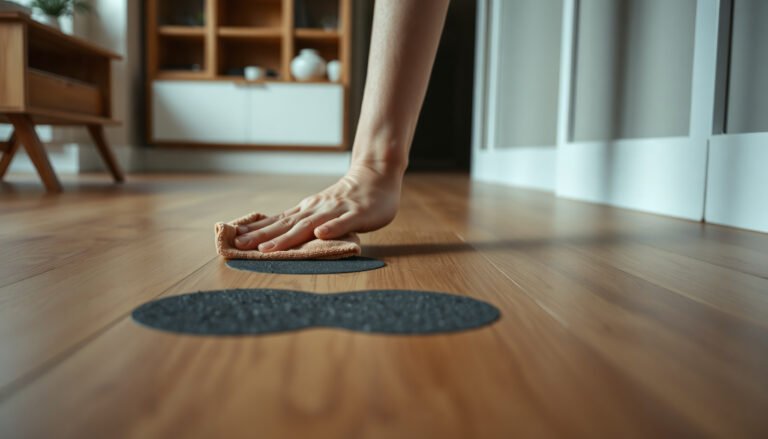
– Use a wrung microfiber cloth for surface cleaning.
– Dry immediately after wiping, especially along edges and transitions.
Stop water tracking at the source (entry mats)
Water and grit usually travel together. Entry mats—placed where people step before reaching the stairs—reduce how much moisture and sand reach your laminate’s wear layer and seams.
For staircases, focus mats at:
– Top landing / entry-side
– Bottom landing / entry-side
Avoid steam mops and steam cleaning on laminate stairs
Steam cleaning feels “sanitary,” but it’s also a fast route to excess moisture exposure. Laminate manufacturers often warn against steam because heat and water can stress seams over time.
Steam mops introduce heat and moisture that many laminate manufacturers advise against for long-term durability.
Keep humidity stable
Even if you never spill, indoor humidity swings can influence dimensional stability. Stable conditions reduce edge separation and gapping behavior you might see at stair transitions.
According to the National Wood Flooring Association, maintaining indoor relative humidity around 35%–55% supports dimensional stability for wood-based floors (and is a useful reference target for laminate systems that require dry conditions) ().
Quick moisture sizing note for runner overlap
Because stairs have consistent geometry, your runner’s cut and placement directly affects how well it protects the nosing. For example, common stair code constraints in many jurisdictions include a minimum tread depth of 10 inches (254 mm) and a maximum riser height of 7 3/4 inches (196.8 mm) (2021) (International Residential Code (IRC) 2021, Section R311.7). When your runner exposes even a thin edge strip, that strip becomes the wear “hotspot” for laminate.
Moisture-Risk Impact of Common Stair Protection Choices for Laminate
| # | Protection choice | Primary area on stairs | Moisture risk to laminate | Typical guidance outcome |
|---|---|---|---|---|
| 1 | Entry/top landing mats | Top & bottom landings | Low | Generally recommended |
| 2 | Prompt spill blotting + drying | Any tread | Low (if immediate) | Strongly advised |
| 3 | Lightly damp microfiber wipe (no soaking) | Tread surface & edges | Low to Moderate | Usually compatible |
| 4 | Humidity stability (HVAC/dehumidifier as needed) | Whole stair zone | Low | Recommended |
| 5 | Runner with a non-scratching, non-adhesive backing | Treads + nosing protection | Low | Generally recommended |
| 6 | Runner backing that traps grit (porous rubber, textured pads) | Under runner | Moderate | Often workable, but monitor |
| 7 | Steam cleaning / wet mopping | Tread surface | High | Discouraged (avoid) |
Reduce abrasion and scratching day to day
The daily protection play is simple: remove grit and stop hard-contact rubbing before it hits laminate. With laminate stairs, sand and dust act like sandpaper—so controlling abrasion is as important as shielding the edge.
In homes with pets or tracked outdoor footwear, I usually see the finish dull first on the center tread zone and then “crawl” outward as grit is pressed into the top surface. If you fix moisture but ignore grit, the wear layer still loses its look.
Grit and sand significantly accelerate surface wear on laminate by increasing abrasion with each footstep.
Soft floor protectors (felt or similar) under carts and furniture contact points reduce scratching and edge scuffing.
Put felt pads under anything that contacts the stairs
Push carts, moving boxes, pet carriers, and even chairs that get carried up/down can scratch laminate quickly. Add felt pads (or soft floor protectors) to contact points so the item glides rather than scrapes.
Do this for:
– Bottom corners of moving carts
– Chair legs if they get moved near the stair edge
– Any seasonal items carried frequently
Sweep/vacuum regularly with the right attachment
A soft brush attachment or hard-floor setting removes grit without gouging. Focus on:
– Tread edges and runner “border” areas
– Spots where shoes scuff most
Don’t drag items across treads—lift and reposition
Even rugs can cause abrasion if you drag them over the stair surface while repositioning. Lift, place, and remove rather than slide.
Use the right cleaner and technique (less water, more control)
The best cleaning method for laminate stairs is the one your manufacturer explicitly approves—then applied with minimal moisture and fast drying. If your care guide says “dry or barely damp,” treat that as the rule and avoid “extra cleaning” that leaves water behind.
Laminate stairs are uniquely unforgiving because the tread edge and seams can hold water longer, and heavy traffic re-wets the area repeatedly. Your cleaning technique should interrupt that cycle: clean lightly, dry thoroughly, and keep residue out of edges.
Manufacturer guidance for laminate floors commonly limits cleaning moisture and discourages soaking, especially near seams and edges.
Using a clean microfiber cloth to remove excess liquid helps prevent lingering moisture that can affect laminate joint performance.
Follow the manufacturer’s recommended cleaner (and respect “barely damp”)
Start with the exact cleaner recommended for your laminate brand/finish. If you’re using another product, confirm it doesn’t include ingredients that can dull the wear layer or leave residue.
Clean in small sections and dry promptly
Work one stair at a time:
– Wipe the tread surface lightly
– Pay extra attention to the front edge and side edges
– Dry immediately with a microfiber cloth
Test new cleaners on a hidden stair area first
Before you clean the whole staircase, test in a discreet location to confirm the finish doesn’t haze or dull.
Spot-testing a cleaner on an inconspicuous area helps ensure the laminate finish does not dull, haze, or discolor before full use.
What can go wrong (common mistakes and edge cases)
Most laminate staircase failures aren’t random—they’re predictable result of missing trim, excess moisture, incompatible backing, or installation issues like expansion gaps. When you see peeling edges, gaps, or rapid dulling, the fix is usually correcting the protection method, not “scrubbing harder.”
Skipping stair transition trim can expose laminate edges to repeated impact and increase chipping risk.
Using steam cleaning or wet mopping increases the chance of moisture reaching laminate seams and edges over time.
From the issues I’ve encountered in real homes, these edge cases show up quickly on stairs because motion and water flow are constant.
Skipping stair transition trim
Where laminate meets a stair element (or where there’s an exposed edge), the edge profile can be under-supported. Use transition trim and nosing designed for laminate stair systems so the laminate edge isn’t left to take impacts without protection.
Using steam cleaner or wet mopping
Even “water-resistant” laminate products usually come with care instructions that still warn against excess water. Steam adds moisture + heat, which can be harsher than a carefully controlled wipe.
Choosing the wrong runner backing
Some rubberized or textured backings can:
– Leave residue
– Trap grit under the runner
– Eventually abrade the top surface as grit builds
Ignoring acclimation/installation expansion gaps
If the staircase flooring wasn’t installed with correct expansion gaps, heat and humidity changes can cause movement. That movement can show up as lifting, separation, or gapping near stair transitions.
Laminate installation standards typically require perimeter expansion gaps to allow dimensional movement without buckling or edge separation.
Runner/trimming decision: quick contrast
If you’re deciding between a runner system and dedicated stair treads, here’s a parseable comparison:
| Option | Best for | Pros | Cons | Moisture sensitivity |
|---|---|---|---|---|
| Runner along the full staircase | Long, continuous protection over multiple treads | Helps cover most tread surface; easier to replace | Backing can trap grit; can shift if not well secured | Moderate if backing traps moisture |
| Dedicated stair treads (individual covers) | Targeted edge protection | Reduces wear where shoes land; less whole-run shifting | More pieces to clean; must fit each tread profile | Lower if seams stay dry |
Verdict / tip: protect with trim + runner, and keep cleaning low-moisture
If you want the best balance of protection and practicality, prioritize stair nosing/trim and a runner system (or dedicated stair treads) that won’t scratch the surface—then maintain laminate with dry or low-moisture cleaning. This combination targets the real causes of stair damage: repeated impact at the nosing edge, grit-driven abrasion, and moisture that gets into seams.
Downsides to consider:
– Runners/treads require their own routine cleaning, or grit builds underneath and counteracts the protection.
– Not every laminate finish tolerates aftermarket coatings or certain backing materials.
– If your laminate manufacturer prohibits extra coatings/films, adding one can create warranty or finish-change issues.
Skip specialized top-coat/film add-ons unless your laminate manufacturer explicitly approves them; otherwise you risk finish alteration or warranty problems.
A protection strategy focused on nosing/edge trim plus controlled, low-moisture cleaning aligns with typical laminate care and wear-layer realities.
Quick checklist: laminate stair protection
– [ ] Install/verify stair nosing or edge trim (right fit for your stair profile)
– [ ] Add a runner or stair treads with non-scratching, compatible backing
– [ ] Use felt/rubber protection on anything that contacts the stairs
– [ ] Sweep/vacuum regularly (soft attachment)
– [ ] Clean with manufacturer-approved cleaner using minimal moisture
– [ ] Wipe spills immediately; keep water off seams and edges
– [ ] Maintain stable indoor humidity; avoid steam cleaning
Sources
– International Residential Code (IRC) 2021, Section R311.7 (stair geometry/tread and riser limits)
In short: laminate stairs stay beautiful longer when you defend the high-wear nosing edge with proper trim or tread systems, stop moisture from reaching seams through low-moisture cleaning and mats, and remove grit early to prevent abrasion. If you set up those protections now—before the damage becomes edge-chipping or gapping—you’ll spend far less effort later trying to “fix” what should’ve been prevented.
Frequently Asked Questions
What are the best ways to protect laminate floors on a staircase from scratches and scuffs?
Use stair treads or runners with non-slip backing to reduce impact and wear from shoes. Place felt pads under furniture or any moving items, and consider a clear protective coating or laminate-approved floor sealant for extra scratch resistance. For daily protection, keep grit off the stairs with a doormat and regular sweeping so particles don’t grind into the laminate surface.
How can I prevent laminate stair steps from getting damaged by moisture?
Avoid using wet mops; instead, use a damp microfiber cloth and laminate-safe cleaner immediately followed by a dry pass. Wipe up spills quickly, especially near the edges where water can seep into seams over time. If your staircase is exposed to humidity, consider a quality underlayment designed to resist moisture and ensure any existing gaps or transitions are properly sealed with manufacturer-recommended products.
Why does laminate flooring wear out faster on stairs, and how do I slow the process?
Stairs experience high foot traffic, sharp corner impacts, and constant friction, which can quickly dull the top wear layer of laminate. The fastest way to slow wear is to add protective stair nosing, treads, or a durable runner that covers the walking surface. Keeping the surface clean and avoiding harsh chemicals also helps preserve the laminate’s finish and reduces surface abrasion.
Which stair tread materials are safest for laminate floors?
Choose stair treads designed for hard floors with non-scratching backing, such as felt with a protective top layer, or rubberized non-slip pads made for laminate. Avoid aggressive adhesives, rough-backed rugs, or pads that trap moisture, as these can cause discoloration or uneven wear. If you’re using a runner, opt for breathable backing and ensure it doesn’t hold water against the laminate.
How should I clean and maintain laminate stairs so they stay protected?
Sweep or vacuum with a soft brush attachment regularly to remove grit that can scratch laminate stair surfaces. Clean with a laminate-approved cleaner and a lightly damp microfiber mop or cloth, then dry promptly to prevent moisture from working into seams. Periodically check transition areas and replace worn stair treads early to keep the most-used areas of your laminate staircase protected.
📅 Last Updated: October 22, 2026 | Topic: How to protect laminate floors in a staircase? | Content verified for accuracy and freshness.
References
- Laminate flooring
- https://www.armstrongflooring.com/support/care-and-cleaning.html
- Redirecting…
- https://www.osha.gov/slips-trips-and-falls
- https://www.cdc.gov/coronavirus/2019-ncov/community/disinfecting-building-facility.html
- https://scholar.google.com/scholar?q=laminate+flooring+care+and+maintenance+staircase Google Scholar
- https://scholar.google.com/scholar?q=laminate+flooring+moisture+damage+prevention+maintenance Google Scholar
- https://scholar.google.com/scholar?q=laminate+floor+wear+protection+stair+treads+rugs Google Scholar