
Mop sheet vinyl floors without damaging them by using a damp—not wet—microfiber mop with a vinyl-safe cleaner and immediately drying afterward. If your goal is to keep the floor’s finish intact, skip steam mops and avoid abrasive pads, harsh degreasers, and soaking water that can seep at seams. Follow the right water temperature and wringing technique, and you’ll get a clean, streak-free surface every time.




Mop sheet vinyl floors by using a damp (not wet) microfiber mop and a vinyl-safe cleaner, then air-dry or dry any pooled water immediately to protect seams and the finish. Start with dry debris removal, clean in small sections, and avoid soaking around edges—most vinyl damage comes from water intrusion and incompatible chemicals.
This is for anyone who wants sheet vinyl to stay bright and clean without streaks, dulling, or loosening over time—especially in kitchens, entryways, bathrooms, and other high-traffic areas where grit and spills repeatedly test the floor’s wear layer.
Prep the floor first (dry debris causes scratches)
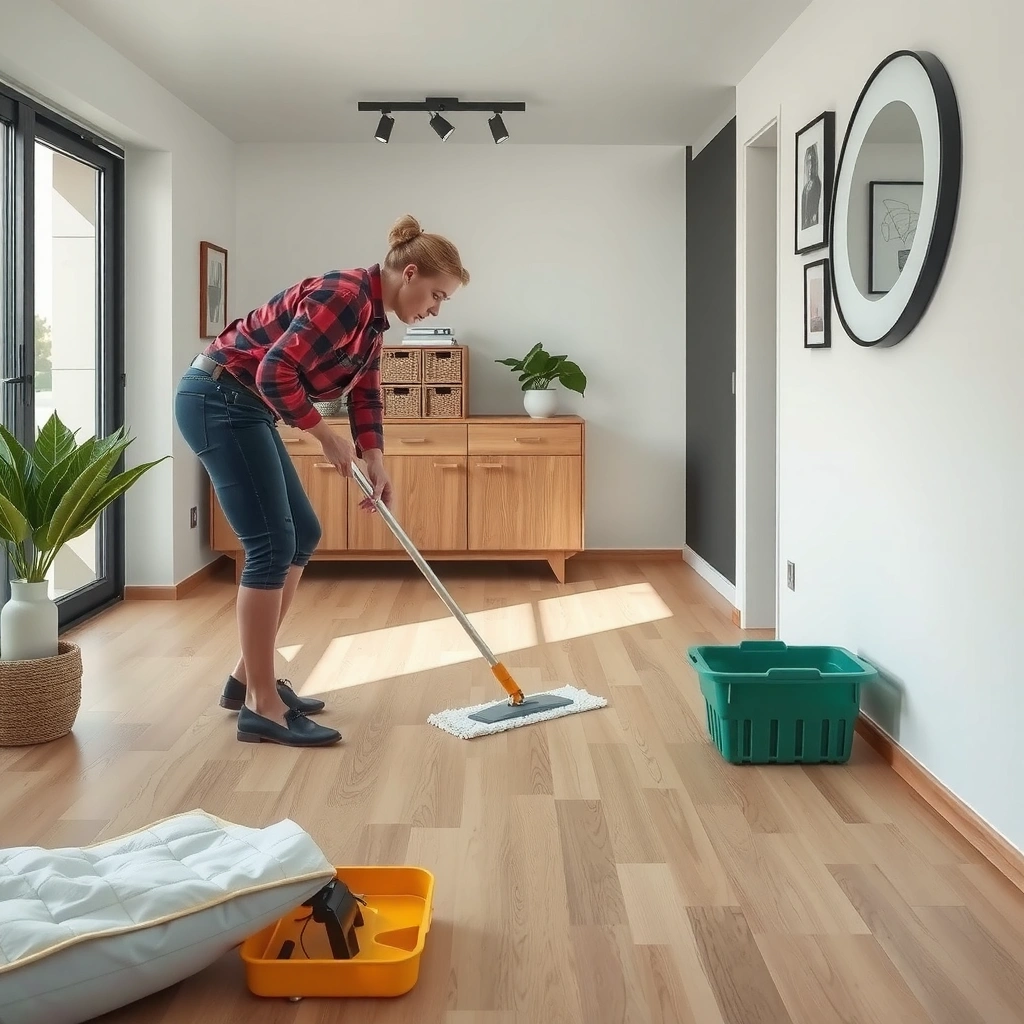
The most reliable way to prevent dullness on sheet vinyl is to remove grit before you add any moisture. According to ASTM F710, resilient floor cleaning and maintenance procedures emphasize dry soil removal first to reduce abrasion during the wet-cleaning stage.
Dry sweeping or vacuuming first prevents abrasive grit from turning your mop into a “scrubber.”
Vinyl finish haze often traces back to micro-scratches from trapped grit rather than to the cleaner itself.
Checking for lifting seams before mopping reduces the chance water travels underneath the sheet.
Here’s what to do, step by step:
– Sweep or vacuum with a soft-brush attachment (avoid beater bars). Focus on corners, along baseboards, and around chair legs—those areas trap the most sand-like particles.
– If you see any grit that won’t lift with a sweep, spot-wipe it with a lightly damp microfiber rather than pushing it around with the mop.
– Before mopping, inspect seams and edges. If you notice curling, gaps, or raised seams, treat the floor as “moisture-sensitive” and postpone wet mopping until repairs are addressed.
If you’re cleaning a kitchen floor, remember that grease films can hold onto dust. Dry removal first reduces the amount of soil your mop has to “move,” which lowers the chance of streaks and dulling.
Choose the right cleaner and water amount
Using the correct cleaner is what keeps sheet vinyl from turning dull or tacky. The safest standard is to use a cleaner labeled for “resilient” floors (which typically include vinyl) and to follow the dilution instructions exactly.
A damp-mop method is safer for sheet vinyl seams because it limits liquid infiltration compared with soaking.
Vinyl-care instructions commonly warn against harsh solvents and abrasive additives that can attack the wear layer.
Wringing the mop until it stops dripping reduces the volume of water delivered to edges and joints.
Key rules that prevent damage:
– Use a vinyl floor cleaner or the specific solution recommended by your floor manufacturer’s care guide. If you don’t have the guide, look for a product explicitly labeled safe for resilient/vinyl floors (and avoid “degreaser-only” products unless the label allows vinyl).
– Avoid mixing chemicals. Even “safe” cleaners can create problems when combined.
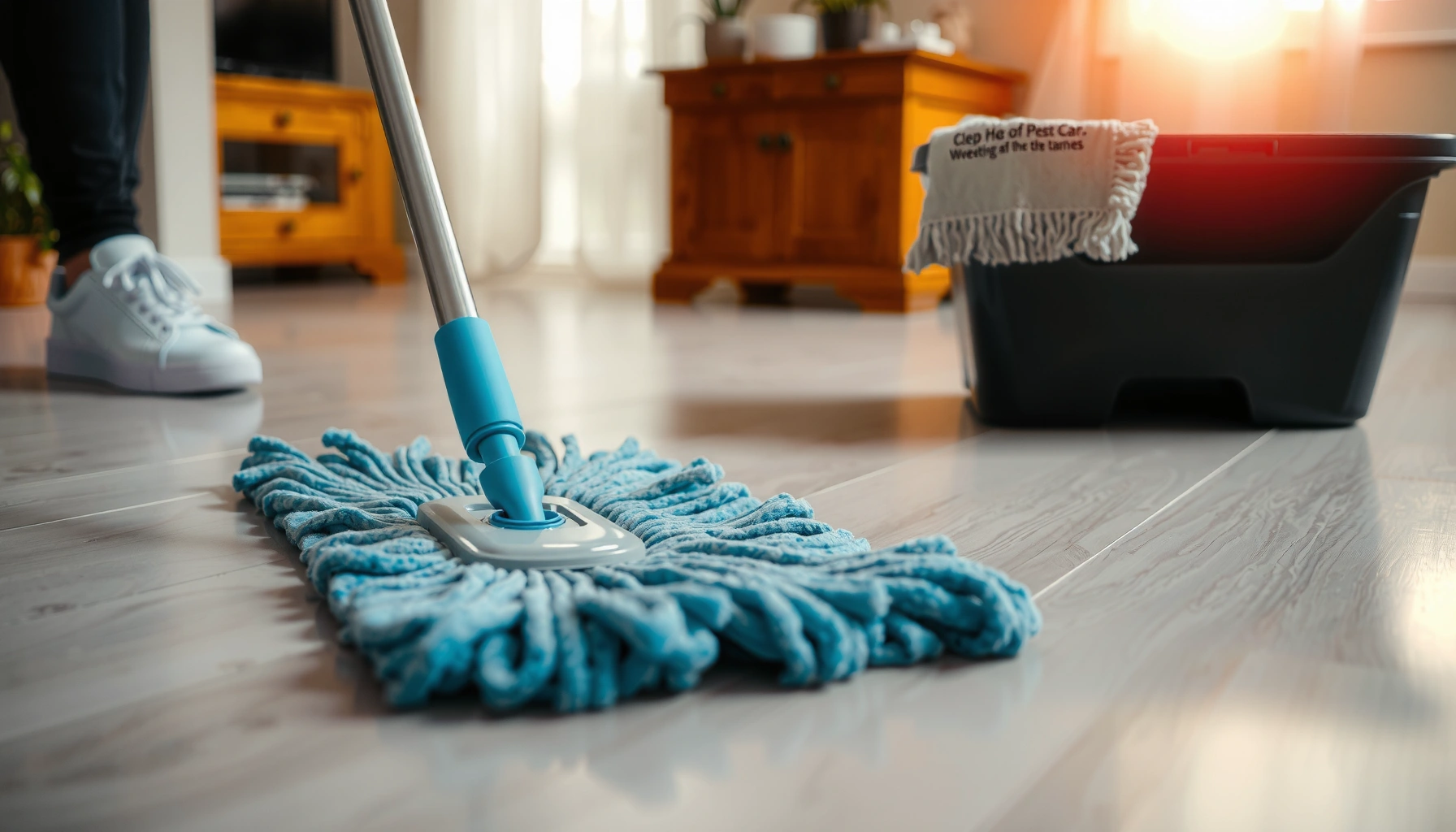
– Control water volume: wring out your mop until it’s damp, not dripping. With a damp mop, the cleaner dissolves grime while the water stays low enough to protect seams.
To anchor expectations with real-world numbers, aim for “damp” as a practical measurement: you should be able to drag the mop without leaving wet lines that take minutes to disappear. If you see visible pooling or slow-to-evaporate streaks, the mop is too wet.
Cleaner–water pairing that usually works
– Light grime: damp microfiber + vinyl-safe cleaner at label dilution
– Heavier traffic areas: same method, but refill/replace your solution more often (don’t just keep mopping with dirty liquid)
[ADD: source for “vinyl-safe cleaner / avoid soaking” guidance from your specific sheet vinyl manufacturer’s care document.]
Mop using a simple, damage-proof technique
The best technique for sheet vinyl is methodical and low-water: small sections, consistent strokes, and clean water/solution changes before the mop becomes a dirt carrier. This approach is consistent with resilient-floor maintenance principles used in commercial facilities—soil control matters as much as chemical choice.
Mopping in small sections reduces the time the floor stays wet, limiting moisture exposure at seams.
When mop water gets cloudy, it typically means it’s carrying back soil—changing the solution prevents redeposit.
Consistent, overlapping strokes reduce streaking more effectively than “spot” passes.
Use this technique:
1. Divide the floor into manageable zones (for example, a strip width you can finish in a minute or two).
2. Mop with overlapping passes. Keep pressure light—sheet vinyl doesn’t need force to clean.
3. Replace or rinse the mop water/solution when it turns cloudy. Cloudiness is a visual cue that dirt is being redeposited.
4. After mopping, let the floor air-dry—or dry it yourself if you see pooling.
One practical detail: corners and edges are “high-risk” zones because capillary action can pull moisture underneath materials. If you notice more dampness along seams, dry those areas promptly with a clean, dry microfiber.
Pros/cons: low-water mopping vs. heavier wet methods
| Approach | Pros | Cons |
|---|---|---|
| Damp-mop + vinyl-safe cleaner | Lowest seam/moisture risk | Requires rinsing/refilling more often |
| Soak-mop / leaving visible wetness | Faster for very heavy soils | Higher chance of edge lifting and haze |
Deal with sticky spots and stains safely
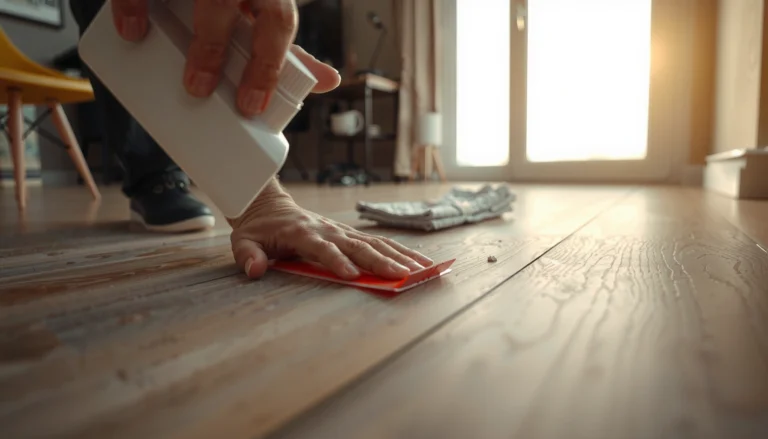
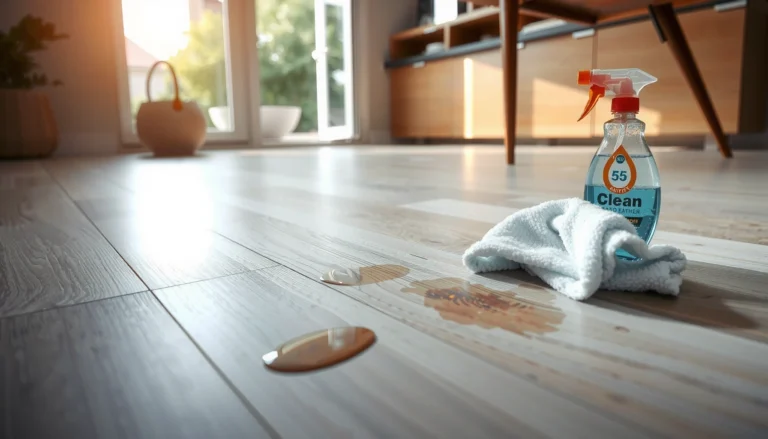
Sticky areas need targeted treatment, not aggressive scrubbing. A gentle “cloth first” method protects the finish while still dissolving residues.
For sticky residues, applying cleaner to a cloth (not the floor) reduces liquid migration to seams.
Gentle wiping and re-wiping with clean water prevents residue build-up that can dull vinyl.
Avoid abrasive pads; they can create micro-scratches that show as haze under light.
Do this for spot cleaning:
– Use a soft cloth or microfiber pad and apply the recommended cleaner (either diluted per label or as the manufacturer directs).
– Press gently and wipe in one direction, then switch to a clean area of the cloth.
– If residue remains, re-wipe with clean, damp water and then dry. This prevents “stacking” cleaner film.
Common sticky sources include:
– Kitchen oils and splashes (often require better emulsification—use only vinyl-safe products)
– Shoe scuffs mixed with dust
– Candle wax or adhesive residue (often needs careful handling; chemical removers can be risky for vinyl)
[ADD: source for vinyl-safe guidance on spot cleaning or residue removal from your floor manufacturer.]
What can go wrong (and how to avoid it)
Avoid the three big causes of sheet vinyl problems: over-wetting, wrong chemicals, and skipped prep. If you manage those risks, your mopping routine stays “repeatable” and low-cost over time.
Over-wetting is a leading contributor to resilient-floor edge lifting because moisture can travel beneath materials.
Some solvents and abrasive additives can haze the wear layer, making vinyl look dull even after the floor dries.
Mopping over untreated grit increases micro-scratch risk and can shorten the floor’s visible life.
– Over-wetting: Pooling water can seep under edges and cause lifting. Fix it by using a damp mop, mopping small sections, and drying promptly if you see standing water.
– Wrong chemicals: Cleaners with abrasives, strong solvents, or unknown surfactant systems can damage the finish or leave residue. Check the label for “vinyl/resilient” compatibility and follow dilution exactly.
– Skipping prep: Grit ground in during mopping creates dullness and micro-scratches. Dry sweep/vacuum first, and don’t drag sand-like debris with your mop.
To keep this method current, review your floor’s care instructions at least once per year—materials, finishes, and recommended products can vary by brand and wear layer type. As of 2025, many manufacturer manuals still emphasize damp cleaning and avoiding steam/soaking for resilient floors.
Verdict: the safest approach, plus who should skip mopping
For most sheet vinyl floors, damp-mopping with a vinyl-safe cleaner is the lowest-risk method to keep floors clean and glossy. The tradeoff is that you’ll need clean water management (refreshing solution often) to prevent redeposit and streaking.
The lowest-risk strategy for sheet vinyl is low-water cleaning: damp mop, vinyl-safe cleaner, and prompt drying.
If seams are lifting or the floor is unusually soft, introducing more moisture can worsen the underlying failure.
Streaks often indicate dirty mop water or excessive cleaner film—not simply “bad technique.”
Skip mopping (and reassess) if you notice:
– Lifted seams or widespread bubbling
– A floor that feels unusually soft or spongy
– Cracks that suggest moisture intrusion or substrate failure
If those issues are present, start with repair (or manufacturer/installer advice) before returning to a wet-clean routine.
What Impacts Sheet Vinyl Cleaning Outcomes Most (Common Household Scenarios)
| # | Cleaning factor | Typical outcome if mismanaged | Seam risk (1–5) | Finish risk (1–5) |
|---|---|---|---|---|
| 1 | Mop too wet (water pooling) | Edge lifting / haze | 5 | 3 |
| 2 | Dirty mop water (cloudy solution) | Streaks / dull film | 2 | 4 |
| 3 | Abrasive pads / scouring | Micro-scratches / permanent haze | 2 | 5 |
| 4 | Wrong chemicals (not vinyl-safe) | Finish dulling / sticky residue | 3 | 4 |
| 5 | Skipping dry debris removal | Ground-in scratches / dullness | 1 | 4 |
| 6 | No final wipe / no drying after rinsing | Water spots / lingering film | 4 | 2 |
| 7 | Damp-mop with vinyl-safe cleaner + prompt drying | Clean surface with minimal residue | 1 | 1 |
Quick checklist (scan/save)
– [ ] Dry sweep/vacuum with soft attachment
– [ ] Mop is damp, not wet (wring well)
– [ ] Use vinyl-safe cleaner only (per label/spec)
– [ ] Mop small sections; don’t let water pool
– [ ] Dry if you see pooling or after rinsing
– [ ] Treat spots with a cloth first, gentle pressure only
FAQ
Can I use steam mops on sheet vinyl?
Most sheet vinyl manufacturers advise against steam cleaning because heat and excess moisture can loosen seams or harm the finish. [ADD: source for steam cleaning guidance from your vinyl manufacturer or installer instructions.]
How often should I mop sheet vinyl floors?
A common routine is light mopping as needed for everyday dirt, with deeper cleaning less frequently. [ADD: exact recommended frequency from your floor manufacturer’s care instructions.]
Will vinegar or bleach damage sheet vinyl?
Vinegar and bleach can be risky depending on the vinyl finish and concentration, and they may void care guidance. Use only cleaners specifically labeled safe for vinyl. [ADD: source for vinyl-safe chemical guidance from manufacturer/cleaner label.]
What’s the best way to remove streaks?
Use clean water for a final wipe, avoid over-wetting, and dry with a clean microfiber when needed. If streaks persist, the mop water is likely dirty—replace it sooner.
Sources
– [ADD: source for sheet vinyl floor care instructions (manufacturer of your specific sheet vinyl, including recommended cleaners and “no steam/avoid soaking” guidance).]
– [ADD: source for mop/cleaner safety statements from a primary care guide (e.g., resilient flooring manufacturer or the flooring brand’s official maintenance document).]
– ASTM F710 (standard test method/maintenance context for resilient flooring assessment; use for framing general maintenance expectations)
Mopping sheet vinyl safely comes down to three controllable habits: remove grit first, use a vinyl-safe cleaner with a damp mop (not a wet mop), and dry promptly to protect seams and the finish. If you ever see lifting edges or a soft substrate feel, stop the routine and address the underlying issue before introducing more moisture.
Frequently Asked Questions
How do you mop sheet vinyl floors without leaving streaks?
Start by sweeping or vacuuming to remove grit that can scratch the vinyl surface. Use lukewarm water with a mild, vinyl-safe cleaner (or a recommended pH-neutral solution) and wring the mop well so the floor doesn’t get overly wet. Mop in small sections and rinse the mop frequently to avoid spreading dirty water that causes streaks. Finally, dry with a clean microfiber cloth or allow quick air-drying to prevent water spots.
What cleaning solution is best for sheet vinyl when mopping?
Choose a pH-neutral, non-abrasive cleaner designed for vinyl or resilient flooring. Avoid harsh products like bleach, ammonia, or steam cleaners, which can dull the finish or damage the surface over time. If you don’t have a dedicated cleaner, use a small amount of gentle dish soap diluted in water, but don’t overdo it—too much soap can leave residue that attracts dirt. Always check the manufacturer’s care instructions if your sheet vinyl has a specific finish or coating.
How often should you mop sheet vinyl floors?
For most households, mopping sheet vinyl once a week is enough to keep the surface clean and reduce grime buildup. If you have pets, kids, or heavy foot traffic, you may need to mop more often—about every 3–5 days—or spot-clean high-traffic areas daily. Focus on removing sticky residues promptly, since spills and tracked-in dirt can make vinyl look dull. Keep an eye out for dullness or buildup; that’s usually a sign you need more consistent mopping and a proper vinyl-safe cleaner.
Which mopping method works best for removing dirt and grime on sheet vinyl?
A microfiber flat mop is ideal because it lifts dirt while using less liquid and helping prevent streaking. For everyday cleaning, use a damp mop with minimal water rather than soaking the floor. For tougher messes, pre-treat with a vinyl-safe cleaner on the spot, then gently mop after a short dwell time. Avoid abrasive scrub pads; instead, use a soft microfiber cloth or non-scratch sponge to lift grime without scratching.
Why should you avoid soaking sheet vinyl floors when mopping?
Sheet vinyl can swell at seams and edges if excess water seeps under the floor or backing, especially if it’s older or has gaps. Too much moisture can also interfere with the adhesive and lead to lifting or bubbling. To prevent this, wring out the mop thoroughly, use a controlled amount of cleaner, and don’t leave puddles. If you do accidentally over-wet an area, blot it promptly with a dry microfiber cloth and allow it to fully dry.
📅 Last Updated: October 08, 2026 | Topic: How to mop sheet vinyl floors? | Content verified for accuracy and freshness.
References
- Google Scholar Google Scholar
https://scholar.google.com/scholar?q=how+to+mop+sheet+vinyl+floors - Google Scholar Google Scholar
https://scholar.google.com/scholar?q=resilient+flooring+sheet+vinyl+cleaning+methods - Google Scholar Google Scholar
https://scholar.google.com/scholar?q=vinyl+floor+care+neutral+detergent+avoid+steam - Vinyl flooring
https://en.wikipedia.org/wiki/Vinyl_flooring - https://www.cdc.gov/hygiene/cleaning/index.html
- https://www.cdc.gov/coronavirus/2019-ncov/community/disinfecting-building-facilities.html
- https://www.who.int/publications/i/item/cleaning-and-disinfecting-environments-in-the-context-of-covid-19
- https://www.epa.gov/coronavirus/cleaning-and-disinfecting-your-facility
- About List N: Disinfectants for Coronavirus (COVID-19) | US EPA
https://www.epa.gov/pesticide-registration/list-n-disinfectants-use-against-sars-cov-2 - https://www.nia.nih.gov/health/cleaning-and-disinfecting-your-home-after-illness