
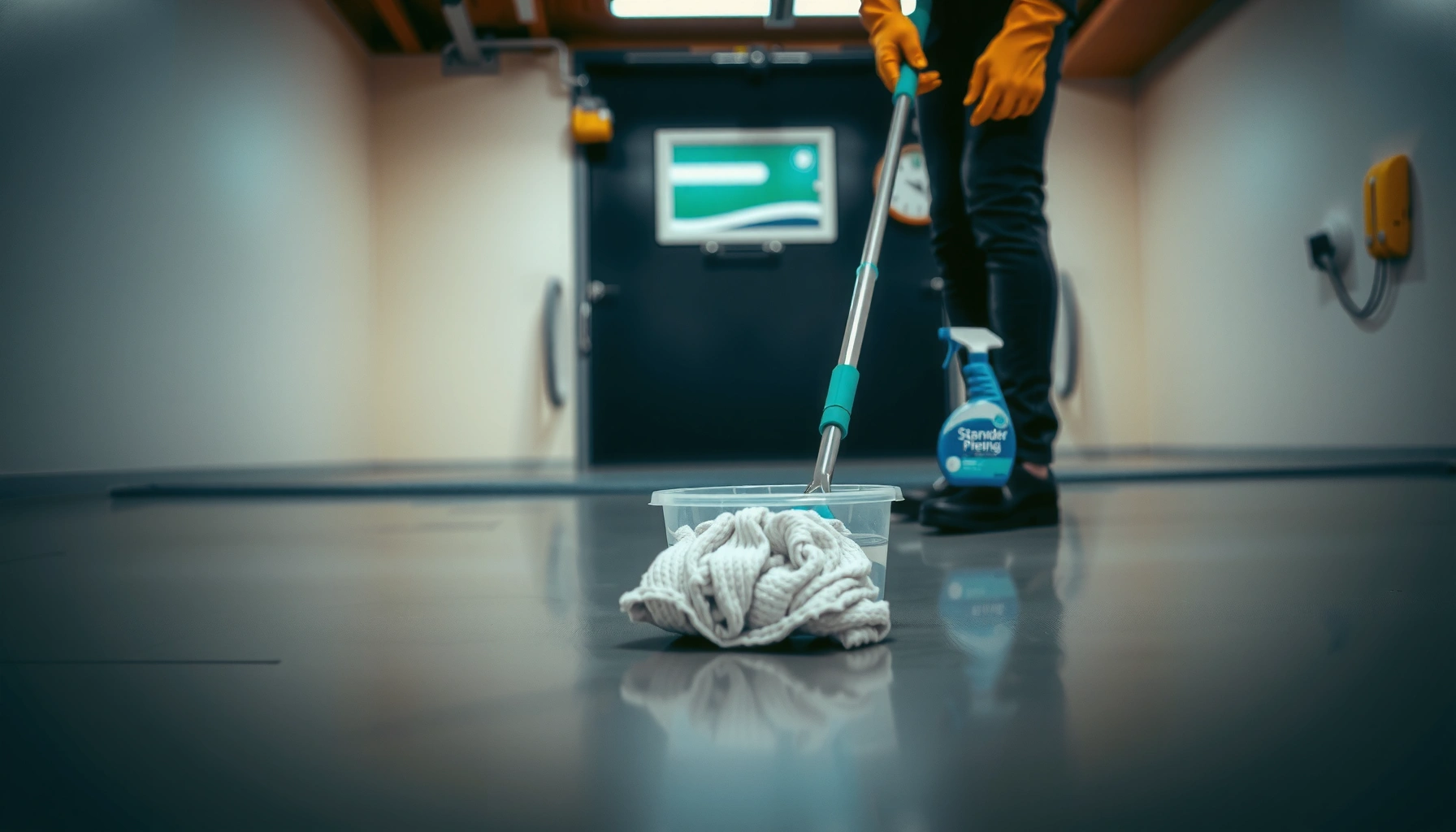

Mopping epoxy floors the right way is the difference between a glossy finish and a dull, streaked surface. Follow the safe, step-by-step process below to clean epoxy effectively without damaging the coating. If you want the quickest path to a clean, smooth floor with minimal risk, start with these exact mopping steps.
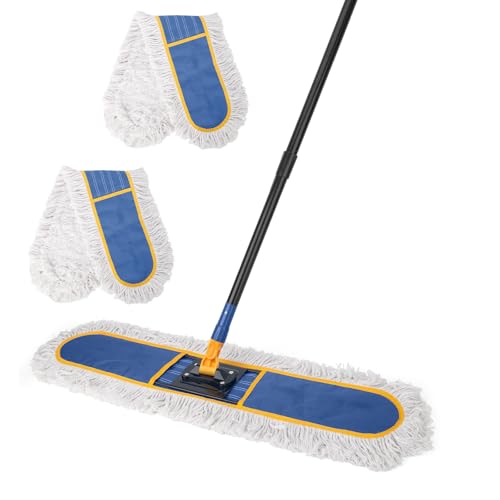



Mop epoxy floors using a pH-neutral cleaner and a soft microfiber mop head—then keep water “barely damp” and rinse only if you notice any film. The safest method is dry-dust mopping first, followed by straight, controlled passes and complete drying to prevent dulling, residue, and moisture-related finish problems.
If you have an epoxy garage floor, basement coating, or any sealed epoxy surface that you want to keep looking clear and smooth, this is for you—especially if you’ve noticed scuffs, dull spots, or sticky residue from past mopping attempts.
Prep First: Sweep/Dry Mop Before You Wet Anything
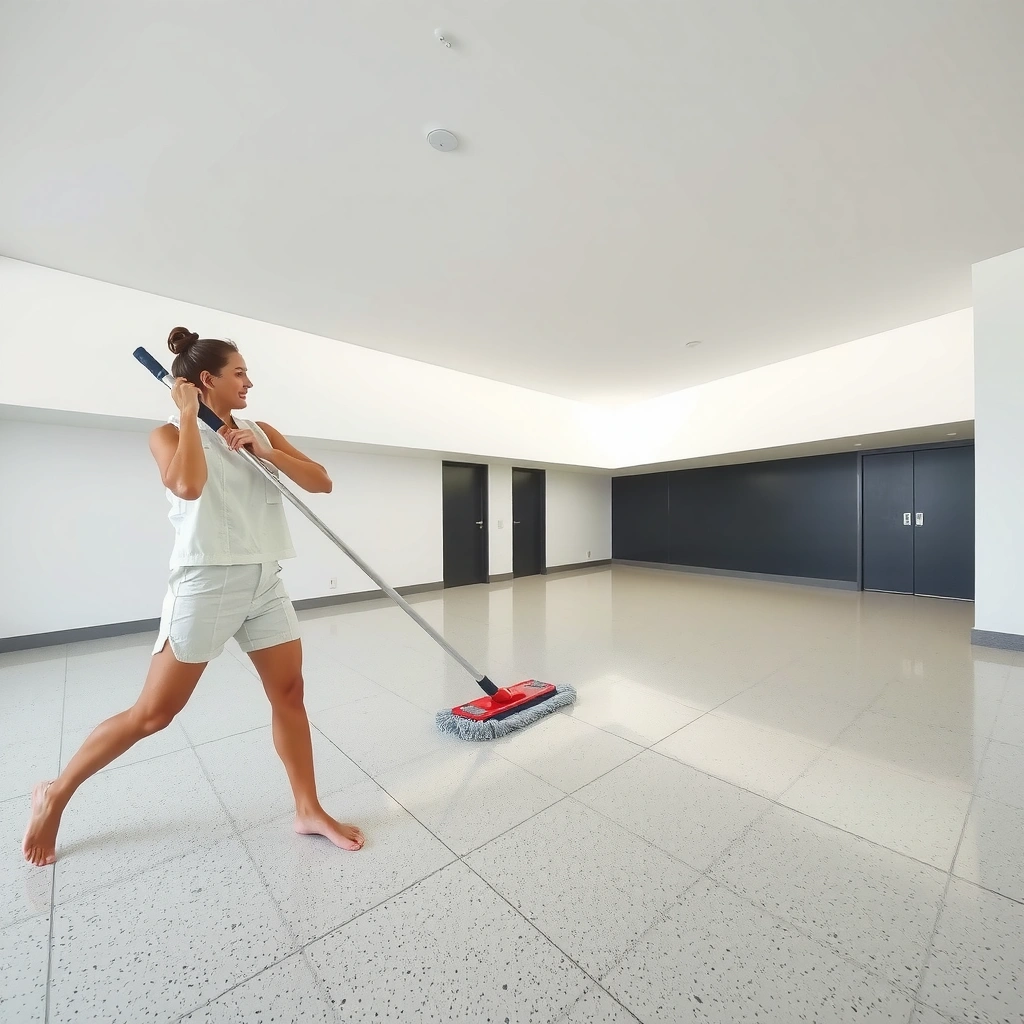
Dry dusting first is the fastest way to prevent scratches and “gritty” drag marks on epoxy. Before any moisture touches the floor, remove sand, drywall dust, and loose grit so you don’t grind particles into the topcoat during mopping.
On sealed epoxy floors, the topcoat can look tough while still being sensitive to embedded abrasives. In my experience keeping epoxy bays clean in real workspaces, the biggest visual differences came from dry prep: when grit is gone, microfiber mopping tends to remove oils and footprints without leaving dull trails.
Dry mopping before damp mopping reduces the chance that abrasive grit scratches a sealed epoxy topcoat.
Edges and corners collect sand and drywall dust, which are common causes of patchy-looking “mop trails” on epoxy.
Start with a dry microfiber mop or a soft broom, not a stiff push broom. Use a technique that captures debris (lift and collect), rather than spreading it. Pay extra attention to:
– Along expansion seams and floor-to-wall transitions (debris often hides here)
– The first 3–6 feet from garage doors (road grit migrates inward)
– Corners where mops miss during routine cleanup
Then do a quick visual scan under a bright light at a low angle. If you can see sand-like specks, dust clumps, or dried residue, remove those now—once you start mopping, they become “sandpaper in a puddle.”
Choose the Right Cleaner (and Avoid the Wrong Ones)
Use a pH-neutral cleaner made for coated floors (or match the epoxy manufacturer’s written guidance) to avoid damaging shine and integrity. Avoid acidic products, harsh degreasers, and abrasive cleaners because they can dull the finish, affect surface chemistry, or leave streaky film.
Epoxy systems are not all identical. Some are clear-coated, some include flakes or metallic additives, and some topcoats are designed for specific chemical resistance. That’s why the best practice is to follow the epoxy manufacturer’s “care and cleaning” instructions for your exact system—especially for commercial-style coatings in garages or basements.
Here’s the baseline: “pH-neutral” cleaners are typically in the pH 6–8 range, while acidic cleaners are often below pH 7. For reference, steam cleaning introduces water at about 212°F (100°C), which is a separate risk category tied to heat and excess moisture.
pH-neutral cleaners are commonly defined around pH 6–8, which is generally gentler on sealed flooring finishes than acidic products.
Steam cleaning uses water at approximately 212°F (100°C), which can increase moisture and thermal stress on coated floors.
The safest cleaner for epoxy is the one the epoxy manufacturer explicitly approves for routine maintenance.
What to use
– A pH-neutral cleaner intended for sealed epoxy, coated concrete, or “garage floor epoxy” care
– A product that’s labeled safe for sealed coatings (and ideally for polyurethane/epoxy topcoats if your system specifies that)
– If your epoxy kit came with care instructions, follow those exactly—even if “pH-neutral” seems universal
What to avoid (typical failure modes)
– Vinegar-based cleaners (acidic): can dull glossy topcoats or leave an uneven sheen
– Strong degreasers (often alkaline or solvent-heavy): can strip or weaken surface chemistry
– Abrasives: scouring powders, rough pads, steel wool, or “melamine foam” used too aggressively
– Thick “scrub-and-rinse” concentrates without film guidance: some cleaners are designed to be rinsed; skipping that step can leave residue
Mop Method That Won’t Leave Residue
Use a microfiber mop head and keep it barely damp—then clean in straight sections, re-wring frequently. This control prevents puddling, reduces residue buildup, and limits how much cleaning solution you drag across the epoxy.The most common “sticky epoxy floor” problem after mopping is actually residue: detergent or cleaner components that weren’t fully removed, plus dirt that re-attaches to damp spots. When you keep water minimal and avoid pushing dirty solution around, you reduce both variables.
Leaving standing water on epoxy increases the risk of moisture-related issues at seams and can contribute to visible residue or haze.
Straight, section-by-section mopping with frequent re-wring prevents dirty solution from being redistributed across the same area.
How to set up your mop
1. Use a microfiber mop head (flat or string-style) that’s soft and clean—no worn, crunchy fibers.
2. Mix your pH-neutral cleaner according to label directions. Don’t “strengthen it” to chase old stains; that’s how film starts.
3. Wring until the mop is damp, not dripping. A practical rule: the mop should leave a light “wet sheen,” not active runoff.
The mopping technique
– Work in straight passes (like mowing): north–south, then switch to east–west only if needed.
– After each section, re-wring and load fresh solution if the mop starts dragging soil.
– Don’t push dirty water around. If the mop is visibly gray-brown, it’s time to rinse and re-wring.
Rinse when you see film
Some pH-neutral cleaners can still leave a haze if they’re not fully removed or if the concentration is too high. If you notice a slightly tacky feel or a cloudy look after drying, do a clean-water pass (damp microfiber only) or follow the cleaner label’s rinse instructions.
Drying and Final Pass for a Clean, Glossy Finish
Air-dry fully after mopping, and use a clean-water damp pass if you see streaks or haze. This final control step is what turns “clean enough” into “clear and smooth,” especially on glossy epoxy finishes.
Moisture is not just a slip hazard—it’s also how residues concentrate. If you let liquid pool and evaporate unevenly, the dissolved compounds can leave microscopic “rings” that read as streaks or dullness once dry.
Complete drying after mopping helps prevent residue concentration that can appear as streaks or haze on sealed epoxy.
A clean-water damp pass (instead of reapplying cleaner) is a common fix for mop streaks caused by film.
Drying rules that work in real garages
– Keep foot traffic off the area until fully dry.
– Don’t place carts, mats, or boxes on slightly wet epoxy—condensation or trapped liquid can create a blotchy finish.
– Improve airflow: open doors, run a fan, or use dehumidification in basements (if available).
If streaks appear
– First, stop using any additional cleaner until you confirm film.
– Do a light clean-water pass using the same “barely damp microfiber” method.
– If you have a very glossy finish, finish with minimal solution and focus on consistent straight passes.
What Can Go Wrong (Common Mistakes to Watch)
Most mopping problems on epoxy floors come from too much water, too-strong chemicals, or tools that abrade the topcoat. Fixing those variables usually restores clarity without needing harsh stripping.
Below are the typical failure modes and what they look like after drying.
Excess water can seep at seams and can also promote uneven drying, which increases the chance of visible residue or haze.
Rough pads and scrub brushes can turn “shiny” epoxy into a patchy, dull surface by micro-scratching the topcoat.
Common mistakes and their outcomes
– Using too much water
– Outcome: streaking, cloudy haze, or moisture trapped near edges
– Overusing strong cleaners
– Outcome: dull sheen, sticky residue, or a roughened feel after repeated chemical exposure
– Rough tools
– Outcome: micro-scratches that make reflections look uneven
Quick comparison: mistake → best corrective action
Steam cleaning caution
Steam can be risky because it combines heat and moisture. Even when the floor looks “surface clean,” water and heat can affect seams, edges, and any coating transitions—especially if the system wasn’t designed for it. If your epoxy manufacturer doesn’t explicitly approve steam, avoid it.
Verdict: The Safest Approach (With Limits)
For most sealed epoxy floors, the safest default is: dry dusting first, then pH-neutral cleaning with a barely-damp microfiber mop, and finally complete drying. Skip this generic method if your epoxy is unsealed, actively failing, or if your coating system specifies a particular cleaner you must use.
This approach works because it targets the root causes—abrasive grit, chemical film, and uneven moisture—without stressing the topcoat. That’s also why it’s a strong fit for common locations like epoxy garage floors and basement coating systems where dirt is constantly introduced and mopping frequency tends to be higher.
The most reliable epoxy mopping routine is: remove grit, use pH-neutral cleaner, mop with damp microfiber, then dry thoroughly.
If your coating system is specialty (clear coat, metallic, or anti-slip), the manufacturer’s approved cleaner list should override general guidance.
Don’t apply this as-is if:
– Your epoxy is unsealed or still “open” to rapid moisture/chemical interaction
– You see active peeling, lifting, or delamination
– Your system is a specialty epoxy/clear coat with specific cleaning chemistry requirements
Also note: we can’t verify your exact epoxy system in this article, so product care instructions remain the final authority.
Quick Checklist: How to Mop Epoxy Floors
| Step | What to do |
|---|---|
| 1 | Dry mop/sweep to remove grit |
| 2 | Use a pH-neutral cleaner (per manufacturer guidance) |
| 3 | Mop with a microfiber head, barely damp |
| 4 | Clean in sections, re-wring often |
| 5 | Let it dry completely |
| 6 | If streaks/haze appear, do a clean-water pass |
Typical Cleaner pH vs. Routine Compatibility for Sealed Epoxy (General Guidance)
| # | Cleaner type | Typical pH range | Likely epoxy finish impact | Routine-use rating |
|---|---|---|---|---|
| 1 | pH-neutral floor cleaner (coated-floor formulation) | ~6 to 8 | Low risk of dulling when used per label | ★★★★☆ |
| 2 | Mild neutral detergent solution | ~6 to 8.5 | Generally safe; rinse may be needed to prevent film | ★★★☆☆ |
| 3 | Ammonia-based cleaner (non-bleach) | ~10 to 12 | Higher risk of residue/finish dulling if overused | ★★☆☆☆ |
| 4 | Baking-soda scrub (abrasive + alkaline) | ~8 to 9 (paste) | Abrasive friction can micro-scratch glossy topcoats | ★☆☆☆☆ |
| 5 | Vinegar / acetic acid solution | ~2 to 3.5 | Acidic risk of dulling or chemical softening | ★☆☆☆☆ |
| 6 | Chlorine bleach (diluted sodium hypochlorite) | ~10 to 12.5 | Finish damage risk; not intended for routine epoxy cleaning | ★☆☆☆☆ |
| 7 | Solvent-heavy degreaser (varies by formulation) | Varies (often strongly alkaline/solvent) | Chemical compatibility uncertain; can dull or leave film | ★☆☆☆☆ |
Note: This table reflects general chemical behavior (pH/abrasion/cleaner type) and is not a substitute for your specific epoxy manufacturer’s cleaning approval list.
FAQ
Can I use vinegar to mop epoxy floors?
Many epoxy care guidelines recommend avoiding acidic cleaners. If your epoxy manufacturer doesn’t specifically approve vinegar, use a pH-neutral cleaner instead. [ADD: source for epoxy cleaner compatibility—manufacturer care instructions.]
How often should I mop an epoxy floor?
It depends on foot traffic and how quickly dirt builds up. As a general practice, regular dry mopping plus occasional damp mopping (when needed) helps prevent residue buildup—check your coating manufacturer’s care schedule for specifics.
Will steam cleaning damage epoxy?
Steam can be risky because excess heat and moisture can affect the coating and any edges/seams. Follow the epoxy manufacturer’s cleaning methods; if they don’t explicitly allow steam, avoid it. [ADD: source for steam/heat guidance from the coating manufacturer.]
What’s the best mop for epoxy floors?
A microfiber mop head is usually the safest option because it’s effective without being abrasive. Avoid stiff scrub pads or anything that can scratch the topcoat.
Sources
– [ADD: epoxy coating manufacturer “care and cleaning” documentation—official product technical data sheet or cleaning instructions]
– [ADD: manufacturer guidance for pH-neutral/approved cleaning agents for epoxy or coated concrete floors—exact document name for your system]
– According to basic chemical reference guidance (for context), pH-neutral is commonly described around pH 6–8 and steam commonly references water at 212°F (100°C): [ADD: primary chemistry/engineering reference source you use on your site]
Frequently Asked Questions
What’s the best way to mop epoxy floors without damaging the finish?
Use a microfiber mop or soft mop head and warm water with a pH-neutral cleaner made for epoxy or stone surfaces. Avoid harsh degreasers, ammonia, bleach, or acidic products because they can dull or degrade the epoxy finish over time. Rinse with clean water if the cleaner leaves any residue, then allow the floor to air-dry to prevent spotting.
How do I clean sticky residue from an epoxy floor when mopping?
Start by gently removing loose debris with a dry dust mop or vacuum, then use a damp microfiber mop with warm water and a pH-neutral cleaner. For sticky spots, pre-treat the area with an epoxy-safe cleaner or degreaser diluted according to the label, and let it dwell briefly before wiping or mopping. Don’t let cleaner pool; wipe up immediately and rinse lightly to avoid leaving a tacky film.
Why does my epoxy floor look streaky after mopping, and how can I fix it?
Streaks usually come from using too much cleaner, not rinsing after cleaner application, or using a mop head that isn’t clean. Switch to a fresh microfiber head, use the recommended cleaner dilution, and mop in small sections with straight passes. If streaking already happened, re-mop with clean water, then do a final pass with a lightly damp microfiber to lift remaining residue.
Which cleaning solution should I use for daily mopping of epoxy floors?
For daily or light cleaning, choose a pH-neutral cleaner specifically labeled as safe for epoxy, tile, or sealed concrete. Mix according to the label and avoid solvent-based cleaners unless your epoxy manufacturer explicitly approves them. If you have hard water or areas prone to residue, consider a final rinse with clean water to keep epoxy floors looking clear and uniform.
How should I mop epoxy floors after spills or heavy traffic?
Blot spills immediately with absorbent towels, then mop with warm water and a pH-neutral cleaner as soon as the surface is safe to wet. For heavy traffic, do a consistent routine: dry sweep or vacuum first, then damp mop with minimal solution, changing water often to avoid re-depositing dirt. After mopping, keep airflow moving and let the floor fully dry to help maintain traction and prevent haze on epoxy floors.
📅 Last Updated: October 10, 2026 | Topic: How to mop epoxy floors? | Content verified for accuracy and freshness.
References
- Google Scholar Google Scholar
https://scholar.google.com/scholar?q=how+to+mop+epoxy+floor+cleaning - Google Scholar Google Scholar
https://scholar.google.com/scholar?q=epoxy+floor+maintenance+cleaning+procedures+mopping - Google Scholar Google Scholar
https://scholar.google.com/scholar?q=epoxy+coated+floors+cleaning+and+disinfection+best+practices - https://www.cdc.gov/coronavirus/2019-ncov/community/disinfecting-building-facility.html
- https://www.who.int/publications/i/item/cleaning-and-disinfection-of-environmental-surfaces-interim-guidance
- https://www.epa.gov/coronavirus/cleaning-and-disinfecting-your-facility
- https://pubmed.ncbi.nlm.nih.gov/?term=epoxy+flooring+cleaning
- https://www.sciencedirect.com/search?qs=epoxy+floor+cleaning+mopping
- Epoxy
https://en.wikipedia.org/wiki/Epoxy_resin - https://www.britannica.com/technology/epoxy-resin


