


Pet odors that seep into hardwood can feel especially frustrating, because the floor looks clean while the smell still lingers. You’ll learn a proven process to lift residue, neutralize odor-causing sources, and dry the surface safely—typically within a couple of hours, depending on how long it’s been there. Gather microfiber cloths, a gentle hardwood cleaner, an enzyme-based deodorizer, and drying towels, and you can get back to a fresh, odor-free home.




Pet odors on hardwood usually come off fastest when you clean first (without soaking), then neutralize the organic residue with a true enzyme cleaner designed for pet urine and give it full dwell time—especially if the smell is returning in 2026. Because urine and other organic deposits can sink into finish cracks and along seams, the order of operations matters: blot/remove the residue, enzymatically break down what’s left, and only then reassess before repeating.
If you’re dealing with a lingering “pet smell” (especially after cleaning), this is for you—particularly if your hardwood is sealed but the odor keeps returning. If the odor is coming from underneath the floor or the wood feels swollen/warped, you may need a deeper fix beyond surface cleaning.
Find the source and limit how far it spread
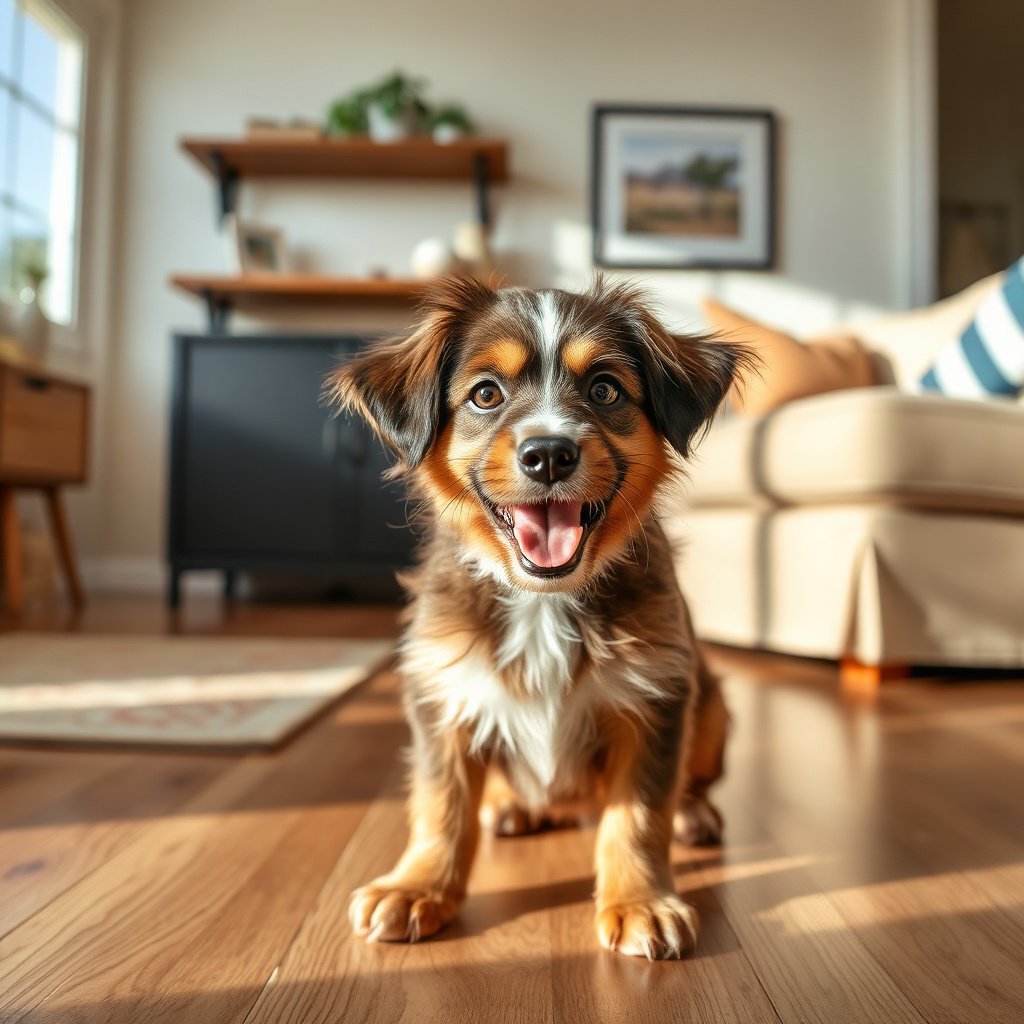
You’ll save time by locating the exact “odor pockets” first, because pet urine odors can migrate into joints and small gaps even when you don’t see a visible stain. Your goal is to identify where residue is still present, not just where it smells strongest.
– Look for the specific spots you can still smell, and check along baseboards, vents, and floor seams where pets often repeat.
– If you suspect an earlier accident that dried up, use your nose at different times of day (humidity can bring odors back).
– If liquid soaked long ago, assume it may be in the finish cracks, grout-like gaps, or edges—not just on top.
A practical way to narrow the source is to do a “perimeter sweep”: stand close to the affected zone and move slowly from the center of the room toward each wall line. I recommend checking the baseboard returns and the first 6–12 inches along seams because odor often travels with airflow and wicking. Even when the hardwood is sealed, residue can still collect under a finish edge or in micro-cracks.
If the odor is strongest at a seam, don’t assume it’s just “surface.” Hardwood is hygroscopic—meaning it can exchange moisture with its environment—so dried residue can re-activate when humidity rises. According to the USDA Forest Service’s *Wood Handbook*, wood moisture behavior is tied to the fiber saturation point (around 25–30% moisture content), which is a key reason old contamination can feel “new” again when conditions change (USDA Forest Service, Wood Handbook).
Remove residue without soaking the wood
The next step is to physically remove residue while keeping water exposure low, because over-wetting can drive odor deeper and damage the floor finish. Cleaning off the bulk of the material makes the enzyme step far more effective.
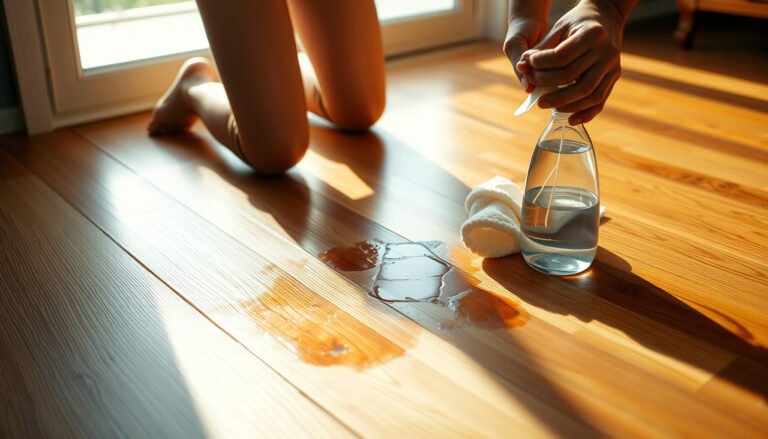
– Blot thoroughly (don’t scrub hard), then wipe with a barely damp, clean microfiber cloth to pick up remaining residue.
– For solids, scrape gently first, then vacuum the debris once dry.
– Keep water to a minimum: hardwood can swell and finishes can cloud or separate when over-wet.
Work in small zones (for example, a 12-inch radius around the odor pocket) so you don’t spread contamination during wiping. Use a clean microfiber corner each pass; if the cloth starts to smell strongly, switch to fresh areas. When you blot, apply pressure with the towel rather than friction—scrubbing can smear residue into finish micro-gaps.
Why the “minimal water” rule is non-negotiable: wood dimensional movement is linked to moisture changes, and when moisture fluctuates beyond what a floor is designed to handle, visible changes can follow. According to the USDA Forest Service’s *Wood Handbook*, typical tangential shrinkage for many hardwoods can be in the range of ~6–10% from fiber saturation to oven-dry conditions (USDA Forest Service, Wood Handbook). You won’t get anywhere near oven-dry in a cleaning scenario, but the principle still applies: repeated over-wetting increases the risk of cupping, finish haze, and uneven movement.
Neutralize the smell with an enzyme cleaner
The best way to eliminate lingering pet odors is to use an enzyme cleaner that breaks down organic molecules, not a deodorizer that only covers the smell. Enzymes work when given enough dwell time to reach and react with residue, which is why this step often determines whether the odor returns.
– Use an enzyme product specifically designed for pet urine/organic odors; regular disinfectants and “air fresheners” often mask odor instead of destroying it.
– Apply according to the label and give it the dwell time it requests (rushing is a common reason odors come back).
– After it’s done, wipe/air-dry as instructed—then reassess the smell before adding more.
Which odor compounds are we really trying to destroy?
Pet urine isn’t just “liquid”—as it dries, it can leave crystalline residue that’s difficult to remove with plain water. For example, uric acid is poorly soluble in water, which helps explain why smells can linger even after surface cleaning. PubChem lists uric acid solubility around 6.8 mg/L at 25°C (PubChem, Uric Acid). That low solubility is one reason enzyme dwell time matters: it gives chemistry time to break down what persists.
Enzyme Classes Commonly Used to Break Down Pet-Urine Odor Chemistry
| # | Enzyme class | Primary reaction (in residue) | Best-matched odor driver | Target match |
|---|---|---|---|---|
| 1 | Urease | Urea → ammonia + CO₂ | Ammonia/“ammonia-like” urine odor | ★★★★★ |
| 2 | Uricase / urate oxidase* | Uric acid → allantoin (oxidation) | “Crystalline” persistent odor component | ★★★★☆ |
| 3 | Proteases | Proteins/peptides → smaller fragments | Protein-based organic residue | ★★★★☆ |
| 4 | Lipases | Fats → fatty acids + glycerol | Oily/vomit-related organic residues | ★★★☆☆ |
| 5 | Amylases | Starches → sugars | Mixed organic residue (less urine-specific) | ★★☆☆☆ |
| 6 | Oxidoreductases (oxidizers) | Oxidize odor-causing compounds | Residual odor/staining compounds | ★★★☆☆ |
| 7 | Catalase (H₂O₂ management) | H₂O₂ → water + oxygen | Supports oxidative enzyme action | ★★☆☆☆ |
\Not every cleaner contains uricase; many formulas focus on urease + proteases and rely on oxidation support for stubborn residues.
Enzyme cleaners vs. disinfectants and deodorizing sprays
If you’re deciding what to use next, treat this as a chemistry problem, not a fragrance problem.
| Option | What it does best | Key limitation on hardwood |
|---|---|---|
| Pet-odor enzyme cleaner | Breaks down organic odor molecules; works during dwell time | Needs correct application and enough time to react |
| Disinfectant spray | Kills surface microbes | Often doesn’t destroy urine residue chemistry; odor can return |
| “Just deodorizer” | Masks smell with fragrance | Doesn’t remove what’s causing the odor under/at seams |
Tackle seams, edges, and the floor finish properly
You increase your odds of permanent removal by treating the perimeter, because odor migrates at the edges where residue can wedge into tiny gaps. This is where sealed floors can still fail, and why careful, controlled application matters.
– Concentrate treatment around the affected area and the perimeter (where odor migrates), using a cloth to control product spread.
– If your floor is sealed, avoid harsh solvents; if it’s unfinished or damaged, be extra cautious because “strong” cleaners can change the wood tone.
– If the finish is already compromised (sticky spots, bubbling, lifting), odor may linger until that section is repaired and refinished.
A sealed hardwood floor is designed to resist spills, but seams and transitions are still the weak points—especially near baseboards, between planks, and around vents. When applying enzyme cleaner, use a dampened cloth approach: place the product onto the cloth, then work it into the perimeter line rather than flooding the surface. This keeps the treatment where it’s needed while reducing the chance of water intrusion.
Also pay attention to finish condition. If you see bubbling, whitening/hazing, or sticky areas after your first clean, you’re not just dealing with odor—you’re dealing with finish failure. In those cases, the smell can remain trapped until the affected finish is repaired or the damaged boards are refinished or replaced.
What can go wrong
This process fails most often due to moisture mismanagement, masking instead of breakdown, or not letting chemistry work long enough. If you correct these mistakes early, you usually avoid repeat work.
– Using too much water or soaking can push odor deeper and cause cupping or finish damage.
– Replacing enzyme treatment with only deodorizing sprays can leave the root issue intact.
– Treating too quickly (not letting the enzyme work long enough) often makes the smell return later.
– If the odor is strong right at the baseboard or you notice persistent dampness, the source may be subfloor—surface cleaning won’t fully solve it.
Here are two “decision alerts” to watch for. First: if odor intensifies after you wipe and air-dry, it can indicate residue movement or reactivation from hidden moisture. Second: if the wood feels cool/damp compared with adjacent areas, assume the problem may be below the finish layer. Hardwood that’s swollen or warped is a strong sign you need a deeper moisture evaluation, not another surface treatment.
From a process standpoint, follow a simple protocol mindset (plan → execute → verify). Don’t jump from “blot once” to “spray once” and call it solved—verify the smell after full dry time, then decide whether a second enzyme dwell cycle is justified.
Verdict: the safest approach (and who should skip it)
If you want the highest chance of success without damaging your floor, do this in order: blot/remove residue, then use a pet-odor enzyme cleaner and let it dwell fully. The downside is time: enzyme treatments may need repeat applications, and badly affected boards may require professional repair.
Skip the DIY route (or stop and get help) if you see warping, ongoing dampness, extensive staining, or you suspect the urine reached the subfloor—those cases typically need more than surface cleaning. Also skip harsh solvents or strong chemicals that your flooring manufacturer doesn’t approve, because finish compatibility is a major determinant of whether odors truly disappear rather than move deeper into the system.
Quick odor-removal checklist (save this)
| Step | What to do | Why it matters |
|---|---|---|
| 1 | Blot and remove residue (minimal water) | Stops odor source from spreading |
| 2 | Check seams/baseboards/edges | Odors travel into gaps |
| 3 | Apply pet-odor enzyme cleaner | Breaks down organic molecules |
| 4 | Follow dwell time on label | Rushing reduces results |
| 5 | Dry fully, then reassess | Ensures you’re not masking odor |
Frequently Asked Questions
How do I remove pet urine odor from hardwood floors without damaging the finish?
First, blot up any fresh urine with paper towels and then use an enzymatic cleaner made for pet urine to break down the odor-causing compounds. Avoid steam cleaning or soaking the floor, since excess moisture can seep into wood seams and warp or cloud the finish. After the enzymatic treatment, let the area fully dry and ventilate the room; if the smell persists, you may need a second application and targeted spot treatment.
What’s the best way to get pet dander and lingering smells out of sealed hardwood?
Start with a gentle dry cleaning step: vacuum with a soft brush attachment to lift pet dander and hair from the finish without scratching. Then wash using a hardwood-safe cleaner (or a diluted, pH-neutral solution) and wipe thoroughly to prevent residue that can trap odors. For ongoing pet smell, follow up with an odor-neutralizing approach like baking soda in small areas (kept off of wet spots) and a final damp mop with clean water.
Which cleaning products work best for pet odor on hardwood, and which should I avoid?
Enzymatic pet odor removers are usually the most effective because they target urine, feces, and organic residue at the source. For routine cleaning, choose cleaners labeled safe for hardwood floors and avoid harsh chemicals that can strip the protective layer. Avoid soaking the floor with bleach, vinegar, or ammonia mixes for odor removal—while they may mask smells, they can discolor wood, damage finish, or worsen odor if the compounds aren’t fully broken down.
Why does pet odor come back on hardwood floors even after cleaning?
Hardwood can absorb moisture and odor compounds into micro-gaps, grout-like seams, or worn-through spots in the finish, so the smell can reappear as temperature and humidity change. Also, using only surface cleaners may remove visible dirt but leave urine crystals or biological residue underneath. If the odor keeps returning, repeat enzymatic treatment and consider checking high-odor areas near baseboards, under rugs, or around gaps where pets return.
How can I safely deodorize hardwood floors after a pet accident with minimal moisture?
Use blotting and dry extraction first—paper towels and a wet/dry vacuum on a low setting (with the nozzle held above the surface) can remove excess liquid without flooding the wood. Apply enzymatic cleaner in a controlled, spot-based way, following label directions and keeping the treatment area lightly damp rather than wet. Let it dry completely with fans and airflow, and if you still smell odor after drying, apply a second enzymatic round instead of repeating heavy wet mopping.
📅 Last Updated: November 04, 2026 | Topic: How to get pet odors off hardwood floors? | Content verified for accuracy and freshness.
References
- https://pubmed.ncbi.nlm.nih.gov/?term=pet+urine+odor+enzymatic+cleaner
- https://pubmed.ncbi.nlm.nih.gov/?term=urease+enzymatic+degradation+urine+odor
- https://pubmed.ncbi.nlm.nih.gov/?term=enzymatic+cleaning+urine+odor+removal+porous+surfaces
- https://pubmed.ncbi.nlm.nih.gov/?term=urine+stain+odor+removal+wood
- https://www.cdc.gov/healthywater/hygiene/household/cleaning-disinfecting.html
- Urine
- https://scholar.google.com/scholar?q=pet+urine+odor+removal+hardwood+floor Google Scholar
- https://scholar.google.com/scholar?q=enzymatic+cleaner+pet+urine+odor+removal Google Scholar
- https://scholar.google.com/scholar?q=urea+ammonia+pet+urine+odor+cleaning+wood Google Scholar
[…] you need to treat the problem at the source: remove liquid residue first, then use a pet urine/odor enzyme cleaner and let it fully dry. Routine mopping often clears the surface but not the compounds trapped in and […]