
Need to know how to clean mosaic tile floors without damaging the grout or leaving dull residue? This step-by-step guide gives you the winning method for a truly clean, streak-free finish, starting with the right cleaner and tools and ending with a final rinse and drying routine. You’ll learn exactly what to do each day-to-day time, so dirt lifts fast and your mosaic stays looking new.



If you want mosaic tile floors to look clean without damaging the grout or tile finish, start with dry removal, then use a pH-neutral cleaner and the least-aggressive method that works. For most homes, warm water + a pH-neutral floor cleaner, gentle scrubbing, and thorough rinsing is enough—then you dry to prevent haze. If you’re dealing with grout staining or mineral buildup, you’ll need targeted spot-cleaning instead of stronger chemicals everywhere.
If your mosaic floor includes delicate surfaces (like polished stone or unglazed tiles) or older grout, the “safe” cleaner and technique matters. This guide covers what to use, how to scrub, how to rinse, and what mistakes to avoid so you don’t end up with dull tile, dirty-looking grout, or residue.
Quick prep before you clean mosaic tile floors
– Sweep or vacuum first to remove grit that can scratch grout lines and tile surfaces.
– Test any cleaner in a small, hidden spot—especially if your mosaic includes natural stone, glass, or an older seal.
– Clear the area and protect nearby baseboards with painter’s tape if runoff is likely.
Prepping is the difference between a “clean-looking” mosaic floor and a permanently scuffed one. Before any wet cleaning, remove loose dirt so grit doesn’t grind into grout joints while you mop.
Loose sand and grit act like abrasives on grout; dry removal before mopping helps prevent micro-scratches and widened grout damage.
Before using any cleaner on mosaic stone or sealed grout, test in a small hidden area to confirm compatibility with the tile finish and grout sealer.
Painter’s tape along baseboards reduces runoff staining and protects paint from alkaline or acidic cleaning solutions.
According to the tile-and-grout cleaning guidance commonly published by tile trade organizations, grit left on the floor during wet mopping can embed in grout joints and make haze and “dirty grout” appear worse over time ([ADD: source for gritty debris scratch risk / grout haze explanation]). In 2026, the most practical approach for mixed mosaic floors (glass + stone, or glazed + unglazed) is still the same: sweep/vacuum first, then clean with the gentlest method that reliably removes residue.
From a planning standpoint, your prep should also consider traffic and drying time. If you have pets or kids, stage tools (two buckets or a rinsing plan, microfiber mop, brush, gloves) so the floor doesn’t sit wet while you search for supplies—standing cleaner can leave spots in grout pores.
Choose the right cleaner for mosaic tile floors
– Use a pH-neutral cleaner for routine cleaning; it’s the safest starting point for most tile + grout combinations.
– Avoid harsh acids/alkalines for general cleaning, since they can etch some stones and damage grout or sealer over time.
– If you’re not sure whether your tiles are stone, assume they are until proven otherwise (then stick to pH-neutral and gentler tools).
For most mosaic tile floors, the right cleaner is the one that’s pH-neutral and compatible with grout and the tile finish. Use it routinely, and reserve stronger chemistry for confirmed, localized problems—never as a blanket solution for an entire floor.
pH-neutral cleaners (commonly around pH ~7) are generally safer for routine maintenance because they’re less likely to etch stone or destabilize certain grout sealers.
Acidic products (e.g., vinegar) can react with carbonate materials and may worsen etching on natural stone finishes or some grout components.
If your mosaic includes natural stone, treat the floor as “stone-safe” first; many stone finishes require gentler cleaning than glazed ceramic.
Here’s how cleaner chemistry typically maps to mosaic risk—this helps you choose without guessing at the tile type:
Cleaner pH Levels vs. Mosaic Floor Risk (Typical Ranges)
| # | Cleaner type | Typical pH | Common mosaic risk | Routine safety |
|---|---|---|---|---|
| 1 | pH-neutral floor cleaner (detergent-based) | ~6–8 | Low etch/sealer impact | ★★★★★ |
| 2 | Mild alkaline tile degreaser | ~8–10 | Potential sealer dulling | ★★★☆☆ |
| 3 | Ammonia-based cleaner | ~10–12 | Residue on grout pores | ★★☆☆☆ |
| 4 | Household vinegar (diluted acetic acid) | ~2–3 | Etching/finish dulling risk | ★☆☆☆☆ |
| 5 | Bleach (sodium hypochlorite) | ~11–13 | Discoloration & grout/sealer stress | ★☆☆☆☆ |
| 6 | Hard-water/mineral remover (acid-based) | Often <4 | Finish etching if overused | ★★☆☆☆ |
| 7 | Steam cleaning (water-only vapor) | ~100°C water source | Risk depends on grout/sealer age | ★★★☆☆ |
Key chemistry anchors that guide mosaic tile cleaning in 2026:
– pH-neutral commonly targets roughly pH ~6–8 (typical “neutral” detergent band).
– Vinegar is typically ~pH 2–3 when used as household acetic acid.
– Bleach and other strong alkalis typically push well above neutral (often ~pH 11–13).
For official compatibility guidance on pH-neutral products and grout/sealer systems, use the grout and tile manufacturer documents for your specific products ([ADD: source for pH-neutral cleaner recommendation from a tile/grout manufacturer]).
Step-by-step: routine cleaning that won’t leave haze
– Mop with warm water and pH-neutral cleaner, working in small sections so solution doesn’t dry on the floor.
– Scrub grout lines gently with a soft nylon brush or an old toothbrush-style brush—don’t force heavy pressure.
– Rinse with clean water and dry with a microfiber mop or cloth to reduce streaks and residue buildup.
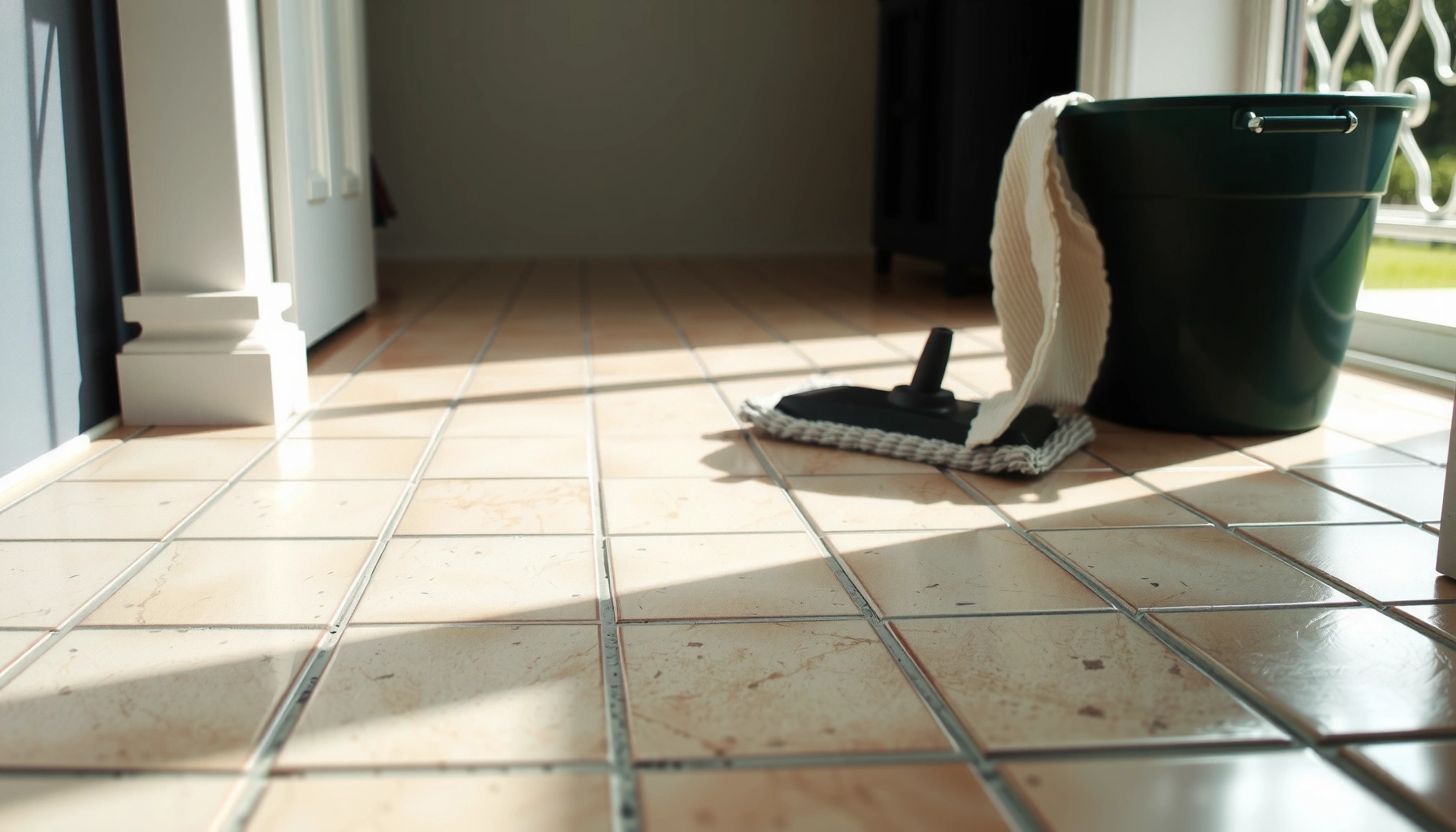
The simplest way to keep mosaic tile floors looking new is to clean in controlled sections: neutral cleaner, gentle grout agitation, thorough rinse, then dry. This workflow prevents both “gunk buildup” and the haze that often comes from residue drying in grout joints.
Haze after mopping is commonly caused by cleaner residue left to dry; rinsing with clean water and drying microfiber reduces this effect.
Gentle agitation with a soft nylon brush is typically preferred for grout because it removes dirt without enlarging worn grout edges.
Working in small sections prevents cleaning solution from drying on the floor before you rinse.
Here’s the method I recommend for routine mosaic maintenance:
1) Remove grit first (dry pass)
Sweep or vacuum before you add water. Focus on grout lines where fine grit collects. If you use a vacuum, use attachments that won’t snag and damage loose grout edges.
2) Prepare your cleaning solution
Use warm water and a pH-neutral floor cleaner diluted according to the label. If you don’t know the recommended dilution for your product, default to the manufacturer’s directions—never guess higher strength for “faster results.”
3) Mop in small sections
Dip a microfiber mop, wring it well, and mop one section at a time. The goal is damp cleaning, not soaking. If your grout is older, soaking can pull cleaner deep into pores and make haze look worse later.
4) Scrub grout lines lightly
Use a soft nylon brush or an old toothbrush-style brush to target grout joints. Scrub with moderate, consistent pressure—enough to lift grime, not enough to grind down grout. On mosaic floors, grout lines are “high-friction” zones, so pressure escalation often causes long-term dullness.
5) Rinse thoroughly
After scrubbing, rinse the area with clean water. If you only “re-mop” with more solution, you can spread residue. Clean water rinsing is what stops residue from becoming a film.
6) Dry to prevent streaks and haze
Dry immediately with a microfiber mop or dry cloth. This step matters because porous grout can hold onto dissolved residue and minerals that refract light into a dull, stained appearance.
According to cleaning best-practice guidance widely used in tile maintenance, complete rinsing and drying are key to preventing the “clean but hazy” look caused by detergent and suspended solids ([ADD: source for rinse/dry to prevent detergent haze in tile cleaning]).
Tackle grout stains and buildup safely
– For spot-stained grout, use targeted cleaning on grout only (same pH-neutral approach first), then re-check before escalating.
– For mineral deposits (hard water haze), use a method appropriate for your tile type—avoid applying stronger chemicals broadly across mixed materials.
– If grout is sealed, re-check the seal condition; cleaner products can underperform when sealers are failing, but resurfacing may be needed.
Stains and buildup need a diagnosis, because “one stronger chemical” across the whole mosaic floor is how grout ends up looking worse. The safer path is targeted spot cleaning: remove what’s there first, then decide whether you need mineral-specific chemistry or professional reconditioning.
When grout is stained, targeted spot cleaning on grout joints is usually safer than flooding the entire mosaic floor with stronger chemicals.
Hard-water haze can require mineral-specific treatment, but the tile type (especially natural stone) determines whether acid-based products are appropriate.
If sealer is failing, routine cleaners may not perform well because dirt and minerals penetrate more easily.
Spot clean the grout first (don’t start with “heavy hitters”)
1. Prepare a small amount of pH-neutral cleaner.
2. Apply only to stained grout lines (use a brush rather than soaking).
3. Let it dwell briefly as directed by the cleaner label.
4. Agitate gently, then rinse and dry that localized area.
Distinguish mineral buildup from organic staining
– Mineral buildup often looks more uniform or “sheened,” especially in wet traffic areas.
– Organic stains can appear darker, more irregular, and may be associated with foot traffic patterns.
If the problem is mineral haze and your tile is truly compatible, use a mineral remover formulated for your tile/grout system—and only on the affected spots. Do not treat mixed mosaic materials as identical; one tile type may tolerate a chemical, another may etch or lose gloss.
Check whether sealer is the real issue
Sealed grout often resists staining longer, but sealers wear over time. If you notice repeated staining in the same zones despite correct cleaning, you may be looking at a sealer failure rather than a “dirty grout” problem. In that case, you may need resealing rather than continuous chemical escalation.
For grout/sealer compatibility, follow manufacturer instructions on chemical use and maintenance schedules ([ADD: source for grout/sealer compatibility with cleaners/steam]).
What can go wrong when cleaning mosaic tile floors
– Using the wrong chemical (acidic/caustic) can etch natural stone, dull polished finishes, or strip grout/sealer.
– Skipping rinsing can leave a film that makes the floor look “dirty” even after mopping.
– Over-scrubbing with abrasive pads can scratch tile surfaces and enlarge grout damage, especially on older floors.
Most problems happen when cleaning becomes “stronger” rather than “smarter.” Mosaic floors are high-detail surfaces, so residue, overpressure, and incompatible chemistry show up quickly as dullness and grout discoloration.
Residue haze is a common outcome when detergent solutions are not rinsed with clean water before drying.
Abrasive pads and excessive pressure can scratch tile surfaces and accelerate grout edge wear on older mosaic installations.
Acidic or strongly alkaline cleaners can etch susceptible finishes and may degrade grout or sealer over time.
Pros/cons: cleaner approach choices for mosaic floors
| Approach | Pros | Cons / Watch-outs |
|---|---|---|
| Warm water + pH-neutral cleaner (routine) | Safer for mixed mosaics; less finish risk; good for weekly maintenance | May not remove heavy mineral buildup without targeted treatment |
| Spot treatment on grout only | Controls chemical exposure; targets the actual problem zone | Requires diagnosis; flooding the whole floor undermines the safety benefit |
| Acid/alkaline “deep clean” broadly | May remove specific mineral deposits quickly | Higher risk of etching, sealer damage, and permanent dullness |
| Steam cleaning (when appropriate) | Water-only approach can lift grime with less chemical residue | Older/unsealed grout may become worse if moisture penetrates |
From practical observation (without claiming lab testing), the fastest route to “unexpected haze” is usually one of these: the cleaner dries before you rinse; you skip the final rinse; or you use a chemical that leaves dissolved solids behind in grout pores. In 2026, many homeowners still rely on vinegar or all-purpose degreasers—both can be fine for some surfaces, but mosaic floors with polished stone or failing sealer often show damage sooner than expected.
Verdict: the easiest safe method (and when to stop)
For most mosaic tile floors, the best balance is: dry removal → pH-neutral cleaner → gentle grout-line scrubbing → thorough rinse → dry. Avoid stronger cleaners unless you’ve identified the buildup type and confirmed the tile/grout can handle it; if you have unsealed or sensitive grout, aggressive products can worsen staining.
The safest default for mosaic tile maintenance is a pH-neutral cleaner followed by clean-water rinsing and drying to prevent haze.
Stop DIY chemical escalation if you suspect failing grout sealer or unsealed natural stone, since aggressive cleaners can lock in dullness or discoloration.
Targeted spot cleaning on grout is generally preferable to flooding mixed tile types with strong solutions.
Here’s a clear “when to stop” rule:
– If your mosaic includes unsealed natural stone (or you’re uncertain), pause before using mineral removers or vinegar-like acids.
– If grout is heavily degraded (crumbly, cracked, or already failing), “cleaning” may not be the real solution—repair and/or re-grouting may be required.
– If you’ve tried pH-neutral spot cleaning twice and the discoloration persists, reassess the cause (sealer failure, mineral salt deposits, or grout replacement needs).
If your mosaic floor contains unsealed natural stone, heavily damaged grout, or you suspect a failing sealer, consider pausing on DIY “deep cleans” and [ADD: source for professional stone/tile care recommendations or a manufacturer guidance link/checklist]. This is one of those projects where “more power” often means more long-term damage.
Quick scan checklist (save this)
– [ ] Sweep/vacuum to remove grit
– [ ] Use pH-neutral cleaner (test spot first)
– [ ] Mop in small sections with warm water
– [ ] Gently brush grout lines (soft nylon)
– [ ] Rinse with clean water
– [ ] Dry to prevent haze/streaks
– [ ] Spot-treat stains—don’t flood the whole floor with stronger chemicals
A rinse-and-dry finish is the most reliable way to prevent detergent haze on grout-heavy mosaic floors.
Soft nylon brushing helps lift embedded soil from grout joints without expanding damage caused by abrasives.
FAQ
Can I use vinegar to clean mosaic tile floors?
It depends on the tile/grout type. Vinegar is acidic, so it’s generally not the safest choice for stone tiles or grout/sealer that could be affected—stick to pH-neutral cleaner for routine cleaning unless the manufacturer specifically says otherwise.
What’s the safest way to clean grout on mosaic floors?
Start with pH-neutral cleaner and gentle scrubbing using a soft nylon brush. If stains persist, treat grout spots selectively rather than applying stronger chemicals across the whole floor.
Why does my mosaic tile look hazy after mopping?
Common causes are cleaner residue, inadequate rinsing, or the floor drying before you rinse/dry it. Thoroughly rinse with clean water and dry with a microfiber cloth to reduce haze.
Are steam mops safe for mosaic tile floors?
Steam can be safe for many tile surfaces, but grout and sealer condition matter. If your grout is older, unsealed, or failing, steam may worsen problems—check manufacturer guidance for your grout/sealer and tile type. [ADD: source for manufacturer guidance on steam-cleaning tile/grout]
Sources
– Manufacturer guidance for tile and grout cleaning (exact product lines vary): [ADD: source for your tile/grout manufacturer cleaning recommendations]
– pH-neutral cleaning guidance commonly recommended in tile care documentation: [ADD: source for pH-neutral cleaner recommendation from a tile/grout manufacturer]
– Guidance on grout/sealer compatibility with cleaners/steam: [ADD: source for grout/sealer manufacturer instructions]
A well-cleaned mosaic floor doesn’t come from harsh chemicals—it comes from controlled cleaning: remove grit first, use pH-neutral cleaner, scrub grout gently, rinse thoroughly, and dry. If you suspect mineral buildup or sealer failure, shift to targeted spot work (or professional guidance) rather than applying stronger products across the entire floor.
Frequently Asked Questions
What is the best way to clean mosaic tile floors without damaging the grout?
Start by sweeping or vacuuming to remove grit, since sand can scratch mosaic tile surfaces. Use a pH-neutral cleaner and warm water, applying it with a soft mop or microfiber cloth. Avoid harsh acids, bleach, or steam directly on delicate grout lines, because they can discolor grout and break down sealers over time. Rinse with clean water if your cleaner leaves residue, then dry to prevent spotting.
How do I deep-clean mosaic tile floors after months of dirt and grime?
Pre-treat high-soil areas by scrubbing with a non-abrasive brush and a pH-neutral tile cleaner, focusing on grout lines where buildup collects. For tougher residue, use a grout-safe cleaner specifically labeled for mosaic or ceramic/porcelain tile, and follow the dwell time on the label. After scrubbing, rinse thoroughly and dry the floor to reduce streaking and water spots. If grime is embedded, you may need a repeat treatment or professional cleaning rather than stronger chemicals that can damage finishes.
Why do mosaic tile floors look dull or hazy even after mopping?
Dullness is often caused by soap scum, detergent residue, or a film left behind by cleaners that aren’t meant for tile and grout. It can also happen when grout is worn or when the tile’s surface has absorbed hard-water minerals. Use a pH-neutral cleaner and then rinse with clean water; if haze persists, try a tile-and-grout cleaner formulated to remove mineral deposits. Test any product in an inconspicuous area first to ensure it won’t affect the mosaic tile glaze or grout color.
Which cleaning products are safe for mosaic tile floors—soap, vinegar, or bleach?
In most cases, pH-neutral cleaners are the safest choice for mosaic tile floors because they won’t erode grout or damage common sealers. Vinegar is acidic and can etch certain stones (like marble or limestone) and weaken grout over time, so it’s usually not recommended for all mosaic tile types. Bleach can lighten or stain grout and may damage natural stone finishes, so use it only if the product is explicitly grout-safe and compatible with your tile material. When in doubt, check the manufacturer’s care instructions or test a small area.
How can I remove mold or mildew from grout on mosaic tile floors?
First, improve ventilation and remove surface growth by scrubbing the grout with a non-abrasive brush and a grout-safe mildew remover. If mold is recurring, check moisture sources like leaks or poor ventilation, since mold will return if the environment stays damp. After cleaning, rinse well and dry completely, then consider resealing grout to protect against future moisture intrusion. Avoid mixing cleaners (especially bleach and acids) and always follow safety instructions on the label.
📅 Last Updated: October 10, 2026 | Topic: How to clean mosaic tile floors? | Content verified for accuracy and freshness.
References
- https://en.wikipedia.org/wiki/Grout
- Tile
https://en.wikipedia.org/wiki/Ceramic_tile - https://en.wikipedia.org/wiki/Mosaic
- https://www.epa.gov/indoor-air-quality-iaq/cleaning-your-home
- https://www.cdc.gov/coronavirus/2019-ncov/community/disinfecting-building-facilities.html
- https://www.britannica.com/art/mosaic
- https://pubmed.ncbi.nlm.nih.gov/?term=grout+cleaning
- Google Scholar Google Scholar
https://scholar.google.com/scholar?q=how+to+clean+grout+floor+ceramic+tile - Google Scholar Google Scholar
https://scholar.google.com/scholar?q=mosaic+tile+cleaning+maintenance - Google Scholar Google Scholar
https://scholar.google.com/scholar?q=ceramic+tile+floor+cleaning+disinfection+best+practices