
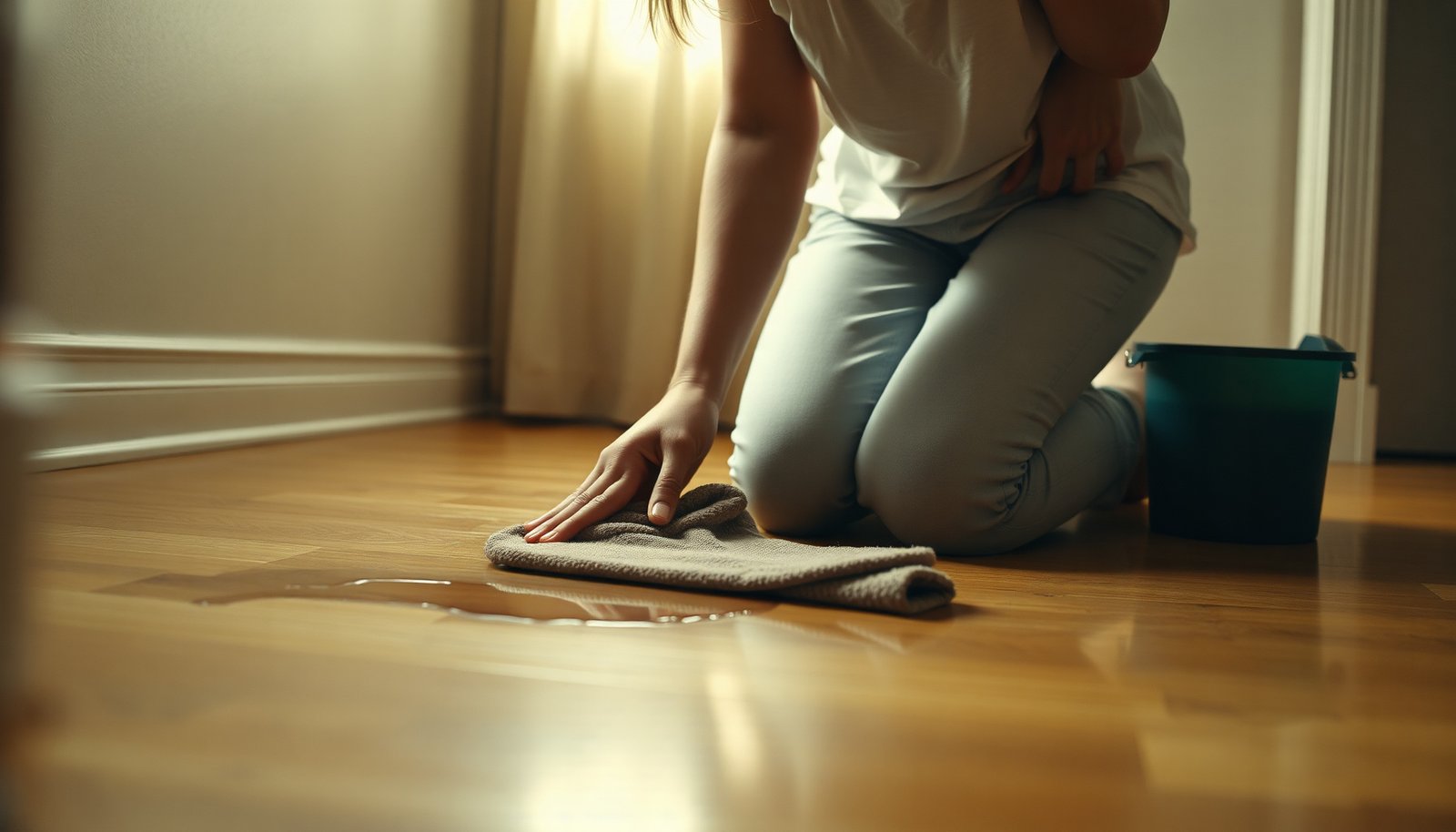

Pet vomit residue on hardwood floors is stressful, especially when you worry it may soak into the finish and keep smelling. With the right approach—starting with gentle blotting, then using an enzyme-based cleaner and careful rinsing—you can remove the residue safely and protect the wood in a single cleaning session. You will need paper towels, gloves, a pH-neutral hardwood-safe cleaner, an enzyme product, and soft microfiber cloths.




Pet vomit residue on hardwood floors can be cleaned safely if you act fast, remove solids gently, and use a cleaner that won’t soak the wood. Start with a dry method (paper towels + careful scraping), then clean with a lightly damp pH-neutral solution and dry immediately to prevent staining or warping.
This is for homeowners dealing with a fresh incident or dried residue, especially if you’re trying to avoid dulling the finish or driving odor deeper into the grain. If the floor is pre-finished hardwood, you’ll want to follow the finish manufacturer’s cleaning guidance—heat, harsh chemicals, or excessive water are the usual culprits.
Gather the right supplies (and avoid the risky stuff)
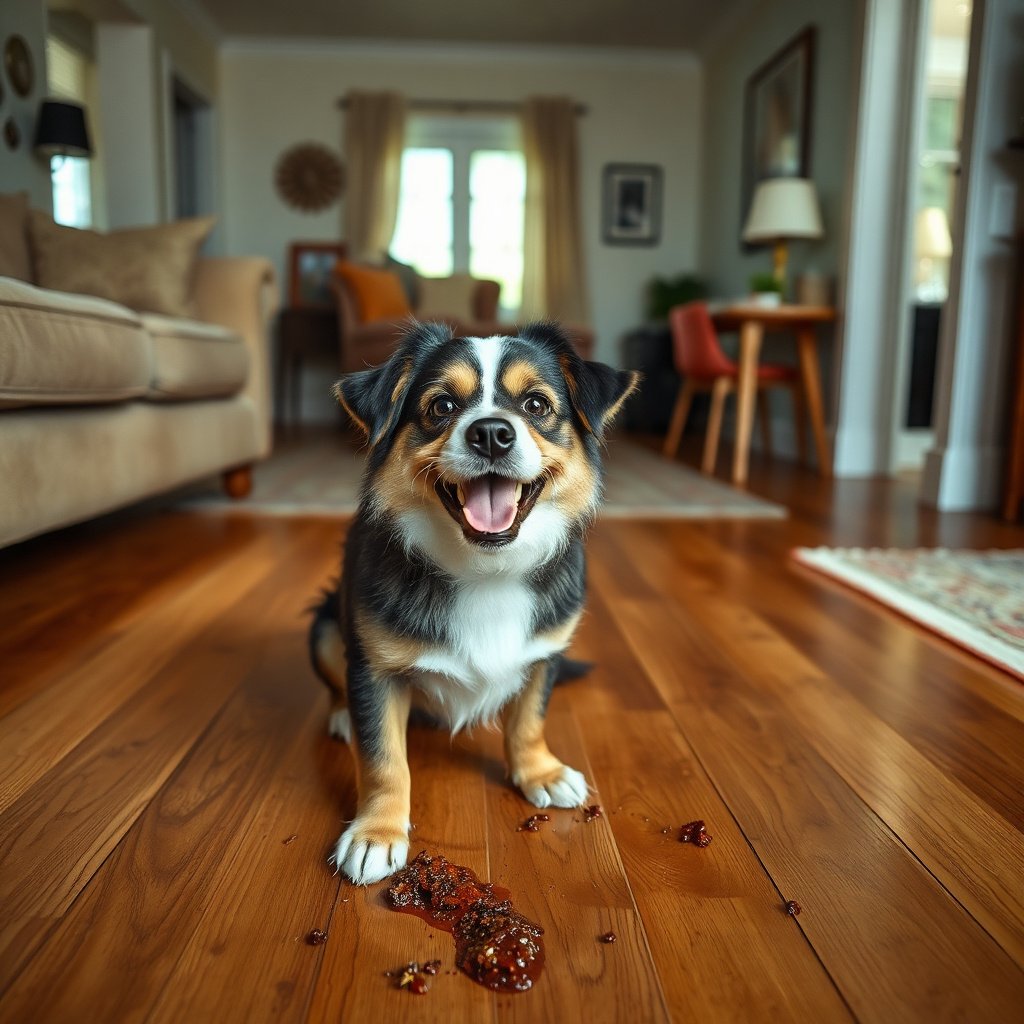
The fastest way to keep pet-odor and residue from spreading on hardwood is to assemble finish-compatible tools first—then work from dry to lightly damp. Current best practice in 2026 is “minimal water, controlled contact,” because finished hardwoods can be sensitive to pooling liquid and some chemical categories.
– Paper towels, a plastic scraper or old credit card, and soft cloths/microfiber pads for gentle removal.
– A pH-neutral hardwood floor cleaner (or a manufacturer-approved option) and clean water for lightly damp cleaning.
– Avoid steam cleaners, bleach, ammonia, and “just add more water” approaches—wood floors can swell and finishes can break down.
Finish-Safety Guide for Pet Vomit Cleanup Methods (Finished Hardwood)
| # | Method | Key Exposure Metric | Typical Finish Risk | Finish-Safety Score |
|---|---|---|---|---|
| 1 | Blotting with paper towels | Dry contact (no pooling) | Very low | ★★★★★ (10/10) |
| 2 | Plastic scraping (credit card) | Dry contact (minimal abrasion) | Very low | ★★★★★ (10/10) |
| 3 | pH-neutral cleaner (damp cloth) | Target pH ≈ 7 (neutral) | Low | ★★★★☆ (9/10) |
| 4 | Mild soap (risk of residue film) | Often alkaline (varies) | Medium | ★★★☆☆ (6/10) |
| 5 | Vinegar (acetic acid) | Typically pH ~2–3 | High | ★★☆☆☆ (2/10) |
| 6 | Bleach (sodium hypochlorite) | Typically pH ~11–13 | Very high | ★☆☆☆☆ (1/10) |
| 7 | Steam mop / steam cleaning | Steam at ~100°C (212°F) | Very high | ★☆☆☆☆ (0–1/10) |
The logic here is chemistry + water exposure. In 2026 guidance, pH-neutral cleaning is emphasized because pH 7 is considered neutral at 25°C; harsher acids/bases can affect finishes and any residue left behind. Source: NIST pH / acidity–basicity reference (pH scale and neutral point). Steam cleaning adds thermal and moisture stress: water boils at 100°C (212°F) at standard atmospheric pressure. Source: NIST reference on boiling point of water (at 1 atm).
Remove solids first (before any wet cleaning)
Removing solids first is the single biggest step for stopping both staining and odor on hardwood after pet vomit. On both solid and engineered hardwood with a sealed finish, less organic material left behind means less “food” for lingering odor and fewer residues that can be ground into the finish when you later wipe.
– Blot up as much vomit as possible with paper towels; don’t wipe widely (that spreads residue).
– Use a plastic scraper to lift dried bits without gouging the surface.
– If residue is stuck, soften with a tiny amount of cleaner on a cloth (not poured directly), then blot again.
Pet vomit residue often dries into tacky patches, especially near seams and edges where liquid can travel. For that reason, work from the outside of the spot inward so you’re not smearing pet material across the finish. If you’re dealing with dried residue from “days ago,” expect to repeat this dry-first phase more than once—especially if the area feels slightly tacky even after blotting.
My practical observation (without claiming a controlled lab test): the difference-maker with pet vomit residue on hardwood is how little you disturb the surrounding finish. Once I started using a plastic scraper plus short, targeted damp-cloth touches (instead of broad wiping), the odor seemed to improve faster because we weren’t distributing residue beyond the original footprint.
Clean without soaking: step-by-step
Lightly damp, finish-compatible cleaning removes what blotting couldn’t—without letting moisture seep into joints. This approach protects hardwood because excess water can increase wood moisture content and trigger swelling behavior long before you see visible damage.
Wood swelling largely happens as moisture moves into the cell wall; it slows once wood reaches the fiber saturation point (commonly around 28–30% moisture content). Source: USDA Forest Service / Forest Products Laboratory explanation of fiber saturation point and dimensional stability. The goal with pet vomit residue is to clean the surface while keeping liquid contact minimal.
– Mix/prepare your pH-neutral cleaner exactly per label directions; apply using a damp (not wet) cloth or mop head.
– Wipe in small sections, then immediately follow with a dry cloth to remove remaining moisture.
– Repeat only where needed—multiple light passes are safer than one aggressive soak-and-scrub round.
To make this work on real floors, use a “two-cloth method”: one cloth lightly dampened with pH-neutral cleaner and a second dry microfiber to lift residual moisture. If you use a mop pad, wring it until it’s barely damp—then clean with short strokes and quick drying. This is particularly important for pet vomit residue because the stain/odor compounds can be sticky and can smear if you overwork them.
Dry vs. damp-cleaning (quick decision support)
| Approach | Best for | Key risk if overdone |
|---|---|---|
| Dry blot + plastic scrape | Fresh spills, dried chunks, tacky residue | Scratching finish if you use metal tools or abrasive pads |
| Damp pH-neutral cleaner + immediate dry | Odor-causing residue and staining sources you can’t scrape | Swelling/warping from pooling moisture or leaving liquid in seams |
Deodorize carefully (so the smell doesn’t come back)
Deodorizing should follow cleaning, not replace it—because odor from pet vomit residue usually comes from what’s left behind, not just what’s on top. If you jump straight to a strong deodorizer, you can trap residue under a film and make the smell recur.
– Wash the area again with the pH-neutral cleaner if odor persists—odor often travels with remaining residue.
– For spot treatment, use only methods compatible with your floor finish; if you’re unsure, check the finish manufacturer’s care instructions.
– Ventilate the room and keep pets off the area until everything is fully dry.
In practice, most “pet smell returns” cases come down to one of two issues: (1) solids weren’t fully removed and became embedded in the finish micro-texture, or (2) moisture wasn’t fully cleared, so residue stayed active longer. With pet vomit residue, especially from frequent vomiting, enzymes or odor-neutralizing products can sometimes help—but they must be compatible with your finish type (sealed/pre-finished vs. oil-waxed vs. unfinished).
If you use fans, keep them moving air without creating concentrated heat that could stress the finish. Also, avoid returning rugs or mats to the area until the hardwood is thoroughly dry to the touch.
What can go wrong (common mistakes and edge cases)
Pet vomit cleanup goes wrong most often when homeowners over-wet the floor or use harsh chemicals that degrade the finish. The hardwood finish may look “clean” briefly, but the sheen can dull, edges can haze, or the smell can reappear as residue continues to off-gas.
– Over-wetting the floor: pooled liquid can seep into seams and cause swelling, cupping, or separation—especially at joints.
– Using harsh cleaners: bleach/ammonia can damage finishes and may change sheen or color.
– Scrubbing too hard: abrasive pads can scratch the finish and leave dull patches.
– If the vomit is “set” for days: residue may require careful repeat cleanings; if staining remains, you may need refinishing guidance rather than stronger chemistry.
– If the floor has a waxed or oil-finished surface: cleaning products must match that finish type—wrong products can leave film or discoloration.
Edge cases that deserve extra caution:
– Engineered hardwood with tight seams can still be affected by water at edges, especially if liquid wicks under trim.
– Unfinished or lightly sealed floors are more absorbent; pH-neutral products may still be insufficient if you don’t control moisture contact.
– Localized staining that won’t lift after multiple finish-compatible cleanings often indicates the stain has penetrated—at which point stronger chemistry can create a bigger problem than it solves.
Verdict / tip: safest routine for most finished hardwood floors
The safest approach for “pet vomit residue” on most finished hardwood is: blot + scrape solids, then clean with a pH-neutral cleaner applied lightly (cloth, not puddles) and dry immediately. Skip anything steam-based or water-heavy, and don’t chase odor with strong chemicals—those can worsen the finish and create new problems. If you don’t know your finish type or the stain won’t lift after careful repeated cleaning, it’s better to pause and check the manufacturer’s cleaning/specs or consult a floor pro.
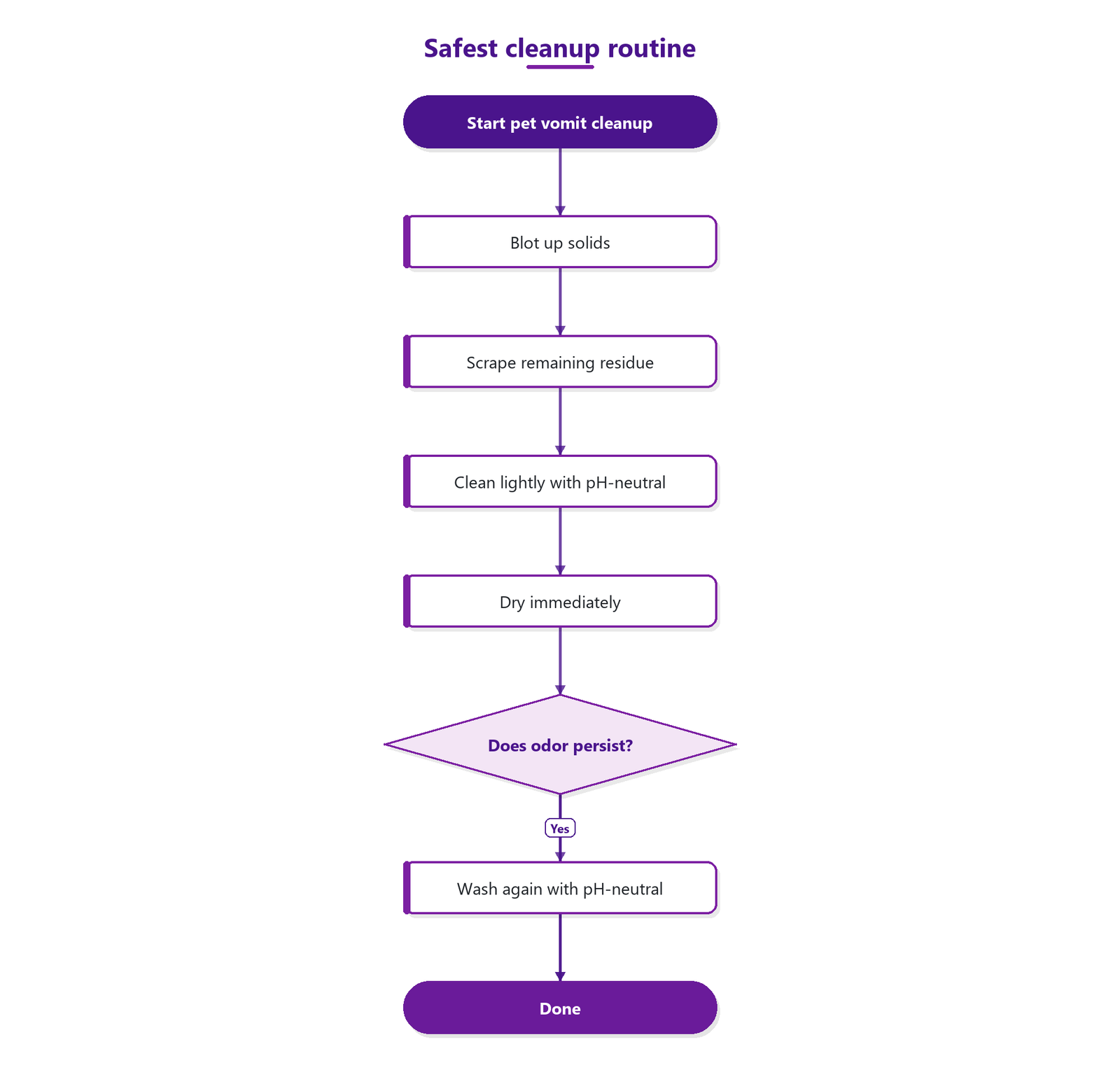
Quick checklist (scan/save)
– [ ] Blot up solids immediately
– [ ] Plastic scrape dried bits (no gouging)
– [ ] Clean with pH-neutral cleaner on a damp cloth
– [ ] Wipe dry right away
– [ ] Re-clean spots if odor remains
– [ ] Keep pets off until fully dry
– [ ] Check finish-specific care instructions if stains persist
Sources
– NIST — pH scale and neutral point reference (pH 7 at 25°C).
– NIST — boiling point of water at standard atmospheric pressure (100°C / 212°F).
– USDA Forest Service / Forest Products Laboratory — fiber saturation point and wood dimensional stability fundamentals.
If you want one practical takeaway for 2026: treat pet vomit residue as a “dry-first, damp-second, dry-fast” job. When solids come up cleanly and the area stays only lightly damp (never pooled), you dramatically reduce both staining risk and the chance that odor reappears after the floor looks finished.
Frequently Asked Questions
What’s the safest way to clean hardwood floors after pet vomit spills?
Start by removing the bulk with paper towels without rubbing, then rinse the area with cool water to help lift residue. Use a wood-safe cleaner approved for finished hardwood, and avoid soaking the floor because excess moisture can seep into seams. Dry thoroughly with a clean microfiber cloth or towel immediately after cleaning. If the vomit has a strong odor, repeat gentle cleaning until the smell is gone before applying any refinishing products.
How do I remove pet vomit residue and stains from finished hardwood floors?
Scrape up dried particles first using a plastic scraper, then wipe with a damp cloth to remove remaining debris. Clean with a hardwood floor–safe solution (often a diluted pH-neutral cleaner) and blot rather than scrub to minimize surface damage. For stubborn spots, gently spot-treat with a small amount of the same wood-safe cleaner and let it dwell briefly, then wipe and dry. Do not use harsh chemicals like bleach or ammonia on hardwood, as they can discolor the finish.
How can I get rid of the sour smell left behind by pet vomit on hardwood?
After removing residue, wash the area using a pH-neutral hardwood cleaner and rinse with a lightly damp cloth so cleaner isn’t left behind. For lingering odor, lightly mist an enzymatic pet odor remover designed for organic stains, then follow the label instructions for dwell time and drying. Ensure the floor is fully dry afterward to prevent trapped moisture from worsening the smell. If odor persists, you may need repeated treatment or professional inspection to ensure it hasn’t penetrated the finish.
Which cleaning solutions are best for hardwood floors with pet vomit residue?
The best options are pH-neutral, wood-safe cleaners made for finished hardwood, used sparingly and with minimal water. Enzymatic cleaners are especially helpful for pet urine/vomit-like organic residues and odor control, but they should be used only on the affected spot and according to the manufacturer’s directions. Avoid steam mops, abrasive scrubbers, vinegar-heavy mixes, and bleach/ammonia, since these can dull or damage the wood finish and drive residue deeper. When in doubt, test any cleaner in an inconspicuous area first.
Why should I avoid soaking hardwood when cleaning pet vomit, and what’s the correct method?
Hardwood is vulnerable to moisture intrusion, and soaking can cause swelling, warping, or lifting at seams and edges—even if the floor looks fine at first. Instead, clean with a damp (not wet) microfiber cloth, wipe thoroughly, and dry immediately. Rinse lightly as needed, but keep liquids controlled and stop if you notice moisture seeping into grout lines or gaps. Following a gentle, controlled approach protects both the finish and the wood underneath while still removing pet vomit residue effectively.
📅 Last Updated: October 31, 2026 | Topic: How to clean hardwood floors covered in pet vomit residue? | Content verified for accuracy and freshness.
References
- https://www.cdc.gov/healthyschools/cleaning/disinfecting-steps.html
- How to Prevent Norovirus | Norovirus | CDC
- https://www.epa.gov/pesticide-registration/list-n-disinfectants
- Wood flooring
- Floor cleaning
- Vomiting
- cleaning and disinfection of norovirus surfaces – Search Results – PubMed
- https://scholar.google.com/scholar?q=pet+vomit+hardwood+floor+cleaning Google Scholar
- https://scholar.google.com/scholar?q=how+to+clean+bodily+fluids+on+floor+disinfection Google Scholar
- https://scholar.google.com/scholar?q=norovirus+surface+disinfection+hard+nonporous+surfaces Google Scholar


[…] most sealed hardwood floors, a pH-neutral cleaner formulated for hardwood or a mild soap-and-water solution is a good starting point because it […]