
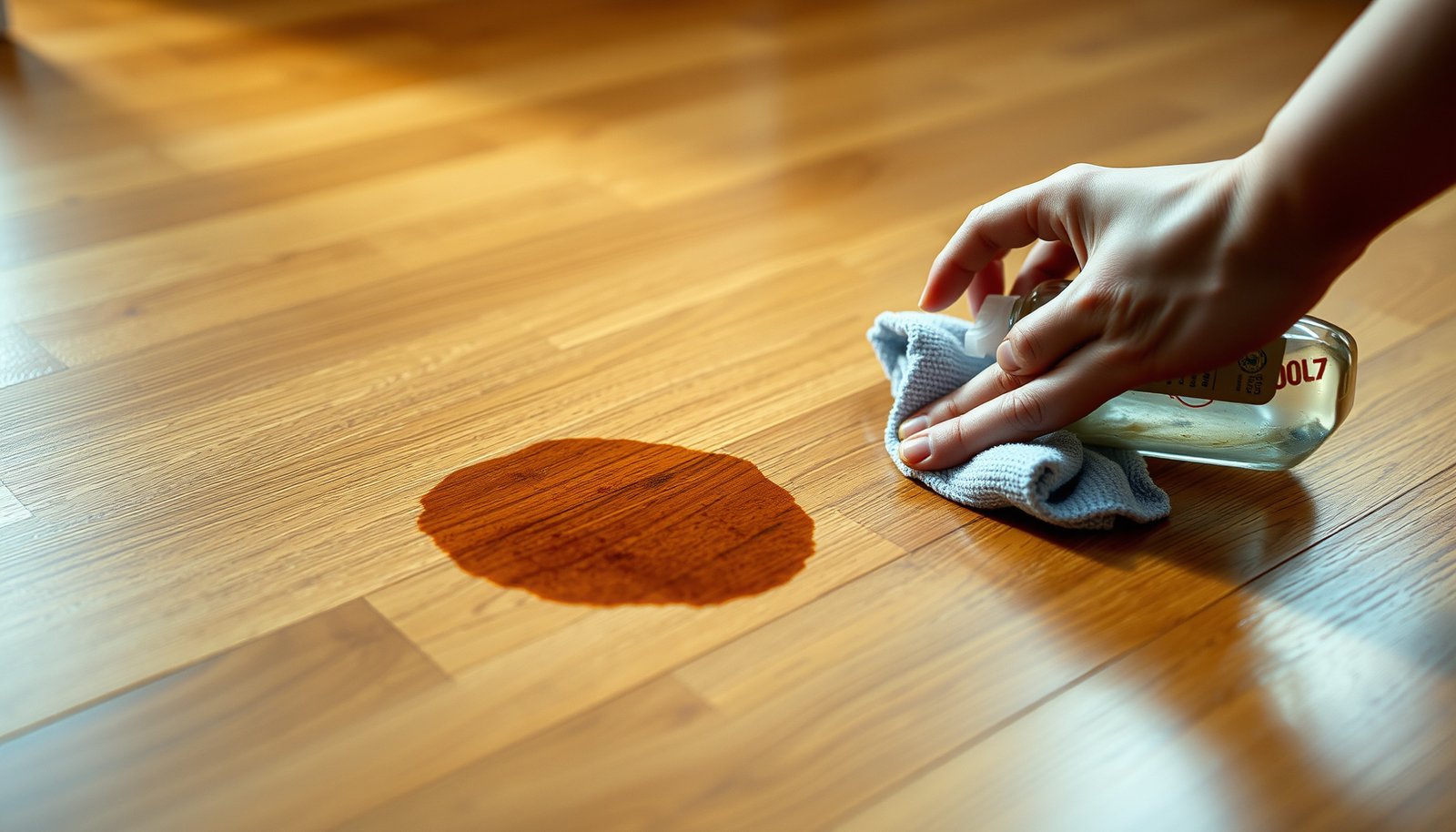

You notice a dried, crusty food ring on your hardwood floor from last night’s dinner, and now it’s stuck to the finish. With warm water, a drop of mild dish soap, white vinegar (only for residue), and soft microfiber cloths, you can soften the stain, lift the particles, and wipe the area clean without damaging the wood. Most jobs take less than an hour once you have your supplies ready.




If food has dried on your hardwood, soften the residue first, then lift it gently and clean with the least-moisture method possible. Start with warm water on a cloth (not soaking), scrape only what’s loosened, and finish by wiping dry to protect the finish—this reduces abrasion and prevents moisture from migrating into seams. You’ll get the safest order of operations so the stain comes up without dulling or damaging the wood, even when quick sweeping or spot mopping doesn’t move it.
This is for homeowners and renters dealing with dried spills from things like sauces, crumbs, or sticky foods on sealed hardwood. It’s especially helpful when the stain has hardened and regular sweeping or quick spot mopping doesn’t move it. As of 2026, the most consistent hardwood-care guidance still centers on limiting water exposure and avoiding harsh DIY mixes, particularly on floors with polyurethane, varnish, or other film finishes.
What to Do First (Before You Scrub)
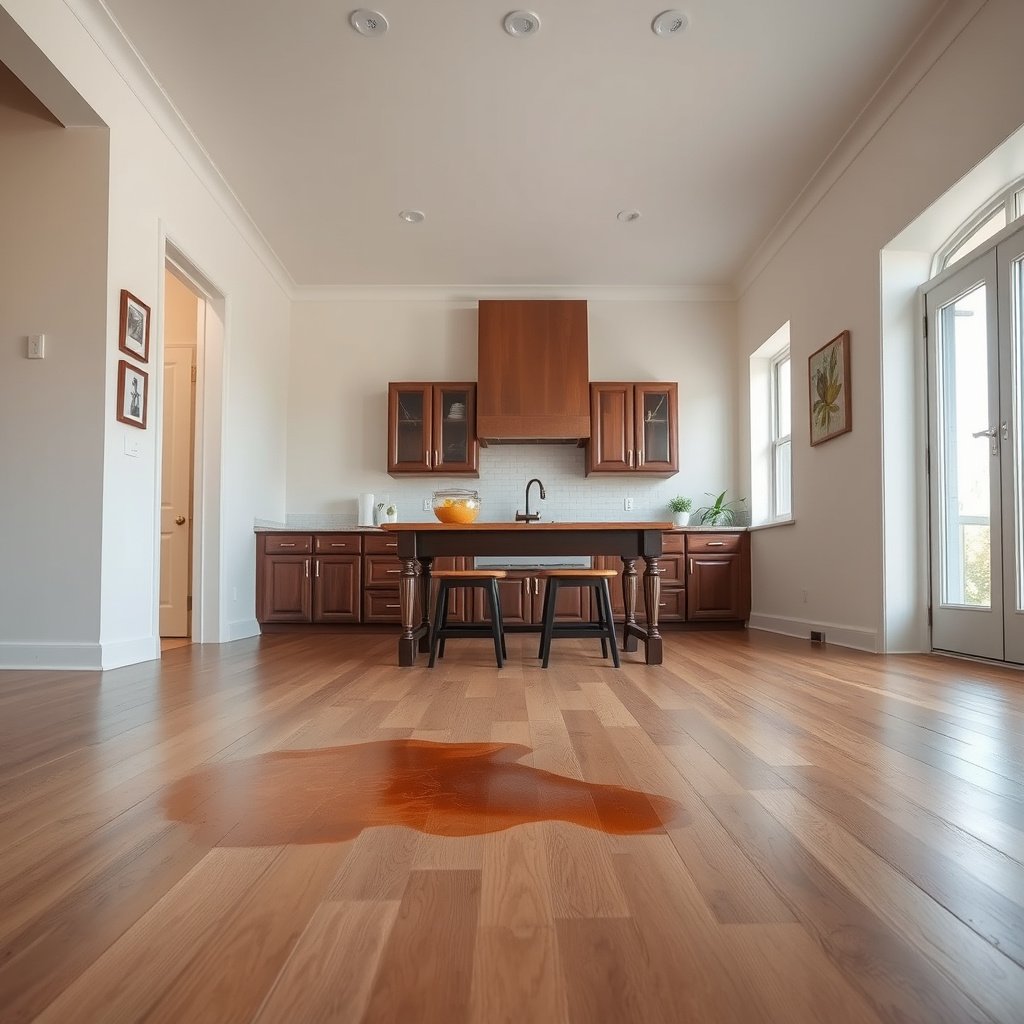
Before you scrub, the goal is to prevent grit and dried residue from acting like sandpaper. Clear what you can dry first, then soften the remainder so it lifts with minimal force.
– Clear debris with a soft brush or dry cloth so you’re not grinding particles into the finish. Focus on edges and corners where crumbs compact into the grain.
– Soften the dried food with a damp (not wet) cloth using warm water for a few minutes to loosen the buildup. Warm water helps rehydrate sugars, salt residues, and water-based sauce components so you can remove them without aggressive scraping.
– Test on a hidden spot if you plan to use anything stronger than water (especially if the stain is near a seam or heavily worn finish). This quick check matters because finishes age unevenly: a seam may be thinner, and high-wear areas may already be breaking down.
Why this order works: hardwood movement is driven by moisture. According to the USDA Forest Service, Wood Handbook, wood’s dimensional change accelerates when moisture content rises above the fiber saturation point (commonly cited around 20–30% moisture content). Your method won’t hit those moisture levels if you use damp-only cloths—but soaking can still push water into seams or through micro-gaps.
Gentle Removal Steps That Protect Hardwood Finish
Gentle removal means you lift, wipe, and repeat—rather than forcing scrubbing. The safest technique keeps your scraper flat, uses minimal liquid, and removes loosened residue before it refreezes into the finish.
– Lift loosened residue with a plastic scraper or old credit card edge, working slowly and keeping it flat to avoid gouges. A plastic edge reduces the “cutting” action that metal scrapers can cause on gloss or polyurethane.
– Wipe with a clean damp microfiber cloth, then immediately follow with a dry cloth to remove leftover moisture. Microfiber is important because it captures lifted residue instead of smearing it across the floor.
– Repeat the softening/lifting cycle rather than forcing scrubbing—mechanical effort often causes more finish damage. If the spot doesn’t improve after a couple cycles, escalate carefully (see the next section) instead of adding pressure.
In practice, the “soften first” approach matters because dried food behaves like glue only after it rehydrates correctly. Sugar and starch residues often loosen after a short warm-damp contact, while oil-based components need different chemistry (not more force).
Quick comparison: what actually causes finish damage?
Here’s a simple contrast you can use while deciding how hard to work the spot:
| Approach | What happens on a sealed hardwood finish | Likely outcome |
|---|---|---|
| Scrape dry residue | Residue + grit act like abrasion | Fine scratches, dulled sheen |
| Soak the area | Water migrates toward seams/edges | Swelling, hazing, edge darkening |
| Damp cloth softening + light scraping | Residue rehydrates and releases | Cleaner lift with minimal finish disturbance |
| Aggressive scrubbing | Friction wears film finish | Rough texture, uneven gloss |
Cleaning Solutions (Choose the Least Aggressive Option)
The best cleaning solution is the one that matches the residue while staying as mild as possible. If warm water won’t fully remove it, step up gradually—never jump straight to strong mixes.
– Start with warm water and mild dish soap on a lightly damp cloth if the residue leaves a greasy film. Dish soap is designed to emulsify oils, but you still want light moisture: wipe off soap residue promptly and dry the floor after.
– If water alone won’t help, use a hardwood-floor cleaner recommended for your floor’s finish type (sealed vs. unfinished); follow the label’s directions closely. Sealed floors (common in rentals and modern installs) typically tolerate cleaners formulated for polyurethane/laminate-style film finishes, while unfinished or oiled floors often require different treatment to prevent blotching.
– Avoid DIY “strong” mixes (like vinegar-heavy solutions or harsh solvents) unless you know your finish tolerates them—many finishes can haze or wear unevenly. Vinegar is especially risky if your finish is worn or thin near seams.
A concrete chemistry note: vinegar’s effectiveness comes from acidity. In the U.S., vinegar standards generally place acetic acid at about 4–8% by volume. According to the U.S. FDA Code of Federal Regulations (standard of identity for vinegar), vinegar commonly contains within that range—enough acidity to react with or dull some finishes over time, particularly if left in contact. That’s why “dilute and rinse” matters even when something seems mild.
How Well Warm Damp Cloth Lifts Common Dried Food Types (Sealed Hardwood)
| # | Dried food residue | Main chemistry | Warm damp lift (★) | Best next step |
|---|---|---|---|---|
| 1 | Sugar (spills from sweets/soda) | Water-soluble carbohydrates | ★★★★★ | Repeat damp softening + wipe dry |
| 2 | Honey | Sugars + viscosity (low-to-moderate oil) | ★★★★☆ | Warm damp cloth, then light soap if needed |
| 3 | Ketchup | Water-based sauce + pigments + sugars | ★★★☆☆ | Damp softening, then film removal wipe |
| 4 | Milk/cream | Proteins + sugars; can yellow when baked on | ★★★☆☆ | Warm damp wipe, then mild soap + quick dry |
| 5 | Chocolate | Fat-based oils + cocoa solids | ★☆☆☆☆ | Use soap on damp cloth; avoid heavy wetting |
| 6 | Peanut butter | High oil/fat content + sugars | ★☆☆☆☆ | Mild dish soap on damp cloth; wipe clean + dry |
| 7 | Salad dressing (vinaigrette-style) | Oil + vinegar/salt; mixed components | ★☆☆☆☆ | Soap wipe first; avoid vinegar escalation |
Note: if a stain is mainly color (pigment) rather than residue, you may see “ghosting” even after the food comes up. That’s when finish-specific guidance matters more than repeating the same damp-wipe cycles.
What Can Go Wrong (And How to Avoid It)
Most cleaning failures happen when someone skips the softening step, adds too much water, or uses the wrong chemistry for the floor’s finish. The fix is to adjust method first, then adjust cleaning strength.
– Scraping before softening can scratch the finish, especially on high-gloss or polyurethane-coated floors. Dried residue mixed with dust behaves like gritty sand.
– Soaking the area—even with “natural” cleaners—can seep at seams and edges and lead to swelling or discoloration. Damp cloths are the boundary; wet is how water migrates.
– Using the wrong cleaner for your finish can leave dull spots; if you’re unsure, do the hidden-spot test first and stop if the sheen changes.
A practical “do this instead” guide
If you’re tempted to escalate, use this decision logic:
1) If residue feels hard and won’t lift → soften longer with warm damp cloth.
2) If you see greasy smears after wiping → use a mild dish soap approach on a damp cloth, then dry immediately.
3) If discoloration remains after residue is gone → treat it as a finish/pigment issue; follow manufacturer care guidance or pause for refinishing advice.
For moisture risk context: when wood moisture content is measured in standards-based testing, samples are oven-dried at controlled temperatures. For example, ASTM ASTM D4442 specifies oven-drying at 103 ± 2°C to determine moisture content. This isn’t something you’ll replicate during cleaning, but it helps explain why water exposure isn’t trivial: wood responds to moisture, and finishes don’t always block it perfectly at seams.
Verdict: Best Overall Approach (Plus Who Should Skip)
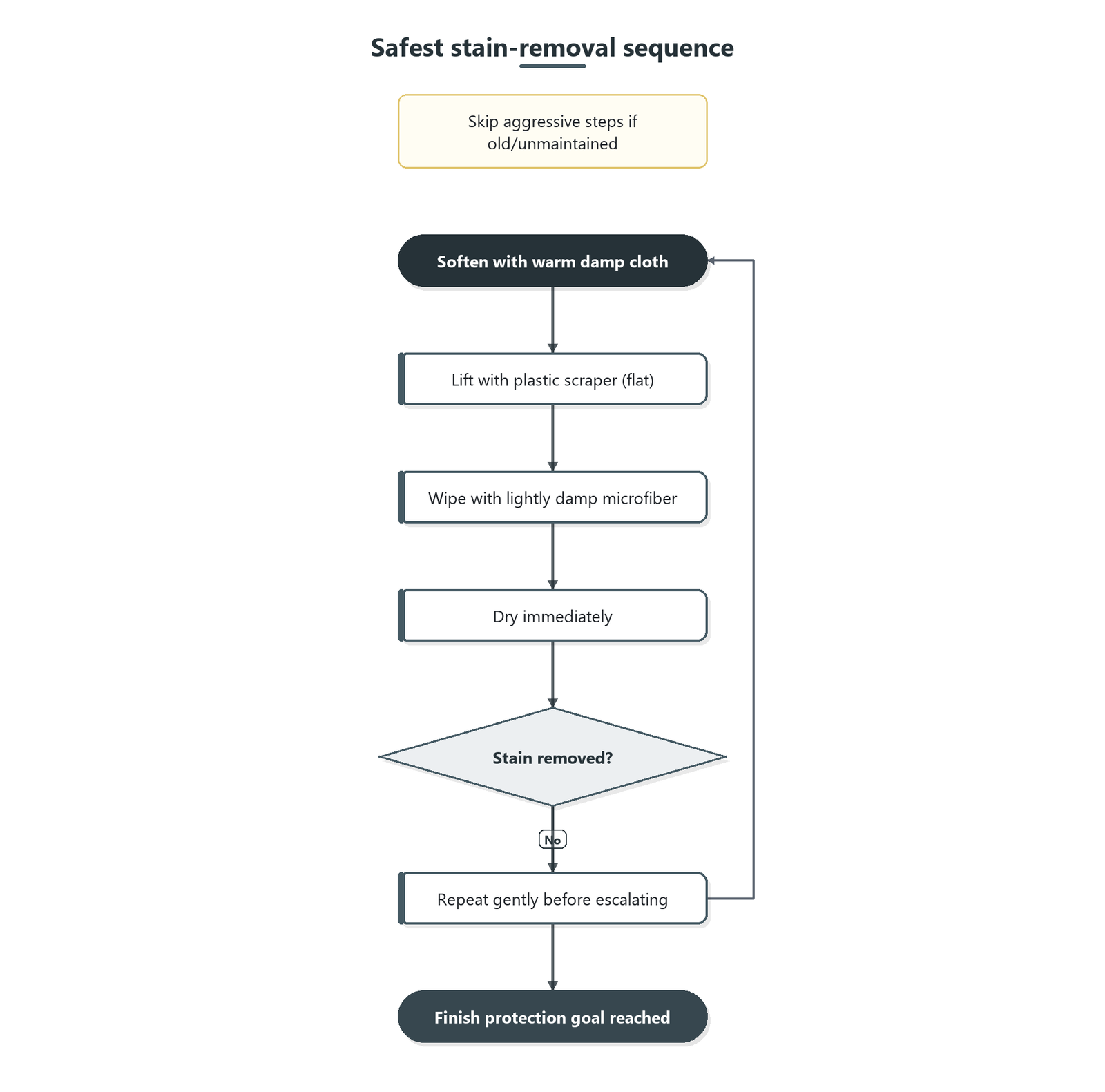
The safest route is: soften with warm damp cloth → lift with a plastic scraper → wipe with a properly damp cloth → dry immediately. This method has the highest chance of removing dried food without damaging the finish because it limits abrasion and moisture exposure, and it removes residue in “release-ready” conditions.
Skip the more aggressive steps (strong degreasers, repeated soaking, or chemical removers) if your floor is old/unmaintained, visibly unsealed/unfinished, or already showing wear—those floors are more likely to spot or take damage. For large or stubborn stains, consider using the manufacturer’s recommended process or . If your spot is near a heavy traffic area or has an unusually matte patch already, treat “stain removal” as “finish preservation,” not “maximum cleaning power.”
From the guidance above, the biggest tradeoff is speed: gentle cycles take longer than one aggressive scrub. In return, you reduce the likelihood of dullness, haze, and micro-scratches—issues that are much harder (and sometimes more expensive) to correct than the original food stain.
Quick Checklist to Save Time
– [ ] Sweep/brush up loose crumbs first
– [ ] Apply warm damp cloth to soften dried residue
– [ ] Scrape only what’s loosened (plastic scraper flat)
– [ ] Wipe with lightly damp microfiber, then dry immediately
– [ ] Repeat gently before escalating to stronger cleaners
– [ ] Avoid soaking; avoid harsh DIY chemicals if finish is unknown
Sources
Dried food stains usually come up best when you loosen the residue first, scrape only what lifts, and keep moisture and abrasion to a minimum. Start with warm damp cloth softening, use a plastic scraper flat, wipe with a lightly damp microfiber, and dry right away. If the stain won’t budge after a few gentle rounds—or if your finish is uncertain—pause and follow your floor manufacturer’s care instructions (or get professional help) so you don’t trade a stain for finish damage.
Frequently Asked Questions
How do I remove dried food stains from hardwood floors without damaging the finish?
Start by gently scraping off any crusted debris with a plastic scraper or credit card to avoid scratching. Soften the stain with a small amount of warm water (or a 1:1 mix of water and white vinegar for light stains) on a cloth, then blot—not scrub. If the stain remains, use a hardwood-safe cleaner recommended for your floor’s finish and finish by drying the area thoroughly.
What’s the best way to clean dried spill marks on sealed hardwood floors?
For sealed hardwood floors, work slowly: rehydrate the dried food residue with a damp microfiber cloth for a few minutes, then blot repeatedly to lift particles. Clean the spot with a pH-neutral hardwood floor cleaner, following the product directions, and avoid excess moisture that can seep into seams. Finish by wiping with a slightly damp cloth only if needed, then dry immediately with a clean towel.
Which household products are safe for dried food stains on hardwood?
Mild options like warm water and a small amount of white vinegar (used sparingly) are commonly safe for many sealed hardwood finishes, but test first in an inconspicuous area. For greasy food stains, a small amount of dish soap diluted in water can help, as long as you blot and dry quickly to prevent swelling. Avoid harsh chemicals, ammonia, bleach, steam cleaners, and abrasive pads that can dull or damage the floor’s finish.
Why do dried food stains leave discoloration on hardwood, and how can I prevent it?
Dried food can embed color and sugars, and oils can penetrate into the surface finish, making stains harder to lift over time. The longer it sits, the more likely the spot will turn brown or sticky and attract grime, which can deepen the mark. Prevent this by wiping spills immediately, using a damp cloth for sticky residues, and keeping hardwood floors dry after cleaning.
How can I handle sticky, caramelized dried food stains on hardwood floors?
First, loosen the residue by placing a damp cloth over the spot for several minutes, then gently scrape with plastic to remove softened food particles. Clean the remaining tacky film with a slightly soapy water solution (few drops of dish soap per cup of water), then rinse by blotting with a clean damp cloth and dry thoroughly. If the stain persists and your floor is well sealed, you may need a targeted hardwood floor spot remover or professional refinishing for stubborn, deeply set discoloration.
📅 Last Updated: October 31, 2026 | Topic: How to clean dried food stains from hardwood floors? | Content verified for accuracy and freshness.
References
- Wood flooring
- How to Clean Hardwood Floors and Have Them Looking Like New | National Wood Flooring Association …
- https://extension.umn.edu/how-to/cleaning-hardwood-floors
- https://extension.psu.edu/how-to-clean-hardwood-floors
- https://hgic.clemson.edu/factsheet/cleaning-and-maintaining-hardwood-floors/
- 404 Error
- https://scholar.google.com/scholar?q=hardwood+floor+stain+removal+dried+food+spill Google Scholar
- https://scholar.google.com/scholar?q=wood+floor+cleaning+and+care+stain+removal+methods Google Scholar
- https://scholar.google.com/scholar?q=hardwood+floor+stain+removal+water+based+spotting+finish+care Google Scholar
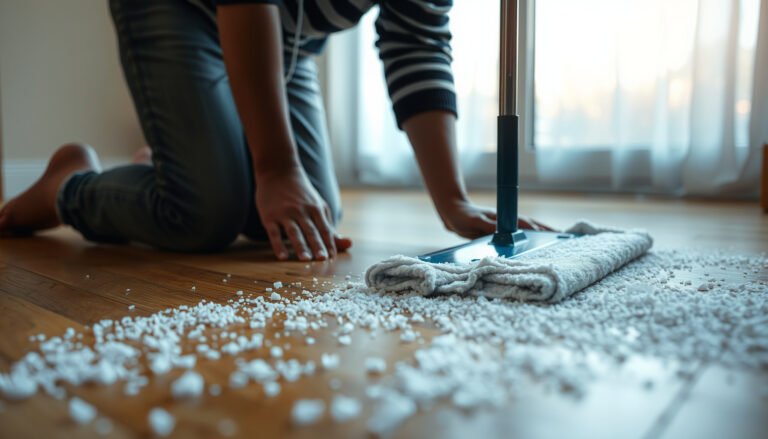

[…] wipe the area with a slightly damp microfiber cloth to remove any surface residue, then dry thoroughly. If the spot is only in the finish, you can […]
[…] the finish? You can usually clear water spots in 30–60 minutes using simple household items—soft microfiber cloths, distilled water, mild soap, and an appropriate hardwood cleaner—plus careful blotting and gentle […]
[…] you see white or cloudy water spots on hardwood, start by gently cleaning with a damp microfiber cloth and then dry thoroughly—most spots come from moisture that left residue on the finish. If that […]