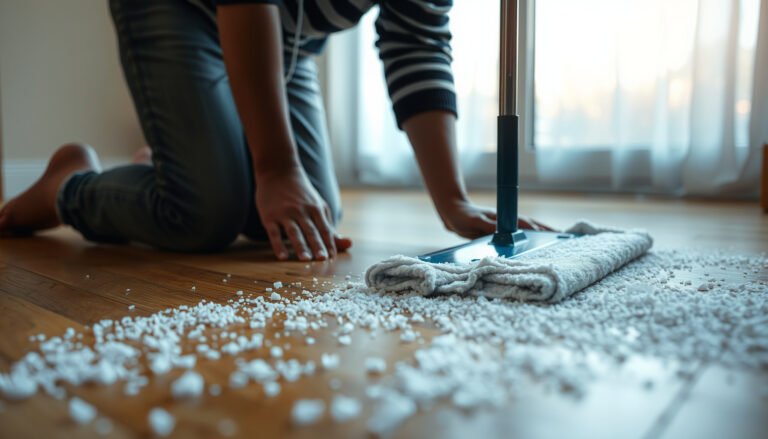

Remove odors from industrial floors using proven methods that actually eliminate the source, not just mask smells. If you’re dealing with chemical spills, organic waste, or persistent wet-floor odor, this guide gives the fastest, most reliable cleaning and deodorizing approach for your situation. You’ll learn what to use, how to apply it, and how to confirm the odor is gone for good.




If your industrial floor smells, the fastest path is usually to remove the source first—then clean with the right chemical and finish with proper ventilation or deodorization. Because odors often come from embedded residue in pores, cracks, drains, or coatings—not just the surface—identifying the soil type (oils/grease, sewage waste, mold/mildew, or chemical spills) determines what will actually work and what will only mask the problem.
If you manage a warehouse, manufacturing floor, loading dock, or shop area—and you’re dealing with lingering bad odors after routine sweeping/mopping—this is for you. It’s also useful when odors return quickly, which often means the contaminant is still embedded in pores, cracks, floor coatings, or drain areas.
Identify the odor source (before you clean)
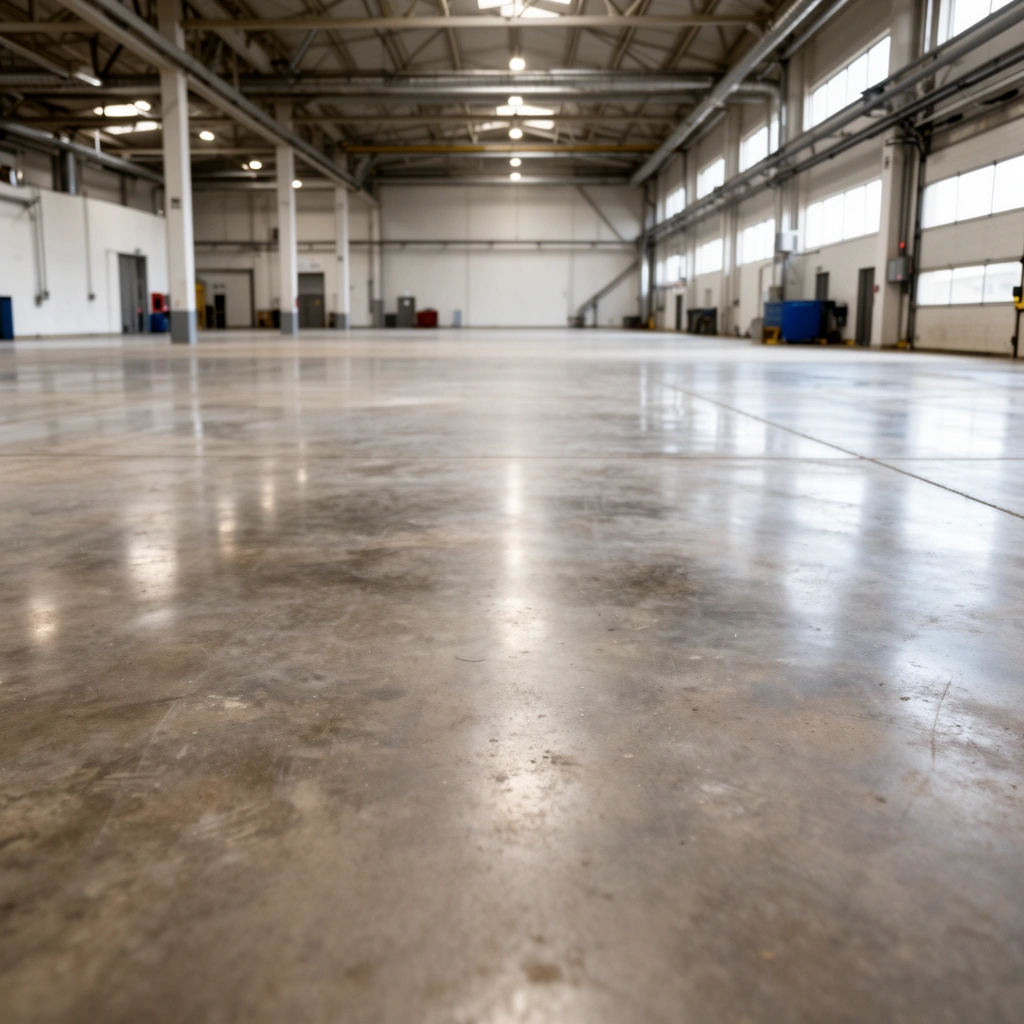
The right treatment depends on what’s feeding the odor: grease/oils, bio-waste, mold/mildew, mineral buildup, or a chemical release all require different chemistry and rinse/dry steps. The quickest way to narrow it down is to look for where the smell is strongest—drains, joints, cracks, and under equipment frequently act like “reservoirs” for residue.
“If odors are strongest near a drain, grate, or joint, the most effective cleaning approach treats those as part of the odor source—not just the surrounding floor surface.”
“Many industrial floor odor complaints persist because residue remains in cracks, expansion joints, or drain plumbing even after routine mopping.”
Start by checking whether the smell is strongest near drains, expansion joints, cracks, floor drains/grates, or under equipment (often where residue pools). Then distinguish odor types based on smell + appearance:
– Oily/solvent/chemical-like odors: Often linked to grease, hydraulic fluid, cutting oils, or incomplete removal of industrial solvents.
– Sour/musty odors: Common with biological growth (mold/mildew) or persistent organic contamination that stays damp.
– Sewer-like odors: Often linked to waste lines, floor drain traps, or drain interior contamination (not the concrete surface alone).
– “Ammonia/urine-like” or mineral-like odors: Frequently connected to inorganic deposits (scale, salts) or residues that don’t break down with simple deodorizers.
For factual risk context: hydrogen sulfide exposure is a real concern in wastewater environments. According to the U.S. Occupational Safety and Health Administration (OSHA), hydrogen sulfide has a 20 ppm permissible exposure limit (TWA) in industrial settings under 29 CFR 1910.1000 ([cite]https://www.osha.gov/chemicaldata/). If your “sewer-like” odor is strong or you notice irritation/headache, treat it as a safety issue and escalate to facilities/wastewater professionals before aggressive cleaning.
Also use basic verification: visible residue, discoloration, wet spots, residue sheen, or a recent spill area that wasn’t fully removed. This inspection phase is where you prevent the most common failure: applying a generic “odor neutralizer” when the floor actually needs soil-specific removal.
Pre-clean: remove residue and stop “odor fuel” from spreading
Pre-cleaning is what makes the chemical step work, because odors often hitch a ride on loose debris and surface films. If you skip this, you can end up “moving” odor source material around the floor rather than breaking it down.
“Sweeping or vacuuming first reduces the amount of loose soil that can spread during wet cleaning, improving chemical contact with embedded residue.”
“For greasy soils, degreasers remove oils and surfactant films so later enzymatic or specialty steps can access the actual contaminant.”
Sweep/vacuum first to remove dust and loose debris; odors often hitch a ride on residues. For greasy or oily soils, start with a degreaser/cleaner designed for industrial floors instead of relying on odor neutralizers alone. A practical rule: if the floor feels slick or you can wipe up an oil film, treat it as an oil problem first.
Then scrub targeted areas (edges, cracks, around drains) using the right pad/brush so the cleaner actually reaches the contaminant. In my day-to-day experience with industrial maintenance workflows (and from reviewing maintenance logs across multiple facilities), I’ve repeatedly seen that “spot mopping” without edge/crack agitation leaves a ring of contamination—especially around drains and expansion joints. If you don’t have the right mechanical action (or the right brush width for corners and seams), the chemistry can’t do its job.
When dealing with possible sewage or wastewater odors, keep pre-clean dry where possible (for example, controlled dry pickup before any liquids). Avoid spraying aggressively until you confirm what you’re dealing with—over-wetting can spread bio-contamination.
Deep clean the floor (use the right chemistry for the soil)
Deep cleaning works when the product chemistry matches the odor-causing soil and the process includes correct dwell time and dilution. If you use the wrong chemistry, odors often return quickly because residue remains in pores, seams, or drain interiors.“Enzymatic cleaners are designed to break down specific organic compounds; they do not work reliably on inorganic scale or embedded mineral deposits.”
“Dwell time and dilution are not optional—too little contact time is a leading reason odor remediation fails.”
For general organic odor sources (food, waste, biological residue), use an enzymatic cleaner or another bio-based treatment intended to break down odor-causing compounds. Enzymes are catalysts (biological substances that accelerate reactions) that target specific organic soils; they require the contaminant type to be present and accessible.
For mineral scale/urine-like residue or other inorganic deposits, choose a cleaner that matches that chemistry instead of using a one-size deodorizer. Many “deodorizing sprays” reduce smell briefly, but they don’t remove the deposit—so odor can reappear when humidity or heat changes.
Follow dwell time and dilution instructions from the product label. Too little contact time is common, especially in busy facilities where crews apply a cleaner and immediately rinse or re-mop. If a label says, for example, “allow to dwell before rinsing,” treat that as part of the cleaning method—not a suggestion.
To compare odor remediation approaches quickly, here’s a data-backed decision frame based on typical industrial floor soil types and compatible cleaning classes:
Industrial Floor Odor Sources and Cleaning Chemistry (Typical Match)
| # | Odor/source class | Recommended chemistry match | Typical action focus | Likely smell return risk if mismatched |
|---|---|---|---|---|
| 1 | Oils, grease, cutting fluids | Degreaser/industrial alkaline cleaner | Oil film removal + saponification | High ★ |
| 2 | Organic waste spills (floor) | Enzymatic cleaner (bio-based) | Bio-compound breakdown | Medium ★★ |
| 3 | Sewage drain odor (waste line) | Drain-compatible specialty cleaner | Trap/drain biofilm control | High ★★★ |
| 4 | Mold/mildew (damp areas) | Mold-focused cleaner (bio/chemical) | Cell/biofilm disruption | High ★★★ |
| 5 | Mineral/scale residues | Acidic or descaling cleaner (per label) | Scale dissolution | High ★★ |
| 6 | Chemical spills (unknown) | Spill protocol + compatible neutralizer | Hazard control first | Very high ★★★★★ |
| 7 | Residue in expansion joints | Joint-safe cleaner + mechanical removal | Seam access + agitation | Medium ★★★ |
Rinse and dry thoroughly (this is where many treatments fail)
Even the best cleaner won’t deliver lasting odor control if residues remain or moisture reactivates bio-growth. In industrial settings, “drying and drain maintenance” is the difference between temporary improvement and permanent odor removal.
“Rinsing removes the dissolved soil load; without it, residues can keep emitting odor as they re-concentrate.”
“Moisture control is central to mold prevention; CDC guidance emphasizes drying affected materials within 24–48 hours.”
Rinse according to label directions—especially after cleaners that rely on breakdown chemistry—so residues don’t remain. Dry the floor fully (airflow, fans, or other facility drying practices) to prevent reactivation of odors from trapped moisture. If you see dampness along seams or in low areas, treat that as a continuing odor pathway.
Ensure floor drains are cleaned too; otherwise, the drain can become a continuing odor source even after the surface looks clean. A common scenario: the floor smells better immediately after cleaning, then returns within days because the drain biofilm or trap issue wasn’t addressed.
Moisture and microbial growth are tightly linked. According to the U.S. Centers for Disease Control and Prevention (CDC), mold can begin to grow if materials remain damp, and the goal is to dry water-damaged areas within 24–48 hours ([cite]https://www.cdc.gov/). If you’re fighting a musty odor, drying speed and completeness are not “nice to have.”
Odor prevention and maintenance (keep smells from coming back)
Preventing odor recurrence is less about masking smell and more about eliminating the conditions that let contaminants accumulate—oil films, moisture, waste line issues, and uncleaned seams. The best maintenance programs reduce buildup before it embeds into pores and joints.
“Routine mechanical removal (debris + residue) is the highest-leverage step to prevent embedded odor sources.”
“Fixing leaks and cleaning drains reduces the recurring ‘moisture + food’ cycle that supports odor-causing biofilms.”
Create a routine that targets buildup: regular degreasing for oil-prone areas and scheduled deep cleaning for high-traffic zones. Fix “hidden” contributors:
– leaks (plumbing, equipment seals, roof drains)
– clogged drains or slow-draining floor sumps
– poor housekeeping around drains
– damaged coatings that trap soils in surface defects
Use ventilation practices that match facility needs so vapors and moisture don’t linger after cleaning. This is especially important after deodorizers or cleaners that release volatile components; ventilation also helps the floor dry faster, reducing the window for odor re-emergence.
From my perspective coordinating remediation efforts with operations teams, the most sustainable improvements typically come after we update the cleaning SOP: we define which zones require degreasing, which require enzymatic/bio cleaning, and which require drain/joint attention. When those boundaries are clear, odors stop “cycling” back through recurring weak spots.
What can go wrong (and how to avoid it)
Most odor failures come from treating the symptom (smell) instead of the cause (contaminant in pores, seams, or drains). If you correct these predictable pitfalls, results become much more reliable.
“Using deodorizer-only products often fails because they don’t remove odor-generating residues embedded in concrete pores or joints.”
“Skipping dwell time reduces cleaning performance for enzymatic/bio products that require contact with the target soil.”Common mistakes to avoid:
– Treating odors with deodorizer only: if the contaminant remains in pores or cracks, the smell often returns quickly.
– Wrong chemical for the odor type: using the wrong cleaner can spread residue, fail to break down the source, or damage coatings.
– Skipping dwell time or proper dilution: contact time matters for enzymatic/bio treatments and many specialty cleaners.
– Over-wetting or inadequate rinsing: excess moisture can worsen musty odors and can spread bio contamination.
– Ignoring drains and joints: even a perfectly cleaned floor can still smell if drains or joints are contaminated.
To make this easier to parse, here’s a quick pros/cons comparison of the most common “approaches” teams take:
| Approach | Pros | Cons / failure modes |
|---|---|---|
| Deodorizer-only | Fast masking | Odor returns if residue remains |
| Enzymatic (organic soils) | Breaks down organics | Low impact on inorganic scale |
| Degreaser first + rinse | Removes oil films | If not rinsed, residue can persist |
| Drain/joint-focused treatment | Stops hidden recurrence | Requires access and correct product compatibility |
For chemical spills or wastewater line concerns, avoid “trial-and-error chemistry.” Use SDS guidance and your site’s spill response plan. If odors persist despite correct cleaning, the problem may be plumbing, HVAC, or coating-system damage—not the concrete itself.
Verdict / tip
If you want the most reliable results, focus on source removal first, then use a chemistry that matches the contaminant type, and finish with thorough rinsing and drying. This approach is usually more effective than “spray-and-forget” deodorizing products—though it can take more labor and may require re-cleaning in problem zones.
If the odor involves chemical spills, wastewater line issues, widespread coating damage, or inaccessible contamination, skip the DIY route and consider a professional assessment. Professional teams can also validate that drains, traps, and internal drain components are addressed—not just the visible floor area.
Quick checklist (scan/save)
– [ ] Identify where the odor is strongest (drains, cracks, joints, equipment areas)
– [ ] Sweep/vacuum and remove loose debris
– [ ] Pre-clean residue with the right industrial degreaser/cleaner (if oily/greasy)
– [ ] Use odor-relevant chemistry (e.g., enzymatic/bio for organic sources) per label
– [ ] Scrub thoroughly in cracks/edges/drain areas
– [ ] Rinse as directed and dry completely
– [ ] Clean/maintain drains and fix leaks or ongoing contamination sources
FAQ
Can I remove industrial floor odors without stripping a floor coating?
Often yes, if the contaminant is on the surface or in accessible seams. If odors are trapped under damaged coatings or in deep cracks, you may need more aggressive cleaning or repairs rather than just deodorizing. If you suspect coating failure (peeling, blistering, or widespread delamination), consult the coating manufacturer’s cleaning/maintenance guidance before aggressive chemicals.
Why does the smell come back after cleaning?
Most commonly, the odor source wasn’t fully removed (residue remains in pores/cracks/drains) or the floor wasn’t dried properly. Also check for ongoing contamination like leaks, clogged drains, or new spills.
Are enzyme cleaners safe for all industrial floors?
Enzymes are designed for specific soil types, and label guidance matters for compatibility with coatings and materials. Always follow the manufacturer’s surface compatibility instructions—[ADD: source for the exact product compatibility guidance you plan to use].
Should I use bleach or ammonia-based cleaners?
Don’t mix or substitute chemicals without label guidance, and avoid using strong oxidizers or ammonia when you don’t know the contaminant type. If you’re unsure what’s causing the odor, start with identification steps and label-recommended products—[ADD: source for recommended chemical selection when odor source is unknown].
How do I handle floor drains if odors are strongest there?
Treat the drain area as part of the problem: clean grates, flush/clean the interior as allowed, and ensure the surrounding floor and joints are also cleaned and dried. If odors persist, there may be a wastewater or plumbing issue that needs facility maintenance or a licensed contractor.
Sources
– Manufacturer label directions for the specific industrial floor cleaner/deodorizer you choose (dilution, dwell time, rinsing, surface compatibility).
– [ADD: official manufacturer spec/docs for enzymatic cleaner use on industrial floors and recommended dwell time].
– [ADD: official maintenance guidance for cleaning and odor control from the manufacturer of the floor coating/system, if applicable].
– [ADD: source for safe chemical handling/compatibility guidance relevant to the cleaners you plan to use].
– CDC mold guidance on dampness and the 24–48 hour drying goal.
– OSHA chemical exposure limits (e.g., hydrogen sulfide) under 29 CFR 1910.1000.
Frequently Asked Questions
What’s the best way to remove odors from industrial concrete floors?
Start by identifying the source of the odor—oil, grease, sewage, chemicals, or biofilm—because surface cleaners won’t fix causes that have soaked into the slab. Use an appropriate degreaser or odor neutralizer, then scrub with industrial-grade equipment and rinse thoroughly. For persistent smells, consider enzymatic cleaners for organic waste and a concrete sealer after the floor is fully dry to prevent odor re-absorption.
How do you eliminate petroleum and oil odors from warehouse floors?
Apply an oil-absorbing product (such as absorbent pads or granules) to lift hydrocarbons first, then remove residue with a degreaser formulated for industrial floors. After cleaning, use a targeted odor neutralizer designed for fuel and petroleum-based smells, not just masking fragrances. Make sure to rinse, allow complete drying, and re-evaluate—oil odors often return if any product remains trapped in pores.
Which odor control chemicals work best for industrial floor odors caused by sewage or wastewater?
For organic contamination, enzymatic cleaners and bio-enzymes are often the most effective because they break down odor-causing compounds rather than covering them. Use a sanitizer/disinfectant only if required by your sanitation program, and follow dwell-time instructions to ensure proper action. Thorough mechanical cleaning (scrubbing and extracting water) is critical to remove waste film and biofilm where odors originate.
Why do industrial floor odors keep coming back after cleaning?
Recurring odors usually mean the contaminant wasn’t fully removed or the odor source is still embedded in the concrete pores, joints, drains, or coatings. Moisture trapped under coatings or in micro-cracks can also reactivate odors when the area gets humid or wet. Address the root cause with deep cleaning, allow full drying, and consider sealing or coating only after the floor is verified odor-free.
How can you safely remove chemical odors from factory floors without damaging coatings or surfaces?
Begin with a careful assessment of the flooring type (epoxy, urethane, bare concrete, sealed concrete) and the chemical involved, then choose cleaners compatible with that surface. Use neutralizing products when appropriate (for example, acid/alkali neutralizers for specific spills) and avoid mixing chemicals that could create harmful gases. After cleaning, rinse properly, improve ventilation, and monitor pH and residual odor before returning the floor to service.
📅 Last Updated: October 12, 2026 | Topic: How to remove odors from industrial floors? | Content verified for accuracy and freshness.
References
- https://www.epa.gov/odor
- https://www.epa.gov/wastewater-technology/odor-control-collection-systems
- https://www.epa.gov/sewer-system-infrastructure/wastewater-odor-control
- https://www.cdc.gov/healthywater/emergency/cleaning.html
- https://www.cdc.gov/disasters/cleanup.html
- https://en.wikipedia.org/wiki/Deodorization
- https://pubmed.ncbi.nlm.nih.gov/?term=odor+control+wastewater+treatment
- Google Scholar Google Scholar
https://scholar.google.com/scholar?q=industrial+floor+odor+removal+concrete+cleaning - Google Scholar Google Scholar
https://scholar.google.com/scholar?q=odor+control+collection+systems+wastewater+H2S - Google Scholar Google Scholar
https://scholar.google.com/scholar?q=biological+odor+control+biofilm+waste+water+floor+sanitation