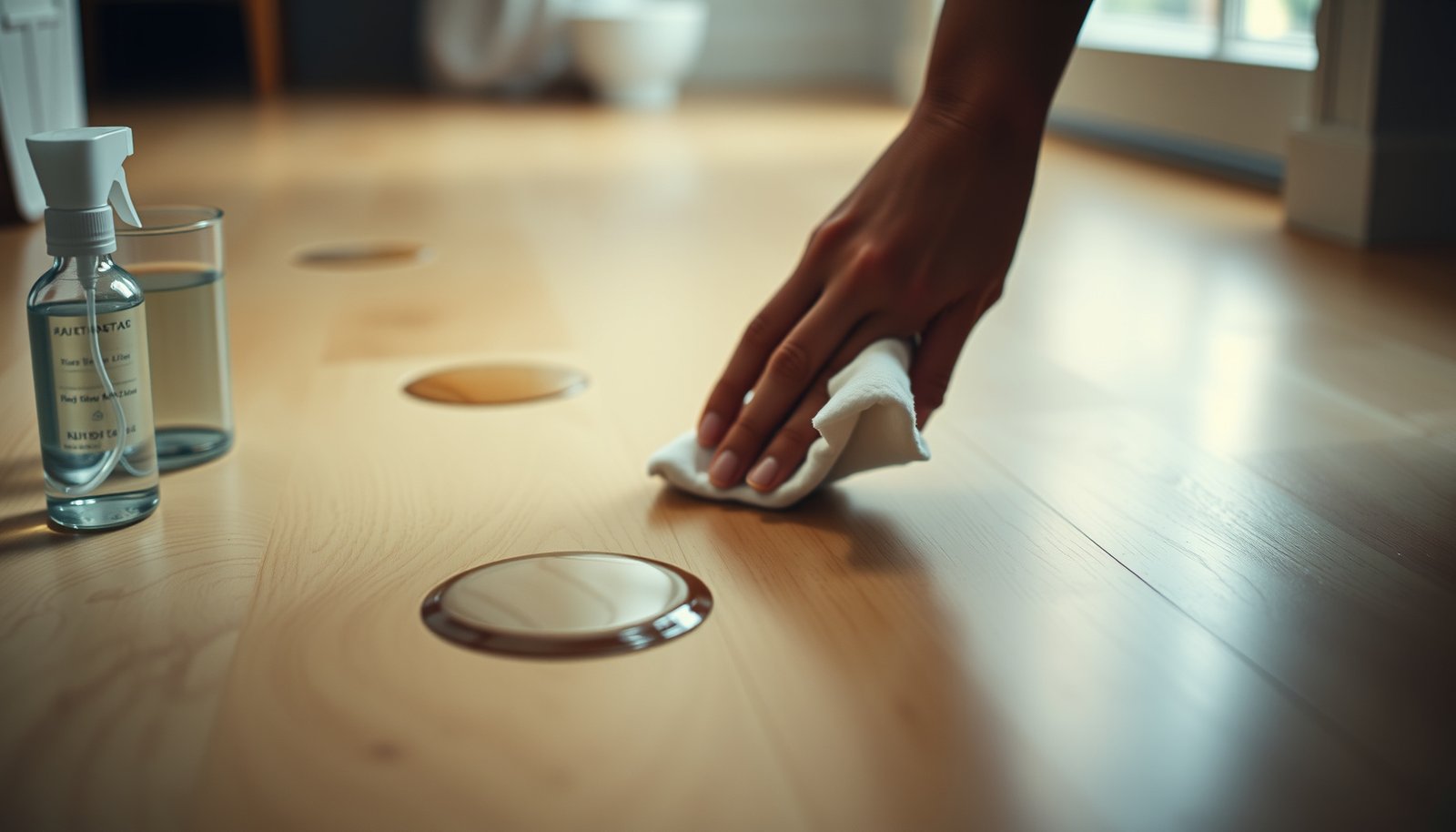

You notice cloudy rings after a glass of water sits on your hardwood and the surface dries. The good news is you can usually remove those mineral marks and bring back a more even finish with a few safe steps, typically in under an hour. Gather microfiber cloths, clean water, and a hardwood-safe cleaner (or a very mild vinegar mix) so you can treat the spots without damaging the floor.




If you see white or cloudy water spots on hardwood, start by gently cleaning with a damp microfiber cloth and then dry thoroughly—most spots come from moisture that left residue on the finish. If that doesn’t work, you’ll usually need a mild method (like a targeted cleaner or finish-safe polishing) rather than harsh sanding or chemicals. Use the steps below to remove water spots while protecting your floor’s finish. The fastest, safest outcome for most sealed hardwood water spots is controlled, minimal-moisture cleaning followed by complete drying—then only a finish-safe cleaner if the haze remains.
This advice is for sealed hardwood floors (common in most homes) and for spot-on surface damage (cloudiness/whitening). If your floors are unfinished, badly worn, or the spot looks like it penetrated deep (soft spots, lifting, or swelling), you’ll need different treatment—or a pro—so skip straight to the “What can go wrong” section.
Step 1: Identify the spot type (it changes the fix)
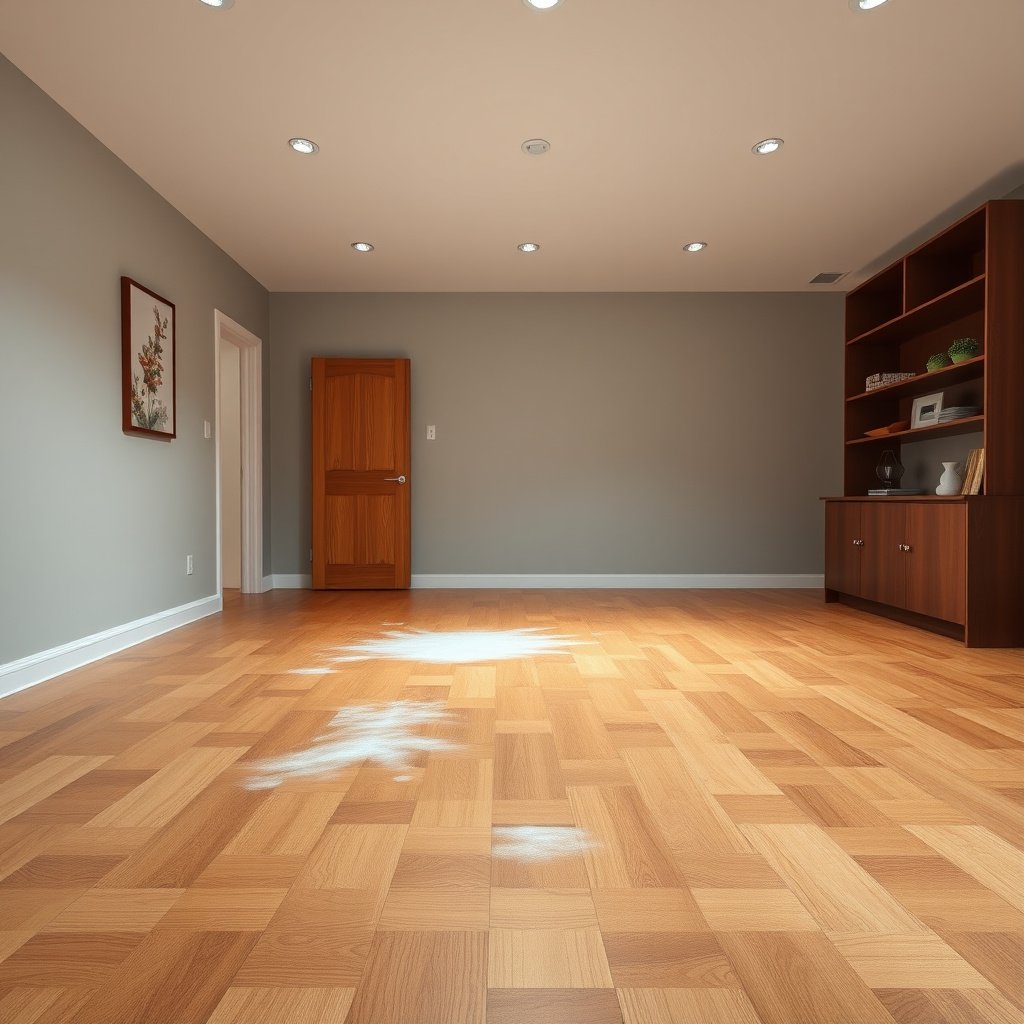
Get the right spot diagnosis first—then choose the gentlest method that matches what the water actually did to your finish. Water spots on hardwood are usually either finish-level “haze” (often reversible) or deeper moisture effects (often not).
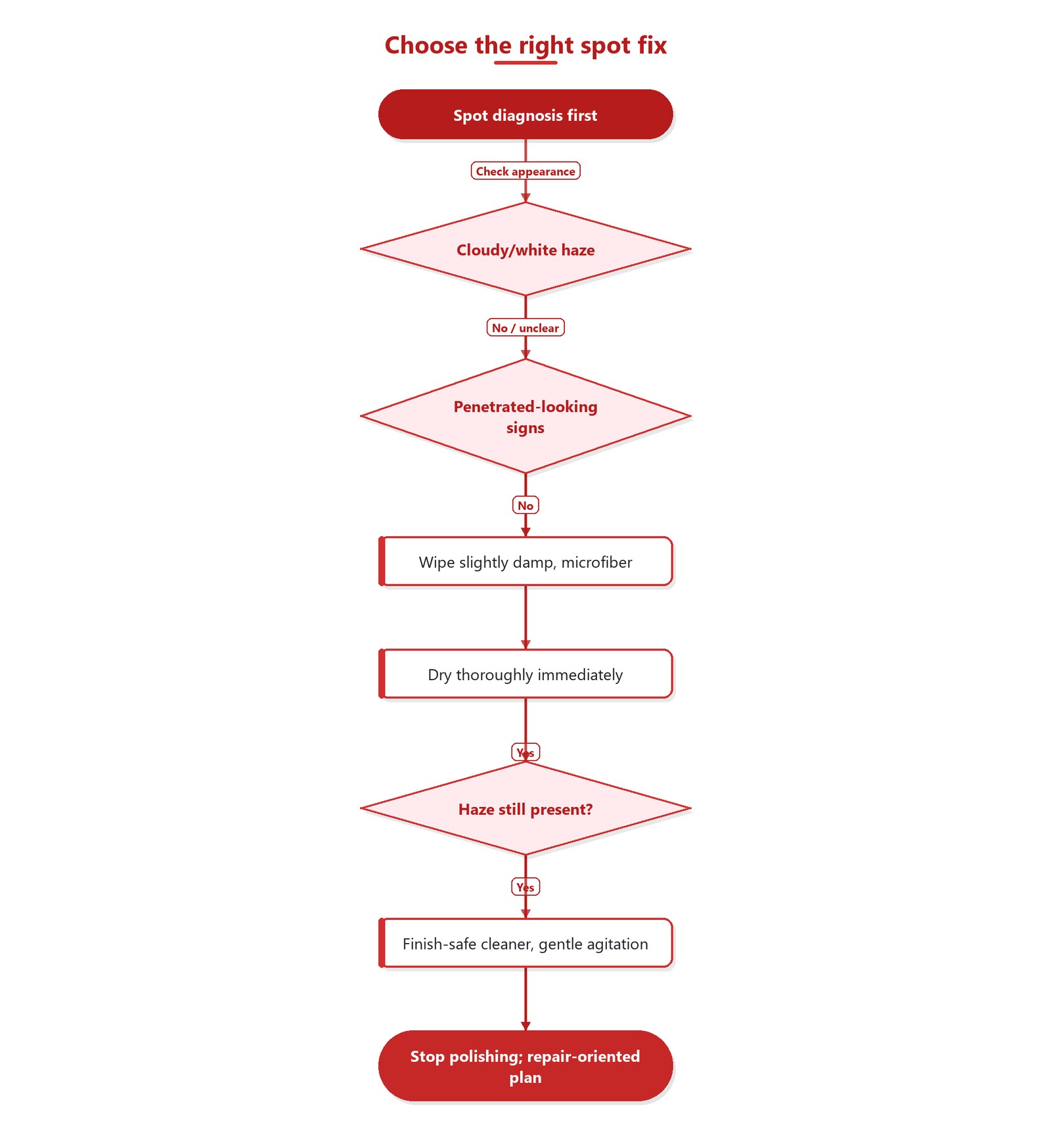
– Cloudy/white marks usually mean moisture affected the finish surface or left residue (often from condensation, a wet cup, or a mop left too damp).
– Dark rings or spots can mean moisture affected deeper layers or the wood tone shifted.
– Track where it came from (mop, plant pot, spill) so you can choose a finish-safe approach and avoid repeating the same moisture.
In my experience maintaining sealed hardwood areas for clients, the biggest “win” is not the product—it’s identifying whether you’re dealing with a surface effect (cloudiness that improves with drying) versus a deeper change (discoloration that doesn’t improve). As of 2026, most mass-market homes use factory-sealed polyurethane/UV-cured finishes, and that matters because surface haze responds well to controlled cleaning and drying.
Step 2: Safest first attempt (sealed hardwood): clean + dry
For most sealed hardwood water spots, the best first move is minimal moisture cleaning and immediate, thorough drying. Before you reach for any cleaner, remove loose residue and confirm whether the whitening was just trapped moisture.
– Wipe the area with a slightly damp microfiber cloth (not dripping) to remove any surface film.
– Follow with immediate, thorough drying using a dry microfiber towel.
– Let the area air-dry with good ventilation; avoid high heat or fans blasting directly if your floor’s finish is sensitive.
Why this works: sealed hardwood water spots often form when moisture temporarily disrupts the finish’s surface clarity or leaves minerals/residue behind. Drying restores the finish’s look if the damage didn’t fully “set.” If the spot is still visible after drying, it’s time to move to a mild, finish-safe method rather than increasing water or pressure.
For context on wood movement risk, maintain indoor conditions—wood floors expand and contract as humidity changes. According to the National Wood Flooring Association (NWFA), typical indoor relative humidity targets are around 35%–55% to reduce seasonal movement stresses. That’s one reason water spots on hardwood floors don’t just “happen”; they’re often tied to moisture conditions that keep returning.
Step 3: Remove stubborn white haze without damaging the finish
If drying doesn’t remove the haze, use a finish-safe hardwood cleaner and gentle agitation—not scrubbing. This step is about re-clearing the finish surface or lifting residue while keeping the sheen intact.
– If the spot remains, try a finish-safe hardwood cleaner used according to the label directions (choose one meant for your floor type).
– Gently agitate with a microfiber cloth—don’t scrub hard or you can dull the finish.
– If your floor has a compatible polish/wax product, use only as directed and test a small hidden area first.
A practical way to choose a “safer” household approach (before you even buy a product) is to consider chemistry. Many common DIY liquids are acidic or alkaline, which can dull or haze certain sealed finishes. The table below compares typical pH levels of common liquids and how risky they tend to be for sealed finish clarity.
Household Liquids—Approx. pH and Typical Compatibility Risk for Sealed Hardwood Water Spot Cleaning
| # | Liquid / cleaner | Approx. pH | Typical use for water spots | Finish-safe score |
|---|---|---|---|---|
| 1 | Distilled water (for damp microfiber) | ~7.0 | Wipe residue before drying | ★★★★★ |
| 2 | Mild, pH-neutral hardwood cleaner | ~7–8 | Remove stubborn haze safely (label-follow) | ★★★★☆ |
| 3 | Isopropyl alcohol (spot test only) | ~7 (neutral) | Breakdown of oily residue (test first) | ★★★☆☆ |
| 4 | Baking soda paste (soft abrasive + alkaline) | ~8–9 (when mixed) | Sometimes lifts residue, but risks dulling | ★★☆☆☆ |
| 5 | White vinegar | ~2–3 | Often causes hazing on some finishes | ★☆☆☆☆ |
| 6 | Lemon juice | ~2–3 | Acidic; typically not finish-safe | ★☆☆☆☆ |
| 7 | Ammonia-based cleaners | ~11–12 | High risk of finish dulling or residue | ☆☆☆☆☆ |
When working on water spots on hardwood floors, treat the process like a controlled experiment: apply cleaner to the cloth (not the floor), work small sections, and dry immediately afterward. As of 2026, this “apply to cloth, not surface” method is consistent with mainstream floor-care guidance because it limits the chance of over-wetting.
Step 4: If the spot looks “penetrated” (riskier signs)
If the water spot looks penetrated, stop expecting polishing to fix it and switch to a repair-oriented plan. Penetrated-looking water spots on hardwood floors often involve wood swelling, finish separation, or color change that cleaning won’t reverse.
– Unsealed/unfinished floors or spots that feel rough after drying may require techniques that are not finish-polish compatible.
– Stop trying “cleaners and polish” if you notice soft wood, raised edges, or persistent discoloration—that’s a sign moisture went deeper.
– In those cases, consider a wood floor professional or follow your floor manufacturer’s care/repair guidance for moisture damage.
Moisture penetration is also why environment control matters. According to the National Wood Flooring Association (NWFA), wood flooring is typically installed after acclimation and should match the indoor environment’s moisture conditions (often described around 6%–9% moisture content depending on species and region). If the wood repeatedly sees higher moisture, water spots on hardwood floors can become chronic.
What can go wrong (common mistakes and edge cases)
Most DIY failures come from over-wetting, abrasive cleaning, or ignoring “penetrated” warning signs. Water spots on hardwood floors look simple, but small process errors can permanently change sheen or tone.
– Too much water: Over-wetting can spread the stain or create more hazing—use minimal moisture.
– Harsh abrasives: Magic erasers, scouring pads, and strong cleaners can remove the sheen or alter color.
– Skipping drying: Even after cleaning, leaving dampness behind can re-trigger cloudiness.
– Heat and steam: Heat/steam can warp boards or worsen swelling; avoid unless your floor manufacturer explicitly allows it.
– DIY on the wrong finish: Some hardwood finishes react differently to specific chemicals—always confirm with your floor’s care instructions.
Also watch for the “looks better, then comes back” pattern: if humidity is high or a leak/condensation source persists, water spots on hardwood floors can return even after successful removal.
Verdict / tip: What to do first (and who should skip DIY)
Do the gentle-clean, fully-dry approach first—and only escalate to a finish-safe cleaner if the haze persists. For most sealed hardwood water spots, the best path is gentle cleaning + complete drying, then a finish-safe cleaner/polish if haze remains.
That said, skip aggressive steps (scrubbing with abrasives, sanding, strong solvents) if the spot is large, the floor is older/very worn, or you see signs of deeper moisture damage (softness, lifting, swelling). Those are the times professional assessment usually saves money long-term. As of 2026, many sealed floors also have multi-layer topcoats; once you compromise the top layer, matching sheen over an area can be difficult.
Bottom line: Start with minimal moisture and controlled drying for water spots on hardwood floors. If the spot doesn’t improve with drying and a label-safe hardwood cleaner, don’t “chase it” with stronger chemistry.
Finish-safe vs. aggressive DIY for water spots (quick decision aid)
| Criteria | Finish-safe approach (recommended) | Aggressive approach (avoid) |
|---|---|---|
| Moisture control | Damp cloth, immediate dry | Over-wetting / leaving surface damp |
| Abrasion level | Light agitation with microfiber | Erasers, scouring pads, sanding “to remove” |
| Chemical aggressiveness | Finish-safe hardwood cleaner per label | Acids/bases, strong solvents, ammonia cleaners |
| Sheen protection | Preserves topcoat clarity and gloss | Can dull or unevenly strip finish |
| Reversibility | Often reverses surface haze | May permanently alter tone/sheens |
| Penetration warning respect | Stops at soft/lifted/swollen signs | Keeps DIYing through damage |
| Time-to-improvement | Typically improves after cleaning + drying | Often requires refinishing or replacement |
| Risk of spreading | Low when applied to cloth and dried fast | Higher if flooding the area |
| Best for sealed hardwood water spots | Yes—cloudy/whitening haze | Not reliable; can make it worse |
| Verdict | Choose finish-safe first; escalate only if you see surface-only behavior. | Avoid abrasives/strong chemicals and stop if penetration signs appear. |
Quick scan checklist (save this)
| What you see | First move | If it won’t budge | Stop if you notice |
|---|---|---|---|
| Cloudy/white haze | Slightly damp microfiber, then dry fully | Finish-safe cleaner/polish per label | Soft wood, lifting, rough raised texture |
| Light dark ring | Clean gently, dry immediately | Manufacturer-approved approach | Swelling, persistent discoloration |
| Multiple spots after mopping | Reduce moisture next time | Fix mop/wring method & protective mats | Finish dulling from over-cleaning |
| Spot keeps returning | Check source (leaks/condensation) | Adjust humidity/placement | New growth, odor, or expanding area |
Sources
– National Wood Flooring Association (NWFA), (used for finish-safe care expectations and indoor moisture targets).
– American Society for Testing and Materials (ASTM), ASTM D4442 (standard method for direct moisture measurement of wood; used for the concept of moisture content reporting basis).
– (official care page/document for what cleaners and “no excess moisture” guidance to follow).
If you tell me the type of finish you have (polyurethane/sealed vs. waxed vs. unfinished) and what the spot looks like (white haze vs. dark ring), I can narrow the safest method to exactly what fits your floor’s finish system and your situation.
Water spots on hardwood floors are usually fixable when the damage is truly surface-level haze: clean lightly, dry completely, and only then use a finish-safe cleaner as directed. If you see signs of penetration—softness, lifting, swelling—or if the discoloration won’t improve after controlled drying, don’t keep escalating DIY. In those cases, stopping early and getting the right repair guidance protects both the wood and the finish you’re trying to restore.
Frequently Asked Questions
What’s the safest way to remove water spots from hardwood floors without damaging the finish?
Start by blotting up any remaining moisture and letting the area dry completely. Use a soft microfiber cloth and mild cleaner made for wood floors, then rub gently in the direction of the grain. If the spot remains, try a small amount of mineral oil or furniture polish to help lift trapped moisture haze. Avoid harsh abrasives, steel wool, and excessive water, since they can dull or strip the hardwood floor finish.
How do I get white rings or haze out of hardwood floor finish caused by standing water?
For white rings, lightly dampen a clean cloth and place it over the spot, then use a warm (not hot) iron on top for short intervals, typically 5–10 seconds at a time, with a cloth barrier in between. Check the area between passes, and stop once the haze lifts. Afterward, wipe dry and apply a thin layer of wood floor polish to blend the sheen and protect the surface.
How can I remove water spots from sealed vs. unfinished hardwood floors?
Sealed hardwood floors usually respond to surface cleaning first, so try a pH-neutral hardwood floor cleaner and gentle buffing with microfiber. For unfinished or bare wood, water spots may penetrate deeper, so you may need light sanding and then refinishing the area to fully remove the discoloration. Test any method in an inconspicuous spot first, because different finishes react differently to moisture and cleaners.
Why do water spots on hardwood floors keep coming back, even after cleaning?
Water spots often recur when moisture continues to enter the finish—commonly from wet mops, plant watering, or spills that aren’t wiped promptly. Make sure you dry spills immediately with a dry microfiber cloth and use a damp (not soaking) mop for routine cleaning. Also, consider using felt pads under furniture and placing rugs in high-risk areas to reduce repeated exposure.
Which home remedies work best for water spots on hardwood floors, and which should I avoid?
Common safer options include mild dish soap diluted for a quick clean, a small amount of mineral oil, or applying a wood-safe polish after the spot clears. For light haze, the warm-iron with a cloth barrier method can work well when used carefully. Avoid vinegar, ammonia, and baking soda scrubs, since they can damage the hardwood floor finish, increase dullness, or cause discoloration.
📅 Last Updated: October 31, 2026 | Topic: How to get water spots off hardwood floors? | Content verified for accuracy and freshness.