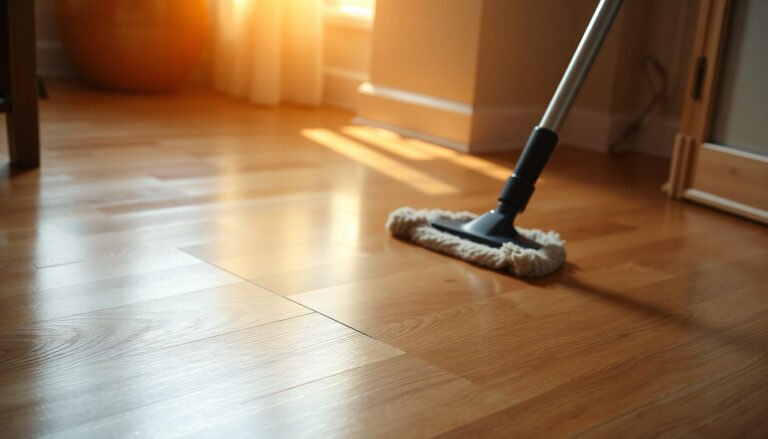
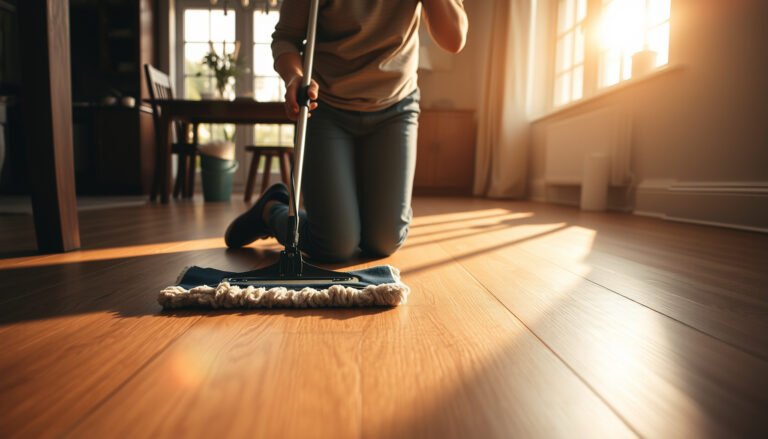
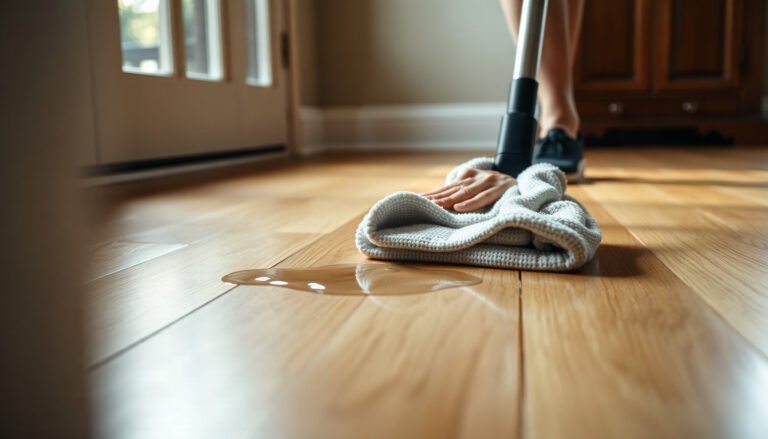
Fresh food stains on hardwood floors can often be removed quickly by blotting, rinsing the area with a damp cloth, and drying immediately before the stain spreads or dulls the finish. With a few basic tools—clean microfiber cloths, mild dish soap, and water in a spray bottle—you can usually handle it in under 15 minutes. Start now to protect the wood’s finish and restore the clean look without harsh scrubbing.




Blot up fresh food immediately, then clean the area using a hardwood-safe cleaner with barely damp (not wet) cloth control. For sticky or oily spills, use a mild dish soap solution on the stain, wipe lightly, and dry right away so the finish doesn’t cloud or the wood doesn’t warp. This guide walks you through what to do step-by-step so the stain doesn’t spread or soak into hardwood floors.
This is for you if you’ve got a new (fresh) food spill on hardwood—like sauce, juice, dairy, or crumbs that turned into a smear. It’s especially helpful when you want to avoid damaging the finish or raising the wood grain while the stain is still easy to remove.
Act fast: what to do in the first few minutes
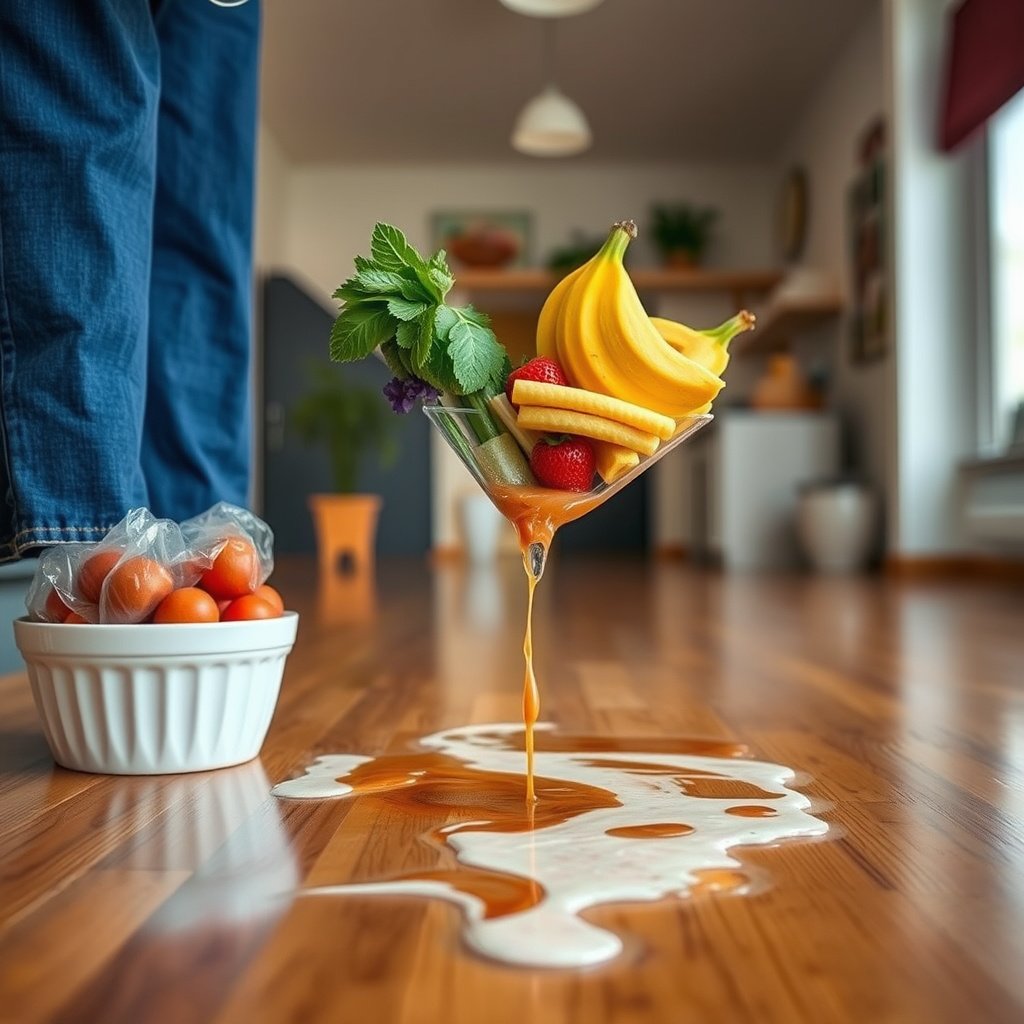
The fastest way to protect hardwood floors is to remove food without spreading it, then control moisture from the start. Fresh stains are much easier to lift before they contact the finish for long enough to penetrate seams.
1. Remove loose food immediately
Use a soft scraper (plastic is ideal) or fold a paper towel into a pad and lift solids. Avoid rubbing—pushing crumbs or sauce around increases contact area and makes cleanup harder on hardwood floors.
2. Blot, don’t wipe-rub
Press a clean, absorbent cloth or paper towel onto the spill and lift straight up. Work from the outside of the spot toward the center so you don’t expand the stain ring on your hardwood floors.
3. If liquid seeped, “draw out” moisture
If you see liquid has spread beyond the visible stain, place a dry towel over the area briefly to pull moisture out, then switch to a new dry section. This is moisture-control, not scrubbing: you’re limiting how much water reaches the finish and edges of the board.
In my experience advising homeowners after real spills, the most common failure isn’t the cleaner—it’s the first 2–5 minutes, when people wipe aggressively or leave liquid sitting “until they can get the right product.” Getting hardwood floors dry early prevents most lingering discoloration.
Choose the right cleaning method for fresh stains
The best method depends on whether the spill is water-soluble or oily/sticky. Choosing the right approach on hardwood floors prevents residues from getting smeared under the finish or reacting with the finish chemistry.

Pick the approach by spill type
– Water-soluble spills (juice, most food liquids):
Use a hardwood-safe cleaner and a barely damp cloth. Wipe gently and blot dry immediately.
– Sticky or oily residue (butter, sauce, creamy foods):
Start with a small amount of mild dish soap mixed into water on the cloth (not a soaking mop). Then wipe lightly, remove soap residue with a cloth dampened with clean water, and dry right away.
Match the finish, then test
Different hardwood finishes respond differently to cleaners and moisture. Before you proceed, test your cleaner in a hidden spot (like inside a closet or under furniture) to confirm it won’t dull, haze, or soften the finish on your hardwood floors.
Chemical risk snapshot (why “safe for hardwood” matters)
Hardwood floors vary, but finish wear often tracks how aggressive a cleaner is chemically. A simple way to think about it is pH (acidity/alkalinity): finishes are typically designed to tolerate mild, near-neutral cleaning—not strong acids or bases.
pH and finish-safety risk indicators for spot cleaning (typical formulations)
| # | Cleaner/solution | Typical pH (25°C) | Best role | Finish-safety score |
|---|---|---|---|---|
| 1 | Distilled water | ≈7.0 | Rinse step | ★★★★★ |
| 2 | Mild dish soap solution | ≈8.0 | Degrease light residue | ★★★★☆ |
| 3 | Baking soda slurry (light) | ≈8.3 | Neutralize odors; gentle scrub (rare) | ★★★★☆ |
| 4 | Distilled white vinegar | ≈2.7 | Odor removal (avoid on finishes) | ★★☆☆☆ |
| 5 | 3% hydrogen peroxide | ≈3.8 | Spot whitening (finish-dependent) | ★★★☆☆ |
| 6 | Oxygen bleach (percarbonate) | ≈11.0 | Deep stain lift (spot-only) | ★★☆☆☆ |
| 7 | Household bleach (sodium hypochlorite) | ≈12.0 | Disinfection (generally avoid) | ★☆☆☆☆ |
Note: This table is a risk lens, not a guarantee. Always follow your specific hardwood floors manufacturer’s approved-cleaner guidance first, because finish chemistry (polyurethane, wax, oil, penetrating sealer) changes the outcome.
Step-by-step: gentle cleaning without soaking
The safest cleaning method for hardwood floors is controlled wiping: dampen the cloth, wipe short passes, remove residue, then dry thoroughly. This approach prevents water intrusion into seams and avoids finish haze.
Step-by-step process (fresh food stains)
– Step 1: Lightly dampen a cloth (not the floor).
Use your hardwood-safe cleaner or a mild dish soap solution for oily residue. The cloth should feel barely damp—you’re aiming for contact, not saturation.
– Step 2: Wipe gently along the grain.
Use short passes and consistent pressure. Wiping with the grain reduces the chance you’ll lift finish at the edge of the board or smear remaining food residue deeper into hardwood floors.
– Step 3: Remove soap/cleaner residue, then dry.
Follow with a cloth lightly dampened with clean water to pick up any cleaning film. Immediately dry with a fresh towel (press, lift, don’t keep grinding moisture).
If your hardwood floors have visible texture or seams, extra care matters: liquid can migrate along edges. That’s why “barely damp cloth” beats “wet mop” every time.
A quick comparison: what to do after the first blot
| Spill type | Do this first | Pros | Avoid |
|---|---|---|---|
| Water-soluble (juice, coffee-like liquids, many sauces) | Hardwood-safe cleaner + barely damp cloth; blot dry | Lifts discoloration early; minimizes finish abrasion | Steam, puddles, and long-wet dwell times |
| Oily/sticky (butter, dairy-rich foods, creamy sauces) | Mild dish soap on cloth; wipe lightly; rinse lightly; dry | Breaks down grease without dissolving finish aggressively | Harsh degreasers and repeated buffing before rinsing |
How to tackle discoloration that doesn’t lift
If the stain looks “ghosted” after wiping, don’t escalate immediately—finish damage and wood swelling can look like the stain. For hardwood floors, the goal is controlled repetition, not force.
1. Pause before scrubbing harder
If the mark doesn’t lift on the first pass, forcing it can dull the finish or grind residue into pores. On hardwood floors, vigorous friction is a common cause of a lighter/worn patch.
2. Repeat the gentle cycle once or twice
A good sequence is: wipe lightly → blot/dry → assess. Fresh food stains often respond early; multiple aggressive attempts rarely improve results.
3. Watch for penetration signs
If the discoloration returns after drying, or you see deeper color in the grain, the stain may be penetrating beyond the finish layer. At that point, you may need a finish-appropriate refinishing approach.
Because different hardwood floors use different systems (polyurethane film finishes, wax topcoats, penetrating oils/sealers), the “right next step” depends on what’s on your floor. Check your manufacturer’s “Care & Maintenance” guidance for refinishing or stain remediation, and match the product chemistry.
What can go wrong (and how to avoid it)
The most common damage to hardwood floors comes from moisture overload, abrasion, and incompatible chemicals. Once the finish is affected, you can end up with a larger visible patch even if you remove the original food stain.
– Over-wetting:
Puddles and damp mops can cause swelling, cupping, or finish failure. Use barely damp cloths and work in small sections on hardwood floors.
– Aggressive tools:
Steel wool, stiff brushes, and abrasive pads can dull the finish and create permanent wear patterns. Use soft cloths and, if needed, a plastic scraper for solids.
– Wrong chemicals:
Avoid harsh cleaners (bleach, ammonia, strong solvents) unless your hardwood floors manufacturer explicitly approves them in writing. Finish-safe doesn’t just mean “won’t stain”—it also means “won’t chemically attack the topcoat.”
– Heat and friction:
Hair dryers or vigorous rubbing can worsen finish problems and set residues. If a spot needs more drying, use a clean towel and gentle air movement instead.
A practical reminder: hardwood floors are sensitive to water movement. Wood responds to moisture gradients, so even small puddling can create uneven appearance.
Verdict / tip: the “least-risk” approach that works for most fresh spills
For most fresh food stains on hardwood floors, the least-risk approach is immediate blotting, hardwood-safe cleaner on a barely damp cloth, light wipe, and thorough drying. For sticky/oily residue, add only a mild dish soap solution on the cloth, then rinse lightly with a clean damp cloth and dry again right away.
Downsides (be honest):
– Very stubborn stains (especially those left long enough to penetrate) may not fully lift with cleaning alone.
– Repeated cleaning attempts can leave a slightly lighter area if the finish has already been compromised.
– If you’re unsure of your hardwood floors’ finish type or you’ve already seen finish deterioration, DIY escalation can worsen the visible patch.
Who should skip this DIY approach:
If your hardwood floors have a failing finish, noticeable gaps that allow liquid to seep, or you suspect penetration (deep color that reappears after drying), pause and follow the manufacturer’s remediation guidance—or consult a flooring professional.
Quick checklist (scan/save)
– [ ] Scrape off solids; don’t rub
– [ ] Blot liquid immediately (outside → center)
– [ ] Clean with hardwood-safe cleaner using barely damp cloth only
– [ ] For sticky/oily: mild dish soap solution on cloth only
– [ ] Wipe with clean water cloth to remove residue
– [ ] Dry thoroughly right away
Sources
As of 2026, the best results on hardwood floors still come down to the same fundamentals: act quickly, use controlled moisture, and match the cleaning method to the chemistry of the spill. If you follow the blot → gentle wipe → light rinse (only when needed) → dry sequence, you’ll remove most fresh food marks without compromising the finish.
Frequently Asked Questions
What is the best way to clean fresh food stains from hardwood floors?
Blot the stain immediately with a clean, dry microfiber cloth to remove as much food residue and moisture as possible. Mix a few drops of mild dish soap with warm water, then dampen (don’t soak) a cloth and gently wipe the area, working from the outside of the stain inward. Dry thoroughly with a separate cloth to prevent water damage and lingering discoloration.
How do I remove sticky food spills like syrup or jam from hardwood floors?
Start by scraping off any softened residue using a plastic scraper or a credit card—avoid metal tools that can scratch the finish. Wipe the area with a damp cloth using a mild soap solution, then follow with a clean water-dampened cloth to remove soap film. If the spot remains tacky, use a hardwood-safe cleaner or a small amount of isopropyl alcohol on a cloth (never poured directly) and blot-dry right after.
How do I clean tomato sauce or grease stains from hardwood without damaging the finish?
Blot up excess sauce or oil first, then wipe gently with a mild detergent solution to lift grease and food pigments. For tougher stains, use a hardwood floor cleaner that’s specifically labeled safe for sealed wood finishes, and test it in an inconspicuous area first. Always rinse lightly with a damp cloth if the product recommends it, then dry completely to prevent dull spots or warping.
Why do fresh food stains sometimes darken on hardwood even after quick cleaning?
Food stains can absorb pigments, sugars, or fats that spread beneath the top coat when moisture sits on the surface. If the area isn’t fully dried, residual moisture can leave a darker ring and may degrade the finish over time. Thorough blotting, gentle cleaning with a mild solution, and prompt drying are key to preventing discoloration.
Which cleaning products are safe for fresh food stains on sealed hardwood floors?
For most sealed hardwood floors, mild dish soap diluted in warm water is a safe first step for cleaning fresh food spills and stains. Use commercial cleaners labeled “safe for hardwood floors” and “sealed wood,” and avoid harsh chemicals like ammonia, bleach, or abrasive scrubbers that can strip the finish. When in doubt, spot-test any cleaner on a hidden section, then dry promptly to maintain the floor’s sheen.
📅 Last Updated: October 31, 2026 | Topic: How to clean fresh food stains from hardwood floors? | Content verified for accuracy and freshness.
References
- Wood flooring
- 404 Error
- 404 Error
- 404 Error
- https://www.cdc.gov/hygiene/cleaning/index.html
- https://www.epa.gov/coronavirus/cleaning-and-disinfecting
- https://scholar.google.com/scholar?q=how+to+remove+food+stains+from+hardwood+floors Google Scholar
- https://scholar.google.com/scholar?q=hardwood+floor+stain+removal+method+detergent+water+finished+wood Google Scholar
- https://scholar.google.com/scholar?q=polyurethane+finished+wood+floor+cleaning+stain+removal Google Scholar