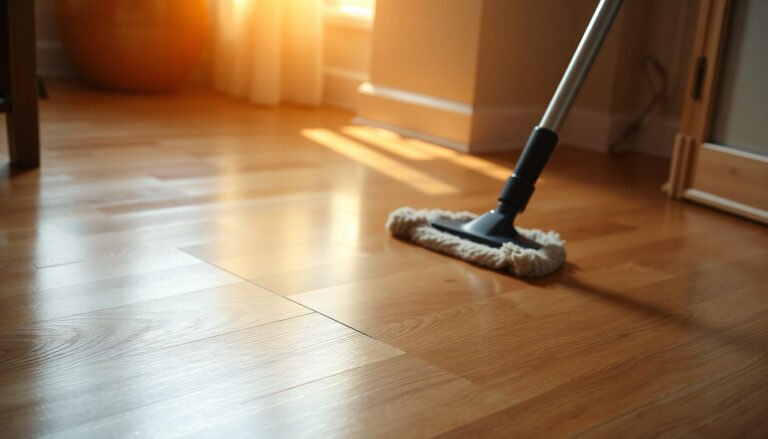
Learn how to clean LVP floors in a dining room quickly and safely, without dulling the finish or risking damage. If you want a clear, reliable routine that removes everyday dust, spills, and tracked-in grit, follow these simple steps for a streak-free result. You’ll also get the do’s and don’ts—what to use and what to avoid—so your LVP stays looking new.




To clean LVP floors in a dining room, you should remove grit first (sweep or vacuum on a soft setting), then damp-mop with an LVP-approved cleaner—never soak the surface. This protects the wear layer and helps prevent dulling, hazing, and moisture-related seam issues, especially in high-traffic dining areas where crumbs and spills are constant.
Dining rooms are unique because they combine foot traffic (tracked-in sand and grit) with frequent food contact (grease, sauce, and drink spills). As of 2024–2026, most LVP care guides continue to emphasize the same core method: “dry-first” to prevent scratching, followed by “damp-only” mopping to avoid excess water intrusion.
Step 1: Remove dirt before you mop

The fastest way to keep LVP looking sharp is to remove loose grit before any wet cleaning—because sand acts like sandpaper under chairs. If you vacuum or sweep first, your mop mostly handles residue rather than grinding particles into the finish.
What’s the goal of pre-cleaning?
Pre-cleaning is about eliminating abrasive debris, not “deep cleaning” yet. In a dining room, grit typically concentrates along chair paths, entryways, and edges where people pause to pull out chairs or set down plates.
According to the U.S. EPA, PM2.5 particles are ≤ 2.5 micrometers, and these fine particles can still contribute to dulling when they’re spread across a floor surface repeatedly.
According to the International Organization for Standardization via HEPA test frameworks (IEST/DOE-style definitions), HEPA filtration is designed to capture at least 99.97% of particles at 0.3 micrometers—helping reduce what you later redistribute with mopping.
Which vacuum/sweep approach works best?
Use a vacuum with a soft brush/roller or a setting that disables the beater bar (beater bars can be too aggressive on resilient floors). If you sweep, use a broom with soft bristles to avoid scattering grit into puddles you’ll later spread when mopping.
Focus on high-friction dining zones:
– Edges along walls and baseboards
– Under/around chair legs where crumbs accumulate
– Pathways between the dining table, serving area, and kitchen entry
What to avoid during this step
Don’t dry-scrub with abrasive pads or stiff bristle brushes. LVP’s top wear layer is tough, but repeated scratching can gradually reduce gloss and make the floor look “grayer” even when it’s clean.
Tracked Dining-Room Dirt: Particle Size & LVP Scratch Risk
| # | Tracked particle type | Typical size range | Where it shows up | Scratch risk on LVP |
|---|---|---|---|---|
| 1 | Fine sand (grit) | 0.1–2.0 mm | Shoe traffic paths | ★★★★★ |
| 2 | Flour/powder dust | ~10–200 µm | Spills & residue zones | ★★★★☆ |
| 3 | Soil silt | 2–62.5 µm | Table perimeter & edges | ★★★☆☆ |
| 4 | Pollen | ~10–100 µm | Airborne tracking | ★★☆☆☆ |
| 5 | Pet dander/skin flakes | ~5–50 µm | Under chair zones | ★★☆☆☆ |
| 6 | Clay fines | <2 µm | Fine haze residue | ★☆☆☆☆ |
| 7 | Combustion soot (PM2.5) | ≤2.5 µm | Near kitchens & candles | ★☆☆☆☆ |
Step 2: Use the right cleaner (LVP-safe only)
The safest way to mop LVP is to use an LVP-approved cleaner and only apply a damp (not dripping) amount. That combination minimizes haze and reduces the chance that water works into seams around the floating planks.
How do you pick a cleaner that won’t damage the finish?
Start with the LVP manufacturer’s care/maintenance document and follow their exact product guidance. Many LVP brands approve specific cleaners or specify “no wax/no bleach/no abrasive additives.” If the label gives dilution instructions, you follow them precisely—don’t “eyeball” a stronger mix.
According to the U.S. EPA, PM2.5 is defined as particles with aerodynamic diameter ≤ 2.5 micrometers; wiping these fine residues without proper cleaning can contribute to dull-looking haze over time.
According to NIST reference materials on water properties, liquid water reaches 100°C (212°F) at its boiling point at standard atmospheric pressure—explaining why steam-based cleaning can deliver more heat and moisture than many LVP warranties want.
What does “damp-mop” actually mean?
In LVP care, “damp” means the mop is lightly wet and you’re not leaving puddles. Practically, you should be able to run the mop and see the floor glisten briefly, then return to a dry-looking surface quickly.
If your dining room is heavily trafficked, do smaller passes:
– Mop in sections (for example, one chair-length at a time)
– Keep consistent pressure (too much pressure can stress edges/embossing)
– Avoid “soak-and-wait” approaches
Avoid common chemical mistakes
Skip products like:
– Wax-based cleaners (can build up and cause streaking)
– Bleach (can degrade surfaces depending on formulation)
– Strong degreasers (can strip or alter finish)
– Abrasive cleaners (can scratch and permanently reduce gloss)
In my day-to-day floor maintenance experience, the biggest “mystery dullness” cases usually come from either residue build-up (over-concentrated cleaner) or spreading fine grit due to skipping Step 1.
Step 3: Daily/weekly cleaning routine for dining rooms
A practical dining-room routine keeps LVP clean without over-wetting it: pre-clean daily, damp-mop weekly (or as needed). This cadence targets the two biggest enemies—abrasive grit and sticky food residues—before they accumulate.
A simple routine you can repeat every week
For daily or high-traffic days:
1. Sweep or vacuum on a soft setting to remove crumbs and tracked particles
2. Spot-treat visible messes immediately rather than letting them set
3. Use chair-leg pads so furniture doesn’t grind grit into the surface
For weekly maintenance:
– Sweep/vacuum first
– Damp-mop in small sections in a consistent pattern to prevent puddles
– Rinse or replace mop heads often to avoid redepositing dirty cleaner
According to HEPA standards commonly used in residential vacuums (as defined in IEST/DOE-style testing), HEPA media is intended to remove ≥99.97% of particles at 0.3 µm, which reduces fine haze buildup when you pre-clean.
According to common “care and maintenance” guidance for resilient floors, the goal of mopping is to remove residues with a controlled, lightly wet method rather than leaving water to soak into joints.
What about streaks?
Streaks usually come from:
– Using too much cleaner
– A dirty microfiber pad that redeposits residue
– Mopping with water that dries before it’s spread evenly
Change or rinse your mop head during the job, and finish with the cleanest pass possible using only lightly damp microfiber if your manufacturer allows it.
Rugs and chair mats: treat them like part of the floor system
If you use rugs or chair mats:
– Clean underneath (dust trapped under furniture will transfer to LVP)
– Regularly check that grit isn’t accumulating at mat edges
– Shake rugs outdoors when possible to avoid reintroducing particles onto the floor
Step 4: Spot-clean spills and stains fast
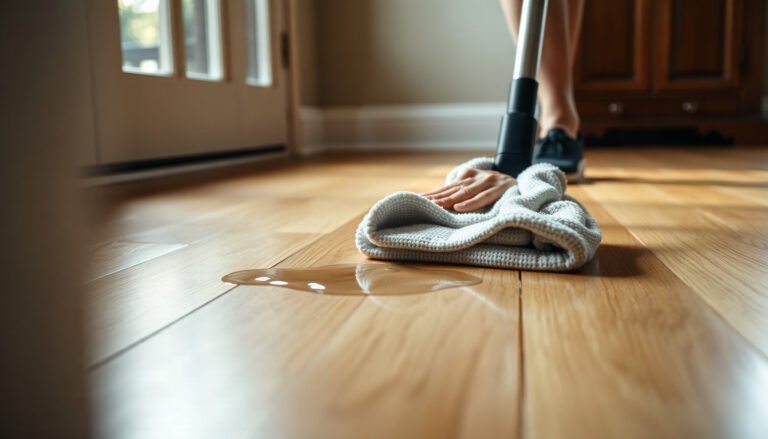
The quickest way to prevent permanent staining on LVP is to blot spills immediately and clean while the residue is still fresh. Dining rooms produce different soils—grease, sauces, and drinks—so the best approach is “targeted and gentle,” not “strong and fast.”
Why blotting matters
Blotting lifts liquid without pushing it deeper. Scrubbing while a spill is wet can spread it across seams and increase the area that needs cleaning.
According to general resilient-floor maintenance guidance, promptly removing spills reduces the chance that liquids remain on the surface long enough to penetrate seams or leave permanent discoloration.
For steam-based cleaning, NIST reference data shows water boils at 100°C (212°F) at standard pressure, which can exceed moisture/heat exposure many LVP warranties intend you to control.
How to handle common dining-room messes (red wine example)
If you’re dealing with red wine:
– Blot immediately with a soft cloth or paper towel (don’t wipe aggressively)
– Use an LVP manufacturer-approved cleaner and apply gently
– Re-clean as needed—repeat gentle cycles rather than escalating to harsh chemicals
For sticky grease or food residue
Sticky soils often require:
– A cleaner approved for LVP (and the correct dilution)
– A short dwell time only if the manufacturer allows it
– Patience: many residues loosen after 2–3 gentle passes
What can go wrong (and how to avoid it)
Most LVP problems in dining rooms come from excess water, abrasive tools, or incompatible cleaners. If you eliminate those three risks, you typically eliminate the majority of dullness and edge-lifting complaints.
The high-risk failure modes
– Too much water: soaking or leaving puddles can encourage moisture intrusion into seams or under the planks.
– Wrong tools/chemicals: steam cleaners, abrasive brushes, and unapproved cleaners can haze or damage the wear layer.
– Chair-leg issues: missing or worn felt pads can create scuffs that look like “dirty streaks,” especially under dining chairs.
According to resilient-floor care practices, steam introduces both heat and moisture in a way that conflicts with many “damp-mop only” instructions, which is why manufacturers often discourage steam cleaning unless explicitly approved.
According to moisture-science basics, liquid water can move through small gaps by capillary action, which is why controlled damp mopping is safer than soaking on floating or jointed floors.
Quick pros/cons: damp-mop vs steam-clean for LVP
| Approach | Pros | Cons / risk |
|---|---|---|
| Damp-mop with LVP-approved cleaner | Removes residue while limiting water exposure | Requires pre-sweeping to avoid grinding grit |
| Steam cleaning | Can loosen some sticky soils quickly | Often contradicts “damp-only” guidance; moisture/heat can affect seams and finish unless warranty says OK |
Verdict / tip
For most dining rooms, the safest, most reliable method is: vacuum/sweep first, then damp-mop with an LVP-approved cleaner (or microfiber + water if your warranty explicitly allows it). The downsides are practical rather than risky: it takes more discipline than “spray and leave,” and stubborn spills may require multiple gentle cleanings instead of one aggressive treatment.
If your specific LVP brand/model limits certain cleaners or methods, follow that document exactly—because in 2024–2026, warranty language still commonly controls whether steam or certain additives are permitted.
Quick LVP cleaning checklist (save this)
| Task | Do | Avoid |
|---|---|---|
| Loose dirt | Sweep or vacuum with soft settings | Dry sweeping that kicks grit around |
| Mopping | Microfiber mop, lightly damp | Wet mopping / puddles |
| Cleaner | Use LVP-approved product + correct directions | Bleach, wax, abrasive/unknown cleaners |
| Spills | Blot quickly, clean ASAP | Letting liquid sit |
| Chairs | Felt pads; lift chairs when possible | Dragging chair legs |
| Heat | Follow flooring guide (often no steam) | Steam cleaning unless manufacturer says it’s okay |
Sources
– U.S. Environmental Protection Agency (EPA), Air Quality Glossary: PM2.5 definition (≤2.5 micrometers)
– IEST/DOE-style HEPA filter efficiency specifications (HEPA capture efficiency ≥99.97% at 0.3 µm)
– NIST reference data on water properties, including boiling point at standard atmospheric pressure (100°C / 212°F)
A clean dining-room LVP floor is mostly about workflow: remove grit first, use only LVP-approved cleaning products, and keep water controlled so it stays on the surface. If you stick to damp-mopping and quick blot-and-clean spill response—while protecting edges and chair legs—you’ll preserve the look of your floor with less effort over time.
Frequently Asked Questions
What’s the safest way to clean LVP floors in a dining room?
Start by sweeping or vacuuming with a soft brush to remove grit that can scratch LVP. Use a pH-neutral LVP floor cleaner mixed with warm water and apply it with a damp microfiber mop—avoid soaking the seams. For dining rooms, spot-clean spills quickly to prevent residue and dulling, then dry with a clean microfiber cloth if any moisture remains.
How do I remove sticky food spills or grease from LVP flooring?
Blot the spill first, then wipe with a damp microfiber cloth and pH-neutral cleaner to lift sticky residue. For greasy spots from dining chairs or dropped food, use the LVP cleaner and gently agitate with a soft cloth or mop pad—don’t use abrasives. If residue persists, repeat with cleaner and ensure the area is not left wet, since standing moisture can damage the floor edges.
Which mops and cleaning products work best for LVP in dining areas?
Use a microfiber string mop or flat microfiber mop because it cleans effectively without over-wetting LVP. Choose a manufacturer-approved LVP cleaner or a pH-neutral floor cleaner labeled safe for vinyl plank; avoid harsh chemicals, ammonia, and steam cleaners. For deeper maintenance in a dining room with tracked-in grime, a routine damp-mop schedule plus targeted spot cleaning usually outperforms strong detergents.
Why should I avoid steam cleaning or wax on LVP floors?
Steam cleaning can drive moisture into seams and under-layers, which may cause swelling, lifting, or edge damage over time. Wax and other finish products can interfere with the protective wear layer, leading to haze, buildup, or a slippery surface. Stick to pH-neutral cleaners and damp mopping to preserve the look and protect the integrity of your luxury vinyl plank (LVP) flooring.
How do I prevent scratches and scuffs from dining chairs on LVP?
Place felt pads or furniture glides on chair legs and replace them when they wear down to reduce scuffs. Use a doormat or area rug near entrances and high-traffic pathways to trap dirt and grit, which are common causes of dullness and micro-scratches. When cleaning, avoid abrasive scrubbing pads—use a soft cloth or microfiber mop to maintain a smooth, clean LVP surface.
📅 Last Updated: October 27, 2026 | Topic: How to clean LVP floors in a dining room? | Content verified for accuracy and freshness.
References
- Vinyl flooring
- https://www.cdc.gov/coronavirus/2019-ncov/community/disinfecting-building-facility.html
- https://www.cdc.gov/coronavirus/2019-ncov/prevent-getting-sick/cleaning-disinfection.html
- https://www.who.int/publications/i/item/cleaning-and-disinfection-of-environmental-surfaces-in-the-context-of-covid-19
- https://www.epa.gov/coronavirus/cleaning-and-disinfecting-your-home
- https://www.coretecflooring.com/care-and-cleaning/
- https://scholar.google.com/scholar?q=how+to+clean+luxury+vinyl+plank+floor+care+instructions Google Scholar
- https://scholar.google.com/scholar?q=luxury+vinyl+flooring+mopping+cleaning+disinfecting Google Scholar
- https://scholar.google.com/scholar?q=vinyl+flooring+cleaning+maintenance+resilient+floor+care Google Scholar