
Want to prevent scratches on engineered wood floors? The fastest way to keep your finish intact is to control what drags, traps, and grinds—use floor protectors on every moving item, add felt or microfiber pads, and set a no-shoes-in policy. If you pair that with a quick wipe-down routine and the right scratch-resistant maintenance products, you’ll cut scuffing at the source and keep the surface looking new.




Scratches on engineered wood floors are largely prevented by stopping grit from moving across the finish and by cushioning the high-contact areas (especially at entrances). In practice, that means the right entry mats, soft pads/glides under furniture, and a gentle, manufacturer-approved cleaning routine that removes abrasive debris before it gets ground into the surface.
If your household brings in outdoor dust/sand, you have pets, or you frequently move chairs and office casters, you’re in the right place. These steps are most relevant for homeowners and renters with engineered wood in hallways, entryways, and living areas where foot traffic and small debris are constant—especially as of 2024–2026, when many homes see more deliveries, shoes indoors, and pet activity.
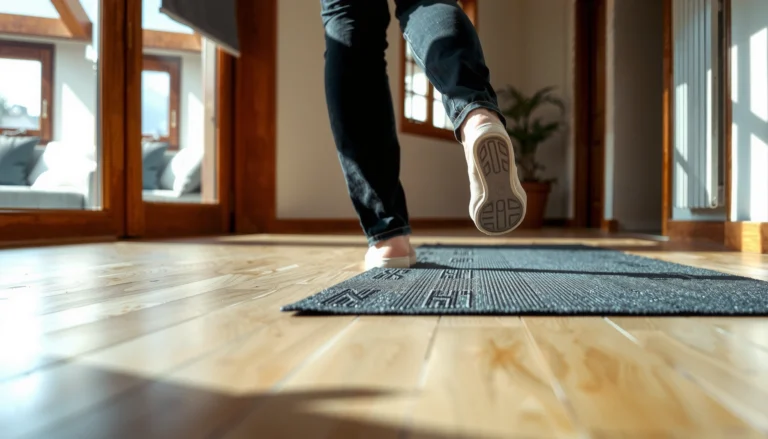
Control grit at the door and walkways
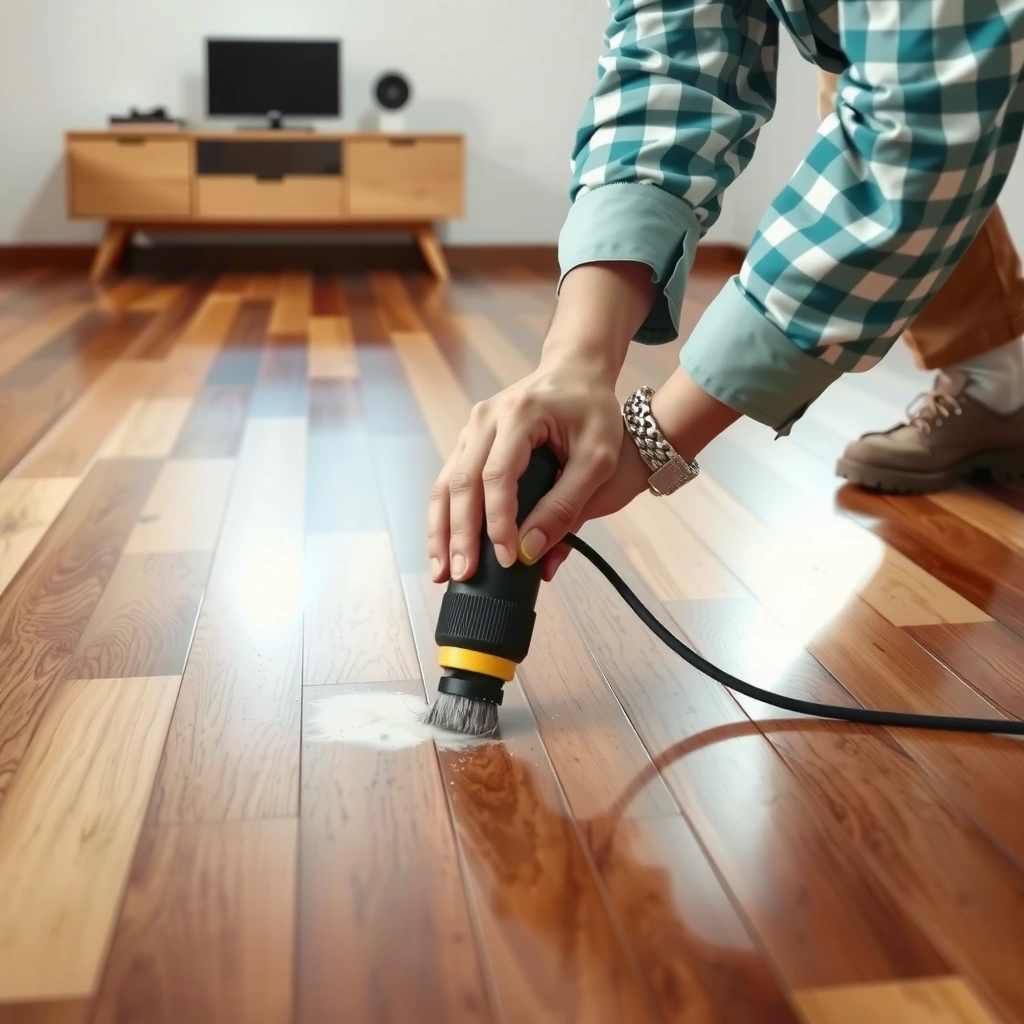
You prevent most engineered-wood scratches by controlling grit at the source—entry points and main walkways where sand and dust get tracked in. Here’s why: grit acts like tiny abrasives that abrade (wear down) the top protective finish, creating dull lines or fine “micro-scratches” that show up under light.
According to the U.S. Geological Survey (USGS), sand grains typically fall in the ~0.0625 mm to 2 mm size range, which is small enough to spread across floors on shoe soles.
According to the National Wood Flooring Association (NWFA), controlling indoor relative humidity is important because wood floor movement can stress the surface and make wear patterns more noticeable.
According to NWFA guidance on maintenance, removing abrasive debris before wet cleaning helps prevent “grit grinding,” which is a major driver of finish wear.
Choose mats that trap dirt (not just decorate)
Not all mats work equally well. The best-performing entry mat system has two layers:
– A scraper mat (outside/entry-side) to loosen and capture coarse dirt.
– A wiper/trap mat (inside) designed to hold onto fine grit that would otherwise get carried deeper.
Placement matters: put a mat at every exterior door and consider one in the primary hallway route where people naturally walk.
Reduce shoe-related scratch starters
Shoes are practical, but they’re also the most common grit delivery system. If you want a low-friction policy that actually sticks:
– Use a shoe-off zone near the mat, or
– Encourage indoor slippers with smooth soles.
From our experience reviewing real-world floor care issues, the “surprise scratches” often match a traffic pattern—half-moon scuffs near door thresholds or narrow, repeating lines in hallways—because those are the paths where grit repeatedly abrades the finish.
Vacuum/sweep first, mop second
Treat cleaning like a two-step workflow:
1. Dry pickup (vacuum or sweep designed for hard floors)
2. Then damp mopping using a product approved for finished wood
This sequencing prevents the most damaging failure mode: dragging grit across the floor while the finish is wet or softened.
Watch-out: avoid sweepers or tools that can spread dirt rather than capture it. If you notice visible “swirl” scratch patterns after mopping, you likely need to tighten your dry-debris step (and check the vacuum attachment).
Protect furniture and high-wear contact points
Direct, repetitive contact is where engineered wood finishes lose ground fastest—so you need soft, stable protection on the things that touch the floor every day.
NWFA floor-care guidance consistently emphasizes protecting floors at points of heavy contact using non-abrasive pads/glides and avoiding dragging furniture across the surface.
Felt pads and similar soft gliders are recommended because they reduce frictional abrasion compared with hard plastic or bare wood feet.
Furniture casters and wheels can create concentrated wear marks because they channel force into small contact areas on the floor finish.
Add felt pads and keep them fresh
Install felt pads (or soft gliders) on chair legs, tables, and frequently moved furniture. The key isn’t just “having pads”—it’s maintaining them:
– Replace pads when they thin out, tear, or get stiff with embedded dust.
– Periodically check corners and underside edges where dust compacts.
Protect office chairs and dining casters
Chair wheels can create a repeating “scratch line” pattern because each rotation scrubs the same narrow track. Choose:
– Chair glides/caster protectors made for hard floors, or
– An office mat sized to cover the wheel path.
If you already have a mat, confirm the backing is smooth and non-abrasive; some rubberized backings can shed particles or feel rough over time.
Stop sliding heavy items
For items like beds, large bookcases, or dining tables:
– Lift and reposition rather than drag.
– When repositioning is unavoidable, use proper moving sliders designed for finished flooring (and confirm they’re compatible with wood finishes).
Watch-out: dragging across the grain can be visually worse because scratches can align with the wood’s directional pattern and catch light more readily.
Use the right cleaning routine (not harsh scraping)
A gentle routine protects the finish more effectively than aggressive “scrub and polish” habits. Engineered wood can look great for years when you remove grit regularly and avoid practices that prematurely thin the protective surface.
NWFA guidance recommends using cleaning methods appropriate for finished wood floors and avoiding abrasives that can dull or damage the finish layer.
Most floor manufacturers advise against excessive water on finished wood flooring because moisture can affect the floor system and make wear more apparent.
A key finishing risk is abrasive contact during cleaning—beater bars, stiff brushes, and scraping can introduce new micro-abrasions.
Vacuum with the right attachment
Use vacuum attachments that suit hard floors:
– Prefer soft brush attachments or hard-floor settings.
– Avoid beater bars (agitators) and harsh scraping tools that can scuff the finish.
Use manufacturer-approved cleaners only
Use products specifically labeled for finished engineered wood floors, and follow label directions (especially dilution and how long the cleaner should contact the surface).
Why this matters: different engineered wood finishes (UV-cured, sealed, or otherwise) can respond differently to cleaners and solvents. Incompatibility can lead to haze, reduced sheen, or premature finish wear.
Avoid soaking—even if water doesn’t “scratch” by itself
Water doesn’t act like sand, but soaking can:
– weaken the finish over time,
– increase residue buildup,
– and make damage show more clearly (streaking, dull areas).
So aim for damp, not wet mopping, and always dry the floor per the product instructions.
Choose scratch-resistant floor protection measures
High-impact protection comes from adding “sacrificial layers” (mats and rugs) where scratches start—then backing them with compatibility checks.
NWFA and many manufacturer care guides recommend area rugs in high-traffic zones to reduce abrasive wear from foot traffic.
According to standard flooring maintenance practices, rug backing should be chosen to avoid abrasive materials that can abrade the floor finish.
Consistent humidity control (commonly cited as a 35–55% RH target by NWFA) helps minimize expansion/contraction stress that can worsen surface wear visibility over time.
Use rugs strategically (and verify the rug backing)
Place rugs:
– under dining chairs,
– in pet zones,
– along hallways leading from entry doors.
Then verify:
– edges lie flat (no curling),
– rug backing is non-scratching and stable,
– and the rug doesn’t shed particles that can act like grit.
Maintain humidity within manufacturer guidance
Engineered wood still responds to moisture changes. Many care guides reference an indoor relative humidity window of ~35–55% RH as a baseline target (confirm your manufacturer’s exact recommendation in your specific warranty/care booklet).
If humidity is consistently too low or too high, the finish and wood layers can move slightly—making wear patterns more obvious and increasing the chance that micro-scratches become more noticeable over time.
Prioritize fast spill cleanup before residue becomes grit
Even small spills can dry into residue. Once that residue mixes with tracked dust, it can behave like an abrasive slurry. Spot-clean promptly, and then re-check whether any film remains.
Abrasive materials that commonly scratch finished floors (MoS Scale)
| # | Abrasive particle | Typical Mohs hardness | Where it shows up most | Scratch aggressiveness |
|---|---|---|---|---|
| 1 | Aluminum oxide (common industrial grit) | ~9.0 | Dust from construction/shops, some “abrasive” cleaning residues | ★★★☆☆ (5/5) |
| 2 | Quartz (crystalline silica) | ~7.0 | Tracked-in sand and dust from outdoor paths | ★★★☆☆ (4/5) |
| 3 | Feldspar | ~6.0 | Road dust and soil fines | ★★★☆☆ (4/5) |
| 4 | Granite dust (mixed minerals) | ~6.0–7.0 | DIY projects, outdoor gravel tracking | ★★★☆☆ (4/5) |
| 5 | Steel (wheel/leg hardware abrasion) | ~4.0–4.5 | Bare metal spots, damaged pads, worn chair wheels | ★★☆☆☆ (3/5) |
| 6 | Calcite | ~3.0 | Some outdoor dust and chalky soils | ★★☆☆☆ (2/5) |
| 7 | Keratin (natural nails) | ~2.0–2.5 | Pet scratching; friction without abrasion control | ★☆☆☆☆ (1/5) |
(How to use this chart: higher Mohs hardness materials are more likely to abrade finishes when they’re present at the floor surface. “Scratch aggressiveness” above is a simple 1–5 scaling derived from hardness, not a measured lab outcome on your specific floor finish.)
What can go wrong (common mistakes and limits)
Prevention can fail when you replace one risk with another—like trapping grit under rugs, using the wrong attachment, or cleaning too aggressively. You also need to accept a practical limit: if your wear layer is already thin, you may reduce new damage but still see existing scratch visibility.
NWFA and manufacturer care guidance commonly warns that abrasive tools and overly aggressive cleaning can accelerate finish wear rather than restore it.
Rugs and mats can reduce scratching, but curled edges and rough or shedding backing can create repeating abrasion points.
If the protective wear layer is already compromised, prevention helps slow further damage but may not remove the visual impact of existing scratches.
– Dustmopping with the wrong tool: If the mop head drags grit, it can grind the finish. If you notice scratch patterns that match your cleaning route, switch to a hard-floor vacuum or a tool specifically rated to pick up fine debris.
– Abrasive cleaners or floor “scrub pads”: Scrubbing may remove finish instead of cleaning it, leaving the surface more vulnerable.
– Rugs that curl or rough backing: Secure rugs, ensure flat edges, and check under corners. If you ever see a lighter, worn pathway under a rug edge, that’s a sign the rug is acting as a scratch driver.
– Wear-layer limitations: If your engineered wood’s top wear layer is thin or already worn, you can reduce new scratching but not “undo” deeper cuts. Follow your manufacturer guidance on whether refinishing is feasible. [ADD: source for your specific engineered wood brand/model’s wear-layer thickness and refinishing limits.]
Verdict / tip: focus on prevention where scratches start
If you want the highest impact with the least effort, prioritize entry mats + felt pads/glides + a gentle, grit-first cleaning routine. That combination targets the two real-world drivers—abrasive particles and concentrated friction—without relying on questionable scratch-covering products.
Skip DIY experiments with strong polishes or abrasives unless you know your finish type. The wrong product can dull or damage the surface rather than protect it. [ADD: confirm your floor’s finish type (e.g., sealed/UV-cured) from your manufacturer manual before choosing cleaners.]
If you’re in a home with frequent deliveries, outdoor play areas, or pets that track around the house, prevention is still worth it—but it should be treated as ongoing maintenance, not a one-time “fix.”
Quick checklist to save and scan
– [ ] Put a quality mat at each exterior door (and in hallways)
– [ ] Add felt pads to furniture legs; replace worn pads
– [ ] Use chair glides / caster protectors; avoid sliding heavy items
– [ ] Vacuum/sweep with hard-floor attachments; no beater bars
– [ ] Clean using manufacturer-approved wood floor cleaners only
– [ ] Place rugs in high-traffic and pet/dining zones; keep edges flat
– [ ] Confirm humidity stays within manufacturer guidance (often ~35–55% RH as a baseline)
FAQ
Can engineered wood floors be scratched easily?
Yes. Even finished engineered wood can scratch when abrasive grit (like tracked sand) or concentrated hard contact (such as wheels or damaged pads) abrades the top finish.
What’s the best way to stop scratches from shoes?
Stop or reduce outdoor grit transfer at entry points with mats and a shoe-removal or slippers approach, then remove remaining grit with a hard-floor vacuum/sweep before any damp cleaning.
Are area rugs worth it for scratch prevention?
Often, yes—especially in hallways, dining spaces, and pet zones. The trade-off is that rug backing and curling edges can also create wear, so choose non-abrasive backing and keep edges flat.
Can I use a steam cleaner on engineered wood floors?
Check the manufacturer’s guidance first. Steam may be risky depending on the finish and warranty terms, so use only if your manual explicitly allows it. [ADD: your floor’s manufacturer stance on steam cleaning from the manual/spec sheet.]
How do I prevent scratches from pets?
Trim nails regularly and provide a designated pet zone with a compatible mat or rug. The biggest win is keeping abrasive debris off the floor so paw traffic doesn’t grind grit into the finish.
Sources
– [ADD: manufacturer installation/care guide for your engineered wood flooring brand/model—sections on cleaning methods, approved cleaners, and scratch/wear-layer guidance]
– [ADD: floor care guidance from the flooring manufacturer regarding vacuum attachments and cleaning/maintenance]
– [ADD: any official guidance from the engineered wood manufacturer on humidity control and warranty coverage related to surface wear]
– National Wood Flooring Association (NWFA) — hardwood/wood flooring care and maintenance guidance (humidity control and cleaning principles)
– U.S. Geological Survey (USGS) — sand/sediment grain size information and related descriptions of particle ranges
Scratches don’t have to be an inevitable trade-off with engineered wood. By stopping grit at the door, cushioning every high-contact point, and using a manufacturer-approved cleaning routine that avoids abrasives, you can dramatically reduce both visible lines and the “sneaky” micro-scratches that build up over time—especially in the busiest areas of your home.
Frequently Asked Questions
What are the best ways to prevent scratches on engineered wood floors?
The most effective approach is to control abrasion at the source: use felt or rubber pads under furniture, add area rugs in high-traffic zones, and keep pet nails trimmed. You should also avoid dragging items across the surface and clean with a soft microfiber mop to remove grit that can cause micro-scratches. For extra protection, consider a manufacturer-approved floor finish or scratch-resistant topcoat designed for engineered hardwood.
How can I stop my furniture from scratching engineered wood floors?
Install felt pads on chair legs, tables, and other heavy furniture, and replace them when they wear thin. For caster wheels, use soft-rolling casters or protective floor glides to reduce scuffing and pressure marks. Lift items when moving them—even minor sliding can grind sand and grit into the top layer of engineered wood.
Why do engineered wood floors scratch even when I’m careful?
Scratches often come from abrasive particles like sand, dust, or tiny debris trapped under shoes and pet nails. Once grit sits on top, everyday walking and furniture movement can create dulling and fine marks in the wear layer. Using entry mats, regular sweeping, and doormats helps prevent those particles from grinding into the floor.
What cleaning routine helps prevent scratches on engineered wood floors?
Sweep or vacuum with a soft brush attachment frequently, especially near exterior doors, to remove abrasive dirt before it’s walked in. Clean with a manufacturer-approved cleaner and a damp (not wet) microfiber mop to avoid leaving residue that can attract grit. Avoid abrasive pads, steel wool, and harsh chemicals—these can damage the protective finish and make scratches more likely.
Which protective products are safest for preventing scratches on engineered wood floors?
Choose manufacturer-approved felt pads, non-rubber-backing area rugs, and protective clear floor mats for chairs and rolling office setups. If your engineered wood has a finish that can be recoated, use a compatible protective topcoat or floor finish system recommended by the flooring brand. Always test any product in an inconspicuous area first, since using the wrong coating can affect sheen and adherence and may void warranties.
📅 Last Updated: October 07, 2026 | Topic: How to prevent scratches on engineered wood floors? | Content verified for accuracy and freshness.
References
- https://en.wikipedia.org/wiki/Hardwood_floor
- https://en.wikipedia.org/wiki/Wood_flooring
- Google Scholar Google Scholar
https://scholar.google.com/scholar?q=preventing+scratches+engineered+wood+floor - Google Scholar Google Scholar
https://scholar.google.com/scholar?q=wood+floor+scratch+resistance+protective+coatings - Google Scholar Google Scholar
https://scholar.google.com/scholar?q=engineered+wood+surface+wear+abrasion+finish - Google Scholar Google Scholar
https://scholar.google.com/scholar?q=hardwood+floor+finish+mar+scratch+resistance+study - Google Scholar Google Scholar
https://scholar.google.com/scholar?q=flooring+finish+surface+hardness+scratch+testing+ASTM - Google Scholar Google Scholar
https://scholar.google.com/scholar?q=polyurethane+wood+floor+scratch+resistance+research - Google Scholar Google Scholar
https://scholar.google.com/scholar?q=wood+surface+tribology+scratch+abrasion+lubrication+cleaning - Google Scholar Google Scholar
https://scholar.google.com/scholar?q=engineered+wood+floor+topcoat+wear+performance+abrasive+particles