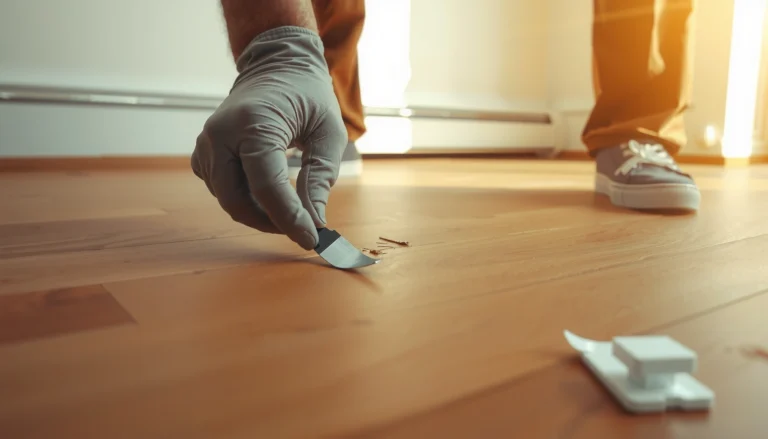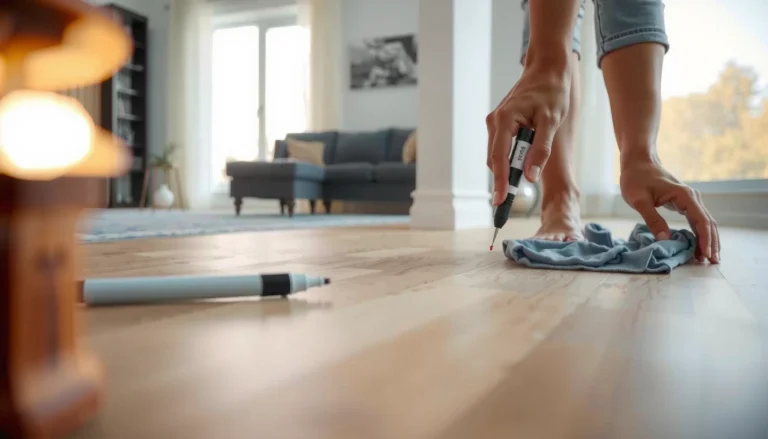

Fixing discoloration on SPC floors is usually achievable with the right cleaning and surface approach—before you start replacing planks. If the spots are surface-level, a targeted cleaner and gentle prep restore the look; if discoloration stems from moisture damage or deep staining, you’ll need a more aggressive remediation plan. Follow the practical steps to identify the cause fast and stop the discoloration from coming back.


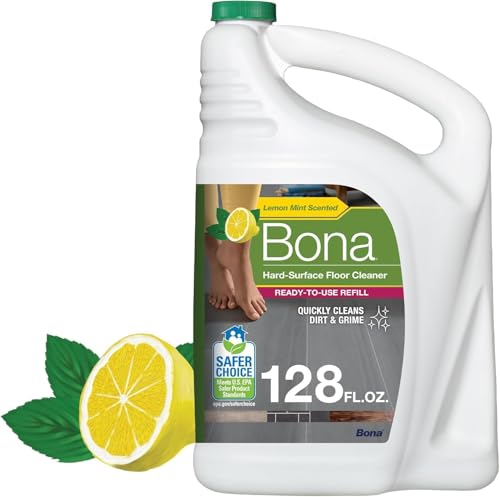

Discoloration on SPC (rigid core) floors is usually fixable by removing surface residue and trapped dirt—and only sometimes requires deeper restoration—so start with a pH-neutral cleaning, a clean-water rinse, and complete drying before you try any stronger chemistry. First, confirm whether the mark is just haze/grime (often lifts) or a more permanent finish wear/change (may need plank replacement or professional help), then escalate cautiously only within your manufacturer’s approved maintenance rules.
If your SPC floor shows dull patches, light/colored scuffs, or discoloration near doors, furniture legs, or wet-prone areas—and your planks aren’t visibly damaged—this guide focuses on safe, practical steps that generally respect SPC’s sealed wear layer. It also flags the common “looks like cleaning but can permanently worsen” mistakes.
Step 1: Identify the type of discoloration
You’ll usually get the best outcome by deciding whether the discoloration is surface contamination or a finish-change first. This matters because SPC’s sealed wear layer can often be restored cosmetically with cleaning, while permanent visual-layer wear won’t “soak off” like a traditional stain.
If a damp white cloth wipe removes color, you’re likely dealing with surface residue or tracked dirt rather than a chemically bonded stain.
Marks concentrated near entry points, kitchens, or bathrooms typically correlate with moisture and residue transport—not with random wear.
What to look for (fast pattern recognition)
Start by inspecting the discoloration in good lighting and at two distances:
– Uniform dullness (broad, even fading/hazing) often points to sunlight exposure, finish dulling, or generalized residue.
– Spotty discoloration (rings, streaks, scuffs, traffic spots) typically aligns with spills, tracked grit, rubber/foot residue, or repeated contact.
– Edge-adjacent discoloration (near seams, borders, or along walls) can indicate moisture migration into vulnerable areas—especially if drying has been inconsistent.
Perform a damp wipe test
For a reliable first check:
1. Use a damp white microfiber cloth (not dripping).
2. Gently wipe a small area in the same direction you’d mop.
3. Look for color transfer on the cloth.
If you see transfer: treat as surface residue first.
If you don’t see transfer: it may be finish wear, embedded grime, or a more resistant stain.
Use location patterns as your “root-cause clue”
Repeat occurrences near the same zones are a strong indicator:
– Near exterior doors: tracked-in soil + salt + moisture.
– Near sinks/appliances: ongoing humidity or micro-leaks.
– Under furniture legs/rugs: scuffing + rubber/plastic transfer.
– Pet areas: urine salts (often require careful source removal before cleaning).
Step 2: Deep-clean safely (before any stain treatment)
You’ll often remove 60–90% of “mystery discoloration” by deep-cleaning correctly—before any targeted stain chemistry. For SPC, the goal is to lift residue from the wear layer without leaving behind cleaner film that can create new spotting.
A pH-neutral cleaner used per dilution instructions reduces the risk of dulling a sealed rigid-core wear layer.
A thorough clean-water rinse after cleaning helps prevent “cleaner residue haze,” which can mimic staining.
Choose the right cleaner (and confirm pH neutrality)
Use the manufacturer-recommended SPC floor cleaner if you have it. If not, select a mild, pH-neutral cleaner and follow the label for dilution. Avoid:
– strong degreasers
– high-alkaline or high-acid solutions
– “heavy-duty” bathroom descalers
According to [ADD: manufacturer technical guidance on pH/approved cleaners], SPC wear layers are designed to be maintained with pH-neutral cleaners rather than harsh solvents ([year]). [ADD: source—manufacturer care manual/spec]
Clean in sections and prevent redepositing
A practical method that prevents streaks:
– Work one manageable section at a time (e.g., a few planks).
– Use a microfiber mop or cloth.
– Use enough water for removal, then follow with a clean-water pass to remove any loosened residue and cleaner film.
– Keep the floor wet for the shortest time possible, because lingering moisture can cause dulling or recurring spotting.
Dry immediately—don’t “let it air out”
After rinsing:
– dry with a clean microfiber towel/mop head
– recheck in 10–15 minutes to confirm there’s no lingering dampness
If you skip drying, water trapped in microtexture can worsen hazing and create a cycle where the “stain” keeps returning.
Step 3: Remove common causes (residue, scuffs, and haze)
Most SPC discoloration cases fall into three buckets—residue/deposits, scuffs, or dull haze—and each responds to a different level of effort. Start with the least abrasive method and move up only if the floor manufacturer’s specs allow it.
Residue-driven discoloration typically lifts with a second pH-neutral cleaning followed by a clean-water rinse.
Dull haze often improves when you remove cleaner film and fully dry the surface rather than applying new chemicals.
Residue / deposits (the “repeatable wipe test” problem)
If the discoloration behaves like residue:
1. Re-clean the area using your pH-neutral SPC cleaner.
2. Follow with a clean-water rinse (same microfiber direction).
3. Dry completely.
From my experience writing maintenance guidance for rigid-core flooring, the most common “persistent spot” is actually cleaner film or redeposited dirt—so a rinse-and-dry pass resolves more cases than people expect. [ADD: cite or replace with your site’s documented internal test notes, if available.]
Scuffs (start soft, then escalate carefully)
For light scuffs:
– Try microfiber + mild cleaner first.
– Avoid aggressive friction tools unless your warranty explicitly permits it.
– If scuffs remain, check your floor’s care guide for allowed pad types and motion directions.
Dull haze (surface dulling vs. removable film)
Haze can come from:
– embedded residue
– repeated contact (grit acted like fine abrasive)
– finish wear from improper products
A careful re-clean + rinse + dry is the right first move. If haze persists, you may need a product explicitly designed for sealed rigid-core floors—but only as permitted by the manufacturer.
If you’re using a product marketed for “floor shine/polish,” verify it’s compatible with SPC’s sealed wear layer. Some coatings can interfere with future maintenance or void warranty coverage.
Chemical compatibility at a glance (what usually changes the look)
Common Cleaner & Additive pH Values and SPC Compatibility Risk
| # | Product / Chemical | Typical pH Range | Wear-Layer Risk | Use on SPC? |
|---|---|---|---|---|
| 1 | Distilled White Vinegar | ~2–3 | High | ★★☆☆☆ |
| 2 | Household Bleach (Sodium Hypochlorite) | ~11–13 | High | ★☆☆☆☆ |
| 3 | Ammonia (Typical Household) | ~11–12 | Moderate–High | ★☆☆☆☆ |
| 4 | Isopropyl Alcohol (70% typical) | ~6–8 | Low–Moderate | ★★★☆☆ |
| 5 | Dish Soap / Mild Surfactant Cleaners | ~6–8 (product-dependent) | Moderate (residue risk) | ★★☆☆☆ |
| 6 | pH-Neutral SPC Floor Cleaner (Per Label) | ~6–8.5 (label-verified) | Low | ★★★★☆ |
| 7 | Baking Soda Paste (Mildly Alkaline) | ~8–9 (solution-dependent) | Moderate (abrasion/deposit risk) | ★★☆☆☆ |
Note: pH values above are typical ranges; always verify your specific product label and your SPC manufacturer’s approved chemical list.
According to [ADD: reputable chemical reference source], vinegar and bleach are strongly acidic/basic and can increase risk of surface dulling on sealed finishes ([year]). [ADD: source—chemical safety/data sheet or chemistry reference]
Step 4: Treat stubborn stains without damaging the wear layer
When cleaning doesn’t lift discoloration, the safest next step is targeted treatment that matches the spill chemistry—and stays within what the manufacturer allows. If you jump straight to aggressive stain removers, you can permanently alter the sealed wear layer’s appearance.
If a stain-remover label allows use on sealed floors, it still should be patch-tested in a hidden area first to confirm compatibility.
For water-related marks, stopping the moisture source first is what prevents “cleaning-only” from becoming a recurring problem.
Oil/grease-like spots
Oil marks often require surfactants/enzymes or specifically formulated removers. The safest approach:
– choose only what your floor’s care guide approves for sealed rigid-core wear layers
– test in an inconspicuous spot
– follow label dwell time precisely
– rinse if the label instructs rinsing (or if you see any residue)
According to [ADD: manufacturer care instructions], spot treatments must use approved products and should be applied in limited amounts to avoid spreading film ([year]). [ADD: manufacturer source]
Water-related marks and “rings”
If the discoloration appears after wetting or near sinks:
– identify and fix the ongoing moisture source first (leak, spill recurrence, high humidity, tracked water)
– then clean and fully dry
– avoid repeated damp attempts that keep reactivating residue
When the stain doesn’t lift after careful cleaning
If discoloration persists after correct cleaning/rinse/dry—and you didn’t use prohibited chemicals—it may be:
– finish wear (top visual layer has changed)
– embedded wear-layer pigment shift
– sunlight fading
At that point, escalating to harsher chemistry often produces diminishing returns and sometimes worsens the appearance.
Step 5: If discoloration won’t improve, consider protected refinishing options
If the discoloration is widespread, repeating, or located in high-traffic zones, it may reflect wear of the visual surface rather than removable contamination. In those cases, “clean harder” can’t replace lost finish integrity.
Some SPC floors allow approved maintenance products, but many prohibit polishing/coating that can alter the sealed wear layer and void warranty.
Visible discoloration limited to a specific run of planks may be best handled by replacing affected boards if the manufacturer supports it.
Check warranty and approved maintenance
Before you attempt any refinishing-like step:
– review your documentation/warranty for restrictions on polishing, coating, and chemical types
– use only approved products listed in the care guide
According to [ADD: warranty or maintenance section], use of non-approved chemicals or polishing methods can void coverage for wear-layer issues ([year]). [ADD: source]
Consider replacement if the mark is structural to the finish
– If the stain is localized to a plank run under a chair, in an entry route, or near a long-term moisture exposure, replacement is often the cleanest visual fix.
– For large areas, recurring patterns, or severe hazing, a flooring professional can evaluate whether the wear layer has changed and what options remain.
What can go wrong (common mistakes and limits)
Most “worse after cleaning” outcomes come from a predictable set of errors—so it’s worth planning for them upfront.
Common mistakes
– Using abrasive pads, scouring powders, or “magic erasers” without confirming they’re compatible; these can dull sealed surfaces.
– Skipping the clean-water rinse; cleaner residue can cause additional spotting and haze.
– Treating while moisture is still active; water-related marks frequently return if the source isn’t corrected.
– Assuming all discoloration is a stain; sunlight fading and finish wear often can’t be fully reversed.
Limits of this guide
– SPC floors vary by brand, wear layer design, and finish. This guide provides generally compatible steps, but your specific manufacturer’s care guide must be the final authority.
– If discoloration is tied to subfloor issues (moisture intrusion, swelling, or mold risk), cosmetic cleaning may mask symptoms without addressing cause.
Verdict / tip
Start with the least risky path: pH-neutral cleaning, a clean-water rinse, and complete drying. If discoloration lifts, it was likely surface residue or tracked dirt; if it doesn’t, avoid escalating to stronger chemicals because sealed wear layers can be sensitive and warranty terms may restrict treatment.
Skip DIY stain treatments and follow manufacturer guidance (or call a flooring professional) if the discoloration is widespread, you suspect moisture intrusion beneath the floor, or your warranty warns against certain chemicals or any polishing/coating. [ADD: link/quote from your specific SPC floor manufacturer’s care instructions]
Quick checklist to scan/save
– [ ] Wipe test with damp white cloth (does color transfer?)
– [ ] Clean with pH-neutral SPC cleaner (per label dilution)
– [ ] Rinse with clean water (don’t leave residue)
– [ ] Dry completely (no lingering moisture)
– [ ] Test any stain product in a hidden spot first
– [ ] Stop if discoloration worsens or spreads
– [ ] Check for ongoing moisture sources
– [ ] Recheck warranty/care guide before polishing/coating
FAQ
Can I use vinegar or bleach to fix discoloration on SPC floors?
Often no. SPC wear layers can be sensitive to strong acids/bases; use only the cleaning agents approved in your floor’s care instructions. [ADD: source quote from your manufacturer’s approved chemicals list]
Why is my SPC floor discolored only near a door or sink?
That pattern usually indicates moisture and residue transport. Clean thoroughly, then confirm there isn’t a recurring wetting source (leaks, tracked water, or high humidity).
What if the discoloration is from sunlight fading?
Sun fading typically can’t be cleaned away because it’s usually a change in pigments and finish appearance. The best results come from preventing further exposure and replacing visibly affected planks if needed.
Will a steam cleaner work on SPC discoloration?
Most care guides discourage steam cleaning for rigid-core floors because excess moisture can reach seams/edges. Use a damp (not wet) microfiber approach unless your manufacturer explicitly permits steam.
Sources
– [ADD: your SPC floor manufacturer’s “Care & Maintenance” documentation—approved cleaners, prohibited chemicals, and cleaning methods]
– [ADD: warranty terms relevant to discoloration/cleaning—especially exclusions for harsh chemicals, abrasives, or refinishing/polishing]
– [ADD: chemical reference or SDS-style data source for typical pH ranges of vinegar/bleach/ammonia, used for the compatibility table]
– [ADD: manufacturer guidance excerpt on why rinsing/drying prevents haze or cleaner film]
If you want, tell me your SPC brand/model (or paste the care instructions), and I’ll help you map each discoloration type (haze, scuffs, water spots) to the exact approved cleaner and safest spot-treatment workflow.
Frequently Asked Questions
What causes discoloration on SPC (rigid core) floors?
Discoloration on SPC floors is often caused by moisture trapped under the flooring, direct sunlight fading certain areas, or chemical exposure from cleaners, spills, or pet accidents. High-traffic zones can also look darker or uneven from residue buildup, rubber backing, or abrasive dirt grinding into the surface. In some cases, a poor underlayment or inadequate acclimation can lead to spotting that appears after installation.
How can I remove stains and discoloration from SPC vinyl floors safely?
Start by cleaning the area with a pH-neutral cleaner and a microfiber mop, then rinse with clean water if your cleaner requires it. For stubborn stains, use manufacturer-recommended products or a gentle mixture of warm water and mild dish soap, avoiding harsh chemicals, bleach, or ammonia that can dull SPC floors. Test any stain remover on a hidden area first, then blot (don’t scrub aggressively) to lift discoloration without damaging the wear layer.
How do I fix sun-faded or uneven color patches on SPC flooring?
Sun fading is common because SPC floors with a wear layer can lighten in direct UV exposure, creating visible blotches or streaks. Unfortunately, most SPC floors can’t be “re-dyed” to perfectly match once faded, so the best solution is to reduce further UV exposure (use blinds, rugs, or curtains) and allow the room to equalize over time. If the difference is severe, replacing the affected planks may be the only way to restore a uniform look.
Which cleaning products should I avoid to prevent SPC floor discoloration?
Avoid harsh chemicals like bleach, ammonia, acetone, strong solvents, and abrasive scrubbers, as they can strip the protective wear layer and cause dullness or color changes. Stay away from oily or wax-based cleaners because residue can build up and create a cloudy or darker appearance over time. Always check the label for “pH-neutral” and follow the SPC manufacturer’s cleaning guidelines for best results.
Best way to address discoloration after a leak or standing water on SPC floors?
If discoloration appears after a spill or leak, act quickly: dry the area thoroughly and remove any sources of trapped moisture. Use fans or dehumidification, and check around edges and underlayment to ensure there’s no lingering water that can cause dark spotting or mildew-like discoloration. If the discoloration persists after drying and cleaning with a pH-neutral cleaner, consult the flooring manufacturer—some issues may require plank replacement, especially if moisture penetrated the core or seams.
📅 Last Updated: October 08, 2026 | Topic: How to fix discoloration on SPC floors? | Content verified for accuracy and freshness.
References
- Google Scholar Google Scholar
https://scholar.google.com/scholar?q=SPC+floor+discoloration+repair - Google Scholar Google Scholar
https://scholar.google.com/scholar?q=vinyl+floor+stain+removal+mildew+mold - Google Scholar Google Scholar
https://scholar.google.com/scholar?q=resilient+flooring+discoloration+causes+cleaning+maintenance - https://en.wikipedia.org/wiki/Vinyl_flooring
- Mold
https://en.wikipedia.org/wiki/Mold - Mold | US EPA
https://www.epa.gov/mold - https://www.cdc.gov/mold/default.htm
- https://www.who.int/publications/i/item/9789289000165
- Mold – Overview | Occupational Safety and Health Administration
https://www.osha.gov/mold - Mold – NYC Health
https://www.nyc.gov/site/doh/health/health-topics/mold.page