


You can remove stubborn water spots from hardwood floors and restore a clean, even finish without sanding or damaging the wood. This article walks you through the safest, most effective methods—from gentle cleaning steps to targeted spot treatment—so you know exactly what to do and in what order. In about 15–30 minutes, with a few common supplies, you can get your floor looking its best again.




Water spots on hardwood floors usually lift with low-moisture microfiber wiping and fast drying—start gentle and escalate only if the finish allows it. If the spot stays cloudy or dull after it’s fully dry, switch to a finish-safe cleaner in small amounts, then dry completely to prevent moisture from migrating into seams.
Hardwood water spots are common because most modern floors are finished with a coating (urethane, aluminum oxide, or similar) that can temporarily trap surface moisture. As of 2026, the safest cleaning approach still follows the same logic: minimize water, avoid abrasives, and let the finish “re-clear” after evaporation. This guide focuses on finished hardwood, where you can improve most white haze and ring marks without sanding or stripping.
What causes water spots on hardwood floors?

Water spots on hardwood floors typically form when moisture is trapped at the finish layer and affects how light reflects from the surface. Most marks are short-lived once the trapped moisture evaporates—but some become deeper stains if water penetrates edges, seams, or worn finish.
– Most marks are caused by moisture sitting on top of the finish and briefly getting trapped, creating a cloudy or white appearance.
– Deeper staining happens when water penetrates seams, edges, or worn spots in the finish.
According to the U.S. Forest Products Laboratory, wood’s “fiber saturation point” is around 30% moisture content, meaning once water gets into the wood structure it can take much longer to redistribute and dry fully (U.S. Forest Products Laboratory, Wood Handbook (2010)). That’s why the same water spot can look improved within minutes on the surface—but persist or reappear after drying if moisture has traveled downward. In practice, water spots on hardwood floors are often fixable when you stop the moisture cycle quickly and keep cleaning low-moisture.
What you need before you start
Water spots on hardwood floors come out more reliably when you assemble the right tools first and control how much liquid touches the surface. Your goal is to wipe and blot, not flood.
– Microfiber cloths (clean, dry + slightly damp), a pH-neutral hardwood floor cleaner if you have one, and a soft toothbrush/cotton pad for corners.
– A fan or good ventilation for fast drying, plus painter’s tape to protect nearby edges if you’re applying any product.
Before you start cleaning water spots on hardwood floors, confirm two practical details: (1) the floor is finished (coated) rather than bare/unsealed, and (2) the spot is from plain water versus a spill containing soap, soda, or food residue. Cleaning choices matter because finish damage often happens indirectly—by scrubbing too hard, using high-pH/acid cleaners, or leaving the area wet long enough for moisture to migrate.
According to the National Wood Flooring Association (NWFA), indoor humidity control is important for hardwood performance; their guidance commonly references maintaining relative humidity in a moderate band during normal living conditions (National Wood Flooring Association (NWFA), hardwood installation/acclimation guidance (commonly cited)). In other words, when your environment is stable and you dry quickly after cleaning water spots on hardwood floors, you reduce the chance of the finish dulling or edges swelling.
Step-by-step: remove fresh water spots safely
Water spots on hardwood floors that are fresh usually clear with almost-dry microfiber wiping plus immediate blotting. The key is to use minimal water and follow up with full drying.
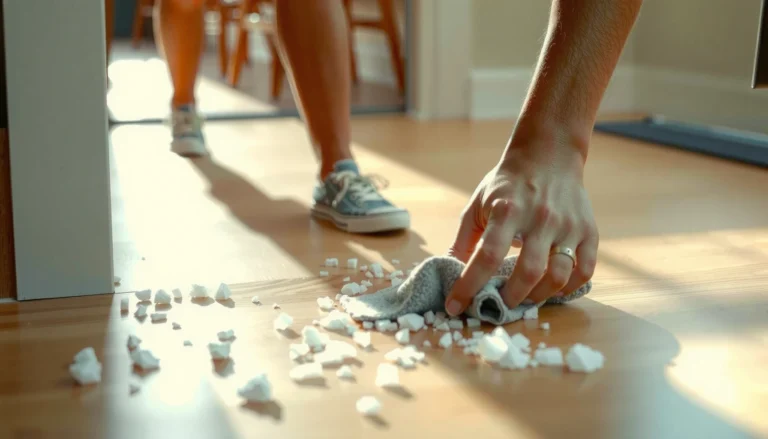
– Lightly dampen a microfiber cloth with clean water (or your recommended hardwood cleaner), then wipe with the wood grain—don’t flood the spot.
– Immediately blot/dry with a second dry microfiber, and let the area air-dry fully (a fan helps).
In my own routine care for water spots on hardwood floors, the “two-cloth method” is the difference between a spot that clears and a spot that spreads: I use one microfiber that is just barely damp (more like it’s been rung out than soaked) and one dry microfiber to absorb right away. I also wipe with the grain rather than scrubbing across it, because cross-grain agitation can increase finish haze on some coatings.
If you see the haze turning more visible while you work, pause. That’s often a sign you’re adding too much moisture. Stop, blot, then let the area air-dry for a full cycle before deciding whether to escalate.
Step-by-step: handle cloudy or stubborn spots
Water spots on hardwood floors that look cloudy after drying usually need finish-safe cleaning in small increments—never more water by default. Start with a hidden test spot, then clean with the least aggressive method that restores clarity.
– If wiping didn’t help, try a “test spot” on a hidden area first, then apply a small amount of finish-safe cleaner to a cloth and rub gently with the grain.
– For cloudy rings, keep working in small increments: damp cloth → gentle agitation → blot dry → stop and reassess. Don’t keep adding moisture.
If you’re unsure whether the cleaner is compatible, choose a pH-neutral hardwood cleaner designed for finished floors and apply it to the cloth—not directly onto the wood surface. Moisture control matters as much as chemistry here: water spots on hardwood floors often worsen when liquid keeps pooling at seams.
To make the “escalate carefully” decision clearer, here’s a comparison of common approaches (focused on finished hardwood only):
| Method | Best for | Pros | Cons / risks |
|---|---|---|---|
| Nearly-dry microfiber wipe | Fresh white haze, light condensation marks | Lowest risk to finish; controls moisture well | May not remove deeper penetration |
| Finish-safe pH-neutral cleaner (cloth-applied) | Cloudy rings that persist after drying | Improves optical clarity without stripping most coatings | Too much cleaner or wetting can still spread the mark |
| Corner/edge agitation (soft brush + minimal liquid) | Condensation near baseboards, tight seams | Targets buildup in crevices without harsh scrubbing | If you over-saturate edges, haze can return |
Work methodically: treat water spots on hardwood floors like a moisture management process, not a “remove at any cost” scrubbing task. Stop after the area is fully dry and reassess under normal lighting. If the spot reappears, you likely have finish wear, a compromised seam, or deeper absorption.
What can go wrong (and when to stop)
Water spots on hardwood floors can become permanent-looking if you add too much moisture, use abrasives, or keep scrubbing after the finish has already started to haze. Here’s what to avoid—and the signs that DIY has reached its limit.
– Using too much water (or leaving it wet) can spread the mark or encourage cupping/warping—especially near seams.
– Abrasive pads, steel wool, or strong cleaners can dull or scratch the finish and make the spot more noticeable.
– If the spot looks like dark staining (not just cloudy) or keeps spreading after drying, you may have deeper penetration and may need professional help.
When I see water spots on hardwood floors that don’t improve, the most common pattern is “repeated wet attempts.” Each cycle adds another small amount of liquid to a surface area that may already be saturated at the finish/edge layer. That’s also where abrasives do damage: once the finish is microscratched, the spot often looks more obvious because light scatters differently across the damage.
Abrasion risk at a glance (why “gentle” matters)
This hardness-based view explains why water spots on hardwood floors can worsen after aggressive cleaning. Materials with higher Mohs hardness are more likely to abrade (wear down) coatings, especially when scrubbed.
Abrasive Hardness vs Hardwood Finish Safety (Rule-of-Thumb)
| # | Abrasive material | Typical use | Mohs hardness | Finish-safe score |
|---|---|---|---|---|
| 1 | Table salt (sodium chloride) | Household “scrub” (avoid) | ~2.0–2.5 | ★★★★★ |
| 2 | Baking soda (sodium bicarbonate) | “DIY paste” (avoid) | ~2.5 | ★★★★ |
| 3 | Steel (carbon steel) | Steel wool / scrapers | ~4.0–4.5 | ★★★ |
| 4 | Pumice | Abrasive “rock” (avoid) | ~6–7 | ★★ |
| 5 | Quartz (silica sand) | Sand / gritty debris | ~7.0 | ★ |
| 6 | Aluminum oxide | Sandpaper / some pads | ~9.0 | ★ |
| 7 | Silicon carbide | Abrasive powders/pads | ~9.5 | ★ |
Verdict / tip: the safest route
The safest way to clean water spots on hardwood floors is to start with nearly-dry microfiber wiping, then use finish-safe cleaner only if the finish holds up and the spot persists after full drying. Avoid sanding or “strong DIY acids,” because once you change the coating, the haze can come back even if the surface looks clean.
Start with minimal moisture and microfiber wiping, then escalate to finish-safe cleaner only if the finish allows it. Avoid sanding, vinegar, or harsh “home remedies” unless you’re sure they’re compatible with your specific floor finish—some products can worsen cloudiness or damage coatings.
Who should be extra cautious with water spots on hardwood floors: (1) owners of unfinished or oiled wood floors (these can darken permanently), (2) anyone dealing with standing water that sat for hours, and (3) floors with worn-through finish near edges or high-traffic zones. If you see dark staining (not just white haze), or if the spot keeps growing after the area dries fully, professional refinishing may be safer.
Quick scan checklist (save this)
Water spots on hardwood floors usually improve fastest when you follow a tight moisture-control sequence. Save this and use it as your decision guide during cleaning.

| Step | Do this | Avoid |
|---|---|---|
| 1 | Wipe with a nearly dry microfiber (or slightly damp) with the grain | Flooding, soaking, or scrubbing hard |
| 2 | Blot/dry immediately, then air-dry | Leaving it wet while you “work on it later” |
| 3 | Use a finish-safe hardwood cleaner in small amounts | Abrasive pads, ammonia/bleach, steam |
| 4 | Test first in a hidden spot | Jumping straight to aggressive methods |
| 5 | Reassess after drying | Repeating the same wet step endlessly |
Sources
Water spots on hardwood floors are often fixable without damage when you treat the problem as a moisture-control process: start nearly dry with microfiber wiping, blot immediately, and dry fully. If haze persists, escalate only to finish-safe cleaner in small amounts—then reassess after complete drying. If the mark darkens, spreads, or keeps returning, stop and consider professional help to protect the finish and the wood beneath.
Frequently Asked Questions
What causes water spots on hardwood floors and how can I prevent them?
Water spots typically form when moisture penetrates the finish, leaving behind mineral deposits from hard water or causing dull “cloudy” marks from trapped water. They’re more common after mopping with too much water, using steam too close to the floor, or spills that aren’t wiped up quickly. To prevent water spots, use a microfiber mop, dampen (not soak) the floor, dry with a clean towel, and always use pH-neutral hardwood floor cleaner rather than harsh chemicals.
How do I remove cloudy water spots from finished hardwood floors?
First, wipe the area with a slightly damp microfiber cloth to remove any surface residue, then dry thoroughly. If the spot is only in the finish, you can often improve it by lightly buffing with a microfiber cloth; for tougher rings, use a hardwood floor polish or cleaner made for your floor’s finish. If the cloudiness remains, you may need to remove and replace the damaged top layer of finish, which is best handled carefully or by a professional.
How do I clean white mineral deposits (hard water stains) from hardwood floors?
For mineral buildup, start with a cleaner labeled safe for hardwood that targets water stains, and follow the label instructions closely. If the spot is still there, try a diluted solution specifically intended for hard water stains—avoid soaking the wood—and work gently with a soft cloth, then dry immediately. Do not use vinegar, bleach, or strong abrasives on sealed hardwood unless the product explicitly says it’s safe for the finish, since they can worsen discoloration.
Which products are best for cleaning water spots on hardwood floors?
The best options are pH-neutral, manufacturer-approved hardwood floor cleaners and products designed for water spots or residue removal. Look for items that are safe for your specific finish (polyurethane, varnish, oil, or wax), and prefer microfiber applicators that won’t scratch. Avoid harsh cleaners, ammonia, vinegar, and steam cleaners unless the floor manufacturer specifically recommends them, because those can damage the finish and spread spotting.
How can I safely remove water spots from unsealed or oiled hardwood floors?
Unsealed or oil-finished hardwood can absorb moisture, so the goal is to restore uniform moisture and oils rather than just wipe the surface. Blot the area immediately if it’s fresh, then clean lightly with a cleaner safe for oil-finished wood and allow it to dry completely. After drying, apply a small amount of oil or wood-restoring treatment recommended for your floor type, then buff to blend—if the spot penetrates deeply, you may need refinishing.
📅 Last Updated: October 31, 2026 | Topic: How to clean water spots from hardwood floors? | Content verified for accuracy and freshness.
References
- https://scholar.google.com/scholar?q=remove+water+stains+hardwood+floors Google Scholar
- https://scholar.google.com/scholar?q=how+to+clean+water+spots+wood+floor+finish Google Scholar
- https://scholar.google.com/scholar?q=water+ring+stain+removal+from+wood+furniture+surface Google Scholar
- https://scholar.google.com/scholar?q=best+practices+wood+floor+maintenance+water+damage Google Scholar
- https://scholar.google.com/scholar?q=polyurethane+floor+finish+water+spot+cleaning+methods Google Scholar
- https://scholar.google.com/scholar?q=wood+finish+stain+removal+white+water+spots+technique Google Scholar
- https://scholar.google.com/scholar?q=distilled+water+spot+removal+from+hardwood+floors Google Scholar
- https://scholar.google.com/scholar?q=cleaning+agents+for+wood+floor+stains+comparison Google Scholar
- https://scholar.google.com/scholar?q=case+study+wood+surface+cleaning+water+staining Google Scholar
- https://scholar.google.com/scholar?q=degloss+or+refinish+after+water+spots+hardwood+floor Google Scholar
[…] just appeared, start by blotting the area dry and wiping with a microfiber lightly dampened with a pH-neutral hardwood floor cleaner. For a white, cloudy “ring,” you may be able to buff it out gently; for dark staining that […]