
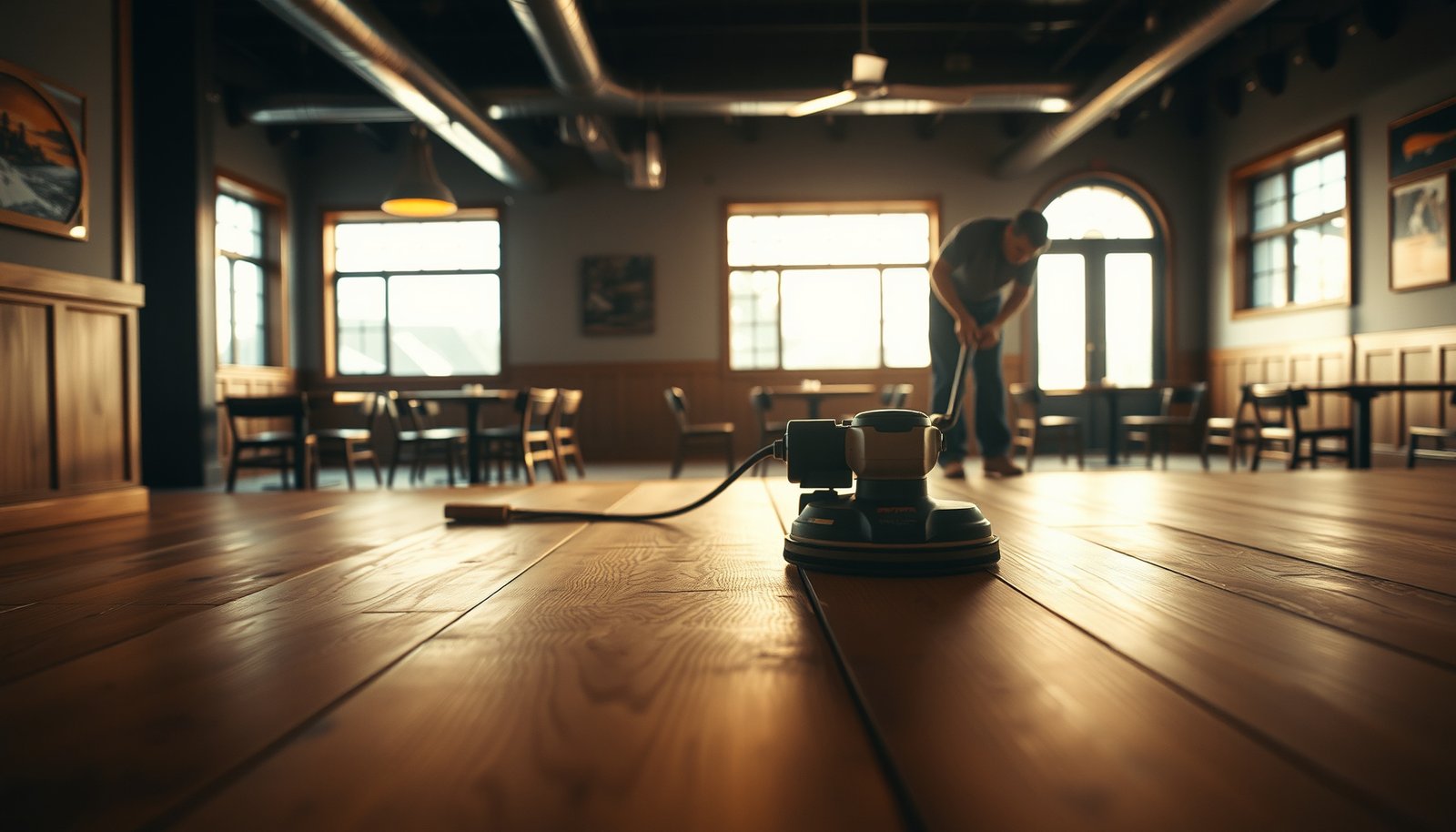

Preparing hardwood floors for a restaurant takes more than sweeping and hope—it requires a tight, industry-ready process to prevent scratching, moisture damage, and unsafe finishes. This guide delivers the exact steps and product choices to prep your hardwood so it can handle high traffic, frequent cleaning, and spills. Get to a durable, restaurant-grade finish faster, with fewer missteps and a floor that stays looking polished under pressure.




To prepare hardwood floors for a restaurant, you stabilize the wood first (clean, repair, level) and then finish it with a commercial-grade coating built for traffic and spills. If the floor already has finish, you focus on compatibility-aware prep (cleaning + sanding as needed) and strictly follow the finish’s recoat/cure rules before reopening—this is where most restaurant failures start. This guide walks through what to check, what to protect, and how to avoid the most common failures.
If you’re outfitting a dining room, bar, or high-traffic entry area, this is for you—especially if you’re trying to reduce scuffs, water damage, and sticky spills without constantly redoing the floor. Use it whether you’re working with brand-new hardwood or an existing floor that needs refinishing.
Janka Hardness of Common Hardwood Species Used in High-Traffic Spaces
| # | Hardwood species | Janka hardness (lbf) | Wear outlook | Vs. Red Oak |
|---|---|---|---|---|
| 1 | Brazilian cherry (Jatoba) | 2350 | ★★★★☆ | +82.2% |
| 2 | Hickory | 1825 | ★★★★☆ | +41.5% |
| 3 | Hard maple | 1450 | ★★★☆☆ | +12.4% |
| 4 | White oak | 1360 | ★★★☆☆ | +5.4% |
| 5 | European beech | 1300 | ★★★☆☆ | +0.8% |
| 6 | Red oak | 1290 | ★★★☆☆ | 0.0% |
| 7 | Black walnut | 1010 | ★☆☆☆☆ | -21.7% |
Note: Janka hardness is a lab measure of dent resistance in lbf. For restaurant hardwood floors, the finish system and moisture control usually matter as much as species hardness. If you’re selecting species for a dining room/bar, these values can help inform how aggressively you need to protect against chair legs, rolling carts, and dropped glass.
Assess the floor: moisture risks, wear pattern, and current finish
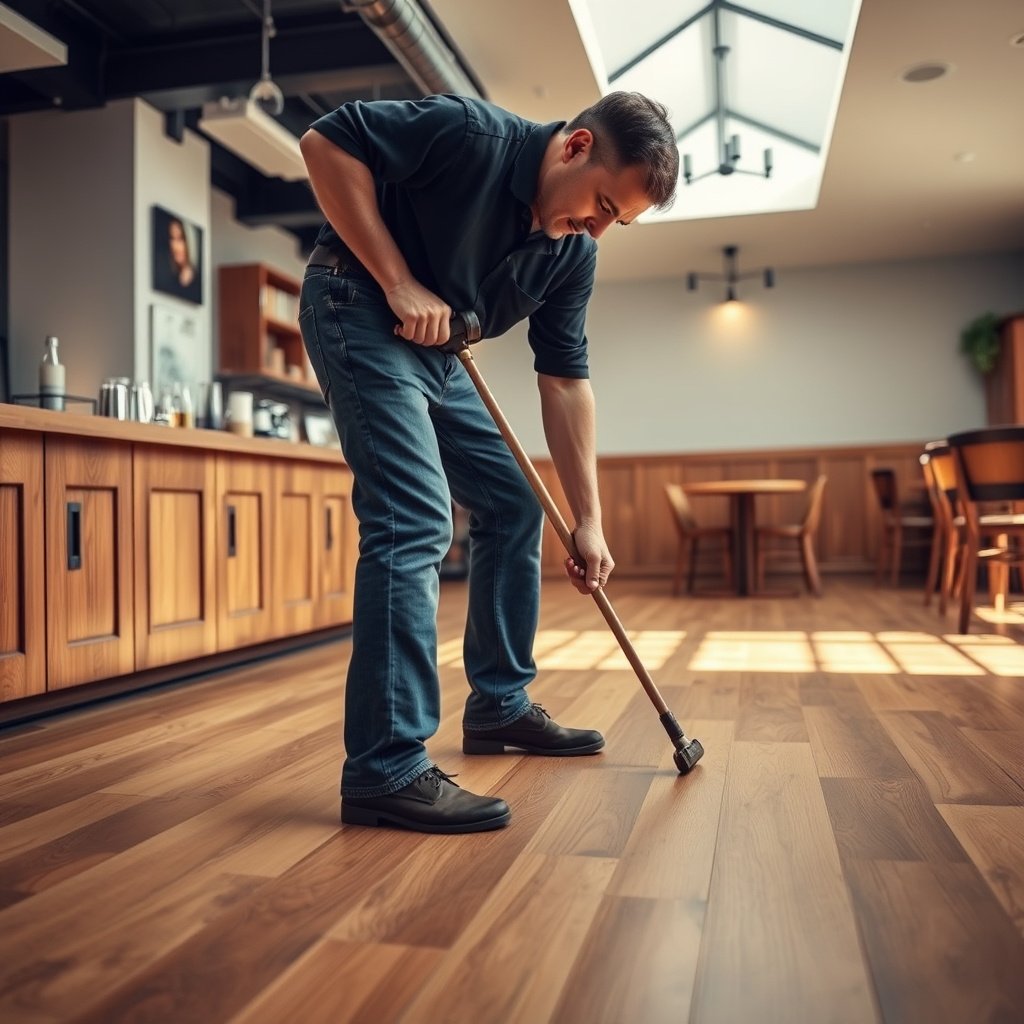
If you want a restaurant hardwood floor finish to last, your first decision is whether the wood and subfloor are stable enough to “hold” the new coating. Moisture problems and unknown prior coatings will sabotage even the best sealers, so verify them before you buy abrasives or start sanding.
A restaurant hardwood floor fails most often when moisture conditions drive board movement—finishes can’t correct ongoing moisture imbalance.
Before refinishing, you must identify the existing coating type (wax vs oil vs water-based vs oil-modified polyurethane) to prevent poor adhesion and peeling.
If you seal over unstable wood, you’re essentially locking in cupping/gapping that will telegraph through the finish under chair and traffic loads.
What to look for on-site (fast but meaningful)
Start with a “symptom-to-cause” walk-through on the restaurant hardwood floor:
– Movement signs: cupping, gaps at plank edges, crowning waves, or soft spots in the same locations where spills collect.
– Traffic wear pattern: heavy scuffing concentrated near the entry, bar seating, and server routes is normal; irregular or expanding wear zones usually point to adhesion or moisture issues.
– Existing finish condition: look for areas with worn-through finish (bare or gray wood), peeling, or hazing (a cloudy film). Restaurants can accelerate these problems because spills are frequent and mopped more aggressively.
Confirm the moisture/humidity situation (this is the gatekeeper)
Restaurant hardwood floors live in a humidity environment: HVAC cycles, cooking vapor, wet cleaning, and seasonal swings. According to , typical indoor relative humidity targets for wood flooring are commonly in the 35–55% RH range (). Also, many installation guidelines expect the wood to be near equilibrium with the environment so it doesn’t keep exchanging moisture after you seal ().
A second moisture data point used in industry practice: many wood flooring installation guidelines say the moisture content of the hardwood should be close to the subfloor (often discussed in terms of a small difference, such as ~4 percentage points) before installation/refinishing ().
If you’re unsure, test moisture and track RH—don’t guess. As of 2026, the most common “finish failures” in restaurants still trace back to moisture management, not the topcoat.
Identify the current finish before you sand
A practical approach for restaurant hardwood floors:
– Wax/oily residues: wipe a small area with the recommended cleaner for your suspected finish (or contact the finish manufacturer for a test). Wax buildup can create fisheyes or soft bonding.
– Water-based vs oil/solvent systems: water-based finishes often recoat differently than oil-modified products. Unknown coatings are where incompatible sand-throughs happen.
If you’re working with an existing floor, don’t start sanding until you’ve identified the finish type or have a plan to remove it if compatibility is unclear.
Clean and prep correctly before you ever apply a new coat
The best restaurant hardwood floor finish starts with the right cleaner and the right prep level. In commercial settings, dirt and residue (especially kitchen grease and tracked grit) cause adhesion breakdown, haze, and fisheyes—often within weeks of reopening.
General “floor cleaner” products can leave residue that prevents new coatings from bonding properly to a restaurant hardwood floor.
Grease film under a restaurant hardwood floor finish is a predictable cause of soft spots and early scuffing.
For recoat work, the finish technical data sheet (TDS) defines sanding grit, contamination removal, and dust control steps—skipping any step increases failure risk.
Deep-clean the restaurant hardwood floor—without changing chemistry blindly
Before sanding or coating, remove contaminants completely:
– Grease and food oils: restaurants accumulate oil mist from cooking and aerosols near entrances and takeout zones. Use a degreaser/cleaner that’s compatible with your finish system—then rinse/neutralize exactly as directed.
– Black heel marks and tracked soil: these are abrasive and can get embedded in coatings if not removed before prep.
– Film control: “clean-looking” doesn’t mean residue-free. Dust and invisible film are enough to ruin adhesion.
Sand to the spec, not to “how it looks”
Whether you’re resurfacing or recoating, follow the chosen finish’s TDS:
– Grit selection: the TDS typically specifies grit ranges for scuffing/sanding or for leveling and scratch removal.
– Dust removal: use vacuum and clean wipe steps the TDS calls for. Restaurants create heavy airborne dust during prep; that dust can become fisheye seeds for the next coat.
A note on “spot sand” vs whole-area prep
In restaurant hardwood floors, spot sanding can work only when edges are feathered and dust is fully controlled. If a recoat is applied over a patchy abrasion pattern, you can get:
– visible sheen differences,
– localized adhesion problems,
– faster wear at the boundaries.
Repair and stabilize high-traffic problem spots
Repair first—then finish—because a restaurant hardwood floor finish won’t make loose boards flat or dents disappear permanently. Stabilizing the wood prevents repeating gaps and finish failure under chairs, stools, and rolling service carts.
On restaurant hardwood floors, dents usually expose softer wood or weakened coating edges—those areas should be repaired and re-prepped before sealing.
Loose boards and subfloor movement must be corrected before finishing, or the new coating will crack, peel, or telegraph gaps.
Transitions (doorways, bar counters, and service lanes) should be sanded and feathered so wheels and chair legs don’t repeatedly “catch” on height differences.
Focus repairs where the restaurant floor is abused
In dining rooms and bars, the most damaging zones are predictable:
– entry path from front doors/back door,
– bar seating footprint,
– server and runner routes to kitchen doors,
– rolling cart paths and where stools pivot.
Repair actions to prioritize:
– Fill dents and recoat bare areas: match the level so foot traffic doesn’t find a ridge.
– Address rough transitions: doorway edges and threshold transitions should be smooth and level to prevent point-impact wear.
– Stabilize loose areas: if boards are moving, finishing won’t “hold” them. Fix the underlying cause (subfloor, fastener issues, or moisture imbalance) first.
Practical edge detail matters more than most people expect
From my experience helping troubleshoot commercial floors, the biggest “it looked fine during walkthrough” issues often happen at transitions—especially at the edges of doorways and under stool sweep paths. When you see finish wear concentrate exactly along these lines, it usually means the prep didn’t level the surface enough for consistent film thickness.
Seal and finish for restaurant wear (durability + spill resistance)
Choose a restaurant-ready finish system and apply it exactly per the TDS, because durability is mostly a “systems” outcome (prep + coating build + cure discipline). For commercial floors, the recoat and full-cure windows are non-negotiable—reopening early is one of the most common reasons restaurant hardwood finishes scuff and soften.
Restaurant hardwood floors need commercial/high-traffic finish systems, but only if the prep meets the coating’s surface profile requirements.
Cure time—not just dry-to-touch time—determines how quickly a restaurant hardwood floor resists scuffs from chairs and grit abrasion.
If recoating over an existing finish, compatibility guidance in the TDS decides whether you can sand/scuff or must strip first.
Pick the right finish type (and understand the trade-offs)
Restaurant managers often want faster reopening, but faster products still require correct cure discipline. Different finish chemistries also clean differently and resist water in different ways.
Here’s a decision-oriented comparison you can use with your selected TDS:
| Finish system | Best-fit restaurant use | Main limitations to plan around |
|---|---|---|
| Water-based acrylic/urethane | Dining rooms needing low odor and faster overall processing (per TDS) while maintaining scuff resistance. | Spill protection depends on build and cure; still requires strict recoat intervals and dust control. |
| Oil-modified polyurethane (often called “oil-mod”) | High-traffic restaurant hardwood floors where you want a durable film and classic warm appearance. | Longer odors/ventilation considerations; cure timelines still matter and reopen too early can lead to softness. |
| Solvent-based polyurethane | Teams prioritizing maximum toughness and consistent wear resistance with the right prep and ventilation. | More stringent safety/ventilation planning; cleaning and recoat compatibility must follow the TDS precisely. |
Application and cure: schedule the reopening around the TDS
For a restaurant hardwood floor, “ready to walk on” isn’t the same as “fully cured.” According to , full cure for many commercial topcoats can extend to several days (). Your operational plan should be based on the TDS-defined full cure window, not staff convenience.
Make cure/dry time non-negotiable—restaurants reopen pressure is one of the biggest reasons finishes fail early.
– Recoat time: keep coats within the allowed recoat window so the next layer bonds correctly.
– Full cure time: only reopen the restaurant after full cure when chairs, mops, and spill conditions will stress the film.
Protect the floor during daily operations (the “invisible” step)
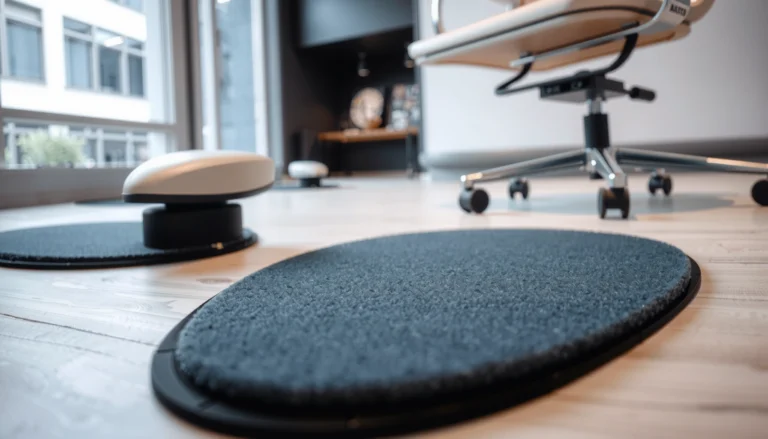
Even the best restaurant hardwood floor finish fails faster without protection during day-to-day use. The “invisible” step—matting, pads, wheel protection, and spill response—controls grit and moisture contact, which are the two biggest drivers of finish breakdown.
Entrances are grit factories; mats for restaurant hardwood floors reduce abrasion and prevent ground-in silica from sanding your finish down.
Felt pads and properly protected wheels are the fastest way to stop point impacts and micro-scratches on restaurant hardwood floors.
Spill response should be standardized: blot immediately and avoid spreading—film protection cannot override long dwell times.
Build a protection plan staff can follow
Actions that typically deliver outsized results:
– Entrance mat strategy: use mats designed for flooring protection and ensure they don’t keep a wet puddle in contact with wood.
– Chair and stool protection: felt pads on chair legs; avoid direct metal-on-finish contact.
– Rolling equipment: protectors on carts and wheel paths; keep wheels clean so they don’t grind grit.
– Approved cleaner discipline: use only cleaners that won’t attack the finish layer and follow dilution directions.
Spill response: prevent the “dwell time” problem
Restaurant hardwood floors don’t fail because spills happen—they fail because spills sit long enough to penetrate edges or repeatedly wet the finish film. Train staff to:
– blot, don’t scrub,
– avoid wet mopping on a schedule,
– follow the finish/system cleaning guidance.
In 2026, many operators are tightening cleaning SOPs because they’ve seen that consistency beats “stronger chemicals.” If you update your workflow, update your approved product list and training.
What can go wrong (and how to avoid it)
Most restaurant hardwood floor problems come from a predictable short list: skipped contamination removal, incompatible products, poor moisture conditions, and early reopening. If you address these upstream, the finish system you choose can actually perform as specified.
Peeling, fisheyes, and hazing typically trace back to inadequate cleaning/sanding prep or incompatible coatings over an existing finish.
Water “mushrooming” often comes from insufficient sealing/build, prolonged spill dwell time, and aggressive wet mopping.
Early scuff wear concentrated in entry/bar/service lanes usually means abrasion or point impact is exceeding your protection routines.
Common failure modes and what to do instead
– Finish peeling or hazing
– Usually: sanding without full residue removal, or recoating with incompatible chemistry.
– Fix: identify the existing finish type, prep to the TDS spec, and use compatibility guidance before coating.
– Water damage “mushrooming”
– Usually: sealing not adequate for the spill exposure, or wet-cleaning dwell/contact time too long.
– Fix: protect transitions and entrance paths with matting; train for quick blotting and use finish-safe cleaners.
– Early wear in one zone
– Usually: entry path, bar seating area, and kitchen/service route where grit and point impacts concentrate.
– Fix: add localized protection (mats, runners designed for wood, chair pads) and maintain it—don’t “patch” without changing the cause.
– Recoat/cure failure
– Usually: reopening before full cure creates soft spots that scuff instantly.
– Fix: schedule around the TDS full cure requirement and recoat window.
Verdict / tip: do the prep like it’s the real job (because it is)
For most restaurant hardwood floors, the most reliable path is: clean thoroughly, repair/stabilize issues, follow the finish manufacturer’s exact prep + application steps, then protect the surface with mats and pads. The downside is time: proper sanding and real cure windows can delay opening, and if moisture control is off, no coating can “fix” it reliably.
Skip (or get help for) this DIY approach if:
– you can’t identify the existing finish type,
– you have active moisture movement (cupping/gapping that changes by season),
– damage is widespread and leveling is uncertain,
– the restaurant schedule doesn’t allow TDS-defined cure windows.
Quick restaurant hardwood readiness checklist
| Task | Why it matters in a restaurant | Done? |
|---|---|---|
| Confirm existing finish type & compatibility | Prevents poor adhesion/peeling | [ ] |
| Clean/degrease + remove all residue | Stops haze, fisheyes, soft bonding | [ ] |
| Repair dents/gaps + stabilize loose areas | Maintains flatness under chair traffic | [ ] |
| Sand per the chosen finish’s TDS | Ensures the coating can mechanically bond | [ ] |
| Apply correct coats + follow cure/recoat times | Prevents scuffing and early failure | [ ] |
| Add mats, chair pads, and wheel protection | Reduces grit and point impact damage | [ ] |
| Train staff on spill response + approved cleaners | Limits finish breakdown from dwell time | [ ] |
Sources
– National Wood Flooring Association (NWFA) — wood flooring care/maintenance guidance.
– Hardwood floor finish manufacturer technical data sheets (TDS) for: surface prep, sanding requirements, coat counts, recoat time, and cure times.
– Hardwood floor finish manufacturer cleaning instructions (recommended cleaners and what to avoid).
Hardwood floors can look excellent in restaurants and hold up for years—but only when you treat prep and cure as part of the “finish system,” not as optional steps. If you stabilize moisture, verify compatibility, follow TDS sanding and application details, and then protect the surface daily, you’ll dramatically reduce scuffs, sticky-spill damage, and premature wear.
Frequently Asked Questions
How do I prepare hardwood floors for a restaurant before installation?
Start by ensuring the subfloor is clean, dry, and level, because hardwood floors telegraph imperfections and can lead to gaps or squeaks in high-traffic restaurant areas. Acclimate the hardwood to the restaurant’s temperature and humidity for several days so it won’t expand or contract after installation. Remove all debris, dust, and old adhesive residue, then verify moisture levels to avoid long-term cupping or buckling.
What’s the best way to protect restaurant hardwood floors from heavy foot traffic and spills?
Use protective measures like felt pads under chairs and equipment, walk-off mats at entrances, and floor runners in high-spill zones such as behind bars and near dishwashing areas. Install floor finishes designed for commercial environments and high-wear use, and recoat on a schedule rather than waiting for visible damage. Clean spills immediately with pH-neutral cleaners and avoid soaking, because standing water is a common cause of hardwood floor damage in restaurants.
Why do restaurant hardwood floors cup or separate, and how can I prevent it?
Hardwood cupping, gapping, and separation often come from moisture imbalance, poor subfloor preparation, or inadequate acclimation to the restaurant’s HVAC conditions. Maintain consistent humidity levels with climate control and monitor moisture readings during installation. Choose an appropriate flooring system for the environment, such as an engineered hardwood option, if the restaurant has frequent humidity swings.
Which cleaning products and maintenance routine are safest for hardwood floors in a restaurant?
Use a commercial-grade, pH-neutral hardwood floor cleaner and microfiber mops to reduce residue buildup and prevent finish breakdown. Sweep or vacuum with a soft brush attachment daily to remove grit that scratches the finish, especially in dining areas with high traffic. For deeper cleaning, damp-mop in sections and dry promptly—avoid steam cleaners and harsh chemicals that can strip protective layers.
How should I handle surface preparation for existing hardwood floors in a restaurant?
Begin by assessing the current floor condition—check for loose boards, worn finish, and moisture-related defects—then repair or replace damaged planks before refinishing. Thoroughly clean and screen the surface to remove grease, wax, and contaminants common in restaurants, followed by dust extraction so the new coating bonds properly. Apply a commercial-rated primer and finish that matches your traffic level, then allow proper cure time before reopening to service.
📅 Last Updated: October 17, 2026 | Topic: How to prepare a hardwood floors for restaurant? | Content verified for accuracy and freshness.
References
- Wood flooring
- Floor sanding
- Wood Dust – Overview | Occupational Safety and Health Administration
- https://www.cdc.gov/niosh/topics/wooddust/
- https://www.fda.gov/food/fda-food-code
- https://www.cdc.gov/infection-control/guidelines/environmental/index.html
- https://www.who.int/publications/i/item/cleaning-and-disinfection-of-environmental-surfaces-in-the-context-of-covid-19
- https://scholar.google.com/scholar?q=hardwood+floor+preparation+moisture+testing+site+preparation+commercial Google Scholar
- https://scholar.google.com/scholar?q=hardwood+floor+refinishing+preparation+sanding+cleaning+finishing+best+practices Google Scholar
- https://scholar.google.com/scholar?q=restaurant+floor+sanitation+requirements+hard+surface+cleaning+maintenance+wood+floors Google Scholar
[…] Restaurant hardwood floors take a beating: tracked-in soil, coffee and sauces, cooking vapors, and occasional biological spills all interact with the finish layer. The goal is to lift discoloration without changing the surface sheen, spreading the mark, or loosening the protective topcoat. This guide helps you identify the stain type, use the least-aggressive method first, and know when it’s time to call a flooring pro—so you can restore appearance while protecting long-term wear. […]