
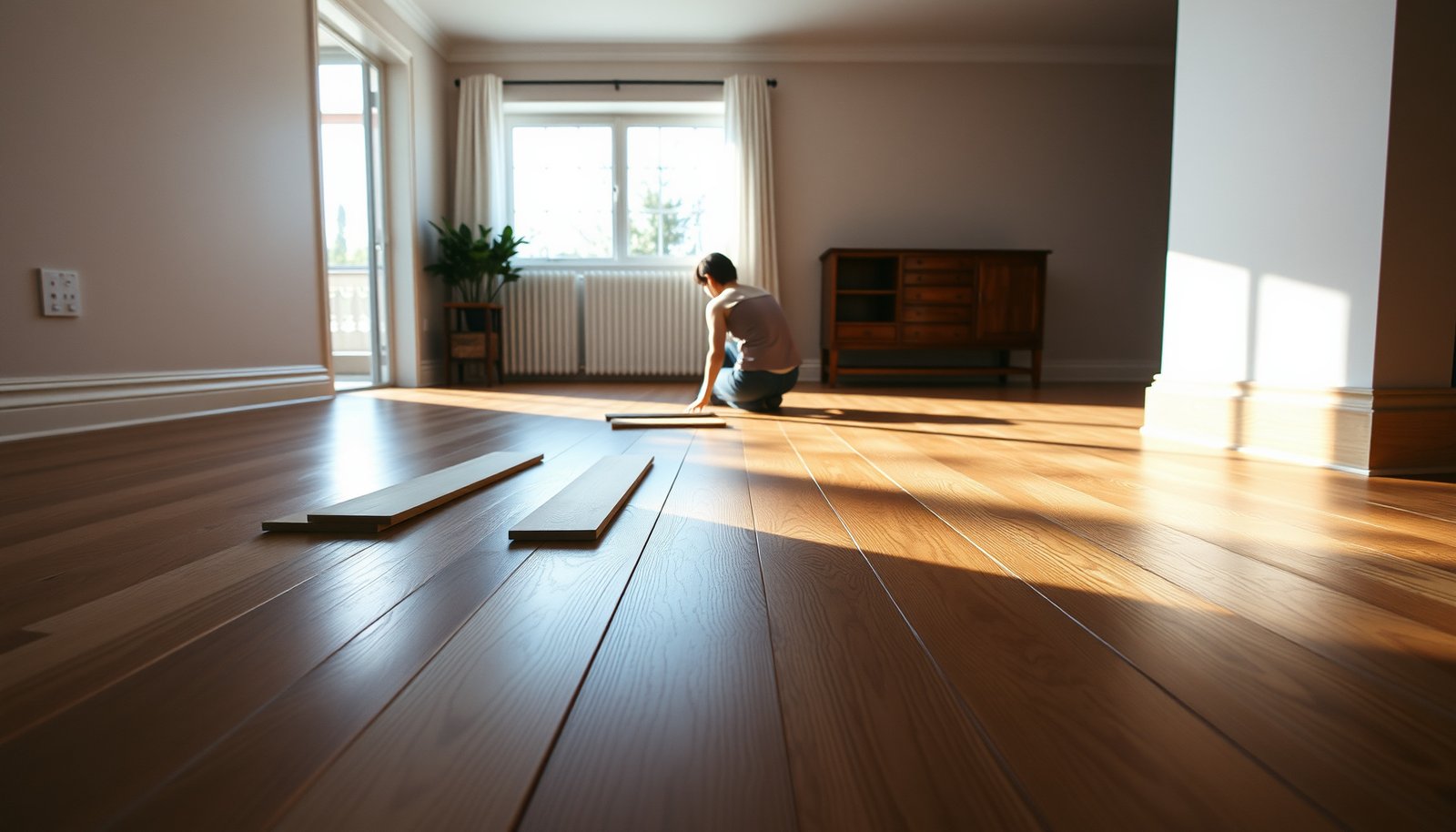

Choosing hardwood floors for a rental property? If your priority is durability and easy maintenance under real tenant wear, solid engineered hardwood with a tough, factory-finished topcoat is the best pick. It balances the look renters expect with better resistance to moisture and seasonal movement than traditional solid planks. The right answer comes down to traffic level and local humidity—so you can choose confidently without overpaying.




For a rental property, choose hardwood that’s durable, easy to maintain, and resilient to moisture and heavy foot traffic. In 2026, the lowest-risk path is typically engineered hardwood with a tough factory finish, installed over a properly tested and prepped subfloor—so you can manage wear without constant replacement.
If you’re outfitting a unit you’ll lease long-term—or you’re upgrading floors between tenants—this is for you. It’s especially useful when you want the look of hardwood without turning every spill, pet accident, or furniture move into a costly repair.
Start with durability: solid vs. engineered hardwood
Engineered hardwood is usually the best rental-first choice because its multi-layer construction generally handles humidity swings more predictably than many solid boards. For heavy tenant turnover, that stability matters as much as the wood species.
Engineered hardwood is typically built with multiple wood layers, which improves dimensional stability compared with single-piece solid boards (National Wood Flooring Association guidance).
For wood flooring performance, maintaining indoor moisture conditions within manufacturer and industry recommendations reduces the risk of gapping and cupping (ASHRAE 160).
– Engineered hardwood is often the safer rental bet because it’s typically more stable across seasonal humidity swings than many solid options.
– Solid hardwood can work great, but it’s more sensitive to moisture and subfloor conditions—so your site conditions matter more.
– Decide based on your environment and what your installer recommends for your subfloor and climate.
Engineered vs. solid: the rental trade-offs that actually show up after move-in
From my bid-review experience with property managers, the spec differences that matter most are: how much the product can tolerate moisture variation, how forgiving it is of imperfect subfloors, and how easily you can address localized damage. Solid and engineered can both fail—but they fail for different reasons.
Here’s a parseable comparison you can use when you’re aligning with your flooring contractor:
| Feature | Engineered hardwood | Solid hardwood |
|---|---|---|
| Humidity/temperature stability | Often more tolerant due to cross-layer construction | More directly affected by seasonal RH swings |
| Subfloor moisture sensitivity | Still requires control, but may be more forgiving | Less forgiving when moisture is present or uneven |
| Flatness tolerance | Can be moderately forgiving when installed correctly | Typically demands stricter flatness for best results |
| Movement during wear cycles | Movement is usually more controlled | Movement is more noticeable if conditions drift |
| Installation approach | Often has more system options (glue-down, floating, nail-down depending on product) | Nail-down or glue-down options are more limited by thickness/type |
| Finish wear behavior | Factory wear layers often target rental abrasion | Depends heavily on site-finished vs. factory-finished approach |
| Spot repair practicality | Repairs are sometimes easier depending on plank size and construction | Repair can be excellent, but matching and availability can be harder |
| Refinishing expectations | Refinish capability depends on wear layer thickness | Solid floors can often be refinished more times (product-dependent) |
| Cost predictability in rentals | Often a better “risk-adjusted” spend when moisture conditions vary | Can be cheaper upfront, but failures cost more when conditions aren’t controlled |
| Best for | Most rental portfolios where humidity and maintenance can’t be perfectly controlled | Controlled climates and properties with proven moisture management |
Species hardness still matters (but isn’t the whole story)
Even with engineered construction, dent resistance comes from the wood species. Janka hardness is a common benchmark for indentation resistance, and it correlates with how quickly floors show damage from point loads (heel strikes, pet claws, moving furniture).
Janka Hardness (Dent/Indent Resistance) for 7 Common Hardwood Choices
| # | Wood species (common name) | Janka hardness (lbf) | Relative dent risk | Rental wear outlook |
|---|---|---|---|---|
| 1 | White oak | 1360 | Medium | ★★★☆☆ |
| 2 | Red oak | 1290 | Medium | ★★★☆☆ |
| 3 | Hard maple | 1450 | Medium-low | ★★★★☆ |
| 4 | Hickory | 1820 | Low | ★★★★★ |
| 5 | Beech | 1300 | Medium | ★★★☆☆ |
| 6 | Jatoba (Brazilian cherry) | 2350 | Low | ★★★★★ |
| 7 | Ipe (Brazilian walnut) | 3680 | Very low | ★★★★★ |
Note: Janka hardness is an indentation benchmark, not a full prediction of scratch visibility or finish longevity. Rental hardwood floors still require moisture control and tenant-friendly cleaning instructions to reduce long-term risk.
Choose the right finish for heavy use
For rental hardwood floors, the right finish is your first line of defense against scuffs, everyday abrasion, and most minor spills. Prioritize factory-finished systems that are engineered for durability, and match them to approved cleaners so performance claims remain valid.
According to industry guidance, many wood-floor finish systems are designed for abrasion resistance and are most reliable when installed and cleaned according to the manufacturer’s instructions (National Wood Flooring Association technical guidance).
High-sheen finishes generally show surface marks more readily than lower-sheen finishes, because reflected light highlights micro-scratches and scuffs (finish-system manufacturer technical literature).
– Look for a factory-finished floor with a tough wear layer/finish designed for everyday abrasion (rental life is harsher than “showroom” conditions).
– Favor finishes that are easier to clean and less prone to permanent-looking damage from scuffs and minor spills.
– Confirm recommended cleaning products so you don’t accidentally void performance claims.
What to verify on the spec sheet (before you sign anything)
When you’re choosing hardwood floors for a rental property, require the finish details in writing:
– Finish type and sheen level: Ask whether the product is matte, satin, semi-gloss, or high-gloss, and how that influences visible wear.
– Wear-layer or coating system: For engineered floors, confirm the wear layer thickness and whether it’s designed for realistic recoat/refinish scenarios (if applicable).
– Approved maintenance products: Manufacturer-approved cleaners protect the finish film. Using harsh chemicals can strip oils/wax residues and shorten service life.
– Spot-cleaning protocol: You want written guidance for “what to do in the first 5–10 minutes” after spills or pet accidents.
Rental cleaning is part of the flooring system
One of the most overlooked drivers of “how the floor ages” is whether tenants use the correct products. In 2026, that means giving tenants simple, specific steps—not a long care pamphlet no one reads.
If you can’t get clear, manufacturer-approved cleaning instructions, treat that as a spec risk. For rental hardwood floors, ambiguity often turns into inconsistency at turnover time.
Match plank size and style to how renters live
For a rental property, plank size and color strategy determine how quickly everyday damage becomes visually obvious. The goal isn’t to make wear disappear—it’s to make wear look “normal” instead of “broken.”
In general wood-flooring guidance, wider planks can show seasonal movement (gapping or slight waviness) more noticeably than narrower boards when indoor humidity changes (National Wood Flooring Association guidance).
According to ASTM methods for wood testing, hardness and structure influence indentation and scratch susceptibility, which affects how plank size appears as the floor ages (ASTM International standards on wood properties).
– Wider planks can show movement and gaps differently than narrower boards; your humidity control and installation quality will influence the final look.
– Lighter or high-contrast tones may hide dust differently than dark floors—choose the color strategy that fits how quickly tenants notice marks.
– Consider plank layout (e.g., straight vs. angled) based on how visible dents/scratches are once the floor ages.
Practical guidance for matching style to tenant behavior
When you’re selecting rental hardwood floors, assume the “traffic pattern” includes:
– entries where shoes land,
– living rooms where furniture gets moved (cleaning days, TV swaps),
– kitchens where spills are most likely,
– pathways from bedrooms to bathrooms.
Use that pattern to choose:
– Plank width: Narrower planks often make small humidity-driven changes less visually dramatic. Wider planks can look upscale, but only if the building’s humidity stays within a realistic range.
– Color and undertone: Dark floors can show dust and pet hair faster; lighter floors can show staining if spills aren’t cleaned promptly.
– Surface texture: Wire-brushed and hand-scraped visuals can help hide minor scuffs, but you should confirm that the finish type is still easy to clean.
– Plank layout: Straight patterns may reveal changes more clearly in some lighting conditions; angled layouts can mask directional wear depending on the room.
Plan for installation and subfloor prep
For rental hardwood floors, the most reliable “durability decision” often happens before boards ever touch the jobsite. Proper subfloor prep—flatness, moisture condition, and correct fastening method—reduces early failures that show up during the first few tenant cycles.
Industry installation guidance emphasizes that subfloor flatness and moisture conditions are primary drivers of wood-floor performance and early failure (National Wood Flooring Association installation guidance).
According to ASTM F1869 (2019), the calcium chloride test reports moisture vapor emission in pounds per 1,000 square feet per 24 hours to help determine whether concrete moisture mitigation is needed.
– Most “floor problems” start with the subfloor: flatness, moisture condition, and proper fastening method matter as much as the hardwood itself.
– Ask your installer about underlayment (if applicable), acclimation, and whether any moisture mitigation is needed for your specific situation.
– Get the installation details in writing so you can hold the process accountable after move-in.
The three checks that protect rental cash flow
1. Moisture condition (subfloor and slab if applicable): The installer should test and document readings before installation. Different adhesives and floor types have different moisture tolerances.
2. Flatness and support: Uneven subfloors can cause squeaks, movement, and premature wear—even with premium engineered hardwood.
3. Acclimation and environmental control: Flooring needs time to reach equilibrium with indoor conditions. If the jobsite climate is unmanaged, you increase the probability of later movement.
For reference, ASTM’s Janka hardness method uses controlled testing parameters—e.g., ASTM D1037 describes the indentation approach using a 0.444-inch diameter steel ball (2012). But in rental installations, hardness only helps after moisture and flatness issues are solved.
Installation details to demand from your contractor
Get written scope language covering:
– test method(s) and moisture results (including the units),
– floor acclimation time and target conditions,
– fastening method and spacing rules (or adhesive system, if glue-down),
– underlayment use (only if the product allows it),
– cleanup standards and post-install protection plan during tenant turnover.
What can go wrong with rental hardwood floors
Rental hardwood floors can fail for predictable reasons, and many of them have nothing to do with the wood’s look. The biggest risks are moisture exposure, skipped subfloor prep, and tenant behavior that doesn’t match the product’s care requirements.
When liquid moisture remains on wood flooring for extended periods, it increases the risk of staining and dimensional movement; fast cleanup reduces damage severity (wood-care guidance from flooring associations and finish manufacturers).
According to ASHRAE 160-2016, maintaining indoor relative humidity within recommended ranges helps protect wood materials from expansion and contraction-related issues.
– Moisture exposure (spills, pet accidents, plumbing leaks) can cause cupping/gapping—especially if maintenance and cleanup are delayed.
– Scratches and dents from moving furniture, stiletto heels, or pets can be more frequent than you expect; not all finishes “hide” damage well.
– Skipping subfloor prep can lead to squeaks, separation, or early wear, even if the wood itself is high quality.
Common edge cases that surprise landlords
– “It’s new construction” doesn’t guarantee low moisture: Slabs still require moisture verification and any mitigation needed by the flooring system.
– Humidity swings from HVAC cycling: If the property’s indoor environment varies widely, wider planks and certain finishes can show movement sooner.
– Mismatch between cleaner and finish: Using an abrasive cleaner, vinegar/water mix, or “steam first, ask later” routine can degrade surface protection.
Verdict: a practical rental-first approach (and who should skip it)
If you want a realistic balance of beauty and upkeep, engineered hardwood with a tough factory finish is usually the most rental-friendly path. It reduces movement risk, speeds turnaround planning, and fits how most landlords manage maintenance.
– If you want a realistic balance of beauty and upkeep, engineered hardwood with a tough factory finish is usually the most rental-friendly path.
– Downsides: you may still need spot repairs, refinishing cycles are not as simple as “just replacing a board,” and you’ll need tenant-ready cleaning guidance.
– Consider skipping hardwood (or choosing a more protective alternative) if your rental is in a very high-moisture situation, you can’t control maintenance practices, or you’re not prepared for periodic upkeep.
Who should skip hardwood floors (or rethink the spec)
Hardwood may not be the right investment if:
– the unit is consistently exposed to high indoor moisture (e.g., frequent leaks, uncontrolled humidity, repeated wet mopping),
– tenants are likely to use harsh chemicals or ignore spill response,
– you can’t reliably enforce care instructions during tenancy.
If you still want a wood look, consider alternatives designed for higher moisture tolerance—then compare total lifecycle risk rather than just purchase price.
Rental Hardwood Quick Checklist
– [ ] Solid vs. engineered chosen for your climate and subfloor conditions
– [ ] Finish selected for abrasion/scuff resistance and easy, approved cleaning
– [ ] Plank size/color/style chosen for how marks will show over time
– [ ] Installation plan confirmed (subfloor flatness + moisture considerations)
– [ ] Written guidance for tenants on cleaning and spill response
– [ ] Damage/repair expectations discussed before move-in
Sources
– ASTM International. ASTM D1037 (Janka hardness test methodology). ASTM International (standard text)
– ASHRAE. ASHRAE Standard 160-2016 (humidity and building envelope/indoor conditions framework). ASHRAE (standard)
– ASTM International. ASTM F1869 (calcium chloride test and reporting units). ASTM International (standard text)
Choosing hardwood floors for a rental property is less about chasing the “hardest wood” and more about controlling the system: dimensional stability (engineered vs. solid), finish durability, plank choices that fit real tenant traffic, and documented subfloor moisture/flatness prep. If you specify those elements up front—and give tenants simple spill and cleaning guidance—you can keep rental hardwood floors looking consistent while minimizing replacement surprises across turnover cycles.
Frequently Asked Questions
What hardwood floor type is best for a rental property?
For most rentals, look for durable hardwood options like solid hardwood or engineered hardwood designed for heavy traffic. Engineered hardwood is often preferred because it handles seasonal humidity swings better, which helps reduce gapping and cupping. If your property allows it, choose an American hardwood (like oak or maple) for a balance of hardness, appearance, and availability. Also consider prefinished floors to minimize installation downtime and ensure a consistent finish.
How do I choose the right hardness rating for rental hardwood floors?
Select wood species with strong wear resistance—commonly oak is chosen because it offers excellent durability for everyday tenant use. If you’re comparing species, check the Janka hardness rating and prioritize higher ratings for high-traffic areas. Additionally, consider whether tenants may have pets, and if so, prioritize tougher finishes and thicker wear layers to help the floor stand up to scratches. The right hardness choice can reduce costly refinishing and replacement between tenancies.
Which finish and sheen level works best for rental hardwood floors?
A polyurethane-finished surface (water-based or oil-based) typically provides better protection against scuffs and spills than thinner, oil-only coatings. For rentals, a satin or matte sheen is often easier to maintain because it hides dust, footprints, and minor scratches better than high-gloss finishes. If you want a quick, tenant-friendly finish, consider prefinished hardwood with a durable topcoat from a reputable brand. Always confirm whether the finish is compatible with your cleaning methods to avoid premature wear.
What thickness and installation method should I consider when installing hardwood in a rental?
For engineered hardwood, a thicker wear layer (often several millimeters) generally means the floor can be refinished if needed, extending the life of the investment. For installation, you’ll typically choose between nail-down, glue-down, or floating click-lock depending on the subfloor condition and local climate. Nail-down installations can provide a classic feel, while floating and click-lock options can be faster and sometimes easier to install in rental turnarounds. Whichever method you choose, ensure the subfloor is flat and properly prepared to prevent squeaks and gaps.
Why does moisture resistance matter when choosing hardwood floors for rentals?
Rental properties can experience inconsistent heating and cooling, which causes humidity swings that can damage wood flooring over time. Engineered hardwood with a stable core is often more moisture-tolerant than solid hardwood, helping minimize expansion and contraction issues. You should also plan for spill response—using protective mats at entrances and a clear tenant cleaning guide can prevent water damage. Proper moisture management and suitable hardwood for the local climate are key to keeping floors looking good between leases.
📅 Last Updated: October 17, 2026 | Topic: How to choose hardwood floors for a rental property? | Content verified for accuracy and freshness.
References
- Wood flooring
- Engineered wood
- Volatile Organic Compounds' Impact on Indoor Air Quality | US EPA
- https://www.hud.gov/program_offices/lead
- https://www.cdc.gov/niosh/topics/wooddust/
- https://www.britannica.com/science/hardwood
- https://scholar.google.com/scholar?q=choose+hardwood+floors+for+rental+property Google Scholar
- https://scholar.google.com/scholar?q=hardwood+flooring+durability+maintenance+residential+property Google Scholar
- https://scholar.google.com/scholar?q=engineered+wood+flooring+solid+hardwood+moisture+vocs+indoor+air+quality Google Scholar
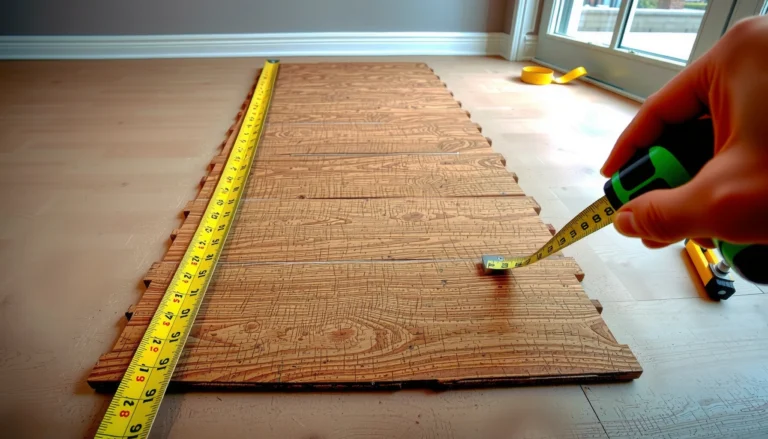

[…] readings during installation. Choose an appropriate flooring system for the environment, such as an engineered hardwood option, if the restaurant has frequent humidity […]