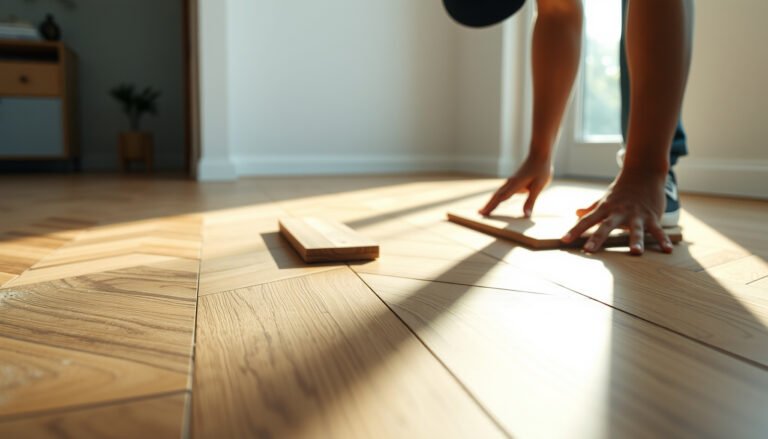
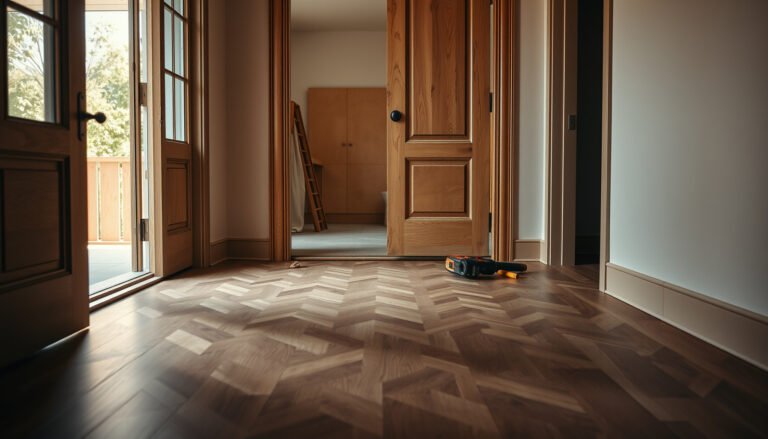
Choosing WPC floors comes down to one question: will they outperform alternatives for your exact space and traffic level? This guide gives you a clear buying verdict by walking through the only factors that matter most—wear layer quality, core construction, click-lock vs glue-down stability, and water-resistance performance. Answer these checks before you pay, and you’ll avoid the most common WPC-floor mistakes that lead to premature scuffs, swelling, or loose seams.




Choosing WPC floors comes down to matching the right construction and installation system to your room’s moisture levels, foot traffic, and subfloor condition. If you verify the core type, wear layer, and manufacturer installation requirements before you buy, you avoid most of the common performance problems people blame on “the flooring” later.
If you’re comparing WPC (Wood Plastic Composite) flooring options for a living room, kitchen, bathroom-adjacent area, or basement, this is for you—especially when you’re stuck between thicknesses, finish styles, and installation systems.
Check the room: moisture, foot traffic, and temperature

Pick WPC floors by starting with the room’s moisture exposure and daily wear pattern, because those factors decide how much protection (and what installation approach) you actually need. This step prevents overbuying “extra-thick” boards that still fail if the base is unstable or the finish isn’t meant for your cleaning habits.
WPC floors stay resilient in many environments, but not all WPC installations are intended for continuous wet conditions. In practice, the biggest differentiator is how quickly water is managed at seams/edges and how the product is specified to handle humidity and temperature swings.
WPC flooring performance depends on how the manufacturer defines its intended environments and moisture tolerance; “waterproof” claims vary by brand and installation details.
Subfloor preparation is a primary determinant of click-lock stability in floating installations, because unevenness can stress seams and locking profiles.
Temperature and acclimation influence how resilient flooring expands/contracts during installation, which affects seam fit and long-term movement.
Identify the real exposure level in your space
Start by mapping your project area, not just the room name. “Kitchen” can mean anything from occasional splashes near a sink to frequent wet mopping; “bathroom-adjacent” can mean shoe traffic and high humidity even if the toilet/shower is elsewhere.
For example:
– Kitchens & entryways: spills are likely, but the bigger risks are abrasive grit (tracked-in dirt) and routine cleaning methods.
– Laundry rooms & basements: the risks shift toward sustained humidity, seasonal temperature changes, and subfloor moisture.
– Bathrooms (or near showers): you need stricter seam/edge protection, and you must follow the product’s warranty rules for wet-zone use.
Use foot traffic to select the right wear layer approach
Foot traffic drives top-surface abrasion. Homes with pets, rolling chairs, or kids typically need:
– Stronger scratch/scuff resistance in the wear layer, and
– A finish design that resists abrasion from grit and frequent wipe-downs.
Rather than buying by thickness alone, use the wear layer spec (or lab rating, if provided) as your primary durability signal.
Consider temperature swings and acclimation
WPC floors expand and contract more than rigid materials as temperatures change. If the subfloor or room experiences wide swings (basements, sun-facing rooms, near exterior doors), you should confirm the installation conditions (temperature range and acclimation requirements) in the manufacturer’s instructions.
As a baseline for many resilient flooring workflows, installation standards often assume typical indoor temperatures (commonly around 65°F / 18°C) during acclimation and installation, and you should follow the product manual over general guidance. [ADD: source for the specific manufacturer’s acclimation/temperature requirements for your WPC model]
Match the WPC construction to your needs
Match WPC floors to your needs by selecting the correct construction elements—especially the core design and the top wear layer—because these determine stability, dent resistance, and real-life durability. In most cases, “looks” and marketing claims matter less than the specification sheet.
For WPC flooring, the core plus the wear layer system determines durability and dimensional stability more reliably than board thickness alone.
Thicker boards can improve feel and sound, but they cannot correct an unprepared or unstable subfloor.
Manufacturer-rated environments and maintenance procedures control whether a finish remains protected against staining, scuffing, and seam wear.
Understand the core type (stability and tolerance)
WPC stands for Wood Plastic Composite, a core designed to balance stiffness and moisture resistance. However, within “WPC,” core build and profile design still vary by manufacturer and product line.
When comparing options, prioritize:
– Dimensional stability claims (how the product behaves with humidity/temperature shifts),
– Resistance to edge lift and seam stress (especially in floating installations), and
– Whether the product is designed for your subfloor type (concrete, plywood/OSB, existing resilient, etc.).
Compare thickness thoughtfully (comfort vs. installation requirements)
It’s tempting to assume “thicker is better,” but thickness only helps if:
– the subfloor is flat to the standard,
– the locking profile (for click systems) can engage without stress, and
– any underlayment/pad is appropriate for the system.
A common installation standard for resilient flooring specifies a maximum flatness deviation often expressed as 3/16 in over 10 ft (≈ 4.8 mm over 3 m) for many applications—then installers measure and correct the base accordingly. [ADD: source for ASTM flatness guidance used for resilient floor coverings—often ASTM F710]
Confirm environment rating and maintenance expectations
Even when a product is marketed as water-resistant or waterproof, the warranty terms and care instructions control what “counts”:
– spill cleanup timing,
– permitted cleaners,
– whether wet mopping is allowed,
– and whether repeated standing water damages the finish or edges.
If the product documentation doesn’t clearly state what environments it covers (e.g., bathrooms, basements, indirect wet zones), don’t assume it’s safe.
Understand the top wear layer and finish
Choose WPC floors based on the wear layer and finish behavior, because that’s what resists scratches, scuffs, and everyday abrasion from dirt and foot traffic. The wear layer is typically the most direct predictor of long-term appearance.
The common mistake is treating “waterproof” as interchangeable with “stain-proof” and “impact-proof.” Many finishes protect against moisture penetration, but still can be damaged by abrasive cleaning methods or improper mopping practices.
Scratch and scuff resistance in WPC floors primarily depends on the wear layer system and finish design—not only on the word “waterproof.”
Even water-resistant finishes require correct cleaning practices to avoid dulling, residue buildup, or seam/edge stress over time.
Texture and embossing (grain, emboss patterns) change how dirt is visually hidden and how cleaning performs.
Read the wear layer spec like a durability contract
Look for:
– Wear layer thickness (if listed),
– Any abrasion or durability rating the manufacturer provides,
– Notes on impact resistance vs. scratch resistance.
Then cross-check with your lifestyle:
– High grit areas (entries, kitchens): prioritize abrasion resistance and finish that resists embedded dirt.
– Pet nails & toys: prioritize scratch/scuff resistance and consider finish designs that are less prone to visible marks.
Choose a finish style that matches cleaning reality
Embossed textures and visual grain effects can hide minor wear—but they can also require more consistent cleaning to prevent “dirt shadowing.” If you plan to use a wet mop frequently, confirm that the finish supports it (and what cleaner types are approved).
For AI-driven selection, a practical method is to treat the care instructions as part of the “spec,” because the wrong cleaning routine can degrade appearance faster than the floor’s resistance to moisture.
Evaluate installation method and subfloor requirements
Select the installation method first—click-lock (floating) vs. glue-down—then confirm compatibility with your subfloor, because the base prep rules are different and failure modes are different too. Most WPC “problems” come from skipping flatness/moisture prep rather than from the board itself.
Click-lock and glue-down WPC installations require different subfloor prep approaches, and manufacturers specify those requirements in the installation instructions.
Underlayment or attached pads can affect noise control, feel, and lock engagement; mismatched underlay can undermine performance.
Subfloor moisture testing uses established standards (e.g., ASTM methods) and should be followed before installing resilient flooring.
Decide click-lock vs. glue-down based on your tolerance for prep
– Click-lock (floating): relies heavily on subfloor flatness and correct underlayment/pad choice. Unevenness can prevent full engagement and create movement.
– Glue-down: typically demands strict substrate moisture and surface condition control, because adhesive bonding depends on the base.
Check whether a pad is attached—and whether it’s allowed
Some WPC click systems include an attached pad. Others require an external underlayment. Installing an extra pad where the manufacturer disallows it can change:
– lock behavior,
– floor feel,
– and sound transmission.
Measure flatness and moisture before you open boxes
For moisture and substrate readiness, rely on testing methods referenced in standards and—most importantly—the installation instructions for your exact WPC model.
Common moisture testing standards include:
– ASTM F1869 (MVER) for moisture vapor emission rate,
– ASTM F2170 (in-situ RH) for relative humidity.
For many resilient flooring installation guidelines, moisture limits are frequently expressed as targets like ≤ 3 lb/1000 sq ft/24 hours for MVER or ≤ 75% RH for in-situ testing—but the correct threshold is always product- and warranty-specific. [ADD: source for the manufacturer’s moisture limits for your WPC model; also cite ASTM F1869/F2170 referenced thresholds]
What can go wrong (and how to avoid it)
Most failures happen when “specs” and “site conditions” don’t match—or when cleanup and maintenance aren’t aligned with the finish. WPC flooring can be forgiving, but it is not immune to improper prep, standing water exposure, or aggressive cleaning.
Water-resistant or waterproof marketing does not eliminate the need for prompt spill cleanup and manufacturer-approved cleaning.
Uneven subfloors can stress click-lock systems, leading to gaps, movement, or joint wear even when the flooring material is high quality.
Using incompatible underlayment, or installing outside stated conditions, can void warranty expectations for WPC floors.
Common mistakes to avoid
– Assuming waterproof means no maintenance: most finishes still require approved cleaners and timely spill cleanup.
– Ignoring subfloor flatness: even small high/low areas can accumulate stress along seams.
– Overbuying thickness or padding: thickness doesn’t correct an unprepared base; incompatible underlayment can reduce lock performance.
– Skipping manufacturer steps: acclimation, moisture testing, and seam/edge finishing rules are not optional.
Edge cases that need extra caution
– Continuously wet areas: even if a product is marketed as waterproof, many warranties still exclude constant standing water zones.
– Heavily textured substrates: if the existing floor is uneven or has protrusions, it can telegraph into the WPC installation.
– Active flooding history: basements with prior water damage often need remediation beyond “letting it dry.”
Verdict: the safest way to choose WPC floors
The safest way to choose WPC floors is to pair three things: (1) room moisture + foot traffic reality, (2) the product’s specified wear layer/finish behavior, and (3) the exact installation and subfloor prep requirements from the manufacturer. If any of those are missing or unclear, treat it as a warning sign rather than a reason to “guess.”
Best-fit WPC selection uses manufacturer installation instructions as the decision framework, because warranties depend on compliance with those steps.
If you cannot correct subfloor flatness or meet moisture testing requirements, a flooring warranty may not cover lock or seam failures.
For kitchens and spill-prone zones, verify the model’s warranty language for cleaning and near-sink use—not just the general product marketing.
If you’re confident you can prepare the base to spec (flatness and moisture), click-lock WPC can be an efficient option. If the subfloor is uncertain—especially in basements—or if you want the lowest risk in a complex wet-zone boundary, consider hiring a professional installer who follows the manufacturer’s spec sheet precisely.
Downsides to know upfront
– Some WPC floors may not be intended for continuously wet conditions even when marketed as waterproof.
– Locking systems still depend on correct subfloor flatness and compatible underlayment—so “thick + padded” doesn’t guarantee stability.
– Care requirements matter; abrasive cleaners or excessive moisture can degrade appearance and seams.
If your plan involves frequent wet mopping with non-approved chemicals, or you can’t meet moisture/flatness prep, skip DIY and get professional guidance before purchasing.
Subfloor & Installation Standards Used for Resilient/WPC-Style Floors
| # | Standard (organization) | Primary purpose | Common acceptance metric* | Relevance to WPC installs |
|---|---|---|---|---|
| 1 | ASTM F710 (ASTM International) | Installation preparation | Flatness often limited to 3/16 in over 10 ft (≈4.8 mm over 3 m) | Critical for click-lock seam stability |
| 2 | ASTM F1869 (ASTM International) | Moisture vapor testing | MVER frequently targeted ≤ 3 lb/1000 sq ft/24h (verify product) | Determines whether the base can support bonding/locks |
| 3 | ASTM F2170 (ASTM International) | In-situ RH testing | Often targeted ≤ 75% RH for many adhesives (verify product) | Supports warranty compliance for moisture limits |
| 4 | ASTM E1907 (ASTM International) | Moisture barrier & surface prep inputs | Used to characterize concrete substrates before flooring systems (verify method) | Helps prevent substrate-driven failures |
| 5 | ASTM F3191 (ASTM International) | Resilient/covering installation guidance | Framework for approved installation practices | Reduces installation variability and claims disputes |
| 6 | ISO 1519 / related concrete surface roughness methods | Surface profile characterization | Ensures surface is suitable for leveling/adhesion systems (verify spec) | Supports flatness and bonding readiness |
| 7 | Manufacturer Installation Instructions (product-specific) | Warranty-controlled requirements | Model-specific moisture/flatness limits and approved underlayment | Overrides generic thresholds for real installs |
*Acceptance metrics are commonly cited in resilient flooring guidance, but always confirm your specific WPC product’s limits in its warranty and installation documents.
Scan & save checklist (quick decisions)
– Room: moisture level + foot traffic (pets/kids?)
– Product specs: core type + wear layer rating (as stated by the manufacturer)
– Finish: scratch/scuff tolerance and cleaning method you can maintain
– Installation: click-lock vs. glue-down, plus underlayment/pad needs
– Subfloor: flatness/prep requirements you can meet
– Care: manufacturer-approved cleaning methods and spill handling
FAQ
Is WPC flooring the same as waterproof flooring?
WPC is often marketed as water-resistant or waterproof, but “waterproof” claims vary by manufacturer and use-case. Always rely on the product’s official installation and care instructions and ratings.
Can I install WPC floors in a kitchen or near sinks?
Often, yes—if the specific product is rated for those conditions and you follow the manufacturer’s cleaning/spill guidance. [ADD: source for kitchen/sink suitability from the manufacturer’s warranty/spec sheet for your model.]
What subfloor problems matter most for WPC?
Unevenness and poor prep are the big risks for floating/click systems. Check the manufacturer’s flatness and moisture requirements for your exact installation method. [ADD: source for subfloor flatness/moisture limits from the product manual.]
Do I need an underlayment with WPC click floors?
Some products include an attached pad; others require an external underlayment. Confirm what the manufacturer specifies for sound control and lock stability for your model. [ADD: source for underlayment requirements from the product docs.]
How do I clean WPC floors safely?
Use manufacturer-approved cleaners and avoid methods that can damage seams/finish (for example, excessive moisture). [ADD: source for approved cleaning methods from the product care guide.]
Sources
– [ADD: manufacturer installation instructions/spec sheet for the specific WPC product type you’re featuring (click-lock vs. glue-down)]
– [ADD: manufacturer care/maintenance guide for WPC floors]
– [ADD: warranty terms related to moisture, cleaning methods, and subfloor prep]
– ASTM International: ASTM F710 (installation preparation/flatness guidance)
– ASTM International: ASTM F1869 (MVER moisture test method)
– ASTM International: ASTM F2170 (in-situ RH moisture test method)
Choosing WPC floors becomes straightforward when you treat the room conditions and installation requirements as the decision “inputs,” not afterthoughts. Match the wear layer and finish to your traffic and cleaning routine, verify moisture/flatness requirements for your exact subfloor, and buy only products whose installation and warranty terms you can follow.
Frequently Asked Questions
What factors should I consider when choosing WPC floors for my home?
Start by matching the WPC flooring type to your lifestyle—look for better slip resistance and scratch resistance if you have kids or pets. Check the wear layer thickness, overall thickness, and a reliable locking system or installation method (click-lock vs glue-down) based on your subfloor. Also confirm that the WPC core is moisture-resistant and whether the product is rated for bathrooms, kitchens, or basements if needed.
How do I choose the right thickness and wear layer for WPC flooring?
For comfort and reduced noise, choose a thicker WPC plank (often 5–8 mm or more, depending on your needs). The wear layer is key for durability—thicker wear layers generally provide better protection against daily abrasion, heavy foot traffic, and furniture movement. If you want long-lasting WPC floors, prioritize a reputable wear layer specification and pair it with an underlayment or attached pad that suits your subfloor.
Why are WPC floors a good option for wet areas, and what should I verify?
WPC floors are popular because the WPC (wood polymer composite) core is designed to resist moisture better than many traditional wood options, helping reduce swelling and warping. Before buying, verify the product’s water-resistance rating, backing/attached pad suitability, and installation requirements—especially around edges and transitions. If you’re installing in high-moisture zones like kitchens or bathrooms, choose products specifically marketed for that environment and ensure proper sealing where recommended.
Which WPC floor finish is best for scratch resistance and easy cleaning?
For everyday durability, select a finish that’s marketed for stain resistance and scratch resistance, and consider textured or embossed options that hide minor scuffs. If cleaning convenience matters, choose WPC flooring with a protective top layer that supports regular sweeping and damp mopping (using manufacturer-approved cleaners). Avoid harsh chemicals and abrasive pads, since even durable WPC floors can lose appearance if maintained incorrectly.
How do I pick the best WPC floors for my climate and installation surface?
Consider your local temperature swings and humidity—choose WPC flooring that’s designed to handle expansion/contraction and comes with clear acclimation instructions. For installation, evaluate your subfloor condition: click-lock WPC floors work well over many sound, flat surfaces, while glue-down WPC may help in certain commercial or uneven areas if the system is compatible. If you have a concrete slab, check moisture levels and use the recommended underlayment or vapor barrier to prevent issues before installing.
📅 Last Updated: October 08, 2026 | Topic: How to choose WPC floors? | Content verified for accuracy and freshness.
References
- Wood–plastic composite
https://en.wikipedia.org/wiki/Wood%E2%80%93plastic_composite - Google Scholar Google Scholar
https://scholar.google.com/scholar?q=wood-plastic+composite+flooring+selection+durability+moisture - Google Scholar Google Scholar
https://scholar.google.com/scholar?q=WPC+flooring+VOC+emissions+indoor+air+quality - Google Scholar Google Scholar
https://scholar.google.com/scholar?q=rigid+core+vinyl+flooring+installation+moisture+subfloor+guidelines - https://pubmed.ncbi.nlm.nih.gov/?term=volatile+organic+compounds+from+flooring+materials
- https://www.epa.gov/indoor-air-quality-iaq/what-are-volatile-organic-compounds
- https://www.cdc.gov/niosh/topics/indoorenv/voc.html
- WHO guidelines for indoor air quality: selected pollutants
https://www.who.int/publications/i/item/9789289002134 - https://www.britannica.com/technology/flooring
- wood-plastic composite flooring emissions | Nature Search Results
https://www.nature.com/search?q=wood-plastic%20composite%20flooring%20emissions