Choosing hardwood floors for a retail store comes down to one decision: which material and finish will handle foot traffic while looking showroom-fresh. If your store needs maximum durability and easier upkeep, pick factory-finished hardwood with a commercial-grade wear layer and a satin sheen. This guide tells you exactly what to prioritize—species, thickness, plank width, and finish—so you buy once and replace never.


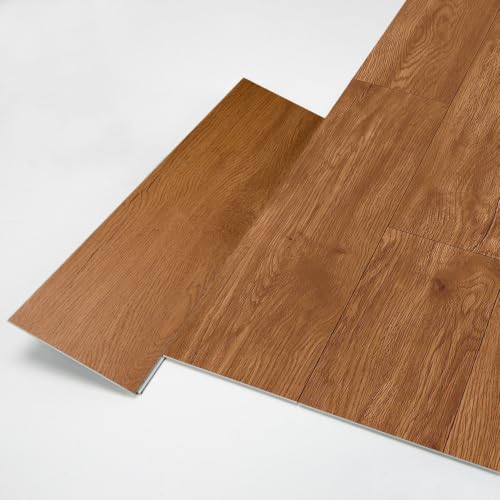
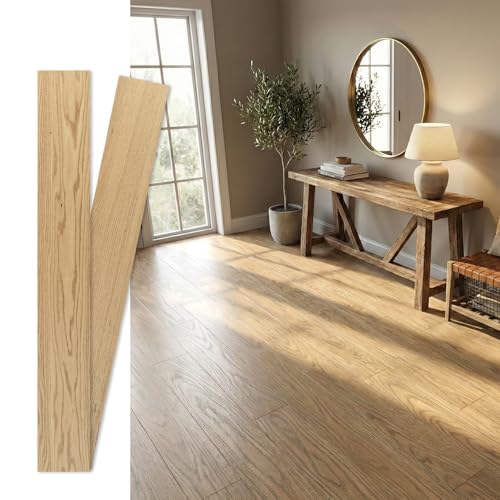
Choosing hardwood floors for a retail store comes down to durability under constant traffic, then confirming the finish and installation details will tolerate your store’s moisture and cleaning routine. Prioritize retail-rated construction (often engineered hardwood), a finish system meant for heavy use, and an installation plan that prevents gaps, movement, and early failure.
If you’re outfitting a shop, showroom, boutique, or storefront, this guide walks through what to decide first—so you don’t end up with a beautiful floor that scratches, dents, or fails early. We’ll focus on the real-world constraints retail brings: constant foot traffic, rolling carts, dropped items, and frequent cleaning.
Assess your retail traffic and conditions first

For retail hardwood floors, the “best-looking” option is the wrong starting point—you need to design for the worst day your floor will experience. Here’s how to translate daily chaos (gait, grit, humidity swings, and cleaning chemistry) into specs that your hardwood can actually handle.
Define the hardest-day wear profile
Start by mapping where damage starts and accelerates in your retail space. In my experience reviewing retail flooring scopes (from entryways to back-of-house corridors), the highest damage rate usually concentrates at transition zones: the door area, the first 20–30 feet inside, and the route where carts travel. That means your hardwood floor choice isn’t just a “material decision”—it’s a traffic-management decision.
NWFA guidance emphasizes that installed wood flooring needs controlled indoor conditions, especially relative humidity (RH), to reduce movement like gapping and cupping. National Wood Flooring Association (NWFA) — installation/maintenance guidance
Make sure the environment can support hardwood
Retail is rarely climate-stable. Door openings, HVAC cycling, and seasonal heating can push RH and temperature around more than you’d see in an office or home. If you can’t hold conditions within the manufacturer’s allowed range, even a “commercial” hardwood finish can still fail due to dimensional movement—scratches are one thing; buckling is another.
In-situ concrete moisture testing is commonly performed using ASTM F2170 (relative humidity probes), which installers use to predict moisture risk before wood flooring goes down. ASTM F2170
Decide what “looks good” means for retail
Finally, define your tolerance for everyday visual wear. Some stains and clear finishes hide scuffs; others make them obvious under showroom lighting. If your retail operation allows entry mats and cleaning controls, you can select a finish that balances stain protection and scratch visibility.
Static slip resistance testing for floor surfaces often uses ASTM D2047, which is used when specifying traction/COF-related performance for interior flooring. ASTM D2047
– Identify the “hardest day” wear: foot traffic level, rolling carts/fixed equipment, entryway grit, and any spills or wet cleaning.
– Match the wood/finish to the environment (especially humidity control and how the store is heated/cooled year-round).
– Decide what “looks good” means: stain tolerance, scratch visibility, and whether you can use mats/entry systems to reduce debris.
Choose wood species, grade, and plank style that fit retail
For retail hardwood floors, species and grade matter because they control dent resistance, how quickly scuffs show, and how “busy” the floor looks after months of foot traffic. Start with hardness and realistic visual expectations, then choose grade and plank dimensions that hide (or reveal) wear patterns.
Pick species for dent resistance and visual tolerance
Species selection should reflect the abuse profile you mapped earlier: rolling cart wheels, dropped items, and point-impact from bins or product shipments. As a decision anchor, Janka hardness (measured in pounds-force, lbf) is widely used to compare wood’s resistance to indentation.
According to the Wood Handbook from the U.S. Forest Products Laboratory, Janka hardness values are reported in pounds-force (lbf) as a standardized way to compare dent resistance across species. U.S. Forest Products Laboratory — Wood Handbook (Janka hardness)
Use grade to prevent “off-looking” wear
Grade is how the board surface and color variation are allowed to look out of the box. In retail, you’re not getting a pristine “first 6 months” appearance forever, so grade should be chosen to avoid a noticeable mismatch between early and late wear. Character-grade options can disguise the random changes that retail introduces; highly uniform grades often show traffic patterns sooner.
Plan plank width/length around scuff visibility and movement
Plank geometry affects how scuffs read visually. Wider planks can create larger “highlight lines” when finish wear concentrates in bands; narrower boards often break up damage visibility. Length also affects how you perceive repeated joints across a high-traffic lane.
Hardwood Species Dent Resistance (Janka Hardness, lbf)
| # | Species | Janka Hardness (lbf) | Retail Wear Fit | Common Retail Use |
|---|---|---|---|---|
| 1 | Brazilian Walnut (Ipe) | 3684 | ★★★★★ | High-impact retail corridors |
| 2 | Hickory | 1825 | ★★★★☆ | Carts + frequent product drops |
| 3 | Maple (Hard Maple) | 1450 | ★★★★☆ | Showrooms with consistent HVAC |
| 4 | White Oak | 1360 | ★★★☆☆ | Balanced durability + classic look |
| 5 | Ash | 1320 | ★★★☆☆ | Moderate-traffic retail zones |
| 6 | Beech | 1300 | ★★☆☆☆ | Retail with strong entrance protection |
| 7 | Red Oak | 1290 | ★★☆☆☆ | Works best with tougher finish systems |
Note: the star “Retail Wear Fit” is a practical mapping from Janka hardness tiers to help you compare species for dent resistance in retail hardwood floors. Verify final suitability against your flooring manufacturer’s warranty and recommended installation conditions.
– Pick species based on hardness/appearance preferences and how much color variation you can tolerate from day to day.
– Choose the right grade/style (e.g., character looks vs. uniform look) so the floor won’t feel “off” after months of wear.
– Plan plank width and length for the space layout—narrower/wider boards can change how scuffs and expansion gaps visually read.
Decide between solid vs. engineered hardwood for retail
For most retail projects, engineered hardwood is the safer bet because it’s designed to handle movement better than many solid-floor applications—especially when store conditions fluctuate. If you prefer solid hardwood, you can still use it, but you must align installation details with your store’s humidity control and the product’s written instructions.
Compare solid vs engineered for movement tolerance
Retail hardwood floors experience seasonal moisture and temperature shifts. Engineered hardwood is typically built with multiple plies that help resist movement, but your specific product still has installation requirements you must follow.
For dimensional stability, engineered wood flooring generally performs better than many solid products in environments where conditions vary, but the deciding factor is the manufacturer’s installation instructions and allowable site conditions. Manufacturer installation instructions (engineered/solid hardwood product lines)
Moisture control is not optional: installers use ASTM F1869 (calcium chloride) or ASTM F2170 (relative humidity probes) to verify concrete moisture before installing wood flooring. ASTM F1869; ASTM F2170
Solid wood flooring is more sensitive to site RH swings because it is a single piece of wood; proper acclimation and site moisture/humidity control are critical. NWFA — acclimation and environmental control guidance
– For most retail projects, engineered hardwood is often the safer bet because it’s built to handle movement better than many solid-floor applications (verify your specific manufacturer guidance).
– If you go solid, confirm it’s appropriate for your store’s humidity control and that installation will be done per the flooring manufacturer’s instructions.
– Before choosing thicknesses, check what you can maintain later: repair/refinish options vary by construction and finish system.
Pros/cons: solid vs engineered in retail
The decision is rarely about “which is better”—it’s about which one your store can successfully support for years.
| Category | Engineered hardwood (retail fit) | Solid hardwood (retail fit) |
|---|---|---|
| Movement tolerance | Often better for fluctuating site conditions when installed per instructions | More sensitive to RH swings; requires tighter control |
| Installation constraints | Still requires correct subfloor prep, moisture testing, and acclimation steps | Requires strict acclimation and environment control; failure risk increases if not followed |
| Repair/refinishing | Refinish potential depends on wear layer thickness and finish type | Often allows more traditional refinishing, but wear still depends on finish durability |
| Typical retail recommendation | Commonly chosen when stores have seasonal footfall and variable HVAC cycles | Works when the building is consistently controlled and the installer follows the written plan |
Select a finish that can survive cleaning and daily impact
For retail hardwood floors, the finish system is what takes the chemical and abrasion hits every day—so choose for wear performance, not just appearance. Your goal is to pair a retail-rated finish with a cleaning routine that won’t degrade it prematurely.
Verify the finish is actually retail-rated
Many product pages show dramatic before/after photos, but the protection you need is defined in abrasion, chemical resistance, and maintenance guidance. Read the manufacturer’s written spec for commercial/high-traffic suitability and how the floor should be cleaned.
In 2026, more retail operators are also standardizing maintenance training across staff and vendors. That matters because the “wrong cleaner” is one of the fastest ways to shorten the life of a hardwood finish.
Control shine level based on lighting and visibility
Sheen changes how scratches and scuffs show. Higher sheen can highlight surface imperfections; lower sheen usually hides them better. The best option depends on your storefront’s lighting layout and the direction of natural light.
Plan for traction and safety where floors get wet
Retail entrances often see tracking and occasional moisture. If you expect wet cleaning near doors or seasonal rain, ask the finish manufacturer for traction guidance rather than guessing.
If you need traction/COF compliance context, ASTM D2047 is one common test method used for static coefficient of friction of floor surfaces and finishes. ASTM D2047
– Choose a finish system designed for wear in commercial or high-traffic settings—use the manufacturer’s abrasion/chemical/maintenance guidance, not just marketing photos.
– Control shine level: higher sheen often shows scratches more clearly, while lower sheen can be more forgiving (the right call depends on your lighting).
– Plan for slip and safety: if entrances get wet, ask the finish manufacturer for slip-resistance information or .
Plan installation and ongoing maintenance like it’s part of the product
For retail hardwood floors, installation quality and ongoing maintenance are inseparable from the material choice. Even a top-tier engineered hardwood and retail-rated finish will underperform if the subfloor isn’t ready, moisture testing is skipped, or staff uses unapproved cleaners.
Treat the subfloor as the real “foundation”
Before hardwood goes down, require a full subfloor assessment: flatness, moisture conditions, and the correct acclimation steps per the flooring manufacturer and/or installation standard guidance. For concrete, installers typically use either ASTM F1869 (calcium chloride) or ASTM F2170 (in-situ RH probes) to quantify moisture risk.
Concrete moisture verification for wood flooring commonly uses ASTM F1869 or ASTM F2170, because excessive moisture emissions can lead to cupping/gapping and finish problems after installation. ASTM F1869; ASTM F2170
Relative humidity recommendations for installed wood flooring typically include maintaining indoor RH within a specified band year-round to limit dimensional change. NWFA — environmental control guidance
Specify transitions and movement control
Retail frequently changes floor elevations at doorways, storage rooms, and ramps. That means transitions, edges, and expansion allowances must be planned to prevent movement that shows up as gaps or lifted boards.
Also, protect your floor from rolling equipment and heavy handling. In many retail builds, the “floor protection plan” gets treated as an afterthought; then carts cause the exact damage nobody planned for.
ASTM standards and manufacturer installation instructions consistently place moisture testing and acclimation as required steps before hardwood installation to reduce post-install movement failures. ASTM / NWFA guidance as cited in manufacturer installation instructions
– Require a full subfloor assessment: flatness, moisture conditions, and acclimation steps per the flooring manufacturer and/or installation standard guidance.
– Use the correct accessories and protection: matching transitions, proper expansion allowances, and for how carts/fixtures will be protected.
– Set a cleaning routine that won’t damage the finish (confirm approved cleaners/tools with the manufacturer); schedule spot checks in high-wear zones.
What we’d tighten in a retail scope (practical details)
If you’re coordinating a retail hardwood flooring job in 2026, push for these items in writing:
– A moisture testing method (ASTM F1869 vs ASTM F2170) and acceptance criteria consistent with the flooring warranty.
– A documented acclimation plan stating the target environmental conditions during installation.
– A staff/vendor cleaning SOP that specifies what’s allowed on hardwood floors (and what’s not).
What can go wrong when choosing hardwood for retail
Retail hardwood floors commonly fail for predictable reasons: conditions don’t match the wood’s movement needs, finish isn’t compatible with daily cleaning, or protection systems aren’t operational. If you plan for these failure modes up front, you’ll avoid costly callbacks and early replacement.
The most frequent failure drivers
Hardwood problems in retail aren’t usually “mystery defects.” They’re often traceable to RH drift, installer shortcuts, or maintenance that gradually erodes finish performance.
– Wrong humidity expectations: even a great floor can gap/cup if store conditions or installer steps don’t match the wood’s movement requirements.
– Choosing for “looks” only: light colors, high-sheen finishes, or overly soft looks can telegraph scratches/dents much faster in retail.
– Skipping protective strategy: without mats at entrances and protection for rolling loads, you’ll see damage early—no finish can fully erase ongoing abuse.
Moisture and RH-related movement issues (like gapping and cupping) are a common root cause of wood flooring failures when indoor conditions and subfloor moisture do not meet the manufacturer’s requirements. NWFA — installation/environment guidance
Even when finish durability is high, point impacts from dropped items and abrasion from trapped grit can still exceed a floor’s protective layer capacity in high-traffic retail. Manufacturer maintenance/abrasion guidance (general principle)
Edge cases to watch
– Wet operations near entrances: If you mop frequently, use steam, or allow spills without quick cleanup, confirm finish chemical resistance and dry-out procedures.
– Frequent pallet jacks or forklifts: Wood floors can be damaged by concentrated rolling loads even when the finish looks “fine.” Protection needs to be mechanical (guards/pads), not just “be careful.”
– Inconsistent HVAC schedules: If the store opens early and closes late with large temperature swings, engineered hardwood still needs a written plan for indoor stability.
Verdict / tip + quick checklist
If you want the safest balance of beauty and durability, start by narrowing to engineered hardwood with a finish intended for high-traffic use, then lock down installation/subfloor requirements and a realistic cleaning routine. Downsides: engineered still dents/scratches (nothing wood-proof exists), and both construction types depend heavily on humidity control and correct installation—so if your store can’t maintain stable conditions, hardwood may be a poor fit. Skip this approach if you can’t control moisture/humidity, won’t follow maintenance instructions, or your retail operation involves extreme rolling/impact without protection (e.g., frequent pallet-jack traffic in customer areas, or regular wet mopping right at door zones without traction planning).
The most reliable retail outcomes come from matching hardwood floors to the site’s moisture/RH conditions and following the manufacturer’s exact installation and maintenance instructions. NWFA and manufacturer installation/warranty guidance
For retail durability, dent/indent resistance (wood species hardness) and finish wear performance both matter; neither alone guarantees long life under heavy traffic. U.S. Forest Products Laboratory — Wood Handbook (hardness concept); manufacturer abrasion guidance
Quick checklist to save (scan before you buy/commit)
| Decision | What to verify |
|---|---|
| Construction | Solid vs engineered + that it’s appropriate for retail conditions (manufacturer instructions) |
| Wood/style | Species + grade + plank width/length that match your look and scratch visibility tolerance |
| Finish | Retail-rated finish system + cleaning/chemical compatibility + sheen choice |
| Installation | Subfloor flatness/moisture requirements + acclimation + expansion allowance |
| Store protection | Entry mats plan + pads/guards for carts/fixtures + transitions and edges handled correctly |
Frequently Asked Questions
What hardwood floor finish is best for a retail store?
For retail flooring, choose a finish designed for heavy foot traffic, frequent cleaning, and high abrasion. Options like aluminum-oxide–cured polyurethane (often called a “commercial” or “hardwearing” finish) can provide strong scratch and wear resistance. If your store experiences moisture from mopping or spills, look for finishes with good stain resistance and verify the manufacturer’s warranty for commercial use.
How do I choose the right hardwood thickness and plank width for retail?
In retail, thicker hardwood planks (commonly 3/4-inch solid or engineered equivalents) can be more forgiving for wear and easier to refinish if you choose solid hardwood. Wider planks can make a space feel more open, but they may show movement and gaps more in varying humidity if not properly acclimated. Many stores prefer engineered hardwood in areas with fluctuating indoor climate because it offers greater dimensional stability while still giving a hardwood look.
Why is engineered hardwood often a better choice for retail floors than solid hardwood?
Engineered hardwood is typically more stable across seasonal temperature and humidity swings, which is important for stores with HVAC cycling and changing occupancy. It also performs better over concrete subfloors when moisture conditions are a concern, as long as the correct installation system is used. For retail owners, the ability to maintain consistent appearance while minimizing expansion and contraction can reduce long-term issues and downtime.
Which wood species and hardness ratings work best for high-traffic retail areas?
Choose hardwood species with higher Janka hardness ratings to better resist dents from shopping carts, shoes, and frequent foot traffic. Common durable options include red oak, maple, hickory, and Brazilian walnut (depending on availability and sustainability goals). Beyond hardness, consider grain pattern and stain compatibility—tighter grains can hide some scratches, while certain species accept finishes more uniformly for a consistent retail floor appearance.
How should I match hardwood floors to my store’s brand, lighting, and maintenance needs?
Select color and tone based on how your lighting and merchandising will look on the floor—lighter woods can brighten the space, while darker stains can hide wear but may show dust more readily. If you expect spills, go with stain-resistant finishes and plan for a routine cleaning method that follows the manufacturer’s guidelines (typically pH-neutral cleaners and soft pads). Finally, ask about commercial warranty terms, finish wear expectations, and refinishing options so your hardwood floor can stay aligned with your brand image long-term.
📅 Last Updated: October 17, 2026 | Topic: How to choose hardwood floors for a retail store? | Content verified for accuracy and freshness.
References
- Wood flooring
- Wood flooring
- Engineered wood
- https://www.fpl.fs.fed.us/documnts/fplgtr/fplgtr190.pdf
- Redirecting…
- https://www.epa.gov/indoor-air-quality-iaq/volatile-organic-compounds-vocs
- https://www.cdc.gov/niosh/topics/voc/
- https://scholar.google.com/scholar?q=how+to+choose+hardwood+flooring+for+commercial+spaces Google Scholar
- https://scholar.google.com/scholar?q=commercial+hardwood+flooring+durability+wear+resistance Google Scholar
- https://scholar.google.com/scholar?q=hardwood+flooring+indoor+air+quality+VOC+finish+selection Google Scholar