
If you need a clear plan for how to maintain laminate floors in a warehouse, this guide lays out the fastest, most reliable steps to keep them stable and looking clean. You’ll learn the exact daily, weekly, and spill-handling routines that prevent moisture damage, scratches, and wear from heavy foot traffic. Follow these practical measures and your warehouse laminate flooring will hold up through workweeks—not just until the next inspection.



Keeping laminate floors in a warehouse clean and dry is the biggest factor in avoiding swelling, warping, and dulling over time. Sweep or dust-mop daily, manage spills fast, and use protective mats at high-traffic entry points to reduce grit-driven wear. If you’re dealing with warehouse realities—forklifts, rolling carts, heavy foot traffic, and frequent debris—this guide focuses on maintenance habits that align with laminate’s main vulnerabilities: moisture, abrasion, and standing water.
If you manage a warehouse, maintenance team, or facility cleaning program, this is for you—especially if you’re trying to keep warehouse laminate flooring looking sharp without downtime. The steps below are designed for day-to-day operations where the floor is constantly exposed to tracked dust, occasional liquid, and repeated impact loads.
Daily cleaning to prevent grit wear
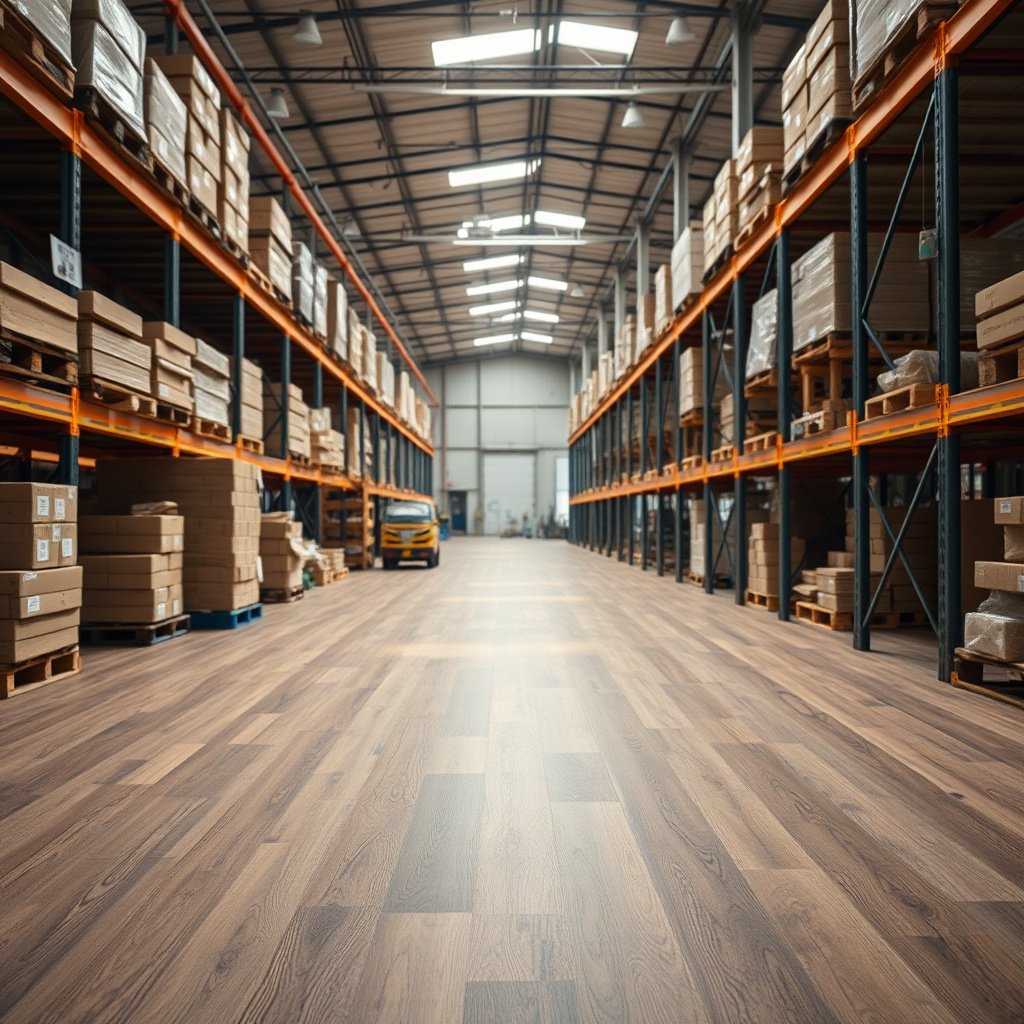
Keeping warehouse laminate flooring dullness-free comes down to removing abrasive dirt before it becomes embedded. Daily dry cleaning prevents grit from acting like sandpaper on the surface finish, which is the first reason laminate looks worn even when it’s “still intact.”
According to the U.S. Environmental Protection Agency (EPA), PM10 includes particles with aerodynamic diameters of 10 micrometers (µm) or less—fine enough to travel and spread across floors during routine foot traffic.
According to the EPA, PM2.5 is defined as particles 2.5 µm or less, which is why “light dust” can still grind against laminate finishes.
According to the EPA, ultrafine particles are generally defined as smaller than 0.1 µm, which can remain airborne and redeposit after sweeping.
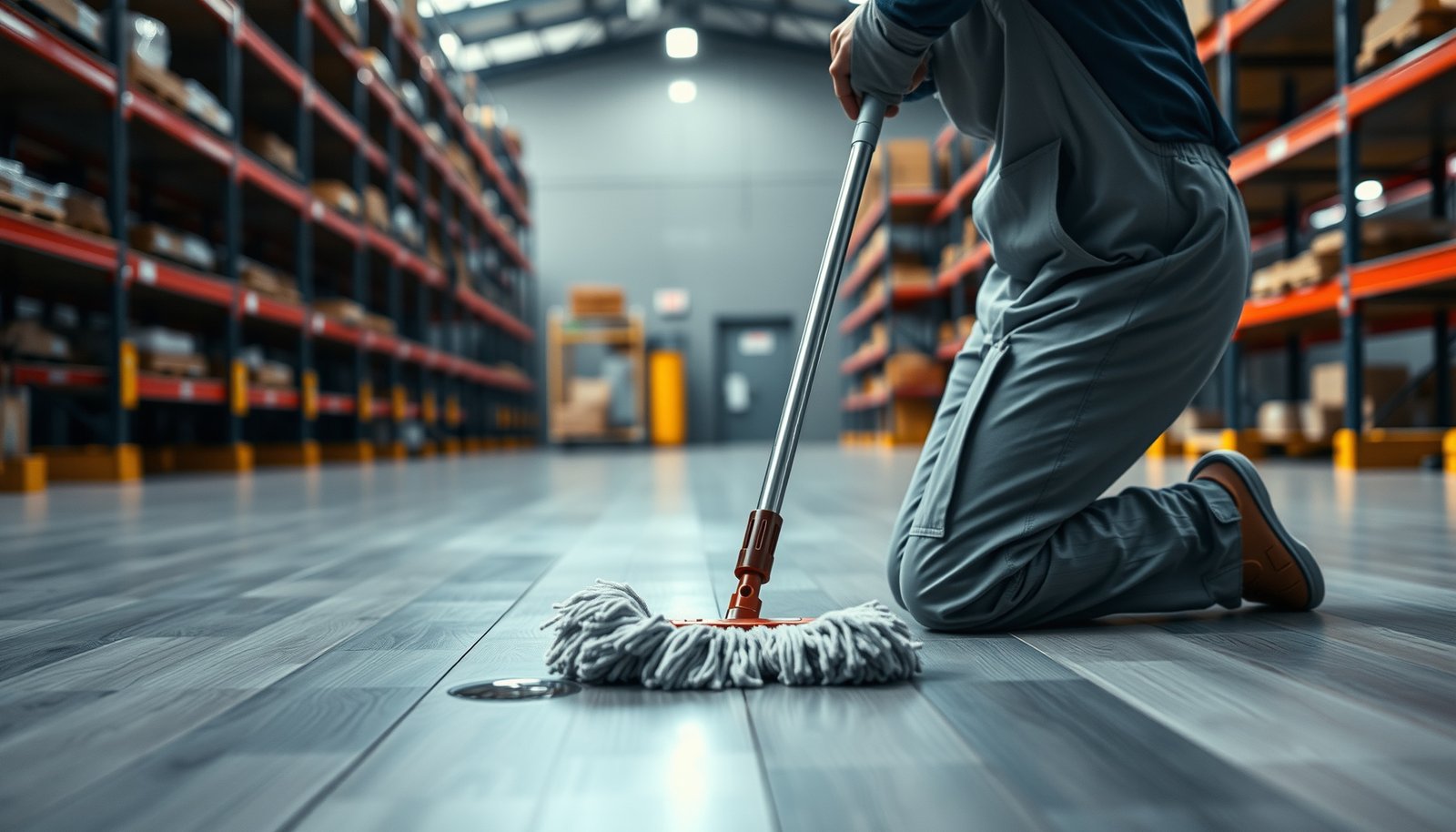
– Sweep or dust-mop regularly to remove abrasive dirt before it grinds into the surface finish. In a warehouse, the goal isn’t “spotless”—it’s consistent removal so grit doesn’t accumulate at seams and edges where moisture can later do more damage.
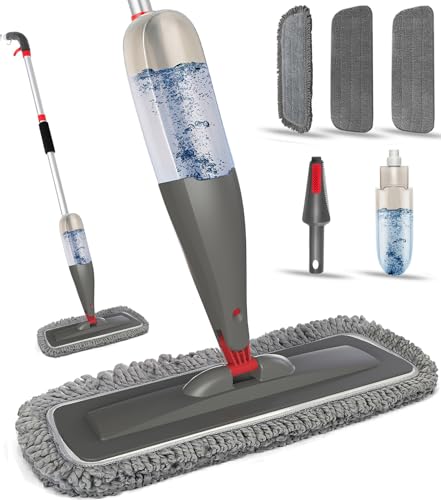
– Use a microfiber mop or vacuum with a soft floor head to avoid scratching and scuffing. Microfiber is effective for fine dust while minimizing the micro-scratches that create cloudy-looking wear paths over time. If you vacuum, ensure the head is soft/low-friction and that the wheels don’t pick up grit and drag it back across the same lane.
What I recommend operationally: treat daily cleaning like a traffic-management system—design routes, assign responsibility by zone (receiving, aisles, packing, returns), and log when dry cleaning is completed. In warehouses, that routine discipline prevents the “we cleaned it once, but not in the problem lanes” pattern that accelerates abrasive wear on warehouse laminate flooring.
Moisture control: spills, mopping, and water exposure
Protecting laminate from swelling is mostly about preventing liquids from sitting long enough to reach joints and edges. In warehouse laminate flooring, the fastest path to warping is usually “small puddles” or “mopping that leaves water in seams,” not a single catastrophic spill.
Laminate flooring is vulnerable because its core is wood-based (commonly HDF). If moisture penetrates edges and seams, swelling can follow even when the surface looks dry.
A damp microfiber approach is different from wet mopping: leaving standing liquid increases the chance that water migrates toward joints and under transitions.
Many laminate care instructions distinguish between dry cleaning and damp mopping, explicitly warning against soaking or allowing water to pool.
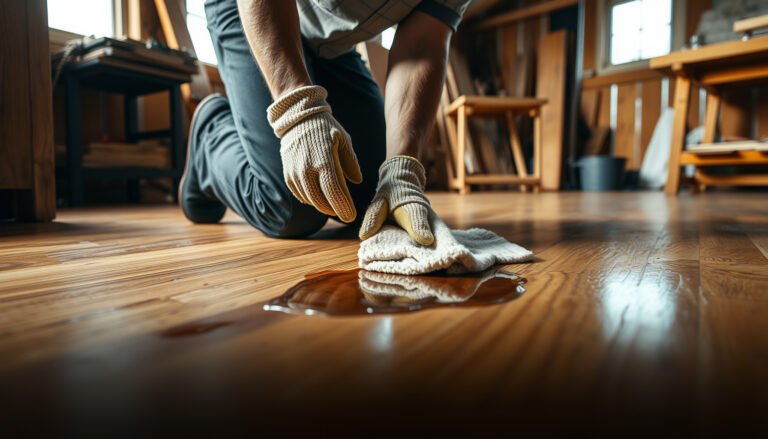
– Wipe spills immediately with a dry or well-wrung damp cloth—don’t let liquids sit. For warehouse laminate flooring, the best first response is usually absorption (dry towel) followed by controlled damp wiping. If something is oily (common near loading docks and maintenance bays), use only laminate-approved methods so you don’t leave residue that later attracts grit.
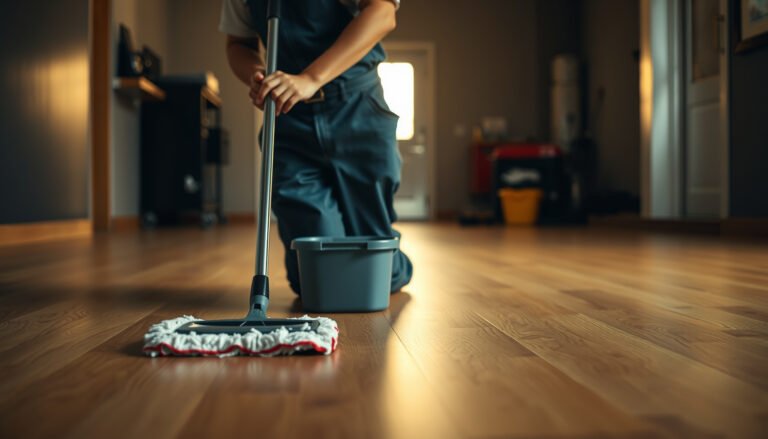
– For wet mopping, follow the manufacturer’s guidance for “damp-only” cleaning; avoid soaking the floor or letting water pool at seams. If you mop, use minimal liquid, and keep the process tight: apply, lightly agitate, and remove—don’t “leave it to work.”
Two moisture rules that keep working in real warehouses:
1. Never normalize pooling. If you can see a wet sheen along a seam, you’ve delayed removal.
2. Change tactics during high-humidity shifts. If your warehouse runs hot/humid seasons, laminate can be more sensitive to repeated damp exposure; tighten spill response and reduce wet-clean frequency.
Floor protection in high-traffic warehouse zones
The most durable warehouse laminate flooring strategy is to stop grit and liquid at the source before they reach the planks. Entry mats, dock protection, and correctly managed equipment contact points reduce both abrasion and the “carry-in water” risk that causes swelling.
Effective entrance matting reduces tracked soil by capturing particles at doorways and loading areas, which lowers abrasion on floor finishes.
Using appropriate protectors under equipment feet reduces impact dents and surface wear, limiting how quickly laminate’s top wear layer degrades.
Directional mat placement works better than scattered mats because it intercepts the dominant travel paths of carts and forklift routes.
– Place mats or floor protectors at doors, loading bays, and anywhere carts enter to catch dust, sand, and moisture. Focus on the highest-frequency entry points first—warehouse laminate flooring tends to fail “where people and carts enter,” not randomly across the warehouse.
– Use felt pads or appropriate protectors on equipment feet and cart wheels to reduce impact dents and surface wear. Pay special attention to rolling carts, pallet jacks, and equipment that turns in place; concentrated turning friction can create visible scuff bands.
That type of targeted adjustment is often more effective than making cleaning more aggressive.
Safe cleaning products and tools (what to use vs. avoid)
Keeping warehouse laminate flooring looking consistent depends on using cleaning products that don’t strip, haze, or leave film. The safest default is “laminate-approved cleaner or laminate-appropriate cleaner per the label,” combined with damp-only application.
Steam cleaning is often restricted for laminate because heat and moisture can migrate into seams and joints.
Residue from non-approved cleaners can reduce floor clarity, creating a cloudy appearance that resembles wear even when the wear layer isn’t fully damaged.
Laminate care guidance commonly emphasizes avoiding waxes and harsh solvents because they can degrade the finish or leave slippery, film-forming residue.
– Stick to laminate-approved cleaners if the manufacturer specifies them; otherwise use cleaners meant for laminate per the label instructions. When possible, align your cleaning chemical to your laminate brand and installation method.
– Avoid harsh solvents, waxes, and steam cleaning unless your laminate manufacturer explicitly permits it (steam can drive moisture into seams). Steam is rarely a “quick win” in warehouse settings because it adds both moisture and heat—two variables you’re trying to minimize for warehouse laminate flooring.
What to use vs. avoid (quick comparison)
| Approach | Why it helps laminate | Main risk if misused |
|---|---|---|
| Dry cleaning (sweep/dust-mop/vacuum soft head) | Removes abrasive grit before it scuffs the wear layer | If you drag hard bristles, you can micro-scratch the surface |
| Damp microfiber mopping (manufacturer-aligned) | Cleans without leaving standing water at seams | Over-wetting can allow moisture migration to joints/edges |
| Steam cleaning (only if explicitly approved) | Can sanitize in some floor types | Heat/moisture may penetrate seams unless the brand allows it |
| Solvents/waxes/unapproved chemicals | None for typical laminate maintenance | Finish damage, haze, or residue buildup that attracts grit |
Repair and maintenance routines that prevent bigger problems
The best time to protect warehouse laminate flooring is before a small edge issue becomes a moisture entry point. A short, scheduled inspection prevents hidden swelling and keeps repair costs predictable.
Laminate floor problems often begin at seams, edges, transitions, and around high-motion entry points where moisture exposure and abrasion concentrate.
Early intervention reduces the chance that water migrates underneath planks, which can lead to lifting and uneven performance across warehouse laminate flooring.
Many laminate systems use a floating installation approach; localized plank replacement is typically preferable to attempting to re-glue large areas.
– Inspect periodically for gaps, lifting edges, or damaged planks, then address them early before moisture finds its way underneath. Look for corners lifting, repeated scuff lines near doors, and areas where carts consistently turn.
– Replace only the affected planks when feasible; if you’re using a floating installation system, follow the recommended replacement method for your product. Follow the installation/maintenance guidance for your exact laminate line so you don’t disrupt locking joints.
A practical inspection cadence
If your warehouse runs daily operations, consider a weekly visual check of entry points and a monthly scan of seams along the most-used aisles. That schedule is usually easier to maintain than relying on “we’ll inspect when it looks bad,” which is how swelling becomes visible only after it’s already progressed.
What can go wrong (common mistakes to avoid)
Most warehouse laminate failures trace back to moisture pooling, abrasive cleaning tools, or ignoring the manufacturer’s allowed methods. Avoid these common patterns and warehouse laminate flooring stays serviceable longer.
Standing water increases the risk of laminate swelling because moisture can migrate toward seams and edges rather than evaporating quickly.
Aggressive scrubbing (hard pads or abrasive brushes) can dull the laminate surface finish, making normal traffic look like permanent damage.
“Universal” cleaners can leave residue or react with coatings, which can create a cloudy appearance even when the floor is structurally fine.
– Letting standing water remain after mopping or spills—laminate can swell if moisture penetrates seams. If your operation requires damp cleaning, you must also require quick removal.
– Using abrasive brushes, rotating floor machines, or aggressive scrubbing pads that dull the finish. For warehouse laminate flooring, friction is not your friend—especially when grit is mixed into the cleaning process.
– Ignoring manufacturer limits on cleaning methods (some laminates allow only dry/damp cleaning; others restrict specific chemicals or equipment). When training shifts, the “we always did it this way” habit can override the actual spec.
– Using “universal” cleaners that aren’t approved for laminate—residue can build up and make the floor look cloudy. Film buildup also increases slip risk in some conditions, which triggers more aggressive cleaning later.
Verdict / tip: a simple maintenance plan that works—if you follow limits
A warehouse laminate floor usually stays looking better when your routine is consistent: daily dry cleaning, immediate spill response, and equipment protection at entrances and wheel paths. The downside is that laminate is less forgiving than tile or sealed concrete—if your environment frequently brings in wet debris or you routinely need heavy wet mopping, you may need stronger moisture-management measures or reconsider the flooring approach.
If your warehouse regularly experiences standing water, constant hose-down cleaning, or frequent flooding, instead of relying on standard laminate care.
To make this operational, use a simple “plan-do-check-act” cycle: set daily dry-clean routes (plan), enforce damp-only cleaning (do), inspect seams/edges (check), and refresh training when crews change (act). That approach keeps warehouse laminate flooring protected without turning maintenance into an endless deep-clean loop.
Warehouse grit reality: what’s actually on the floor
Tracking dust isn’t just “dirt”—it includes particle sizes that can repeatedly abrade laminate finishes.
EPA Particle Size Categories Relevant to Warehouse Floor Abrasion
| # | Particle fraction | Definition (aerodynamic diameter) | Common warehouse source types | Upper limit (µm) |
|---|---|---|---|---|
| 1 | TSP (Total Suspended Particles) | ≤ 100 µm | Swept road/yard dust, disturbed bulk material | 100 |
| 2 | PM10 | ≤ 10 µm | Road dust, tire/brake-related dust (vehicle movement) | 10 |
| 3 | Coarse fraction (PM10–PM2.5) | 2.5–10 µm | Heavier tracked grit from outdoor access | 10 |
| 4 | PM2.5 | ≤ 2.5 µm | Smaller combustion/airborne dust components | 2.5 |
| 5 | Fine particles (PM2.5–PM1) | 1–2.5 µm | Resuspended dust from traffic and sweeping | 2.5 |
| 6 | Respirable dust (common reference cutpoint) | ≈ ≤ 4 µm | Airborne dust that settles slowly, then redeposits | 4 |
| 7 | Ultrafine particles (UFP) | ≤ 0.1 µm | Vehicle exhaust and combustion-related aerosols | 0.1 |
Quick checklist (save this)
– Daily: sweep/dust-mop to remove grit
– Entry points: mats at doors/loading areas
– Spills: wipe immediately; no standing water
– Mopping: damp-only per manufacturer guidance
– Tools: microfiber/soft heads; avoid abrasive pads
– Chemicals: laminate-approved cleaners only
– Ongoing: inspect seams/edges; repair early
Sources
– U.S. Environmental Protection Agency (EPA), particulate matter size definitions (PM10, PM2.5, and related particle categories) (latest posted guidance, current site content).
– National Wood Flooring Association (NWFA) / laminate installation and expansion guidance (use the specific version applicable to your installation instructions).
Laminate can work well in a warehouse when you treat cleaning as moisture-and-abrasion control, not just “making it look better.” If you can keep warehouse laminate flooring dry, remove grit daily, protect entry points, and follow your specific manufacturer’s limits, you’ll usually get longer life and fewer visible wear zones—while avoiding the swelling and dulling failures that show up when standing water and harsh cleaning become routine.
Frequently Asked Questions
What daily cleaning routine should I use to maintain laminate floors in a warehouse?
Sweep or vacuum the laminate floor daily using a soft-bristle broom or a vacuum with a brush attachment to remove grit that can scratch the surface. For routine cleaning, use a microfiber mop lightly dampened with a laminate floor cleaner (or a manufacturer-approved cleaner) and avoid soaking. Promptly clean up spills to prevent moisture from seeping at seams and edges. Keep foot traffic moving through entry mats to reduce dirt buildup in high-traffic warehouse aisles.
How do I prevent scratches and scuffs on laminate floors from forklifts and pallets?
Use protective measures like forklift floor pads, pallet corner guards, and rack bases to reduce impact and friction on laminate flooring. Place heavy-duty entry mats at loading docks and use skid-resistant protective film or floor runners in areas where carts, pallet jacks, or equipment turn frequently. For walk-behind traffic, consider felt pads under rolling equipment to minimize abrasive wear. Regularly inspect for damaged planks and replace worn sections early to keep the warehouse floor looking uniform and extending laminate lifespan.
Why is moisture control critical for maintaining laminate floors in warehouse environments?
Laminate floors are sensitive to excess water because moisture can travel into seams and cause swelling, warping, or delamination. In a warehouse, damp mopping, leaking pipes, or condensation from HVAC can create hidden moisture problems over time. Use spill containment, dry mop quickly, and ensure any cleaning solution is compatible and not overly wet. Also maintain proper indoor humidity levels and fix leaks immediately to protect laminate floor durability.
Which cleaning products are safe for laminate floors, and which should I avoid in warehouses?
Choose a manufacturer-approved laminate floor cleaner or a pH-neutral cleaner designed for laminate to maintain the protective wear layer. Avoid harsh chemicals like ammonia, bleach, or abrasive scrubbers that can dull the finish and damage the surface coating. Don’t use steam mops or waxes/sealers unless the laminate manufacturer explicitly allows them, as heat and residue can harm the floor. When in doubt, test a small, inconspicuous area first before cleaning large warehouse sections.
What is the best way to handle stains, scuffs, and plank damage to maintain warehouse laminate flooring?
For scuffs and light stains, start with gentle cleaning using a microfiber cloth and the recommended laminate cleaner, then use a laminate-safe spot remover if needed. For deeper scratches or damaged planks, repair quickly by removing the affected sections and installing replacements according to the installation method (click-lock or glued systems). Keep replacement planks on hand to reduce downtime and avoid extended traffic over compromised areas. After repairs, re-clean the area and monitor for moisture at seams to keep the floor stable and uniform.
📅 Last Updated: October 24, 2026 | Topic: How to maintain laminate floors in a warehouse? | Content verified for accuracy and freshness.
References
- Laminate flooring
- https://www.osha.gov/preventing-slips-trips-and-falls
- https://www.cdc.gov/coronavirus/2019-ncov/community/disinfecting-building-facility.html
- https://www.who.int/publications/i/item/cleaning-and-disinfection-of-environmental-surfaces-in-the-context-of-covid-19
- Slips and trips – HSE
- Page Not Found – PERGO® Flooring
- https://scholar.google.com/scholar?q=laminate+floor+maintenance+warehouse Google Scholar
- https://scholar.google.com/scholar?q=commercial+laminate+floor+cleaning+care+maintenance Google Scholar
- https://scholar.google.com/scholar?q=laminate+flooring+moisture+damage+prevention+maintenance Google Scholar