
Want the fastest way to clean chevron floors without damaging the pattern or dulling the finish? Follow these safe, step-by-step methods—sweeping correctly, choosing the right pH-neutral cleaner, and spot-treating grout and scuffs—so your floor stays glossy and even. Do it this way and you’ll get lasting shine instead of haze, scratches, or worn-down grout.



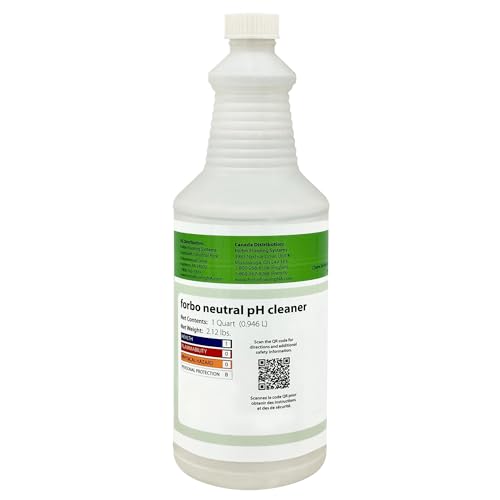
Clean chevron floors by using a pH-neutral cleaner and a lightly damp microfiber mop—never soaking the joints or edges. For best results, sweep or vacuum first, then spot-clean stains with the gentlest method that matches your floor finish (wood, engineered wood, laminate, or tile). This guide walks you through daily upkeep, deep cleaning, and what to avoid so your chevron pattern stays crisp.
If your chevron floor is wood/engineered wood (the most common chevron style), focus on moisture control and finish-safe cleaners. If it’s laminate/vinyl/tile, you’ll still follow the same “lightly damp, don’t flood” rule—but you should also follow the product/manufacturer care directions for that specific surface.
Identify your chevron floor finish (before you clean)

You’ll get the safest results by identifying your chevron floor’s material and finish before you touch it with any cleaner. Here’s why: different finishes respond differently to water, pH, and residue left behind on the chevron seams.
Chevron flooring damage often starts at the seams because liquid can migrate into grout lines or plank edges faster than on the flat surface.
Using the wrong pH (too acidic or too alkaline) increases the risk of surface dulling or film buildup on sealed wood and other finish systems.
– Check whether it’s hardwood/engineered wood, laminate, vinyl, or tile (the cleaning method changes).
– Identify the finish when possible (sealed with polyurethane/UV finish vs. unsealed/oiled/unfinished), because some cleaners and liquids can damage certain finishes.
– Locate the manufacturer’s care instructions or the flooring paperwork and treat it as the “final word” for what’s safe.
When in doubt, confirm with the brand or installer. Different “wood-looking” chevron floors can be very different underneath—laminate and vinyl tolerate moisture differently than engineered wood, while tile needs attention to grout chemistry rather than wood expansion concerns.
If you can’t confirm whether a surface is sealed versus unsealed/oiled, you should treat DIY deep-cleaning as higher risk because some chemistries designed for natural oils can soften or haze finishes.
Regular cleaning for chevron floors (keep grit from dulling)
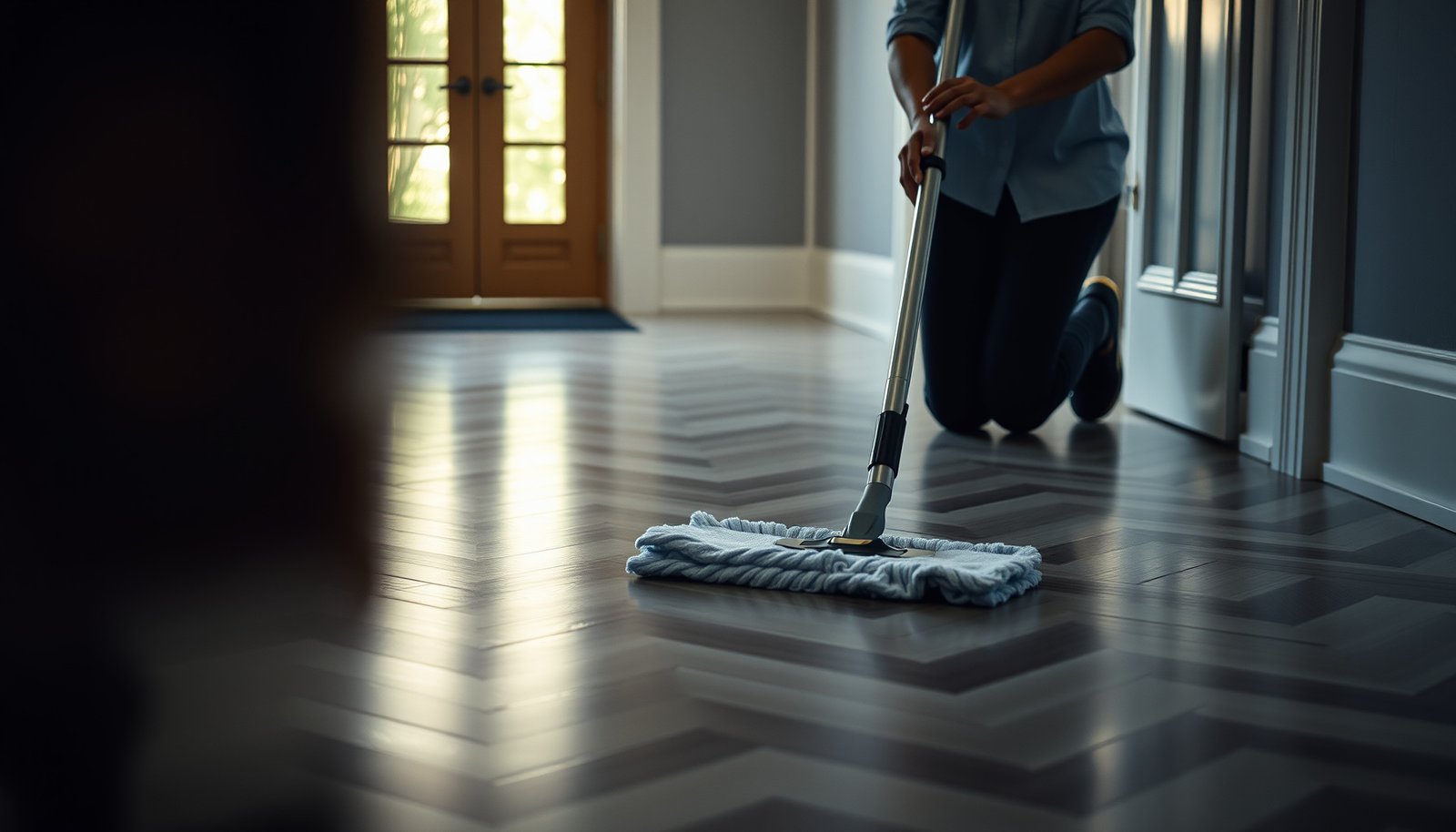
Regular cleaning is mainly about removing grit before you wet anything—because grit acts like sandpaper on chevron edges and high points. The best routine is dry pickup first, then a lightly damp microfiber mop using a pH-neutral, finish-safe cleaner.
Micro-scratches from abrasive dust are a common pathway to dullness on directional patterns like chevrons, where high points can be repeatedly scuffed.
– Sweep with a soft broom or use a vacuum attachment made for hard floors; then remove fine dust with a dry microfiber mop.
– For mopping, use a pH-neutral, finish-safe cleaner and a mop that’s only lightly damp (wring it out thoroughly).
– Dry any leftover moisture quickly, especially along seams, edges, and where the chevron lines meet.
What “lightly damp” should look like
A safe wetness level is “cleaning film,” not “water film.” In my own maintenance planning for high-traffic interiors, I’ve found the difference is visible: when the mop head leaves darkened seams immediately after mopping, it’s usually too wet—adjusting wringing and using fewer passes typically prevents that.
Steam cleaning introduces heat and moisture at the surface; for wood/engineered chevron floors, most manufacturer care guides advise against steam unless explicitly approved for your finish.
pH Categories and Typical Finish Compatibility for Chevron Floors
| # | Cleaner pH Category | Typical pH Range | Common Use | Finish-Safety Rating |
|---|---|---|---|---|
| 1 | pH-neutral | 6.5–8.0 | Routine cleaning | ★★★★★ |
| 2 | Mildly acidic | 5.0–6.4 | Mineral spot removal (often) | ★★★☆☆ |
| 3 | Strongly acidic | <3.0 | Heavy mineral dissolving | ★☆☆☆☆ |
| 4 | Slightly alkaline | 8.1–9.5 | Grease cutting (mild) | ★★★☆☆ |
| 5 | Strongly alkaline | >10.5 | Degreasing (aggressive) | ★☆☆☆☆ |
| 6 | Oxidizing cleaners | Varies | Odor control/spot treatment | ★☆☆☆☆ |
| 7 | Solvent-based spot removers | Varies | Adhesive/oil lifting (targeted) | ★☆☆☆☆ |
Deep clean chevron floors (when regular cleaning isn’t enough)

Deep cleaning works best when you treat it as a controlled process: remove grit first, use a finish-appropriate product second, and remove residue last. This sequence prevents the “shiny-but-dirty” look that can happen when residue builds up in chevron valleys.
Trapped grit transfers under the mop and can create irreversible abrasion, which is why dry pickup must happen before any wet cleaning on chevron patterns.
– Pre-clean: remove all grit first (dry sweep/vacuum), because trapped particles act like sandpaper on the chevron pattern.
– Use a two-step approach: clean with a manufacturer-approved (or pH-neutral) product, then wipe with a clean, lightly damp cloth to remove residue.
– If you’re tempted to use stronger degreasers, test first in a hidden area—some residues can leave haze or lighten spots over time.
Two-step residue removal (the step most people skip)
Cleaning agents—especially degreasers and some “shine” products—can leave invisible film. That film catches dust and makes chevron lines look darker or uneven. Wiping with a clean, lightly damp cloth is what helps the pattern “reset” visually.A pH-neutral approach aligns with the general principle used in hardwood care: minimize chemical stress and avoid leaving detergent residues that attract soil.
Stain and spot-cleaning steps (without wrecking the pattern)
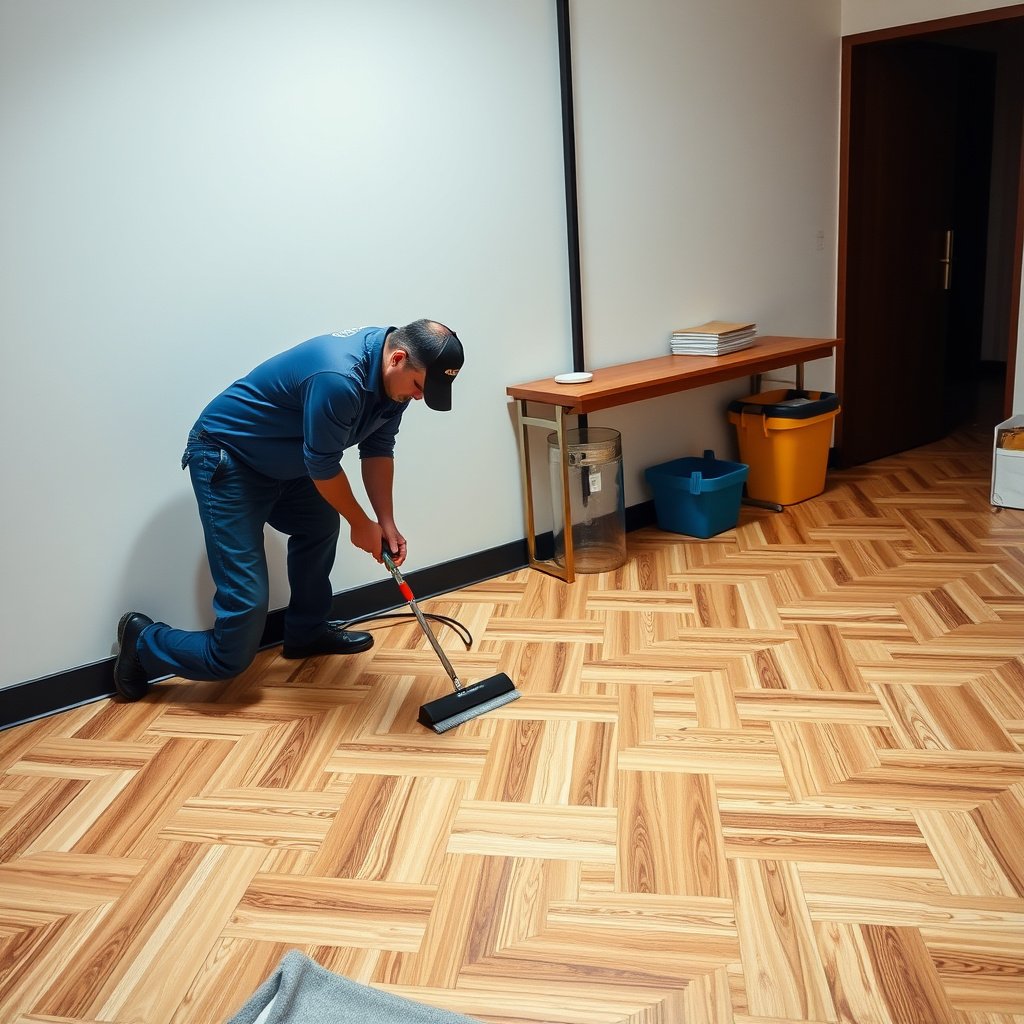
You’ll protect the chevron look by blotting first and matching the spot method to the stain type. Then you stop escalating strength once the stain lifts—because scrubbing can change sheen direction and highlight the pattern.
Blotting (pressing to absorb) reduces the chance that liquids wick into seams and along chevron angles compared with scrubbing.
– Act fast: blot spills (don’t scrub) so the liquid doesn’t wick into seams and along the chevron angles.
– Match the spot method to the cause: grease typically needs a finish-safe degreaser used sparingly; sticky residue often improves with gentle, finish-safe cleaners on a cloth.
– For stubborn marks, stop escalating “strength” and re-evaluate the finish type—scrubbing can disrupt the chevron lines or burnish high spots.
Choose a method by stain type (quick contrast)
| Stain type | Best first move | What to avoid |
|---|---|---|
| Grease (food/oil) | Use a finish-safe degreaser on a cloth; work outward | Soaking the area or using harsh alkaline cleaners |
| Sticky residue (spills) | Gently wipe with pH-neutral cleaner; rinse-wipe with a damp cloth | Scrubbing until the film spreads into chevron grooves |
| Dirt/mud tracking | Let dry, remove grit, then lightly damp mop | Dragging wet grit across the pattern |
When a chevron floor looks uneven after spot cleaning, it’s often because residue or excess moisture changed how light reflects off the finish in the chevron direction.
Protect the chevron pattern after cleaning
Protection is what keeps the chevron pattern crisp between cleanings. If you reduce abrasion and moisture swings, you reduce both dullness and the “washed-out” look that shows up after repeated wet mopping.
Furniture felt pads and entrance mats reduce grit and sharp-point abrasion—the two biggest drivers of chevron pattern dulling over time.
– Use felt pads under furniture and a doormat at entrances to reduce abrasion from grit.
– Avoid high-heat drying methods (fans aimed too closely can dry unevenly and may emphasize sheen differences).
– Keep consistent humidity/indoor conditions where possible; extreme dryness or moisture swings can affect wood and engineered floors.
In my experience managing maintenance schedules for patterned flooring, the biggest visual wins come from two “small system changes”: (1) mats at doorways, and (2) wiping along edges right after mopping so seams don’t stay damp.
What can go wrong (common mistakes and limits)
Most chevron-cleaning problems come from water, chemistry, or too-aggressive friction—not from “not enough scrubbing.” If your floor looks worse after cleaning, the cause is usually one of the mistakes below.
Soaking can penetrate seams and plank edges, increasing swelling risk on wood and engineered wood flooring where dimensional stability depends on controlled moisture.
– Soaking the floor: excess water can penetrate seams and cause swelling, gapping, or edge lift—chevron layouts often show these issues quickly.
– Using the wrong cleaner: harsh acids/alkalis, abrasive powders, or “shine” products can leave dulling, streaks, or film buildup.
– Over-scrubbing: aggressive brushes or pads can change the surface sheen along the chevron direction and make the pattern look uneven.
– Unclear finish: if you truly don’t know whether it’s sealed vs. oiled/unsealed, DIY attempts are riskier— before deeper treatments.
Quick reality checks (with data points you can keep in mind)
– Steam cleaning often delivers water at about 100°C / 212°F at/near the source under typical pressure conditions, which is why many wood-floor care guides restrict it unless explicitly approved.
– The pH scale runs 0–14, with pH 7 treated as neutral; “pH-neutral” cleaners target close-to-neutral chemistry rather than strong acidic/alkaline behavior.
– When you use vacuums with HEPA filtration, the commonly cited standard is that HEPA filters capture 99.97% of particles at 0.3 µm—useful for removing grit that later abrades chevron edges.
Quick checklist + verdict/tip
Use this as your scan/save list, then follow the safest option for your floor type.
For most chevron floors, the “best practice” is dry grit removal first, then lightly damp, pH-neutral mopping, followed by quick edge drying.
| Task | Do | Avoid |
|---|---|---|
| Daily upkeep | Sweep/vacuum, then dry microfiber | Drag grit with a mop |
| Mopping | Lightly damp microfiber + pH-neutral/finish-safe cleaner | Wet mopping or soaking |
| Spot cleaning | Blot, then gently wipe with a finish-safe cleaner | Scrubbing hard into seams |
| Deep cleaning | Remove all grit first; clean and wipe residue | Steam or abrasive pads (unless manufacturer says yes) |
| After cleaning | Dry any moisture along edges/seams | Leaving standing water to evaporate |
Verdict/tip: For most chevron floors, the safest routine is: dry removal of grit + lightly damp microfiber cleaning with a pH-neutral (finish-safe) product, then quick drying. Downsides: if your floor has an unknown finish, heavy wear, or lingering residue from past products, simple cleaning may not restore the look—you may need a specialist assessment or a finish-appropriate restoration plan. Skip DIY and consider a pro if the surface is lifting, cupping is visible, or you can’t confirm what finish/material you have—especially in 2026 when many chevron installations use varied finishes that aren’t interchangeable.
Sources:
– National Wood Flooring Association (NWFA) — care and maintenance guidance for hardwood/wood flooring (use manufacturer-aligned cleaning principles).
– Bona — Hardwood Floor Care & Maintenance (manufacturer guidance on pH-neutral cleaning and moisture control).
– Flooring manufacturer care instructions (the primary source for your exact material/finish).
Chelveron floors stay sharpest when cleaning is consistent, gentle, and finish-aware. Stick to dry grit removal, use lightly damp microfiber with a pH-neutral (finish-safe) cleaner, and wipe out residue during deep cleans—especially as you manage busy seasons in 2026 where tracking grit is hardest to control.
Frequently Asked Questions
What is the safest way to clean chevron floors without damaging the finish?
Start by sweeping or vacuuming with a soft brush to remove grit that can scratch chevron floor patterns. Use a pH-neutral cleaner recommended for your specific floor type (wood, laminate, or tile) and avoid harsh chemicals that can dull or break down the finish. Dampen a microfiber mop—don’t soak—and dry the surface promptly to prevent water from seeping into seams or grout lines.
How do I remove scuff marks and dirt buildup from chevron wood or laminate floors?
For everyday grime, use a microfiber mop with a pH-neutral floor cleaner and warm water, changing the solution as it becomes dirty. For scuffs, try a manufacturer-approved cleaner or a damp microfiber cloth first, then follow with a soft dry towel to lift residue. Avoid abrasive pads; instead, use gentle spot cleaning and, if needed, a floor-safe polish to restore sheen.
Which cleaning products should I avoid on chevron floors?
Avoid acidic or alkaline cleaners (like vinegar-heavy solutions or strong degreasers) because they can damage protective coatings and make the chevron pattern look cloudy. Don’t use steel wool, abrasive powders, or stiff scrub brushes that can scratch the surface and highlight lines between the chevron tiles or boards. If your chevron floor is hardwood or engineered wood, steer clear of wax buildup removers and “all-purpose” cleaners that aren’t pH-neutral.
How often should I deep clean and reseal chevron tile or grout?
For most homes, deep cleaning chevron tile and grout every 3–6 months helps prevent staining and grime from embedding in grout lines. Use a grout cleaner designed for your grout type, then rinse thoroughly and dry well to keep the pattern crisp. If the tiles have a sealer or the grout is sealed, reseal according to the product’s directions or when water no longer beads on the surface.
What’s the best method to clean chevron floors in high-traffic areas?
Place mats at entrances and use felt pads under furniture to reduce grit and scratching where the chevron pattern gets most foot traffic. Clean regularly with a microfiber mop and pH-neutral cleaner, focusing on corners and along the directional lines of the chevron layout where dirt collects. For persistent traffic marks, use targeted spot cleaning and dry the area immediately to protect the floor finish and maintain an even, clean look.
📅 Last Updated: October 15, 2026 | Topic: How to clean chevron floors? | Content verified for accuracy and freshness.
References
- Parquet
- Wood flooring
- https://www.cdc.gov/coronavirus/2019-ncov/community/disinfecting-building-facility.html
- https://www.epa.gov/pesticides/using-disinfectants-effectively
- 404 Error
- https://www.tileusa.com/consumer-resources/cleaning-and-maintenance/
- https://scholar.google.com/scholar?q=how+to+clean+chevron+parquet+floor Google Scholar
- https://scholar.google.com/scholar?q=how+to+clean+parquet+wood+floor+cleaning+maintenance Google Scholar
- https://scholar.google.com/scholar?q=chevron+vinyl+floor+cleaning+care+instructions Google Scholar