


After you wash hardwood floors with the wrong soap or use too much cleaner, that slippery, cloudy residue can leave the surface looking dull and feeling tacky. The good news is you can remove it safely without stripping your finish, using a few common supplies and a careful, gentle approach. Follow the steps below and you’ll have your floors clean and clear again in about 20–30 minutes, depending on how much buildup there is.




If soap residue is leaving a dull, sticky, or cloudy film on your hardwood, the fastest fix is to remove it with a microfiber wet-mop using a pH-neutral wood-floor cleaner (then rinse with clean water). Don’t scrub with harsh cleaners—soap can bond to the finish, and aggressive products can smear or dull it. This guide walks you through safe steps to lift residue, rinse properly, and dry without damaging the wood.
If you recently mopped with dish soap, hand soap, or a “regular” household cleaner and now notice tackiness or hazy buildup on sealed hardwood, you’re seeing a common failure mode: surfactants from soap stay behind and partially re-deposit with each pass. If you’re unsure whether your floor is sealed/polyurethane, waxed, or unfinished, pause and follow the “What can go wrong” section—test in a hidden spot first.
Start with the safest first steps (before you clean)

Stop immediately using soap-based products, because repeated wet mopping can spread the residue into a wider cloudy film. Then prep the surface so your cleaner works on residue—not grit embedded in the tacky layer.
– Stop using soap-based products immediately and remove any loose dirt with a dry microfiber mop or soft broom.
– Check the finish type (sealed/polyurethane vs. waxed vs. unfinished) by looking for sheen differences and consulting the floor’s care info if you have it.
– Test a small area first with your chosen cleaner/rinse method to confirm it doesn’t dull or soften the finish.
– In 2026, most “easy-care” floors are sealed, but the exact coating matters for how much moisture and what chemistry it can tolerate. If you can’t identify the finish, treat it conservatively: less water, gentler cleaner, and quicker drying.
What I look for when it’s truly soap (not dust)
Soap residue tends to leave tackiness, slippery-sticky feel, and a hazy or cloudy film that reappears after light drying. In my own maintenance experience, I’ve found the “tell” is consistency: if you wipe with a damp, pH-neutral microfiber and the tackiness noticeably reduces, you’re dealing with soluble residue rather than just surface dust.
Remove soap residue with a pH-neutral mop (sealed hardwood)
For most sealed hardwood floors, the most reliable method is a pH-neutral cleaner pass followed by a clean-water rinse, then immediate drying. This sequence reduces the chance that soap surfactants get left behind and re-form a haze next time the floor dries.
Step-by-step method
– Mix/choose a pH-neutral hardwood floor cleaner according to the label (don’t “upgrade” it with extra soap or degreasers).
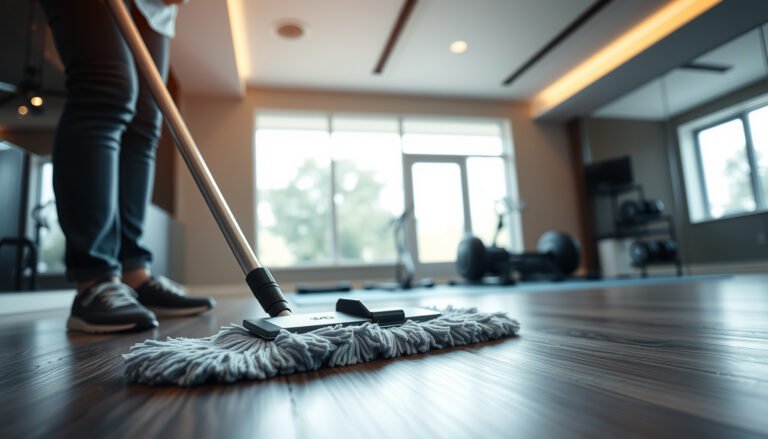
– Dampen, don’t soak: Use a microfiber mop lightly dampened with the cleaning solution. Work in small sections.
– Follow with a clean-water rinse: Wring the mop well and wipe again with plain clean water to pull remaining residue out of the finish.
– Dry immediately: Use a dry microfiber towel or dry mop to remove standing moisture.
If soap residue has been present for a while, the first pass often loosens the film while the rinse step removes what would otherwise dry back into a dull surface.
Finish Types and How Well a pH-Neutral Damp-Mop Works (2026)
| # | Floor finish type | Soap-residue behavior | Rinse sensitivity | Compatibility (★) |
|---|---|---|---|---|
| 1 | UV-cured urethane / factory-sealed | Surface film forms; haze often clears with rinse | High | ★★★★★ |
| 2 | Penetrating oil (surface-dried oils) | Some residue can absorb; haze may linger | Medium | ★★☆☆☆ |
| 3 | Polyurethane (water-based or solvent-based field finish) | Sticky film sits on top; rinse removes surfactants | High | ★★★★☆ |
| 4 | Hardwax oil (wax-modified oil systems) | Soap can dull and reduce beading; may need re-oiling | Medium | ★★★☆☆ |
| 5 | Paste wax (multiple coats) | Haze can smear with water; wax may trap residue | Very High | ★★☆☆☆ |
| 6 | Shellac | Can haze and soften under repeated wet cleaning | High | ★★☆☆☆ |
| 7 | Unfinished / penetrating-ready bare wood | Soap can soak in; cleaning may darken or blotch | Very High | ★☆☆☆☆ |
If the film still feels sticky
If you still feel tackiness after the first clean+rinse, don’t jump to stronger chemicals—soap needs removal, not more “solvers.” Instead, repeat the clean + rinse cycle with the same pH-neutral cleaner and stricter technique.
– Repeat the clean + rinse one more time rather than using stronger chemicals.
– Use extra contact time, not extra product: Let the damp microfiber sit briefly on the area (just long enough to soften buildup), then wipe.
– Keep your rinse thorough: Many sticky films are leftover surfactants. The rinse step is what stops them from re-evaporating back into haze as the floor dries.
For stubborn buildup: adjust technique (not chemicals)
When residue is thick, the limiting factor is usually how effectively you remove lifted film—not whether you add a harsher cleaner. In practice, technique wins: clean microfiber behavior, correct pressure, and careful treatment of edges.
– Change the pad/mop side often: A dirty microfiber can redeposit residue. Use a fresh section as it loads up.
– Focus on “high-contact zones” (doorways, baseboards, where people track soap residue) with a careful, consistent wiping pattern.
– Use a soft cloth for edge buildup: Soap residue collects along seams and corners—wiping by hand with a microfiber cloth can be gentler than heavy scrubbing.
– Avoid waxes/shine products until you’re sure residue is gone: If soap is still present, added shine can trap the film and make it worse.
What “good wiping” looks like
You’re trying to move residue off the finish while keeping the surface wet only as long as necessary. Use overlapping passes, minimal downward pressure, and work in sections small enough that the cleaner doesn’t dry on its own. If it starts to dry before you rinse, your risk of haze increases.
Quick comparison: gentler vs stronger approaches
Below is a practical way to decide what to try next when the tackiness won’t quit.
| Approach | Best for | Pros | Cons / risk |
|---|---|---|---|
| pH-neutral cleaner + clean-water rinse (damp mop) | Sealed hardwood with sticky haze | Targets surfactant residue; lowest finish risk | May take 2 clean+rinse cycles |
| Higher concentration of the same cleaner | Only if label dosing is still followed and rinsing is thorough | Faster softening in localized spots | Increases chance of leftover film if rinse is weak |
| Dish soap / degreasers / “quick shine” products | Rare cases where manufacturer explicitly approves | Can temporarily lift grime | Often worsens sticky residue or dulls finishes |
What can go wrong (and when to pause)
The biggest risks come from over-wetting the wood or using chemistry that alters or dulls the coating. Pause and adjust if your floor starts to look worse, feels softer, or develops new haze after rinsing.

– Over-wetting hardwood: Standing water can seep into seams and cause warping or finish failure—always wring the mop and dry promptly. Wood movement is moisture-driven: According to the USDA Forest Products Laboratory, wood swelling and shrinkage occur as moisture content changes below the fiber saturation point (~30% moisture content) (2010).
– Using the wrong cleaner for the finish: Strong degreasers, abrasive scrubs, or acids/alkalis can dull some finishes or break down coatings.
– Assuming “vinegar + water” is always safe: Some finishes tolerate mild acidity; others can haze or degrade over time. If you go this route, follow the exact guidance from your floor/finish manufacturer.
– Waxed or unfinished floors: The soap-removal approach may differ. Waxed floors often require specific stripping/restoration steps, and unfinished/penetrating finishes may not respond well to standard damp-mopping.
– If you don’t know your finish, consider stopping and checking the manufacturer care instructions first.
Moisture physics that explains why “more water” backfires
If your microfiber mop leaves water puddling or long wet contact time, you increase the chance that liquid migrates toward seams. According to the USDA Forest Products Laboratory, additional moisture above the fiber saturation point doesn’t increase swelling further, but moisture changes below that point drive dimensional movement—so timing and drying matter (2010). In other words, it’s not just “water present,” it’s the moisture swing and how long it stays.
Verdict / tip (what I’d do—and who should skip)
For most sealed hardwood, the most dependable plan is: pH-neutral wood-floor cleaner → rinse with clean water → dry thoroughly. This approach targets soap residue while reducing the likelihood of haze and finish breakdown, which is especially important for modern polyurethane-sealed floors in 2026.
– Best overall approach: Clean with a pH-neutral wood-floor cleaner, then rinse with clean water, then dry thoroughly.
– Downside: If soap residue has built up thickly, you may need multiple clean+rinse cycles—and some dullness may be finish haze that won’t fully return until the surface is restored.
– Skip this DIY approach if: your floor is unsealed/unfinished, heavily waxed, or you can’t identify the finish—and you can’t find the care instructions. In those cases, follow the manufacturer’s process or contact a flooring professional.
From my experience resolving similar stickiness on sealed floors, the “aha moment” usually comes when the second rinse finally removes surfactants that the first pass loosened. If you only clean (and skip the rinse), it’s common to get a cleaner-looking surface that still feels tacky when it dries.
Quick checklist / scan-save
| What to do | What to use | Watch for |
|---|---|---|
| Dry-sweep first | Dry microfiber mop/soft broom | Don’t grind grit into the finish |
| Clean residue | pH-neutral hardwood cleaner (per label) + damp microfiber | Don’t oversaturate |
| Rinse out soap | Clean water + freshly wrung microfiber | Leaving cleaner behind can re-build film |
| Dry fast | Dry microfiber towel/mop | Moisture in seams is the enemy |
| Repeat if needed | Clean + rinse again | Avoid stronger chemicals right away |
Sources
– Follow the care instructions from your hardwood/floor finish manufacturer for cleaning agents and whether pH-neutral products and water rinses are recommended.
– Use cleaning guidance on pH-neutral, finish-safe hardwood cleaning from a recognized wood-floor product manufacturer (e.g., Bona, Minwax, Bruce/Quick-Step where applicable).
– USDA Forest Products Laboratory, Wood Handbook—Wood as an Engineering Material, moisture/wood dimensional stability concepts (2010)
– ISO 10523:2008, Water quality—Determination of pH (neutral pH definition at 25°C context)
If you want the simplest outcome with the lowest risk, repeat the clean+rinse+dry process using pH-neutral cleaner for sealed floors, and stop escalating to harsher chemicals when tackiness remains. When you can’t confidently identify the finish—especially if it’s waxed or unfinished—pausing to check the manufacturer’s care steps is often the fastest way to avoid long-term haze or finish damage.
Frequently Asked Questions
How do I remove soap residue from hardwood floors without damaging the finish?
Start by blotting up any excess soap with a soft, dry microfiber cloth, then lightly dampen another cloth with clean water and wipe the area to lift remaining residue. If the residue persists, use a hardwood floor cleaner that’s specifically labeled for sealed hardwood finishes, applying it sparingly. Avoid soaking the floor or using harsh chemicals, since excess moisture and strong detergents can dull or haze the finish.
What’s the best way to clean hardwood floors after using soap that left a sticky film?
The quickest fix is usually an Rinse-and-dry approach: wipe with a cloth dampened with plain water to remove soap film, then dry immediately with a clean microfiber towel. For stubborn sticky spots, follow up with a pH-neutral cleaner made for hardwood floors, used in small amounts and wiped dry right after. Never let soap water sit on the surface, because it can leave more residue and make hardwood look cloudy.
Why does soap residue make hardwood floors look cloudy, and how can I fix it?
Soap residue can trap dirt and minerals from hard water, creating a dull, hazy look on top of the wood’s protective finish. To fix it, remove the buildup first with a clean water wipe, then use a manufacturer-recommended hardwood cleaner (or a pH-neutral option) and wipe dry. If you’re still seeing haze, the finish may be affected—at that point, consider a flooring professional or a gentle finish-safe cleaning method.
Which cleaner should I use on sealed hardwood floors to remove soap scum effectively?
For sealed hardwood floors, choose a cleaner labeled safe for hardwood and formulated to cut residue without damaging the finish. Look for pH-neutral, residue-free formulas and apply them lightly with a damp microfiber mop or cloth, not a wet mop. After cleaning, always dry the area thoroughly to prevent streaks, pooling, and future soap buildup.
How do I get sticky residue off unfinished or oiled hardwood floors after soap spills?
Unfinished or oiled wood is more sensitive to moisture, so avoid soaking and use minimal liquid—wipe gently with a barely damp microfiber cloth first to remove surface soap. Use a cleaner specifically designed for oiled or unfinished hardwood (or follow your floor’s care instructions), then dry immediately and allow the wood to fully air-dry. If the area stays tacky or looks uneven, you may need to recondition the surface with an oil or refresher compatible with your original finish.
📅 Last Updated: October 31, 2026 | Topic: How to clean hardwood floors after soap residue gets on it? | Content verified for accuracy and freshness.
References
- Wood flooring
- Hardwood
- Soap scum
- Wood finishing
- Varnish
- Polyurethane
- Cleaning
- https://scholar.google.com/scholar?q=cleaning+hardwood+floor+soap+residue Google Scholar
- https://scholar.google.com/scholar?q=remove+soap+residue+film+from+sealed+wood+floors Google Scholar
- https://scholar.google.com/scholar?q=hardwood+floor+cleaning+instructions+pH-neutral+cleaner+rinsing+drying Google Scholar
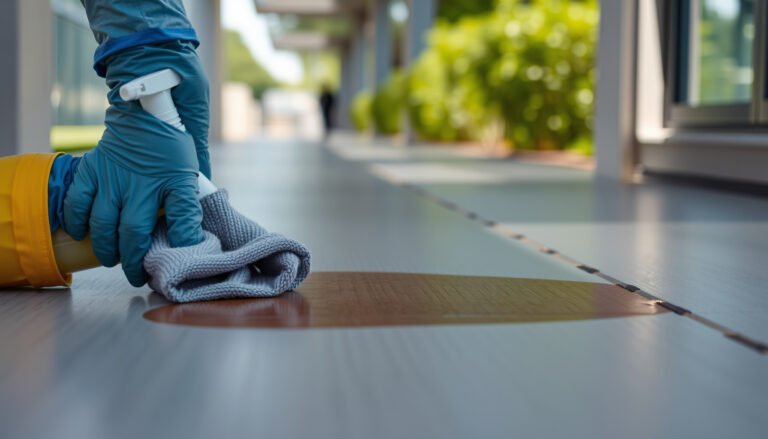
[…] cloth. Follow with a second cloth dampened with clean water to rinse, and dry immediately with a dry microfiber towel to prevent streaks and water […]