
Want the fastest way to remove stains from vinyl floors on an outdoor walkway? For most everyday grime, a targeted clean with a vinyl-safe detergent and a gentle scrub delivers the best results without dulling the surface. For tougher discoloration like mold or rust, the right stain-specific treatment beats repeated mopping. This guide tells you exactly what to use for each stain type so your walkway looks clean again.



Rinse first, then clean outdoor vinyl walkway floors with a pH-neutral cleaner and a soft-bristle brush; only escalate to a vinyl-approved stain remover if the discoloration remains. This order of operations lifts dirt, grease, algae, and rust-like spotting while minimizing the risk of haze, surface dulling, or finish damage.
Stains on vinyl used outdoors typically come from dirt that’s ground in by foot traffic, organic growth (mold/algae), oil/food residues, or mineral/metal transfer that re-stains when left untreated. If you’re dealing with an exterior-adjacent area—like a walkway that gets sun, rain splash, and occasional leaf/plant debris—this methodical approach keeps your cleaning aggressive enough to work, but gentle enough to protect resilient/vinyl surfaces.
Identify the stain and choose the safest cleaner
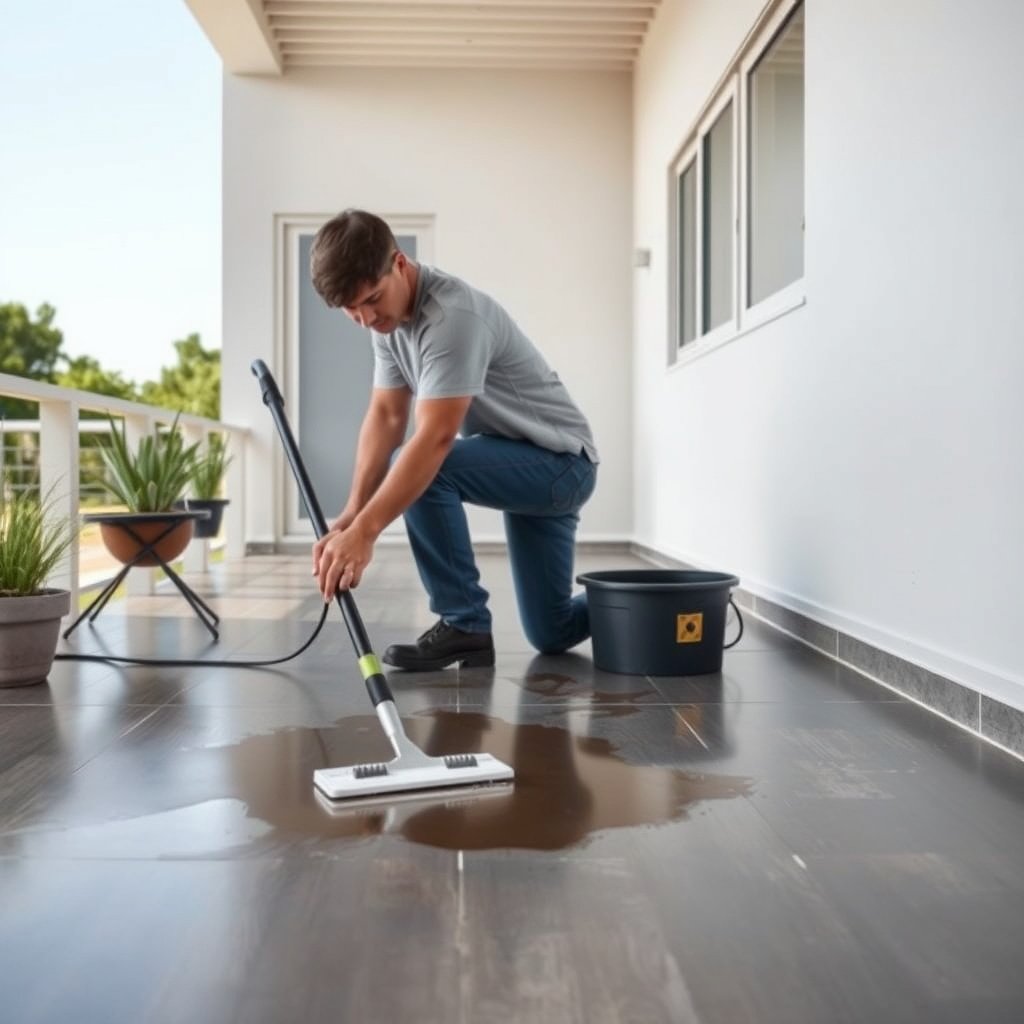
Start by matching the stain’s look to its most likely cause, because the safest cleaner for outdoor vinyl walkway floors depends on whether you’re dealing with grease, algae, rust transfer, or plain grit. The fastest way to avoid damage is to begin with a pH-neutral cleaner (a cleaner designed to stay close to neutral pH) and only use a targeted remover if the stain type still won’t lift.
“pH 7” is defined as neutral on the pH scale, which is why “pH-neutral cleaners” are intended to stay close to neutral rather than being acidic or strongly alkaline. NIST
Mold growth can begin on damp materials within 24 to 48 hours, so dark spots on outdoor vinyl often signal a moisture problem as well as a surface stain. EPA
Quick stain “clue” guide for vinyl walkways
– Greasy film or slick residue (oil/grease): tends to wipe with a towel but returns as a dull film.
– Dark spots that look fuzzy, speckled, or slimy (mold/algae): often reappears after rain or morning dew.
– Orange/brown freckles or streaks (rust-like spotting/metal transfer): commonly appears near railings, planters, doormats, or outdoor furniture.
– Gray, gray-brown, or dull-looking buildup (dirt/footprints): looks ground-in rather than “beaded,” and usually improves with rinsing plus gentle brushing.
– Random patches after leaf debris or wet weather: can be organic staining that partially bleaches itself with sun, then re-darkens as residues reactivate.
Choose vinyl-safe chemistry first
Use products that are explicitly labeled safe for resilient flooring (a flooring category that includes vinyl) or that follow your vinyl manufacturer’s written care instructions. For outdoor vinyl walkway floors, avoid “works on everything” products unless they’re approved for resilient/vinyl—especially anything marketed as a heavy-duty solvent, abrasive polish, or strong degreaser.
Vinyl-Surface Compatibility: Cleaner “Strength” Categories (Outdoor Use)
| # | Cleaner category | Typical pH direction | Best first use on outdoor vinyl | Vinyl safety rating |
|---|---|---|---|---|
| 1 | Clean water rinse / initial rinse | Neutral (water ≈ pH 7) | Lifts loose dirt & reduces embedded grit | ★★★★★ |
| 2 | pH-neutral cleaner (resilient/vinyl-safe) | Near neutral (≈ pH 7) | Safe baseline for dirt, footprints, and general spotting | ★★★★☆ |
| 3 | Oxygen-based cleaner (percarbonate/peroxide type) | Mildly alkaline (varies by product) | Organic stains (dull discoloration) without strong solvents | ★★★★☆ |
| 4 | Enzymatic degreaser / grease spot cleaner (vinyl-labeled) | Often near-neutral (product dependent) | Food grease, oily track marks, sticky residue | ★★★☆☆ |
| 5 | Acidic “natural” vinegar solutions | Acidic (vinegar ~pH 2–3) | Occasional mineral scale work (only if vinyl allows) | ★★☆☆☆ |
| 6 | Strong alkaline degreasers (not vinyl-labeled) | Strongly alkaline (often pH > 10) | Heavy grease (risk if not approved) | ★☆☆☆☆ |
| 7 | Bleach / sodium hypochlorite products | Alkaline (typically pH ~11–13) | Disinfection (only if vinyl manufacturer explicitly allows) | ★☆☆☆☆ |
Pre-clean and protect the vinyl surface
The safest way to remove stains from outdoor vinyl walkway floors is to start with dry debris removal and a rinse, because grit and sand-like particles can cause permanent scuffing while you scrub. After the rinse, use soft tools (microfiber, sponge, or soft nylon brush) so your cleaning removes chemistry and stain—not the vinyl finish.
Loose grit acts like abrasive, and resilient flooring care typically emphasizes removing debris before wet scrubbing to prevent finish damage.
Outdoor mold growth is strongly moisture-dependent, so rinsing and prompt moisture control reduce the chance that vinyl stains re-darken after cleaning. EPA
Small-section workflow that prevents haze
Outdoor vinyl walkway floors often have seams, micro-texture, and outdoor finish layers. Work in small sections (for example, an area you can clean and rinse in a couple of passes) so the cleaner doesn’t dry on the surface. Drying cleaner can leave residue that dulls the finish and makes the next rain or foot traffic “highlight” the same spot again.
Protect the finish (tools and motions)
– Sweep or dry-brush first, then rinse. This reduces embedded particles that can create swirl marks.
– Use soft bristles: microfiber cloth, sponge, or soft nylon brush.
– Avoid abrasive pads, steel wool, and aggressive “magic erasers” unless your vinyl manufacturer specifically approves them.
– Rinse frequently if you’re using a spray-on product—especially outdoors where wind can speed up drying.
Pros/cons: what to use when cleaning outdoor vinyl walkway floors
| Option | Pros | Cons / risks |
|---|---|---|
| pH-neutral cleaner + soft brush | Best first step for dirt, footprints, and most “unknown” stains; lower chance of finish damage | May take multiple passes for grease or organic staining |
| Vinyl-approved spot remover (stain-specific) | Targets stubborn stains with product chemistry designed for resilient flooring | If dwell time or dilution is wrong, it can leave residue or affect sheen |
| Bleach / strong solvents | Often effective for discoloration on some surfaces | Can damage vinyl finish and can increase streaking; use only with explicit manufacturer approval |
As of 2026, many vinyl/resilient flooring brands still warn against harsh chemicals and abrasive tools; the practical result for outdoor vinyl walkway floors is that a slower, rinse-first approach usually prevents “cleaning damage” that looks like a permanent stain.
Remove common outdoor stains (by type)
Use stain type matching to pick the gentlest chemistry that’s likely to work on outdoor vinyl walkway floors. In practice, you’ll get the best balance of lift and surface safety by pairing (1) pH-neutral cleaning for baseline soil and (2) vinyl-approved targeted products only for grease or algae-like discoloration.
EPA notes that mold requires moisture to grow, which is why surface cleaning must be paired with moisture control for outdoor vinyl walkway floors. EPA
CDC guidance for bleach-based disinfection uses diluted sodium hypochlorite solutions (for example, 0.1% sodium hypochlorite for many routine disinfection scenarios), which can be harsh for finishes if not permitted for vinyl. CDC
Dirt/footprints/gray buildup
If the stain is gray and looks ground-in, it’s usually particulate dirt plus traffic soil. Clean by:
1. Rinsing thoroughly to remove loose grit.
2. Scrubbing gently with a pH-neutral cleaner and a soft brush.
3. Rinsing until water runs clear and no suds remain.
Reappearance after rain often means you’re still leaving behind soil residue in outdoor vinyl walkway floor pores or texture. A final rinse is not optional if you want to avoid a “dirt magnet” effect.
Oil/grease marks (food, cooking drips, tracked grime)
Grease stains behave differently: they can resist water and can redeposit when the surface isn’t degreased. Use:
– A vinyl-safe degreaser/spot cleaner that’s explicitly labeled for resilient/vinyl floors.
– Follow the label dwell time (how long it sits before rinsing). Outdoors, dwell time also affects whether the product dries and leaves film.
After dwell, scrub lightly with a soft brush, then rinse thoroughly. If the mark is still visible, repeat the vinyl-safe cleaner method rather than switching to strong solvents.
Mold/algae dark spots
Dark algae/mold-like spots usually mean both surface staining and living growth on damp residues. Use:
– A vinyl-approved mildew/algae cleaner (not an unapproved bleach solution).
– Light scrubbing to lift growth without damaging the vinyl finish.
– Thorough rinsing afterward.
The outdoors factor matters in 2025/2026: sunlight and rain cycles can make the same stain look “worse” after you clean if moisture remains trapped under planters, near drainage problems, or in shaded damp corners.
Ground-in stains: step-by-step escalation
When outdoor vinyl walkway floors won’t respond to a first cleaning, escalate carefully: repeat gentle steps before you change chemistry. The key is to avoid jumping from pH-neutral cleaning to harsh solvents, because vinyl damage can become permanent and visually looks like the stain is still there.
If bleach or other disinfectants are used, CDC specifies diluted sodium hypochlorite concentrations (e.g., 0.1% in many scenarios), which is far stronger than a typical “pH-neutral cleaner” and can increase risk to finishes. CDC
EPA explains that mold can begin to grow on damp materials within 24 to 48 hours, so stains that quickly return usually signal an ongoing moisture driver. EPA
Step 1: re-clean after rinsing
If a stain remains after your first pH-neutral clean, rinse first and then repeat the pH-neutral clean. This escalation path is safer than reaching for stronger products immediately, especially on outdoor vinyl walkway floors where heat and sun can intensify residue-related haze.
Step 2: choose a compatible targeted remover
Only move to a stain-specific option if it is explicitly safe for resilient/vinyl flooring. Oxygen-based cleaners are often gentler than strong solvents for many organic discolorations, but you must confirm compatibility with your flooring product’s care guidance.
When using a targeted remover:
– Apply to the stained area (not the whole walkway) to limit exposure.
– Keep dwell time within the label instructions.
– Rinse thoroughly and check sheen after drying.
Step 3: finish with final rinse and dry
Outdoor vinyl walkway floors can show streaking if cleaner residue remains. After scrubbing:
– Rinse until no residue is visible.
– Dry with a microfiber towel if practical, or allow to air dry fully with a clear window for monitoring.
A “clean-looking but hazy” surface is often a residue issue, not a stain you failed to remove—so rinsing again can fix it.
What can go wrong (and how to avoid it)
The biggest problems with stain removal on outdoor vinyl walkway floors are not just “does it lift,” but whether you damage the finish while cleaning. Common failures—like skipping the initial rinse, using abrasive tools, or applying strong chemicals without vinyl approval—can permanently alter sheen or trap residues that make stains reappear.
Because mold requires moisture to grow, a stain can re-darken after cleaning if the underlying dampness source persists. EPA
The pH scale defines neutral conditions at pH 7, and cleaners far from neutral (strong acid or strong alkali) can be harsher on finishes even when they remove discoloration. NIST
Swirl marks and embedded grit
Skipping the initial rinse can embed grit into vinyl texture. Once embedded, it creates swirl marks that look like a permanent stain even after repeated cleaning. Always remove loose debris first.
Surface dulling or “burned” areas
Strong solvents and unapproved bleach can degrade protective layers or alter surface finish. Outdoor sun and heat can amplify this effect, making discoloration appear as though the stain is etched into the vinyl.
Color changes from incorrect products
Some chemicals lighten, re-spot, or cause uneven sheen on outdoor vinyl walkway floors. This often shows up as streaks after the area dries.
Mold/algae that returns
Even a perfectly cleaned vinyl surface may darken again if there’s ongoing moisture: a clogged drain, frequent splashing, leaks, sprinkler overspray, or shaded damp zones. Cleaning alone rarely fixes the root cause—especially outdoors in wet seasons.
Verdict / tip
If you want the safest, most reliable result on outdoor vinyl walkway floors, use this order: rinse → pH-neutral cleaner + soft brush → vinyl-approved stain-specific cleaner (only if needed) → thorough rinse and drying. Skip DIY “strong chemical” experiments (acetone/solvents, heavy degreasers, abrasive pads) unless the vinyl manufacturer explicitly allows them—because outdoor conditions can magnify surface damage.
Scan-friendly checklist (and quick FAQ)
| Stain type you see | Start with | Then use only if vinyl-safe | Avoid |
|---|---|---|---|
| Dirt/gray scuffing | pH-neutral cleaner + soft brush | Repeat cleaning | Abrasive pads, dry scrubbing |
| Grease/oil | Vinyl-safe degreaser/spot cleaner | Repeat per label | Strong solvents not approved for vinyl |
| Mold/algae dark spots | Vinyl-approved mildew/algae cleaner | Light scrub + rinse | Bleach unless your vinyl allows it |
| Rust-like spots (metal transfer) | Gentle cleaner + rinse | Stain remover approved for resilient floors | Scrapers/steel wool |
FAQ
– Can I use bleach on outdoor vinyl walkway floors? Only if your vinyl/resilient flooring manufacturer explicitly allows bleach. When unsure, use a vinyl-approved mildew/algae product instead.
– Why does the stain look lighter or streaky after cleaning? Cleaner residue or incompatible chemicals can leave haze—rinse more thoroughly and ensure products are fully removed.
– Will a power washer work? It can force water into seams and lift material if used too aggressively. If you use any washer, stay gentle and follow manufacturer guidance.
– What if the stain won’t come out at all? The stain may be etched into the finish or caused by actual surface damage. Re-check product compatibility; if it’s still visible, consider professional cleaning or replacement for affected planks.
Sources
–
(Primary source: EPA)–
(Primary source: CDC)–
(Primary source: NIST)Summing it up: rinse first, clean outdoor vinyl walkway floors with a pH-neutral product and soft tools, then escalate only to stain removers that the vinyl manufacturer explicitly approves—always followed by a thorough rinse. If you share the stain type (oil, mold, rust-like, or dirt) and your vinyl brand/model, we can help narrow the safest next step for your specific outdoor walkway.
Frequently Asked Questions
How do I remove oil stains from vinyl floors in an outdoor walkway?
Start by blotting excess oil with paper towels, then sprinkle an absorbent like baking soda or cat litter for 30–60 minutes to lift residue. Apply a vinyl-safe degreaser or a mixture of dish soap and warm water, then gently scrub with a soft-bristle brush. Rinse thoroughly and dry completely to prevent slippery spots and residue that can attract more dirt.
What’s the safest way to clean muddy or ground-in dirt stains on outdoor vinyl plank floors?
Sweep or dry-brush first to remove grit, since abrasive particles can dull vinyl and make stains harder to remove. Use warm water with a mild floor cleaner or dish soap, then scrub lightly and rinse well. If stains remain, repeat with a diluted vinegar solution (about 1:3 vinegar to water) and rinse again to avoid streaking or buildup.
How do I remove tough rust or tannin stains from outdoor vinyl flooring?
First, try a gentle approach by applying a vinyl-safe oxygen bleach solution according to label directions, then let it sit briefly before scrubbing and rinsing. For rust, use a commercial rust remover labeled safe for vinyl or test a small hidden area before full use. Avoid harsh acids like undiluted vinegar or strong chemicals that can damage the vinyl surface and backing, especially in outdoor walkway conditions.
Which cleaning products are best for removing stains without damaging vinyl floors outdoors?
Use mild, vinyl-safe cleaners such as dish soap diluted in warm water, pH-neutral floor cleaners, or oxygen-based stain removers for outdoor vinyl. Avoid abrasive pads, steam mops, and strong solvents (like acetone) because they can scratch or haze vinyl. Always test any product on a small inconspicuous area first, and rinse and dry after cleaning to protect the outdoor walkway finish.
Why do stains keep coming back on outdoor vinyl floors, and how can I prevent them?
Outdoor stains often recur because dirt, moisture, and grime get trapped in seams or the surface texture, so residue left behind can re-stain over time. Keep the vinyl outdoor walkway clean by sweeping regularly, cleaning spills promptly, and using a protective vinyl floor cleaner or sealant if recommended for your specific product. Ensure good drainage and fully dry the area after washing to minimize discoloration from water spotting and trapped contaminants.
📅 Last Updated: October 27, 2026 | Topic: How to remove stains from vinyl floors in a outdoor walkway? | Content verified for accuracy and freshness.
References
- Vinyl flooring
- https://www.epa.gov/mold/mold-and-mildew-basics
- Mold Cleanup in Your Home | US EPA
- https://www.cdc.gov/mold/default.htm
- https://www.cdc.gov/coronavirus/2019-ncov/community/clean-disinfect/index.html
- vinyl flooring cleaning stains – Search Results – PubMed
- https://www.sciencedirect.com/search?qs=vinyl%20floor%20stain%20removal
- https://scholar.google.com/scholar?q=vinyl+floor+stain+removal+mold+outdoor+walkway Google Scholar
- https://scholar.google.com/scholar?q=resilient+flooring+cleaning+guidelines+stains Google Scholar
- https://scholar.google.com/scholar?q=PVC+flooring+stain+removal+grease+rust+mildew Google Scholar