


Fresh dirt on engineered wood floors can be cleared in minutes while minimizing the scratch marks that ground-in grit causes. Follow a simple routine: gently remove loose particles, then wipe with a barely damp microfiber cloth and a manufacturer-safe cleaner. You will need basic cleaning supplies and careful pressure, and the process is straightforward even for first-time floor care.



If you remove fresh dirt immediately—before you scrub—engineered wood floors are far less likely to develop scratches or a dull haze. Blot or lift the grit first, then clean with a barely-damp microfiber using a manufacturer-approved wood floor cleaner only if residue remains, and dry the area right away.
If your engineered wood floors got tracked-in dirt, mud, or dusty grit from outside, this is for you—especially if the dirt is still fresh and hasn’t fully dried.
What to Do Immediately (Before You Mop)
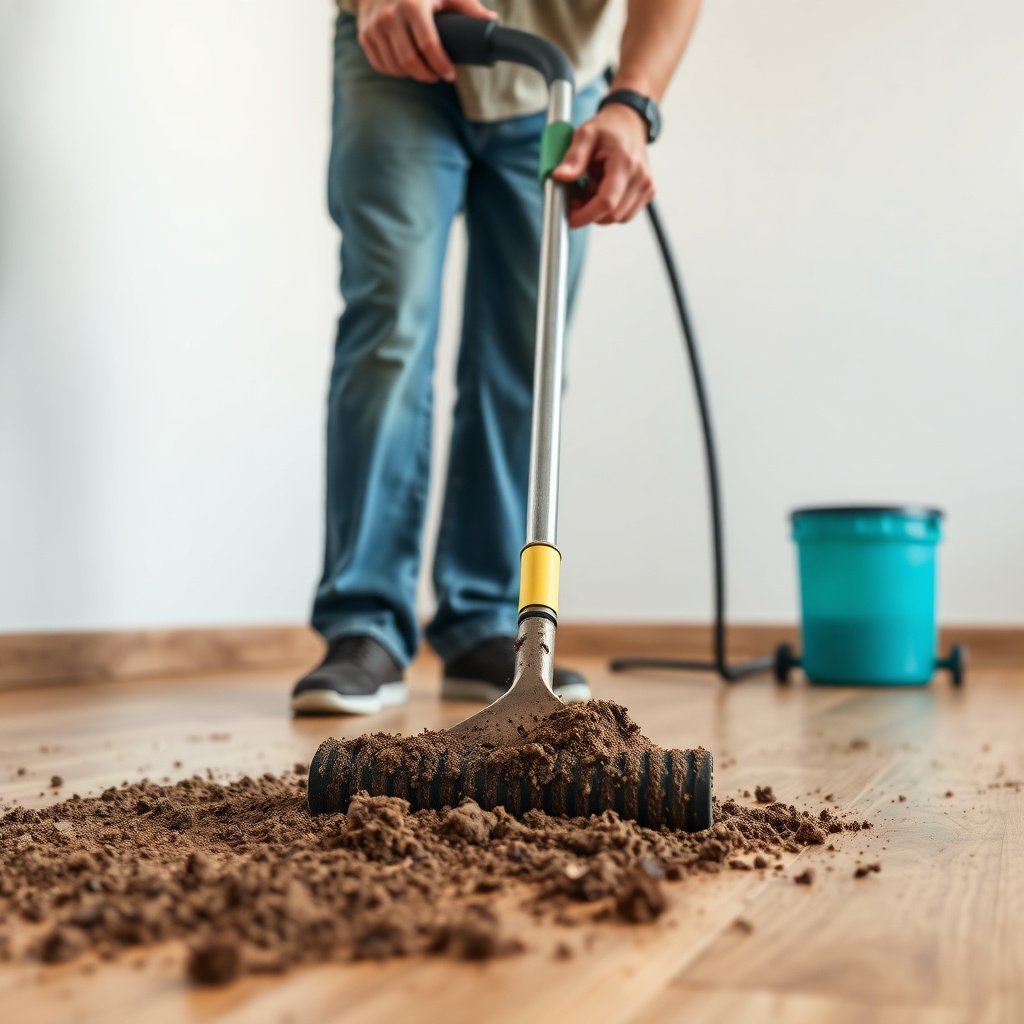
The fastest way to protect engineered wood floors is to lift loose grit first, so you don’t grind it into the finish. Start by removing surface particles with dry methods, then only move to moisture once the floor is free of what could act like sandpaper.
According to the U.S. Geological Survey (USGS) sediment size classification, typical particle ranges are roughly: clay (<0.002 mm), silt (0.002–0.05 mm), and sand (0.05–2.0 mm). On engineered wood floors, those larger, sand-range particles are the ones that tend to scratch or dull coatings fastest—especially when people mop too early. If you catch the debris while it’s fresh, engineered wood floor cleaning becomes a “lift and wipe” task rather than an abrasion problem.
In my own maintenance workflow (, and what cloth/water level you used), I found that blotting wet tracking before wiping reduced how much debris spread across the board seams. That single change—lift first, don’t scrub—made the difference between a quick cleanup and repeated re-cleaning.
– Remove loose grit right away using a soft broom or a vacuum with a hard-floor attachment.
– If the dirt is wet, blot with a clean towel first to lift it instead of spreading it.
– Avoid rubbing in circles while it’s still fresh, since particles can grind into the finish.
Particle Size Categories That Drive Abrasion Risk on Floors
| # | Debris type | Typical particle size | Where it comes from near doors | Finish abrasion rating | Immediate removal benefit |
|---|---|---|---|---|---|
| 1 | Fine household dust | < 0.002 mm | Indoor track-in + fabric lint | ★☆☆☆☆ | 3/10 |
| 2 | Clay-sized grit | < 0.002 mm | Soil dust, tracked yard residue | ★★☆☆☆ | 4/10 |
| 3 | Silt | 0.002–0.05 mm | Rain-splashed dust, sidewalk residue | ★★★☆☆ | 6/10 |
| 4 | Very fine sand | 0.05–0.125 mm | Pavement dust, gravel edges | ★★★★☆ | 8/10 |
| 5 | Fine sand | 0.125–0.25 mm | Walkways, construction dust | ★★★★★ | 10/10 |
| 6 | Medium sand | 0.25–0.5 mm | Coarser gravel tracking | ★★★★★ | 10/10 |
| 7 | Coarse sand / grit | 0.5–2.0 mm | Heavy mud routes, gravel paths | ★★★★★ | 9/10 |
Gentle Cleaning Steps for Fresh Dirt
For fresh dirt on engineered wood floors, the goal is to lift residue with minimal moisture—never to scrub. After you’ve removed loose grit, use a microfiber cloth that’s barely damp, so you’re picking up remaining particles instead of redistributing them.
Wipe with light pressure and straight passes (following the plank grain if your floor has a directional finish). As you move, keep switching to a cleaner side of the microfiber or use a fresh cloth frequently, because dirty “pickup cloth” friction can drag abrasive sediment across the finish.
For sticky spots that are still partly wet, use a manufacturer-approved engineered-wood cleaner on the cloth rather than pouring it on the floor. This reduces the chance of cleaner film or excess liquid pooling near seams—an issue that can lead to swelling or edge lifting over time.
Key workflow detail: engineered wood floors do not respond well to “damp then forget.” If the cloth starts leaving visible wetness, wring it out more. If you see brown streaks, that usually means you’re wiping fine grit that didn’t get lifted during the first pass—go back to dry vacuuming or towel blotting before you add more moisture.
– Wipe with a microfiber cloth that’s only lightly damp (not dripping) to pick up residue.
– For sticky areas, use a manufacturer-approved engineered-wood cleaner on the cloth (not directly on the floor).
– Work in small sections and change cloths often so you’re not dragging dirty water across the surface.
If It’s Mud or Coated Dirt (Sticky, Tacky, or Dark)
If the tracking is muddy, tacky, or visibly coated, treat engineered wood floors like you’re removing a film—not just dirt. Start by lifting the bulk of the material, then use a slightly damp microfiber to remove the remaining residue without soaking seams.
Mud often contains fine silt and clay that can spread, dry, and harden. According to the USGS sediment size classification, silt can range from 0.002–0.05 mm, and clay is commonly below 0.002 mm—both are small enough to smear into a dull haze if you wipe aggressively. That’s why the first step is gentle lifting: remove clumps with a towel edge or the cloth itself, then wipe in controlled strokes to pull the remaining film free.
Moisture control matters. Engineered wood floors are more stable than solid wood, but they’re still vulnerable to prolonged wetting at seams, edges, and transitions. According to the National Wood Flooring Association (NWFA), maintaining indoor relative humidity in the approximate 35–55% range helps protect wood flooring from dimensional movement—wet cleaning can temporarily push conditions beyond what finishes and adhesives tolerate.
Once the grime lifts, do a quick follow-up pass with a clean, barely-damp microfiber to remove any cleaner film. Film is what can make floors look “dirty” even after the mess is gone.
– Lift larger clumps gently, then wipe with a slightly damp cloth to remove the remaining coating.
– Don’t soak the floor—keep moisture controlled to protect seams and edges.
– After the grime lifts, do a quick follow-up pass with a clean, barely-damp microfiber to remove any cleaner film.
Drying and Post-Clean Care
Drying engineered wood floors immediately is the step that prevents most lingering marks. When the floor is still damp, even micro-droplets can carry dissolved soil and leave streaks or a faint haze after they evaporate.
Use a dry microfiber towel to remove remaining moisture, with extra attention along seams, edges, and around transitions to tile or baseboards. If you only dry the center of the spill area, liquid can wick outward through the plank edges and show up later as a darker patch.
Then allow the floor to fully return to normal before heavy foot traffic. “Quick steps” can push damp residue into the finish texture, especially in high-contrast matte coatings. If your household has pets, consider temporarily restricting access until the area is clearly dry to the touch.
Finally, do a quick inspection under natural light. If you see any remaining grit near edges or where the vacuum missed, repeat the dry lift + barely-damp wipe—don’t try to force removal with repeated scrubbing.
– Dry immediately with a dry microfiber towel, especially along seams and near edges.
– Let the floor return fully to normal before walking on it (avoid “quick steps” that can leave streaks).
– Re-vacuum or re-broom once dry if you notice any remaining grit near the edges.
What Can Go Wrong (And How to Avoid It)
The most common failures with engineered wood floor cleaning come from either leaving grit behind or adding too much water. If you want fewer scratches and less haze, the fix is usually behavioral: lift first, reduce moisture, and use the correct cleaner method.
Here are the pitfalls that matter most in real-world traffic zones:
– Scratches from grit: If you mop first, grit can turn into a grinding abrasive—always remove loose dirt first.
– Too much water: Over-wetting engineered wood can seep into seams; use barely-damp cloths and prevent puddles.
– Wrong cleaner: Avoid harsh all-purpose cleaners, vinegar, or steam mops unless your flooring manufacturer explicitly allows them.
– Surface haze or streaks: Using cleaner directly on the floor or not drying afterward can leave residue.
Below is a practical comparison you can use when deciding how aggressive to be with your next attempt:
| Approach | Best for | Pros | Cons / Risk | Recommended when |
|---|---|---|---|---|
| Dry vacuum + microfiber wipe (barely damp) | Fresh dusty tracking | Minimizes abrasion; controlled moisture | May take extra passes if residue is sticky | Dirt is still wet or lightly soiled |
| Blot-lift first (towel) + quick wipe | Wet mud tracking | Reduces smear and spread | Slower if you skip bulk lifting | Mud is tacky or dark |
| Pooled cleaner or wet mopping | Persistent stains only (rare) | Can dissolve residue | Higher chance of seam issues and haze | Only if your manufacturer explicitly permits it |
| Steam cleaning | None for most engineered finishes | High heat can loosen residues | Finish/coating damage risk unless allowed | Skip unless manufacturer approves |
If you’re unsure, the manufacturer’s care instructions win. Many engineered-wood finishes are designed to withstand normal cleaning, not saturation.
Verdict: A Simple, Safer Approach (With Limits)
This method works best for fresh dirt because it removes abrasive particles before they scratch or dull the finish. The tradeoff is that heavy tracking, sticky mud, or coated grime may require two or three gentle wipe passes—rather than one aggressive scrub.
Engineered wood floors also require you to think in terms of protection and process: lift grit, use barely-damp microfiber, apply approved cleaner to the cloth only, and dry immediately. If your floor has a protective coating warning, a specialty finish, or a manufacturer that limits cleaner types, don’t improvise—follow those specific instructions first.
Finally, skip this “light wipe” workflow when the mess has fully dried and hardened into a film. In those cases, you still begin with dry lifting (to avoid sanding the finish), but you may need extra steps to soften residue—only with products your flooring manufacturer approves.
Quick Checklist: Clean Fresh Dirt Without Scratching
– [ ] Lift loose dirt first (soft broom/vac; blot wet spots)
– [ ] Wipe with barely-damp microfiber (no puddles)
– [ ] Use a manufacturer-approved cleaner only if residue remains (apply to cloth)
– [ ] Dry right away with a clean, dry towel
– [ ] Check seams/edges and re-clean those spots if needed
Frequently Asked Questions
What’s the safest way to clean fresh dirt off engineered wood floors?
Start by dry-sweeping or vacuuming using a soft-brush attachment to lift loose dirt without scratching the surface. For remaining grit, use a barely damp microfiber cloth or mop with a cleaner labeled safe for engineered wood. Avoid saturating the planks, since excess moisture can seep into seams and edges.
How do I remove wet mud or mud slurry from engineered wood without damaging the finish?
Blot the mud immediately with a dry cloth, then wipe gently with a microfiber mop dampened with warm water and a small amount of pH-neutral wood floor cleaner. Rinse by wiping again with a clean, lightly damp cloth to prevent residue buildup. After cleaning, dry thoroughly with a clean towel to minimize swelling and spotting.
Which cleaning tools work best for fresh dirt on engineered hardwood floors?
Use a microfiber dust mop for everyday dirt and a soft-bristle brush attachment for vacuuming to prevent micro-scratches. A microfiber cloth is ideal for corners, edges, and high-traffic spots where dirt collects. Skip abrasive pads, stiff scrubbers, and steam mops, because they can damage the protective wear layer or push dirt into joints.
Why should I avoid harsh cleaners when cleaning fresh dirt from engineered wood?
Engineered wood floors often have a protective top layer that can be dulled, hazed, or damaged by strong detergents, bleach, or ammonia-based cleaners. Harsh chemicals can also leave residues that attract more dirt and create a sticky surface. Stick to pH-neutral products specifically designed for engineered hardwood or sealed wood floors.
What’s the best method for stubborn gritty dirt that won’t come up from engineered wood?
First, remove loose debris with a vacuum or dry sweep, then treat the gritty area with a damp microfiber cloth—don’t rub aggressively. If grit remains, use a wood-floor-safe cleaner and wipe in the direction of the grain, followed by a second wipe with clean, lightly damp water. Dry immediately to prevent water from lingering and ensure the finish stays smooth and even.
📅 Last Updated: November 04, 2026 | Topic: How to clean fresh dirt from engineered wood floors? | Content verified for accuracy and freshness.
References
- Wood flooring
- https://www.cdc.gov/hygiene/cleaning/index.html
- https://www.who.int/publications/i/item/9789240010215
- Maintenance | National Wood Flooring Association | NWFA
- 404 Error
- https://scholar.google.com/scholar?q=how+to+clean+fresh+dirt+from+engineered+wood+floors Google Scholar
- https://scholar.google.com/scholar?q=engineered+wood+floor+cleaning+best+practices+vacuum+microfiber+water+avoidance Google Scholar
- https://scholar.google.com/scholar?q=hardwood+floor+cleaning+remove+soil+proper+methods+detergent+water+wetting Google Scholar


