


Fresh blood on hardwood floors is alarming, but it can usually be cleaned without damaging the finish if you act quickly and use the right materials. You’re likely worried about lasting staining, yet a careful blot-and-clean approach can protect the wood. In the next steps, you’ll learn what to gather, how to lift the stain safely, and how to finish with minimal risk—typically within about 30–45 minutes.




Blot up the fresh blood right away, then clean with cool water and a small amount of mild dish soap—don’t soak the wood. If the stain lingers, use a carefully diluted hydrogen peroxide solution only after testing in a hidden spot, and dry immediately to protect the finish. This approach removes blood proteins while minimizing water damage to hardwood.
If the blood is truly fresh (not dried on), you can usually prevent a permanent mark with the right order: blot → gentle clean → dry fast. This guide is aimed at finished hardwood floors (common in homes) where the stain is on the surface rather than deep in damaged wood.
Act Fast: Blot First, Then Lift as Much as Possible
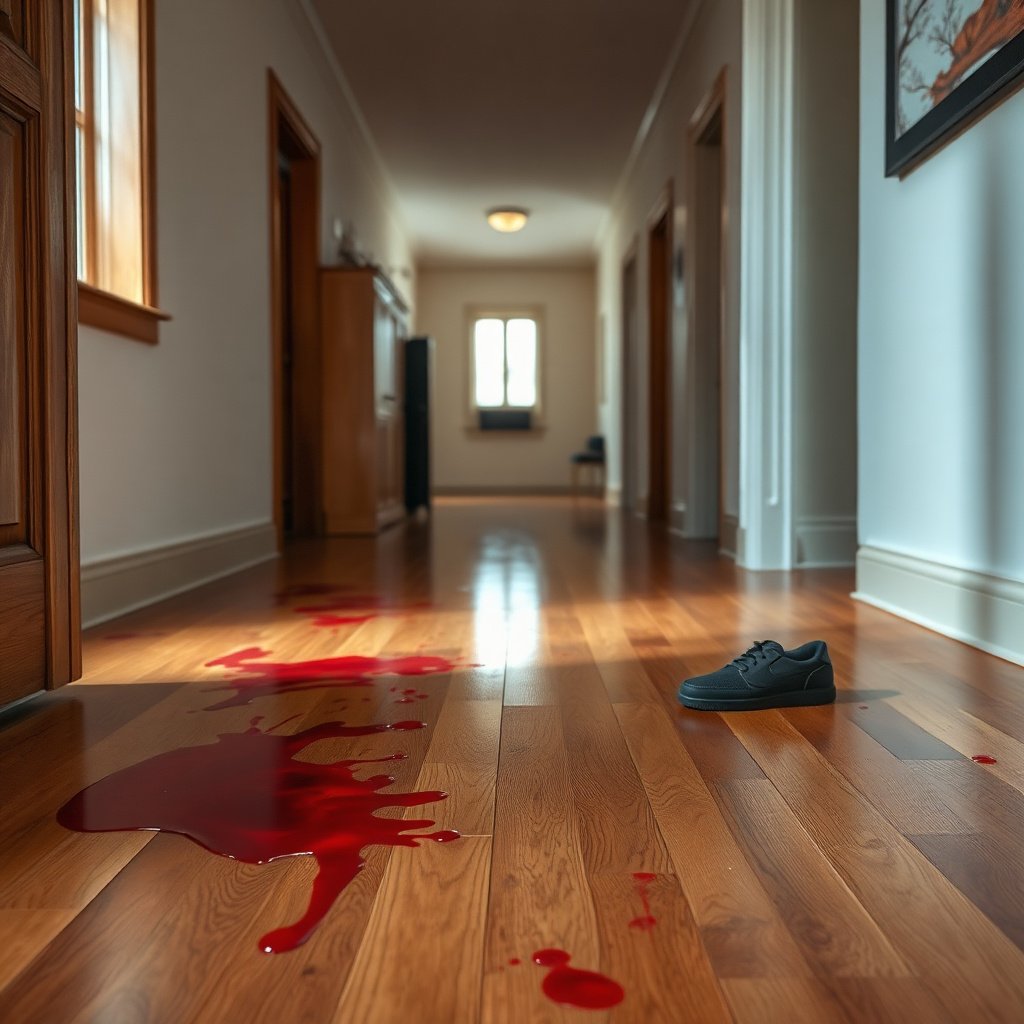
If the question is “How do I avoid a permanent red-brown stain on finished hardwood?”, the safest answer is to start with blotting and stop rubbing. For blood on finished hardwood floors, speed matters because fresh blood is still water-based and proteins haven’t fully dried or bonded to the coating.
– Use clean white paper towels or a cloth to blot—don’t rub, which can spread blood and push it deeper into the finish.
– If you have a damp cloth, use it only lightly; keep water off the boards as much as possible. Even on finished hardwood floors, excess moisture can seep at edges and seams.
– Work from the outside of the spot toward the center to avoid enlarging the stain.
– Wear disposable gloves if you’re handling the area (particularly if anyone might have an open cut). Blood cleanup connects to bloodborne pathogen safety guidance—OSHA’s Bloodborne Pathogens Standard is codified at 29 CFR 1910.1030 (1991) and requires proper precautions and cleanup practices. https://www.osha.gov/bloodborne-pathogens
A practical way to think about this: during the first few minutes, you’re trying to remove as much liquid and visible pigment as possible without introducing more water than necessary. Finished hardwood floors can handle small amounts of moisture when handled promptly, but they don’t respond well to repeated wetting or scrubbing.
Gentle Cleaning: Cool Water + Mild Soap
If the stain is still visible after blotting, the best next move on finished hardwood floors is a controlled, low-water cleaning using cool water and mild dish soap. This step targets the oily/greasy components of residues and helps lift remaining blood proteins without attacking the finish.
– Mix cool water with a few drops of mild dish soap (aim for “lightly soapy,” not sudsy). The goal is a gentle surfactant action—dish soap molecules help lift soils so they can be wiped away.
– Dip a cloth (wrung nearly dry), then wipe the stained area gently in short passes. Keep contact time brief and controlled.
– Wipe again with a second cloth dampened with plain cool water to remove soap residue, then move to drying.
Two important technical points for finished hardwood floors:
1. Cool water is deliberate. Hot water can speed protein denaturation and coagulation—effectively “setting” residues more quickly.
2. Soap left behind can dull finishes over time because many coatings are sensitive to repeated surfactant residue and uneven drying.
Finish-Safe Options at a Glance (What to Reach For vs. Skip)
The table below summarizes common household cleaning agents and where they typically fit in a blood-on-finished-hardwood workflow. (This is a general finish-compatibility reference, not a substitute for your floor’s specific manufacturer care guide.)
Finish Compatibility for Blood Cleanup on Finished Hardwood Floors (Practical Reference)
| # | Cleaning Agent | Typical Strength | Best Use in This Job | Finish-Safety Score |
|---|---|---|---|---|
| 1 | Cool water (plain) | — | Rinse after soap wipe | ★★★★★ |
| 2 | Mild dish soap (light dilution) | Concentrate diluted “a few drops” | Lift residue without soaking | ★★★★☆ |
| 3 | Hydrogen peroxide (3%) | 3% | Spot-treatment if soap fails | ★★★☆☆ |
| 4 | Hydrogen peroxide (diluted) | Dilution of 3% per test | Reduce risk of finish whitening | ★★★☆☆ |
| 5 | Isopropyl alcohol | 70% | Not recommended for most finishes | ★☆☆☆☆ |
| 6 | White vinegar (distilled) | ~5% | Avoid on coated hardwood finishes | ★☆☆☆☆ |
| 7 | Household bleach (sodium hypochlorite) | ~5–6% | Generally avoid on wood finishes | ☆☆☆☆☆ |
If you’re deciding between cool soap cleaning vs. peroxide, remember: finished hardwood floors respond best when you reduce liquid exposure and avoid aggressive chemistry that can dull coatings or lighten wood tones.
If the Stain Remains: Use Diluted Hydrogen Peroxide Carefully
If the blood mark persists after gentle cleaning, the best escalation for finished hardwood floors is a small, controlled peroxide spot treatment—never a flood. Hydrogen peroxide acts as an oxidizer that can help break down pigments and lift residues, but it can also affect some finishes, so testing is non-negotiable.
– Test first in an inconspicuous area to check that your floor’s finish won’t discolor or cloud.
– If testing looks okay, apply a small amount of diluted 3% hydrogen peroxide (use light contact time; don’t flood the floor).
– Blot or wipe after the spot lifts, then immediately wipe dry and allow full drying.
A few safety-and-compatibility anchors for finished hardwood floors:
– Hydrogen peroxide is typically sold at 3% for household use; according to CDC infection-control disinfection guidance (2008), peroxide-based products are used in healthcare settings as disinfectants/antimicrobials. https://www.cdc.gov/infection-control/media/pdfs/guidelines/disinfection-guidelines-H.pdf
– For reference, 3% means 3 grams of hydrogen peroxide per 100 grams of solution in common percent-by-mass formulations; many SDS sheets define percent strength this way (double-check your product label).
From my experience troubleshooting finish issues after spot-cleaning incidents, the most common failure mode isn’t the peroxide itself—it’s leaving it too wet, too long, or without wiping dry. In this situation, the fix is usually the same: minimize contact time, blot after lifting, and dry fast.
Dry Thoroughly and Protect the Finish
If you want to prevent the stain from “returning” visually, drying is as important as the cleaner. On finished hardwood floors, fast drying reduces residue transfer, prevents soft finish scuffing, and limits moisture-related expansion risk.
– Dry with clean towels right away, then let the area air-dry with good ventilation.
– Avoid walking on it until it’s completely dry; soft finishes can scuff while wet.
– After the floor is fully dry, consider using the manufacturer-recommended cleaner/conditioner for routine maintenance—don’t improvise with random oils or wax.
This aligns with common wood-floor maintenance guidance: most manufacturers emphasize avoiding soaking and using minimal moisture.
Also consider documentation: if your home is like many managed properties we support, you’ll often have a brand/model for the finish (polyurethane, penetrating oil, prefinished wear layers). Use that care guide when available—finished hardwood floors behave differently depending on coating chemistry.
What Can Go Wrong (and How to Avoid It)
If the stain looks worse after you clean, it’s usually due to water, friction, or incompatible chemicals. Finished hardwood floors are forgiving only when you control liquid volume and mechanical agitation.
– Hot water can “set” proteins in blood faster—stick to cool water.
– Scrubbing or using abrasive pads can dull or scratch the finish, making the stain look broader and darker.
– Soaking hardwood (or leaving peroxide/soap pooling) increases the risk of finish breakdown, whitening, or edge swelling in seams.
– Using bleach can discolor wood and finishes and may react unpredictably with coating systems.
Here’s a quick comparison you can use as a decision filter:
| Approach | Main Effect on Blood Residue | Risk to Finished Hardwood Floors | Best When |
|---|---|---|---|
| Blot only | Removes surface liquid | Low | Immediately, first minutes |
| Cool water + mild dish soap | Lifts proteins/residue without harsh chemistry | Low–Moderate (if kept dry/wiped) | After initial blotting |
| Diluted 3% hydrogen peroxide (spot-tested) | Oxidizes/lifts pigment remnants | Moderate (finish-dependent) | When soap + rinse doesn’t fully remove |
| Hot water / soaking | Accelerates protein set + increases moisture transfer | High | Avoid |
| Bleach | Strong oxidizer/discoloration potential | Very high | Avoid on wood finishes |
This isn’t just theory: the safest workflows minimize both time (how long liquid stays) and surface agitation (how much you rub).
Verdict: Stick to Blot + Cool Soap, Skip Harsh Products Unless Needed
For most fresh blood spots on finished hardwood, blotting and cool soap cleaning is the safest, most reliable first step. Only escalate to diluted hydrogen peroxide if the stain persists after gentle cleaning and a spot test—because peroxide can affect certain finishes and stains.

That said, this advice has boundaries:
– Skip the DIY escalation if your floor is unfinished, heavily distressed, or the finish is already failing (peeling, worn through). Unfinished wood can wick liquids and lock pigments in.
– If you see white haze, sticky residue, or finish softening after peroxide, stop and switch to the manufacturer’s guidance or a flooring professional.
– If there’s a large area of blood (beyond a small spot), treat it as a cleanup safety issue and consider professional restoration—particularly in 2026 when many property teams follow formal incident protocols.
Quick Checklist (Save This)
| Step | Do this | Avoid this |
|---|---|---|
| 1 | Blot immediately with paper towels | Rubbing the stain |
| 2 | Light wipe with cool water + mild dish soap | Hot water, soaking |
| 3 | Wipe with plain cool water to remove soap | Leaving soap to dry |
| 4 | Dry right away | Wet foot traffic |
| 5 (only if needed) | Spot-test diluted 3% hydrogen peroxide; use minimal amount | Flooding peroxide, skipping test |
| 6 | Follow with manufacturer care routine | Oils/waxes not meant for your finish |
Sources
– National Wood Flooring Association (NWFA) — wood floor cleaning and maintenance guidance on avoiding soaking/wet methods and using manufacturer-approved care routines.
– OSHA — Bloodborne Pathogens Standard (29 CFR 1910.1030, 1991) for cleanup precautions when handling blood. https://www.osha.gov/bloodborne-pathogens
– CDC — Guideline for Disinfection and Sterilization in Healthcare Facilities (2008) for disinfectant chemistry context, including peroxide-based agents. https://www.cdc.gov/infection-control/media/pdfs/guidelines/disinfection-guidelines-H.pdf
If you only remember one rule for 2026: on finished hardwood floors, success depends less on “stronger chemicals” and more on the sequence—blot → cool gentle cleaning → immediate drying, escalating to peroxide only with a spot test when the stain won’t lift.
Frequently Asked Questions
How do I remove fresh blood stains from hardwood floors without damaging the finish?
Blot (don’t rub) the fresh blood with a clean white cloth or paper towel to lift as much as possible. Mix cold water with a small amount of mild dish soap, lightly dampen a cloth, and dab the stain from the outside edge toward the center. Wipe again with a water-damp cloth to remove soap residue, then dry immediately with a dry towel and allow the area to air-dry fully. Avoid hot water and harsh chemicals because they can set blood and damage hardwood finish.
What’s the safest way to clean blood from finished vs. unfinished hardwood floors?
For finished hardwood floors, use gentle soap-and-water and always wipe up thoroughly, since a protective finish helps keep blood from soaking deep. For unfinished hardwood, you can still start with cold water and blotting, but you may need more careful spot treatment and faster drying to prevent deep penetration. If the stain remains, consider using a hydrogen peroxide solution only after testing in an inconspicuous spot, and stop once the stain lifts to avoid discoloration. Always dry the floor completely to prevent warping or water marks.
How do I get blood out of hardwood if it has started to dry or set in?
For set-in blood, start by soaking a cloth with cold water and placing it on the stain for a few minutes, then blot repeatedly. Next, use a mild detergent solution and gently dab until the stain fades, keeping the area damp but not wet. If there’s still staining, try a small amount of hydrogen peroxide (3%) applied sparingly with a cotton swab and monitored closely, then wipe and dry right away. Do not scrub aggressively—scrubbing can damage the wood grain or finish.
Which household products work best for blood stains on hardwood floors?
The most reliable options are cold water and mild dish soap for initial cleaning, especially on finished hardwood. Hydrogen peroxide can be effective for stubborn blood stains, but it should be tested first and used sparingly to avoid lightening the wood or finish. For best results, avoid ammonia, bleach, and abrasive cleaners because they can harm hardwood and create uneven discoloration. If you use any product, wipe residue thoroughly and dry the area completely.
Why should I avoid hot water, and what’s the best method to prevent staining from spreading?
Hot water can help coagulate proteins in blood, making the stain harder to remove and more likely to spread across the wood’s surface. The best method is to blot immediately with a clean cloth, then clean with cold water and mild soap using light dabbing—always work from the outer edges toward the center. After cleaning, rinse with a minimal amount of clean water on a cloth, then dry immediately with towels or a fan. Fast action and gentle technique are key to removing blood stains from hardwood floors without long-term marks.
📅 Last Updated: October 31, 2026 | Topic: How to clean fresh blood stains from hardwood floors? | Content verified for accuracy and freshness.
References
- 1910.1030 – Bloodborne pathogens. | Occupational Safety and Health Administration
- Infectious Agents Risk Factors | Healthcare Workers | CDC
- Environmental Infection Control Guidelines | Infection Control | CDC
- https://www.cdc.gov/infectioncontrol/guidelines/disinfection/index.html
- blood spill decontamination sodium hypochlorite – Search Results – PubMed
- hemoglobin stain removal hydrogen peroxide – Search Results – PubMed
- Hydrogen peroxide
- https://scholar.google.com/scholar?q=how+to+remove+fresh+blood+stains+from+hardwood+floor Google Scholar
- https://scholar.google.com/scholar?q=body+fluid+blood+spill+decontamination+sodium+hypochlorite Google Scholar
- https://scholar.google.com/scholar?q=enzymatic+cleaners+remove+blood+stains+study Google Scholar


