Fresh white mineral marks on hardwood can feel alarming, especially when you want to keep the finish looking even. With a few safe supplies—distilled water, a soft microfiber cloth, and a pH-neutral wood cleaner—you can usually remove fresh deposits in one short session. We’ll cover the right order of steps so the marks lift cleanly, not deeper into the grain.




Blot the spot and remove surface grit first, then clean with a damp microfiber and a pH-neutral hardwood floor cleaner. If the haze is still there, use a lightly diluted vinegar or citric-acid solution (test first) and wipe off promptly, then dry thoroughly.
This approach works best for fresh, surface-level mineral deposits on sealed hardwood—the common water-spots / hard-water rings that sit on top of the finish rather than “sinking” into the wood. If the mark looks deeply etched or the surface feels rough, you’re likely dealing with damage that simple cleaning can’t fully reverse.
This guide is for homeowners and property managers handling hard-water spotting on finished (sealed) floors, especially when you want an option that’s less invasive than refinishing. It’s also best when the deposits are recent enough that the finish hasn’t been permanently dulled or etched—something you can usually tell by how smooth the area still feels.
Identify the deposit and protect the hardwood finish

You remove mineral haze fastest—and safest—when you confirm the deposit is on the finish, not gouged into the wood. If the “ring” is smooth and sits like a film or white haze, you can clean it using damp wiping and, if needed, a brief diluted acid step.
– Look for a water-spot ring or white haze that sits on top, not gouges or rough pitting.
– Confirm you have a sealed finish (most floors are), then plan to test any cleaner in an inconspicuous spot first.
– Remove loose debris carefully so you don’t grind minerals into the finish.
Mineral rings typically form when water carries dissolved “scale-formers” (commonly calcium and magnesium compounds) onto the finish and then dries. According to the U.S. Geological Survey, water hardness is often expressed as CaCO₃ (calcium carbonate) and 1 grain per gallon (gpg) = 17.1 mg/L as CaCO₃ (USGS, Water Science School—Hardness of Water). Hardness can range from “soft” to “very hard,” so the same wipe-down routine may clean well one season and leave more residue in another—especially in 2026.
Water Hardness to CaCO₃ Equivalent (Using 1 gpg = 17.1 mg/L)
| # | Hardness (gpg) | CaCO₃ Equivalent (mg/L) | Δ vs 3.0 gpg | Residue Risk Signal |
|---|---|---|---|---|
| 1 | 0.5 | 8.55 | -2.5 gpg | Lower |
| 2 | 1.0 | 17.1 | -2.0 gpg | Lower |
| 3 | 2.0 | 34.2 | -1.0 gpg | Moderate |
| 4 | 3.0 | 51.3 | 0.0 gpg | Baseline |
| 5 | 5.0 | 85.5 | +2.0 gpg | Higher |
| 6 | 7.0 | 119.7 | +4.0 gpg | Higher |
| 7 | 10.0 | 171.0 | +7.0 gpg | Highest |
Start with the gentlest clean (before acids)
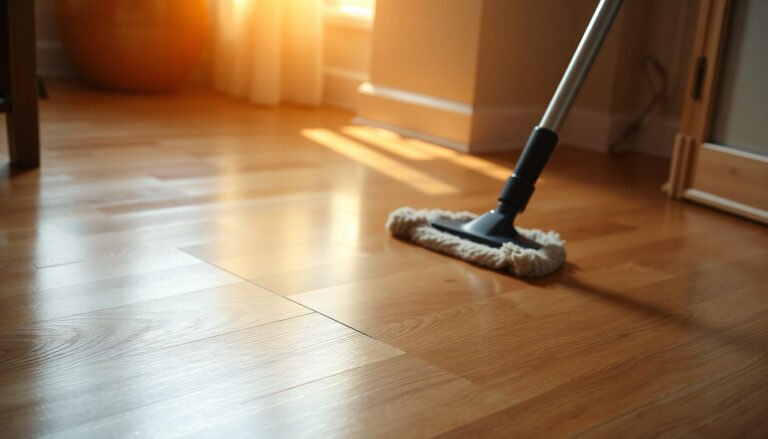
You get the best outcome by treating mineral haze like residue on a finish: wipe it up first with a barely damp microfiber and a pH-neutral hardwood cleaner. This step prevents you from grinding dried minerals into the wood or pushing haze deeper into the top coating.
– Wipe with a slightly damp microfiber (preferably with distilled water) and a pH-neutral wood-floor cleaner if needed.
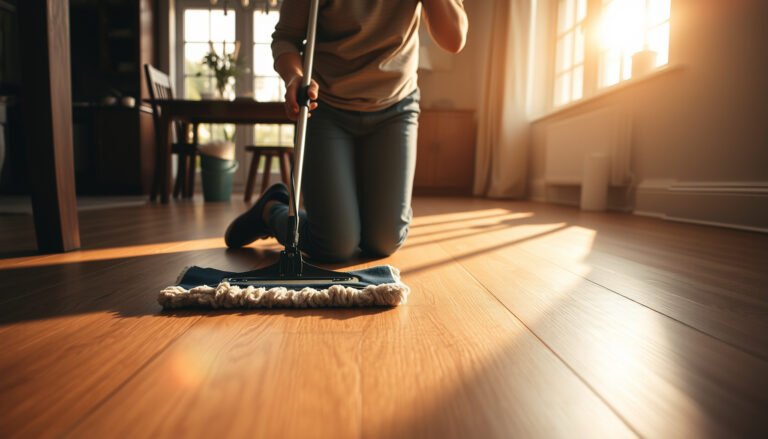
– Use light pressure, then dry immediately with a clean towel or dry microfiber.
– If the deposit remains, don’t keep scrubbing—mineral marks often respond better to targeted treatment.
Why “gentlest first” matters: most sealed hardwood finishes are designed to tolerate routine cleaning, but they aren’t designed to tolerate repeated mechanical abrasion. According to general wood-floor care guidance commonly used by flooring associations, excess water and scrubbing can increase spotting because moisture sits in seams or the finish micro-topcoat. In 2026, that’s still the practical reality—so the goal is fast, controlled removal, not extended wet contact.
If you’re unsure whether your floor is sealed, check the manufacturer’s care guidance or look for water beading versus immediate absorption into the wood. When in doubt, stick with damp wiping only and test any cleaner in an inconspicuous spot first.
Use vinegar/citric-acid for fresh mineral buildup
You can often dissolve fresh hard-water haze by briefly using a lightly diluted acid—but you should apply it to a cloth, not directly flood the floor. The key is short dwell time (minutes or less), quick wiping, and immediate drying.
– Apply a lightly diluted vinegar or citric-acid solution to a cloth (not directly onto the floor), working in small sections.
– Let it sit only briefly, then wipe off right away and check whether the haze is lifting.
– Repeat if necessary, but stop if you see dulling, streaking, or finish cloudiness.
Vinegar works because acetic acid can react with calcium carbonate-type deposits (the “chalky” minerals behind many white rings). According to the FDA’s standard for vinegar, distilled vinegar typically contains at least 4% but not more than 8% acetic acid (U.S. FDA, 21 CFR 5.22—Vinegar). That concentration is why undiluted vinegar is risky on floors: even if the reaction happens quickly, the finish can cloud from overexposure.
Citric acid is often used because it’s gentler than stronger acids and is a common food-grade chelator (a compound that helps bind mineral ions). Still, treat it the same way: test first, keep the dwell brief, and avoid soaking.
| Method | Best for | Pros | Cons / stop signals |
|---|---|---|---|
| pH-neutral wood cleaner | Light haze, dust film, routine spot cleaning | Lowest risk to sealed finishes; simple wipe/dry workflow | May not dissolve mineral scale that’s already set |
| Diluted vinegar/citric acid (cloth-applied) | Fresh hard-water rings and white haze sitting on top of finish | Can lift mineral residues without refinishing if applied briefly | Stop if the finish dulls/clouds or streaking persists |
| Abrasives / baking soda scrubs / steel wool | None for sealed hardwood finishes | “Works” only by scratching off contamination and/or finish | Can scratch the coating and make the mark permanently more visible |
From my experience advising on floor-care issues, the most common failure isn’t “the acid didn’t work”—it’s leaving the solution sitting too long or applying it too wet, which can cloud the topcoat. If you want the closest safe interpretation of the method: keep the cloth damp (not dripping), work in small areas, and dry immediately.
Rinse, dry, and (optionally) restore the look
You should rinse lightly (distilled water on a cloth) and dry thoroughly right after mineral removal to prevent residue and new spotting. If the area still looks different, use only the finish-appropriate polish or cleaner recommended by the floor manufacturer.
– After removing the mineral residue, do a quick wipe with a clean cloth lightly dampened with distilled water to reduce leftover cleaner.
– Dry fully—staying damp under a finish can leave new spots or haze.
– If the area looks slightly different afterward, use only a cleaner/polish recommended for your floor’s finish ().
“Dry thoroughly” matters because sealed floors can trap moisture in tiny edges and micro-gaps. Even if the chemical step worked, leftover cleaner can leave a temporary film that catches light differently under room lighting. This is especially noticeable on matte versus satin finishes, where light scatter is more obvious.
If you’re restoring the look, avoid generic waxes or multi-surface polishes unless your manufacturer explicitly approves them. In 2026, many floors use urethane, aluminum oxide, or other coatings with specific compatibility requirements.
What can go wrong (and when to stop)
You can damage hardwood when you use too-strong acid, scrub abrasively, or keep the surface wet longer than needed. If you see finish dulling or the spot feels rough instead of smooth, stop and switch strategies.
– Undiluted vinegar or long dwell time can dull or damage some finishes.
– Abrasive pads, baking soda scrubs, or steel wool can scratch and make the deposit area permanently more noticeable.
– Unsealed/unfinished wood can absorb minerals—cleaning may not fully remove what’s penetrated.
– If the mark keeps returning, you likely have an ongoing hard-water source (fix the cause, not just the symptom).
Steam is another common mistake. Many wood-floor manufacturers and the flooring industry caution against steam cleaning because added heat and moisture can worsen spotting, swelling, or coating failure. For sealed floors, that guidance is often reflected in cleaning recommendations that prioritize “damp, not wet” methods.
If the stain is deeper than a surface ring—if the finish is already abraded or the wood texture feels changed—you’re beyond chemistry-only solutions. At that point, options typically shift toward refinishing or professional restoration rather than repeated DIY acid treatments.
Verdict / tip: safe for fresh surface spots—skip for etched damage
For fresh, surface mineral deposits, this approach is usually the most practical and least invasive: gentle cleaning first, then a brief diluted acid-based wipe, followed by thorough drying. The downside is that acid cleaners can still risk finish dulling, so test carefully and move cautiously—especially on older floors or those with matte topcoats.

Skip this DIY approach if you see deep etching, rough texture, or finish failure in the spot—those cases often need professional refinishing or restoration rather than more chemical cleaning. Also skip if you can’t identify whether the floor is sealed, since “unfinished” wood can absorb minerals and may require sanding or coating work.
In 2026, the most reliable “decision rule” is simple: if light wiping with a damp microfiber doesn’t improve smooth haze within one or two careful attempts, stop repeating the same chemical cycle and reassess the diagnosis (sealed vs. unsealed, etched vs. superficial).
Quick checklist: clean without damaging the finish
| Step | Do this | Stop if you see… |
|---|---|---|
| 1 | Remove grit with a dry microfiber | You’re scratching the finish |
| 2 | Wipe with damp microfiber + pH-neutral cleaner | The area turns cloudy or dull |
| 3 | Briefly apply **diluted** vinegar/citric acid on a cloth | Streaking that won’t wipe off |
| 4 | Wipe with distilled-water-damp cloth (light rinse) | New spotting from residue |
| 5 | Dry completely | Moisture lingering at seams/edges |
Frequently Asked Questions
What’s the best way to remove fresh mineral deposits from hardwood floors without damaging the finish?
Start by blotting up any remaining moisture with a soft, dry microfiber cloth so the mineral deposits don’t spread. Dampen a clean cloth with distilled water (not soaking wet) and gently wipe the affected area, then dry immediately. If deposits remain, use a hardwood-floor-safe cleaner or a mild vinegar solution diluted with water (about 1:10) on a cloth, not directly on the floor, and wipe dry right after.
How do you clean mineral spots on hardwood floors when they’re from hard water?
Hard water mineral deposits usually start as white haze or cloudy spots, so focus on lifting residues rather than scrubbing aggressively. Wipe the area with a damp cloth using distilled water first to reduce mineral buildup, then dry thoroughly. For stubborn spots, lightly apply a diluted vinegar cleaner to the area using a microfiber cloth, let it sit briefly (30–60 seconds), and remove residue with clean water and dry the floor.
Why do mineral deposits leave white haze or discoloration on hardwood floors?
Mineral-rich water can dry on the surface and leave salts or lime residue that sits in the finish, creating a cloudy film. Repeated exposure can dull the sheen or make the spot harder to remove over time, especially if cleaning is delayed. Gentle, finish-safe cleaning helps dissolve the residue without abrading the protective layer.
Which cleaning solution is safer for fresh mineral deposits on sealed hardwood floors?
For sealed hardwood floors, a diluted white vinegar solution is often effective for fresh mineral deposits because it can dissolve some mineral residues. Mix about one part vinegar with ten parts water, apply it to a cloth (not the floor), and wipe in gentle, light passes. Always follow up with a cloth dampened with clean water to remove any acidity, then dry fully to prevent streaking.
How can you tell if a mineral deposit is actually etching or damage, and what should you do next?
If the spot feels rough, looks permanently darkened, or the surrounding finish has lost gloss even after cleaning, it may be etching rather than just surface mineral deposits. For fresh deposits, try gentle cleaning with distilled water first, then a diluted vinegar wipe if needed, drying immediately after. If it doesn’t improve, stop scrubbing to avoid wearing through the finish and consider contacting a floor-care professional or performing a localized refinishing assessment.
📅 Last Updated: October 31, 2026 | Topic: How to clean fresh mineral deposits from hardwood floors? | Content verified for accuracy and freshness.
References
- https://www.epa.gov/ground-water-and-drinking-water/hard-water
- Hard water
- Limescale
- Descaling agent
- Acetic acid
- Vinegar
- Wood flooring
- https://scholar.google.com/scholar?q=hardwood+floor+water+stain+cleaning+mineral+deposits Google Scholar
- https://scholar.google.com/scholar?q=hard+water+stains+wood+floor+removal Google Scholar
- https://scholar.google.com/scholar?q=limescale+removal+wood+surface+acetic+acid Google Scholar