
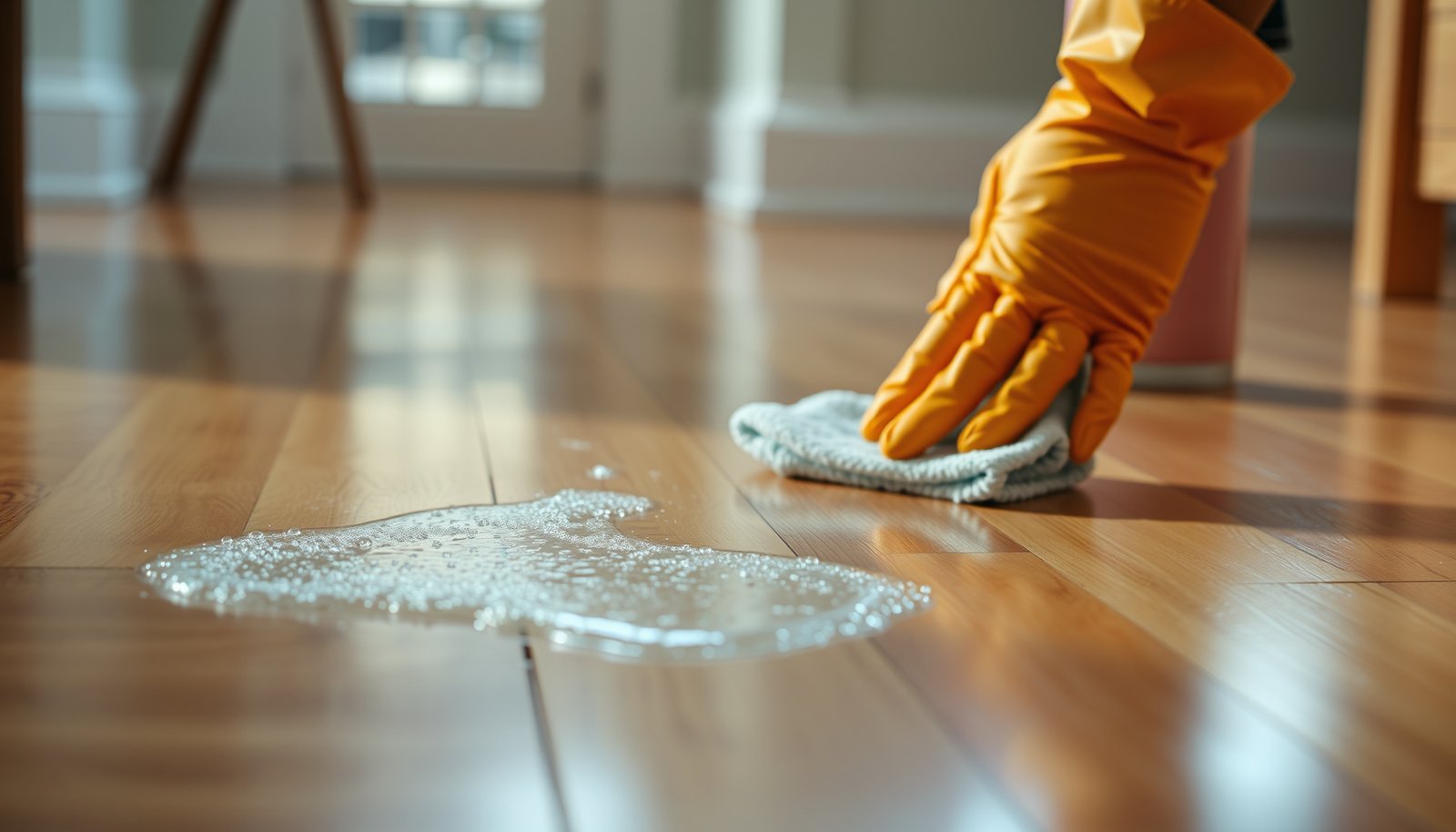

Soap scum on your hardwood floor looks stubborn—can you remove it without damaging the finish? Yes, you can, and the process is usually quick if you use the right cleaner and method. You will need a soft microfiber cloth, pH-neutral floor cleaner (or a manufacturer-approved option), and clean water for rinsing, plus a gentle scrubber for buildup. Start now by tackling the scum in small sections so you can restore a clean, safe surface without dulling or stripping the wood.




Safely clean soap scum from hardwood by using a pH-neutral cleaner with very limited moisture, then wipe-rinse and dry completely. Soap scum on hardwood usually comes from soap, hard-water minerals, and repeated moisture—so the safest approach is to remove it gently with a pH-neutral cleaner and very limited water, then dry completely. Start with a spot test in an inconspicuous area, wipe with a damp (not wet) microfiber cloth, and avoid harsh acids or steam that can dull or damage the finish.
This advice is for homeowners dealing with cloudy film, sticky spots, or a soapy haze on finished hardwood (polyurethane, sealed, or waxed floors). If your floor is unfinished, badly worn, or you’re unsure what finish you have, pause and follow the flooring manufacturer’s care instructions—or use the least aggressive method first.
Check your hardwood finish before you start
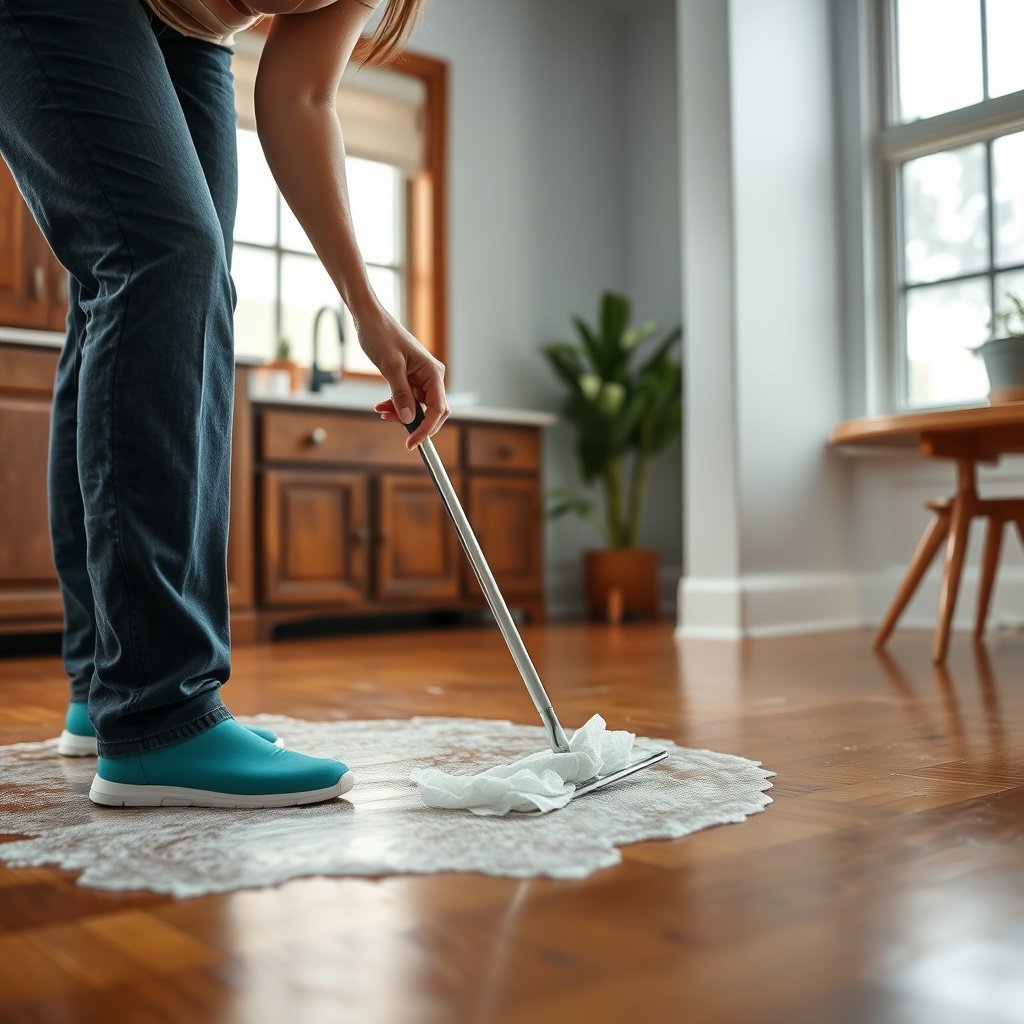
Before you clean, confirm your finish type because hardwood care is “finish-dependent,” not “problem-dependent.” Sealed surfaces tolerate gentle, pH-neutral cleaners; older, porous finishes can be permanently dulled by the wrong chemistry or too much water.
– Look for clues: glossy sealed floors often feel slick; waxed floors may feel slightly tacky; unfinished wood can look more matte and absorbent.
– Decide based on risk level: the more porous/old the finish, the more careful you need to be with any liquid cleaners.
– If you don’t know the finish, do a small spot test first to confirm the cleaner doesn’t leave a dull patch or streak.
A key reason this matters: soap scum isn’t just “dirt.” It’s commonly a mixed film—soap residue plus calcium/magnesium mineral deposits from hard water—so you’re removing both organics and minerals. Cleaning products that are too acidic (or too abrasive) can leave a long-term haze by altering the finish surface.
Gather safe supplies (and the “avoid” list)
Use products and tools that remove film without soaking seams—this is how you minimize hazing, lifting, and dulling. The most consistent approach across sealed/finished hardwood care guidelines is pH-neutral cleaning with microfiber wiping and immediate drying.
– Use: pH-neutral hardwood floor cleaner (or a manufacturer-recommended cleaner), microfiber cloths, and a bucket with clean water for rinsing.
– Use tools correctly: a well-wrung microfiber mop/cloth (no puddles) helps remove film without soaking seams.
– Avoid: steam cleaners, abrasive pads, scouring powders, and strong acids/alkalis (common soap-scum “hacks” can damage finishes).
– For tough buildup, plan to repeat gentle cleaning rather than using one aggressive product—film removal is often a “multiple light passes” job.
Below is a practical, finish-safety risk view of common soap-scum “options” people try. In real maintenance terms, you’re choosing between chemistry risk (pH/reactivity) and mechanical/steam risk (heat + moisture exposure).
Finish-Safety Risk of Common Soap-Scum Cleaning Methods (Hardwood)
| # | Method | Typical pH / Chemistry | Moisture / Heat Level | Finish Safety |
|---|---|---|---|---|
| 1 | pH-neutral floor cleaner | ~pH 7 (balanced) | Low—barely damp wipe | ★★★★★ |
| 2 | Clean-water wipe (no soap) | ~pH 7 (water) | Low—wipe & dry immediately | ★★★★☆ |
| 3 | Dry microfiber removal first | No chemistry added | None—dry capture only | ★★★★☆ |
| 4 | Mild soap residue “rinse” with neutral cleaner | pH-neutral (proper dilution) | Low—wipe/rinse-wipe | ★★★☆☆ |
| 5 | Vinegar spot cleaning | Acidic (~pH 2–3 typical) | Medium—contact time varies | ★★☆☆☆ |
| 6 | Steam cleaner on soap haze | Heat-driven + moisture exposure | High—vapor + wetting risk | ★☆☆☆☆ |
| 7 | Abrasive pads / scouring powders | Abrasive + possible pH additives | Mechanical damage risk | ★☆☆☆☆ |
Step-by-step: remove soap scum without harming the finish
The safest method is a dry-first pass, then pH-neutral damp wiping, followed by a clean-water wipe and immediate thorough drying. If haze remains, repeat gentle passes instead of escalating to harsher chemicals or steam.
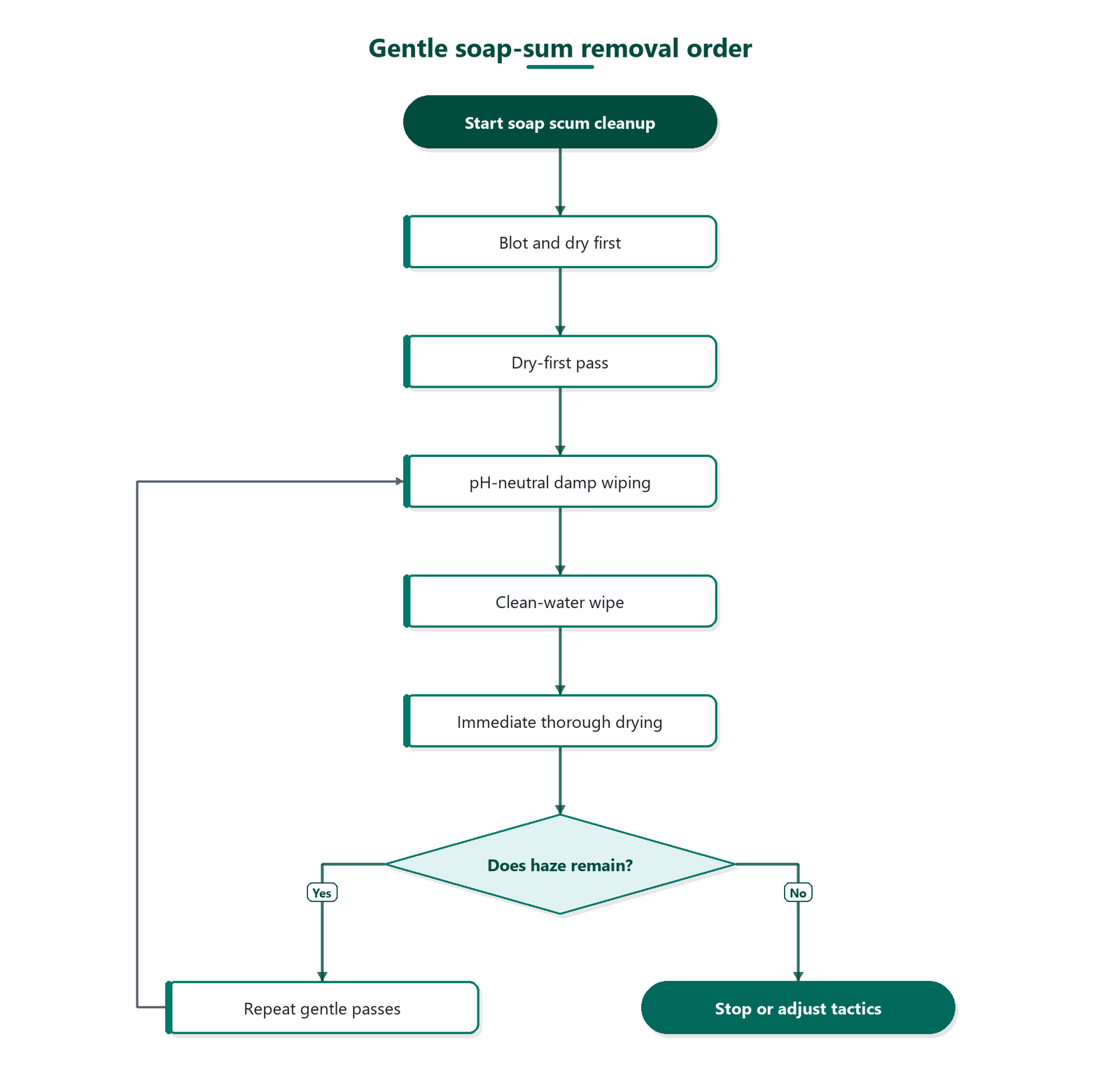
– Step 1: Blot and dry first
– If the area is wet, blot with a dry microfiber towel. Keeping water off the floor is your best protection against haze and swelling.
– Step 2: Dry-remove loose residue
– Lightly wipe with a dry microfiber cloth to pick up surface grime before introducing any moisture. This reduces “grind-in” and smear risk, especially where grit is part of the film.
– Step 3: Make a gentle cleaning mix
– Use the pH-neutral cleaner according to its label dilution. If you’re using a homemade mix, keep it mild and confirm with a spot test first.
– Step 4: Wipe—not soak
– Dampen a microfiber cloth (or well-wrung mop) and wipe in the direction of the grain. Don’t let liquid sit on the floor.
– Step 5: Rinse by wiping with clean water
– Use a second cloth lightly dampened with clean water to remove leftover cleaner/film, then immediately dry. This step matters because soap-scum haze often returns when residue is left behind.
– Step 6: Dry thoroughly
– Finish with a dry microfiber towel until the area is no longer tacky or cloudy. If you see a “rainbow sheen,” continue drying until the surface reads uniformly.
– Step 7: Repeat if needed
– If soap scum haze remains, do another gentle pass. If the film is still stubborn after a couple of rounds, the next step should be finish-safe escalation—not stronger chemicals.
At a chemistry level, acidity and alkalinity can change how mineral deposits adhere to the finish. For example, pH is logarithmic—according to NIST, pH = −log10[H+]—so a one-unit drop toward acid increases acidity by about 10× (NIST definition of the pH scale and logarithmic relationship). That’s why “small” deviations from recommended pH-neutral products can create uneven finish dulling over time.
What “gentle passes” look like in practice (comparison)
If you’re deciding whether to re-clean or escalate, use this tradeoff view:
| Option | Pros | Cons / Watch-outs |
|---|---|---|
| Repeat pH-neutral wipe + rinse-wipe | Lowest risk to finish clarity; effective over time for film layers | May take multiple rounds if buildup is long-standing |
| Long dwell with acidic “remover” | Can dissolve mineral/soap faster in some cases | Higher likelihood of dulling/etched finish; risk depends on finish type |
| Steam + scrub | Quick on tile/laminate in many homes | High moisture/heat exposure—can swell seams and haze finishes |
| Abrasive pads / powders | May remove top film quickly | Scratches and surface dulling; can make haze permanent |
What can go wrong (and how to prevent it)
Even with good intentions, soap scum cleanup can create new problems—most commonly from residue left behind or too much water. When results don’t improve quickly, it’s usually because moisture spread the film or the finish was affected.
– Dull, cloudy, or streaky finish
– This often happens when residue is spread around or cleaner isn’t rinsed/dried. Rinse-wipe and immediate dry are key.
– Swollen boards or gapped edges
– Over-wetting (soaking with mop water or leaving puddles) can push moisture into seams. Use minimal liquid and keep it moving.
– Finish damage from “DIY soap scum removers”
– Vinegar, harsh degreasers, and abrasive scrubbing can etch or soften certain finishes. If you’re tempted by an acid/abrasive method, do a test spot first.
– Wax buildup confusion
– Some floors develop an “in-between” problem: the haze may be soap film on top of wax, or wax may be breaking down. If your floor is waxed, stick to the wax-compatible method recommended by the wax/finish product instructions.
Hard-water mineral buildup is also worth addressing, especially if soap scum keeps returning in the same high-traffic zones. According to the U.S. Geological Survey, 1 grain per gallon (gpg) equals 17.1 mg/L as CaCO₃ (USGS conversion for water hardness units to mg/L as CaCO₃). If your entry area experiences frequent wet mopping or tracked-in soap residues, mineral contact tends to restart the cycle even after cleaning—so prevention matters as much as removal (especially into 2026).
Verdict: the safest method is gentle, pH-neutral cleaning—with limits
If your hardwood is sealed and you want the lowest risk option, stick to pH-neutral cleaner, limited moisture, rinsing by wiping, and thorough drying. The downside: stubborn soap scum may take several careful rounds, especially if the buildup has been there for a while.
Skip this approach (or change tactics) if:
– You have unfinished or very delicate surfaces and you can’t confirm the finish type.
– The film seems to be embedded or the area is already damaged—mechanical “scrub harder” attempts can make it worse.
– You’re unsure whether your floor is waxed or coated—use the manufacturer’s guidance instead of guesswork.
If you’re in 2026 and the floor is visibly deteriorating (soft spots, lifting edges, peeling coating), the most responsible next step is often professional inspection or resurfacing—because at that point, the “cleaning” problem is actually a “finish protection” problem.
Quick scan checklist (save this)
| Step | What to do | Why it matters |
|---|---|---|
| 1 | Dry-blot any wet spots | Prevents swelling and haze |
| 2 | Dry-wipe to remove loose grit | Avoids smearing |
| 3 | Use pH-neutral cleaner (label dilution) | Gentle on finishes |
| 4 | Wipe with barely-damp microfiber | Prevents over-wetting |
| 5 | Rinse-wipe with clean water | Removes residue/film |
| 6 | Dry immediately and fully | Prevents streaks/clouding |
| 7 | Repeat gently if needed | Safer than harsh chemicals |
Sources
– US Geological Survey (USGS) water hardness unit conversion: 1 grain per gallon equals 17.1 mg/L as CaCO₃
– NIST (National Institute of Standards and Technology) pH scale definition: pH = −log10[H+] and logarithmic relationship
When it comes to soap scum on hardwood, the safest path is consistent: gentle pH-neutral cleaning, minimal moisture, wipe-rinse, and thorough drying. If the haze doesn’t improve after a couple of careful rounds, don’t “push through” with steam, acids, or abrasives—stop, reassess your finish type, and follow manufacturer guidance or switch to finish-compatible treatment.
Frequently Asked Questions
What is the safest way to remove soap scum from hardwood floors without damaging the finish?
Use the mildest approach first: start with warm water and a small amount of pH-neutral cleaner made for hardwood or stone. Dampen a microfiber mop or cloth (do not soak the floor), then gently wipe and rinse with clean water to prevent residue buildup. Avoid harsh chemicals, abrasive pads, and excessive scrubbing that can dull or strip the wood finish.
How do you clean soap scum on hardwood floors when it’s stuck or cloudy?
For stubborn soap scum, create a gentle solution of warm water plus a few drops of pH-neutral dish soap, then apply it to the affected area with a barely damp cloth. Let it sit for 1–2 minutes to loosen residue, then wipe with clean microfiber until the film lifts. Finish by wiping again with water to remove any cleaner left behind, since residue can make soap scum return faster.
Why does soap scum build up on hardwood floors, and how can you prevent it?
Soap scum forms when soap, body oils, and hard-water minerals combine and leave a sticky film that attracts more dirt. Prevention starts with quick, regular cleaning using hardwood-safe pH-neutral products and microfiber tools, plus reducing moisture during mopping. Consider using non-soap cleaners or a diluted, hardwood-appropriate cleanser in high-traffic wet areas to minimize buildup.
Which cleaning products are best for soap scum on finished hardwood floors?
The best options are pH-neutral hardwood floor cleaners and products specifically labeled safe for sealed wood finishes. If you need extra cutting power, choose an “interior floor” cleaner that’s non-abrasive and avoids waxes or silicones unless your floor’s maintenance routine calls for them. Always test the product in a small, hidden area first to ensure it won’t dull the finish or leave streaks.
How do you protect hardwood floors from water damage while removing soap scum?
Always wring out mops and cloths so they’re damp, not wet, and work in small sections to keep moisture off the wood. After cleaning, dry the area promptly with a clean microfiber towel or dry mop pad to prevent water from seeping into seams. Avoid steam cleaners and prolonged soaking, and never let soap-cleaner mixtures dry on the surface—rinse and dry right away.
📅 Last Updated: October 31, 2026 | Topic: How to safely clean soap scum from hardwood floors? | Content verified for accuracy and freshness.
References
- Soap scum
- Wood flooring
- Cleaning
- Vinegar
- pH
- https://www.cdc.gov/coronavirus/2019-ncov/prevent-getting-sick/disinfecting-your-home.html
- https://www.epa.gov/coronavirus/cleaning-and-disinfecting-your-home
- https://scholar.google.com/scholar?q=soap+scum+removal+hardwood+floor Google Scholar
- https://scholar.google.com/scholar?q=hardwood+floor+cleaning+residue+mild+detergent+water+avoid Google Scholar
- https://scholar.google.com/scholar?q=vinegar+cleaning+wood+floor+finish Google Scholar
[…] sealed hardwood, mix warm water with a pH-neutral floor cleaner and apply it lightly to the affected areas. Work in small sections, agitating the surface with a […]
[…] may need a finish-specific method. Otherwise, you can end up spreading residue across the hardwood floor and making the buildup look worse even as you “clean […]
[…] and a careful rinse in about 20–40 minutes, without damaging the finish. You will need a pH-neutral floor cleaner or gentle detergent, microfiber cloths, and a non-abrasive pad—then you can restore the shine you […]