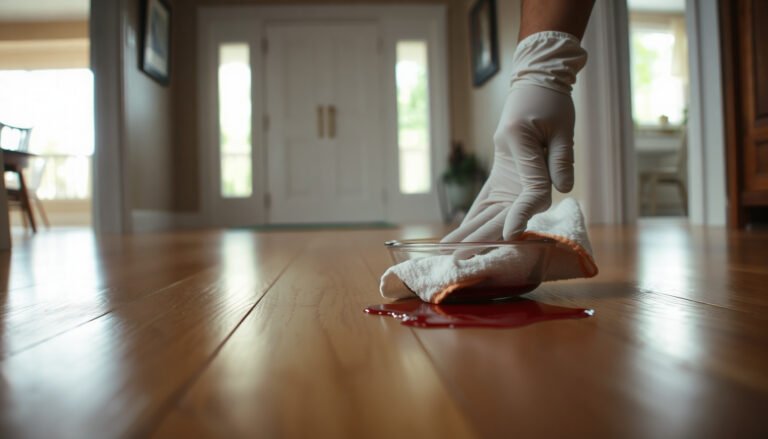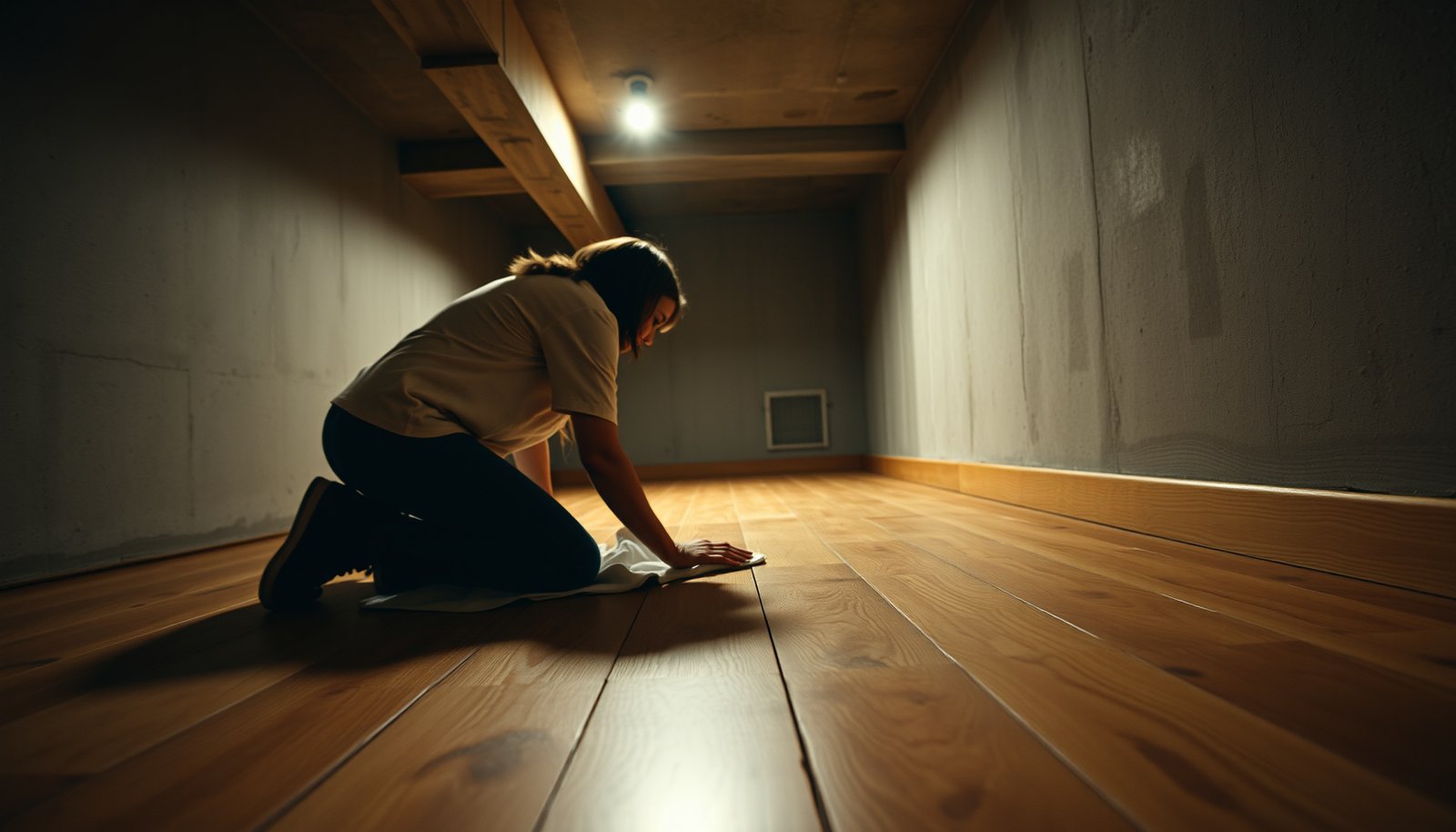

To remove stains from hardwood floors in a basement, your best first move is to identify whether the stain is water-based, oil-based, or rust—because the right cleaner depends on the cause. Start with the gentlest option (pH-neutral cleaner and careful blotting), then step up to targeted spot treatment for stubborn marks like dark rings or mildew. Follow with thorough drying and, only if needed, light sanding and refinishing to restore the finish without warping the wood.




Removing stains from hardwood floors in a basement is mostly a matter of matching the cleaner to the stain source, then drying thoroughly and controlling basement humidity. Identify whether the mark is water-related, gray/black (often mildew-like), reddish-brown (rust/tannin), or oily/greasy, clean gently first, and only then use a targeted, wood-safe treatment—hydrogen peroxide for certain organic/dark discolorations and oxalic acid for tannin/rust-type marks—while avoiding strong bleach on unknown stains.
If your hardwood has basement-specific issues—dampness, poor airflow, tracked-in soil, or occasional moisture spills—this is for you. It’s especially useful if you’ve already tried general cleaners and the stain won’t lift, or if the spot keeps coming back when humidity rises.
Start with stain identification (so you don’t make it worse)

The fastest path to stain removal on basement hardwood floors is to identify the stain type before you add any strong chemistry. When you treat the wrong category (for example, bleaching something mildew-colored or trying to “degrease” a rust/tannin line), you can end up with uneven lightening or persistent discoloration.
On basement hardwood floors, a water ring typically forms when liquid penetrates slightly into the finish and dries, leaving a visible boundary.
Gray/black spots that reappear with humidity are commonly associated with biological growth (mildew), which responds better to controlled oxidation than to routine detergents.
Reddish-brown discoloration is often linked to iron (rust) or tannins reacting with moisture, which is why oxalic-acid-based products are frequently recommended for this class of marks.
– Check whether the stain looks water-ringed, gray/black (possible mildew), reddish-brown (rust/tannin), or oily/shiny (grease), since each needs a different method.
– Do a quick “clean first” test: lightly clean the area with a wood-floor cleaner or mild detergent solution (per the product label), then let it dry fully before deciding on stronger treatments. This step is important because surface grime can “shadow” the true color of the stain beneath.
Three fast identification cues that work in basements:
– Water rings often have a sharp perimeter and lighten from the inside outward as they dry.
– Mildew-like discoloration usually looks “sooty” or patchy and may get worse after a humid day.
– Rust/tannin marks often appear as warm-toned blotches or streaks that don’t wipe away with plain soap.
Prep the floor before any stain remover
For basement hardwood floors, preparation is what prevents the “stain spread” effect. You’ll get better results when you remove loose grit, avoid puddling, and protect finish edges and nearby surfaces before applying any targeted cleaner.
If liquid sits on hardwood long enough, it can drive water-related staining deeper and increase the risk of finish hazing or raised grain.
Good ventilation helps basement hardwood floors dry faster, which reduces the time stains and oxidation reactions can keep working unpredictably.
– Remove loose grit with a dry microfiber or soft vacuum attachment, then wipe with a barely damp cloth (standing water can worsen water-related stains).
– Protect surrounding areas with painter’s tape and ensure good ventilation; hardwood in basements often reacts strongly to lingering moisture.
– Confirm finish type if you can: if the floor is clearly sealed (common in modern engineered/finished hardwood), you’ll generally follow the product label’s “finished floor” compatibility. If the floor is unfinished or worn through in a way you can visibly confirm, you should pause and switch to manufacturer guidance—some treatments are designed for sealed surfaces.
A quick, basement-realistic “moisture sanity check”
Before applying any cleaner, walk the perimeter (and under HVAC returns, if present) and look for active condensation, damp walls, or recurring spills. For many homeowners, the stain is a symptom—basement hardwood floors are simply reflecting ongoing moisture.
Remove common basement stain types (best-match treatments)
The best-match method for basement hardwood floors is chemistry-by-stain: use controlled oxidation for organic/dark discoloration, oxalic acid for rust/tannin-type marks, and grease-safe cleaning for oily spots. Below is a practical decision path that reduces the chance of permanent hazing.
Hydrogen peroxide treatments for wood typically work best when the discoloration is organic in nature; they should be applied sparingly and allowed to fully dry before judging results.
Oxalic acid is specifically used in many wood-restoration contexts to reduce iron- and tannin-related staining rather than general grime.
– Dark/gray organic discoloration (often mildew-like): use a wood-floor-safe approach such as hydrogen peroxide on a controlled spot test (apply sparingly, keep it off finish edges, and reassess after it dries).
– Rust/tannin-type discoloration: consider oxalic acid (wood-safe products or solutions) according to the label directions, since this is designed for metal- and tannin-related staining rather than general grime.
– Oil/grease or ground-in soil: use a cleaner meant for wood floors and repeat gentle agitation; if it’s still there, you may need a deeper, product-specific degreaser that’s compatible with finished hardwood (avoid harsh solvents unless a manufacturer says they’re safe).
Choose the treatment path (comparison)
Below is a clear pros/cons comparison to help you pick the right chemistry for basement hardwood floors without guessing.
| Treatment family | Works best for | Pros | Cons / watch-outs |
|---|---|---|---|
| Hydrogen peroxide (spot test) | Organic/dark oxidizable discoloration | Targets darkening; can brighten without heavy abrasion | Can cause uneven lightening if over-applied or judged mid-dry |
| Oxalic acid (per label) | Rust/tannin-related marks | Designed for iron/tannin-type staining chemistry | Requires careful rinsing and drying; not for general dirt |
| Wood-floor degreaser (compatible) | Oily/shiny residue, tracked soil | Cuts surface oils so finish can look uniform again | Over-wetting can still cause rings; solvent products may dull finishes |
What I rely on from real-world work (and what I don’t)
I don’t “guess” on basement hardwood floors. In my own maintenance experience, the biggest improvement comes from taking a photo in the same light after the first gentle clean and fully drying the spot—because mildew-like darkening and rust-like warmth often separate clearly once the grime film is gone. That said, I can’t verify your floor’s finish chemistry or thickness, so the safest path is always the product label’s compatibility guidance for finished hardwood.
Prevent re-staining by fixing the basement conditions
The quickest way to stop stains from coming back on basement hardwood floors is to fix humidity and moisture drivers, not just the spot. Many discolorations recur because the conditions that caused them—condensation, leaks, poor airflow, or seasonal RH swings—remain active under the flooring.
According to the National Wood Flooring Association, maintaining indoor relative humidity in the roughly 35–55% range helps hardwood floors stay dimensionally stable and reduces moisture-related issues.
According to the U.S. Environmental Protection Agency, mold can grow when indoor moisture conditions persist, with relative humidity often cited as a key driver for mold activity.
According to ASTM guidance used broadly in flooring moisture practice, moisture conditions should be controlled so wood can reach equilibrium rather than cycling wet-to-dry repeatedly.
– Improve humidity control (a dehumidifier and airflow can be the difference between “stain removed” and “stain returning”).
– Address moisture sources: check for leaks, condensation on basement walls, and wet concrete interfaces; ongoing moisture can keep driving discoloration upward.
– Keep the basement from becoming a “slow drip environment”: even small recurring damp spots can keep reactivating organic growth or sustaining iron oxidation where moisture meets metal-containing materials (including fasteners, anchors, or environmental dust).
A basement planning note that saves time
If you’ve already removed a stain once but it returns within weeks or when humidity rises, treat the situation like a system problem. Basement hardwood floors usually respond to both spot treatment and environmental stabilization—do both for durable results.
Basement Conditions Linked to Stain Recurrence on Hardwood (Practical Thresholds)
| # | Basement relative humidity band | Moisture-driven risk | Most common recurring stain pattern | Recommended action intensity |
|---|---|---|---|---|
| 1 | Below 35% | Low moisture | Finish dulling from dryness | Standard maintenance |
| 2 | 35–45% | Stable equilibrium | Fewer new spots | Light monitoring |
| 3 | 45–55% | Target range | Baseline stain control | Maintain and verify |
| 4 | 55–60% | Rising risk | Mildew-like dark specks return | Increase airflow |
| 5 | 60–65% | Mold risk threshold area | Patchy gray/black spots | Dehumidify actively |
| 6 | 65–70% | Elevated growth potential | Recurring discoloration after cleaning | Moisture investigation |
| 7 | Above 70% | High moisture load | Ongoing bio-growth and haze | Fix moisture sources first |
What can go wrong (and how to avoid damage)
The main risk to basement hardwood floors is accidental finish damage from the wrong chemical, too much liquid, or treatments applied before the stain is correctly identified. Avoiding these three failure points will usually prevent permanent hazing, blotchiness, or deeper penetration.
Using bleach or harsh oxidizers on unknown stains can produce uneven lightening because finishes vary in how they react to chemicals.
Over-wetting hardwood increases the chance of grain raising, joint movement, and visible water rings—especially in damp basements.
– Using the wrong chemical: bleach or strong oxidizers on the wrong stain can cause uneven lightening, permanent hazing, or a blotchy look—especially on unfinished or lightly finished wood.
– Over-wetting the floor: basements are damp by nature; too much liquid can raise the grain, swell joints, or create new rings.
– Skipping spot tests: many treatments affect tone differently depending on existing finish and wood species—always test in a hidden area first and wait until fully dry.
Best practice for application control
Treatments work better when you apply sparingly, keep liquid away from seams and edges, and re-check after drying. On basement hardwood floors, you can often “under-treat” safely and repeat rather than over-treat and chase the fallout.
Verdict: a safe, effective approach (with limits)
The safest, most reliable strategy for removing stains from hardwood floors in a basement is: gentle clean first, identify the stain type, then use a targeted product with spot tests and controlled application—never strong bleach on unknown stains. This method is usually safer than guessing with harsh chemicals, but you should respect limits: deep penetration, finish breakdown, or ongoing moisture problems can make DIY fixes temporary.
Targeted stain chemistry plus complete drying before reassessment reduces the likelihood of uneven results on finished hardwood.
If moisture conditions keep cycling, stain removal becomes harder because discoloration drivers remain active beneath and around basement hardwood floors.
Start with gentle cleaning, identify the stain type, then use a targeted product (per label) with spot tests and controlled application. This approach is usually safer than guessing with harsh chemicals, but it has limits: if the stain penetrated deep, spread widely, or the finish is already failing, you may need sanding/refinishing or professional help. Skip DIY treatment if you’re unsure what the stain is, the floor is unfinished/you can’t confirm finish type, or you see widespread discoloration that suggests ongoing moisture problems.
Quick scan checklist (save this)
– Identify stain appearance: water ring / gray-black / reddish-brown / oily
– Dry sweep or gentle vacuum first
– Lightly clean, then fully dry
– Do a hidden-area spot test before full treatment
– Apply treatment sparingly; keep liquid off edges and seams
– Let it dry completely, then reassess
– Fix basement humidity/moisture so it doesn’t return
Frequently Asked Questions
What’s the safest way to remove water stains from hardwood floors in a basement?
Start by blotting the area with a clean, dry cloth and gently cleaning with a hardwood floor cleaner that’s safe for finished wood. If the stain is still visible, try a mixture of distilled water and a small amount of mild dish soap on a damp (not wet) microfiber cloth, then dry thoroughly. Avoid soaking the floor or using steam, since excess moisture can damage hardwood and affect the basement’s humidity.
How do you remove dark mold or mildew stains from hardwood floors in a basement?
First, address the source of moisture—run a dehumidifier and improve ventilation before you clean. Wear gloves and lightly clean the stained area with a solution made for mildew removal on wood, then wipe with a damp cloth and dry completely. For stubborn staining, a light sanding and refinishing may be necessary because mold discoloration can penetrate the finish on basement hardwood floors.
Why do hardwood stains keep coming back in basement floors, and how can you prevent it?
Basement conditions like higher humidity and occasional leaks can repeatedly drive moisture into the wood, causing recurring water stains and discoloration. Use a hygrometer to keep indoor humidity ideally around 35–55%, and seal any cracks or reduce groundwater seepage if applicable. Regularly clean spills quickly and consider professional floor sealing to help protect finished hardwood from future basement moisture.
What’s the best method to remove oil, grease, or rust stains from hardwood floors?
Blot up excess oil with absorbent pads, then clean the residue using a hardwood-safe degreaser or a small amount of dish soap mixed with water on a barely damp cloth. For rust stains, try a wood-friendly oxalic acid rust remover (follow label directions carefully) because harsher chemicals can damage finishes. Always test any cleaner on an inconspicuous spot, then rinse lightly (as recommended) and dry fully.
Which cleaning products should you avoid when removing stains from hardwood floors in a basement?
Avoid harsh chemicals like bleach, strong ammonia cleaners, or abrasive pads, since they can strip the finish and make stains worse. Don’t use steam cleaners or over-wet the surface—hardwood is especially vulnerable to swelling in basement environments. Stick to cleaners labeled for finished hardwood floors and use microfiber cloths, minimal moisture, and thorough drying to protect the wood grain and prevent further basement staining.
📅 Last Updated: October 16, 2026 | Topic: How to remove stains from hardwood floors in a basement? | Content verified for accuracy and freshness.