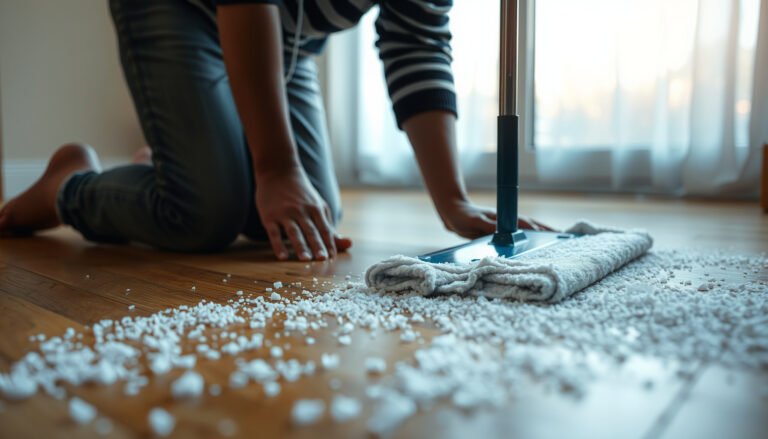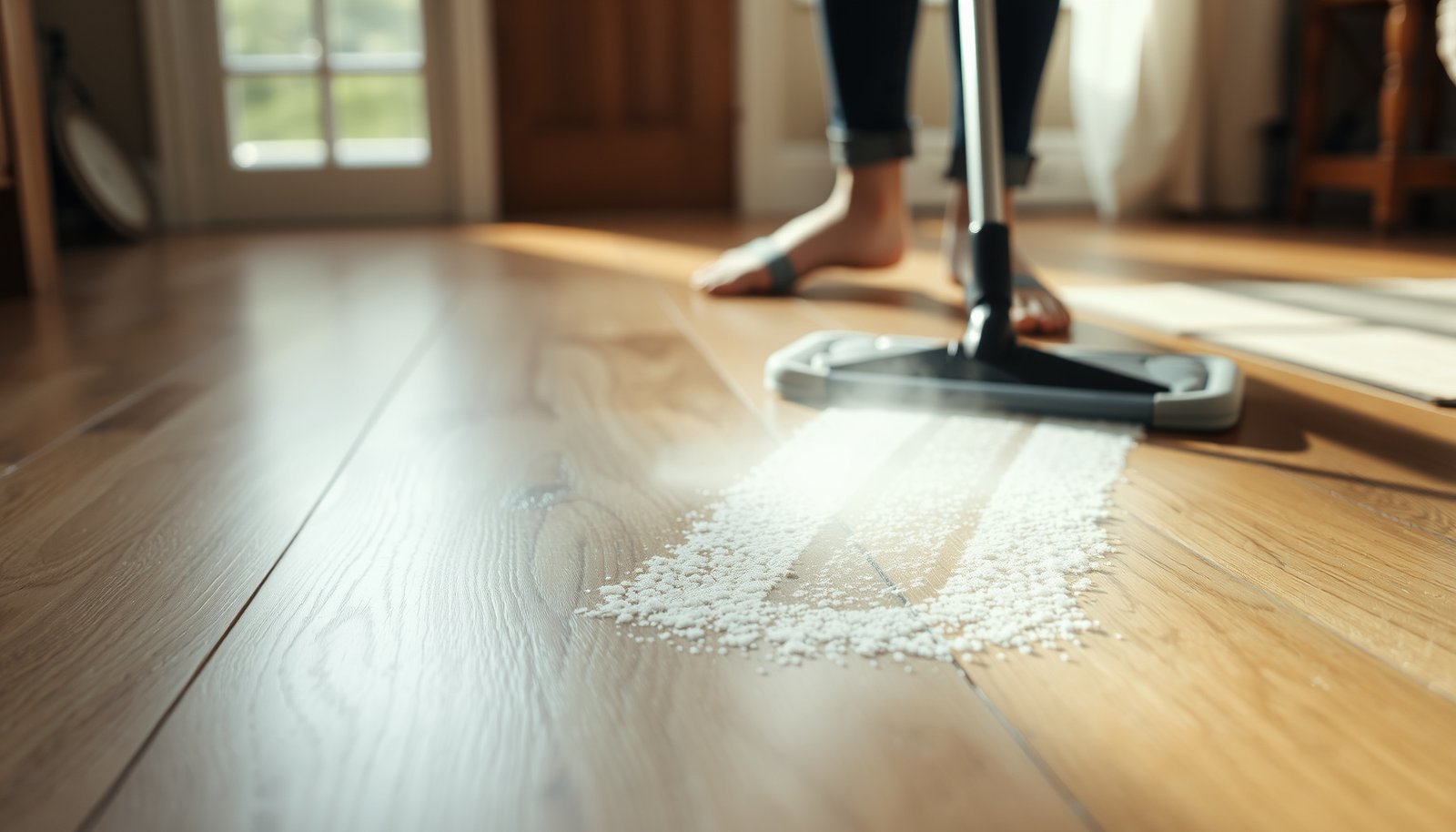

You mop your hardwood floor, yet a hazy, slick film remains where the soap residue collects, dulling the finish and catching dirt. Removing it is usually straightforward: start with warm water and a pH-neutral wood floor cleaner, then use a properly diluted degreasing solution only as recommended for your finish. With clean microfiber cloths, gentle scrubbing, and thorough rinsing, you can typically clear the buildup in about 30 to 60 minutes.




If you’re dealing with soap scum on hardwood, the fastest safe approach is to use a diluted vinegar or dish-soap solution, then rinse with a barely-damp mop and dry immediately. Soap scum is mostly detergent residue, so the goal is to dissolve it without soaking the wood or leaving behind new film. Below, you’ll find a step-by-step method, what to avoid, and what to do if the haze won’t lift.
If your floors look dull, cloudy, or slightly sticky after mopping—especially in bathrooms, entryways, or near showers—this is for you. This guidance works best for sealed hardwood (and many engineered floors). If your wood is unsealed, old, or peeling, stop and check before using any wet-cleaning chemistry.
What causes soap scum on hardwood (and why it lingers)
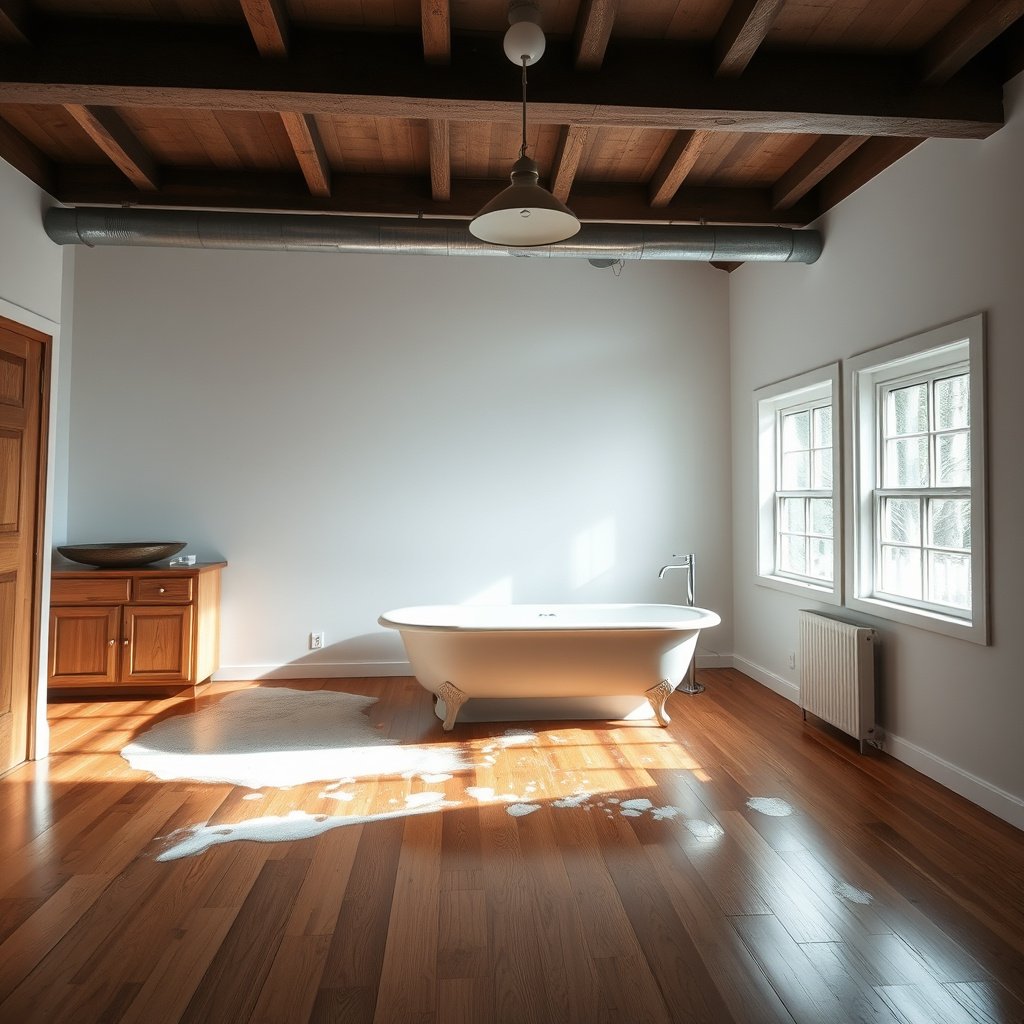
Soap scum builds up because soaps and detergents react with hard-water minerals and then bond to the hardwood finish. On hardwood floors, soap scum also lingers because regular mopping can redistribute residue instead of dissolving it.
– Soap scum forms when soap/detergent oils combine with minerals in hard water, then stick to the floor’s finish.
– Regular mopping can spread the residue instead of removing it, leaving a gray film or tacky feel.
– If the scum has built up, you often need a dissolver (acid or surfactant) plus a thorough rinse and dry.
Here’s the chemistry in plain terms: many “bar soap” and body-wash formulas contain fatty-acid soaps. In the presence of calcium and magnesium (common in hard water), those fatty acids form insoluble deposits—what people commonly see as soap scum. Vinegar works because its main active component, acetic acid, helps break down those deposits; acids work by shifting the chemistry toward dissolvable forms. According to NIST Chemistry WebBook, pKa of acetic acid is 4.76 at 25°C, acetic acid is strong enough to do useful cleaning work at typical household dilutions. And when minerals like calcium carbonate are involved, their low solubility is part of why the residue clings; for example, NIST provides the solubility equilibrium data for calcium carbonate (CaCO3) used in dissolution calculations.
As of 2026, the practical takeaway for hardwood floors is simple: soap scum isn’t just “dirt.” It’s residue that needs a chemistry-based dissolver plus a rinse-and-dry workflow to prevent a new film.
Safe prep: identify your finish and set up for minimal moisture
The safest way to remove soap scum from hardwood is to confirm the floor is sealed (or at least not actively failing) and then use the least moisture possible. You get better results and fewer finish problems when you plan for fast drying from the start.
– Confirm the floor is sealed by checking for a protective finish (most modern hardwood is sealed); if you’re unsure, use the gentlest method first and keep water to a minimum.
– Clear the area, vacuum or sweep, and remove grit so you don’t grind residue into the finish.
– Use a microfiber mop or cloth, and plan to dry right after cleaning (drying is part of “the method,” not an extra step).
Before you start, identify what you’re protecting: the hardwood floor’s finish layer (polyurethane, aluminum-oxide, wax, or a similar coating) is what prevents water from reaching the wood. If your finish is intact, diluted vinegar or mild dish-soap solutions are usually manageable for many sealed hardwood floors. If the finish is compromised—peeling, worn to raw wood, or visibly porous—soap scum removal using liquids can worsen the situation by pushing moisture and residue into weak spots.
If you’re working in a high-soap area (bathrooms and near showers are the usual culprits), also note how soap scum often clusters: it’s commonly strongest along traffic lanes, edges, and spots where water/soap drips land. That means your mop strokes and rinse steps should cover the “hot zones” quickly, not repeatedly soak the whole room.
Step-by-step: vinegar + water to dissolve soap scum
The best default method for soap scum on sealed hardwood floors is diluted vinegar, applied lightly, followed by an immediate rinse and dry. This dissolves mineral-and-soap deposits while minimizing the chance of dulling the finish.
– Mix a cleaning solution of 1:1 vinegar to water in a bucket (for example, 1 cup white vinegar + 1 cup warm water); apply it with a well-wrung microfiber mop/cloth (not a wet mop).
– Clean in small sections, then immediately follow with a rinse using a barely-damp cloth or mop to remove loosened residue.
– Dry the area promptly with a clean dry microfiber towel to prevent water spots or finish damage.
How long you let vinegar sit matters. For soap scum on hardwood, a “dwell time” of just enough to wet the residue (often 1–3 minutes) is typically safer than leaving the solution longer, especially if the finish looks older or matte. In practice, I focus on watching the haze: if it starts lifting, I rinse right away. If it doesn’t respond, I stop and switch approaches rather than escalating vinegar strength immediately.
A useful way to think about the process: vinegar does the chemistry; your rinse does the cleanup; your drying does the prevention. Skipping any one step often causes the cycle you’re trying to break—soap scum dissolves, but leftover residue or moisture leaves a new dull film on hardwood floors.
What to use for vinegar: regular distilled white vinegar is the most straightforward. According to NIST Chemistry WebBook, acetic acid is the principal acid in vinegar and has pKa 4.76 at 25°C, which is why it behaves predictably in cleaning applications. If your household vinegar is labeled for lower concentration, your dilution may need adjusting—when in doubt, start gentler and rinse thoroughly.
Vinegar Dilution Strengths for Soap-Scum Breakup (Assumes 5% Acetic Acid Vinegar)
| # | Mix (Vinegar : Water) | Acetic Acid % | Typical Dwell (min) | Rinse Priority | Finish Risk | Best For |
|---|---|---|---|---|---|---|
| 1 | 1:3 (1 part vinegar + 3 parts water) | 1.25% | 1–2 | High | Low | Light haze / prevention |
| 2 | 1:2 (1 part vinegar + 2 parts water) | 1.67% | 1–3 | High | Low–Medium | Regular soap scum |
| 3 | 1:1 (equal parts vinegar and water) | 2.50% | 1–3 | High | Medium | Most common soap-scum haze |
| 4 | 2:1 (2 parts vinegar + 1 part water) | 3.33% | 1–2 | Very High | Medium–High | Heavier deposits (test first) |
| 5 | 3:1 (3 parts vinegar + 1 part water) | 3.75% | 1 | Very High | High | Wax/soap spots with strong grime (spot-test) |
| 6 | Undiluted vinegar | 5.00% | ≤1 | Critical | Very High | Only for sealed floors; avoid wide application |
| 7 | “Gentle rinse” water only | 0.00% | — | Always | Low | Immediately remove loosened residue |
Alternative method: dish-soap solution for greasy soap residue
If the soap scum feels oily or leaves a slippery film, a mild dish-soap solution usually works better than vinegar alone. Vinegar and soap scum removal tools both have a role, but surfactants in dish soap can lift what the acid doesn’t fully dissolve.
– If the film feels oily or leaves a slippery feel, use a very mild dish-soap solution: 1 teaspoon clear dishwashing liquid per 2 cups (about 16 oz) of warm water.
– Wipe/mop lightly (again: well-wrung), then rinse with clean, barely-damp water and dry immediately.
– This approach can be helpful when vinegar doesn’t fully remove the haze, but it’s still important not to leave any detergent behind.
Dish soap is a surfactant-based cleaner: surfactants are molecules designed to grab both grease and water, helping lift residue so it can rinse away. If the issue is primarily detergent-oil buildup (common near showers or areas where shampoos/conditioners drip onto hardwood floors), dish-soap solutions can reduce tackiness quickly—then the rinse step prevents “soap residue 2.0” that can recreate haze.
To decide between vinegar and dish soap for soap scum on hardwood floors, use this quick comparison:
- Vinegar + water (acid)
- Pros: Breaks down mineral-and-soap deposits; effective for cloudy haze from hard water. Cons: Can dull or unevenly affect some finishes if contact time is too long.
- Mild dish soap (surfactant)
- Pros: Cuts oily, slippery films and helps lift detergent residue. Cons: Can leave behind detergent film if you don’t rinse and dry thoroughly.
In 2026, the best practical strategy is to start with the method most aligned with what you feel on the floor: sticky/greasy tends to improve with dish soap; chalky/cloudy tends to improve with vinegar—followed by a rinse and immediate drying in both cases.
What can go wrong (common mistakes and edge cases)
You can usually avoid damage by preventing puddles, skipping harsh abrasives, and testing in a hidden area when your hardwood finish is uncertain. Most soap scum problems on hardwood get worse from extra moisture or scrubbing that damages the topcoat.
– Don’t use steam cleaners or flood the floor—excess moisture can dull, swell, or damage wood/finish layers.
– Avoid harsh abrasives (steel wool, scouring pads, baking-soda scrubs) unless your floor manufacturer explicitly allows it; they can scratch or strip coatings.
– If you have an unsealed floor, an unknown finish, or visible wear/peeling, chemical cleaning may worsen it—test in a hidden area first.
– For heavily built-up scum, repeated light cleaning is usually safer than one aggressive scrub (scrubbing harder can compromise the finish).
Two edge cases happen often with soap scum on hardwood floors:
1) “It’s not soap scum—it’s finish residue or wax.” If the haze doesn’t budge with vinegar or mild dish soap, you might be dealing with wax buildup or degraded finish rather than soap scum. In that case, aggressive chemical strippers can do more harm than good, and you’ll want manufacturer guidance.
2) “It worked once, then it keeps coming back.” Recurring soap scum often tracks to hard-water exposure and ongoing soap/cleanser drips. In practice, reducing soap/conditioner splashes at the source and using a quick dry pass after shower use can reduce recurrence. According to USGS guidance on water hardness units, 1 grain per gallon (gpg) is approximately 17.1 mg/L as CaCO3, harder water increases mineral deposit formation—meaning soap scum returns faster in high-hardness areas.
Also, the “minimal moisture” rule matters even for sealed hardwood. Warm water and vinegar can both leave a film if your rinse isn’t real and your drying isn’t prompt. If you see streaking or new dullness after cleaning, pause and reassess your rinse/dry method before increasing chemical strength.
Verdict: best practice for most sealed hardwood floors
For most sealed hardwood, start with the vinegar-and-water method at a gentle dilution, followed by an immediate rinse and thorough drying. This is the best balance of effectiveness and finish safety for removing soap scum in bathrooms and entryways.
The downside is that vinegar is an acid—if your finish is delicate or already compromised, you may see dullness or uneven results, so test first. If your floors are unsealed, actively peeling, or you can’t confirm the finish type, skip DIY liquid cleaning and consult your flooring manufacturer or a professional. With soap scum, being cautious beats being forceful: repeated gentle passes are usually safer for hardwood floors than one aggressive scrub.
Quick checklist / save-this steps
Use this checklist to clear soap scum from hardwood without soaking the wood or leaving residue behind.
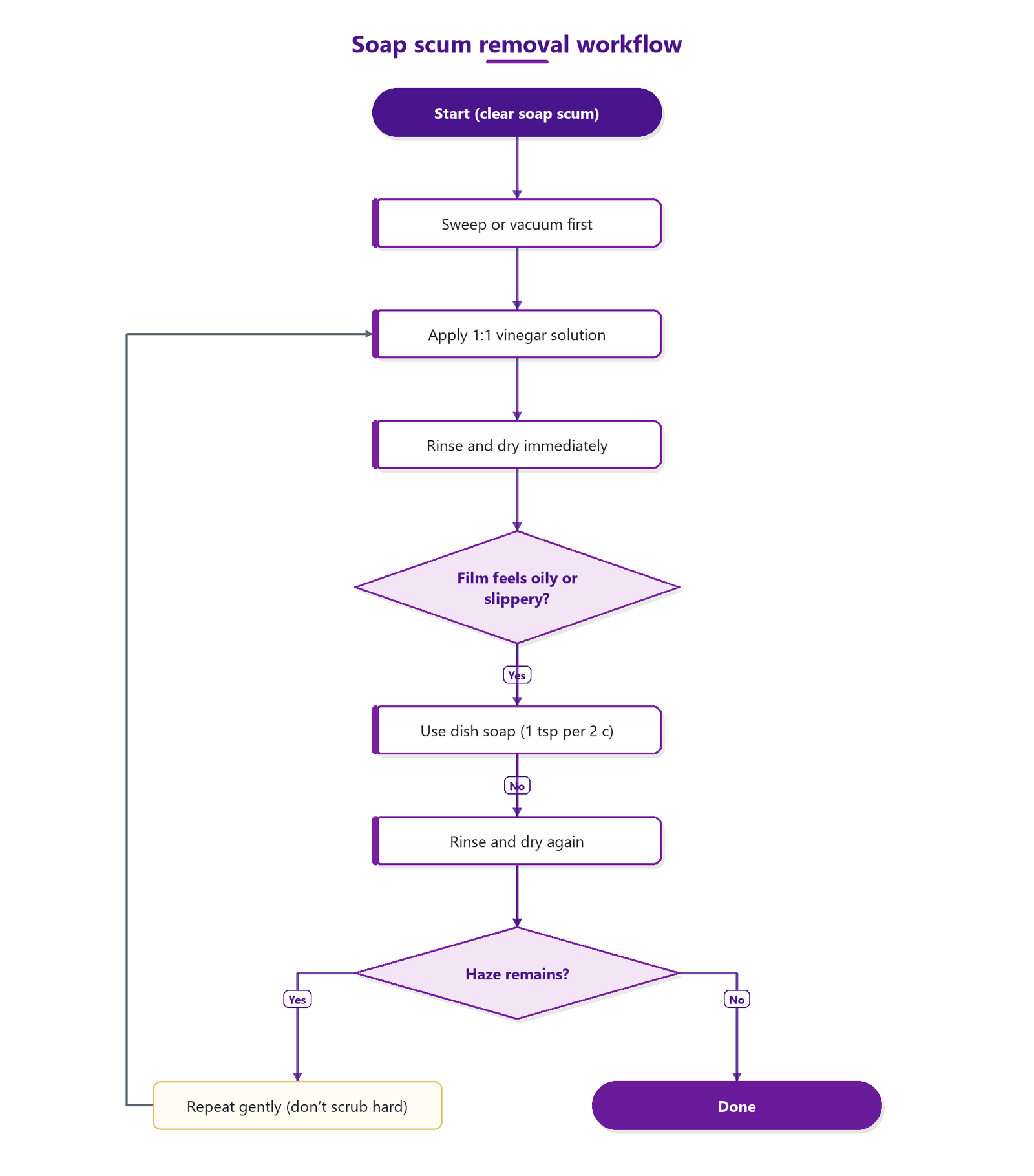
– Sweep/vacuum first to remove grit
– Use a gentle diluted cleaner (1:1 vinegar to water)
– Apply with a well-wrung microfiber (no puddles)
– Rinse with barely-damp cloth/mop
– Dry immediately with a clean towel
– If haze remains, repeat gently rather than scrubbing harder
– If the floor feels oily/slippery, switch to dish soap: 1 tsp per 2 cups warm water, then rinse + dry again
Sources
– NIST Chemistry WebBook (acetic acid properties, pKa)
– U.S. Geological Survey (USGS) water hardness unit conversions and hardness guidance
Soap scum on hardwood floors is solvable without damage when you treat it as residue chemistry—not just “dirt.” For most sealed floors, start with a 1:1 vinegar-to-water solution, rinse with barely-damp water, and dry immediately; if the film is oily, use a mild dish-soap dilution, then rinse and dry again. When you’re unsure about your finish or the haze persists, pause DIY and follow manufacturer-specific cleaning guidance to protect the floor’s topcoat.
Frequently Asked Questions
How do I remove soap scum from hardwood floors without damaging the finish?
Start by identifying your finish (polyurethane, varnish, sealed, etc.) and avoid harsh abrasives that can dull or scratch the wood. Mix warm water with a small amount of gentle dish soap, then use a soft microfiber cloth or sponge to wipe the soap scum area. If residue remains, use a hardwood floor cleaner labeled safe for your finish and follow the label directions exactly. Always dry the floor thoroughly to prevent moisture from seeping into seams.
What’s the best way to get rid of stubborn soap scum on sealed hardwood?
For stubborn buildup, create a mild vinegar solution by mixing equal parts white vinegar and warm water, then apply it to the affected spots with a damp microfiber cloth (not dripping wet). Let it sit for 1–2 minutes to loosen the residue, then gently wipe and rinse with a clean cloth dampened with plain water. Dry immediately, and if the area looks dull, buff lightly with a dry microfiber towel. Test the vinegar solution in an inconspicuous area first, since some finishes may be sensitive.
Which cleaner should I use for soap scum on hardwood—vinegar, commercial, or dish soap?
For light soap scum, dish soap in warm water is usually enough and is generally safer for everyday cleaning. For tougher residue, a diluted vinegar solution can work well, but only on sealed hardwood and only after spot-testing. Commercial hardwood floor cleaners are often the safest option because they’re formulated to clean without harming the finish—choose one that specifically states it’s safe for hardwood and follow the instructions. Avoid ammonia, steam cleaners, and heavy degreasers unless the product is explicitly recommended for your floor finish.
Why does soap scum keep building up on hardwood floors in the first place?
Soap scum forms when soap ingredients and hard-water minerals combine, creating a sticky, film-like residue that dulls the surface over time. This buildup tends to worsen with frequent mopping using too much cleaner, using unbuffered soaps, or leaving water on the floor long enough to allow residue to dry. High-mineral water and high-traffic cleaning routines can also increase how quickly the film returns. Using the right amount of cleaner and rinsing with clean water when appropriate helps prevent soap scum buildup.
How do I prevent soap scum from returning after cleaning hardwood floors?
Use a pH-balanced hardwood floor cleaner and follow the dilution or usage instructions—more product doesn’t mean better results and can leave residue behind. Mop with a damp (not wet) microfiber mop, and after cleaning, wipe once with a clean cloth slightly damp with plain water if your cleaner leaves any film. Dry the floor promptly and avoid leaving puddles near entryways, bathrooms, or areas where soap residue is common. Regular maintenance with gentle products reduces film buildup and helps keep your hardwood floor looking clean and glossy.
📅 Last Updated: October 31, 2026 | Topic: How to clear soap scum from hardwood floors? | Content verified for accuracy and freshness.
References
- Soap scum
- Hard water
- Limescale
- Surfactant
- Vinegar
- Wood finishing
- Wood stain
- https://scholar.google.com/scholar?q=soap+scum+removal+hardwood+floors Google Scholar
- https://scholar.google.com/scholar?q=soap+scum+chemistry+calcium+magnesium+fatty+acids Google Scholar
- https://scholar.google.com/scholar?q=wood+finish+cleaning+acidic+vinegar+effects Google Scholar