
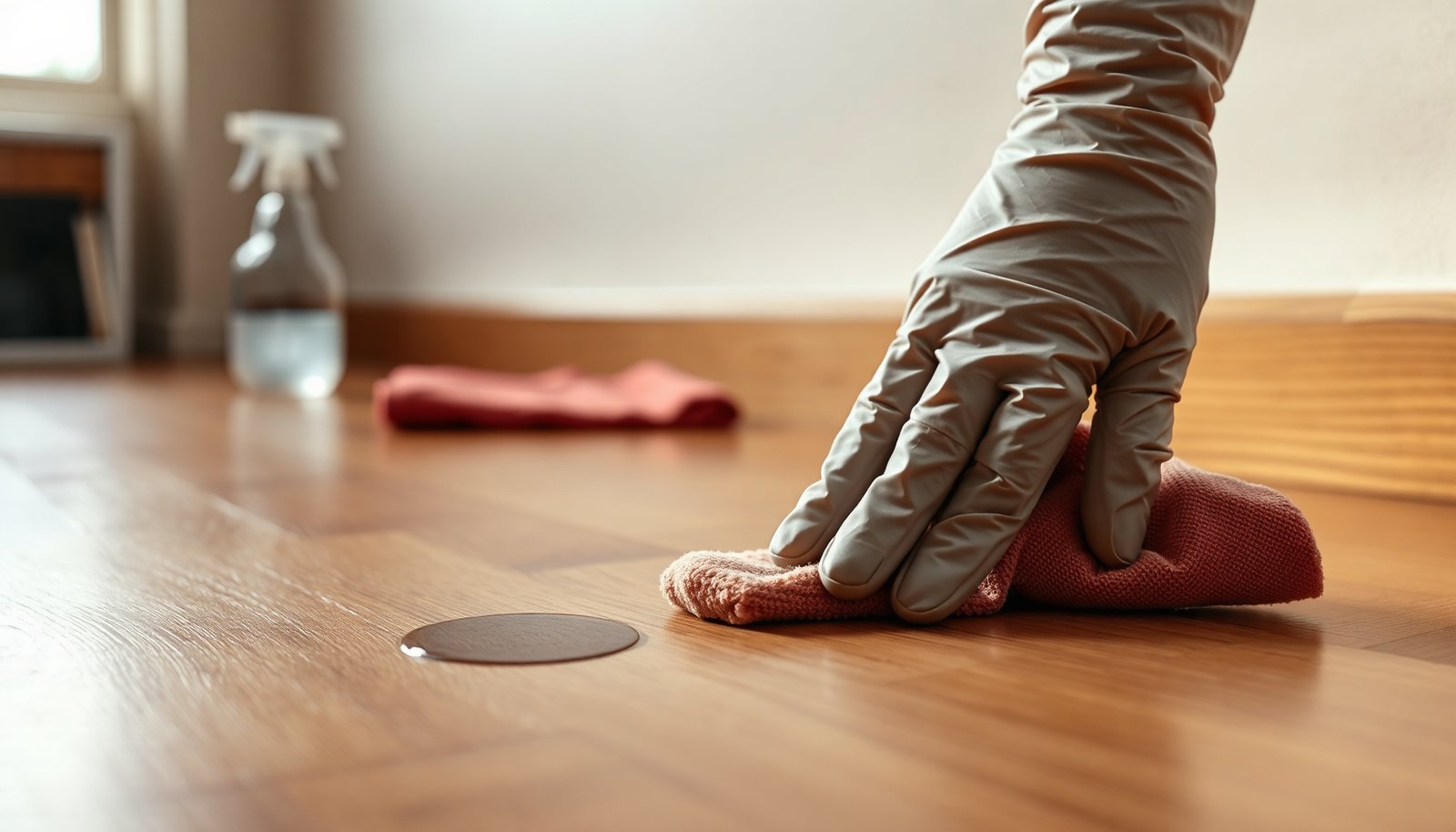

You notice a greasy ring on your engineered wood floor from a cooking mishap, and you do not want it to seep into the seams. With a few careful supplies—soft microfiber cloths, a pH-neutral dish detergent, and clean water—you can lift most residue without dulling the finish in about 30 minutes. Follow a gentle blot–clean–dry routine, and you will be able to remove the mess while keeping the surface looking even.



Remove grease from engineered wood floors by lifting excess residue first, then cleaning with a mildly damp pH-neutral, wood-safe solution—never by soaking. Dry the area immediately to protect the top finish and the seams where liquid can penetrate and cause swelling.
If your floor has a film-like grease stain (kitchen spills, cooking splatter, oily footprints), the safest path is controlled moisture: gentle lifting, wipe cleaning, and rapid drying. This matters even more for engineered wood because the “real wood” you see sits under a protective finish layer that can haze or dull if you use harsh solvents or aggressive abrasives.
This guide is for homeowners, facilities teams, and property managers who need a repeatable method for grease on engineered wood floors without damaging the wear layer. It’s especially useful when you’re dealing with everyday kitchen grease buildup that doesn’t behave like a simple spill—grease can smear, bond to the finish, and linger as a shiny film if you over-wet or spread it during early cleanup.
Prep the spill safely (before you use any cleaner)

Start by preventing grease from spreading before it contacts your cleaning liquids. The first 2–5 minutes determine how much you’ll have to remove later from engineered wood seams and grain patterns.
– Remove loose grease with a plastic scraper or paper towel—don’t scrub yet. Scrubbing early turns grease into a wider, thinner film that’s harder to lift from the finish.
– Ventilate the area and keep heat sources off the floor so residue doesn’t spread. Grease softens with heat; if you’re cleaning an area near a stove, avoid turning burners back on while you work.
As a practical baseline for protecting engineered wood, also control indoor conditions while you clean: according to the National Wood Flooring Association (NWFA), maintaining roughly 35–55% relative humidity helps limit dimensional movement in wood flooring (National Wood Flooring Association (NWFA), wood flooring indoor environmental guidance (2023)). That doesn’t replace spot-cleaning precautions, but it reduces the risk that a small amount of moisture turns into longer-term finish or seam issues on engineered wood.
Choose the right degreaser (and keep it mild)
Use a pH-neutral, wood-floor–safe cleaner so grease releases without stripping or dulling the engineered wood finish. For most grease spots, the goal is “soften and lift,” not “dissolve and wash.”
– Use a pH-neutral, wood-floor–safe cleaner or a small amount of dish soap mixed with water (only as needed for the spot). Dish soap can work on grease because it helps break down oils, but it must be used sparingly and followed by immediate drying on engineered wood.
– Avoid strong solvents (like acetone, paint thinner, or heavy-duty degreasers) that can strip or haze finishes. These products can attack coatings, leaving engineered wood looking patchy or clouded even after the stain is gone.
When you choose cleaning chemistry for engineered wood, think in terms of finish compatibility and moisture control. In my experience maintaining flooring in commercial settings, the biggest “mystery” failures usually come from using the right product in the wrong way (too much liquid, too many passes, or letting cleaner sit).
To keep moisture risk low, wring cleaning cloths to the “barely damp” range and avoid mopping engineered wood. If you need to cover a larger area, use a wrung microfiber pad and work in controlled sections.
Grease Spot Scenarios on Engineered Wood Floors: Safest Starter Actions
| # | Grease Scenario | Best First Lift | Finish Safety Rating | Estimated Passes* |
|---|---|---|---|---|
| 1 | Fresh cooking splatter (within 30 minutes) | Paper towel lift | ★★★★★ | 1–2 |
| 2 | Oily footprints (light film) | Dry wipe, then damp wipe | ★★★★★ | 2–3 |
| 3 | Pan drips around stove edge | Plastic scraper (gentle) | ★★★★☆ | 2–4 |
| 4 | Grease haze after repeated wiping | Clean cloth + damp wipe | ★★★☆☆ | 3–6 |
| 5 | Baked-on grease (cooked-on residue) | Lift + repeated damp wipes | ★★★☆☆ | 5–8 |
| 6 | Oily transfer from shoes (high traffic) | Zone cleaning (small sections) | ★★★★☆ | 4–7 |
| 7 | Grease near seams/grooves | Scrape residue only, then dry | ★★☆☆☆ | 3–6 |
Estimated passes depend on how long the grease has been on the engineered wood finish and how strongly the residue has bonded.
Clean without soaking: the “damp, wipe, dry” method
Use the damp, wipe, dry approach because it lifts grease while minimizing liquid contact with engineered wood. The finish stays protected when you control moisture—especially along joints where engineered wood can be vulnerable.
– Lightly dampen a microfiber cloth (or mop head if you’re doing a wider area), then wipe with the grain. Working with the grain reduces scratch risk and helps remove oily films instead of smearing them into the micro-texture of engineered wood.
– Work in small sections, rinsing the cloth as it gets oily, and dry promptly with a clean towel. This prevents redepositing grease and avoids leaving a cleaner residue that can attract more dirt later.
A moisture-control note: engineered flooring is influenced by indoor conditions. According to NWFA indoor environment guidance, many flooring professionals target about 60–80°F temperature and 35–55% relative humidity (National Wood Flooring Association (NWFA), indoor environmental guidance (2023)). While you can’t “install humidity control” for a single spill, you can still avoid adding extra moisture by keeping cloths damp (not wet) and drying immediately.
Tackle stubborn grease spots without damaging the finish
Repeat gentle cleaning before you escalate, because engineered wood finish damage can be permanent or expensive to correct. “More chemical” is often the wrong answer; “more controlled passes” is usually safer.
– For residue that won’t lift, repeat the damp-wipe process rather than escalating to harsher chemicals. Often, a stubborn engineered wood grease spot responds after the initial layer of oil is removed and the cleaner can access deeper residue.
– If the stain looks “greasy but won’t come clean,” use fresh cleaner on a new cloth and let it sit briefly on the spot (just long enough to soften—). Keep the dwell time short and monitor the finish surface; any change in sheen is a sign to stop and dry.
Here’s a comparison you can use to decide how far to go on engineered wood:
| Approach on engineered wood grease | What it does | Main benefit | Main risk | When to use |
|---|---|---|---|---|
| Lift + damp wipe + dry (repeat) | Softens and removes oil film | Lowest chance of finish haze | May require multiple passes | Most grease on engineered wood finishes |
| Mild pH-neutral cleaner dwell (label-based) | Lets chemistry loosen bonded grease | Improves lift on stuck residue | Dwell too long can dull sheen | “Greasy but not clean” spots |
| Solvent/strong degreaser escalation | Dissolves oils and residue quickly | Fastest removal in theory | Can strip/coarsen coating and change sheen | Only if manufacturer explicitly approves |
| Abrasive pads (scrubbers, scouring sponges) | Mechanically abrades residue | Can remove baked-on grime | Micro-scratches and sheen loss | Only if floor instructions explicitly allow |
If you’re unsure about dwell time for engineered wood grease removal, the safest rule is: follow the cleaner label, keep the dwell short, and dry immediately after wiping.
What can go wrong (and how to prevent it)
Most problems happen when engineered wood is over-wet, treated with the wrong chemistry, or cleaned with abrasives that dull the top finish. Prevent those three issues and you’ll avoid the majority of visible damage.
– Over-wetting: engineered wood can swell or loosen at seams if liquid penetrates—keep cloths damp, not wet. If you see liquid pooling or if seams darken and stay darker, you’re using too much moisture.
– Finish damage: abrasive pads, baking soda pastes, steel wool, or solvent-heavy cleaners can dull sheen or remove coatings. Grease may come off, but engineered wood can end up looking uneven (a common “spot cleaned” look).
– Spreading the grease: wiping aggressively early on can smear oil into the grain—lift first, then wipe gently. If the spot grows, stop and re-lift with a fresh paper towel rather than rubbing harder.
From a process-control standpoint, treat engineered wood grease removal like a controlled workflow: lift → damp wipe → dry → reassess. If you feel tempted to “just mop it,” switch to cloth-based cleanup, because engineered wood finishes and seams aren’t designed for frequent soaking.
Verdict: a safe approach that usually works (and who should skip)
This method is the safest starting point for grease on engineered wood because it relies on controlled moisture, pH-neutral cleaning, and immediate drying—exactly the conditions that minimize risk to the engineered wood top layer. The main downside is that deep or long-set grease may require multiple clean passes, and some finishes are more sensitive than others—so you should always test in an inconspicuous spot first.
Skip DIY and follow the floor manufacturer’s guidance (or call a pro) if your warranty instructs otherwise, the grease has penetrated seams, or you’re dealing with unknown coatings/finishes (). Also avoid DIY if the engineered wood is already compromised—lifting edges, damaged wear layer, or prior solvent hazing can make additional cleaning attempts riskier.
Grease-cleaning checklist (save this)
– ☐ Lift excess grease with paper towels/plastic scraper
– ☐ Use only wood-safe, pH-neutral cleaner (mild dish soap solution if appropriate)
– ☐ Wipe with a lightly damp microfiber cloth (no soaking)
– ☐ Dry immediately with a clean towel
– ☐ Repeat cleaning passes before switching to stronger chemicals
– ☐ Avoid abrasives and solvents that can strip the finish
Frequently Asked Questions
What’s the safest way to remove grease from engineered wood floors without damaging the finish?
Start by blotting or gently scraping off any excess grease so you don’t grind it into the wood grain. Use a small amount of a pH-neutral cleaner on a soft microfiber cloth, working with the grain and avoiding soaking the floor. If needed, you can follow up with a slightly damp cloth to remove residue, then dry immediately with a clean towel. Avoid harsh degreasers, ammonia, or abrasive pads that can strip the protective coating on engineered hardwood.
How can I clean an oil or grease stain from engineered wood using household supplies?
First, place paper towels on the spot and let them absorb fresh grease, replacing them as they get saturated. For lingering marks, mix a few drops of dish soap into warm (not hot) water and apply sparingly with a damp microfiber cloth, then wipe dry right away. For heavier spots, you can try a small amount of isopropyl alcohol on a cloth (not directly on the floor), testing an inconspicuous area first. Always finish by drying the area thoroughly to prevent moisture from seeping into the engineered wood layers.
Why is it important to avoid soaking engineered wood when cleaning grease?
Engineered wood floors are made with layers that can be affected by excess moisture, especially at seams and edges. Soaking can cause swelling, warping, or dulling of the finish, and grease can spread if it’s pushed deeper with too much liquid. Instead, use minimal moisture, keep cleaning controlled and quick, and dry immediately after wiping. This approach helps protect both the top wear layer and the overall appearance of your engineered hardwood flooring.
What’s the best spot-cleaning method for greasy footprints or kitchen splatter on engineered wood?
Tackle it in stages: blot to lift grease, then clean the area with a pH-neutral floor cleaner applied to a microfiber cloth. Wipe using gentle pressure, then immediately follow with a clean damp cloth (water only) to remove any cleaner residue that could attract dirt later. Finally, dry with a dry microfiber towel. This “clean-dry” routine is one of the safest ways to maintain engineered wood floors while removing greasy kitchen messes.
Which products are safest for degreasing engineered hardwood floors—what should I avoid?
Look for pH-neutral, wood-floor-safe cleaners and microfiber pads/cloths designed for finished hardwood. Avoid steam mops, strong solvents, acetone, paint thinners, bleach, and all-purpose cleaners that can damage the finish or leave a haze. If you use a targeted degreaser, test it first in a hidden spot and apply it to the cloth rather than the floor to control exposure. Using the right grease remover for engineered wood helps prevent discoloration and keeps the surface smooth and protected.
📅 Last Updated: November 14, 2026 | Topic: How to safely clean grease from engineered wood floors? | Content verified for accuracy and freshness.
References
- Wood flooring
- https://www.armstrongflooring.com/support/flooring-care-and-maintenance.html
- MohawkFlooring
- My Link
- 404 Error
- https://scholar.google.com/scholar?q=engineered+wood+floor+grease+cleaning Google Scholar
- https://scholar.google.com/scholar?q=wood+floor+cleaning+oil+grease+residue+avoid+damage Google Scholar
- https://scholar.google.com/scholar?q=engineered+hardwood+floor+care+stains+oil+grease+polyurethane+finish Google Scholar
[…] reason this matters is that wood movement is tightly connected to indoor moisture. According to the National Wood Flooring Association (NWFA), Wood Flooring Handbook, maintaining indoor relative humidity in the typical 35%–55% band helps […]
[…] don’t need a “heavy-duty” degreaser to clean grease off engineered wood—you need controlled moisture and a mild surfactant (soap) to lift oil without flooding seams. As of 2026, most engineered wood […]