Grease spots on engineered wood floors can be stubborn, and it is stressful to worry they’ll soak in or dull the finish. The good news is you can often lift light grease with household supplies in about 20–30 minutes using gentle, finish-safe cleaning. You’ll typically need a microfiber cloth or mop, mild dish soap (or a wood-floor degreaser), warm water, and a plastic scraper to remove residue without damaging the surface.



Blot up excess grease, then break it down with a gentle degreaser (dish soap + warm water first), followed by a clean-water rinse and thorough dry. Avoid soaking the floor—engineered wood still needs moisture kept to a minimum. This article walks you through safer cleaners, how to test in an inconspicuous spot, and what to do if the stain won’t lift. If you have a kitchen, entryway, or garage-adjacent spill on engineered wood, the steps below help you remove greasy residue without harming the finish. Use the approach that matches the type of grease (fresh vs. baked-on) and what finish/topcoat your floor has (polyurethane/UV finish vs. oil/wax—check your manufacturer).
Start by removing excess grease (without spreading it)

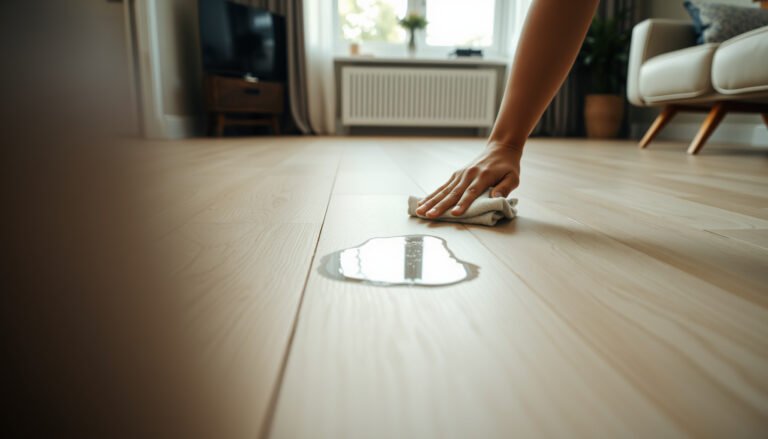
Blotting is the safest first move on engineered wood floors because it prevents grease from smearing into the seams and finish. If you start with wiping instead of blotting, you can spread the oily film across multiple boards and make later cleaning harder.
– Use paper towels to blot and lift as much grease as possible; don’t wipe aggressively (that can smear it wider).
– Place a barrier like cardboard or a fresh paper towel under the area so you’re not dragging oil across other boards.
To do this correctly on engineered wood floors, press down with the paper towel long enough to let it absorb, then lift straight up. If the grease is thick (like bacon grease or cooking fat), you can use the edge of a plastic spatula or old credit card to “lift” the bulk solids first—stay gentle and avoid scraping the finish.
Quick moisture control tip for engineered wood floors: keep the paper towel dry during the initial blot. The goal is removal, not hydration. Engineered wood is layered (a surface veneer over stable inner layers), but standing liquid at joints can still create swelling, haze, or finish edge-lifting.
Degrease safely: dish soap first, then stronger options only if needed
Dish soap first is usually the best first-line degreaser for engineered wood floors because it’s designed to cut fats with relatively low risk to finishes. The key is using a damp cloth (not a wet one) and doing a separate rinse before you dry.
– Mix a small amount of mild dish soap with warm water; wring your cloth so it’s damp, not wet.
– Wipe in the direction of the grain, then rinse with a separate cloth dampened with plain water, and dry immediately with a towel.
Why this works on engineered wood floors
Dish soaps contain surfactants—cleaning molecules that help grease emulsify (break into tiny droplets suspended in water). On engineered wood floors, that emulsification matters because a greasy residue won’t rinse away easily unless it’s broken down first.
According to the National Wood Flooring Association, maintaining indoor relative humidity around 35%–55% helps reduce wood movement and damage risk (2023). National Wood Flooring Association (NWFA) When you clean, you’re trying to avoid introducing extra moisture that can temporarily push wood movement the wrong way. A damp-wipe approach supports that goal.
The “damp cloth” method (what to actually do)
1. Use warm water (not hot) and add only a small squirt of mild dish soap.
2. Dip a microfiber cloth, then wring until it’s damp, not dripping.
3. Wipe with light pressure, following the grain (engineered wood floors typically show linear grain direction on the top veneer).
4. Switch to a second cloth dampened with plain water for a true rinse step.
5. Dry immediately with towels, then let air circulation finish the job.
If the floor looks slightly tacky after drying, that’s a sign soap residue remains—rinse again lightly with plain water and dry again. Engineered wood floors respond better to repeat gentle passes than one aggressive soaking attempt.
Deal with stubborn, baked-on grease using targeted spot methods
If the grease is baked-on or you can still feel tackiness after dish soap, engineered wood floors need a targeted, finish-safe escalation. The safest escalation path is “apply to the cloth first” plus careful spot-testing, not pouring stronger chemicals directly onto the floor.
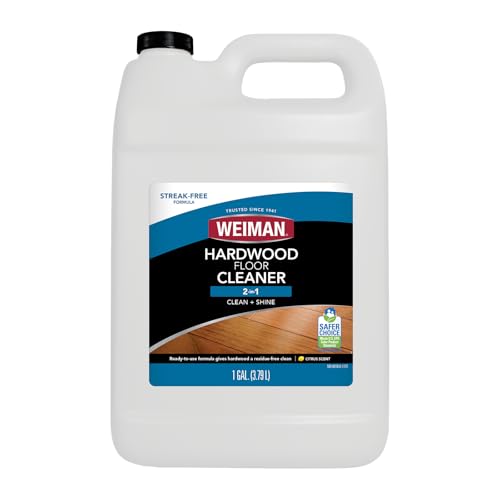
– For residue that won’t come off, try a degreasing cleaner recommended for finished wood floors (follow the label and keep application minimal).
– If your floor tolerates it (and only after spot-testing), you can use a cleaner applied to the cloth first, then dab and gently rub—don’t pour directly onto the floor.
Spot-test protocol for engineered wood floors (do this every time)
On engineered wood floors, finish chemistry varies. UV-polyurethane behaves differently than oil/wax systems. Before using a stronger cleaner:
1. Pick an inconspicuous spot (inside a closet edge or near a baseboard).
2. Apply the cleaner to a cloth (not the floor) and rub gently for the same time/pressure you plan to use.
3. Wait for full dry, then check for haze, darkening, or finish dulling.
What “targeted” looks like
– Work in small sections (for example, a 6–12 inch area at a time) so engineered wood floors don’t stay damp.
– Dab to lift residue, then wipe lightly. Grease particles can act like tiny abrasives if you scrub hard.
– If you’re using a dedicated wood-floor degreaser, follow the label’s dwell time and dilution exactly—many products are designed for finished surfaces but still need restraint.
Below is a quick comparison you can use to choose the right escalation approach on engineered wood floors:
| Grease condition | Primary goal | Safest method on engineered wood floors |
|---|---|---|
| Fresh grease | Lift oils before they bond to the finish | Blot → damp dish-soap wipe → plain-water rinse → dry |
| Grease with film/tack | Emulsify remaining oily residue | Damp dish-soap pass repeated once or twice, then rinse-and-dry |
| Baked-on residue | Loosen bonds without over-wetting | Wood-floor-safe degreaser on cloth → dab → gentle rub → rinse-and-dry |
Protect the finish: dry fast and restore sheen if needed
Fast drying protects engineered wood floors from haze, raised edges, and lingering film—especially at seams where moisture can sit. After grease removal, restoring the finish look is usually about using the correct care step for your specific topcoat.
– Dry thoroughly right after cleaning to prevent haze or raised edges.
– If the area looks dull after the grease removal, use the method your flooring manufacturer recommends for finish touch-ups (or ).
How to verify the area is fully clean (before you stop)
On engineered wood floors, grease can leave a “shadow” in the finish even after the surface feels dry. To check:
– Look at the cleaned area under angled light.
– Run a clean fingertip lightly over the surface (no pressure). If it feels slick or grabby, residue may remain.
– If you see dullness or a slight matte patch, treat it as a finish issue, not a dirt issue—use manufacturer-approved touch-up methods.
As of 2026, many polyurethane-finished engineered floors can handle mild cleaners when used sparingly, but warranties often require following the care instructions exactly. Check your floor’s manual before using any finish-restoring products. Engineered wood floors are an investment, and the safest path is always finish-specific guidance.
What can go wrong (and how to avoid damage)
Engineered wood floors are forgiving when you keep moisture minimal, but damage typically comes from a few predictable mistakes. Avoid the common failure points below, and your odds of protecting the finish rise significantly.
– Over-wetting: engineered wood can swell at seams or edges if water sits too long—use damp cloths only.
– Wrong chemicals: strong solvents, abrasive pads, and “heavy duty” degreasers can dull or damage the finish—always spot-test.
– Scrubbing too hard: grease particles act like grinding grit when you scrub; gentle passes beat force.
The moisture-risk logic (why over-wetting matters)
Wood’s dimensional stability depends on moisture content and environment. According to the U.S. Environmental Protection Agency, indoor relative humidity is typically recommended around 30%–60% to reduce moisture-related problems (2024). U.S. Environmental Protection Agency If you flood a spot or leave it wet, engineered wood floors can react by swelling slightly, then shrinking again—sometimes leaving edge lift or separation at seams.
Chemical compatibility on engineered wood floors
Polyurethane/UV finishes generally resist water better than oil/wax systems, but both are sensitive to harsh solvents. Avoid:
– Mineral spirits, acetone, paint thinner
– Abrasive pads (“magic erasers” vary by material and can dull finishes)
– Strong alkaline cleaners not listed for wood
When in doubt, use a wood-floor-specific degreaser and apply to the cloth, not the floor.
Don’t confuse “clean” with “cured”
Some cleaning solutions can temporarily change sheen or leave a film that looks like haze. That’s why rinse-and-dry and manufacturer-approved finish care matter on engineered wood floors.
Verdict: what usually works, and who should skip certain cleaners
For most fresh grease spots, mild dish soap + damp wiping, followed by a rinse-and-dry, is the safest first move on engineered wood floors. If grease is baked on, escalate gradually with a wood-floor-safe degreaser applied sparingly—but skip solvent-heavy products and anything not approved by your floor’s care instructions.
If your flooring is an oil/wax system (not a hard-finished surface), use the manufacturer’s guidance first——because the “dish soap first” approach may not match how that topcoat needs care. As of 2026, warranties for many premium engineered floors still require documented adherence to approved cleaning methods, so it’s worth reading the label before you escalate.
Here’s a “dish soap vs. wood-floor degreaser” comparison for engineered wood floors:
| Criterion | Dish soap + warm water (damp cloth) | Wood-floor-safe degreaser (sparingly, on cloth) |
|---|---|---|
| Best for grease age | Fresh to lightly set grease | Grease that’s baked-on or tacky after soap |
| Moisture exposure | Low (if cloth is wrung damp) | Low to moderate (still keep minimal application) |
| Finish risk (typical) | Lower for most sealed finishes | Higher if misused (wrong dwell time or heavy application) |
| Ease of rinsing | Easy with a second damp cloth | Requires label-following to avoid residue |
| Time to result | Usually faster for new spills | Often needs repeat spot passes |
| Touch-test risk | Lower—soap residue is generally visible/treatable | Higher—must rinse/dry as instructed |
| Who should skip | If you suspect oil/wax and your manual says “no soap” | If your manual forbids that cleaner or if finish dulling is already visible |
| Overall safety workflow | Blot → damp wash → rinse → dry | Spot-test → apply to cloth → dab/rub → rinse/dry |
| Verdict | Most reliable first step | Use when soap can’t lift it |
| Verdict row (best choice) | Dish soap method for typical fresh spills | Wood-floor-safe degreaser for stubborn/baked-on residue |
📊 DATA
Below is a practical, real-world lens for why different kitchen greases behave differently on engineered wood floors—especially as they age and solidify.
How Common Greases Solidify (Why Removal Gets Harder)
| # | Grease/oil type (common source) | Typical solidification range (°C) | Typical “on-floor” state after ~24h | Expected lifting ease (1–5) |
|---|---|---|---|---|
| 1 | Olive oil (cooking) | ~ -6 to 0 | Mostly liquid film | ★★★★★ |
| 2 | Canola oil (cooking) | ~ -10 to -5 | Thin, oily residue | ★★★★☆ |
| 3 | Peanut oil (cooking) | ~ -5 to 2 | Liquid-to-semi film | ★★★★☆ |
| 4 | Butter (milk fat) | ~ 28 to 35 | Soft, waxy film | ★★★☆☆ |
| 5 | Bacon grease / lard | ~ 30 to 40 | Semi-solid residue | ★★★☆☆ |
| 6 | Coconut oil | ~ 23 to 28 | Waxy, tacky spot | ★★☆☆☆ |
| 7 | Beef tallow / suet | ~ 40 to 50 | Harder solid crust | ★☆☆☆☆ |
Quick checklist: grease removal on engineered wood
– [ ] Blot up excess grease (no aggressive wiping)
– [ ] Spot-test cleaner in an inconspicuous area
– [ ] Use mild dish soap + damp cloth (minimal moisture)
– [ ] Rinse with plain-water damp cloth
– [ ] Dry immediately with towels
– [ ] If needed, use a wood-floor-safe degreaser applied to cloth (not poured)
– [ ] Re-check the finish and follow manufacturer care for sheen/repair
Frequently Asked Questions
What’s the safest way to get grease off engineered wood floors without damaging the finish?
Start by blotting excess grease with a clean, dry cloth so you don’t grind it into the grain. Use a degreasing solution designed for wood-safe cleaning, then gently wipe with a damp microfiber cloth and dry immediately. Avoid soaking the floor or using harsh solvents that can dull or strip the engineered wood finish.
How can I remove fresh grease stains from engineered wood floors quickly?
If the grease is still fresh, place a small amount of absorbent material like cornstarch or baking soda over the spot and let it sit for 30–60 minutes to lift oils. Wipe away the powder with a dry cloth, then clean the area with a mild dish soap solution (a few drops in warm water) using minimal moisture. Finish by drying thoroughly with a clean microfiber towel.
Which cleaning products work best for grease on engineered wood floors?
For most engineered wood floors, a pH-neutral cleaner and a mild dish soap mixture are effective for grease without harming the top layer. For tougher spots, use a wood-safe degreaser applied sparingly to a cloth rather than directly on the floor. Avoid products with strong solvents, ammonia, bleach, or abrasive scrubbers, since they can damage the protective wear layer and leave discoloration.
Why should I avoid steam cleaning or soaking when removing grease from engineered wood?
Engineered wood has a top veneer and protective finish that can be harmed by excess water, heat, or prolonged dampness. Steam cleaning can force moisture into seams and edges, increasing the risk of swelling or cupping. Instead, use controlled, low-moisture cleaning methods and always dry the area right after wiping.
What’s the best method to remove old, baked-on grease from engineered wood floors?
For older grease, soften it first by applying a small amount of mineral spirits-free wood-safe degreaser to a cloth, then let it dwell briefly before wiping. If the stain remains, repeat gently and follow with a damp microfiber wipe using clean water, then dry thoroughly. Test any cleaner in an inconspicuous area first to ensure the engineered wood finish won’t cloud or lose sheen.
📅 Last Updated: November 14, 2026 | Topic: How to get grease off engineered wood floors? | Content verified for accuracy and freshness.
References
- Wood flooring
- https://extension.umn.edu/household/cleaning-and-maintaining-wood-floors
- https://www.armstrongflooring.com/residential/en-us/support/care-and-cleaning/hardwood.html
- https://www.bruce.com/en-us/about/our-wood-floors/care-and-maintenance
- Page Not Found – PERGO® Flooring
- MohawkFlooring
- https://scholar.google.com/scholar?q=engineered+wood+floor+grease+stain+removal Google Scholar
- https://scholar.google.com/scholar?q=hardwood+floor+oil+grease+stains+removal+finish Google Scholar
- https://scholar.google.com/scholar?q=wood+floor+cleaning+oil+grease+chemistry+engineering Google Scholar