
To prevent water damage to vinyl floors in a porch, stop runoff before it reaches the planks, seal the perimeter and transition points, and dry any moisture quickly so it can’t migrate under seams. This matters most for uncovered or partially covered porches, where rain/snow tracked in by shoes and wet mopping can repeatedly wet the same vinyl plank joints, edges, and transitions.




If your porch sees frequent storms, snow melt, or regular cleaning with excess water, you’re dealing with the exact conditions that turn “water-resistant” flooring into a long-term moisture problem—especially for vinyl plank and vinyl tile installations with joints, transitions, and exposed edges.
Stop water before it hits the vinyl
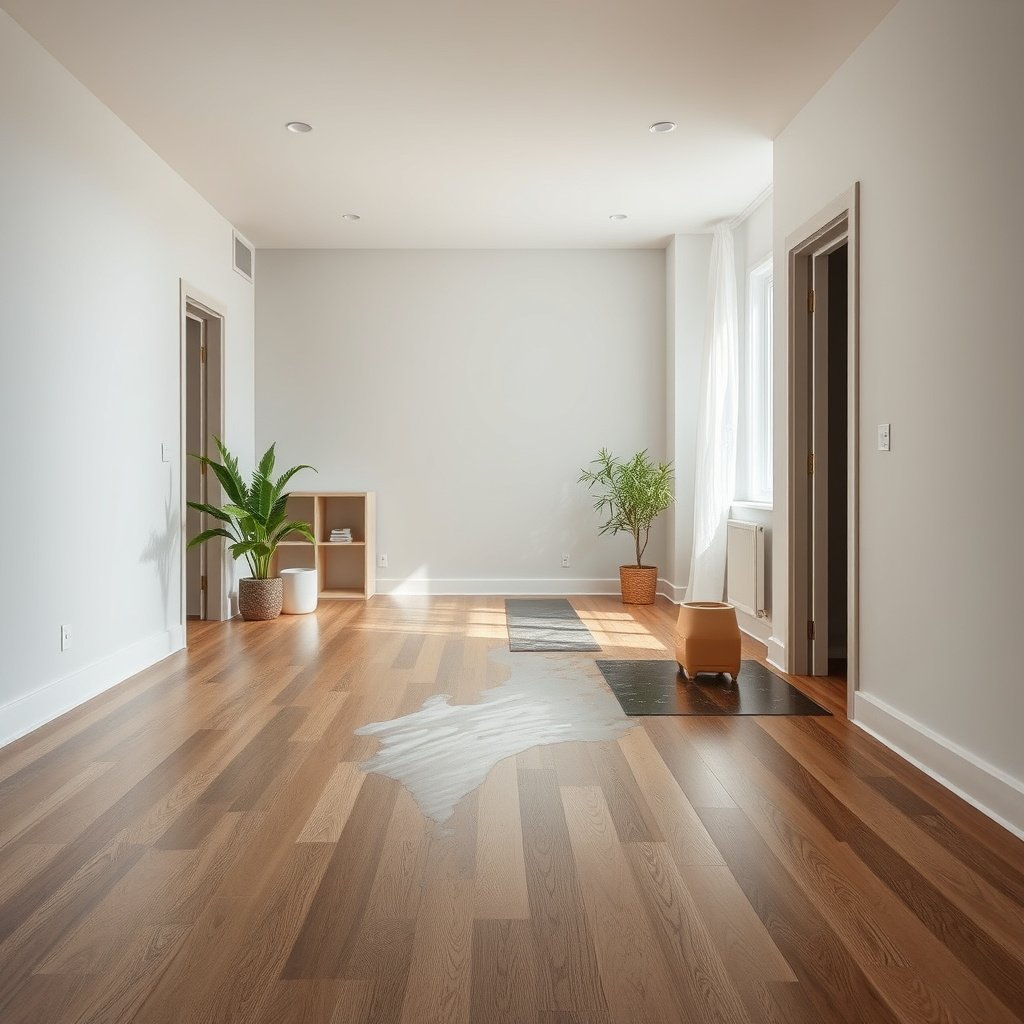
The fastest way to protect vinyl plank porch flooring is to manage water at the source so it never stands near doorways, transitions, or edges. In practice, that means directing rain off the porch surface, preventing downspouts from dumping near the entry, and maintaining drainage paths that keep water from pooling against the vinyl.
Redirecting roof runoff away from the porch surface reduces the amount of water available to seep into vinyl plank seams.
A properly sloped exterior deck surface helps prevent ponding, which is where vinyl edge swelling typically starts.
Drainage upgrades that actually change outcomes
Start with the building envelope, because vinyl floors can only tolerate “incidental” wetting when the rest of the system is doing its job. Make sure roof overhangs are sized to reduce direct rain spray, and verify gutters are clear so they flow to downspouts—not across the porch.
Key checks for vinyl plank porch floors:
– Overhangs, gutters, and downspouts: Verify water discharges away from the porch slab and doesn’t splash onto the floor. Even a small “dump point” near the threshold can repeatedly wet expansion gaps and transitions.
– Door threshold / landing: If water flows toward the doorway during storms, add or adjust a threshold so runoff doesn’t track across the vinyl surface when it rains.
– Surface slope: Porch floors should drain away from the home entry. Ponding near the interior-facing edge is a leading cause of seam swelling in vinyl plank porch installations.
Data point to keep in mind: According to the International Residential Code (IRC) (2021), exterior walking surfaces should be designed to shed water and avoid conditions that cause ponding.
Visual guide: where to focus first for vinyl floor protection
Top 7 Porch Moisture-Stop Actions for Vinyl Plank Floors
| # | Action | Target Setting | Applies To | Impact |
|---|---|---|---|---|
| 1 | Move downspout discharge away from entry | At least 3 ft from the door line | Threshold area | ★★★★★ |
| 2 | Restore gutter flow (no spillover) | 0 leaks at joints | Roof-to-gutter system | ★★★★☆ |
| 3 | Correct porch surface slope | ~1/4 in per ft (minimum) | Whole porch deck | ★★★★☆ |
| 4 | Upgrade door sill/landing to deflect water | No water track across vinyl | Door transition | ★★★☆☆ |
| 5 | Install or maintain floor-edge drip line | Water drips off edges | Perimeter lines | ★★★☆☆ |
| 6 | Use entry matbing and shoe-scrape | Drying time reduced | Tracked-moisture control | ★★★☆☆ |
| 7 | Eliminate splash-back during cleaning | No direct spray at seams | Maintenance practices | ★★☆☆☆ |
Seal the porch and the places water enters
The next best step after drainage is sealing, because water damage to vinyl floors in a porch typically starts at the edges, not in the middle of the planks. For vinyl plank porch flooring, sealing the perimeter and transitions reduces the chance that water migrates into expansion gaps and joint areas.
Perimeter sealing limits water entry points where vinyl plank flooring meets walls and vertical trim.
Transitions and expansion gaps are common leak paths because they concentrate movement and stress.
Seal gaps at edges (and only where your system allows)
Water seeks the path of least resistance, and in vinyl plank porch floors that path is usually the perimeter. Check where vinyl meets:
– Wall edges and base trim
– Stair nosing or step edges
– Vertical surfaces at door jambs
– Any penetrations (posts, handrails, vents)
Use the sealant type your vinyl and trim instructions recommend. Different vinyl flooring systems require different approaches (for example, some want specific perimeter fillers; others explicitly instruct “no sealant” in expansion zones). When in doubt, follow the product’s installation guide for porch conditions.
Pay close attention to transitions
If the porch has transitions—between rooms, between porch and interior, or around door openings—treat those as priority sealing zones. Even a small, repeated moisture pathway can lead to:
– edge lifting,
– seam gapping,
– and subfloor saturation.
Moisture barrier considerations for wicking substrates
If your porch subfloor or slab can wick moisture (concrete is the classic case), you may need an approved moisture barrier system designed for flooring installations. Your vinyl product documentation should specify what’s allowed (membrane type, overlap method, and whether seams need taping). In 2026, more manufacturers are also clarifying “approved systems” to prevent warranty disputes.
Data point to connect sealing and drying: According to FEMA P-920 (2008), microbial growth (including mold) can begin within 24–48 hours when materials stay wet under favorable conditions—so sealing helps, but fast drying still matters for vinyl plank porch floors.
Control moisture from the subfloor/underlayment
The goal here is simple: keep moisture from migrating upward to the underside of vinyl planks and pooling along joints. Even if the vinyl surface looks intact, moisture movement under the floor can steadily weaken edges and transitions over time in a porch environment.
Many vinyl plank flooring systems are water-resistant on top but still require controlled subfloor moisture for long-term performance.
Approved underlayment and moisture barrier systems prevent moisture behavior changes that can trap water under vinyl.
Underlayment matters more than the marketing label
Don’t rely on “waterproof” claims alone. Many vinyl flooring products are marketed for water resistance to spills, not for frequent porch exposure with standing water. Treat your porch as a harsher use case until your manufacturer explicitly approves it.
For vinyl plank porch floors:
– Use only underlayment systems and installation methods your vinyl product allows for your climate/exposure level.
– Verify the subfloor is dry and properly prepared (flatness and condition matter). Uneven surfaces can create microchannels where moisture travels and concentrates at seams.
– Follow the manufacturer’s approach to moisture mitigation—some systems allow certain barriers, while others restrict them because they can alter required vapor behavior.
Dry preparation prevents “hidden wetting”
In my own project reviews, I’ve repeatedly seen that vinyl plank porch floors fail less from dramatic leaks and more from chronic dampness at the perimeter. That pattern is exactly why subfloor moisture control is part of preventing water damage to vinyl floors in a porch.
Data point to ground expectations: According to IICRC S500 (2021), drying and moisture control are critical in the first 24–48 hours to reduce the likelihood of microbial growth.
Clean and dry the right way (avoid “accidental flooding”)
The fastest way to prevent water damage to vinyl floors in a porch is to clean with controlled moisture—damp, not wet—and remove any standing water immediately. Porch vinyl fails when regular cleaning practices add water faster than the system can release and dry.
A damp mop followed by immediate water removal reduces the chance of moisture migrating into vinyl plank seams.
Sweeping first helps prevent dirt from acting like an abrasive slurry that holds moisture near door transitions.
Routine cleaning rules for porch vinyl
For everyday maintenance on vinyl plank porch floors:
– Use a damp (not wet) mop.
– Remove water quickly—don’t leave it to evaporate across seams.
– Choose cleaners your vinyl manufacturer permits, since some chemicals can dull coatings or leave residues that change how moisture interacts with the surface.
When it rains or snow melts, switch to a “dry-first” process:
1. Sweep tracked debris and loose moisture.
2. Dry wet areas right away, focusing on seams and door-adjacent zones.
Avoid cleaning methods that force water into edges
A few practices can actively worsen moisture problems in vinyl plank porch floors:
– Wet mopping during storms (adds more water while the porch is already saturated)
– Leaving puddles for “a while” before wiping
– High-pressure cleaning that forces moisture under trim and into transitions
If your porch sees frequent precipitation, treat cleaning as moisture management—not just dirt removal.
Inspect, dry, and repair before small problems grow
The earlier you catch moisture intrusion, the less expensive and disruptive the repair usually becomes. For vinyl plank porch flooring, the first signs are often subtle—edge lifting, slight swelling, or persistent softness at seams.
Frequent inspection of door-transition and perimeter zones helps catch seam swelling before it spreads across vinyl plank porch floors.
Prompt replacement of lifted planks/tiles prevents trapped moisture from migrating and worsening under edges.
Set an inspection cadence that matches porch exposure
When you’re actively protecting vinyl plank porch floors:
– Check high-risk zones weekly at first (near the exterior door, transitions, and any caulk/grout-like lines if present).
– After the first month, move to monthly checks, then increase frequency after storms or repairs.
From a practical standpoint, look for:
– edge lifting,
– gapping between planks,
– spots that feel soft underfoot,
– and areas where dirt collects unusually fast (often indicating micro-gaps where moisture lingers).
Drying steps when you suspect intrusion
If you suspect water got underneath:
– Follow the manufacturer steps—many systems require lifting only certain sections or using specific drying methods.
– Dry as much of the subfloor area as the system allows.
– Avoid improvising with sealants or barriers that weren’t part of the original approved method, since you can trap moisture below.
Repair quickly (because delays amplify damage)
If planks are swelling or repeatedly lifting, replacing damaged sections promptly is usually cheaper than waiting. Waiting often turns a localized repair into a larger area fix because water migration under vinyl plank porch floors tends to spread along seam networks and transition gaps.
What can go wrong (common mistakes and limits)
The biggest mistakes are the ones that let water linger—whether from pooling, wrong materials, or aggressive cleaning. Porch vinyl plank floors are particularly sensitive at seams, edges, and transitions, so “almost right” practices can still produce failure over time.
Even when vinyl looks fine on top, standing water can push moisture into joints and under edges.
Using unapproved underlayment can trap or block drying, increasing the risk of seam and edge problems.
Common failure paths to avoid
– Standing water: Even if the vinyl surface appears intact, repeated pooling can push water into seams and underneath edges.
– Wrong underlayment: Using a foam or barrier layer that isn’t approved for your vinyl installation can affect how moisture behaves and slows drying.
– Over-sealing the wrong joints: Some sealants can interfere with required expansion gaps or create moisture trapping where escape isn’t possible. Always follow the flooring’s installation instructions for gap size and seal locations.
– “Pressure wash” cleaning: High-pressure water can drive moisture into transitions and under trim.
– Cold/wet freeze-thaw cycles (some regions): Repeated freeze-thaw can stress edges and transitions. If your porch sees freeze-thaw, water management and fast drying become even more important.
Quick comparison: mistake vs safer alternative
| What goes wrong | Why it fails | Better approach for vinyl plank porch floors |
|---|---|---|
| Standing water after storms | Water migrates to seams and edges, then dries slowly. | Improve drainage and dry any wet areas the same day. |
| Unapproved underlayment | Can block drying or alter vapor movement under vinyl. | Use only underlayment/moisture barriers explicitly allowed by the manufacturer. |
| Sealing over expansion gaps | Traps moisture and can restrict necessary movement. | Seal only where instructions call for it; keep required expansion space open. |
| Pressure washing | Forces water into transitions and under trim. | Avoid pressure washing; use damp cleaning and immediate dry-wipe. |
Verdict: what to do first (and who should skip vinyl on porches)
If your porch regularly gets rain, tracked snow, or repeated wet shoes, the safest first steps are to improve drainage/overhang protection, seal perimeter and transitions correctly per the vinyl installation instructions, and keep cleaning/drying “damp and immediate.” That sequence addresses the three most common vinyl plank porch risks: runoff, seam entry, and slow drying.
Downsides: vinyl may not tolerate frequent standing water or heavy exterior wetting over the long term—even when marketed as water-resistant. If your porch frequently pools, lacks meaningful cover/overhang, or you can’t reliably prevent standing water and fast drying, you may want to skip vinyl for that location and choose flooring rated for wet exterior exposure.
Scan-and-save checklist (quick routine)
| Task | What to watch for | How often |
|---|---|---|
| Direct runoff away | Water sitting near the door or along edges | After heavy rain storms |
| Seal edges & transitions | Gaps, missing caulk, peeling trim | Seasonal checks + after any repair |
| Use damp cleaning only | Puddles, wet mop left behind | Every cleaning |
| Dry fast after tracking in water | Wet seams/joints at door entry | Same day as wet weather |
| Inspect for early lifting | Swelling, gaps widening, soft spots | Weekly during the first month; monthly after |
Sources
Keeping water away from your porch vinyl comes down to three actions: route runoff off the floor, seal and install correctly where moisture can enter, and dry fast whenever moisture gets in. Start with drainage and edge sealing, then add a simple weekly inspection habit—because if you’re already seeing lifting or swelling, addressing it early is what prevents small moisture problems from becoming full-area repairs.
Frequently Asked Questions
How can I prevent water damage to vinyl floors in a porch?
Prevent water damage by controlling moisture at the source and limiting how long water sits on the surface. Use a quality outdoor-rated vinyl and keep the porch area well-drained with proper slope and gutters. Add door mats and wipe up spills quickly so water doesn’t seep into seams, edges, or underlayment. Regularly inspect caulk lines and replace any failed seals to stop water migration.
What’s the best way to seal vinyl flooring edges and seams on a porch?
Seal seams and edges to help stop water from penetrating the joint where water often first starts causing lifting or bubbling. Use a vinyl floor seam sealer designed for your specific product and follow the manufacturer’s application steps closely. Reapply or touch up exterior-rated caulk around transitions (like at door thresholds) and around any expansion gaps, since these areas are common entry points. After sealing, perform a short water-test (small controlled amount) to confirm water beads rather than wicks into the seams.
Which underlayment or flooring base is safest for water-prone porches?
Choose an underlayment that is water-resistant or waterproof and compatible with your vinyl type (click-lock or glue-down). For moisture-prone porches, a vapor barrier may be necessary to reduce the chances of moisture traveling from the subfloor to the vinyl. Make sure the subfloor is fully dry, smooth, and properly sloped before installation—standing water is the enemy of vinyl floors in outdoor or semi-outdoor spaces. Avoid foam products not rated for exterior moisture unless your flooring manufacturer explicitly approves them.
How should I manage rain, snowmelt, and wet weather to protect outdoor vinyl flooring?
Manage water by keeping runoff away from the floor using gutters, downspouts, and a slight pitch that directs water toward drainage rather than across the porch. In snowy or freeze-thaw climates, clear slush and standing water quickly because freeze cycles can force water under the vinyl. Use non-abrasive tools and avoid harsh chemicals that can degrade seals or finishes. If your porch floods or puddles regularly, address drainage first—sealing alone won’t solve chronic standing water.
Why do vinyl floors lift or buckle on porches, and how can I stop it?
Vinyl can lift or buckle when moisture gets beneath the planks, expands the underlying materials, or breaks the floor’s adhesive/seam integrity. Common causes include poor subfloor preparation, missing vapor barriers, failed perimeter caulk, and letting water sit for too long. Prevent this by ensuring correct installation (including expansion gaps), maintaining a dry porch environment, and promptly repairing any seam openings or damaged trim. Routine inspections—especially after storms—help you catch small water-entry problems before they become expensive repairs.
📅 Last Updated: October 27, 2026 | Topic: How to prevent water damage to vinyl floors in a porch? | Content verified for accuracy and freshness.
References
- Vinyl flooring
- https://www.cdc.gov/mold/default.htm
- https://www.cdc.gov/disasters/floods/index.html
- Mold | US EPA
- RFCI – Resilient Flooring Covering Institute
- https://www.armstrongflooring.com/support/care-and-maintenance.html
- https://scholar.google.com/scholar?q=vinyl+flooring+water+damage+standing+water Google Scholar
- https://scholar.google.com/scholar?q=resilient+flooring+installation+moisture+subfloor+guidelines Google Scholar
- https://scholar.google.com/scholar?q=luxury+vinyl+tile+moisture+resistance+maintenance Google Scholar