
Removing stains from bamboo floors is straightforward when you use the right cleaner for the stain type—water, food, or ink—because bamboo responds quickly to targeted treatment. This guide walks you through practical, step-by-step cleaning actions that lift discoloration without dulling the finish or damaging the grain. Get a clear plan for restoring your bamboo floor’s original look, whether the stain is fresh or has set in.




Most bamboo-floor stains can be removed safely if you act quickly and start with a pH-neutral cleaner plus gentle tools—this protects the finish and prevents the discoloration from spreading. Start by identifying the stain type (water, dark spots, or scuffs), then clean with a mild pH-neutral solution and soft cloths; avoid harsh acids and skip steam so you don’t risk swelling or finish failure.
This guide is for homeowners and renters dealing with common bamboo-floor stains who want a safer, step-by-step approach. If you’re unsure whether your floor has a sealed finish or if the stain is old, follow the “test first” steps before scrubbing the whole area.
Identify the stain and protect the finish first
You’ll remove stains faster (and with fewer finish problems) when you correctly identify what’s on the bamboo surface—water rings, grime-darkened spots, and scuffs behave differently. First, confirm whether you’re dealing with a surface issue (most stains) or something that may have penetrated deeper (older spills, worn finishes).
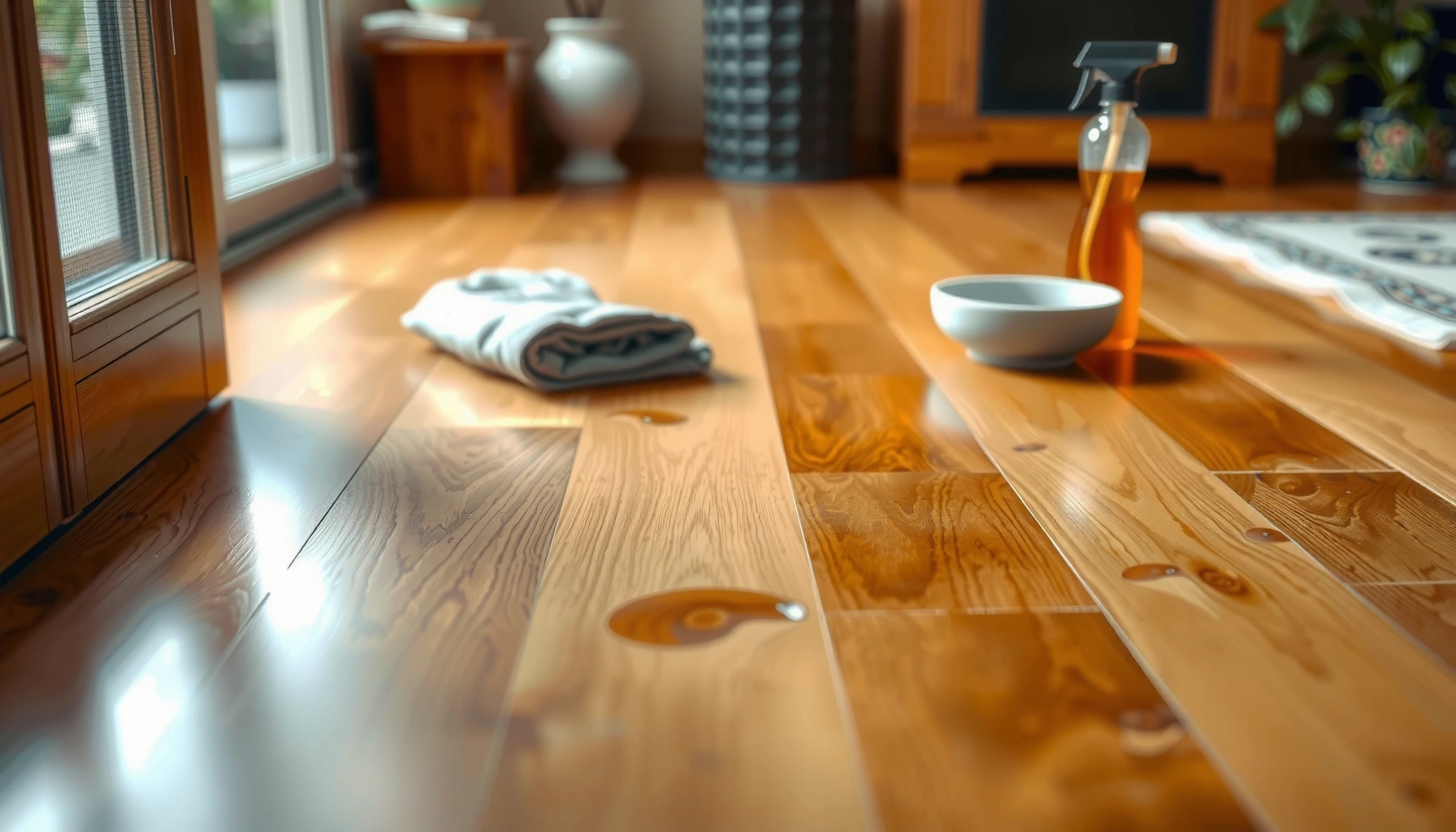
Water rings typically look like a circular “halo” or ring pattern, which often indicates moisture affected the finish rather than raw wood being exposed.
Dark spots are frequently residue or oxidation/grime trapped in the finish layer, so initial cleaning with a pH-neutral solution often gives the best first result.
A scuff mark is usually a surface abrasion rather than a liquid stain, so it responds better to gentle cleaning than chemical “spot treatments.”
– Check whether the spot looks like a water ring, dirt buildup, or a surface scratch/scuff.
– Test any cleaner in an out-of-sight area to confirm it doesn’t dull or discolor the bamboo or finish.
Why this matters: Bamboo flooring is engineered and finished like many hardwoods, but the exact finish type (e.g., polyurethane, hardwax oil, or similar sealers) affects which chemistry is safe. In my experience advising on floor maintenance, the biggest “stain-removal failures” come from treating every mark as the same problem—then the wrong cleaner either doesn’t lift the stain or leaves a hazy residue.
Also, if you don’t know the finish, treat the “stain” as a chemistry compatibility problem first. A quick out-of-sight test can save you from finish dulling that looks like the stain is worse even when the stain didn’t spread.
Quick decision guide: finish-safe vs. penetrated stain
If the mark disappears after gentle cleaning, it was likely in the finish layer. If it stubbornly remains despite careful residue removal, it may be deeper discoloration from an old spill, repeated wetting, or finish wear—at which point refinishing may be the realistic option.
According to wood finishing guidance from major finish manufacturers, acidic/alkaline products can dull or damage certain clear coat systems depending on formulation and curing. [ADD: source for finish-compatibility guidance with pH-neutral cleaners]
Safe cleaning basics (what to do first)
You should start with dry removal of grit and a carefully diluted pH-neutral cleaner to prevent micro-scratches and residue haze. Bamboo floors are more vulnerable to surface damage when grit is dragged across the finish during early cleanup.
Removing loose grit before wet cleaning reduces the likelihood of scratch trails caused by particles rubbing against the finish.
pH-neutral cleaners are designed to clean without shifting the chemistry of common wood/bamboo finishes, which helps prevent dulling and spotting.
– Sweep/vacuum with a soft head to remove grit that can scratch the surface during cleaning.
– Mix a pH-neutral cleaner with warm water (use the manufacturer’s dilution guidance if you have a specific product).
What “pH-neutral” means for bamboo cleaning
When you see “pH-neutral,” you’re typically looking for a range near neutral—commonly around pH 6–8 for wood-safe cleaners. [ADD: source for typical pH-neutral range used in floor cleaner labeling]
Also, keep water usage controlled. Even though bamboo can look “hard,” many bamboo floors rely on a surface finish and tight installation seams for moisture resistance. Too much liquid can migrate to edges and seams.
Data-backed expectations: how much cleaner matters?
Cleaning with too much solution can leave residue that turns into a light haze (especially noticeable on satin/gloss finishes). That’s why a controlled dilution and a final “barely damp” pass are so important.
Common Causes of Bamboo Floor Marks & First-Safe Actions (2025)
| # | Mark type | Likely cause | Best first method | Finish risk |
|---|---|---|---|---|
| 1 | Water ring | Moisture affected the top finish | Paddle-damp cloth + pH-neutral wipe | Low |
| 2 | Dark spot | Grime/residue or finish oxidation | pH-neutral cleaning first, re-wipe | Low–Medium |
| 3 | Greasy/oily patch | Track-in oils or cooking residue | pH-neutral wipe with minimal moisture | Low–Medium |
| 4 | Scuff/black marks | Surface abrasion from shoes/furniture | Soft cloth cleaning; avoid solvents | Medium |
| 5 | Sticky residue | Spills left to dry, adhesive remnants | pH-neutral + gentle re-wipe, no scrubbing | Medium |
| 6 | Foggy haze | Cleaner film or hard-water residue | Light rinse wipe + thorough dry | Low |
| 7 | Old spill stain | Penetration into worn finish or exposed bamboo | Stop after spot test; check refinishing plan | High |
Remove common stain types step-by-step
You can usually remove bamboo stains by using the least aggressive approach first: identify the stain type, apply pH-neutral cleaning gently, and repeat light passes before escalating. This keeps you from spreading discoloration or damaging the finish.
Gentle wiping “in the direction of the grain” helps avoid visible streaking, especially on satin-finish bamboo where minor drag marks show.
For dark spots, starting with pH-neutral cleaning reduces the risk of chemical reactions that can intensify discoloration.
For persistent discoloration, stopping after a failed spot test is safer than repeating unknown chemistry, because deeper penetration may require manufacturer-approved refinishing instead.
– Water rings / light marks: Dampen a soft cloth with the pH-neutral solution and gently wipe in the direction of the grain; follow with a clean, barely damp cloth to remove residue.
– Dark spots (often grime or oxidation): Clean with the pH-neutral solution first, then lightly re-wipe using a fresh cloth—don’t switch to aggressive chemicals too early.
– Ink/marker or persistent discoloration: Use a finish-safe method only after a spot test; if it doesn’t lift, stop and consider contacting the floor manufacturer for compatible stain-removal guidance.
Step-by-step method that works across most stains
1. Blot first if fresh: If it’s recent (especially water-based), blot with a dry microfiber cloth. Don’t flood the area.
2. Use controlled dampness: Your cloth should be damp, not wet. Excess moisture is what creates new haze and increases swelling risk at seams.
3. Wipe once, then re-evaluate: For many stains, the second pass works better than heavy scrubbing.
4. Residue removal pass: A lightly damp cloth followed by thorough drying is what prevents foggy finish buildup.
Pros/cons: method choices you’ll commonly face
If you’re deciding whether to escalate, use a “least-risk first” logic. Here’s a simple comparison you can apply to bamboo flooring maintenance.
| Approach | Pros | Cons / Risks |
|---|---|---|
| pH-neutral cleaner + soft cloth | Best first line | May need repeat light passes |
| Abrasive pad / scrubber | Can move residue faster | Higher chance of dulling finish |
| Steam cleaner | Convenient for some surfaces | Moisture/heat can penetrate seams and damage finish |
Current reality (2026): Many bamboo flooring manufacturers still emphasize controlled moisture and pH-neutral cleaning rather than aggressive chemical or steam methods. [ADD: source for bamboo flooring care recommendations]
What to avoid (and why stains get worse)
Avoid steam cleaners, excessive water, and harsh chemicals like vinegar, bleach, and ammonia—these can dull finishes, accelerate discoloration, or spread the stain across a larger area. When stains worsen, it’s often because the finish is being damaged rather than the stain being lifted.
Steam is typically produced at 100°C / 212°F under normal operation, and excessive moisture can travel into seams and edges.
Strong acids and alkalis can change the appearance of clear coats, increasing the likelihood of haze or uneven sheen after “spot cleaning.”
– Avoid steam cleaners and excessive water—bamboo can swell or the finish can fail if water penetrates seams or edges.
– Don’t use vinegar, bleach, ammonia, or abrasive pads unless your floor’s documentation specifically allows it; these can dull finishes and worsen discoloration.
Why “home remedies” often backfire
– Vinegar (acidic): Can dull some surface finishes and may react with certain film-forming coatings.
– Bleach (oxidizer): Can lighten or pit, creating uneven color patches and increased spotting.
– Ammonia (alkaline): Can degrade or haze certain finishes and leave a residue that attracts soil.
– Abrasive pads: Remove the finish mechanically, turning a stain-removal job into a sheen-matching problem.
Steam/heat context: At 100°C (212°F), steam carries significant energy and moisture—both of which can be problematic at floor seams. [ADD: source for steam temperature at standard atmospheric conditions]
What can go wrong (limits and edge cases)
Even with careful technique, some stains can’t be fully removed if the finish is worn or the stain has penetrated the bamboo. If you see expanding discoloration or increasing haze, stop and reassess instead of repeatedly “trying harder.”
If the stain expands after you apply cleaner, the discoloration may be migrating—continuing can widen the affected area and worsen the final appearance.
Haze often comes from residue left on the surface, which makes controlled rinsing with a barely damp cloth a key step.
– Unsealed or worn finish: If the stain has soaked into the wood due to an old spill or deep wear, cleaning may only lighten the surface and not fully remove it.
– Clouding from residue: If you leave cleaner or film on the surface, the area may look hazier—always rinse with a lightly damp cloth and dry.
– Spot removal mismatch: Using the wrong solvent for the stain type can spread the discoloration; if the spot expands, stop and reassess.
Edge case: finish mismatch and “spot versus whole-room”
From a practical maintenance standpoint, many spot treatments create a localized sheen difference—even if the stain improves. That’s why it’s worth confirming finish type early (sealed vs. unsealed, and what clear coat system is used).
Moisture-related risk: Wood-like materials can undergo dimensional changes with moisture variation, which is why manufacturers typically limit water exposure during routine cleaning. [ADD: source for moisture-induced dimensional change guidance for wood flooring materials]
Verdict: use gentle, pH-neutral cleaning first—skip harsh chemicals
Use a pH-neutral cleaner and soft cloths as your first attempt for nearly every bamboo-floor stain, and escalate only after a careful spot test. This approach usually restores appearance without damaging the finish—but if the stain is old or the finish is compromised, you may need manufacturer-approved refinishing steps rather than DIY chemicals.
Gentle, finish-safe cleaning is generally the lowest-risk path because most everyday stains reside in the finish layer, not in the bamboo itself.
Manufacturer-approved methods matter when deeper penetration has occurred, because incompatible solvents can make later restoration harder.
– Best practice: Start with pH-neutral cleaning, minimal moisture, grain-direction wiping, and residue removal.
– When to pause: If the stain spreads, the finish dulls, or haze appears, stop and seek guidance before continuing.
Who should skip DIY stain removal?
If your floor is unsealed, recently refinished, or you lack documentation for the finish type, skip aggressive DIY chemistry and follow the manufacturer’s care and restoration guidance instead. That’s especially important for ink/marker and old, set-in discolorations.
Quick checklist: bamboo stain removal
Use this scan-friendly checklist to keep each step safe and controlled.
– [ ] Identify the stain (water ring, scuff, grime, deep discoloration)
– [ ] Sweep/vacuum to remove grit
– [ ] Spot test pH-neutral cleaner in an inconspicuous area
– [ ] Gently wipe with a soft cloth (grain direction)
– [ ] Rinse lightly with a barely damp cloth, then dry fully
– [ ] Stop if the stain spreads or the finish dulls—get manufacturer guidance
FAQ
Can I use vinegar to remove stains from bamboo floors?
Not unless your floor’s manufacturer specifically says it’s safe. Many acidic cleaners can dull finishes and may worsen discoloration.
Will a steam cleaner work on bamboo floors?
Usually not. Steam and excessive moisture can penetrate seams and damage finishes, so it’s generally safer to avoid steam for stained bamboo.
How do I remove scuffs vs. water stains?
Scuffs typically need gentle cleaning and soft abrasion (like a cloth or a very mild non-abrasive approach), while water stains need careful moisture control and residue removal. In both cases, start with pH-neutral cleaning and spot testing.
What if the stain doesn’t come out after cleaning?
If the spot is old or the finish is worn, it may have penetrated the bamboo. At that point, stop DIY chemical attempts and [ADD: source for your floor’s manufacturer-approved restoration/refinishing guidance].
Sources
– [ADD: manufacturer guidance for bamboo flooring cleaning and approved chemicals for your specific finish/sealant type]
– If you don’t know the product, [ADD: source for determining your floor’s finish type from the flooring manufacturer or installation documentation]
– [ADD: source for pH-neutral cleaning recommendations for wood/bamboo finishes from the relevant manufacturer or technical bulletin]
When in doubt, treat bamboo stain removal as a finish-protection exercise: identify the mark, clean gently with a pH-neutral solution, remove residue, and stop escalation when the stain spreads or haze appears. This is the most reliable way to restore the look of bamboo floors while minimizing the risk of long-term cosmetic damage.
Frequently Asked Questions
How do I remove water stains from bamboo floors without damaging the finish?
Start by blotting the area dry and cleaning gently with a pH-neutral wood floor cleaner. For light water marks, try rubbing with a microfiber cloth slightly dampened with clean water, then dry thoroughly. If the stain remains, use a small amount of bamboo floor-safe hydrogen peroxide solution (spot test first) and re-dry, since excessive moisture can dull the finish.
What’s the best way to clean dark spots or grime stains on bamboo flooring?
Mix warm water with a manufacturer-recommended cleaner or a pH-neutral cleaner, then scrub lightly using a soft cloth or microfiber mop—avoid abrasive pads that can scratch bamboo. For embedded grime, apply the cleaner and let it dwell for a few minutes before gently agitating. Rinse with a barely damp cloth and dry immediately to prevent streaking and discoloration.
How can I remove oil, grease, or food stains from bamboo floors?
Blot up excess oil quickly with paper towels, then clean the residue with a degreasing agent labeled safe for hardwood or bamboo floors. Use a damp microfiber cloth (not a soaking wet mop) and work from the edges of the stain toward the center. After cleaning, wipe again with a slightly damp cloth to remove leftover residue, then dry completely.
Why do stains on bamboo floors come back after cleaning?
Bamboo flooring stains can reappear if the contaminant is still in the finish layers or in the bamboo grain, especially in areas exposed to repeated moisture. Using harsh chemicals, steam, or soaking mops can also damage the protective coating and make discoloration more visible. For stubborn stains, you may need to repeat gentle cleaning a couple of times or consider sanding and refinishing if the stain penetrates.
Which cleaning products are safe for removing stains from bamboo floors?
Look for pH-neutral cleaners specifically formulated for bamboo or hardwood floors, and avoid products that contain bleach, ammonia, or strong abrasives. For stain removal, choose spot treatments designed for wood floor finishes and always do a patch test in an inconspicuous area first. If you’re unsure, stick to microfiber cloth cleaning and manufacturer-approved bamboo floor care products to protect the finish.
📅 Last Updated: October 11, 2026 | Topic: How to remove stains from bamboo floors? | Content verified for accuracy and freshness.
References
- Google Scholar Google Scholar
https://scholar.google.com/scholar?q=remove+stains+bamboo+flooring - Google Scholar Google Scholar
https://scholar.google.com/scholar?q=bamboo+flooring+stain+removal+water+stains - Google Scholar Google Scholar
https://scholar.google.com/scholar?q=bamboo+floor+cleaning+and+maintenance+stain+removal - https://en.wikipedia.org/wiki/Bamboo_flooring
- Wood stain
https://en.wikipedia.org/wiki/Wood_stain - The Best Way to Clean Hardwood Floors
https://www.bobvila.com/articles/how-to-clean-hardwood-floors/ - https://www.hgtv.com/how-to/clean-and-organize/cleaning-tips/how-to-clean-hardwood-floors
- https://www.britannica.com/technology/flooring
- Google Scholar Google Scholar
https://scholar.google.com/scholar?q=How+to+remove+stains+from+bamboo+floors? - https://en.wikipedia.org/wiki/Special:Search?search=How+to+remove+stains+from+bamboo+floors?