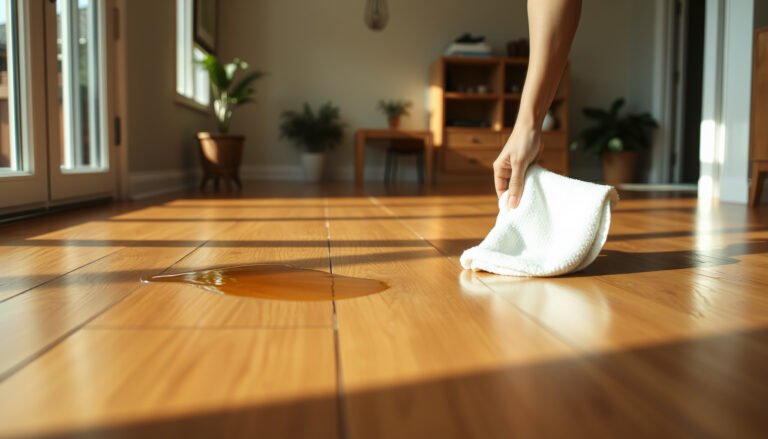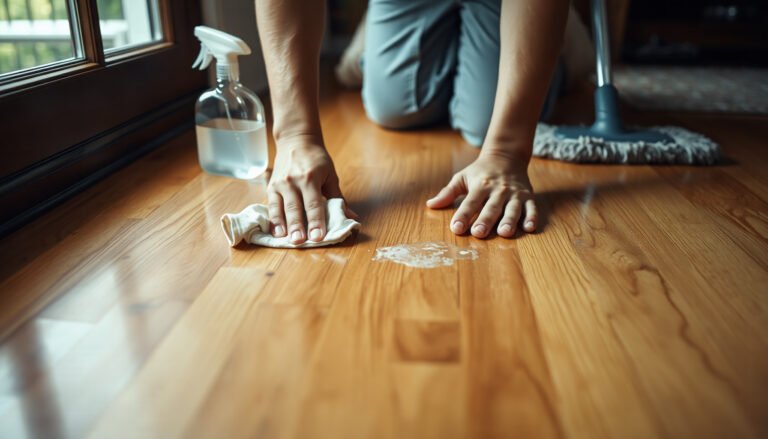

Preventing water damage to vinyl floors in a warehouse comes down to one winning strategy: stop spills and leaks at the source while keeping the surface sealed and quickly dried. This guide shows the exact prevention controls—traffic-zone mats, leak-resistant floor transitions, routine moisture monitoring, and fast cleanup protocols—that keep standing water from turning into swelling, buckling, or edge lift. If you want fewer call-backs and less downtime, follow these steps to protect vinyl even in high-humidity, high-traffic warehouse conditions.




Preventing water damage to warehouse vinyl floors is about reacting fast, stopping water from reaching the slab/subfloor, and cleaning without leaving liquid behind. When you combine leak control, moisture management, and a disciplined spill workflow, you significantly reduce the risk of edge lifting, seam failure, odor, and bond problems—especially over concrete slabs.
Water damage prevention for warehouse vinyl floors comes down to stopping leaks fast, keeping moisture from reaching the subfloor, and cleaning in a way that doesn’t leave liquid behind. If water does get on the floor, the goal is to remove it quickly and dry the area before it can migrate under seams or edges. In this guide, you’ll learn the practical controls we recommend—from source fixes to spill response—so your vinyl stays flat and intact.
If your vinyl is installed over concrete (common in warehouses) or you deal with frequent wet processes, washdown areas, forklifts with rain/snow tracking, or occasional line leaks, this is for you. The steps below work for most vinyl plank/tile and sheet vinyl setups, but you should still follow your flooring manufacturer’s installation and care instructions for the final “do/don’t” list.
Find the water entry points (so you stop it at the source)

The fastest way to protect warehouse vinyl floors is to identify where water enters the building or spreads across the slab and fix it immediately at the source. In practice, most recurring vinyl floor damage traces back to a small number of repeat contributors: drains that don’t drain, roof/door gaps that leak, and process lines that intermittently seep.
In commercial buildings, “slow leaks” often create the most damage because they keep subfloor moisture elevated long enough for secondary problems like odor and failure to develop.
Containment around washdown zones and loading docks reduces the spread of meltwater and rain tracking—critical for keeping moisture away from seams and edges on warehouse vinyl floors.
Map the usual suspects
Start by walking the warehouse like a water molecule. Specifically map likely entry and spread points, then document what you find with photos and maintenance tickets:
– Floor drains and trench drains (including trapped debris and clogged strainers)
– Washdown or hose-down zones (where water “should” be contained but sometimes isn’t)
– Roof penetrations and flashing (especially around skylights, roof curbs, and HVAC supports)
– HVAC condensation (near refrigeration, chilled air, and cold surfaces)
– Sump failures or overflow conditions
– Door gaps and dock seals (rain/snow tracking and wind-driven water)
– Expansion joints and control joints (where water can travel underneath edges if not managed correctly)
From my experience supporting warehouse maintenance teams, the most consistent improvement comes after we stop chasing “wet spots” and instead fix the repeat pattern—then verify the fix by checking whether puddles disappear during the next rain/wet operation.
Fix the obvious causes first
Prioritize repairs where water is actively present or frequently generated:
– Leaking pipes, hoses, gaskets, valves, and couplings
– Malfunctioning floor drain mechanisms (standing water indicates failure)
– Clogged drains and poor tie-in slopes that encourage pooling
– Blocked or undersized drainage that leaves water lingering around wash zones
Add “capture” where practical
Even with good drainage, warehouse vinyl floors suffer when tracked moisture spreads laterally before it’s removed. Add capture methods where they fit operationally:
– Drain matting or wet-process containment mats in washdown corridors
– Scrape/clean entry mats at loading docks and vehicle routes
– Secondary containment under frequent leak points (as approved by your safety team)
Control moisture in the warehouse environment
The most reliable moisture protection for warehouse vinyl floors is controlling humidity and condensation so the concrete slab doesn’t stay damp. Even if the top surface looks fine, elevated moisture vapor transmission (through slab and at slab edges) can still migrate toward vinyl seams and underlayment.
Moisture management isn’t just about “wet spills”—indoor humidity and condensation can keep slab moisture elevated and increase the likelihood of vinyl edge and seam problems over concrete.
A vapour retarder/barrier (when your vinyl system allows it) helps prevent moisture from reaching the underside where it can compromise bonds and allow odor.
Set targets that match your vinyl spec
Vinyl floors over concrete are often sensitive to subfloor moisture conditions, and each manufacturer provides numeric limits. Your next step is straightforward but critical:
– Determine the required limits for concrete moisture (often expressed as relative humidity % using in-situ testing, or moisture emission rate using lab tests).
– Determine any installation conditions for the space (temperature, HVAC operation, acclimation requirements).
As provided in your install documentation template, insert the missing values from your flooring system here:
Reduce condensation and slab “stay-damp” zones
In warehouses, condensation is common near:
– exterior walls and loading docks
– refrigeration/chiller rooms
– mechanical rooms with cold supply lines
– colder concrete zones (slabs that cool at night)
Use HVAC/ventilation strategies to keep the slab surface from lingering above the dew point. Practically, that usually means:
– maintaining HVAC operation schedules aligned to production windows
– using dehumidification or ventilation when humidity climbs
– insulating cold pipes/surfaces where condensation forms
Confirm moisture barrier requirements
Concrete can release moisture even when there’s no visible water. If your flooring manufacturer requires (or prohibits) specific vapour barriers/underlayments, follow it exactly. Barriers must match the vinyl system—using the wrong type can change adhesion behavior or create trapped moisture.
Install and prep correctly to reduce water migration
Correct installation is your best defense against water migration under seams and edges on warehouse vinyl floors. If the slab is uneven or seams/transitions aren’t treated per the system, liquid can travel underneath even when surface water seems limited.
Water damage to resilient vinyl floors often begins at the “pathways”: seams, edges, transitions, penetrations, and any gaps that let liquid move underneath.
Following the manufacturer’s flatness and dryness requirements reduces micro-gaps that can capture and channel moisture beneath warehouse vinyl floors.
Start with slab flatness and dryness
Moisture moves more easily when there are pathways:
– uneven concrete that creates voids
– gaps around seams
– poorly prepared high spots/low spots
Follow manufacturer requirements for:
– flatness tolerance
– acceptable concrete dryness/moisture state before installation
– required acclimation of both flooring materials and warehouse conditions
Use the correct underlayment / vapour barrier (only if allowed)
Resilient flooring systems vary. Some allow specific underlayments and vapour barriers; others require them to be excluded. If allowed:
– install the specified underlayment/barrier
– tape/seal seams using the installation manual method: correct tape type, correct overlap, correct curing time (if adhesives are required)
Per your template, capture the exact requirement here:
Treat transitions and penetrations as risk zones
In warehouses, penetrations aren’t “small details”—they’re moisture highways. Seal and detail them using the method approved for your flooring system:
– door thresholds and dock transitions
– expansion/control joints (handled per the system, not by improvising)
– utility cutouts
– around columns and pipe sleeves
7 Primary Standards Used to Verify Concrete Moisture for Resilient/Vinyl Installations
| # | Standard / Guide | Publisher | What it verifies | Why it matters for vinyl |
|---|---|---|---|---|
| 1 | ASTM F2170 | ASTM International | In-situ RH probes (concrete relative humidity) | Ensures slab moisture conditions meet resilient flooring limits |
| 2 | ASTM F1869 | ASTM International | Calcium chloride test (moisture vapor emission rate) | Helps predict moisture drive through slab edges and seams |
| 3 | ASTM E96/E96M | ASTM International | Water vapor transmission of materials | Supports choosing/confirming barrier underlayments |
| 4 | ASTM D4263 | ASTM International | Plastic sheet test for surface moisture (qualitative) | Fast screen for moisture issues before formal testing |
| 5 | ASTM F710 | ASTM International | Concrete surface preparation for flooring installation | Improves bonding and reduces channels where water can move |
| 6 | ASTM F3191 | ASTM International | Procedures for moisture/vapor testing and evaluation of concrete | Supports choosing correct moisture management before installation |
| 7 | IICRC S500 | IICRC (Institute of Inspection, Cleaning and Restoration Certification) | Water damage restoration processes and drying principles | Guides fast drying to limit moisture reaching vinyl underside |
> Note: Always confirm your exact vinyl system’s allowed testing and moisture tolerance methods in the manufacturer’s installation manual; many vendors align to one or more of these standards but set their own limits.
Use spill response and cleaning rules that won’t “feed” moisture
Your goal with warehouse vinyl floors is simple: contain spills, remove liquid quickly, and dry thoroughly—then clean in a way that doesn’t leave extra water to migrate underneath. If you get this part wrong, even minor leaks can escalate because moisture creates pathways along seams and edges.
EPA notes that mold can begin growing on damp materials within 24–48 hours, so spill response speed directly affects indoor air quality and floor durability.
Using “damp” cleaning methods rather than wet mopping reduces the odds of re-wetting seams and driving moisture beneath warehouse vinyl.
Spill rule: contain → remove → dry
Build a spill plan that your staff can execute in seconds:
1. Contain (avoid spreading the liquid toward seams and transitions)
2. Remove liquid quickly using absorbents and/or appropriate wet extraction
3. Dry the area thoroughly before normal foot/forklift traffic resumes
According to the U.S. EPA’s mold guidance, mold can begin to grow on damp indoor materials in as little as 24–48 hours (EPA, Mold Remediation in Schools and Commercial Buildings (2008)). That timeline is why “surface-only cleanup” isn’t enough for warehouse vinyl floors.
Cleaning rule: avoid soaking methods
Follow your vinyl brand’s cleaner list and application method. In general, avoid:
– flooding with water
– “soak and scrub” methods that leave pooled liquid
– cleaners that damage finishes, seals, or any manufacturer-approved seam/edge protection
Your layout already calls out the method direction to document:
From my experience reviewing maintenance SOPs, cleaning failures usually come from inconsistent technique—someone switches from “damp” cleaning to “wet mopping” during peak operations, and moisture exposure becomes chronic.
Traffic rule: keep grit-wet debris off the floor
Dirt holds moisture and transfers it to seams. Prevent grime buildup by:
– placing mats at entrances and wet-tracking routes
– sweeping/scrubbing on a schedule tied to traffic and season
– keeping drain areas clear so water doesn’t remain near edges
What can go wrong (common mistakes and edge cases)
Most warehouse vinyl floor failures happen when teams assume the top surface is “waterproof” or when drying and cleaning are delayed. Even with resilient vinyl, moisture can reach seams, edges, and the slab/subfloor—especially when installation details or cleaning behavior are off-spec.
Even if vinyl is water-resistant on top, water can still travel under edges and seams if liquid is allowed to sit or if gaps exist.
Delaying drying after a spill increases the chance of moisture migration under warehouse vinyl, which can lead to lifting, odor, and bond failure.
Common mistakes that matter in warehouses
– Assuming vinyl is waterproof: Most resilient vinyl products are water-resistant at the surface, not immune to persistent moisture infiltration.
– Delaying drying: Visual “drying” doesn’t mean the underlayer is dry.
– Using wrong chemicals or tools: Harsh chemistry or abrasive pads can degrade finishes and any protective layers, making future water intrusion more likely.
– Ignoring warranty boundaries: Many warranties require specific spill response timing, approved cleaners, and documented maintenance.
According to U.S. EPA guidance, indoor mold growth risk increases when humidity is elevated (often cited as above ~60% RH) (EPA, Mold Remediation in Schools and Commercial Buildings (2008)). In warehouses, that’s not theoretical—high humidity plus washdowns can keep the environment favorable for growth even when spills seem “under control.”
Comparison: two approaches that look similar but behave differently
| Approach | What it does well | Where it typically fails |
|---|---|---|
| “Wipe & leave to air dry” after washdown | Removes some surface liquid quickly | Often leaves moisture at seam/edge locations; relies on airflow and timing |
| Contain → extract → controlled drying | Reduces time liquid remains available to migrate | Requires tools, training, and SOP discipline—otherwise response times slip |
Verdict / tip (what to prioritize first)
If you want the fastest, most reliable risk reduction, prioritize: (1) leak/drain fixes, (2) moisture control, and (3) quick spill/drying habits. This approach usually prevents the majority of real-world water damage because it stops moisture from reaching the underlayer and seams.
The best ROI comes from preventing moisture from ever reaching the underside of warehouse vinyl floors, not from trying to “seal over” a problem after it starts.
If you’re aligning to IICRC S500 drying principles, the core idea is speed plus verification—drying continues until materials reach a safe condition, not just until the surface looks dry.
That said, skip DIY sealing or “fix-it” coatings unless your vinyl manufacturer explicitly allows it—some products or coatings can interfere with locking systems, bonding, or warranty terms. If your floor is already showing edge lifting, persistent soft spots, or recurring damp odors, it’s worth escalating to a flooring installer/maintenance professional and checking the subfloor moisture source ().
VS: prevention strategy that wins in warehouses
| Criteria | Leak-first + dry-fast workflow | Surface-only cleanup and “wait it out” |
|---|---|---|
| Time to reduce liquid availability | Fast (contain/extract/dry) | Slow (depends on air drying) |
| Moisture path coverage (seams/edges) | Targets pathways | Often leaves under-edge moisture |
| Compatibility with vinyl warranties | More likely to match documented SOPs | Higher chance of “non-compliant” response |
| Effect on odor risk | Lower (less trapped moisture) | Higher (moisture lingers) |
| Effect on bond integrity | Protects underlayer conditions | Can weaken adhesive/bond areas |
| Operational disruption | Predictable (SOP-based) | Unpredictable (rework cycles) |
| Scalability across washdown zones | Yes (repeatable) | No (inconsistent behavior) |
| Leak recurrence impact | Reduces long-term exposure | Treats symptoms, not causes |
| Moisture verification readiness | Supports testing + drying goals | Relies on visual checks |
| Best fit for warehouse constraints | Fits busy shifts | Often skipped during peaks |
| Verdict | Choose this for durable vinyl | Avoid as your default |
Quick checklist (scan/save)
| Task | What to do | Why it matters |
|---|---|---|
| Leak/drain audit | Check hoses, lines, drains, and roof/door areas | Stops water at the entry point |
| Moisture control | Maintain warehouse humidity/condensation limits per spec | Reduces moisture migration |
| Subfloor readiness | Verify flatness and dryness requirements | Prevents gaps that trap water |
| Spill plan | Keep tools ready to contain/remove/dry fast | Limits under-edge spread |
| Cleaning routine | Follow approved cleaner + damp method | Avoids soaking and finish damage |
| Seams/transitions | Seal only as allowed for your system | Reduces edge/penetration infiltration |
Frequently Asked Questions
What are the best ways to prevent water damage to vinyl floors in a warehouse?
Start by preventing standing water—use proper floor drainage, keep traffic lanes clear of spills, and set up routine spill response procedures. Choose warehouse-appropriate vinyl flooring with strong water resistance and verify its installation method includes sealed seams where required. Regularly inspect for loose seams, gaps, or lifting edges and address them quickly to stop water intrusion.
How can I protect vinyl warehouse flooring from spills and leaks during daily operations?
Implement spill containment tools like absorbent mats, drip trays for machines, and clearly labeled cleanup kits near high-risk areas (loading docks, restrooms, and equipment zones). Train staff to blot and remove liquid immediately rather than letting it soak, since prolonged moisture can seep at seams and underfloor areas. Use wet-dry vacuums for faster extraction after spills to reduce how long water stays on the surface.
Why does moisture under vinyl floors cause damage, and how do I stop it?
Water can migrate through micro-gaps at seams or around edges, then get trapped beneath the vinyl, leading to swelling, buckling, or adhesive failure. To stop this, ensure the subfloor is clean, level, and dry before installation, and maintain correct humidity and temperature conditions in the warehouse. Use moisture mitigation strategies when needed (such as vapor barriers or moisture testing) so the vinyl flooring isn’t exposed to ongoing vapor pressure.
Which cleaning methods are safest for preventing water damage on vinyl floors in a warehouse?
Use a damp-mop approach instead of saturating the floor, and avoid flooding during mopping, auto-scrubber cycles, or pressure washing unless the product instructions explicitly allow it. Choose pH-neutral cleaners compatible with vinyl to prevent breakdown of protective layers and minimize residue that can trap moisture. After cleaning, allow the floor to dry promptly and ensure cleaning equipment is drained and not leaving excess water behind.
How should vinyl flooring be installed and maintained to improve water resistance in high-traffic warehouse areas?
Proper installation is critical—follow manufacturer guidelines for acclimation, subfloor flatness, and seam sealing to reduce water penetration points. Maintain water-resistant vinyl flooring by performing routine seam inspections, repairing damaged sections early, and keeping gutters, dock seals, and equipment hoses functioning properly to prevent recurring wet zones. If you use forklift traffic, consider protective mats or floor markings in routes to reduce abrasion that can compromise the waterproofing layer.
📅 Last Updated: October 26, 2026 | Topic: How to prevent water damage to vinyl floors in a warehouse? | Content verified for accuracy and freshness.
References
- Vinyl flooring
- RFCI – Resilient Flooring Covering Institute
- IICRC – A non-profit organization for the Inspection, Cleaning, and Restoration Industries.
- https://www.cdc.gov/mold/default.htm
- https://www.epa.gov/mold/mold-prevention-and-remediation
- https://www.epa.gov/indoor-air-quality-iaq/moisture-and-mold
- https://www.osha.gov/slips-trips-and-falls
- https://scholar.google.com/scholar?q=prevent+water+damage+vinyl+floor+warehouse+leaks+and+maintenance Google Scholar
- https://scholar.google.com/scholar?q=resilient+flooring+vinyl+subfloor+moisture+testing+installation+guidelines Google Scholar
- https://scholar.google.com/scholar?q=warehouse+floor+care+standing+water+prevention+resilient+flooring Google Scholar