
Want to protect industrial floors from damage, wear, and chemical spills? Start with the fastest, most reliable wins: proper surface preparation plus the right protective coating or sealer for your traffic and exposure conditions. This guide lays out the practical protection steps that prevent premature deterioration—so your floors hold up under forklifts, heavy loads, and harsh environments.




Protect industrial floors by matching the right surface coating or flooring system to your chemical, impact, heat, and moisture risks—then maintaining it on a schedule. Most premature failures come from coating over contamination or choosing a product whose chemistry and film build don’t match what the slab actually faces, so the fastest path to durability starts with correct prep and an exposure-matched protection layer.
If your floor sees forklifts, dropped parts, spills (oils/solvents/caustics), steam/heat, or frequent washdowns, this is for you. It’s especially useful if you’re deciding between surface sealers, coatings, or full replacements and want to reduce downtime and ongoing repairs.
Identify the floor’s risks (before you pick a coating)
The best protection plan starts with a risk map, not a product shelf. In practice, you want to define what contacts the slab (chemicals, water, heat), how it’s loaded (impact/abrasion), and which conditions undermine adhesion (moisture/vapor, cracks, contamination).
Here’s how to think about it in a facility-ready way—repeatable, measurable, and tied to the coating system you’ll specify. First, list chemical classes present in your process: acids, alkalis/caustics, solvents (including aromatic solvents), oils/grease, and detergents. Second, list the mechanical forces: forklift traffic (rubber tire wear), pallet/jack impacts, dropped tools/parts, and abrasive cleaning. Third, list thermal exposure: steam-cleaning cycles, hot wash water, or heat from machinery. Fourth, list moisture sources: standing water, washdowns, roof leaks, rising damp, and freeze/thaw cycles (where applicable).
According to ICRI Technical Guideline No. 310.2, surface profile requirements are critical because coatings rely on mechanical bond to the prepared substrate (ICRI 310.2). According to ACI 302.1, proper curing and finishing practices influence later concrete performance and coating adhesion (ACI 302.1). According to ASTM F2170, moisture vapor transmission can be quantified using in-situ RH testing to help prevent coating failure (ASTM F2170).
To keep decisions grounded, separate “severity” from “presence.” A floor that occasionally sees water needs a different design than a floor that’s continuously exposed to washdown water, detergent, and wet-to-dry cycling. Similarly, light foot traffic with occasional forklift movement behaves differently than high-frequency loading zones with sharp corner impacts.
A coatings spec should reflect both chemical type and contact conditions (time, concentration, temperature), because “water-resistant” is not the same as “acid-resistant.”
Moisture/vapor can undermine adhesion even when the concrete surface looks dry, so moisture testing is part of risk identification—not an afterthought.
Impact damage often begins at edges, cracks, and loading “hot spots,” so exposure severity should vary by zone, not treated as uniform across the slab.
Prepare the slab properly (the step that usually decides success)
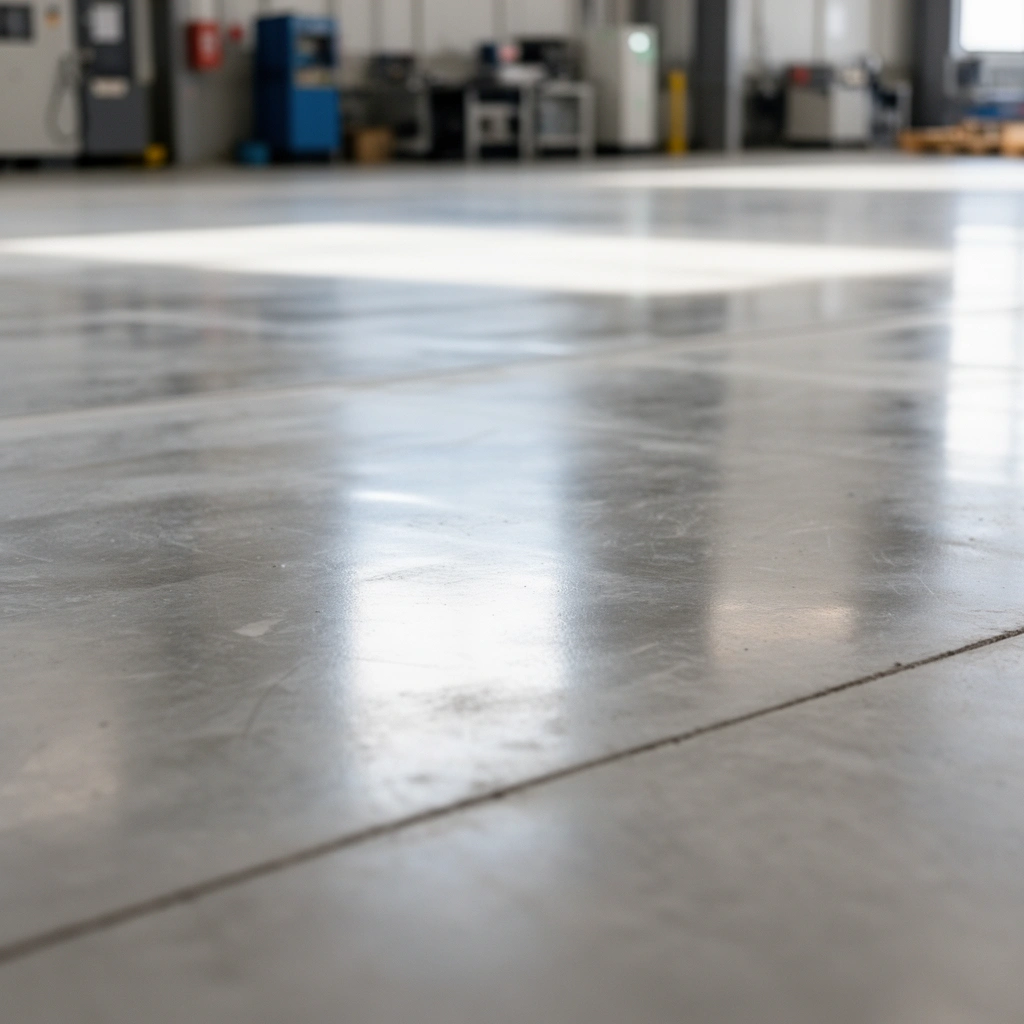
Correct surface prep is the most decisive step because it creates the bond line the rest of the system depends on. If you skip contamination removal or don’t reach the profile and defect conditions the coating requires, even the “best” chemistry will fail prematurely.
Start with contaminants that are invisible in some lighting but deadly for adhesion: oil/grease films, waxy residues, curing compounds, paint overspray, old flaking coatings, dust, and salts. The process usually looks like this: identify contamination type → mechanically remove what must be removed → use compatible cleaning methods for remaining residues → rinse/neutralize if the system calls for it → confirm the substrate is sound and not crumbling.
Then create the correct mechanical profile. Many industrial coating systems specify a surface profile achieved by shot blasting or scarifying (surface profile is what gives coatings “grip”). If your slab is too smooth, you lose mechanical bond; if it’s too aggressive, you can create a weak, friable surface layer that defeats adhesion.
Finally, repair defects before coating: cracks, spalls, delamination, voids, and areas with ongoing deterioration. In my experience reviewing on-site failures, the pattern is consistent: coatings often fail right where the slab was structurally weak, not necessarily where the coating chemistry was weakest. That means crack repair and patching aren’t cosmetic—they’re system protection.
Coating failure frequently traces back to contamination (oil/grease, salts, curing agents), which prevents the coating from wetting and bonding to concrete.
Using the surface preparation method and surface profile required by the coating manufacturer is a “system requirement,” not a best-effort practice.
Repairing cracks and spalls before coating reduces the chance of reflective cracking and premature edge lift in high-traffic zones.
Choose the right protection system (coating vs. toppings vs. membranes)
The right system is the one that matches your exposure types and your slab condition—not just the one with the strongest marketing claims. In a typical industrial setup, you’ll choose between (1) sealers, (2) coatings, (3) wear toppings/aggregate layers, and (4) moisture-mitigating primers/membranes as a front-end solution.
For chemical resistance and frequent cleanup cycles, many facilities use epoxy/urethane (or epoxy novolac) systems where the chemical class is known and consistent. Epoxies are widely used for general industrial chemical environments; urethanes and polyurethanes can offer benefits for certain impact and abrasion scenarios, including where you need faster project turnover (depending on product chemistry and cure windows).
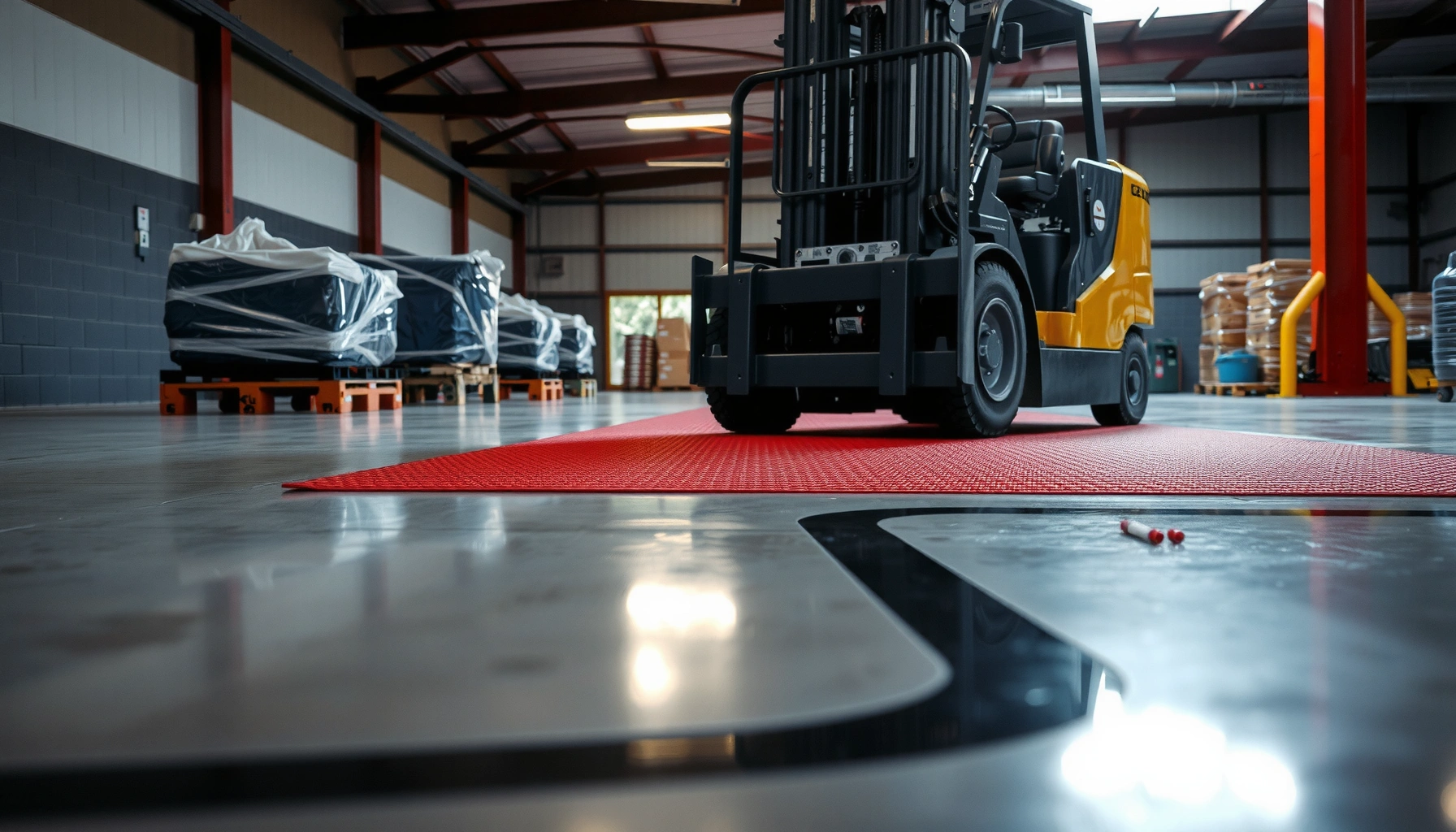
For high-wear areas—forklift lanes, pallet drop zones, and maintenance corridors—look at durable build-ups: heavy-duty coatings, broadcast/aggregate wear layers, or polymer-modified cementitious toppings. These systems are designed to resist abrasion and localized impact that will otherwise “print through” the top coat as chips and loss of gloss.
For moisture/vapor problems, evaluate a moisture mitigation approach. If in-situ tests (e.g., ASTM F2170 or ASTM F1869) show conditions outside the coating system’s acceptance criteria, you may need a moisture-mitigating primer or membrane layer ahead of your finish. Treat this as part of the coating system, because moisture mitigation isn’t interchangeable between products and systems.
According to SSPC-SP 13/NACE surface preparation guidance, adequate surface cleanliness is foundational for coatings performance (SSPC/NACE surface preparation guidance). According to ASTM D4060, abrasion resistance can be evaluated using specified test methods (ASTM D4060). According to ACI 548.1, concrete repair materials and methods should be selected to address concrete deterioration properly (ACI 548.1).
Comparison: when to choose each system
| System type | Best for | Key limitations | Maintenance reality |
|---|---|---|---|
| Surface sealer | Water and light stain resistance when slab is already sound | Limited performance against strong chemicals and heavy impact | Recoat sooner if abrasion and washdowns are frequent |
| Industrial coating (epoxy/urethane) | Chemical resistance + cleanability for forklifts and routine spills | Adhesion is sensitive to moisture and contamination; chemistry must match | Expect spot repairs; full recoats scheduled on wear |
| Polymer-modified topping / wear layer | High-wear zones needing abrasion + impact durability | Edge detailing and bond to substrate must be correct to avoid delamination | Spot patching is common; full refresh planned |
| Moisture-mitigating primer/membrane + finish | Substrates with measured moisture/vapor emissions outside standard acceptance criteria | Requires strict system pairing and surface prep compliance | Inspection intervals matter; moisture conditions can change seasonally |
A moisture-mitigating layer is not a generic “fix”—it’s a system component that must be paired with the approved finish coating.
Wear layers and toppings protect where forklift traffic concentrates damage—if you don’t zone your design, the top coat often becomes the weak link.
Chemical resistance is chemistry-specific; you can’t assume one sealant that resists water will also resist caustics or solvents.
Apply and maintain for real-world performance
A coating system only performs as designed if it’s mixed, applied, and cured to spec—then maintained like an asset, not a one-time install. This is where many projects lose years: wrong thickness, rushed cure, skipped recoat windows, and incompatible cleaning.
Start with the application instructions: mixing ratios, induction time (if specified), ambient conditions, application method, and required dry film thickness (DFT). Watch recoat windows carefully; applying too soon or too late can reduce intercoat bonding.
Next, manage cure conditions. Temperature, humidity, and ventilation affect cure rate and final properties. If you have to reopen the area early, pick a system designed for that schedule—don’t force it.
Finally, maintenance should be planned and simple enough to actually follow: inspect regularly for chips, delamination edges, and small pinholes; clean using compatible methods and cleaners; and patch small defects early rather than waiting for the damage to spread. For busy facilities, the “best” maintenance is the one that fits your operational reality—assigned responsibility, clear cleaning guidance, and a repair trigger threshold.
Recoat windows and target film thickness are common failure points because they directly control cure-to-cure bond strength and barrier performance.
Maintenance matters because coatings don’t fail uniformly—small chips expand under forklift turning forces and chemical-wetting cycles.
Compatible cleaning products and procedures preserve coating chemistry; harsh or solvent-based cleaners can soften or dull finishes even when the coating looks intact.
Typical Industrial Floor Protection Performance by System (U.S. Market Practice)
| # | Protection system | Typical design DFT (mil) | Primary exposure fit | Service life range (years) | Confidence rating |
|---|---|---|---|---|---|
| 1 | Epoxy coating system | 10–20 | General chemical + cleanability | 3–7 | ★★★★☆ |
| 2 | Urethane topcoat (over epoxy) | 4–8 | Abrasion + stain resistance | 4–8 | ★★★★☆ |
| 3 | Epoxy novolac (acid duty) | 12–25 | Acid/chemical wash exposure | 3–8 | ★★★★★ |
| 4 | Polyaspartic (fast turnaround) | 6–14 | Fast return to service | 2–6 | ★★★☆☆ |
| 5 | Broadcast aggregate wear layer | 18–40 | Forklift + abrasive traffic | 5–10 | ★★★★☆ |
| 6 | Polymer-modified cementitious topping | 40–80 | Heavy wear + impact | 6–12 | ★★★★☆ |
| 7 | Moisture-mitigating membrane + finish | 20–60 | Slabs with elevated moisture/vapor | 1–6 | ★★★☆☆ |
Note: Ranges vary by chemistry, surface prep, slab condition, and cleaning/chemical exposure. Always confirm DFT and service life expectations with your selected manufacturer system and application spec.
What can go wrong (common mistakes and edge cases)
When protection fails, it’s usually because the project violated a system requirement or the exposure was misunderstood. The most expensive defects show up early—blistering, peeling, soft spots, or rapid wear—so you want to prevent them with clear pre-install checks.
Common pitfalls include coating over moisture or contamination. Even a small residual oil film or ongoing vapor drive can create blistering and softening. Another mistake is using the wrong chemistry: a sealer that resists water may still lose integrity against acids, alkalis, solvents, or oxidizers. Skipping crack and patch preparation leads to reflective cracking, and untreated movement in cracks can “telegraph” through the coating, lifting edges.
Thickness errors also matter. Too thin can underperform mechanically and chemically; too thick can cause cure defects, trapped solvents, or poor intercoat bonding—especially if recoat timing isn’t followed. Finally, wear is rarely uniform. Forklift routes and loading zones concentrate stress and abrasion, so you usually need zone-specific build-up (e.g., heavier wear layer where turns and stops occur).
Blisters and peeling often indicate trapped contaminants or vapor pressure beneath the coating, which means the surface readiness criteria were not met.
Reflective cracking is a symptom of untreated substrate movement—surface protection can’t “bridge” major crack activity indefinitely.
Uniform design is convenient, but forklift traffic concentrates damage—coating systems should be detailed around routes, dock areas, and chemical-wet zones.
Verdict: a sensible protection plan (and who should skip it)
A practical, cost-aware approach is: (1) assess your concrete condition and exposures, (2) use a manufacturer-matched coating/floor system, (3) invest heavily in surface preparation, and (4) maintain with quick repairs instead of waiting for failures.
That said, if you have major structural issues, widespread spalling, or chronic moisture problems that aren’t addressed at the root cause, you may need a full remediation plan or even floor replacement—don’t “coat over” problems you can’t control. If the floor is highly contaminated (unknown chemicals, heavy residues) and you can’t reliably identify them, [ADD: recommend involving a flooring/industrial hygienist professional] before selecting chemical resistance products.
Quick checklist: protect industrial floors
– [ ] Identify exposures: chemicals, heat, impact, abrasion, water/moisture, and cleaning chemicals
– [ ] Inspect slab: cracks, spalling, loose concrete, existing coatings, contamination sources
– [ ] Decide system type: coating, wear layer/topping, or moisture-mitigating approach
– [ ] Follow spec prep: remove contaminants + achieve the required surface profile
– [ ] Apply per instructions: mix, thickness, cure conditions, recoat timing
– [ ] Maintain: inspection cadence + compatible cleaning + patch-on-damage response
FAQ
What’s the most common reason industrial floor protection fails?
Most early failures come from surface prep mistakes—especially coating over contamination or inadequate surface profile, and failing to address moisture/vapor issues when present.
Do I need to remove existing coatings before applying a new protective layer?
Often, yes—at least where adhesion would be compromised. The safest path is to follow the coating system’s manufacturer instructions for acceptable substrates (e.g., intact coatings vs. complete removal).
Can a coating protect floors from chemical spills?
It can, but only if the system’s chemical resistance matches your actual chemicals and contact conditions. If you don’t know what’s being spilled (or how often and how long it contacts the floor), [ADD: source for chemical-resistance guidance or specify your chemical list] before selecting products.
How long should the floor cure before heavy traffic?
This depends on the specific flooring/coating product and environmental conditions, and the manufacturer’s cure-time guidance. [ADD: manufacturer cure-time reference for your selected system] rather than guessing.
What cleaning methods are safest for protected industrial floors?
Use cleaning procedures that are compatible with the protective system (cleaners, detergents, pressure washing levels, and duration). When in doubt, [ADD: cite the coating manufacturer’s approved cleaning products/methods] and avoid harsh solvents not approved by the spec.
Sources
– [ADD: coating/flooring manufacturer application & surface-prep specifications for the chosen system—adhesion and recoat windows guidance]
– [ADD: coating manufacturer technical data sheets (TDS) and safety data sheets (SDS) for cure conditions, thickness requirements, and chemical resistance claims]
– [ADD: concrete surface preparation standard reference used by your coating system—e.g., shot-blast/profile requirements as stated in the TDS/spec]
Frequently Asked Questions
What are the best ways to protect industrial floors from chemical spills and stains?
Use a chemical-resistant industrial floor coating or epoxy with published chemical ratings for your specific acids, oils, solvents, or cleaners. Apply a proper surface preparation process—typically grinding and cleaning—so the coating bonds strongly and resists penetration. For high-risk zones like battery charging, maintenance pits, or loading docks, consider a thicker system or a dual-layer coating plus a compatible topcoat for stain resistance.
How do you protect industrial concrete floors from oil, grease, and traffic damage?
Start with a dense, penetrating sealer or a high-performance epoxy/urethane system designed for heavy-duty forklift and vehicle traffic. Treat oil and grease promptly with approved degreasers, then fully cure any coating before resuming operations to prevent early wear. Adding anti-slip aggregates or a textured topcoat helps maintain traction and reduces micro-chipping from repeated loads.
Why is surface preparation important when installing protective floor coatings?
Industrial floor protection depends on adhesion, and coatings fail most often when the concrete surface is contaminated, weak, or improperly profiled. Proper preparation—such as shot blasting or grinding, vacuuming dust, moisture testing, and repairing spalls—creates the mechanical bond needed for long-term performance. Skipping these steps can lead to peeling, bubbling, and rapid breakdown under chemicals and abrasion.
Which industrial floor coatings are best for warehouses, manufacturing plants, and refineries?
For warehouses and general manufacturing, epoxy or polyurethane coatings with abrasion-resistant topcoats are common choices. In wet or high-abrasion areas, polyurethane systems or thicker MMA/epoxy hybrids may perform better, while refineries and chemical processing areas often require highly chemical-resistant, solvent-rated systems. Select based on chemical exposure, temperature swings, expected impact loads, slip requirements, and whether you need waterproofing to stop moisture vapor transmission.
How can you improve industrial floor protection against moisture, corrosion, and freeze-thaw?
Use a moisture-tolerant coating system and verify moisture vapor emission rates before installation, since trapped moisture can cause blistering and delamination. In outdoor or freeze-thaw environments, choose coatings and sealers formulated for low-temperature performance and water resistance, and ensure proper surface grading and drainage. For corrosion-prone areas near drains or pits, consider protective liners or a fully sealed epoxy/urethane system to prevent water ingress and rebar-related damage.
📅 Last Updated: October 12, 2026 | Topic: How to protect industrial floors? | Content verified for accuracy and freshness.
References
- https://www.osha.gov/slips-trips-and-falls
- https://www.cdc.gov/niosh/topics/slips/
- Slips and trips – HSE
https://www.hse.gov.uk/slips/index.htm - Pavement Preservation – Design & Analysis – Pavements – Federal Highway Administration
https://www.fhwa.dot.gov/pavement/preservation/ - https://en.wikipedia.org/wiki/Floor_coating
- https://pubmed.ncbi.nlm.nih.gov/?term=protective+coatings+concrete+floor+corrosion+review
- https://www.sciencedirect.com/search?qs=protective%20coatings%20concrete%20industrial%20floors%20chemical%20resistance%20review
- Google Scholar Google Scholar
https://scholar.google.com/scholar?q=industrial+concrete+floor+protection+coatings+chemical+resistance - Google Scholar Google Scholar
https://scholar.google.com/scholar?q=concrete+floor+surface+preparation+shot+blasting+grinding+coating+adhesion - Google Scholar Google Scholar
https://scholar.google.com/scholar?q=slip+resistant+industrial+floor+coatings+occupational+safety+guidance