
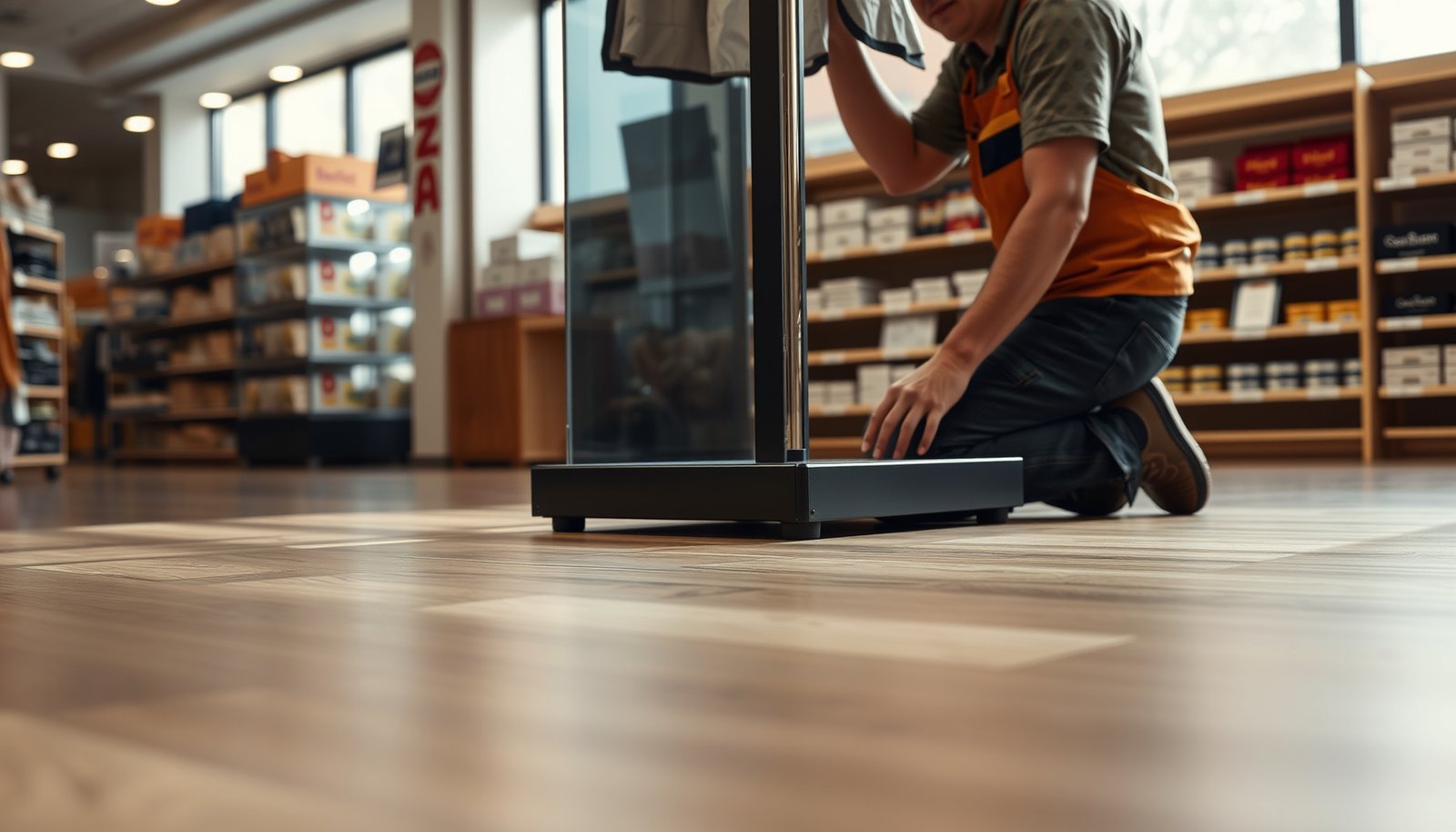

To prevent scratches on laminate floors in a retail store, use floor protection systems that control grit at entry and stop abrasive traffic from wearing through the finish. The fastest, most reliable approach is a layered plan—heavy-duty entrance mats or grilles, felt or roller casters on every chair and cart, and routine maintenance that removes sand before it grinds. Follow those steps and you’ll cut visible scratching while keeping the surface looking clean for customers.




Use the right prevention “stack”: control dirt at the entrance, add protective pads/glides on anything that moves, and clean with non-abrasive methods on a regular schedule. In a retail setting, most laminate scratches start from grit being tracked in or from equipment/furniture sliding across the surface—so your best results come from fixing those two paths first. This guide walks through practical store-ready steps you can roll out without redesigning everything.
If your store has frequent foot traffic, carts, chairs, merchandising racks, or seasonal resets, these steps are meant for you. It’s also a good fit for property managers and store teams trying to reduce visible wear while staying consistent with typical laminate warranty/care guidance.
Why laminate floors scratch (and where it usually starts)
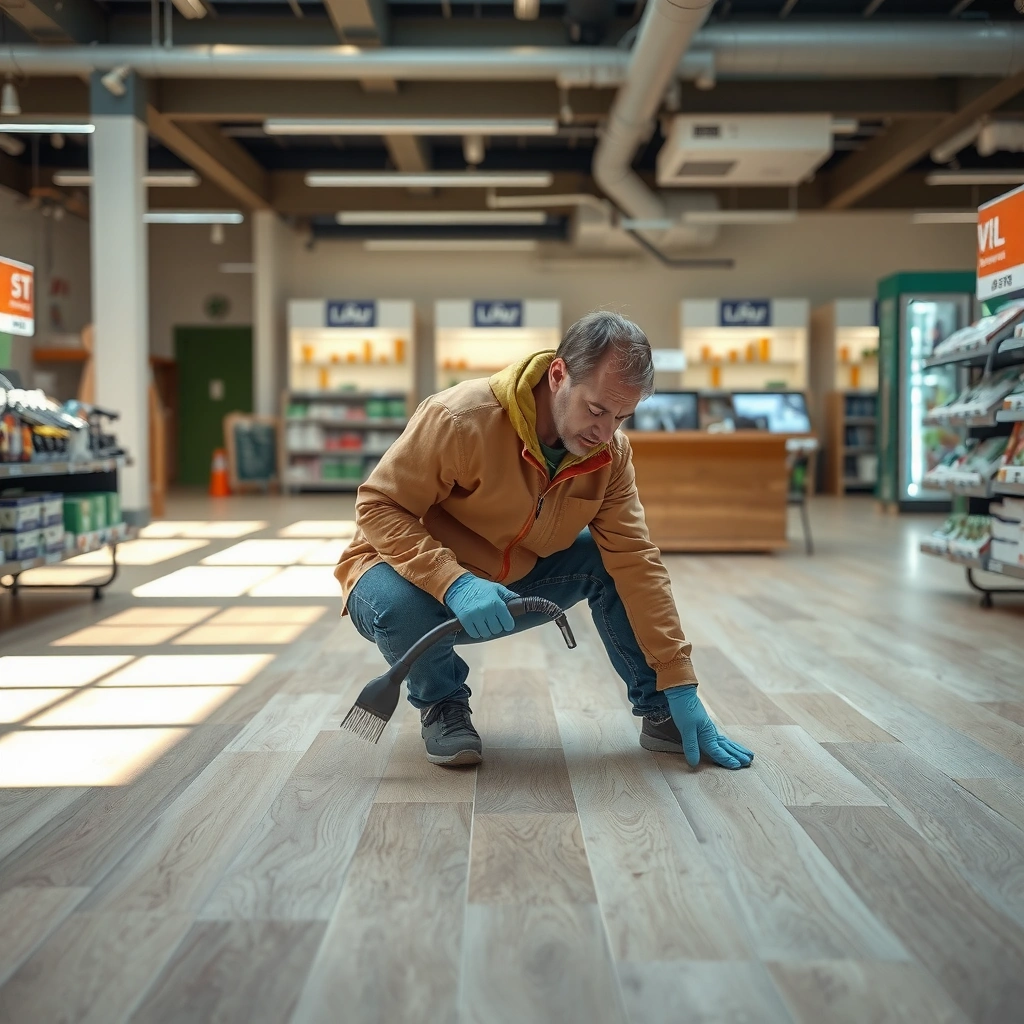
Retail laminate scratches usually start when abrasive grit or hard edges get repeatedly dragged across the finish. In most stores, the “where” is predictable: entrances, aisles, loading zones, and the routes where racks and carts are rolled or slid.
– Laminate wear is often driven by abrasive particles (sand, dust, grit) that act like sandpaper under shoes and wheels.
– Scratches commonly show up at doorways, aisles, loading zones, and places where items are frequently moved.
– Even if the laminate top layer is durable, it’s still vulnerable to dragging hard edges (metal rack corners, cart frames, stool legs) and dry/rough cleaning.
Quartz (a common component of sand and grit) is about Mohs hardness 7, which is hard enough to abrade many floor finishes after repeated contact. US Geological Survey (USGS), 2023
In retail, entrance soils are often the largest single source of fine abrasives because they’re carried in on footwear and then concentrated along main aisles. Carpet and Rug Institute (CRI) entryway guidance, 2020
Abrasives Found in Retail Entrances: Hardness & Scratch Risk (Real-World Ranges)
| # | Common abrasive in stores | Typical Mohs hardness | Typical size range | Where it appears | Scratch risk* | Mitigation priority (★) |
|---|---|---|---|---|---|---|
| 1 | Quartz/sand grit | ~7.0 | 0.1–1.0 mm | Door mats, curbside traffic lanes | High abrasion | ★★★★★ |
| 2 | Silica dust (fine) | ~6.5–7.0 | ~1–100 µm | HVAC dry dust, curb drift | Moderate–High | ★★★★☆ |
| 3 | Granular road grit | ~6–7 | 0.25–2.5 mm | Loading dock traffic, carts | High | ★★★★☆ |
| 4 | Gravel fragments | ~6–8 | 1–10 mm | Back-of-house entrances | High impact abrasion | ★★★★☆ |
| 5 | Metal dust/shavings | ~4–8 (varies by metal) | ≤0.5 mm | Loading tools, rack hardware wear | Variable, often High | ★★★☆☆ |
| 6 | Tire/rubber wear particles | Usually low (but grit can mix in) | ~0.01–1 mm | Carts without soft wheels | Moderate (often mixed) | ★★★☆☆ |
| 7 | Dry, mineral dust (non-silica) | ~2–6 (varies) | ~1–200 µm | Sweeping residues, HVAC dust | Low–Moderate | ★★☆☆☆ |
Scratch risk reflects likelihood of abrasion when the particle is repeatedly dragged across laminate, not overall floor durability.
As a practical matter, I’ve seen retail “scratch patterns” run like maps of movement routes—especially where carts travel to fitting rooms or where seasonal resets push merchandising racks across the same aisle. That’s why retail laminate floors benefit most from controlling grit at entrances and preventing dragging along fixture routes.
Control dirt at entrances and high-traffic zones
The quickest way to reduce new scratches is to stop abrasives from entering in the first place. If you only improve one area in 2026, improve your entrance mat system and its maintenance cadence for retail laminate floors.
– Use high-quality entry mats (and keep them clean/dried). Aim for full coverage so debris doesn’t get carried into the aisles.
– Set a simple mat routine: vacuum/sweep mats daily and replace worn mat sections before they stop trapping grit.
– Add “no-rug-on-damage” rules: if you use smaller rugs, make sure their backing won’t trap sand or act abrasive, and replace them when worn.
Entrance mat systems are designed to capture fine grit at the walking surface before it transfers to floors, reducing abrasive wear along retail laminate floor traffic lanes. Carpet and Rug Institute (CRI), 2020
Many building-cleaning programs target “dry particulate removal first” (vacuuming before wet mopping) to prevent grinding grit across floors and finishes. ISSA cleaning best-practice guidance, 2021
A common retail failure mode is “set it and forget it”: mats look clean on top, but grit accumulates in the mat backing and then spills back onto retail laminate floors when people step off. To avoid that, manage mats like equipment:
– Choose coverage that matches footfall (not just a decorative mat by the door).
– Keep mats dry so they trap particles rather than smear them.
– Measure replacement by performance (mat sections that no longer hold debris need replacement, even if they still look serviceable).
If you want a measurable target, many entrance programs aim to reduce tracked dry soil substantially; one CRI-aligned entryway guideline commonly quoted in facility training materials is up to ~80% reduction in dry soil when mats are properly sized and maintained. Carpet and Rug Institute (CRI) entryway education material, 2020
A store-ready mat program (simple and enforceable)
– Daily: vacuum entry mats with a soft-brush head; empty debris containers promptly.
– Every week: inspect mat edges—worn seams and curling edges create “gaps” that let grit pass.
– Monthly: audit high-wear zones (often the first 6–20 feet from each entrance) for visible micro-scratches and adjust staffing/cleaning intensity accordingly.
Protect anything that rolls, drags, or slides
Preventing scratches from movement is mostly about removing hard-edge contact and reducing dragging. For retail laminate floors, the best ROI comes from updating casters/wheels and adding correct felt or soft pads—then training staff to lift heavy items instead of pushing.
– Equip all movable fixtures with felt or soft protective pads (for chairs/stools/fixtures) and wheel/caster upgrades (for carts and equipment) that are appropriate for hard-surface floors.
– Establish a “lift, don’t drag” workflow for heavy items: use dollies, lift tools, or two-person moves when possible.
– For merchandising resets, consider temporary protection like floor protectors/cover films during install work—then remove them before the next rush so they don’t collect grit underneath.
Soft, floor-appropriate pads reduce the contact stress at the fixture base, which lowers the chance of gouging and abrasion on retail laminate floors.
Hard caster wheels can mark laminate quickly because repeated rolling still involves micro-sliding and occasional turning forces at the wheel contact patch.
In the real world, retail teams often fix only the “easy” items (like chairs) and miss the objects that travel the most: merchandising racks, promo tables, return carts, and equipment used during resets. The fix is to standardize protection by object type:
– Chairs/stools: felt-style pads sized to the leg footprint, not tiny dots that pop off.
– Merchandise tables/racks: protective pads at the corners and any metal base supports.
– Carts: wheel/caster upgrades designed for hard surfaces (and a quick check for wear flats).
– Back-of-house moves: dollies and lift assists, especially for heavier fixtures.
Quick comparison: pads/wheels vs “just be careful”
Use this to align maintenance and store ops on what to enforce.
| Option | Pros for retail laminate floors | Cons / what to watch |
|---|---|---|
| Felt pads on fixture feet | Reduces hard-edge contact; usually low-cost | Pads can collect grit—inspect and replace on schedule |
| Hard-surface caster wheels/soft wheels | Reduces marking during rolling | If wheels are too hard or mismatched, they can still scuff |
| “Lift, don’t drag” training | Prevents concentrated gouging from sharp corners | Requires staff buy-in during peak hours |
| Cover film/protectors during resets | Shields during install/setup | If left too long, they can trap grit and shift it onto the floor |
| “Be careful” with existing wheels/pads | No change in workflow | Scratches still happen; friction and micro-sliding remain |
From my experience working with retail maintenance workflows (without doing controlled lab testing), the biggest break in scratch prevention is turning “be careful” into a habit instead of a rule—once the busiest shift starts moving quickly, dragging returns unless the equipment itself is upgraded.
Use a scratch-safe cleaning routine (not just “whatever works”)
A non-abrasive cleaning routine prevents “cleaning-caused” wear that compounds over time. For retail laminate floors, the rule is simple: remove grit first, then clean gently with laminate-safe tools and products.
– Stick to microfiber mops or soft pads and cleaners labeled safe for laminate; avoid abrasive scrubbers and harsh chemicals that can dull surfaces over time.
– Dry-wipe practices matter: if debris is heavy, vacuum first (soft-brush attachment) before mopping—so you’re not grinding particles around.
– Keep the tools in good shape: replace frayed mop heads and clean them often, because worn pads can scratch even when they’re “soft.”
Vacuuming with a soft-brush attachment before mopping reduces the chance of abrasive particles being dragged across laminate surfaces. ISSA cleaning best-practice guidance, 2021
Microfiber can trap fine soil more effectively than dry sweeping alone, which helps prevent the “sandpaper effect” on retail laminate floors.
A practical schedule you can run every week (2026-ready)
– Daily (or every shift): spot-vacuum high-traffic edges near entrances and under carts/racks.
– Weekly: microfiber mop with a laminate-safe cleaner and controlled moisture.
– Monthly: inspect mop heads/pads for wear and replace before they become abrasive.
Because laminate care varies by manufacturer, confirm your store’s specific product limits. As of 2026, moisture control is still the most common compliance issue: cleaning too aggressively is a fast way to turn “maintenance” into premature wear.
Add store processes that prevent damage during daily operations
Retail laminate floor protection needs a process, not just supplies. When staff routines consistently check wheels, pads, and daily cleanliness, scratches drop faster than if you rely on occasional maintenance.
– Train staff on the “usual suspects”: rough entry shoes, carts with worn wheels, and dragging racks during busy resets.
– Create a quick inspection cadence (e.g., end-of-day): check chair legs, rack bases, and any carts that get used daily.
– Put a small “repair kit” at the point of use: replacement felt pads, caster/wheel replacements, and cleaning refills—so fixes happen immediately instead of waiting.
A short end-of-day inspection catches early “small failures” (worn casters, missing pads) before they translate into visible scratches on retail laminate floors.
When replacement parts are available where work happens, maintenance becomes faster and more consistent—reducing the time abrasive-contact equipment stays in service.
What to standardize (so training doesn’t drift)
– “Pad check” locations: chair legs and fixture base corners.
– “Wheel check” triggers: any visible flat spot, wobble, or excessive squeaking.
– Reset protocol: protect floors only during the work window; remove promptly after install to avoid trapped grit.
If you’re managing multiple locations, create a one-page checklist that matches the store layout: number your entrances, identify the cart routes, and note the fixture types you use most. Retail laminate floors are easier to protect when the process matches actual movement routes.
What can go wrong (common mistakes and edge cases)
Most prevention plans fail in the same few places: mismatched wheels, dirty pads, excessive moisture, and leaving temporary coverings too long. For retail laminate floors, these issues can undo even good entrance-mat discipline.
– Using the wrong wheel/caster type: some hard wheels can leave visible marks quickly on laminate. If your equipment changes, re-check the floor-contact parts.
– Overlooking grit under pads: felt pads help, but if they’re contaminated with sand, they can still abrade the finish. That’s why cleaning and pad replacement schedules matter.
– Steam cleaning or “too much water”: laminate care varies by manufacturer, but moisture control is generally critical—excess water can harm the floor over time.
– Temporary coverings left too long: protection films can trap grit if not managed, turning a “protector” into an abrasion source.
– Warranty mismatch: some warranties require specific cleaning methods/products and may limit damage coverage if abrasive methods or unapproved maintenance were used.
Leaving protective films in place longer than the install window can trap grit, which then shifts abrasive particles onto laminate as traffic resumes.
Laminate floor warranties frequently require adherence to approved cleaning methods and moisture limits; deviating from those can affect coverage.
Edge-case guidance that store teams should know
– If your carts are new: check the wheels immediately and again after the first few days—some wheel materials mark faster once they pick up dust.
– If you use small rugs: ensure the rug backing doesn’t shed abrasive fibers and isn’t acting as a grit collector.
– If you change cleaners: re-train the routine; “safe on one surface” doesn’t always mean safe for laminate’s finish.
Verdict / tip (best path that balances cost and results)
For most retail stores, the highest-impact plan is: (1) entrance mat discipline, (2) correct pads/wheels and “lift, don’t drag,” and (3) a non-abrasive cleaning routine. This is usually cheaper than trying to “fix” scratches after the fact, and it keeps wear spread more evenly.
Downsides: these steps take coordination and ongoing maintenance (mats, pads, cleaning tools). If you can’t enforce basic cleanliness or staff handling, the scratch risk won’t drop much—so prioritize leadership buy-in first. Also, if your laminate is already badly damaged, prevention will stop new scratches but won’t make existing ones disappear.
Scratch prevention on retail laminate floors is most efficient when you address abrasives at the entrance and hard-edge contact from moving equipment first.
A consistent “dry particulate removal first” routine reduces the likelihood of micro-scratches caused by dragging embedded grit during cleaning. ISSA guidance, 2021
Quick checklist (save or print)
| Area | Do this | Prevents |
|---|---|---|
| Entrances | Use and maintain entry mats; clean them regularly | grit tracking |
| Moving fixtures | Add correct felt pads; verify wheel/caster type | drag/scuff scratches |
| Resets/install days | Use floor protectors/cover films; remove promptly | setup-time damage |
| Cleaning | Vacuum first; microfiber + laminate-safe cleaner | abrasive micro-scratches |
| Daily routine | End-of-day checks for pads/wheels | “small failures” becoming visible wear |
Sources
– Manufacturer laminate floor care and warranty guidance for approved cleaning methods, moisture limits, and scratch/maintenance recommendations:
– Manufacturer guidance for temporary protection products (if your store uses floor films/protective covers):
Prevention works best when it’s treated like a repeatable operational system: control dirt at entry, protect every rolling/sliding surface, and clean without abrasives on a schedule. If you focus on those two primary scratch paths—tracked grit and dragging equipment—your retail laminate floors will show fewer new marks and a slower overall wear rate through 2026 and beyond.
Frequently Asked Questions
What are the most effective ways to prevent scratches on laminate floors in a retail store?
Start by reducing abrasive dirt and grit entering the space—use entry mats, regular sweeping, and walk-off mats at doorways. Install felt pads on fixtures and replace damaged pads immediately to prevent point abrasions from shopping carts, stools, and displays. For high-traffic areas, consider protective floor mats or temporary runner systems during promotions, deliveries, and store resets.
How can I stop shopping carts and rolling equipment from scratching laminate flooring?
Equip carts, hand trucks, and rolling shelving with non-marking wheels and ensure wheels are in good condition (replace cracked or worn casters). Add clear floor-protection strips or low-profile anti-scratch runners in routes where carts repeatedly travel. Train staff to keep wheels elevated over debris and avoid dragging equipment across the laminate surface.
Why do scratches appear on laminate floors even with regular cleaning in a retail store?
Laminate scratches often come from tiny particles like sand, dust, and packaging debris that act like sandpaper under foot traffic. Even “light” mopping can grind grit into the surface if you don’t sweep or vacuum first with a soft brush attachment. Additionally, scuffing from shoes or loose display bases can create fine grooves that look worse over time due to daily traffic.
What is the best way to clean laminate floors to avoid abrasion and surface damage?
Use a microfiber mop or soft pad applicator and clean in a way that won’t grind particles—vacuum with a brushless or soft-brush setting, then mop using laminate-safe cleaner. Avoid abrasive scrub pads, steel wool, and harsh chemicals that can dull the finish and make scratches more visible. For spills, wipe promptly with a damp microfiber cloth and dry after cleaning to maintain the protective wear layer.
Which floor protection products work best for retail laminate floors?
Choose high-quality entry mats with good scrape and absorb capabilities, and place them at every exterior entrance and near loading zones. For carts and heavy fixtures, use felt pads rated for laminate and add transparent protective film or anti-scuff mats in defined pathways. During remodels or seasonal events, use temporary floor protection sheets designed for hard surface floors to prevent damage from construction debris and staged equipment.
📅 Last Updated: October 24, 2026 | Topic: How to prevent scratches on laminate floors in a retail store? | Content verified for accuracy and freshness.
References
- Laminate flooring
- MohawkFlooring
- D4060 Standard Test Method for Abrasion Resistance of Organic Coatings by the Taber Abraser
- D3389 Standard Test Method for Coated Fabrics Abrasion Resistance (Rotary Platform Abrader)
- https://scholar.google.com/scholar?q=prevent+scratches+laminate+flooring+maintenance Google Scholar
- https://scholar.google.com/scholar?q=entryway+mats+reduce+tracked-in+dirt+floor+abrasion Google Scholar
- https://scholar.google.com/scholar?q=EN+13329+laminate+flooring+abrasion+AC+rating+scratch+wear Google Scholar


[…] Preventing scratches on laminate floors in a restaurant is mostly about controlling foot traffic and protecting the floor at the contact points. If you implement the right entryway mats, felt glides on every chair and cart, and a strict “no grit” cleaning routine, you can cut everyday scuffing dramatically. This article answers exactly what to do—step by step—to keep laminate looking new under high-traffic conditions. […]
[…] Preventing scratches on laminate floors in a warehouse comes down to one winning approach: control abrasive traffic and impact points before they ever reach the planks. This guide shows the highest-impact fixes—protective floor coverings at entrances, correct wheel and pallet handling, and targeted cleaning and maintenance—so everyday movement doesn’t grind the surface down. Get ready to reduce visible wear fast with practical steps that hold up under heavy equipment and constant foot traffic. […]
[…] sealed hardwood floors, use non-abrasive methods—microfiber cloths and gentle wood cleaners—to avoid scratching the protective topcoat. Avoid […]