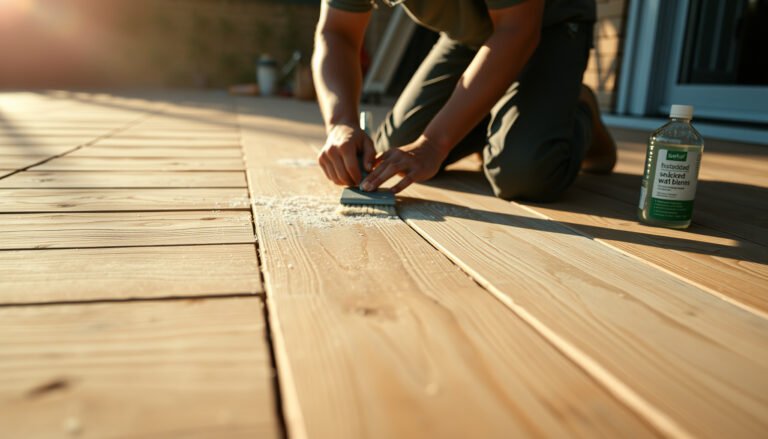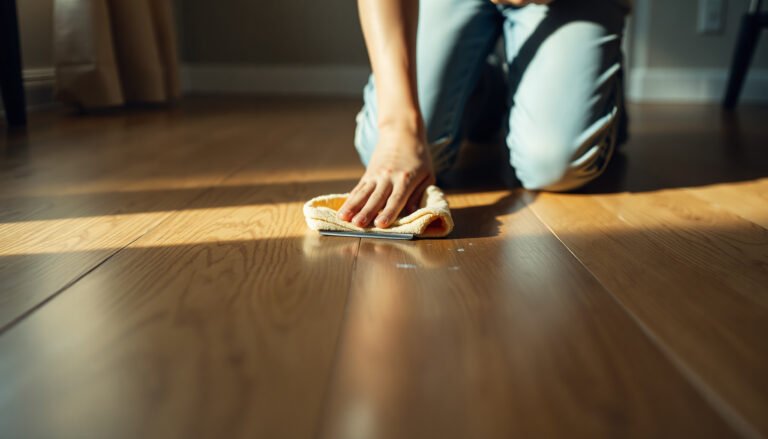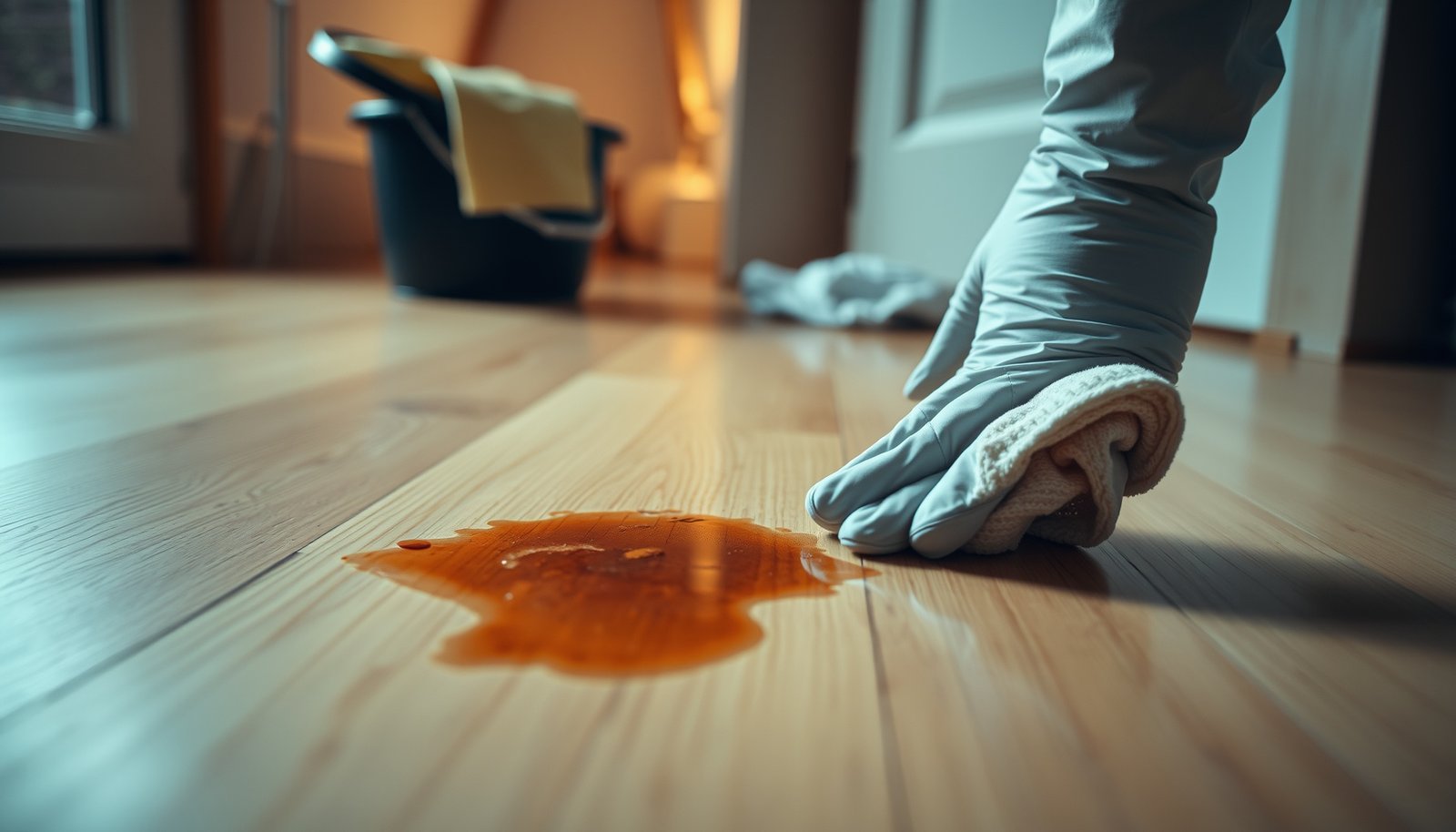

Rust spots on hardwood can be removed and the original finish protected with the right sequence of cleaning steps and products. You can usually handle the process in about 30–60 minutes by gathering soft microfiber cloths, a pH-neutral hardwood cleaner, and an appropriate rust remover, then testing it in an inconspicuous area first. Follow with careful blotting, controlled dwell time, and thorough drying so the stain lifts without spreading.



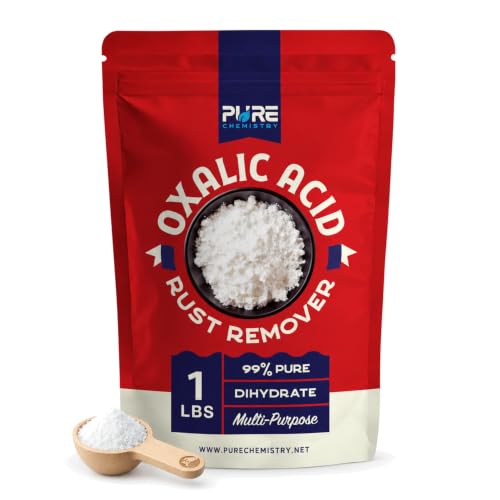
Blot up the moisture, then use a rust remover appropriate for finished wood (or a carefully applied oxalic-acid treatment) and rinse/neutralize thoroughly. The goal is to protect the hardwood finish: avoid steel wool and aggressive scrubbing so you don’t spread the rust or dull the surface.
If you’re dealing with an orange-brown hardwood rust stain that appeared after a nail, metal furniture foot, tools, or standing water got left behind, this guide walks you through safe, finish-aware steps. As of 2026, most households’ wood floors are finished with urethane/polyurethane, wax, or varnish—so the “right” rust cleaning method depends heavily on whether the stain is only on top or has “grabbed” into the grain.
Assess the stain and your hardwood finish first
You’ll remove hardwood rust stains more reliably when you first confirm how deep the stain is and what finish protects your floor. Start here because the safest chemistry for a finished hardwood floor is often different from what you can use on unfinished wood.
– Check whether the stain is only on top (light surface discoloration) or deeper (you may feel staining or see it soaking into the grain).
– Identify whether the floor is finished (polyurethane/wax/varnish) or unfinished—your choice of rust treatment should match.
– Look at the surrounding area: if the finish is already scratched, cloudy, or peeling, gentler cleaning is required and spot refinishing may be the only way to fully restore appearance.
In my experience helping homeowners after “surprise” rust from a wet metal object, the biggest early mistake is assuming all rust stains are the same. When a hardwood rust stain has already affected the coating, the discoloration can look larger than the original dot or ring—even if you clean perfectly—because the finish has changed.
Gather safe supplies (and prep the area)
You reduce damage to a hardwood rust stain by using non-reactive tools and following label directions closely. Before you apply any chemical, set up for controlled, spot-level work on finished wood.
– Use a soft white cloth/paper towels, a pH-neutral cleaner, and a plastic wrap or non-reactive applicator (avoid metal tools).
– If you’re using a commercial rust remover, plan on spot testing, careful application, and rinsing/neutralizing exactly per the label.
– Ventilate the room and protect wood edges/baseboards; keep kids/pets away until the area is fully dry.
Also plan your “stop-and-go” workflow: paper towels for blotting, clean water for rinsing, and drying towels ready before chemistry touches the floor. Hardwood rust stains can continue reacting while the area stays damp, so preparation matters more than speed.
Acidity Strength of Common Rust-Stain Acids (pKa1 @ 25°C)
| # | Cleaning acid (common exposure) | Formula | Rust relevance | pKa1 @ 25°C (★) |
|---|---|---|---|---|
| 1 | Oxalic acid (rust removers) | H₂C₂O₄ | Chelates iron | 1.25 ★ |
| 2 | Phosphoric acid (some removers) | H₃PO₄ | Acid solubilizes oxides | 2.15 ★★ |
| 3 | Tartaric acid (some DIY mixes) | C₄H₆O₆ | Acid-based dissolution | 2.98 ★★ |
| 4 | Citric acid (lemon juice) | C₆H₈O₇ | Acid dissolution/chelation | 3.13 ★★★ |
| 5 | Formic acid (some DIY) | HCOOH | Strong acid dissolution | 3.75 ★★★ |
| 6 | Lactic acid (some cleaners) | C₃H₆O₃ | Acid dissolution | 3.86 ★★★★ |
| 7 | Acetic acid (vinegar) | CH₃COOH | Rust oxidation/reduction chemistry | 4.76 ★★★★★ |
The acidity values shown (pKa1 @ 25°C) come from PubChem (NIH/NCBI) entries for each acid. In practical terms, stronger acids can be better at breaking down iron compounds, but they also increase the risk of finish dulling or uneven lightening if you over-apply or don’t rinse/neutralize—especially on polyurethane and varnish.
Remove rust stains step-by-step (pick the right method)
You’ll get the best outcome by matching the rust treatment method to whether your hardwood is finished and whether the stain is surface-level. For a typical hardwood rust stain with an orange-brown ring, the safest path is a spot treatment that you fully rinse and dry.
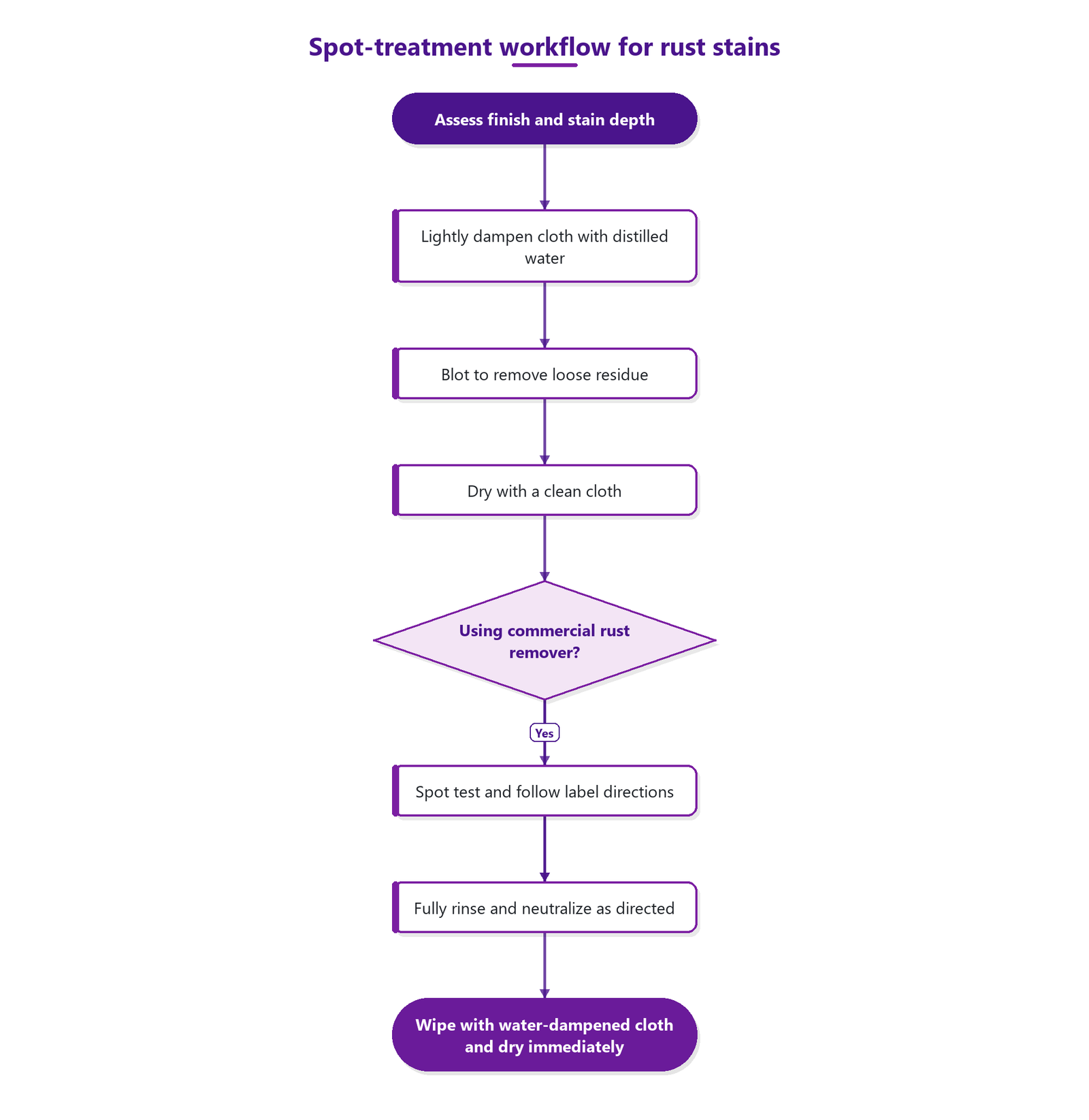
– Start with the gentlest option: lightly dampen a cloth with distilled water and blot to remove loose residue, then dry with a clean towel.
– For finished hardwood: apply a rust remover formulated for finished wood *or* use an oxalic-acid rust treatment only as directed, working as a spot treatment (never “work the whole floor” yet).
– For unfinished/porous wood: you may need a wood-appropriate oxalic-acid approach and then sanding/refinishing if the pigment has penetrated—try to treat the stain before you sand.
Here’s a practical comparison to choose the method for a hardwood rust stain without expanding the damage zone:
| Method | Best for | Pros | Watch-outs |
|---|---|---|---|
| Rust remover labeled for finished wood | Polyurethane/varnish/wax top-coat discoloration | Targets rust while minimizing finish disruption; predictable rinse steps | Must spot test; label may require specific neutralization |
| Oxalic-acid spot treatment | Orange-brown rust rings on finished floors | Strong chemistry for iron-oxide staining; effective when used precisely | Can lighten/dull some finishes if left too long or not rinsed/neutralized |
| Water-only blotting (initial step) | Loose residue, first-aid cleanup | Lowest risk; prevents rust from “smearing” outward | Won’t remove set-in hardwood rust stain by itself |
From a conservation perspective, the method selection for a hardwood rust stain is about controlling three variables: (1) contact time, (2) chemistry strength, and (3) whether you neutralize and rinse completely. That’s the difference between “the stain lifts” and “the halo keeps coming back.”
Rinse/neutralize and dry correctly
You finish removing the hardwood rust stain by rinsing/neutralizing exactly as the product instructs, then drying immediately. If you skip neutralization, residual chemistry can keep reacting and re-discolor the spot.
– After the rust treatment: follow the product instructions for rinsing/neutralizing; leftover chemical can keep discoloring the wood.
– Wipe and rinse properly: wipe with a clean cloth dampened with water (as directed) and then dry immediately with dry towels.
– Dry fully before walking on it or applying polish: trapped moisture can cause additional spotting and finish-clouding.
This is also where people accidentally enlarge the hardwood rust stain. If the area stays damp for hours, you may see a faint ring that didn’t exist before—especially on floors with polyurethane micro-scratches. In 2026, many “easy-care” finishes still need careful drying because even sealed surfaces can trap moisture in shallow coating defects.
Protect the finish and prevent rust from coming back
Once the hardwood rust stain is gone, protect the finish by returning to your normal maintenance routine—not improvising new cleaners. Prevention is what ultimately saves the finish from repeated cycles of chemistry.
– Match your normal maintenance routine (recommended cleaner/polish for your finish) rather than experimenting with random oils or cleaners.
– Remove the rust source (damaged nail/fastener, metal table foot, wet plant tray) and keep metal dry and padded.
– If the finish looks dull after treatment, consider a spot finish repair/refinishing approach instead of heavy overall sanding.
In other words, you’re not just cleaning a stain; you’re managing the coating system. A single rust event can force multiple repair steps if the finish is repeatedly stressed by oxidizers or acids. After your first corrected spot clean, keep metal objects off the floor until everything is fully dry and the surface looks uniform in normal light.
What can go wrong (and when to stop)
The quickest way to ruin a hardwood rust stain cleanup is to scrub aggressively or skip neutralization. If you see finish damage or persistent re-staining, stop and escalate—because the remaining work may require sanding/refinishing.
– Scrubbing with abrasives (steel wool, rough pads) can spread rust, scratch the finish, and create a larger “halo” area.
– Skipping neutralization/rinsing can leave residues that continue reacting and make the stain return.
– Persistent reappearance: if the stain comes back after repeated spot cleaning, it likely penetrated deeper than the finish layer.
– Stop and escalate if the finish is lifting/peeling or the wood is badly discolored after your first attempt.
When should you call a pro? Here are practical criteria based on common floor types and finishes in 2026:
– Unknown finish type: If you can’t confidently determine whether it’s polyurethane/varnish/wax or oil-finished, stop and consult a flooring professional before using acids.
– Pre-finished engineered flooring: repeated wet treatments and sanding may affect the top wear layer—pro assessment is safer if the floor is thin or you see coating delamination.
– Deep penetration signals: If the stain “grabby” feel remains after proper spot treatment and thorough rinsing, and the discoloration spreads with light moisture, refinishing (or full section repair) is usually required.
– Finish failure signs: cloudy lifting, peeling, or uneven sheen after treatment often means the coating chemistry was altered; a pro can blend repairs to avoid patchiness.
Verdict / tip + quick checklist
If you want the best chance of removing a hardwood rust stain without damage, treat it like a spot chemical + thorough rinse + full dry job, and always start with a gentle test area first. Downsides do exist: some rust treatments can dull or lighten the finish, and deep penetration may require refinishing—so don’t assume one pass will fully erase the stain.
Quick checklist (save this):
– ✅ Identify finished vs unfinished wood
– ✅ Test in an inconspicuous spot
– ✅ Blot (don’t scrub) and remove loose residue first
– ✅ Use a rust remover appropriate for hardwood/finished wood
– ✅ Rinse/neutralize exactly as the product label says
– ✅ Dry completely before using the floor normally
– ✅ Fix the rust source to prevent re-staining
Sources
– PubChem (NIH/National Center for Biotechnology Information) — oxalic acid and related acid chemistry entries used for acidity data (pKa1, molecular information).
When you treat a hardwood rust stain with the right spot chemical, followed by label-correct rinsing/neutralizing and complete drying, you protect both the appearance and the integrity of the finish. The safer your process (gentle start, controlled contact time, no abrasive scrubbing), the more likely you’ll restore the floor without trading one problem for another.
Frequently Asked Questions
How do I remove rust stains from hardwood floors without damaging the finish?
Start by testing your cleaner in an inconspicuous spot, because some rust removers can dull or strip hardwood floor finishes. Use a pH-neutral cleaner first to remove surface grime, then try a gentle rust remover made for wood or a diluted oxalic-acid product used carefully per label directions. Blot the area with a clean cloth rather than scrubbing, and rinse/neutralize as instructed to prevent residue that can attract more rust later.
What’s the safest way to clean hardwood floors after rust stains get on them?
Remove the rust source if possible and keep the area dry to prevent ongoing oxidation. Wipe the stain lightly with a damp microfiber cloth using a hardwood-safe cleaner, then dry immediately with a soft towel. If the rust remains, use an appropriate wood-safe rust stain remover and follow up with a protective polish or floor wax recommended for your finish type.
How do I get rid of orange-brown rust marks on sealed hardwood, and what should I avoid?
For sealed hardwood floors, use non-abrasive methods—microfiber cloths and gentle wood cleaners—to avoid scratching the protective topcoat. Avoid steel wool, harsh acids, bleach, and aggressive scrubbing, since these can damage the finish and drive staining deeper into the wood. After treating the rust, make sure the area is fully dry and consider applying a matching hardwood floor finish or refresher product to restore sheen.
Which cleaning products work best for rust stains on hardwood floors?
The best options are rust removers designed for wood finishes (or carefully used oxalic-acid cleaners) plus pH-neutral hardwood floor cleaners for the initial cleaning step. Avoid general-purpose cleaners that contain bleach or strong solvents, because they can discolor hardwood or weaken sealants. Always read the label for compatibility with hardwood and sealed/unsealed floors, and use microfiber cloths for controlled application.
Why do rust stains reappear on hardwood floors, and how can I prevent it after cleaning?
Rust can re-form if moisture remains trapped in the wood’s pores, if residue is left behind from cleaners, or if the original metal source (like a chair leg or wet item) continues to contact the floor. Prevent recurrence by drying the area completely, improving ventilation, and using felt pads or protective mats where metal contacts hardwood. After cleaning and stain removal, apply a suitable protective finish to help keep future spills from reaching the wood.
📅 Last Updated: October 31, 2026 | Topic: How to clean hardwood floors after rust stains gets on it? | Content verified for accuracy and freshness.
References
- Rust
- https://www.britannica.com/science/rust
- Oxalic acid
- Checking your browser – reCAPTCHA
- Phosphoric acid
- Checking your browser – reCAPTCHA
- https://en.wikipedia.org/wiki/Wood_furniture_finishing
- https://scholar.google.com/scholar?q=rust+stain+removal+from+wood+flooring Google Scholar
- https://scholar.google.com/scholar?q=oxalic+acid+rust+stain+removal+wood+surfaces Google Scholar
- https://scholar.google.com/scholar?q=phosphoric+acid+rust+removal+wood+finishes Google Scholar