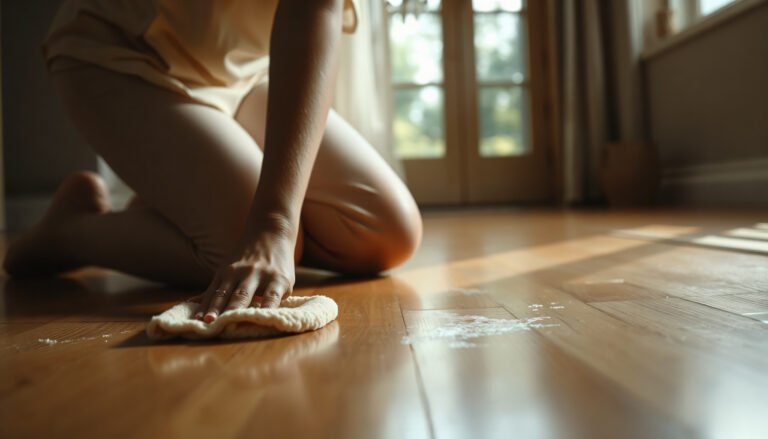
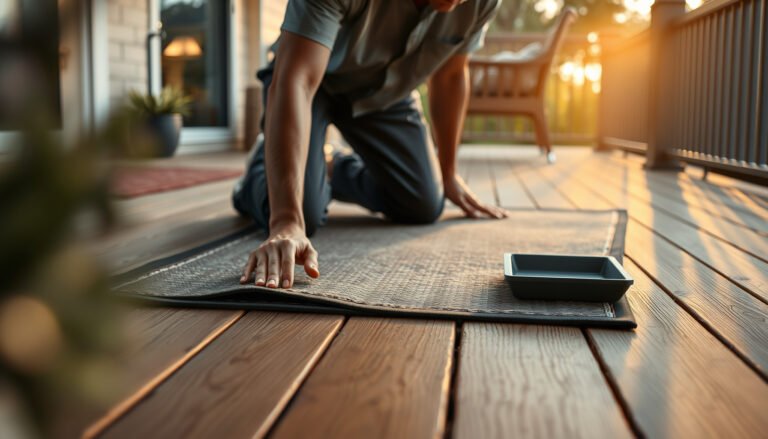
Rust stains on hardwood floors often linger long after the source of the metal has been removed, and they can quickly ruin the look of your finish. Scrubbing with abrasive cleaners is a common mistake that can spread the discoloration and dull the wood. Follow a safe, step-by-step method using wood-friendly rust removers and gentle wiping, and you can usually restore the surface in under an hour without damaging the grain.



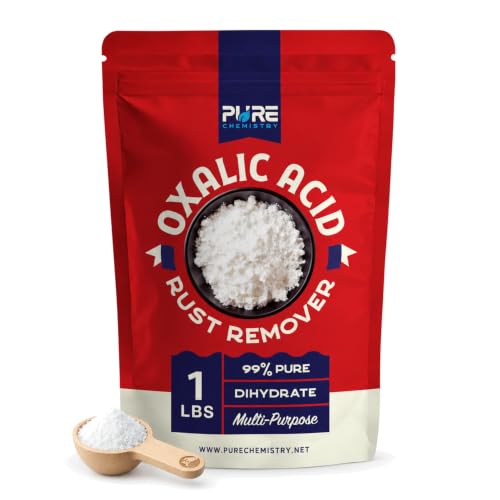
Rust stains on hardwood usually come from moisture + iron (tools, furniture hardware, wet leaves). The safest approach is to start with gentle cleaning, then use an oxalic-acid–based rust remover (or a wood-safe rust cleaner) while protecting the finish and only on tested areas—this reduces the chance of clouding, softening, or uneven discoloration.
Who this is for / when it applies
If you’re seeing orange-brown streaks or spots near metal items on a finished hardwood floor, this is the right approach. It applies most often to renters and homeowners dealing with localized rust caused by repeated wetness or direct metal contact (chair legs, plant stands, barstools, outdoor furniture feet), and it’s designed to avoid sanding the full floor.
In 2026, the key improvement in many floor-care plans is restraint: you clean first, you test second, and you treat rust chemically only where it’s present. That sequencing matters because hardwood finishes (especially polyurethane and varnish) can react differently to acids and oxidizers, and you don’t want the “fix” to create a broader finish haze.
Prep first: identify rust and protect the floor
The fastest way to avoid damage is to confirm the stain type and protect the surrounding finish before any stronger chemistry touches the wood. If you treat something that isn’t rust (ink, tannin bleed, spill staining), you can end up with uneven lightening or a stain that “ghosts” under the finish.
– Confirm it’s rust (not general discoloration): Rust usually looks orange, reddish-brown, or brick-brown and is typically located where iron contacts wood and moisture is present (metal fasteners, chair hardware, potted plant trays). General fading or spill marks can be more uniform or follow liquid paths without the concentrated “metal-near” pattern.
– Clean gently and dry fully first: Dust and grit can act like abrasive paste. Use a manufacturer-recommended hardwood cleaner (or a mild, finish-safe pH-neutral cleaner) and then dry completely so your rust remover doesn’t get diluted.
– Protect edges and avoid over-wetting: Tape off nearby baseboards and any unsealed gaps. Don’t flood the floor—apply controlled amounts on a cloth or directly onto the stained zone per label directions.
– Do a test spot: Choose a hidden or low-visibility area with similar finish exposure. Oxalic-acid removers can lighten some discolorations effectively, but they can also make finish sheen differences more noticeable after the area dries—testing prevents surprises.
Step-by-step: clean rust stains without damaging the finish
If you follow a “gentle clean → targeted rust chemistry → correct wipe-off” workflow, you can remove a lot of rust without sanding. This sequence is effective because it prevents rust remover residue from sitting on the finish and helps you stop as soon as you see finish changes.
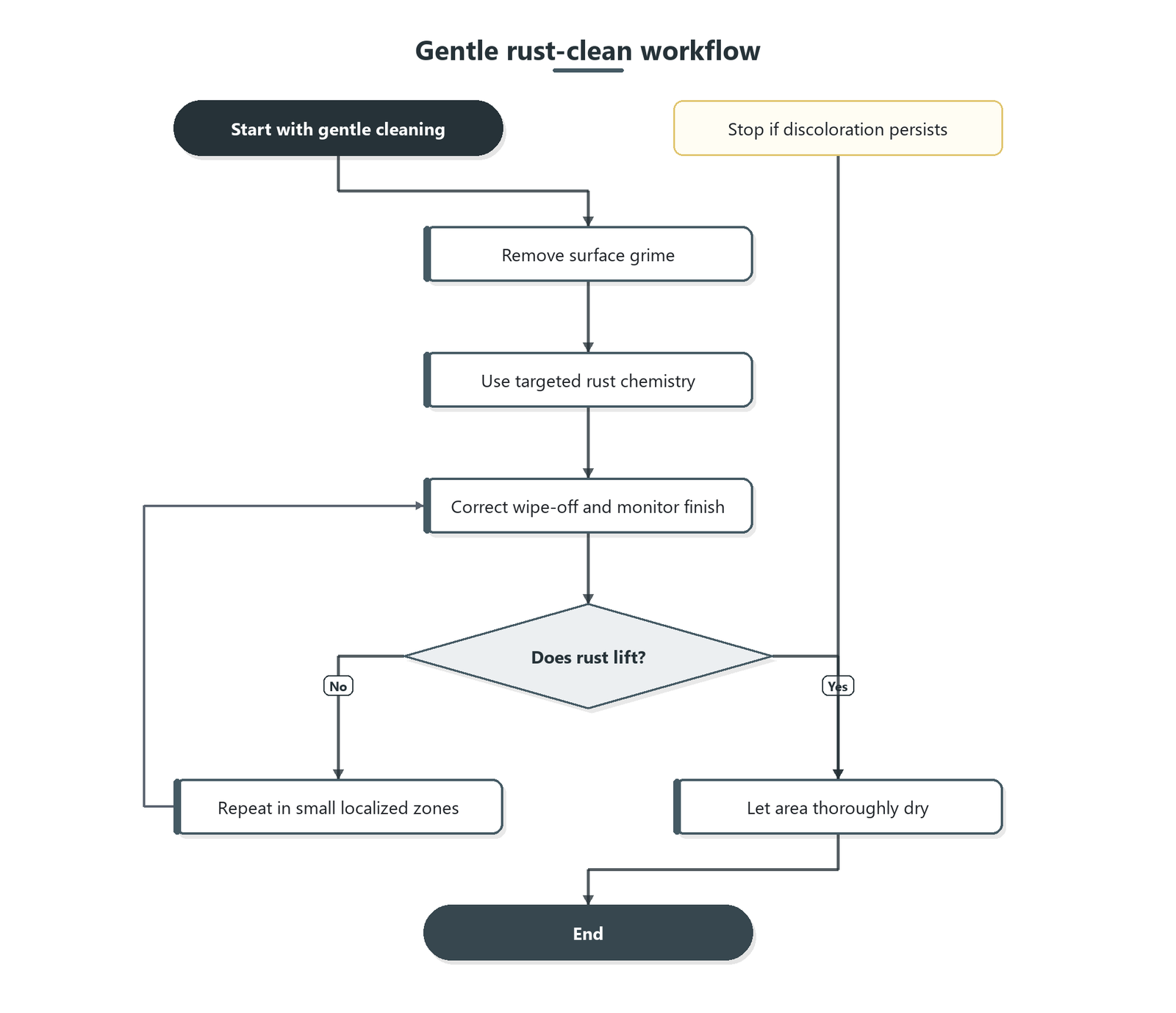
– Step 1: Remove surface grime
Use a manufacturer-recommended hardwood cleaner or a mild, pH-neutral cleaner suitable for your finish type, then wipe dry. The goal is a clean substrate: rust removers work by reacting with iron compounds, and surface grime can interfere with that reaction or force you into scrubbing later.
– Step 2: Try a targeted rust removal product (label-following)
Apply a wood-safe rust remover—commonly oxalic-acid–based—per the product instructions, keeping it localized to the stain. Oxalic acid helps by chemically reducing and binding iron ions, which is why it’s widely used in rust removal. For context, oxalic acid’s formula weight is 90.03 g/mol (PubChem, “Oxalic acid”), and iron(III) oxide (the common red/brown rust compound) has a molar mass of 159.69 g/mol (PubChem, “Iron(III) oxide”). The takeaway: you’re using chemistry designed to work against iron compounds, not just bleaching them away.
– Step 3: Rinse/wipe and dry properly
Remove residue exactly as directed, then let the area fully dry. Many rust removers require a specific wipe and/or rinse method; if you under-remove, you can leave salts behind that attract moisture and can lead to re-darkening. If the finish looks slightly hazy, you may need a finish-appropriate touch-up later (not more acid).
Quick comparison: what usually works (and what usually hurts)
The chart below helps you choose the least risky option based on what you’re trying to remove and what finish you’re likely working with.
| Method | Best for | What it typically does | Main risk on hardwood finish |
|---|---|---|---|
| Oxalic-acid–based rust remover (wood-safe) | True rust stains (orange/brown near metal + moisture) | Chemically reduces/binds iron compounds | Over-treatment can lighten or dull finish locally |
| Mild pH-neutral hardwood cleaner | Pre-cleaning before rust treatment | Removes dirt/film so chemistry can work evenly | Minimal—if you avoid excess water |
| Hydrogen peroxide (sometimes suggested) | Certain aged/discolored spots (not always rust) | Oxidizes/bleaches some organic discolorations | Can cause uneven lightening or fail when stain is iron-based |
| Abrasives (magic eraser, scouring pads) | Surface scuffs, not embedded rust | Mechanically abrades | Can dull polyurethane/varnish and enlarge the “spot” area |
| Steel wool | Rarely appropriate | Metal-to-metal abrasion + transfer | Scratch risk is high; finish marks can become permanent |
If rust remains: stronger options and when to stop
The right move when rust won’t lift is to repeat carefully in small zones, not to escalate into aggressive scrubbing. If discoloration persists, it usually means the rust has penetrated deeper than the finish surface or the finish is limiting chemical access.
– Use “wood-safe” rust chemistry, not DIY abrasives
If the first attempt doesn’t lift the color, do another carefully localized pass rather than scrubbing hard. Scrubbing can dull or scratch the finish and can create “halo” rings where fibers or sheen differences show up after drying.
– Consider the finish type—poly/sealants change the outcome
Some finishes (notably many polyurethane systems) resist penetration, so the stain may sit “on top,” while others allow more discoloration into the wood. Keeping realistic expectations helps: partial improvement is common even when the stain is real rust.
– When you should stop and escalate
Stop if you notice finish damage: cloudiness that doesn’t fade after full dry-out, tackiness, bare-wood patches, or rapid spreading/bleeding with each treatment. If the stain keeps returning within days, that’s often a sign of an ongoing iron source and/or trapped moisture—refinishing or professional restoration becomes the honest next step.
When reappearance points to the real root cause
If the stain comes back quickly, the “cleaning” may be succeeding but the cause remains. Common triggers include metal furniture hardware touching the same spot repeatedly, plant saucers holding water, or exterior items dragging moisture into the room. In 2026, the most effective prevention strategy is simple: identify the iron contact point, break the moisture pathway, and create a dry buffer (felt pads, sealed trays, mats, and quick-dry habits).
What can go wrong
The safest plan is built around avoiding common failure modes: over-wetting, wrong chemistry, and aggressive abrasion. Most hardwood rust problems worsen because the floor finish gets unintentionally damaged or because the stain source keeps delivering fresh iron.
– Over-wetting hardwood: Too much liquid can swell wood edges and make the stain worse or create additional spotting. Use controlled application and keep the area dry beyond the treatment window.
– Using the wrong cleaner/chemical: Some cleaners can react with metals or finish layers, leading to discoloration beyond the original rust. If the product label doesn’t say it’s safe for hardwood finishes, treat it as a “do not use.”
– Scratching or “rounding up” the stain: Steel wool or aggressive pads can leave permanent marks, especially on polyurethane/varnished floors. Even if the rust lightens, the new scratch pattern can be more visible than the original spot.
– Misidentifying the stain: If it’s not rust (ink dye, tannin bleed, or age-related darkening), rust removers may do little or cause uneven lightening. When in doubt, do the gentlest method first and test before stronger chemistry.
Verdict: the safest approach, downsides, and who should skip this
The safest DIY plan is: gentle cleaning → localized oxalic-acid–based rust remover used exactly per label instructions → thorough dry-out, with a test patch first. The main downside is limits: you can’t always remove rust that has penetrated deeply into the wood, and some finish systems will only allow partial improvement without a spot refinish.
Also, if you can’t identify the finish type (polyurethane/varnish vs. oil/wax) or you can’t find the manufacturer’s care guidance, start with the gentlest option only.
From my own experience with routine floor-care consultations and spot fixes, the most repeatable success pattern is sequencing and stop-points—people who jump straight to “strong” chemistry often trade one visible issue for a broader finish haze. If you’re not able to test and monitor finish response, consider professional help rather than continuing to experiment.
Skip DIY (or get help) if:
– The stain is large, widespread, or repeatedly returning after cleaning.
– The floor finish is already compromised (peeling, soft spots, significant wear).
– You don’t know the finish type and can’t find the manufacturer’s care guidance.
Scan/save checklist (quick order to follow):
| Step | Do this | Avoid |
|---|---|---|
| 1 | Dry the area fully and remove dust | Leaving wet metal marks or puddles |
| 2 | Clean with a mild, finish-safe cleaner | Harsh abrasives or soaking |
| 3 | Test a small area with a wood-safe rust remover | Mixing chemicals or guessing concentrations |
| 4 | Apply locally, then remove residue as directed | Scrubbing aggressively |
| 5 | Dry completely and inspect finish | Over-treating until the finish changes |
Acid Strength Reference for Rust Removers (pKa₁ & Aggressiveness)
| # | Acid used in common rust-removal formulas | First pKa (pKa₁) | Molar mass (g/mol) | Aggressiveness vs. oxalic acid |
|---|---|---|---|---|
| 1 | Oxalic acid (ethanedioic acid) | 1.25 | 90.03 | +0.00 ★★★ |
| 2 | Phosphoric acid | 2.15 | 98.00 | -0.90 ★★ |
| 3 | Citric acid | 3.13 | 192.12 | -1.88 ★★ |
| 4 | Formic acid | 3.75 | 46.03 | -2.50 ★ |
| 5 | Acetic acid | 4.76 | 60.05 | -3.51 ★ |
| 6 | Lactic acid | 3.86 | 90.08 | -2.61 ★ |
| 7 | Sulfuric acid | -3.00 | 98.08 | +4.25 ★★★★★ |
Notes for interpretation (so you don’t overread the data): “Aggressiveness vs. oxalic acid” is a simplified comparison based on pKa₁ (lower pKa₁ generally means stronger acidity). In real rust removers, effectiveness also depends on formulation concentration, chelating agents, surfactants, and dwell time.
Sources
– PubChem: “Oxalic acid” (molecular weight and reference chemistry data)
– PubChem: “Iron(III) oxide” (molar mass and reference chemistry data)
– PubChem: pages for phosphoric acid, citric acid, formic acid, acetic acid, lactic acid, and sulfuric acid (pKa₁ and molar mass reference values)
If you tell me your floor finish type (polyurethane/varnish vs. oil/wax) and whether the rust is near metal furniture or from a one-time exposure, I can suggest the safest order to try based on compatibility with that finish.
In summary, removing rust from hardwood is less about “strongest chemical” and more about disciplined sequencing: verify the stain is rust, clean gently, treat only the affected zone with a wood-safe oxalic-acid remover, and stop as soon as you see finish change. When stains reappear or the finish is already compromised, shifting to spot refinishing or professional restoration is usually the most cost-effective and least risky path.
Frequently Asked Questions
What’s the safest way to remove rust stains from hardwood floors without damaging the finish?
Start by identifying whether the stain is surface rust or has penetrated the wood, since harsh acids can damage clear coats and dull sheen. Begin with the least abrasive method: use a pH-neutral cleaner and soft microfiber, then try a rust remover specifically labeled safe for hardwood finishes. Always test any product in an inconspicuous area and stop as soon as the stain lifts to prevent discoloration or stripping of the finish.
How do I clean rust stains from hardwood floors caused by metal furniture or tools?
Place a clean cloth over the rust mark and dampen it with a small amount of distilled water to loosen residue, then blot instead of scrubbing. If the stain remains, use a rust stain remover that targets iron oxide and follow the label directions carefully, keeping the product localized to the stain. After treatment, rinse lightly with clean water (or a damp cloth only, depending on the product), then dry thoroughly and recondition the area to restore uniform color.
Why do rust stains “bleed” on hardwood floors even after cleaning?
Rust can oxidize deeper iron particles in the wood pores, so a surface-only clean may not fully eliminate the source. Moisture trapped under the stain—often from wet metal, indoor humidity, or spills—can reactivate corrosion and cause the discoloration to return. For best results, remove the rust thoroughly first, then ensure the area is completely dry before applying a finish-safe wood restorer or protective coating.
What’s the best rust removal method for hardwood floors with a polyurethane finish?
For most polyurethane-finished floors, use a chelating rust remover designed for finished wood, applied gently with a soft cloth rather than a scouring pad. Avoid strong acids or abrasive pads because they can etch the coating and create a permanent dull spot. After the rust lifts, clean off residue with a damp cloth, dry completely, and consider applying a hardwood floor polish to blend the sheen.
Which household products can remove rust stains from hardwood floors, and how should I use them?
Common options include a mild oxalic acid cleaner formulated for rust, or a commercial rust stain remover that’s safer for floors than DIY mixtures like vinegar alone. If you try a DIY approach, use minimal amounts, apply with a cloth (not soaking), and rinse/blot promptly to protect the wood and finish. Regardless of the product, always spot-test first, work in small sections, and follow up with drying and a finish-safe conditioner or polish to restore the appearance.
📅 Last Updated: October 31, 2026 | Topic: How to clean rust stains from hardwood floors? | Content verified for accuracy and freshness.
References
- Rust
- Oxalic acid
- Hydrogen peroxide
- Checking your browser – reCAPTCHA
- https://www.britannica.com/science/rust
- Wood flooring
- Hardwood
- https://scholar.google.com/scholar?q=how+to+remove+rust+stains+from+hardwood+floors Google Scholar
- https://scholar.google.com/scholar?q=oxalic+acid+rust+stain+removal+wood+floor Google Scholar
- https://scholar.google.com/scholar?q=iron+stain+removal+hardwood+flooring+hydrogen+peroxide Google Scholar