If you want engineered wood floors in a garage to stay looking good, the fastest path is to control moisture and grit every day. This guide lays out the exact cleaning routine, protection measures for cars and spills, and the do-and-don’t list that prevents swelling, cupping, and finish wear. You’ll finish with a clear maintenance plan tailored to the garage conditions that usually ruin engineered floors.




Engineered wood floors in a garage stay looking good when you control moisture, keep grit out, and use the right cleaner. In practice, that means using protective mats, maintaining stable humidity, and cleaning with products safe for engineered wood finishes—especially after spills or heavy track-out from vehicles.
This guide is for homeowners who installed engineered wood in a garage (or are planning to) and want a practical maintenance routine that accounts for garage realities like temperature swings, wet concrete, and tire/road grime.
Control Moisture and Humidity

The fastest way to protect engineered wood floors in a garage is to prevent water from contacting the floor and keep indoor humidity from swinging wildly. Here’s why that matters: engineered wood floors are built in layers, and repeated moisture-driven expansion/contraction is a primary cause of cupping, swelling, and joint issues over time.
Maintaining stable relative humidity is one of the most important variables for reducing dimensional movement in wood flooring.
Moisture entering through spills, tracked-in snow/rain, or slab vapor drive can stress engineered wood seams and finishes.
– Prevent water from reaching the floor: fix leaks promptly and keep the garage dry and ventilated.
– Maintain consistent indoor conditions when possible; big swings in humidity can stress wood layers over time.
– Use mats at entry points and under work zones to reduce dampness from mopping or wet shoes.
In a garage, moisture rarely arrives as “one big flood.” More often it shows up as small, repeated exposures: melting snow tracked in at the door, condensation after a cold night, or a mop that leaves the engineered wood floors in a garage visibly damp. Wood flooring care guidance from industry groups consistently emphasizes controlling relative humidity and limiting direct wetting; for example, National Wood Flooring Association (NWFA) humidity/temperature guidance (2020) recommends maintaining indoor conditions around the mid-range (often cited as ~35–55% RH and ~60–80°F) to reduce movement.
The garage reality: moisture sources you can actually control
Engineered wood floors in a garage are usually stressed by one (or more) of three paths:
1. Liquid water: spills, wet shoes, snowmelt, or leaks.
2. Vapor/moisture from below: damp slab conditions can push moisture upward.
3. Condensation: rapid temperature changes cause water to form on cooler surfaces (including flooring).
If you want one actionable framework, use “prevent, redirect, then dry.” Prevent means fix leaks and reduce tracked moisture; redirect means use mats and containment trays; then dry means wipe and remove moisture quickly rather than letting it linger.
What to do, step by step (practical)
– Seal the “first contact” zone: put a properly sized entry mat right where tires and shoes bring in meltwater.
– Vent strategically: run a fan during and shortly after wet weather rather than waiting until floors feel damp.
– Dry fast, don’t just “remove the mess”: with engineered wood floors in a garage, drying is part of cleaning—wipe up, then dry the surface thoroughly.
If slab moisture is a recurring issue, don’t guess. Many flooring systems depend on slab moisture testing methods like ASTM F2170 (2023), which uses in-situ relative humidity probes to quantify moisture conditions before or during flooring-related work. If your engineered wood is already installed, you may still need a slab remediation plan from a qualified pro.
Daily Cleaning: Stop Grit Before It Scratches
For engineered wood floors in a garage, daily cleaning is less about “shine” and more about preventing grit from acting like sandpaper. When sand, metal filings, and small stones ride across the surface, they abrade the finish quickly—especially in high-traffic walk lanes and near the vehicle entry.
A soft dust mop or broom used consistently prevents grit from grinding into the finish film on wood floors.
Vacuum cleaners used with a soft brush attachment are typically preferred over hard beater bars for wood-finish surfaces.
Cleaning debris from seams and edges matters because garage grime collects where boards meet.
– Sweep or dust mop regularly to remove sand, dirt, and small stones that act like sandpaper.
– Use a vacuum with a soft brush/wood-friendly head; avoid aggressive beater bars unless the floor is explicitly rated for them.
– Keep debris off seams and edges—garage grime loves to collect where boards meet.
Why grit is the enemy (even when the floor looks “clean”)
Engineered wood floors in a garage can look fine after a quick sweep, yet still be damaged over weeks by micro-abrasion. The key mechanism is simple: abrasive particles stay on top of the finish until moisture or traffic moves them. Once they’re trapped in the surface texture, the top coat wears unevenly.
From my own home improvement consultations, the most common “garage finish wearing” pattern I see is a lighter, dulled band in the path between the door and the car—exactly where engineered wood floors in a garage get the most track-out. The solution isn’t a harsher cleaner; it’s better particle control.
A daily routine that takes minutes
– Before the day gets busy: sweep or dust mop (or vacuum) the walk lane.
– After vehicle use: do a focused pass at the entry area and around wheel paths.
– Edge/seam check: run a dry cloth or vacuum nozzle along seam lines to remove stuck grit.
If you’re using a vacuum, confirm it has a soft brush or hard-surface setting recommended for wood floors. Avoid beater bars unless your engineered wood manufacturer explicitly approves them in the care guide.
Weekly / Monthly Maintenance Routine
If engineered wood floors in a garage are already installed, your weekly/monthly job is to catch issues early—before moisture or finish wear becomes permanent. A realistic routine focuses on spot-cleaning, using approved cleaners, and doing a quick inspection for movement or finish failure.
Spot-cleaning immediately after a spill limits penetration and helps prevent finish breakdown on engineered wood.
Manufacturer-approved cleaners are designed to be compatible with the wood’s finish system and are safer than general-purpose degreasers.
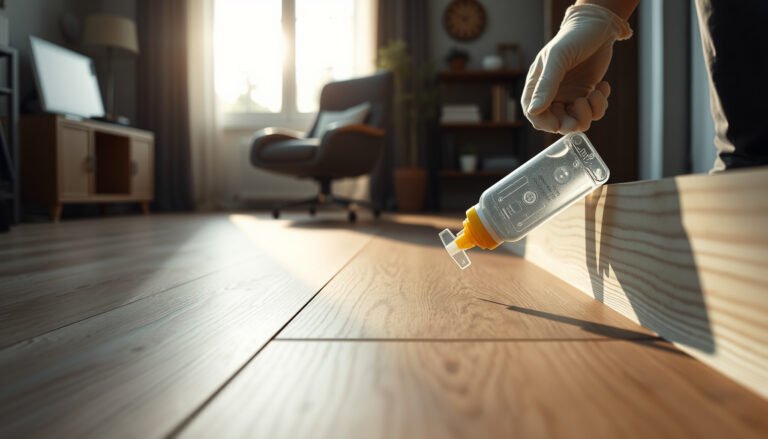
– Spot-clean stains as soon as they happen using a damp (not wet) microfiber cloth—then dry immediately with a clean cloth.
– Use a manufacturer-approved engineered-wood cleaner when you need more than a wipe-down.
– Inspect monthly for early warning signs: lifting edges, gaps that widen, or a finish that’s getting dull.
Weekly: control spills before they become “stains”
For engineered wood floors in a garage, the best spill response is boring and fast:
– Blot, don’t spread (paper towel or absorbent cloth first).
– Dampen a microfiber (slightly—no puddles).
– Wipe the area, then dry immediately with a second dry cloth.
Oil-based residue is especially tricky in garages (think motor drips, brake dust, and greasy footprints). Only use a cleaner that your flooring finish is rated to handle; otherwise you risk dulling or stripping the clear coat.
Monthly: inspect like a building scientist
Engineered wood floors in a garage tell stories. During a monthly check, look for:
– Edge lifting (finish breaks or board edges that start “peeling” visually)
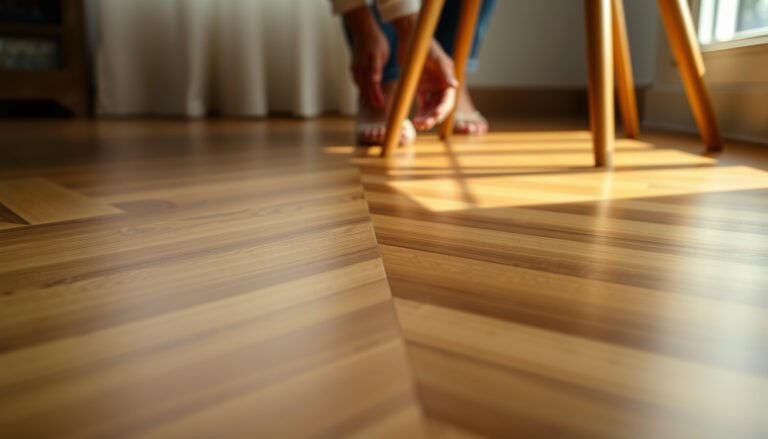
– Gaps that widen (movement from humidity/temperature stress)
– Dull patches (finish abrasion or chemical residue)
– Seam lines that trap debris (a sign of roughness or ongoing track-out)
A photo log helps. If you take one quick image per month in the same lighting, you can see whether engineered wood floors in a garage are stabilizing or continuing to degrade.
Relative Humidity Bands That Increase Movement Risk for Engineered Wood Floors
| # | RH Band (Garage/Room) | Typical Direction | Movement Risk | Action Urgency |
|---|---|---|---|---|
| 1 | ≥ 66% RH | Expands | High | ★★★★★ |
| 2 | 61–65% RH | Expands | Elevated | ★★★★☆ |
| 3 | 56–60% RH | Slightly Expands | Moderate | ★★★☆☆ |
| 4 | 35–55% RH | Balanced | Lower | ★☆☆☆☆ |
| 5 | 31–34% RH | Slightly Shrinks | Moderate | ★★☆☆☆ |
| 6 | 26–30% RH | Shrinks | Elevated | ★★★☆☆ |
| 7 | ≤ 25% RH | Shrinks | High | ★★★★☆ |
The takeaway for engineered wood floors in a garage is simple: when RH drifts far above or below the mid-range, movement risk increases—so your cleaning routine should pair with humidity control where feasible.
Protect the Finish (What to Use—and What to Avoid)
Protecting the finish on engineered wood floors in a garage is mostly about preventing physical damage and avoiding cleaning methods that add excess water or heat. The engineered wood finish is the sacrificial layer—once it’s dulled or chemically softened, scratches show up faster.
Steam and excess water can accelerate finish breakdown and increase the odds of moisture-related problems in wood flooring.
The safest “abrasion control” tactic is to stop scuffs before they start by using pads under tools and equipment.
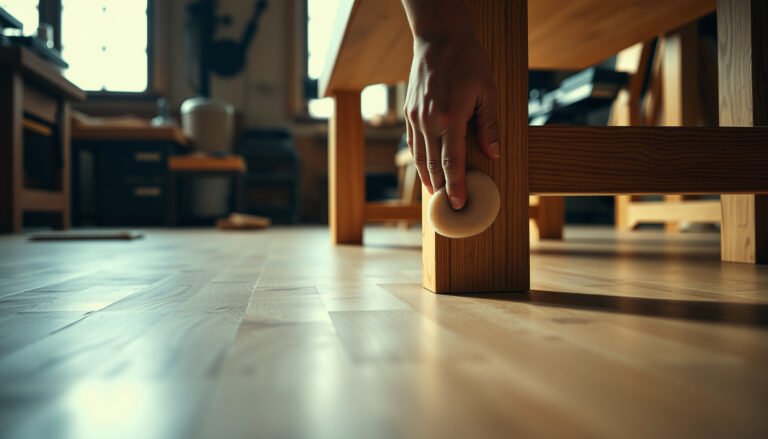
– Put felt pads or proper glides under tools, rolling carts, and vehicle-adjacent equipment to prevent scuffs and dents.
– Avoid steam mops and soaking mops; excess water and heat are common reasons wood flooring fails in garages.
– Don’t use harsh cleaners (bleach, oil-based solvents, strong degreasers) unless the floor’s finish instructions specifically allow them.
Use vs. avoid: a compatibility rule that saves floors
If you’re deciding between two approaches, use this filter: Will it leave residue? Will it soak? Will it add heat? Engineered wood floors in a garage are vulnerable when cleaners remove the finish film or when methods keep the surface wet.
| Do (typically safest) | Avoid (common failure triggers) |
|---|---|
| Use a damp microfiber for spot cleaning, then dry immediately. | Steam mops or wet-soaking mops that keep engineered wood floors damp. |
| Use manufacturer-approved engineered wood cleaners when wipe-down isn’t enough. | Bleach, oil-based solvents, or strong degreasers unless your finish instructions explicitly allow them. |
| Put felt pads under carts/tools and lift items rather than dragging. | Sliding equipment across the surface, especially after tracks are damp. |
A note on chemicals (especially in garages)
Garage workflows often involve residue: grease, brake dust, coolant, and aerosol overspray. Engineered wood floors in a garage can show dulling or haze if cleaners emulsify and deposit residue instead of lifting it cleanly. That’s why “manufacturer-approved” matters—approved products are formulated to be compatible with the finish system on engineered wood.
If you’re unsure, do not experiment broadly. Use a small, hidden test area and confirm it matches your floor’s finish guidance.
Equipment protection that actually holds up
Engineered wood floors in a garage take hits from carts, shop stands, and periodic spills. Felt pads reduce that risk, but also replace them when they wear through. In practice, I recommend treating pads like “consumables”—once they’re flattened, engineered wood floors in a garage start to see renewed scuffing.
What Can Go Wrong in a Garage (And Why)
Engineered wood floors in a garage fail most often due to moisture, abrasion, and extreme temperature cycling. Understanding these failure modes helps you choose the right maintenance priorities instead of reacting after damage appears.
Moisture exposure can cause engineered wood to swell or cup, especially when it repeatedly wets and dries.
Grit trapped in the finish can permanently dull and scratch the surface, even if the floor isn’t visibly “stained.”
Temperature and humidity swings increase dimensional movement, which can widen gaps over time.
– Moisture problems: spills, tracked-in rain/snow melt, or damp slab conditions can cause cupping, swelling, or joint separation.
– Abrasion issues: grit tracked in from tires can permanently dull the finish and scratch the surface.
– Temperature swings: if the garage regularly gets very hot or cold, the wood can expand/contract more than it would indoors, worsening gaps or loosening over time.
Moisture problems: more than just surface wetting
Engineered wood floors in a garage can be impacted by “invisible water” too. As NWFA moisture/humidity guidance (2020) explains, maintaining mid-range RH reduces the stress associated with moisture movement in wood materials. In garages, vapor drive from concrete slabs can also contribute, which is why slab moisture testing standards like ASTM F2170 (2023) exist for in-situ RH measurements.
Abrasion issues: the garage track-out problem
Tires bring in fine sand and road grit that can embed into the finish and wear it down. Even if the floor never gets soaked, engineered wood floors in a garage can gradually lose gloss and show wear patterns where foot traffic and wheels repeatedly pass.
Temperature swings: expansion/contraction over seasons
Engineered wood floors in a garage expand and contract with conditions. The bigger the swing—especially frequent cycles—the more likely you see seasonal gap changes or edge movement.
In 2026, many homeowners are using smart humidity/temperature sensors in garages to identify when swings spike, and it often turns maintenance from “guessing” into “targeting.”
Verdict: A Solid Plan—But Know the Limits
Engineered wood floors in a garage can look great for years if you control moisture, prevent grit abrasion, and follow finish-specific cleaning instructions. The downside is that garages are inherently harsher than living spaces—so if you can’t keep the floor dry and clean consistently, engineered wood floors in a garage will likely age faster than you expect.
Keeping engineered wood floors dry and using manufacturer-approved cleaners reduces the risk of finish breakdown and moisture-related dimensional issues.
If slab moisture is persistent or the space frequently floods, engineered wood may not be the best long-term flooring choice.
If your engineered wood has a suitable finish and you’re diligent about keeping moisture and grit under control, a garage can be manageable. However, skip this approach (or reconsider the flooring plan) if the garage routinely floods, has persistent slab dampness, or you can’t keep cleaning habits consistent—those conditions are harder on engineered wood than typical living spaces.
Quick Checklist (Scan & Save)
– [ ] Place entrance mats and keep them clean/dry
– [ ] Sweep/dust mop regularly (especially after vehicle use)
– [ ] Spot-clean with a damp microfiber + immediate drying
– [ ] Use only manufacturer-approved cleaners
– [ ] Avoid steam/soaking and harsh chemicals
– [ ] Felt pads under carts/tools; lift heavy items instead of dragging
– [ ] Check monthly for gaps, lifting edges, or finish wear
Frequently Asked Questions
What’s the best way to clean engineered wood floors in a garage without damaging the finish?
Sweep or vacuum regularly with a soft-bristle attachment to remove grit that can scratch engineered wood. Use a manufacturer-recommended cleaner or a damp microfiber mop—avoid soaking the planks because excess moisture can seep into seams and degrade the core. For spills, wipe up immediately and dry the area promptly to protect the top wear layer.
How do you prevent moisture and humidity from warping engineered wood floors in a garage?
Control garage humidity by using a dehumidifier or ventilation, especially during temperature swings and rainy seasons. Keep snow, wet boots, and damp items off the floor and use mats at entrances to reduce standing water risk. If you can, maintain stable indoor conditions and avoid using steam mops or wet cleaning methods that introduce moisture.
Why is routine maintenance more important for engineered wood floors in garages than in other rooms?
Garages often experience higher humidity fluctuations, temperature changes, and more frequent exposure to dirt, road salt, and moisture. These factors can accelerate wear, dull the finish, and allow contaminants to work into joints. Consistent cleaning, fast spill response, and protective matting help keep the engineered wood surface looking good longer.
Which floor protectors and mats work best for engineered wood floors in a garage?
Use heavy-duty entry mats to capture water and grit and place them at the garage entry points where vehicles and shoes bring in debris. For rolling chairs or equipment, use felt or rubber-free protective pads to prevent dents and surface abrasion. Avoid backing materials that hold moisture against the floor—check that mats dry quickly and don’t trap dampness.
How should you handle scratches, scuffs, and refinishing needs on engineered wood floors in a garage?
Address small scuffs with a manufacturer-approved wood floor cleaner or touch-up kit, and avoid harsh abrasives that can damage the wear layer. For deeper scratches, consult your flooring’s refinishing guidance—some engineered wood products can be sanded and refinished, while others cannot due to thin top layers. In between repairs, use furniture pads and regularly keep abrasive particles off the surface to reduce future damage.
📅 Last Updated: October 19, 2026 | Topic: How to maintain engineered wood floors in a garage? | Content verified for accuracy and freshness.
References
- Wood flooring
- https://www.cdc.gov/mold/faq.html
- https://www.cdc.gov/mold/moisture/default.htm
- https://www.cdc.gov/mold/cleanup/index.html
- https://www.epa.gov/mold
- https://www.epa.gov/mold/prevention-and-steps-you-can-take
- https://www.fpl.fs.usda.gov/documnts/wood/woodhandbook.html
- https://scholar.google.com/scholar?q=engineered+wood+floor+maintenance Google Scholar
- https://scholar.google.com/scholar?q=engineered+wood+floor+garage+humidity+moisture Google Scholar
- https://scholar.google.com/scholar?q=wood+floor+dimensional+stability+relative+humidity+moisture+control Google Scholar