
To clean engineered wood floors in a garage, you need a method that removes grit without swelling, scratching, or dulling the finish. If you sweep or vacuum with a soft brush, then mop only with a barely damp microfiber and a pH-neutral cleaner, you’ll get the fastest, safest results. Skip harsh chemicals and soaking—garage dirt and moisture are exactly what ruins engineered wood when cleaning is too aggressive.



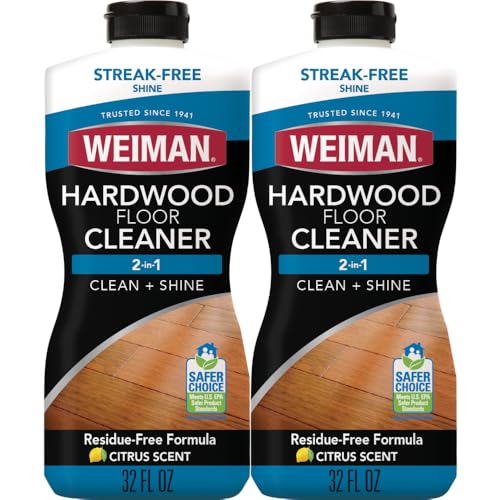
Clean engineered wood garage floors by sweeping or vacuuming grit first, then mopping with a well-wrung microfiber mop and a cleaner that’s approved for engineered wood. Avoid soaking, steam, and harsh chemicals—these can damage the finish and drive moisture into seams.
If your garage sees road salt, sawdust, paint drips, or wet boots after rain, you’re in the right place. This guidance is best for engineered wood floors with a sealed top layer, especially when you need a safe routine that won’t leave residue or dull the surface. As of 2026, the safest approach is still the same: remove abrasives dry first, then use minimal moisture with manufacturer-approved chemistry.
Prep First: Remove Grit and Debris
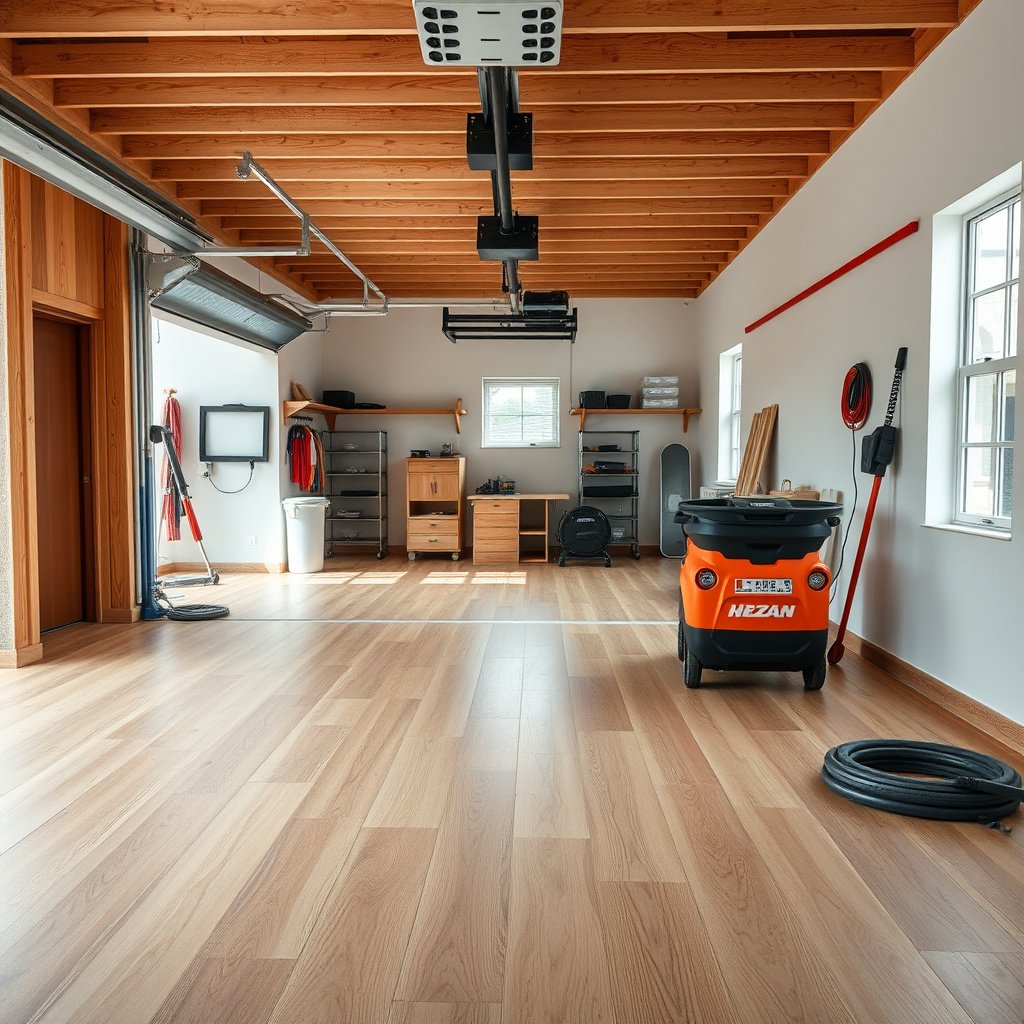
If you remove abrasive grit before you add any liquid, you prevent the most common “mystery scratches” on engineered wood garage floors. In other words: start dry, then transition to a damp, controlled clean.
Engineered wood floors are vulnerable to micro-scratches because tracked grit behaves like sandpaper; dry removal before mopping is consistently recommended in wood-floor care guidance. National Wood Flooring Association (NWFA) care guidance
Using a soft-brush vacuum attachment and sweeping reduces drag compared with abrasive tools, which helps preserve the surface finish on engineered wood floors. NWFA care guidance
Reducing moisture and salt tracking at the garage entrance (e.g., by using mats) lowers the amount of salt residue that can concentrate at seams.
Grit removal that doesn’t scratch engineered wood
Grit matters more in garages than people expect because fine particles from sanded wood, lawn debris, and tire wear migrate under boots and wheels. On engineered wood garage floors, the scratch risk is highest during the first minutes of cleaning—before any damp mopping. For best results:
– Sweep daily (or as needed) using a soft broom or microfiber dust mop designed for hard-surface floors.
– Vacuum with a soft brush attachment to lift sand-like particles without gouging. Avoid beater bars and aggressive spinning heads.
– For caked-on dirt: use a plastic scraper to lift deposits gently. The goal is to remove buildup without grinding grit into the finish.
Control tracking at the source
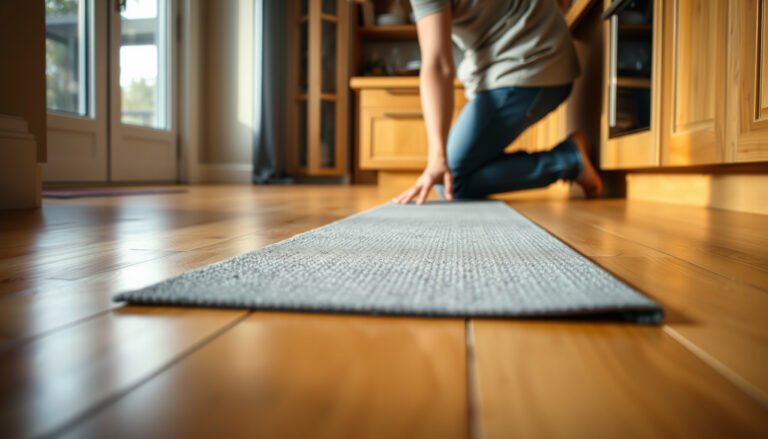
A garage floor cleaning routine is easier if you reduce the “inputs.” Put a mat at the garage entrance so boots shed moisture and debris before they hit engineered wood garage floors. In wet months, also keep a second “drying” mat just outside the door (or switch mats so one is always ready).
Seasonal reality checks (2026)
As seasons change, engineered wood garage floors collect different debris: pollen in spring, sand/grit in winter, and construction dust if you do DIY projects year-round. That’s why daily dry pickup matters. When you skip it, the next damp clean often redistributes residue instead of removing it.
Choose the Right Cleaner (and Use Less Than You Think)
The right cleaner for engineered wood garage floors is the one that’s explicitly approved for your flooring’s finish—and you should use it sparingly. Cleaner choice is about protecting the topcoat (often a sealed wear layer) and avoiding residues that attract more dirt.
Wood-floor manufacturers generally instruct homeowners to use cleaners specifically approved for their floor’s finish and to avoid strong solvents or chemicals that can damage the top layer. Manufacturer care/maintenance instructions (engineered wood)
Applying cleaner to a damp mop (instead of pouring onto the engineered wood floor) helps prevent pooling along edges and seams. NWFA general cleaning guidance
Microfiber mops are recommended because they lift grime with less abrasive friction than rough cloths, which helps maintain the appearance of engineered wood garage floors.
Match the cleaner to the finish on engineered wood garage floors
Engineered wood is not one uniform product—top layers vary. Your best target is a cleaner that is labeled:
– Safe for engineered wood, and
– Compatible with your finish type (commonly polyurethane, UV-cured finishes, or other sealed systems).
If you don’t have the label or maintenance sheet, treat it as a “stop and check” moment. Many finish manufacturers publish a short list of permitted cleaner categories and explicitly warn against others (such as bleach, ammonia, or wax strippers).
Dilution and application technique
Cleaner effectiveness depends on dilution and moisture control:
– Dilute only as directed (never stronger “to make it work faster”).
– Apply cleaner to the mop, not directly onto the engineered wood garage floors. Direct application increases the chance of puddling at seams and edges.
– Use microfiber throughout. Microfiber’s structure traps dirt in the fibers, which reduces dragging grit back across the surface.
Quick comparison: cleaner types for sealed engineered wood
Below is a practical “decision table” you can use when you’re staring at a shelf of products.
Cleaning Agents/Methods: Compatibility for Sealed Engineered Wood Floors (Practical Guidance)
| # | Cleaner / Method | Typical Garage Use | What Makes It Risky | Compatibility |
|---|---|---|---|---|
| 1 | Distilled/filtered water (damp microfiber) | Between heavier cleans | Over-wetting edges/seams | ★★★★★ |
| 2 | Neutral, engineered-wood-approved cleaner | Routine damp mopping | Low if diluted correctly | ★★★★★ |
| 3 | Dry microfiber dusting (no liquid) | Daily grit control | Low—just avoid abrasive pads | ★★★★★ |
| 4 | Diluted mild detergent (only if approved) | Sticky, localized spots | Possible residue/film buildup | ★★★☆☆ |
| 5 | Vinegar / acidic solutions | Hard-water or grime spot attempts | Finish dulling and chemical interaction | ★☆☆☆☆ |
| 6 | Bleach / chlorine disinfectants | Disinfection in other spaces | Finish damage/discoloration risk | ☆☆☆☆☆ |
| 7 | Steam cleaning | “Deep clean” in other floor types | Heat + moisture can penetrate seams | ☆☆☆☆☆ |
> Note: “Compatibility” above reflects common wood-floor care guidance for sealed engineered wood floors—always confirm with your exact flooring manufacturer before using any chemical or method.
The Safe Mopping Method for Garage Engineered Wood
The safe mopping method for engineered wood garage floors is “damp, not wet,” with controlled sections and fast drying at edges. When moisture is managed, routine mopping removes remaining residue without swelling or finish dulling.
Most wood-floor care guidance emphasizes keeping mops “damp” and avoiding standing water because engineered wood still reacts to moisture at seams and edges. NWFA moisture/maintenance guidance
Steam cleaning introduces heat and moisture; at standard pressure, boiling water reaches 100°C (212°F), which increases the likelihood of finish damage and joint stress. NIST: water phase-change data
If streaks or damp spots appear, prompt drying with a clean microfiber towel helps protect the appearance of engineered wood floors.
Mop in small sections (this is where control happens)
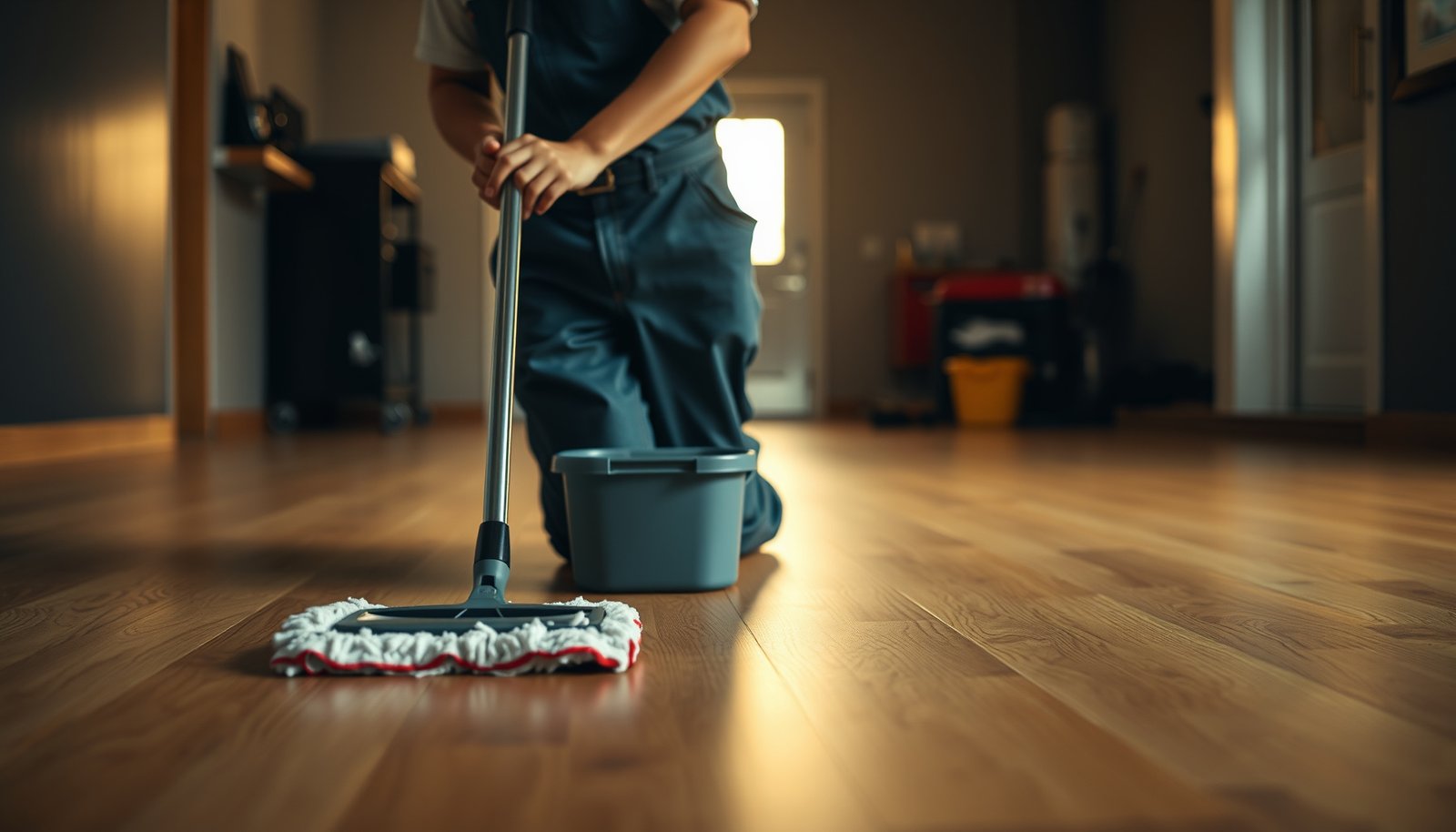
I keep the technique simple: microfiber mop head dampened, wrung until no visible drips, then work methodically.
– Work in small sections so the mop doesn’t sit wet while you move to the next area.
– Mop with the grain (the direction of plank lines) to reduce uneven streaking.
– Use two passes if needed:
1. Cleaning pass with the approved cleaner
2. Optional light “rinse” pass with plain water on the mop only if your manufacturer recommends it
Dry promptly—especially along edges
Garage engineered wood floors often show the problem first at the perimeter: baseboards, expansion gaps, and transitions. If you notice any streaking or dampness, dry promptly with a clean microfiber towel.
As of 2026, this “quick dry” habit is one of the most reliable ways to maintain a crisp finish look on engineered wood garage floors, particularly when you’re cleaning in cool seasons or humid weather.
Handling Common Garage Messes
You can handle garage messes on engineered wood floors safely by matching the cleanup method to the material (salt, grease, paint) and staying inside the limits of moisture and chemistry. The key is targeted spot cleaning instead of soaking the entire surface.
If a cleaner or degreaser is not explicitly labeled as safe for engineered wood, it can cause finish dulling or residue—wood-floor maintenance guidance consistently warns to follow approved products only. NWFA and manufacturer cleaning guidance
Salt and muddy residue should be removed promptly and kept from lingering at the perimeter because moisture with dissolved salts can concentrate as it dries.
For paint, adhesive, and tar, manufacturers typically require finish-specific removal steps; using the wrong solvent can damage coatings and leave haze.
Grease and road grime (the “use caution with degreasers” category)
Grease from vehicles is one of the toughest garage contaminants. Start with the rule: only use a manufacturer-approved wood-safe degreaser if the label explicitly says it’s safe for the engineered wood finish you have. If you’re unsure, you’re better off doing controlled damp cleaning more frequently than taking a guess.
A practical workflow:
1. Dry clean the area first (so grit doesn’t turn into grinding paste).
2. Use only the approved degreaser sparingly on the affected spot.
3. Follow with your normal engineered-wood-approved cleaning method using a damp, well-wrung microfiber mop.
Salt or muddy residue after rain/snow
If your garage engineered wood floors see road salt tracking, act quickly:
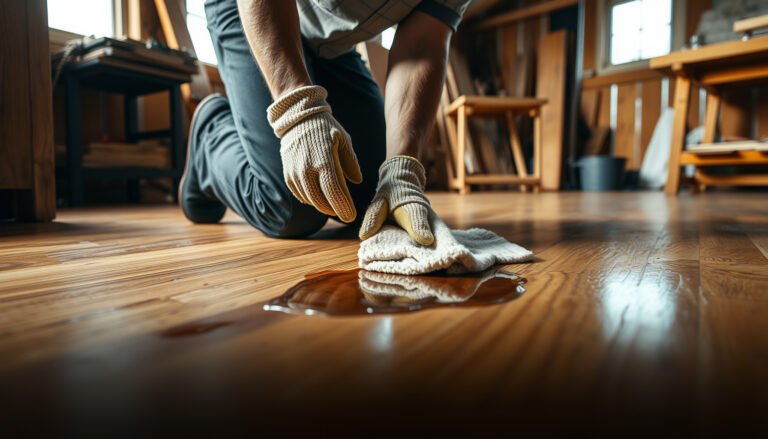
– Wipe first with a barely damp microfiber cloth (not a dripping mop).
– Dry immediately so moisture doesn’t sit at baseboards or seams.
This is especially important in winter or during freeze-thaw cycles, when garage humidity and temperature swings rise—conditions that can stress wood products.
Paint, adhesive, and tar: don’t improvise
Paint drips and adhesives can penetrate or stain if you push them deeper. Since these depend heavily on the coating and finish type, use only the method your flooring manufacturer allows. If you can’t find it, stop and check your installation/maintenance document before trying solvents—some “common” chemicals can permanently haze sealed wear layers.
What Can Go Wrong (Avoid These Mistakes)
If you want engineered wood garage floors to stay flat, bright, and scratch-resistant, avoid the big three: soaking, steam, and harsh chemicals. These mistakes are common because they work “faster” at first—then they cause long-term dullness, swelling, or edge damage.
Soaking or “flood mopping” increases moisture exposure at seams and edges, which can lead to swelling even on engineered wood. NWFA moisture/maintenance guidance
Steam cleaning combines heat and moisture; with water boiling at 100°C (212°F) under standard conditions, it can stress and penetrate vulnerable joints. NIST water boiling point
Hard chemicals (bleach, ammonia, abrasive cleaners, heavy degreasers not approved for wood finishes) can dull or strip protective layers on engineered wood floors. Manufacturer care/maintenance warnings
The moisture and heat problem
Even though engineered wood has a stable construction, the surface still relies on a sealed finish. Moisture can move toward seams, and heat accelerates changes in that environment. This matters more in a garage because temperature and humidity are less controlled.
According to NWFA humidity guidance, wood flooring is typically recommended to be maintained around 35–55% relative humidity and 60–80°F (15–27°C) to reduce expansion/contraction stress (as conditions allow). In real garages, you can’t always control that—so minimizing extra moisture during cleaning becomes even more important.
Skipping grit removal
If you skip the grit stage, your microfiber mop becomes a “move-the-sand” tool. That’s how permanent micro-scratches appear—usually in high-traffic paths like parking and door access routes on engineered wood garage floors.
Ignoring the manufacturer’s limits
Some engineered floors have strict cleaner pH limits or require specific “no residue” products. If you don’t follow those instructions, you can end up with dullness, sticky residue, or accelerated wear.
Verdict: Use a Gentle Routine—Skip Harsh Cleaning
A safe engineered-wood garage cleaning routine is mostly about control: remove grit first, mop with a properly diluted wood-safe cleaner, and keep moisture to a minimum. The upside is fewer scratches and less residue buildup; the downside is you may need repeated gentle cleanings for heavy grease or stubborn spots instead of one aggressive treatment.
If your garage sees frequent standing water, extreme humidity swings, or you’re unsure whether your top layer is sealed (or what finish you have), consult your installation/maintenance document before cleaning and follow the manufacturer’s approved cleaner list and moisture limits. If you can’t locate it, contact the flooring manufacturer directly and ask for the exact cleaning agent and method for your finish type.
Quick Checklist (Scan & Save)
– [ ] Sweep/vacuum grit first (soft brush, dry approach)
– [ ] Mop with a well-wrung microfiber mop (damp, not wet)
– [ ] Use an engineered-wood-approved cleaner (dilute exactly as directed)
– [ ] Work small sections; keep moisture off edges and seams
– [ ] Dry any damp spots promptly
– [ ] Skip steam and avoid harsh chemicals unless the label explicitly approves engineered wood
– [ ] Use mats at the door to reduce moisture + salt tracking
A controlled routine—dry grit removal first, then a damp mop with approved cleaner—reduces both scratching and moisture-related finish issues on engineered wood garage floors. NWFA care guidance
Sources
– National Wood Flooring Association (NWFA) — wood flooring care/maintenance guidance, including cleaning approach and moisture considerations
– National Institute of Standards and Technology (NIST) — water thermodynamic data (e.g., phase-change temperatures)
When you stick to the “dry grit first, damp microfiber second, approved cleaner always” routine, your engineered wood garage floors can look clean without trading durability for speed.
Frequently Asked Questions
What is the best way to clean engineered wood floors in a garage without damaging the finish?
Start by dry sweeping or vacuuming with a soft-bristle brush attachment to remove grit that can scratch engineered hardwood. Use a damp (not wet) microfiber mop with a pH-neutral cleaner specifically labeled safe for engineered wood. Avoid steam mops and excessive water, since moisture can seep into seams and edges and cause swelling or cupping.
How do I remove oil, grease, and tire marks from engineered wood in my garage?
Blot spills immediately with a clean cloth and use a manufacturer-approved degreaser that’s safe for wood floors; apply sparingly and test in an inconspicuous area first. For tire marks, use a damp microfiber cloth with a mild pH-neutral cleaner and gently rub until the stain lifts. Do not use harsh solvents like acetone or paint thinner, which can damage the protective wear layer and finish.
How often should I clean and deep-clean engineered wood floors in a garage?
For regular maintenance, sweep or vacuum weekly and damp-mop as needed, typically every 1–2 weeks depending on traffic and dust. For deep-cleaning, schedule a thorough clean about once or twice per year using a pH-neutral cleaner designed for engineered hardwood. Always follow up with a dry microfiber towel to remove residual moisture and prevent streaking.
Which cleaning products are safe for engineered wood flooring in a garage?
Look for pH-neutral cleaners that are “safe for engineered hardwood” or “safe for wood floors,” and use microfiber pads or microfiber cloths to avoid abrasion. Avoid all-purpose acidic or alkaline cleaners, wax buildup products, and anything with bleach, ammonia, or strong solvents. If you have uncertainty, choose a cleaner recommended by your engineered wood manufacturer for best results.
Why should I avoid water, steam, and abrasive tools on engineered wood floors in garages?
Garages typically bring higher moisture risk from snow, wet boots, and concrete humidity, and engineered wood can be sensitive to standing water. Steam mops and wet mopping can force water into joints and seams, leading to warping or delamination over time. Use soft tools only—microfiber, soft brushes, and non-scratch pads—so you clean effectively without scratching the wear layer.
📅 Last Updated: October 19, 2026 | Topic: How to clean engineered wood floors in a garage? | Content verified for accuracy and freshness.
References
- Engineered wood
- Wood flooring
- Wood flooring
- https://www.epa.gov/mold/moisture-and-mold
- https://www.cdc.gov/mold/default.htm
- https://www.fpl.fs.usda.gov/documnts/fplgtr/fplgtr190.pdf
- https://scholar.google.com/scholar?q=how+to+clean+engineered+wood+floors+in+a+garage Google Scholar
- https://scholar.google.com/scholar?q=engineered+wood+floor+cleaning+and+maintenance+moisture+damage Google Scholar
- https://scholar.google.com/scholar?q=hardwood+floor+care+cleaning+practices+water+avoidance Google Scholar
- https://scholar.google.com/scholar?q=engineered+wood+floor+care+cleaning+instructions+manufacturer+guidelines Google Scholar