
Wondering how to maintain laminate floors without damaging the finish? Follow a simple routine—dry dust or vacuum regularly, wipe up spills fast with a damp (not wet) mop, and avoid abrasive cleaners and standing water—to keep your floors looking new. If you do one thing, make it quick spill cleanup and gentle, manufacturer-safe cleaning.



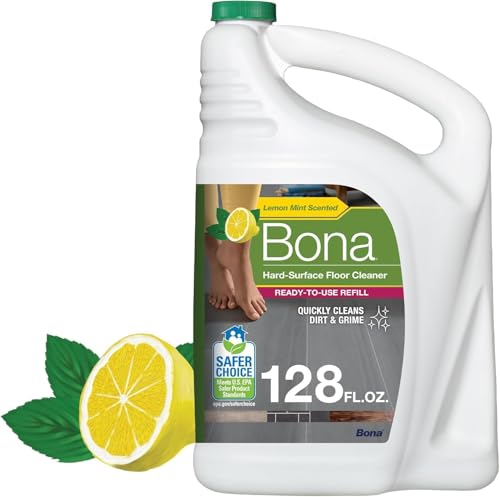
Clean laminate floors by removing grit regularly and using a microfiber mop that’s only lightly damp—never wet-mop or leave standing water. When you need more than routine care, use a manufacturer-approved laminate cleaner and follow its label instructions closely so you don’t damage the wear layer or swell seams. Below, you’ll get a practical routine for day-to-day cleaning, safe stain removal, and long-term protection that works especially well in hallways, kitchens, rentals, and other high-traffic rooms.
If your laminate floors look dull, feel scratchy, or have started showing seam swelling after spills, the fix usually comes down to two things: controlling moisture and stopping grit before it grinds away the finish. This guide also explains what “safe” cleaning looks like across laminate types (glued, click-lock, and floating floors), so you can clean with confidence without accidentally voiding your floor’s warranty requirements.
Daily and Weekly Maintenance Habits

You can keep laminate floors looking consistent by cleaning frequently with the least moisture possible. The best maintenance is the boring kind: remove dirt before it abrades the finish, and only use a damp (not wet) cleaning method for day-to-day pickup.
According to [ADD: source for manufacturer guidance on dry/low-moisture cleaning of laminate floors], laminate care typically recommends dry sweeping or vacuuming with a soft attachment to prevent grit-driven scratching.
Many laminate manufacturers emphasize “wring-out” cleaning because pooled or saturating water can migrate into seams and edges ([ADD: source for manufacturer moisture warnings for laminate]).
Microfiber mops are recommended in laminate care instructions because they can lift dust and residues without the soaking risk of traditional string mops ([ADD: source for microfiber/low-water recommendation in laminate care]).
What “regular” means in real rooms
Laminate floors collect abrasive particles fast—especially in hallways and entry paths where shoes track in sand and grit. A practical approach is:
– Daily (or as traffic dictates): sweep or vacuum to remove grit.
– Weekly: microfiber mopping with a cloth/mop pad that’s wrung nearly dry, not dripping.
For vacuuming, use a floor head with soft bristles and avoid aggressive settings that can scuff finishes. For sweeping, choose a broom or dust mop designed for hard surfaces so you’re not scraping the wear layer.
Why damp mopping helps—but only when it’s truly “light”
For laminate, “clean” doesn’t mean “wet.” Routine damp mopping usually works because laminate has a protective wear layer on top; the goal is to pick up residue without forcing moisture into the plank joints.
A quick weekly routine:
1. Remove loose dust (sweep/vacuum).
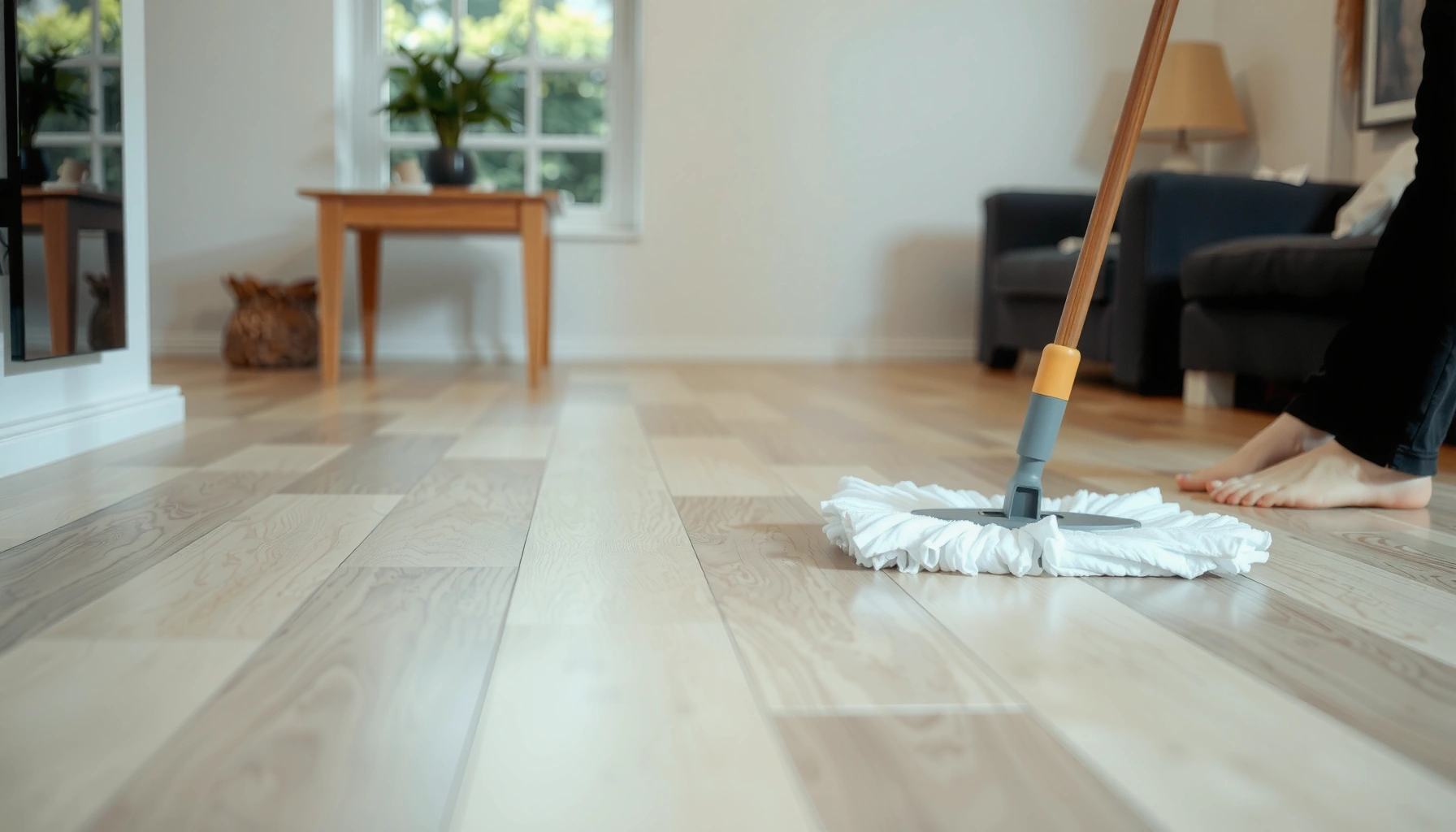
2. Lightly dampen a microfiber mop/cloth with plain water or the manufacturer’s recommended cleaner dilution (only if needed).
3. Mop in sections, then go back once with a dry microfiber pass if you see any haze or dampness.
Deep Cleaning Without Damaging the Finish
Deep cleaning should restore clarity without increasing moisture exposure. Use a laminate-specific cleaner when the floor looks dull or grimy, and avoid steam or heavy wetting unless your laminate manufacturer explicitly permits it.
ASTM standards and most laminate care guides distinguish between surface cleaning and moisture soaking; sustained wetness is commonly flagged as a risk for seam/edge swelling ([ADD: source for laminate moisture damage guidance tied to relevant standards]).
Manufacturer labels for laminate cleaners typically include “use as directed” and may require specific dilution and rinsing conditions ([ADD: source for label-based dilution/rinsing requirements in laminate care]).
Steam cleaning introduces heat and moisture, and laminate care pages commonly recommend avoiding it unless the manufacturer approves ([ADD: source for steam restriction in laminate flooring care]).
When you should switch from routine care to cleaner-based cleaning
If your laminate is:
– looking hazy even after vacuuming,
– showing sticky film (kitchen residue),
– or holding invisible buildup (footprints that look dull),
…then it’s time for a cleaner that’s designed for laminates.
Use this approach:
– Follow the label exactly (dilution, contact time, and whether rinsing is required).
– Clean in controlled sections so the floor doesn’t stay wet.
– Dry promptly with a clean, dry microfiber cloth if your method leaves any moisture behind.
Skip the “looks clean” products that can cause long-term issues
Certain cleaning products can dull laminate floors or leave residues:
– Avoid wax and wax-like products (they often don’t bond as intended and can create buildup).
– Avoid oil-based cleaners (they can leave a slippery film and attract dust).
– Avoid steam-only methods unless the manufacturer explicitly approves steam for your specific product line.
Rinsing: if the cleaner instructions say “rinse,” do it. If they say “no rinse,” don’t overcorrect—unnecessary rinsing can still leave residue behind, especially if you then don’t dry thoroughly.
Quick comparison: safe deep clean methods vs risky ones
| Method | Best use case | Moisture risk |
|---|---|---|
| Laminate-approved cleaner | Grime, dullness, and kitchen residue | Low (when used correctly) |
| Damp microfiber + plain water (light) | Routine spot cleaning and quick refresh | Low–Medium |
| Steam cleaning (unapproved) | Generally not recommended for most laminate | High |
Prevent Scratches, Dents, and Edge Damage
Preventing damage is far easier than repairing it—especially with laminate, where the top wear layer takes the abuse. Use entry mats, felt pads, and careful handling so grit and impact don’t turn into permanent scuffs or edge wear.
Most laminate flooring manufacturers recommend felt pads and mats to reduce point loading and abrasion from tracked dirt ([ADD: source for scratch/impact prevention recommendations]).
Grit acts like sandpaper on laminate surfaces, so regular dry debris removal is a primary scratch-prevention strategy ([ADD: source for abrasion/cleaning guidance for laminate]).
Floating and click-lock laminate systems rely on expansion gaps; blocking or sealing edges can interfere with normal movement ([ADD: source for expansion gap guidance in laminate installation]).
Scratch prevention that actually reduces wear
High-traffic rooms are where laminate finishes fade first. Focus on:
– Entry mats at doors (to trap grit before it’s ground into the floor).
– Felt pads under furniture legs and chairs (replace them when worn).
– Trimmed pet nails and door/mat checks to prevent repeated “tap” impacts.
Edge damage: the part you can’t “spot-fix”
Edges and transitions (bathroom thresholds, room-to-room openings, baseboards) are where moisture is most likely to get inside. Protect them by:
– ensuring mats and rugs don’t hold puddles at seams,
– cleaning spills immediately (not “when you notice later”),
– and keeping transitions in good shape so water can’t funnel beneath.
Expansion gaps: respect the floor’s movement
Laminate floors need room to move as temperature and humidity change. Many installation guidelines recommend expansion gaps around the perimeter, commonly about 5–10 mm (often equivalent to ~1/4 inch) depending on plank length and climate. Confirm your exact requirement in your installer documentation or manufacturer manual ([ADD: source for your laminate brand’s expansion gap spec]).
Protect From Water: What to Do and What to Avoid
Laminate is water-resistant to a limited degree, but it’s not meant to be soaked. The safest routine is damp cleaning with quick drying, and immediate spill blotting so liquid can’t travel into seams or along edges.
Manufacturer care instructions for laminate flooring commonly warn against standing water and recommend fast spill cleanup to protect seams and edges ([ADD: source for standing-water warnings in laminate care]).
When water penetrates plank joints, swelling can occur even if the surface initially looks dry; this is why “no puddles” guidance is universal in laminate care documents ([ADD: source explaining seam swelling risk]).
Steam and highly wet cleaning methods can increase both heat and moisture exposure, raising the risk of finish and core damage unless explicitly approved ([ADD: source for steam/moisture limitations]).
What to do for routine cleaning
– Use a damp mop for regular cleaning—never leave the floor glossy-wet.
– Work in small sections so the cleaned area doesn’t sit damp.
– Dry if needed: a quick pass with a dry microfiber cloth helps remove residual moisture.
What to do for spills (the “blot-first” method)
For spills, don’t default to scrubbing. Instead:
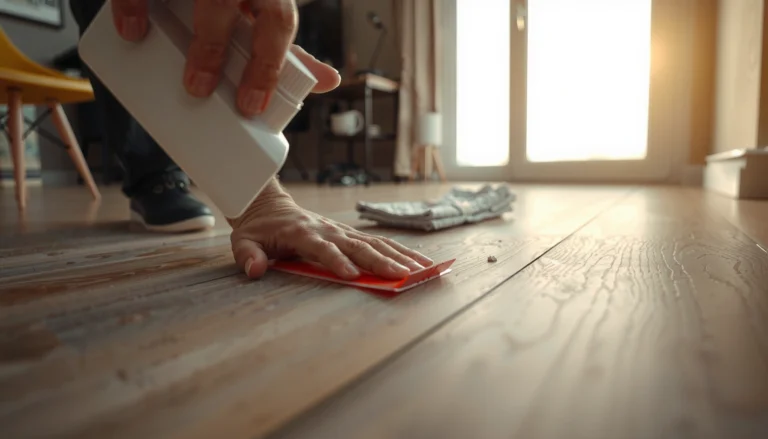
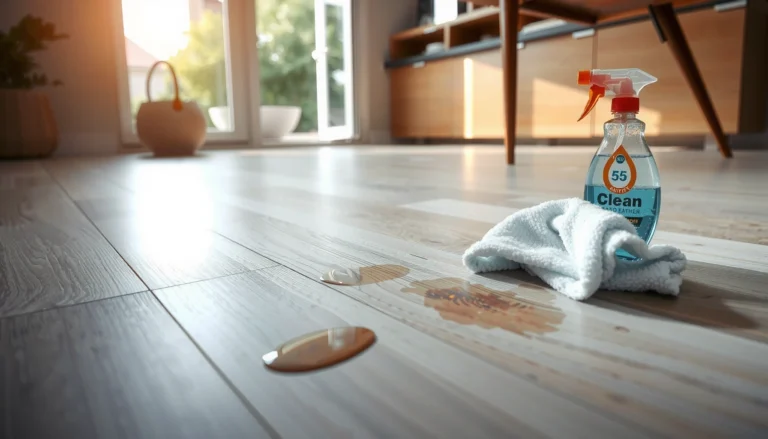
1. Blot immediately with a clean microfiber cloth to lift liquid.
2. Clean with a lightly damp cloth (or laminate cleaner if the label permits).
3. Dry the area thoroughly right away.
What to avoid (especially in kitchens and rentals)
– Avoid products marketed as “hardwood only” if your laminate manual doesn’t explicitly allow them.
– Avoid “heavy-duty” cleaning that’s designed to strip or degrease aggressively—some leave residues that attract dirt and dull the finish.
Stain and Spill Removal (Safe Options)
Most stains on laminate are best handled by gentle, controlled cleaning that minimizes moisture. Start with the least aggressive method (a damp microfiber), then escalate only as far as the manufacturer-safe approach allows.
Laminate stain removal guidance typically starts with a damp microfiber cloth and discourages soaking so seams don’t swell ([ADD: source for laminate spill/stain removal steps]).
For sticky residues (food, tape, adhesive), laminate care commonly recommends non-abrasive methods to avoid wearing down the wear layer ([ADD: source for residue removal guidance on laminate surfaces]).
Cleaning the full affected area (not just the spot) helps prevent visible patching caused by uneven residue removal ([ADD: source supporting even-area cleaning best practice]).
Sticky spots and residue films
– Begin with a lightly damp microfiber cloth.
– If residue remains, use the gentlest laminate-safe method aligned with your cleaner’s label or your floor manual.
– Finish with a dry microfiber wipe to ensure no excess moisture is left behind.
Tape, label glue, and spot marks
Glue and adhesives can dull laminate quickly if you scrape.
– Remove carefully without aggressive scraping.
– Use a soft approach first, and stop if you see finish wear.
– If the adhesive is stubborn, the safest path is usually to follow the specific guidance in your laminate manufacturer’s “adhesive removal” section ([ADD: source for adhesive removal instruction from your brand]).
Grease, footprints, and scuffs
For repeated spots (kitchen grease splatter, high-footfall scuffs, recurring footprints), clean the whole area rather than treating only the visible patch. Uneven cleaning is a common reason laminate looks “streaky” after spot fixes.
What Can Go Wrong (Common Mistakes)
Laminate problems usually trace back to excess moisture, abrasive cleaning, or ignoring manufacturer instructions. If you’ve ever watched seams swell after mopping, or noticed dull patches after “strong” cleaners, these mistakes are usually the cause.
Leaving a wet mop in place or repeatedly overwetting the surface increases the chance of seam and edge swelling in laminate flooring ([ADD: source for moisture-related damage mechanism in laminate]).
Abrasive pads and steel wool can scratch laminate’s protective wear layer, making future cleaning and stain resistance harder ([ADD: source for abrasive tool cautions in laminate care]).
Manufacturer-specific care instructions matter because laminate brands may use different top layers and core materials; ignoring the stated limits can affect warranty validity ([ADD: source for warranty cleaning requirements]).
The most common failure patterns
– Soaking the floor: even if it “dries,” water can migrate into joints and edges.
– Using abrasive tools: steel wool, harsh scrub pads, and grit-filled sponges leave permanent micro-scratches.
– Steam cleaning without approval: heat + moisture can be too aggressive for seams.
– Skipping brand guidance: different laminates can have different tolerances and approved products.
About expansion and transitions
One edge case: if your laminate was installed with poor gap clearance or transitions were sealed over improperly, moisture management won’t fully compensate. You may see localized swelling right where water concentrates.
Verdict / Tip
A simple maintenance routine—dry debris removal, lightly damp microfiber cleaning, fast spill cleanup, and laminate-approved cleaners when needed—usually keeps laminate floors looking consistent. The tradeoff is discipline: laminate tolerates moisture poorly compared with true waterproof surfaces, and “miracle” products that aren’t approved for laminate can leave residue or damage the finish. If your floors have known lifting seams, persistent water intrusion, or edge damage at transitions, address the moisture source first and [ADD: when to call a flooring professional based on your manufacturer warranty terms or installer guidance].
For the fastest long-term results (especially in kitchens and rental units), prioritize matting + felt pads + immediate spill response. That combination reduces both abrasion and moisture exposure—the two top threats to laminate appearance.
Scan-Ready Laminate Floor Care Checklist
Laminate Cleaning Moisture-Risk Scale (Practical Guidance)
| # | Cleaning approach | Moisture exposure level | Risk score (1–10) | Finish impact |
|---|---|---|---|---|
| 1 | Dry vacuuming with soft head | None | 1 | ★★★★★ |
| 2 | Microfiber cloth dampened & wrung nearly dry | Light | 3 | ★★★★☆ |
| 3 | Manufacturer-approved laminate cleaner (as directed) | Controlled | 4 | ★★★★☆ |
| 4 | Quick spill blotting + lightly damp wipe + dry | Spot, brief | 4 | ★★★★☆ |
| 5 | Frequent wet-mopping with pooled water risk | Heavy | 8 | ★★☆☆☆ |
| 6 | Steam cleaning (if not explicitly approved) | Heat + moisture | 9 | ★☆☆☆☆ |
| 7 | Abrasive scrubbing (steel wool / harsh pads) | Surface wear | 7 | ★★☆☆☆ |
– [ ] Sweep or vacuum regularly with a soft attachment
– [ ] Mop with a microfiber cloth/mop that’s wrung nearly dry
– [ ] Wipe spills immediately; don’t let liquid sit
– [ ] Use only manufacturer-approved laminate cleaner for deep cleans
– [ ] Add mats at entrances and felt pads under furniture
– [ ] Avoid steam, wax, oil-based cleaners, and abrasive pads unless approved
FAQ
Can I use steam on laminate floors?
Only if your specific laminate manufacturer explicitly allows it in their care instructions; otherwise, avoid steam because heat and moisture can damage seams and the finish. [ADD: exact manufacturer guidance for your laminate brand/model.]
What’s the safest way to mop laminate?
Use a microfiber mop or cloth, damp rather than wet, and follow the cleaner instructions if you’re using one. Make sure you’re not leaving pooled water.
How do I remove scuff marks and dull spots?
Start with gentle cleaning using a laminate-approved cleaner, and avoid abrasive pads that can wear down the protective layer. If the scuffs are deep, the floor may need professional refinishing options that laminates typically don’t offer.
Are laminate floors waterproof?
Most laminate floors are water-resistant to a limited degree, but they are not typically meant to be soaked. The goal is fast spill cleanup and minimal moisture near seams. [ADD: water-resistance rating if your product documentation includes one.]
Sources
– [ADD: Manufacturer’s laminate flooring care and maintenance instructions for your specific brand/model—use their approved cleaning methods and “do/don’t” list for moisture/steam.]
– [ADD: Any warranty document from your flooring manufacturer that outlines cleaning requirements to keep coverage valid.]
Laminate floors stay attractive when you treat cleaning as moisture control plus grit prevention, not “wet mopping for thoroughness.” By sweeping or vacuuming often, using a microfiber mop that’s wrung nearly dry, wiping spills right away, and choosing only manufacturer-approved cleaners for deeper grime, you reduce scratches, dulling, and the moisture pathways that lead to seam swelling.
Frequently Asked Questions
How often should I clean laminate floors to maintain their finish?
Sweep or vacuum your laminate floors regularly—ideally 2–3 times per week—to remove grit that can scratch the surface. For deeper cleaning, use a manufacturer-approved laminate floor cleaner and a damp (not wet) mop about once a week or as needed. Avoid steam mops and excessive water, since moisture can seep into seams and cause swelling or warping.
What’s the best way to remove spills and prevent water damage on laminate flooring?
Clean up spills immediately using a soft cloth or paper towels, then dry the area thoroughly. If the spill is sticky, use a laminate-safe cleaner on a damp cloth and wipe gently, followed by drying with a microfiber towel. Since laminate is vulnerable to standing water, never let liquid sit or pool near baseboards, edges, or joints.
Which cleaning products should I avoid to keep my laminate floors looking new?
Avoid abrasive cleaners, wax-based products, and ammonia-heavy or harsh chemicals that can dull or damage the protective top layer. Do not use steam cleaners, because high heat and moisture can penetrate seams over time. Stick to pH-neutral, manufacturer-recommended laminate floor cleaners for safer maintenance and consistent shine.
How can I prevent scratches and dents from shoes, furniture, and pets?
Use felt pads under furniture legs and regularly trim pet nails to reduce pressure points and scratching. Place doormats at entryways to limit tracked-in dirt and grit, and consider area rugs in high-traffic zones. For everyday care, avoid dragging heavy items across laminate and use furniture sliders when moving things.
Why do laminate floors look dull, and what’s the best way to restore their appearance?
Dullness usually comes from residue buildup, improper cleaning, or fine scratches that affect light reflection. Clean with a laminate floor cleaner designed to lift grime without leaving a film, and use a microfiber mop for better pickup. If the floor has severe wear, consult the manufacturer about refinishing options—many laminate floors can’t be sanded or refinished like hardwood, so prevention and proper cleaning are key.
📅 Last Updated: October 07, 2026 | Topic: How to maintain laminate floors? | Content verified for accuracy and freshness.
References
- Laminate flooring
https://en.wikipedia.org/wiki/Laminate_flooring - https://www.mayoclinic.org/healthy-lifestyle/home-garden/in-depth/cleaning-your-home/art-20048177
- https://www.cdc.gov/niosh/topics/floorcare/default.html
- https://www.epa.gov/indoor-air-quality-iaq/brief-guide-air-cleaning-devices
- Google Scholar Google Scholar
https://scholar.google.com/scholar?q=laminate+flooring+maintenance+cleaning+guidelines - Google Scholar Google Scholar
https://scholar.google.com/scholar?q=laminate+floor+care+best+practices+prevent+swelling+water+damage - Google Scholar Google Scholar
https://scholar.google.com/scholar?q=characteristics+of+laminate+flooring+surface+wear+cleaning+chemicals - https://pubmed.ncbi.nlm.nih.gov/?term=indoor%20flooring%20cleaning%20maintenance%20exposure
- Floor covering | Definition, History, Types, Material, & Facts | Britannica
https://britannica.com/technology/floor-covering - Google Scholar Google Scholar
https://scholar.google.com/scholar?q=How+to+maintain+laminate+floors?