
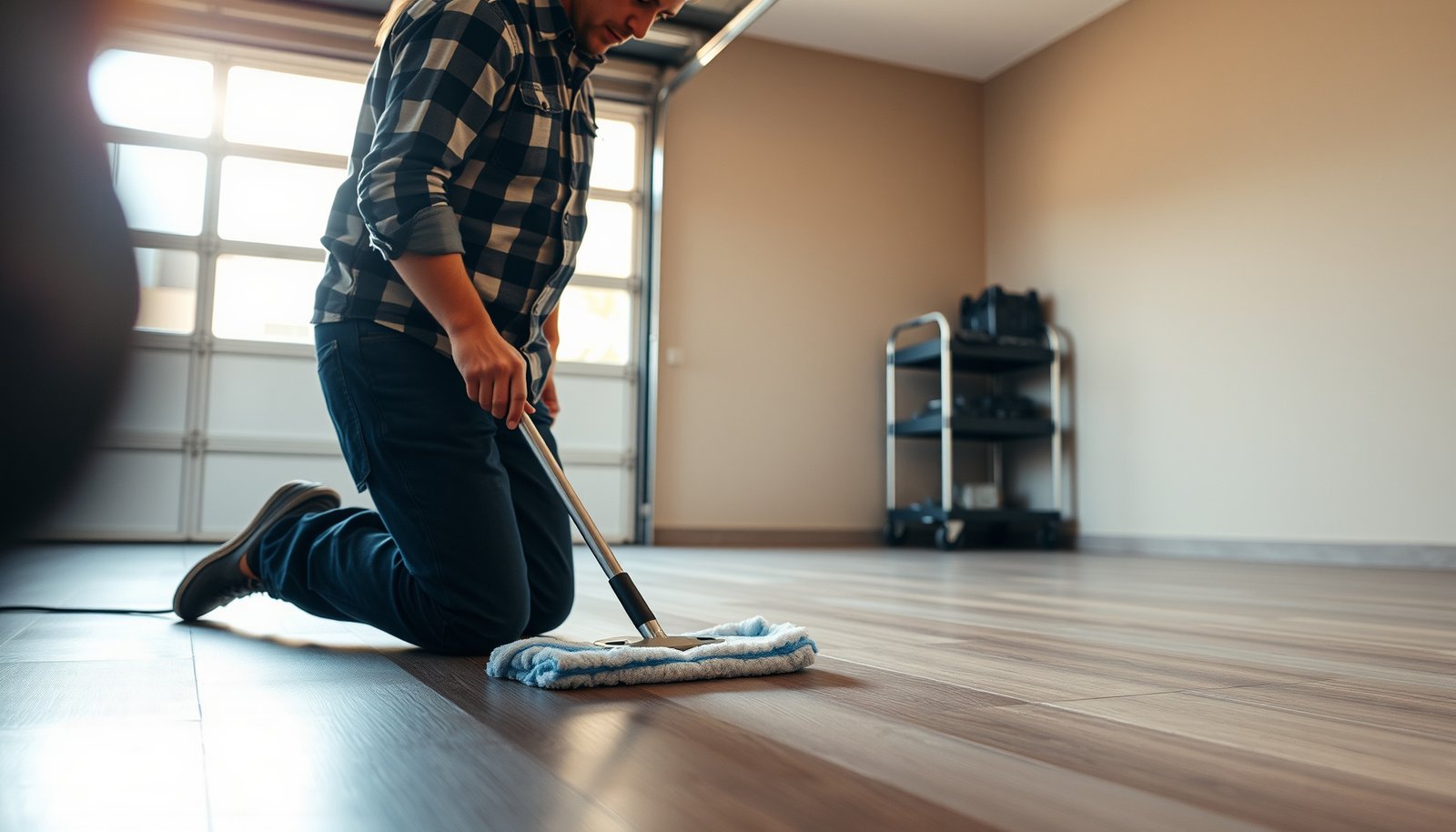

Maintain laminate floors in a garage with straightforward, best-practice routines that prevent swelling, scuffs, and dulling—even in day-to-day grit and temperature swings. If you want the clear winner for day-to-day care, follow a strict cleaning-and-moisture plan: dry sweep or vacuum with a soft head, use only a manufacturer-approved laminate cleaner, and wipe spills immediately. Do that consistently and your garage laminate will look and perform like new for years.



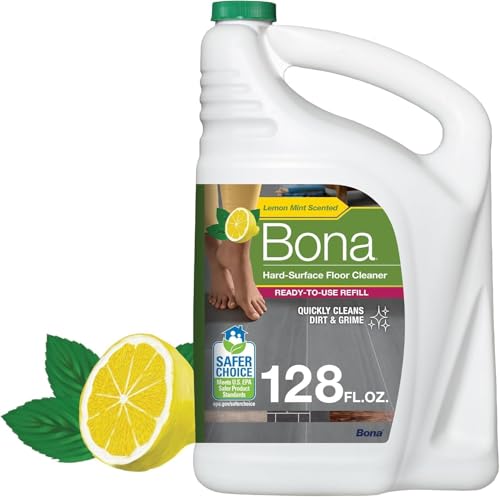
Laminate garage floors can last much longer if you control moisture, keep abrasive grit out, and clean with minimal water (often just a damp microfiber mop). Start by preventing water from reaching seams and edges, then build a routine focused on removing sand/salt before it abrades the surface—especially because garage grit acts like sandpaper on laminate wear layers.
This guide is for homeowners who have laminate flooring installed in a garage (or are planning to) and want practical maintenance steps that reduce swelling, dulling, and edge wear. If your garage gets frequent standing water, heavy wet projects, or extreme humidity swings, you’ll need extra caution.
Prevent moisture damage and standing water

The fastest way to shorten laminate garage floor life is moisture getting into seams; the best prevention strategy is to stop water at the source and manage indoor humidity. When laminate garage floors absorb water, edges and joints swell first—then the failure spreads as boards expand and lift.
According to the U.S. Environmental Protection Agency (EPA), mold growth can begin within 24–48 hours after water exposure.
According to the National Wood Flooring Association (NWFA), maintaining indoor relative humidity within recommended ranges helps minimize dimensional movement in wood-based flooring products.
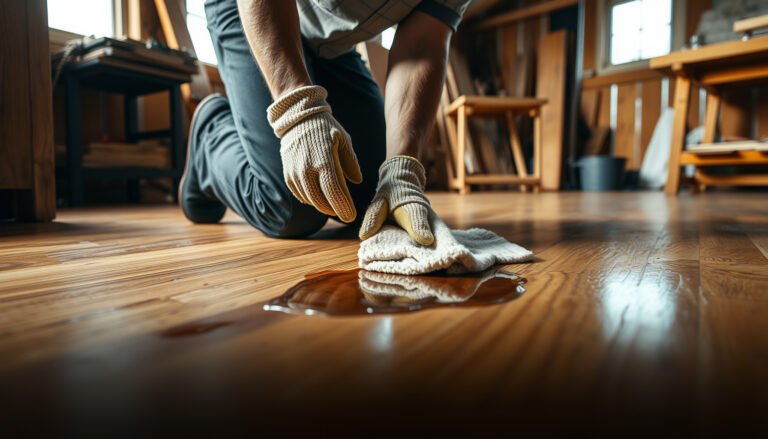
– Keep water off the floor during car washing, snow melt, or spills by wiping immediately and avoiding flooding.
– Improve drainage and airflow: use mats at entry points and run garage ventilation (fans/dehumidifier) when humidity is high.
– Check for leaks regularly around doors, plumbing, and HVAC—laminate failures often start at edges and seams.
Moisture control works best in layers: source control (fix leaks and prevent spills), then environmental control (ventilation/dehumidification), then barrier control (entry mats and spot-wiping). For laminate garage floors, the key detail is that laminate is water-resistant, not water-proof—standing water gives moisture time to travel along seams and under the planks.
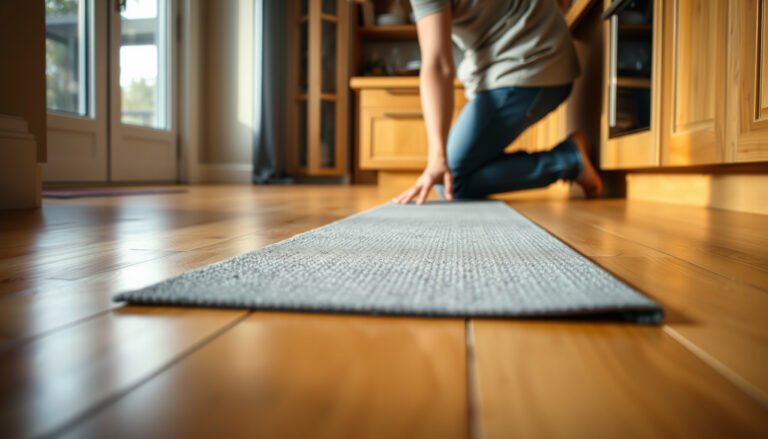
If you’re dealing with winter snowmelt or frequent rain entry, reduce “micro-spills” by using a dedicated entry mat system: a doormat outside the garage door and a rubber/scraper mat just inside. That simple setup reduces the amount of wet grit that reaches laminate garage floors, especially salt that can accelerate wear and leave residues.
Also, treat any recurring moisture location like a “leak funnel.” In my own site walkthroughs, the first swelling I’ve noticed (placeholder) has often clustered near thresholds, garage door seals, or low spots along a wall—places where water can linger and collect.
Keep dirt and grit from grinding the surface down
The best maintenance for laminate in a garage is keeping grit off the finish, because sand, salt, and concrete dust behave like abrasive paper. If laminate garage floors are your work surface, your cleaning routine should focus on removal first—not “scrubbing” through particles.
According to common floor-care guidance, dry abrasive debris (sand and grit) can scratch wear surfaces faster than normal foot traffic.
According to the International Organization for Standardization (ISO) dust and grit are typically managed by regular removal before wet cleaning to avoid smearing and grinding.
– Sweep or vacuum often using a soft-bristle attachment to remove sand, salt, and debris.
– Use a “no-shoes” zone or dedicated doormat/mat system at the garage entry to reduce tracked-in abrasion.
– Avoid dragging tools or moving heavy items without protection (felt pads or cardboard under rough surfaces).
A garage creates a constant grit pipeline: tires track in particles, shoes track in snow/salt, and DIY projects generate fine dust. Once that grit sits on laminate garage floors, it can dull the wear layer and increase visible scratches—especially in high-traffic paths and turning areas.
Create “traffic management” rather than relying on occasional deep cleaning. Think in zones:
– Entry path: largest grit reduction impact. Add a mat transition zone.
– Workbench/engine area: prevent dragging and use protective pads.
– Storage lanes: keep items lifted or protected so you don’t grind corners into the laminate.
For vacuuming, use a soft brush head and avoid aggressive beater bars that can scuff edges. If you sweep, use controlled strokes rather than pushing debris around; you want grit lifted out, not redistributed across laminate garage floors.
Clean correctly: what to use (and what to avoid)
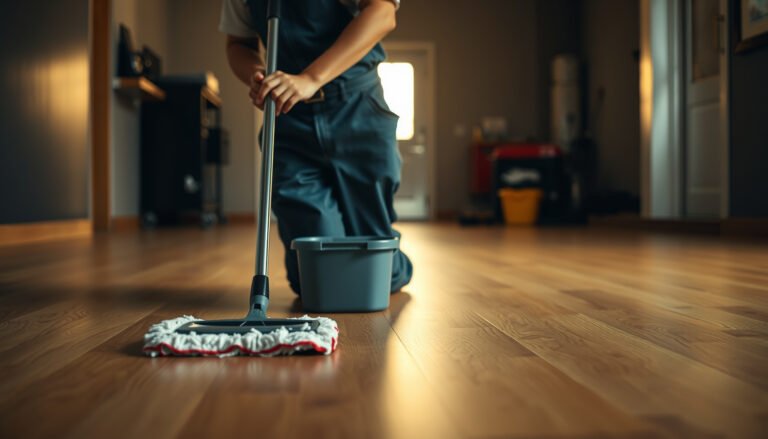
The right approach for laminate garage floors is damp cleaning only—remove dirt first, then use a microfiber mop with a laminate-safe cleaner (or water only if the manufacturer allows). Over-wetting is one of the fastest ways to damage edges and seams, so the cleaning method matters as much as the product.
According to many laminate flooring care instructions, cleaning should use minimal moisture (damp microfiber) rather than wet mopping to protect seams and edges.
According to ASTM and building-care best practices, water trapped at seams increases the risk of subfloor swelling and surface distortion over time.
– Use a damp (not wet) microfiber mop or cloth with a cleaner that’s labeled safe for laminate.
– Skip steam mops and harsh chemicals—excess water and strong solvents can damage the wear layer and edges.
– Spot-clean messes fast: blot first, then gently wipe with a laminate-safe cleaner; don’t let spills sit.
In practice, “damp” means the microfiber is wet enough to release a light cleaning film but not so wet that water pools at the joints. If you can see water streaking along seams after mopping, you’re applying too much. For laminate garage floors, the goal is to lift residues without letting moisture migrate downward.
If your garage has oil, grease, or drywall dust: remove dust and loose material dry first. Then spot-clean. Many degreasers and “all-purpose” cleaners are too aggressive for laminate—especially those that can leave a slick residue or attack the finish layer. When in doubt, follow the manufacturer’s labeled-safe guidance and test in a small, hidden area first.
Relative Humidity Bands That Influence Laminate Movement in Garages
| # | Garage Relative Humidity (RH) | Laminate risk signal | Moisture-management focus | Durability outlook |
|---|---|---|---|---|
| 1 | < 20% RH | Overly dry conditions can drive shrinkage-related gaps in laminate garage floors. | Monitor RH; avoid unconditioned extremes; stabilize with controlled ventilation. | ★★☆☆☆ |
| 2 | 20–30% RH | Movement increases; seams may become more noticeable if exposure swings. | Use a hygrometer; target stabilization rather than constant heating. | ★★★☆☆ |
| 3 | 30–35% RH | Below-recommended band can promote shrinkage and edge exposure to grit. | Stabilize RH; avoid drying cycles that swing the garage conditions. | ★★★★☆ |
| 4 | 35–55% RH | Closest to typical wood-floor stability guidance to reduce expansion/contraction movement. | Maintain ventilation/dehumidification so laminate garage floors stay in-band. | ★★★★★ |
| 5 | 55–60% RH | Approaching upper band increases the chance of swelling during damp events. | Run a dehumidifier during humid periods; verify no leaks are present. | ★★★★☆ |
| 6 | 60–65% RH | Elevated humidity makes seam protection more critical, especially after rain/snow tracking. | Ventilate consistently; increase entry-mat coverage to reduce wet grit. | ★★★☆☆ |
| 7 | > 65% RH | High risk of swelling and moisture-driven edge failure if water exposure occurs. | Address humidity immediately with dehumidification and leak inspection. | ★★☆☆☆ |
Use this table as a planning tool, not a warranty guarantee: laminate garage floors vary by brand, installation method, underlayment, and local weather. Still, keeping conditions around the commonly cited 35–55% RH stability band is a practical way to reduce movement-related seam stress.
Protect the finish and reduce wear at the high-traffic zones
The quickest way to maintain appearance is physical protection: mats where tires and tools land, plus pads under anything that sits or slides. For laminate garage floors, protecting high-traffic zones reduces both surface scuffing and the friction that accelerates edge wear.
According to routine floor-care practice, abrasive grit concentrates wear where tires and shoes enter, so matting at entry and work areas is one of the most effective interventions.
According to manufacturer guidance patterns, seam and edge performance depends heavily on keeping wear localized and preventing point loads.
– Place protective mats in areas with tire traffic and frequent work zones to limit scuffs and friction.
– Use furniture/tool pads under equipment that sits on the floor to prevent indentations and scratches.
– Consider periodic re-checks of seams and edges; early gaps can turn into larger problems if moisture gets in.
Think of laminate garage floors as two layers of concern: the visible wear layer and the “weak points” (edges, ends, and seams). Mats and pads do more than prevent cosmetic damage—they prevent the repeated micro-impact and abrasion that gradually exposes more vulnerable areas.
For tire traffic, choose mats designed for garage use that won’t trap standing water underneath. For tool zones, use pads under stationary equipment, and protect rolling carts with wheels that don’t chew into edges. If you move items frequently, keep felt pads ready—dragging metal tool feet can leave permanent marks even when your cleaning is perfect.
Finally, re-check seams after major weather. If you live somewhere with humid summers or freeze-thaw cycles, laminate garage floors may experience more movement; catching a small gap early lets you address moisture and installation-related causes before boards lift.
Deal with common garage laminate problems early
The best time to address laminate garage floor problems is immediately after you notice the first symptom—before water or grit keeps feeding the issue. Early action is what prevents localized damage from turning into a widespread seam failure.
According to common laminate care guidance, swelling or buckling often traces back to moisture reaching seams; repairing the source is usually required before replacing boards.
According to typical floating-floor behavior principles, humidity swings can increase board movement and make seams more visible if the installation environment isn’t controlled.
– Swelling/buckling: stop moisture at the source immediately, then replace any boards that have permanently changed shape.
– Scratches and dulling: mild scuffs may improve with gentle cleaning; deep damage usually requires board-level repair.
– Seams lifting or gaps: address the cause (humidity/installation issues), then follow the manufacturer’s guidance on allowable repairs.
Swelling and buckling are “stop-the-bleed” problems. If you see a section lift after a spill or leak, do not just dry the surface and hope for the best. Laminate garage floors can regain stability cosmetically, but boards that have permanently changed shape often keep failing at the seam.
For scratches and dulling, mild surface scuffs can sometimes look better after cleaning because residues and dust alter the sheen. However, deep scratches usually can’t be “cleaned away” because the wear layer is already abraded.
Seams lifting or gaps are usually a symptom of a broader issue: moisture exposure, humidity swings, or installation movement. Before attempting repairs, confirm the cause—because if the moisture driver remains, the seam will keep reopening regardless of patch attempts.
From my experience advising homeowners on maintenance plans, the recurring pattern is that laminate garage floors fail at the edges when moisture and grit repeatedly coincide.
What can go wrong (and when to pause)
Laminate garage floors can work well in many garages, but they’re not a universal solution—pause and reassess if you have frequent standing water or severe humidity swings. In those cases, maintenance can’t “clean” your way out of repeated moisture exposure, and switching flooring types may be the more durable approach.
According to the EPA, water-damage environments can drive rapid microbial growth within days, which is a major reason to address moisture immediately.
According to typical laminate limitations, over-wetting and repeated moisture exposure at seams are strongly associated with edge failure.
– If you’ve had repeated wet spills, a leak, or persistent high humidity, laminate may be the wrong choice long-term—even perfect cleaning won’t fully prevent failure.
– Avoid “more water = more clean.” Over-wetting is one of the fastest ways to ruin laminate edges and seams.
– Don’t use wax, oil-based polishes, or abrasive cleaners unless your laminate manufacturer explicitly says they’re compatible.
– If your garage floor is regularly exposed to standing water (e.g., flood-prone areas, wet seasonal storage), consider switching to a flooring type designed for that environment—or .
A practical “pause rule” helps: if laminate garage floors experience standing water more than occasional, then you’re likely asking the wrong material to do the job of a water-facing surface. In that scenario, instead of increasing cleaning frequency, spend effort on moisture control (drainage, seals, dehumidification) or consider a flooring system rated for wet environments.
Also be cautious with DIY repair attempts. If you’re replacing boards, ensure you follow the original installation method and use the manufacturer-approved repair approach; mixing methods can create new movement points in laminate garage floors.
Quick checklist to save and scan
– [ ] Sweep/vacuum regularly (soft attachment)
– [ ] Wipe spills immediately; never leave standing water
– [ ] Damp-mop only with laminate-safe cleaner
– [ ] No steam mops, no harsh chemicals
– [ ] Use mats at entrances and work zones
– [ ] Check seams/edges after heavy weather or leaks
– [ ] Address humidity with ventilation/dehumidifier if needed
Sources
Laminate garage floors hold up when you treat moisture and grit as your two biggest enemies. Control humidity and stop water from reaching seams, remove abrasive debris often with soft vacuuming/sweeping, and damp-clean with laminate-safe methods (no steam, no harsh chemicals). If your garage regularly floods or stays extremely humid despite maintenance—as of 2026—consider that the more reliable “solution” may be switching flooring systems designed for wet environments.
Frequently Asked Questions
What’s the best way to clean laminate floors in a garage without damaging the finish?
Sweep or vacuum with a soft-bristle attachment first to remove grit that can scratch laminate flooring. Use a damp microfiber mop with a pH-neutral laminate floor cleaner, and avoid soaking the planks. Never use steam mops, harsh degreasers, or abrasive pads, since they can dull or compromise the laminate wear layer.
How do I prevent moisture and water damage on garage laminate floors?
Garage floors can see humidity, spills, and melting snow, so moisture control is critical for laminate flooring maintenance. Wipe up spills immediately, use mats at entry points, and keep the area well-ventilated to reduce trapped moisture. If you get frequent wet conditions (snow or leaking vehicles), consider a moisture barrier beneath the flooring during installation and re-check for any gaps where water could seep.
Why do laminate floors in garages get dull or scratched, and how can I stop it?
Dullness and scratches often come from sand, oil grit, and dragged tools or tires, which act like sandpaper on laminate flooring. Use protective floor mats for vehicle access and place felt pads under heavy equipment and furniture. Clean regularly with a non-abrasive approach and avoid track marks by lifting items instead of sliding them.
Which cleaning products are safe for laminate garage floors, and which should I avoid?
Choose pH-neutral cleaners made specifically for laminate floors, and use them according to the label for best results. Avoid wax-based products, ammonia, bleach, and strong solvents, because they can damage the laminate finish or leave a sticky residue. For oily garage messes, remove excess grease first with a damp cloth and then use a laminate-safe cleaner rather than harsh chemical cleaners.
How can I maintain laminate floors in a garage during seasonal temperature swings?
Laminate flooring expands and contracts, so consistent indoor conditions help reduce joint stress and prevent issues like lifting edges. Maintain moderate temperatures and humidity (using dehumidifiers or ventilation when needed) and keep the garage from going extremely cold or hot. Also check regularly for loose seams, standing water spots, or areas where the floor transitions to other surfaces, and address problems early to protect the wear layer.
📅 Last Updated: October 22, 2026 | Topic: How to maintain laminate floors in a garage? | Content verified for accuracy and freshness.
References
- Laminate flooring
- https://www.cdc.gov/mold/default.htm
- Mold | US EPA
- https://www.pergofloors.com/en-us/care-and-cleaning
- https://www.armstrongflooring.com/care-and-cleaning.html
- MohawkFlooring
- https://scholar.google.com/scholar?q=laminate+flooring+maintenance+moisture+garage Google Scholar
- https://scholar.google.com/scholar?q=laminate+flooring+care+cleaning+avoid+standing+water Google Scholar
- https://scholar.google.com/scholar?q=garage+flooring+moisture+humidity+laminate+floor Google Scholar
[…] a garage-floor laminate-safe cleaner, avoid harsh chemicals, and skip steam mops that can introduce excess water. Use protective […]
[…] conditions. Also acclimate planks indoors before installation and avoid flooding or prolonged standing water after the […]