
If you want hardwood floors safer in your kitchen, prioritize slip resistance, fast water protection, and removing trip hazards before they worsen. Start by keeping spills from sitting on the surface, then use a properly secured mat/rug setup and a low-residue cleaning routine so hardwood stays “grippy” even with frequent mopping—without damaging the finish.



Who this is for / when it applies: This is for homeowners (and renters, where permitted) with hardwood floors in kitchens—especially where you routinely mop, use floor cleaners, or have kids, seniors, or anyone at higher fall risk. It’s also useful if you notice squeaks, loose edges, or slippery patches near sinks and cooking areas.
Improve traction where slips happen most
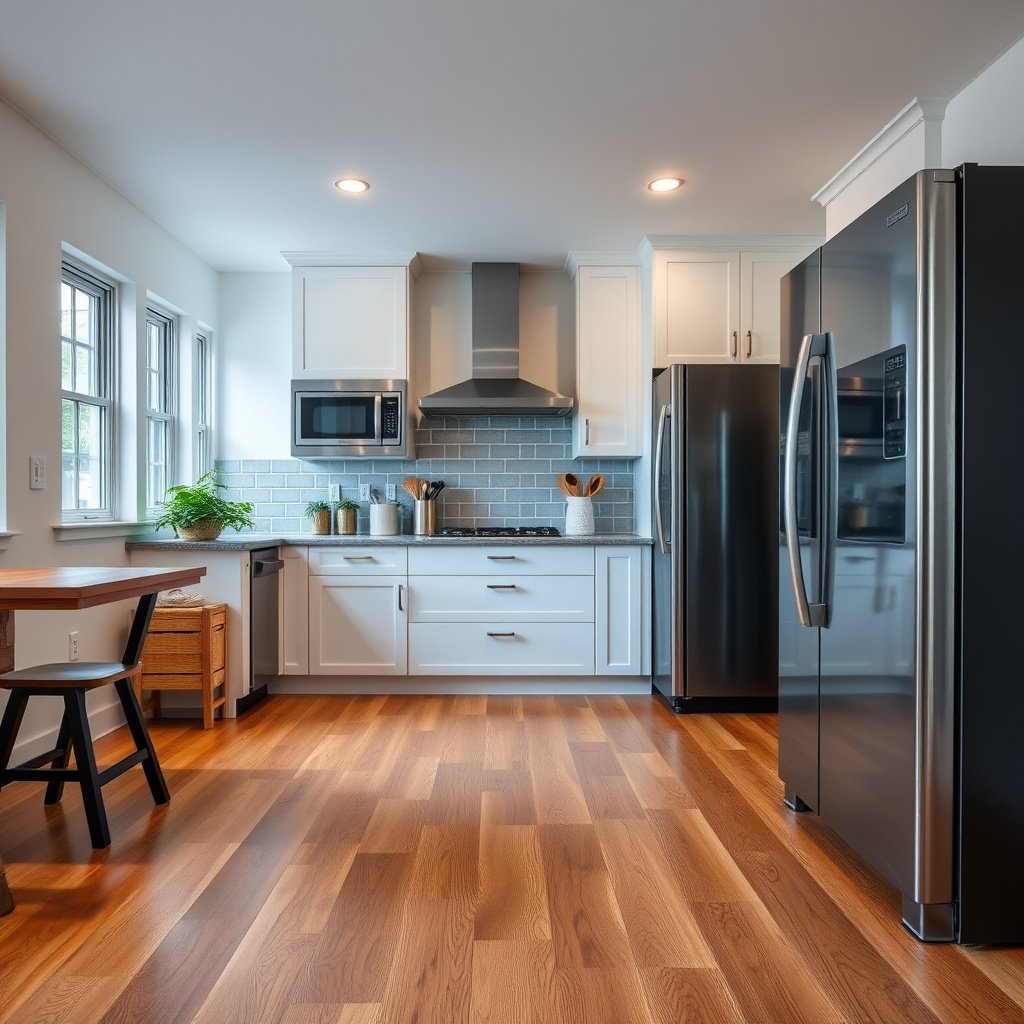
You don’t need to refinish your whole kitchen to reduce slip risk—small changes in traction and moisture control usually make the biggest difference. In 2026, the most effective approach for hardwood floors in kitchens is combining a hard-surface-friendly mat with strict “dry-first” spill handling.
A major slip risk on hardwood floors is not “bare wood,” but the film created by wetness, grease, and cleaner residue; controlling water and residue improves traction without changing the floor.
The CDC reports that 1 in 4 older adults falls each year, which is why slip-resistant routines around sinks and cooking paths matter for kitchen safety. CDC (Falls: Important Facts about Falls)
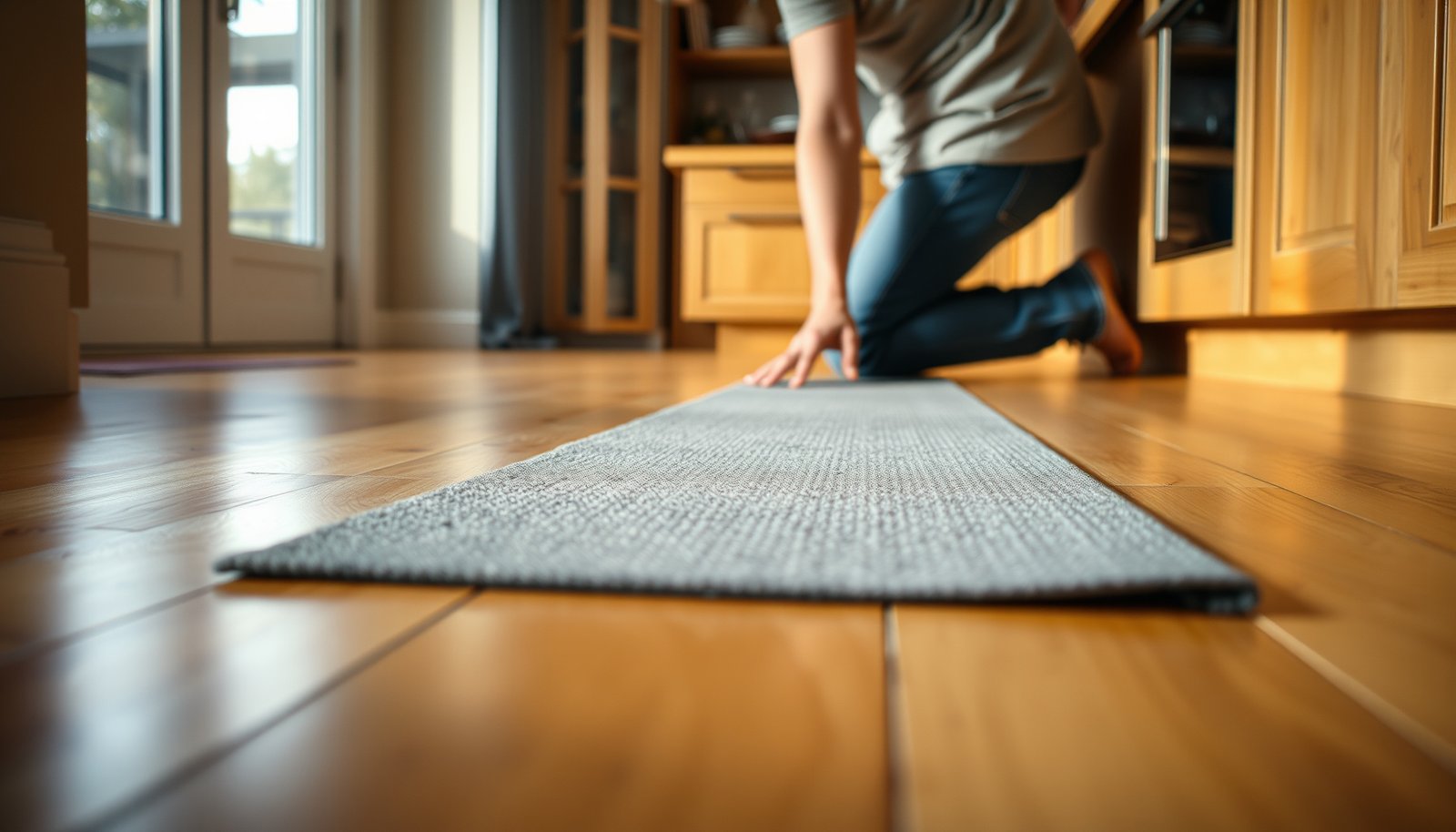
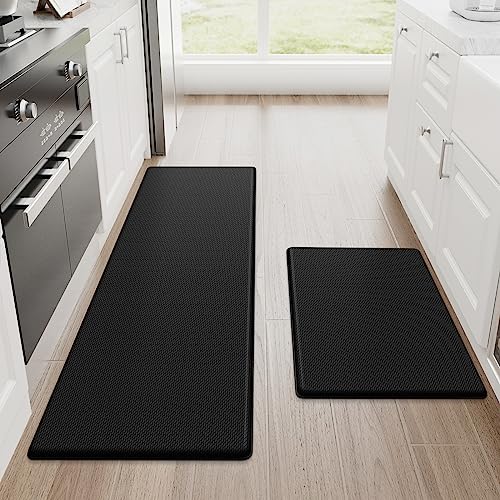
– Use a non-slip kitchen mat (or rug pad) specifically designed for hard floors, and replace it when the backing wears out.
Look for mats that specify compatibility with hard floors (not just carpet). Worn backing can turn a “grippy” entrance into a sliding hazard—especially on glossy hardwood finishes.
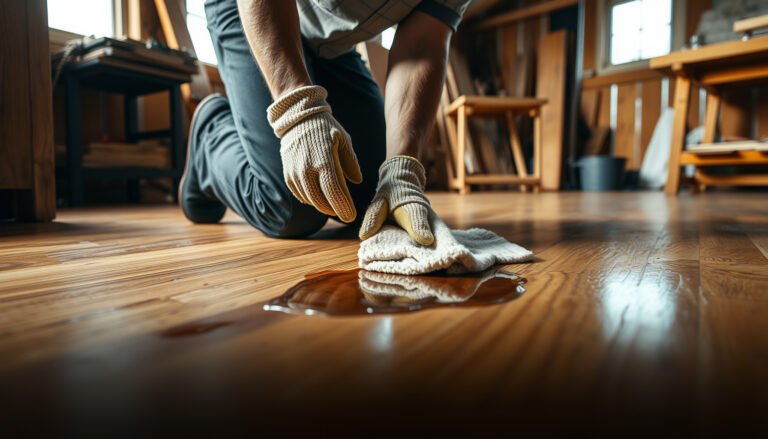
– Keep the floor dry around the sink/dishwasher area: wipe standing water immediately and dry with a clean towel after routine cleaning.
Hardwood safety often comes down to water management: even if the floor doesn’t look wet, a thin moisture layer can reduce surface friction.
– If you’re currently seeing slick “sheen” from cleaner residue, pause that product and switch to a hardwood-approved method (see cleaning section).
A visible sheen is a strong signal that the floor surface may have an uneven chemical film. That film can feel clean but behave slippery—particularly where foot traffic is repeated.
Protect the finish from water and spills
Fast spill cleanup is one of the highest-return safety steps for hardwood floors in kitchens. The finish (topcoat/coat system) is what resists moisture and affects traction—when finish breaks down, slip risk increases.
The World Health Organization estimates about 684,000 people die each year from falls globally, underscoring why reducing wet-floor slip hazards is a meaningful injury-prevention step. WHO (Falls facts)
Wood flooring performance depends on consistent indoor conditions; NWFA guidance commonly recommends maintaining indoor relative humidity around 35–55% to limit movement and finish stress. National Wood Flooring Association (NWFA) care/maintenance guidance
– Clean spills promptly (especially grease, sauces, and water) to prevent dulling, cupping, and finish breakdown that can affect traction.
Grease behaves differently than water: it can smear across the surface and leave a thin, slick layer that regular “mop-and-rinse” may not fully remove. For hardwood floors in kitchens, quick blotting (then spot-cleaning) is often safer than letting it sit until a scheduled cleaning.
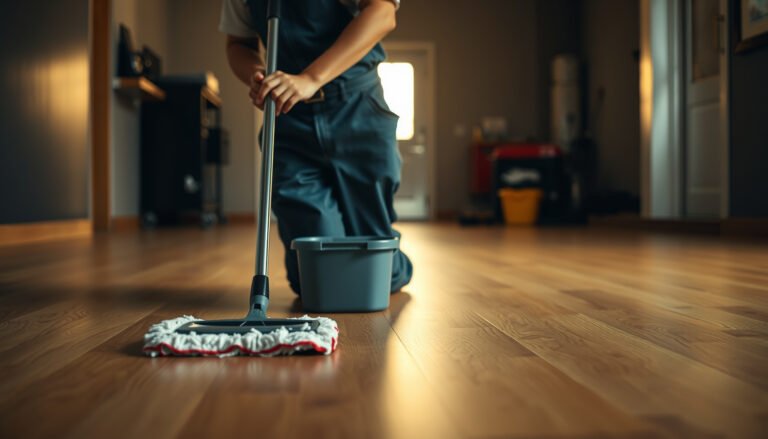
– Avoid soaking: use a damp (not wet) mop and wring cloths thoroughly so water doesn’t seep into seams.
Hardwood safety is closely tied to moisture control because water can move into seams or edges, especially near sinks. “Damp” means the mop leaves no puddles and the towel dries quickly—not a visible wet path.
– If your floor has worn high-traffic areas, consult the flooring manufacturer or installer about recoating/refinishing options that restore an appropriate finish level for daily use.
When the finish becomes thin or uneven, traction can become inconsistent—fine grit may embed in the surface, and the floor can feel slick in certain zones while looking “okay” elsewhere.
Reduce trip hazards at edges and transitions
Slip safety and trip safety work together: even a non-slippery hardwood floor becomes risky if feet catch at thresholds or lifted boards. For kitchens, that usually means focusing on transitions between hardwood, tile, and rug edges—plus any separation near appliances.
Trip hazards on hard surfaces often come from height differences, lifted edges, or curling rug corners, which can catch shoes even when the floor itself isn’t slippery. OSHA / general fall-prevention principles (walking/working surfaces)
Maintaining expansion gaps and sealed edges helps prevent water and debris from migrating under hardwood seams, which indirectly supports both traction and trip safety. NWFA installation/care principles
– Check for lifted boards, loose transitions, or thresholds that are uneven—fix or replace them before they become a fall risk.
Kitchens concentrate stress from dragging chairs, frequent appliance access, and constant foot traffic. If you feel a “click” underfoot or catch a toe near an edge, treat it as a safety issue, not a cosmetic one.
– Keep caulk and seam edges in good condition (or repair them) so crumbs/water don’t collect under gaps.
Broken or missing sealant can trap moisture and food residue under the edge, creating both traction issues (slick films) and trip issues (debris buildup that changes the floor’s feel).
– Ensure rugs sit flat at the edges and are trimmed to prevent curling or catching feet.
Rug curling is a two-part problem: it increases catching risk, and it can cause the rug backing (or the floor beneath) to stay damp for longer. If a mat’s corner lifts, replace it.
Use safer cleaning habits that don’t leave buildup
For hardwood floors in kitchens, safe traction depends as much on cleaning technique as on what you clean. If you’re seeing slipperiness after mopping, the routine is likely leaving residue or grinding grit into the finish.
According to NWFA care guidance principles, you should avoid flooding hardwood floors; using a damp mop reduces moisture penetration risk compared with soaking. NWFA care/maintenance guidance
Using too much cleaner can leave a film that reduces friction; if the floor feels slick after cleaning, switch to a hardwood-approved method and reduce product quantity. Hardwood manufacturer care instructions (general guidance)
– Follow a “dry-first” approach: sweep/vacuum before you wet-clean, so you don’t grind grit into the surface.
Grit is abrasive and also holds onto liquids and oils. When hardwood floors in kitchens are cleaned without removing particles first, the finish can lose uniformity—traction becomes patchy.
– Choose a cleaner labeled for hardwood floors and use the recommended dilution/amount—too much product can create slippery residue.
Residue doesn’t always look dirty. It may appear as a mild gloss or “slickness” underfoot, particularly near sinks and cooking routes.
– Use microfiber pads/cloths and avoid harsh scrubbing tools that can compromise the finish and change how the floor grips.
Microfiber helps lift grime without over-agitating the surface layer. If your scrubbing method is leaving swirl marks or increasing gloss, adjust your approach.
Cleaner chemistry vs. traction safety (quick reference)
The table below summarizes common household cleaner chemistry in pH terms and how that chemistry typically affects hardwood finish compatibility and traction safety. This isn’t a replacement for your floor manufacturer’s approved-products list, but it helps explain why some “cleaners” make hardwood floors in kitchens feel slick later.
Typical Household Cleaner pH vs. Hardwood Traction Safety (Kitchen Use)
| # | Cleaner type | Typical pH (approx.) | Why it can matter on hardwood | Traction safety rating |
|---|---|---|---|---|
| 1 | Hardwood floor cleaner (manufacturer-labeled) | 6.0–8.5 | Designed to be residue-controlled for finished wood floors | ★★★★★ |
| 2 | Diluted dish soap (neutral to mild) | 7.0–9.0 | Less likely to attack finish, but can still leave film if overused | ★★★★☆ |
| 3 | Baking soda solution/paste | 8.0–9.0 | Can be abrasive in paste form; residue may affect traction if not fully rinsed | ★★★☆☆ |
| 4 | Hydrogen peroxide (typical 3% use) | ~3.0–4.5 | Acidic character can be risky on some finishes if used frequently or heavily | ★★☆☆☆ |
| 5 | White vinegar | 2.4–3.4 | Acidic; can dull or weaken finishes over time and may increase slippery film | ★☆☆☆☆ |
| 6 | Household bleach (sodium hypochlorite) | 11.0–13.0 | Strong alkali/oxidizer; can damage finishes and leave residue effects | ★☆☆☆☆ |
| 7 | Household ammonia (diluted) | 11.0–12.5 | Alkaline; can degrade some coatings and increase uneven surface feel | ★☆☆☆☆ |
Consider anti-slip upgrades—carefully
Anti-slip upgrades can help hardwood floors in kitchens, but they’re not “one-size-fits-all.” The safest upgrades are those compatible with your exact finish system and applied in a way that doesn’t change how the floor looks—or how it wears.
Finish compatibility matters because anti-slip topcoats or additives can interact with the existing polyurethane/penetrating oil system and change traction behavior.
Many steam-mop and excessive-moisture approaches are discouraged in hardwood care instructions because water can penetrate seams and degrade the finish over time.
– If you’re evaluating an anti-slip treatment, confirm it’s compatible with your specific hardwood finish type (and that it won’t void a warranty).
This is where homeowners can accidentally worsen the problem. A treatment that “feels rough” can wear unevenly and become slick in a different way after a few cleanings.
– Consider topical solutions only where needed (e.g., near sink routes) rather than changing the entire floor’s feel.
Concentrating treatment near the sink/dishwasher path limits how noticeable the change is across the kitchen and reduces risk of uneven traction.
– If you’re unsure, ask the manufacturer/installer for guidance based on your floor’s finish system and age.
From what I’ve seen in real kitchens, the owners who get the best results are the ones who ask first—because they already know whether their finish is surface-sealed (common with polyurethane) or more penetrating/oil-based.
What can go wrong (and when to stop)
If your goal is safer hardwood floors in kitchens, stop when cleaning or “anti-slip fixes” create new residue, new moisture exposure, or finish damage. The wrong approach can make the floor look clean but become more slippery underfoot.
Even if the floor appears spotless, wrong cleaner choice or excessive product can increase slipperiness by leaving a film that reduces friction.
Over-wetting hardwood with steam or overly wet mopping is a common path to finish/edge issues because moisture can migrate into seams.
– Using the wrong cleaner (or too much cleaner) can increase slipperiness even if the floor looks clean—test in an inconspicuous spot first.
If you test, don’t evaluate only by appearance. Evaluate by “walk test” friction after drying time specified on your cleaner and observe whether it feels slick in socks/shoes.
– Soaking with steam mops or overly wet mopping can damage hardwood by letting water penetrate seams.
Stop steam-mopping if your manufacturer doesn’t explicitly approve it.
– Aggressive “anti-slip” sanding or coatings can change sheen and texture—if you’re not confident, stop and get an installer’s recommendation.
If your floor has widespread finish failure, guessing can turn a safety issue into a costly refinish job.
Verdict / tip
The safest, lowest-risk approach is: keep the floor dry, control traction with properly secured mats, eliminate loose/uneven transitions, and use hardwood-approved cleaning without residue. Downsides: mats can become a hazard if backing wears out, and aggressive “slip-proofing” can alter finish behavior or void warranties—so avoid DIY coatings unless the product and your finish are explicitly compatible. If your floor has widespread finish failure, major gaps, or lifted boards, skip quick fixes and schedule repairs/refinishing advice instead.
Quick scan checklist (save this)
| Area to check | Quick fix | Safety goal |
|---|---|---|
| Sink/dishwasher path | Dry spills immediately; use a non-slip mat | Reduce slip risk |
| Edges & transitions | Repair lifted boards/uneven thresholds | Prevent trips |
| Rug setup | Use rug pad; trim/correct curling edges | Keep feet from catching |
| Cleaning routine | Use hardwood-approved cleaner; don’t over-apply | Avoid slick residue |
| Finish wear spots | Get advice on recoating/refinishing | Restore traction and durability |
Sources
– National Wood Flooring Association (NWFA) care and maintenance guidance.
– Your hardwood floor manufacturer’s installation/maintenance or care instructions (for approved cleaners, moisture limits, and finish compatibility).
– Centers for Disease Control and Prevention (CDC), “Falls: Important Facts about Falls.”
– World Health Organization (WHO), “Falls” facts/resources (including global deaths estimates).
– Flooring/finishing system documentation for any anti-slip products or topical treatments you consider.
Hardwood floors can be kitchen-safe, but only when traction, moisture, and physical edges are managed together. If you tackle those three areas consistently—starting now—you’ll reduce slips and trips without trading safety for long-term finish damage.
Frequently Asked Questions
What are the most effective ways to make hardwood floors safer in a kitchen?
Start by reducing slip risk with low-profile, machine-washable anti-slip rugs or mats that are secured with non-skid backing. Keep floors dry by cleaning spills quickly and using absorbent mats near the sink, dishwasher, and stove. For added safety, consider applying a low-sheen, slip-resistant finish and regularly maintaining the floor so it doesn’t become glossy or uneven.
How can I prevent slips and falls on hardwood floors in the kitchen?
Place anti-slip mats at high-risk zones, especially in front of the sink and stove, and choose options with a rubber or textured backing that won’t slide. Use a pH-neutral cleaner and avoid waxy products that can make hardwood floors slick when wet. When cleaning, dry the surface promptly and check for worn areas, loose planks, or gaps that can catch feet.
Which floor finish is best for improving traction on hardwood in kitchens?
Look for a slip-resistant or “low-sheen” polyurethane finish designed for residential areas with foot traffic, since gloss finishes can reflect light and feel slippery when wet. Ask your installer whether the product is compatible with your existing hardwood species and wear layer, and ensure it’s rated for kitchens. After installation, follow the manufacturer’s cure and maintenance instructions to keep hardwood floors safe and durable over time.
How do I address water damage that makes hardwood kitchen floors unsafe?
Water is a major cause of warping and cupping, which can create trip hazards and unsafe surfaces. Wipe spills immediately, fix leaks under sinks or appliances quickly, and use a dehumidifier if your home has high humidity. For protection, consider a water-resistant mat near plumbing fixtures and use felt pads under chairs and appliances to avoid gouges that can trap moisture.
Why does hardwood in kitchens become hazardous, and how can I prevent it?
Hardwood floors can become unsafe when they’re scratched, uneven, or covered in residue that reduces traction, plus when moisture causes expansion and movement. Prevent this by maintaining proper cleanliness (no harsh cleaners), keeping grit out with entry mats, and performing routine inspections for loose boards and finish wear. Regularly recoat or refinish when needed so the surface stays stable, textured, and safer for everyday kitchen use.
📅 Last Updated: October 16, 2026 | Topic: How to make hardwood floors safer in a kitchen? | Content verified for accuracy and freshness.