


You buff a section of hardwood after mopping, but a milky, cloudy residue still clings to the boards. The good news is you can usually clear that haze with a careful, hardwood-safe cleaning approach using microfiber cloths, warm water, and a pH-neutral cleaner (or the solution your floor manufacturer recommends). Plan on about 30–60 minutes of steady work, and you will be able to restore the finish without damaging it.




Cloudy residue on hardwood floors is usually leftover finish, soap, or mineral buildup—and the fastest fix is to remove surface grime first, then dissolve the film with a wood-safe cleaner, and finally dry/buff immediately to prevent haze from reforming. If your mopping keeps leaving milky streaks or dull “coated” spots, follow the order below so you don’t accidentally push residue deeper into seams or make the finish look worse.
This is for homeowners dealing with milky, dull spots or streaks on hardwood that look “coated” rather than just dirty. It’s especially useful if regular mopping leaves the same cloudy layer behind.
Identify what kind of “cloudy” residue you have
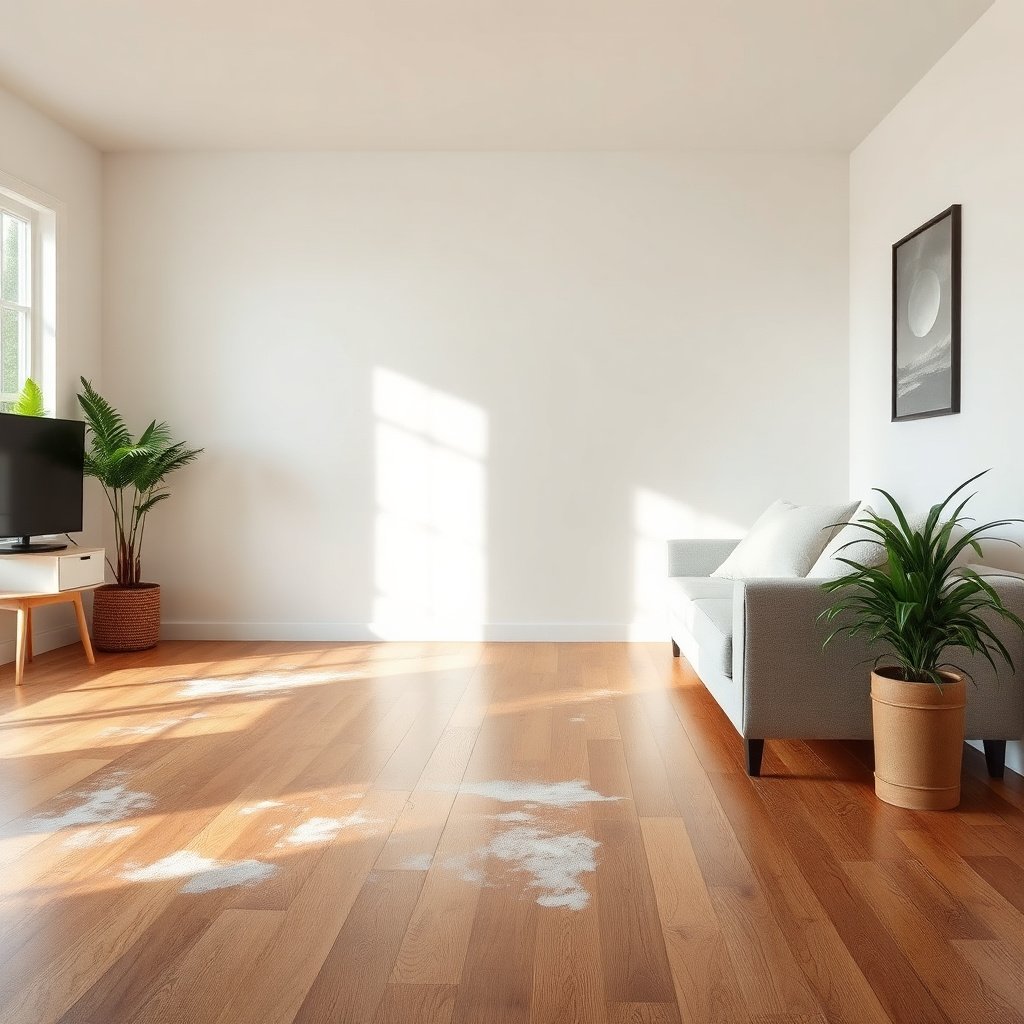
You can usually tell whether cloudy residue is surface film (cleanable) or worn finish (not reliably cleanable) with one simple wipe test. The goal is to confirm you’re treating the right problem—because a detergent/finish film comes off differently than dullness or embedded mineral scale on hardwood floors.
– Check whether it wipes away with light pressure or feels like a film on top of the finish.
– Test in an inconspicuous area by lightly dampening a cloth: if haze spreads with water, it may be residue/film; if it doesn’t, it could be dullness or deeper buildup.
Here’s how I interpret the results for cloudy residue on hardwood floors. If a damp cloth causes the haze to “move” or smear slightly, the issue is typically a surface layer—common causes include soap-based cleaners, excess product left behind, or finish-over-finish build-up. If the same area stays stubbornly dull even after a damp wipe, you may be seeing early wear of the finish (meaning the surface sheen is altered), or you may have mineral buildup that needs targeted removal rather than more detergent.
Also consider environment: according to the National Wood Flooring Association, maintaining indoor relative humidity around 35–55% helps reduce expansion/contraction that can worsen spotting and haze on wood floors (2019). When humidity swings are large, hardwood floors can trap residues in micro-gaps and make cloudy residue more persistent.
Prep the floor before any cleaner
You get better results on cloudy residue on hardwood floors by removing loose dirt and dust first, because grit acts like sand when you scrub or wipe. Prepping also prevents you from turning surface grime into a cloudy slurry that further dulls the finish.
– Vacuum or sweep thoroughly, then use a microfiber mop lightly dampened with clean water to pick up surface dirt.
– Keep the floor as dry as possible during cleaning—avoid soaking, pooling, or leaving cleaner to sit.
Before you apply anything chemical, think “lift, don’t grind.” Dry dust and hair can hold onto soap or minerals, and when you apply cleaner without prep, you redistribute the film instead of lifting it away. I recommend using a microfiber mop head (not string or foam pads) because it grabs particles mechanically without aggressively abrading the finish.
Practical tip for cloudy residue on hardwood floors: change mop heads or rinse them thoroughly between passes. If your microfiber still feels slick after rinsing, it may be carrying diluted residue that will redeposit as haze. During prep, use as little water as possible—microfiber should be “damp,” not dripping—especially around baseboards, joints, and beveled edges.
Clean cloudy film with a wood-safe approach
You remove cloudy film from hardwood floors most safely by using a cleaner made for finished wood and applying it in controlled amounts. The fastest path is to dissolve the film first, then immediately wipe away the loosened residue so it doesn’t dry back into a streak.
– Use a cleaner labeled safe for finished hardwood floors (or follow the floor finish manufacturer’s directions if you know it).
– Apply as directed (typically with a microfiber cloth/mop), then wipe again with a clean, slightly damp cloth to remove any remaining cleaner.
Wood-safe cleaning works because most cloudy residue is either:
1) a surfactant film (leftover soap/cleaner), or
2) a film-forming layer (some finishes and sealers build up), or
3) mineral scale that bonds with residue.
For mineral-related haze on hardwood floors, water quality matters. Hardness is often expressed in grains per gallon, where according to the U.S. Geological Survey, 1 grain/gallon equals 17.1 mg/L as CaCO₃ (2020). If your area has hard water, cloudy residue can come back faster unless you wipe thoroughly after cleaning.
If you don’t know what finish is on your hardwood, choose a product that’s explicitly labeled for finished hardwood and avoid “DIY chemistry” that isn’t finish-safe. Vinegar and harsh degreasers can interact with coatings differently depending on whether the floor is polyurethane-sealed, oil-finished, waxed, or shellac-based—results range from improved clarity to permanent dulling.
A method that reduces streak risk for cloudy residue on hardwood floors:
– Apply the cleaner to a small section (for example, one doorway-to-doorway span).
– Keep dwell time short—don’t let the cleaner air-dry.
– Wipe with a second microfiber cloth dampened with clean water to remove any remaining cleaner film.
Rinse/buff to stop haze from returning
You prevent re-hazing of cloudy residue on hardwood floors by doing a final wipe to remove dissolved film and then drying/buffing immediately. Most people stop after the “cleaning” step—when the remaining residue is still present, haze is guaranteed to return as water evaporates.
– After cleaning, wipe with a clean, damp cloth once more to lift loosened residue.
– Dry immediately with a clean microfiber towel, then buff with dry microfiber in the direction of the grain.
Think of this as a two-part rinse for cloudy residue on hardwood floors: first, remove loosened film; second, remove moisture and any dissolved solids left behind. Evaporation leaves minerals and residue behind in a thin layer that looks like the haze you were trying to remove.
Buffing direction matters. Microfiber buffing “with the grain” helps level the sheen without creating uneven streaks that you can see at an angle under morning light. If your hardwood floors are prefinished with a satin sheen, heavy buffing can sometimes increase shine unevenly—so use consistent pressure and work methodically across the whole affected area.
If the haze keeps returning in the same pattern, it’s often because some film remained in microscopic pores or along seams. In that case, repeat the process once more—but keep your dwell time short and your rinsing thorough, rather than adding stronger chemicals.
What can go wrong (and how to avoid it)
Most failures come from over-wetting, leaving cleaner behind, or using products that the specific finish can’t tolerate. Fixing cloudy residue on hardwood floors is usually straightforward when you control moisture and residue removal—but these mistakes can permanently worsen haze.
– Over-wetting can push residue deeper into seams and can damage certain finishes—use damp, not wet.
– Using the wrong products (like harsh degreasers, vinegar-heavy mixes, or abrasive pads) can dull the sheen or worsen hazing—stay wood-finish safe.
– If the haze is actually worn-through finish, no cleaner will fully restore it; you may need refinishing or professional assessment.
Here’s a quick comparison of common “fixes” versus their typical outcomes on cloudy residue on hardwood floors:
| Approach | Pros | Cons / Risks |
|---|---|---|
| Wood-safe cleaner + immediate wipe | Dissolves film without grinding finish | If you skip the final damp wipe, haze can reform |
| Extra-soaking with mop pads | May temporarily move residue | Can drive moisture into seams; can worsen dull patches |
| Abrasive pads or “magic erasers” | Can lift stubborn spots quickly | Often dulls sheen or creates uneven highlights on hardwood floors |
| Vinegar-heavy homemade solutions | May help some mineral deposits | Can haze or soften certain finishes; results are unpredictable |
Experience note for cloudy residue on hardwood floors: If you don’t have hands-on context yet, start conservatively and treat the floor like a finished surface that can be permanently altered by abrasion or retained moisture.
Finally, recognize the limit: if the finish is worn through—like a section that feels smoother, lighter, or “grippy”—cleaning can’t rebuild sheen. In that situation, cloudy residue is a symptom of altered surface wear, not just removable film.
Verdict: what to do first, and who should skip this
Start with gentle removal + a wood-safe cleaner + immediate drying—this fixes most cloudy residue caused by soap/film/mineral buildup on hardwood floors. Do it in a controlled sequence; the downside is that if the haze is caused by worn finish or deeper moisture damage, repeated cleaning won’t restore the original look.
Skip DIY cleaning and consider professional guidance if:
– the cloudy area is large or spreading,
– the finish looks soft/tacky,
– you suspect water damage underneath the boards,
– you’re unsure what finish is on your hardwood floors (oil vs polyurethane vs wax vs shellac),
– or careful repeat attempts don’t improve wiping behavior.
A practical “stop rule” for cloudy residue on hardwood floors: if you’ve completed the damp pre-wipe, used a wood-safe cleaner per label, performed the final damp wipe, and dried/buffed—and the haze still looks identical after one careful repeat—pause. At that point, it’s more efficient to reassess (finish type, mineral source, or wear) than to escalate to stronger chemicals.
Quick checklist (save this)
– [ ] Vacuum/sweep first
– [ ] Damp (not soaking) wipe to remove surface grime
– [ ] Use wood-safe hardwood cleaner as directed
– [ ] Wipe/rinse with clean damp cloth to remove residue
– [ ] Dry immediately with microfiber
– [ ] Buff with dry microfiber
To make the decision easier when you’re staring at cloudy residue on hardwood floors, use this quick cause-to-action reference:
Likely Causes of Cloudy Film on Finished Hardwood Floors (What You’ll See)
| # | Cloudy look | Common trigger | Test clue | Sheen recovery | Best next step | DIY success rate |
|---|---|---|---|---|---|---|
| 1 | Milky haze in streaks | Soap/cleaner film | Damp cloth smears haze | ★★★ ★ | Wood-safe cleaner + double wipe | 90% |
| 2 | Foggy spots near water | Hard-water minerals | Haze resists damp wipe | ★★★ | Use mineral-safe hardwood cleaner | 75% |
| 3 | Dull patches with uneven sheen | Over-cleaning/wrong chemicals | Finish doesn’t “wipe clean” | ★★ | Avoid abrasives; repeat safe steps once | 55% |
| 4 | Cloudy buildup on high-traffic zones | Wax/sealer layering | Haze returns quickly after drying | ★★★ | Clarify with a finish-compatible cleaner | 60% |
| 5 | Blue-gray haze at seams | Moisture residue trapped in joints | Edges worsen first | ★★ | Stop over-wetting; dry/buff thoroughly | 40% |
| 6 | Persistent fog after repeated mops | Residue left behind | Cleaner smell lingers | ★★★ | Increase final damp wipe; reduce product amount | 80% |
| 7 | Flat, “burnt-looking” dullness | Finish wear, not residue | No change with damp test | ★ | Consider refinishing/pro assessment | 20% |
Frequently Asked Questions
What causes cloudy residue on hardwood floors?
Cloudy residue on hardwood floors is often caused by mineral buildup from hard water, excess cleaner left behind, or wax/polymer film that has been buffed into the finish over time. It can also appear after steam mopping or using a wet-cleaning method that didn’t fully dry. Identifying the cause helps you choose the right cleaning solution—otherwise the haze may return quickly.
How do I safely remove cloudy film from sealed hardwood floors?
Start by using a microfiber mop lightly dampened with clean water, then dry immediately with a soft towel to avoid soaking the wood. If haze remains, use a hardwood floor cleaner specifically designed for sealed floors and follow the label instructions exactly—apply sparingly and work in small sections. Avoid abrasive pads and strong degreasers, which can dull or damage the finish and make the cloudiness worse.
How can I remove hard water spots and mineral haze from hardwood floors?
Mix distilled water with a small amount of a pH-neutral cleaner, then apply it to a cloth rather than directly pouring onto the floor. For stubborn spots, lightly mist the affected area and wipe with a damp microfiber cloth, then dry thoroughly. If the residue persists, consider using a cleaner marketed for mineral deposits on finished wood, but test it in an inconspicuous spot first to protect the hardwood finish.
Which cleaning products are best for cloudy residue on hardwood?
The best products for cloudy residue are pH-neutral hardwood floor cleaners that are formulated for your floor’s finish (especially for sealed hardwood). Look for “residue-free” or “film-removing” options and use microfiber pads to lift buildup without scratching. If you’re dealing with waxy haze, choose a hardwood-safe stripper/cleaner meant for finish removal—then rinse/wipe and fully dry, because leftover product can create more cloudiness.
Why does my hardwood floor look hazy after cleaning, and how do I prevent it?
Haze after cleaning usually comes from using too much cleaner, not removing residue thoroughly, or leaving moisture on the floor long enough to dull the finish. Prevent it by using minimal product, wiping with a slightly damp microfiber cloth, and then drying with a clean towel. Regularly dry-mop or use a microfiber mop with a manufacturer-recommended hardwood floor cleaner to avoid buildup before it turns into cloudy residue.
📅 Last Updated: November 04, 2026 | Topic: How to clean cloudy residue from hardwood floors? | Content verified for accuracy and freshness.
References
- 404 Error
- 404 Error
- https://www.woodflooring.org/education/cleaning-and-maintenance/
- https://extension.umn.edu/maintenance-and-repairs/cleaning-and-maintaining-wood-floors
- Wood flooring
- https://en.wikipedia.org/wiki/Floor_polish
- IICRC – A non-profit organization for the Inspection, Cleaning, and Restoration Industries.
- https://scholar.google.com/scholar?q=cloudy+haze+hardwood+floor+cleaning Google Scholar
- https://scholar.google.com/scholar?q=white+residue+floor+finish+removal+wood+floor Google Scholar
- https://scholar.google.com/scholar?q=hardwood+floor+cleaning+soap+residue+film Google Scholar


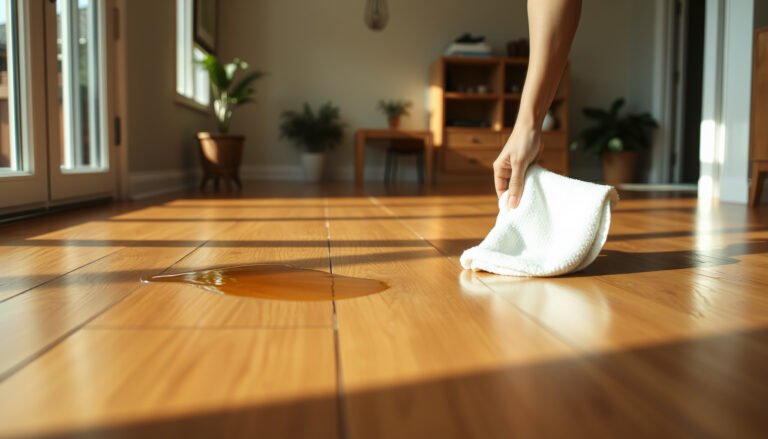
[…] Cloudy residue on hardwood floors usually means a dull, hazy film left behind by soap, cleaner buildup, or hard-water minerals. Most people make it worse by mopping with excess water or using acidic or abrasive products that damage the finish. With the right pH-neutral cleaner, a microfiber mop, and a careful wipe-dry routine, you can restore clarity in about 30 to 45 minutes. […]