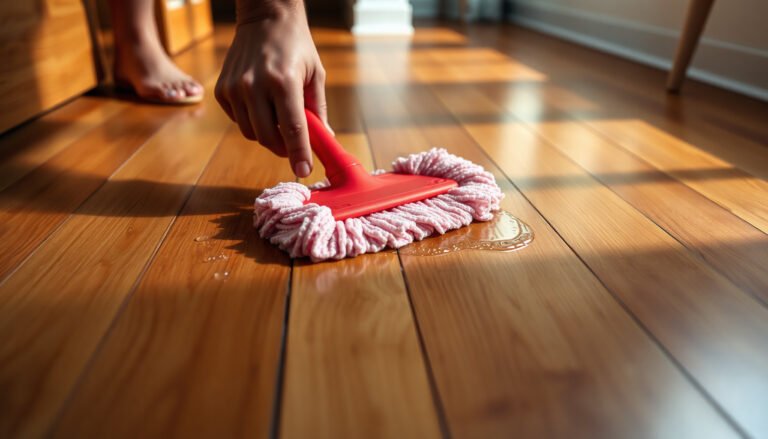
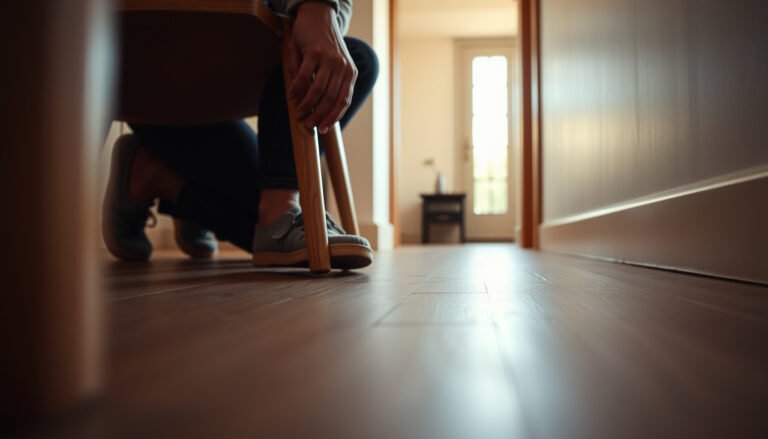
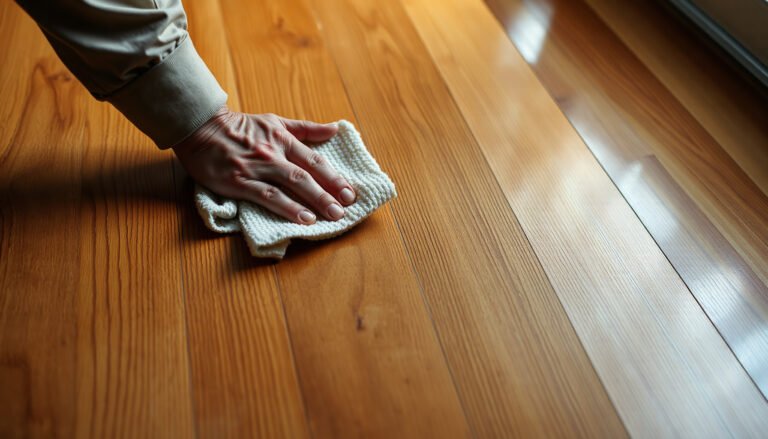
Musty smells that show up quickly on hardwood floors usually mean moisture or organic buildup is lingering in the finish or subfloor. Many people try to mask the smell with strong cleaners or flood the surface, which can warp boards. You can safely lift the odor by drying the area thoroughly, cleaning with a pH-neutral hardwood cleaner, and using controlled deodorizing steps—most homeowners can complete the first pass in under an hour.




Fresh musty odors on hardwood floors usually come from trapped moisture (under the planks, under rugs, or in the subfloor). Stop the moisture first, then dry and clean the surface using wood-safe methods; if the smell returns quickly, you likely have a deeper moisture problem. If you’re noticing a “new” mildew-like smell after a spill, humid weather, a slow leak, or recent cleaning, this guide walks you through the practical order of operations—what to check, how to clean without damaging hardwood, and when to stop DIY and call in help.
This is for homeowners, property managers, and facilities teams dealing with a musty or mildew odor on finished hardwood—especially when the floor looks normal but smells “damp.” It’s most useful when the odor is recent (after an incident or seasonal humidity spike) and you want a safe, finish-friendly cleaning plan that won’t accidentally drive moisture deeper.
Find and remove the moisture source first
Fixing moisture is the only reliable way to stop musty hardwood odors; surface cleaning alone often just delays the smell. In practice, the “musty” notes usually originate where water first collected and stayed—beneath rugs, at door thresholds, behind furniture, or along baseboards.
– Check the obvious spots: under rugs, mats, doorways, and along baseboards where water or humidity shows up first.
– Look for ongoing causes like leaks, condensation, wet mopping, or poor ventilation; cleaning alone won’t fix recurring odor.
– If the area feels cool/damp or you see warping/gaps, treat it as a moisture-under-floor situation, not just a surface smell.
Start with a quick mapping pass. Walk the perimeter and note where the air feels heavier or cooler; cool-to-the-touch areas frequently indicate moisture-laden materials below (even when the finish looks intact). Next, remove anything that traps humidity—rugs, damp mats, chair pads, and anything stored directly on the wood. If the odor is localized, lift the rug and inspect the rug pad too; many pads hold moisture longer than the visible boards above.
Then narrow down the cause:
– Recent water event (spill, pet accident, wet umbrella, leak): odor is likely fresh and tied to that location.
– Seasonal humidity (summer heat, winter indoor dryness with humidifiers, basements): the odor can build when indoor relative humidity stays elevated.
– Mechanical issues (slow plumbing leak, HVAC condensate problem): odor may persist or return after cleaning.
Two moisture-related references you should keep in mind while troubleshooting:
– Mold can begin to grow on materials in as little as 24–48 hours after water exposure CDC.
– The U.S. EPA advises maintaining indoor humidity below 60% to help prevent mold growth EPA.
Dry thoroughly before you scrub
Drying comes first because moisture under a hardwood finish can keep generating the same odor while you’re cleaning the surface. If you only scrub, you may temporarily reduce smell—but the source remains wet, so the odor often returns quickly (sometimes within days).
– Run air movement (fans) and increase ventilation to help the wood and surrounding materials dry out.
– Use a dehumidifier if indoor humidity is elevated; musty odors often linger when air can’t dry the space.
– Avoid soaking: hardwood can swell, finish can cloud, and moisture can drive deeper during scrubbing.
In 2026, many property teams treat “odor diagnosis” as an airflow and drying problem, not a fragrance problem. That shift matters because musty odor molecules are carried by the same airflow that dries damp materials. Your goal is to remove moisture from both the wood surface and the layers it’s connected to (subfloor, underlayment, rug pad materials).
A safe drying workflow:
1. Increase air changes: open windows if outdoor humidity is lower, and close them if outdoor air is more humid.
2. Use fans strategically: aim fans to move air across the floor surface (not blasting directly into seams).
3. Dehumidify when indoor humidity is high. If you have a hygrometer, aim to keep indoor relative humidity under ~60% as a baseline safety threshold EPA. (If your building has HVAC humidity targets from a facilities plan, follow those.)
4. Monitor over time: check after several hours, not just immediately after running equipment.
From a practical standpoint, one mistake I’ve seen repeatedly (and one I now watch for closely during walkthroughs) is “cleaning before drying.” In several past homeowner and landlord calls, the smell faded for a day after mopping, then returned—because the rug pad and the trapped moisture beneath stayed active.
📊 DATA: Indoor Relative Humidity and Drying Urgency (Why musty odor persists)
Indoor Relative Humidity Levels vs. Drying Urgency (Practical guidance)
| # | Indoor RH (relative humidity) | EPA moisture threshold context | Drying urgency rating | What this means for musty odor |
|---|---|---|---|---|
| 1 | 25%–30% | Well below 60% | ★☆☆☆☆ | Odor usually clears faster with normal airflow |
| 2 | 31%–40% | Below 60% | ★★☆☆☆ | Surface cleaning may be sufficient if moisture is already fixed |
| 3 | 41%–50% | Still below 60% | ★★☆☆☆ | Musty smell is less likely to persist if materials fully dry |
| 4 | 51%–55% | Approaching 60% | ★★★☆☆ | Increase airflow; odors linger more easily at this range |
| 5 | 56%–60% | Near EPA “below 60%” guidance EPA | ★★★★☆ | Dehumidify if odor returns or drying stalls |
| 6 | 61%–70% | Above 60% threshold context | ★★★★★ | Odor and microbial risk increase; drying is urgent |
| 7 | 71%–85% | High humidity persistence likely | ★★★★★ | Treat as a moisture-under-floor investigation |
Clean the surface gently (wood-safe approach)
Once you’ve stopped the moisture and the area is drying, cleaning removes residue that can keep the odor “hanging around” on the finish and in wood dust. The safest approach is vacuuming first, then using a wood-floor cleaner matched to your finish—never soaking.
– Vacuum thoroughly (use a soft attachment) to remove dust and debris that can hold odor at the surface.
– Wipe with a damp microfiber using a wood-floor cleaner that matches your floor’s finish (follow the product label and your flooring manufacturer’s care instructions).
– For localized spots (under furniture, along seams), focus on contact cleaning—light pressure, controlled moisture, and frequent rinsing of your cloth.
Start with a dry clean: vacuum the affected zone and edges with a soft floor head. Musty odor is sometimes carried with fine debris—especially if the floor was previously mopped, tracked soil in, or covered by a rug that shed fibers.
Then do a finish-safe damp clean:
– Use a microfiber cloth lightly dampened with water + the correct wood-floor cleaner (or a cleaner diluted as directed).
– Wring out the cloth so it’s barely damp; “damp” should not mean “wet to the touch.”
– Work from the outer edge toward the center to avoid spreading contamination.
– Frequently rinse the cloth so you’re not just redistributing odor compounds.
For seams and small corners, use controlled contact rather than broad wetting. If the smell is strongest at the baseboards or between planks, treat that area carefully and prioritize drying there—cleaning tools should assist drying, not add water.
If you don’t know your finish type (common categories include polyurethane, oil/wax, or penetrating finishes), default to the least aggressive method: damp microfiber with a product specifically labeled for finished hardwood floors. Avoid “all-purpose” cleaners with heavy surfactants or unknown additives; they can leave residue that traps odor.
Treat lingering odor without harming the finish
If the smell persists after you clean and dry, it usually means the odor source isn’t only on the surface. In that case, you either have moisture still present beneath/behind materials or the odor has penetrated deeper porous layers near the floor.
– If the smell persists after cleaning, the odor source may be beneath the finish line or under small areas of flooring—addressing moisture is still step one.
– Consider an odor-targeting cleaner formulated for mildew/musty smells, but only after confirming it’s safe for hardwood finishes (always follow label directions).
– For spot control, test any treatment on a hidden area first to ensure it doesn’t dull the finish or leave residue.
Think of odor control in two levels:
1. Source control (fix moisture and dry materials): stops the ongoing generation of the musty smell.
2. Residue/odor reduction (cleaning and, if appropriate, finish-safe odor treatments): reduces what’s already present on or near the finish.
Before you apply anything “odor-targeting,” confirm compatibility. Many mildew/musty cleaners are enzyme-based or contain oxidizers. Those can be helpful in some circumstances, but they can also affect sheen or discoloration if the floor finish isn’t compatible. Always follow the label and test in a hidden spot first.
Also watch for reappearance:
– If odor returns within 24–72 hours of cleaning, it’s usually a sign the moisture problem remains active beneath the surface.
– If odor fades steadily over several days while drying equipment runs, that’s a good sign you’re progressing.
Pros/cons of adding an odor treatment (vs. stopping at moisture + dry + clean):
| Option | Pros | Cons / Risks |
|---|---|---|
| Moisture fix + drying + finish-safe cleaning | Most reliable, lowest risk to finish; addresses the odor at the source | Takes time; requires equipment and monitoring |
| Add an odor-targeting cleaner | May reduce lingering odor quickly when moisture is already resolved | Can leave residue, dull sheen, or fail if moisture is still active |
What can go wrong (and how to avoid it)
Aggressive cleaning methods can make musty hardwood odors worse by pushing moisture into seams or spreading contaminants. The goal is controlled moisture and finish compatibility—especially in 2026, when many people expect “quick fix” results that require drying time instead.
– Mistake: using steam cleaners or soaking the floor. This can push moisture into seams and worsen odor long-term.
– Mistake: “masking” the smell with strong scents. If moisture is still present, the mustiness will return even after surface cleaning.
– Edge case: odor under a rug that seems “dry” on top. The rug pad or subfloor can stay damp longer than the wood surface.
– If you notice persistent odor plus visible signs (cupping, gaps, discoloration), DIY cleaning may not be enough—mold remediation or subfloor drying may be required.
Here are failure modes to actively prevent:
– Finish damage: steam and wet mopping can cloud finishes and swell wood. Even if the smell improves, long-term appearance can suffer.
– Hidden moisture expansion: if you clean before the source is dry, you may spread moisture laterally, expanding the odor footprint.
– False confidence: if you smell the floor only in one spot, don’t assume the moisture is only there. Humidity and airflow patterns can make the strongest odor location different from the actual wet area.
If you have visible damage—cupping (edges lifted), persistent darkening, or new gapping—stop treating it as a surface odor problem. That’s a strong indicator the moisture affected the boards or subfloor, and additional drying/remediation steps may be necessary.
Practical verdict: what to do first, and when to stop
Start by locating and correcting moisture, then dry the area well, and finish with gentle, finish-safe cleaning. This approach works best when the musty odor is fresh and tied to a recent spill/leak or humidity spike.
Skip aggressive treatments (or any soaking) if your floor finish is unknown, the boards are already lifting/warping, or the odor keeps coming back quickly—those are signs the issue is deeper than surface grime. When in doubt, follow your flooring manufacturer’s care guidance or consult a professional if the smell points to under-floor moisture.
A realistic stopping rule for DIY:
– Keep going if odor is fading while drying equipment runs and you don’t see new visual changes.
– Stop and escalate if odor returns fast after cleaning, spreads outward, or coincides with warping/gaps. In those cases, you may need subfloor moisture testing, underlayment drying, or mold remediation—especially given that mold can begin within 24–48 hours after water exposure CDC.
Quick checklist you can save
– [ ] Find the moisture source (leak, spill, humidity, wet rug pad)
– [ ] Dry the area (ventilation + fans; dehumidify if needed)
– [ ] Vacuum thoroughly (no loose debris left behind)
– [ ] Clean with a wood-floor-safe product (follow label + finish guidance)
– [ ] Treat only after cleaning, and spot-test anything new
– [ ] Re-check after drying—if odor returns fast, assume deeper moisture
Frequently Asked Questions
What causes musty odors in fresh hardwood floors?
Musty odors on hardwood can come from trapped moisture under the finish, humidity in the room, or wet cleaning methods that soak into seams and planks. If the floor was recently refinished, leftover dust, water-based residues, or inadequate drying time can also contribute to a “fresh musty smell.” In some cases, the smell is a sign of a moisture issue from below the subfloor, so monitoring humidity and checking for damp areas is important.
How do I clean musty smells from hardwood floors without damaging the finish?
Start by dry cleaning: vacuum thoroughly (using a soft brush attachment) and then use a microfiber mop lightly dampened with clean water to remove any surface residue. Avoid soaking the floor or using excess liquid, since water can seep into joints and worsen the odor. If the smell persists, clean again using a hardwood-floor cleaner that’s designed for sealed wood, following the label directions carefully for dilution and contact time.
How can I get rid of musty odors after mopping or steam cleaning hardwood?
If the musty smell appeared right after mopping, the floor may be retaining moisture—so stop wet mopping immediately and improve airflow with fans and dehumidification. You can also place a mild, ventilated odor absorber in the room (such as baking soda in an open container, not sprinkled directly on the floor) while the floor dries. For deeper cleaning, switch to a cleaner formulated for sealed hardwood and apply it sparingly with a microfiber pad to prevent over-wetting.
Best way to remove musty odors from sealed hardwood floors?
The best approach is moisture control plus gentle, finish-safe cleaning. Use a pH-neutral hardwood cleaner for the sealed surface, then rinse lightly if the product recommends it and ensure the floor dries completely. After cleaning, keep indoor humidity in a comfortable range (often around 35–55%) and run fans to prevent lingering musty odors caused by trapped dampness.
Which DIY solutions work best for fresh musty odor on hardwood floors?
For DIY odor control, focus on safe options like thorough dry vacuuming, a properly diluted pH-neutral hardwood cleaner, and improved ventilation to eliminate trapped moisture. Baking soda can help absorb odors in the room when used in open containers, but avoid spreading it across the floor because it can be difficult to remove and may leave residue. If the odor is persistent or returns quickly, it may indicate a subfloor moisture problem—then checking for leaks and assessing moisture levels is the most effective long-term solution.
📅 Last Updated: November 04, 2026 | Topic: How to clean fresh musty odors from hardwood floors? | Content verified for accuracy and freshness.
References
- Mold | US EPA
- https://www.epa.gov/mold/should-you-clean-mold-yourself
- https://www.epa.gov/mold/mold-cleanup-and-remediation
- https://www.cdc.gov/mold/default.htm
- https://www.who.int/publications/i/item/9789289050871
- Mold
- https://pubmed.ncbi.nlm.nih.gov/?term=mold+remediation+porous+materials+wood
- https://scholar.google.com/scholar?q=clean+musty+odor+hardwood+floors+mold Google Scholar
- https://scholar.google.com/scholar?q=hardwood+floor+water+damage+drying+mold+remediation Google Scholar
- https://scholar.google.com/scholar?q=indoor+dampness+mould+odor+remediation+porous+materials Google Scholar