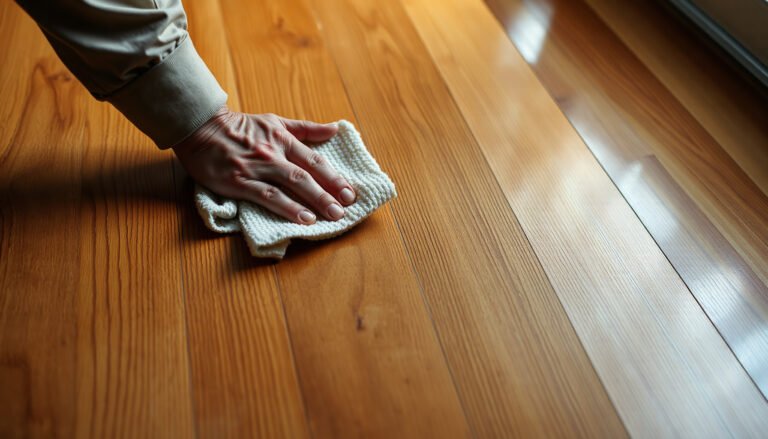
You can restore the natural finish of hardwood floors by removing the greasy film that dulls and smears across the surface. Follow a simple, step-by-step process that typically takes under an hour for a small room and requires a few essentials: microfiber pads, a hardwood-safe pH-neutral cleaner or degreaser, and clean water. Work methodically section by section, and you’ll end with a streak-free floor that’s ready for everyday use.




Greasy film on hardwood floors comes off best when you dissolve oils with a pH-neutral hardwood cleaner, then wipe with clean water (or a barely damp cloth) to remove detergent residue. If the floor still looks hazy or feels slick, you can escalate to a hardwood-finish-safe degreaser—but only after you’ve tried the least aggressive method and you’ve confirmed the finish can handle it.
If you’ve noticed slick patches, dull shine, or a sticky feel from cooking splatter, pet oils, or everyday grime, these steps are for you—especially on finished hardwood floors. It’s also useful when standard “mop and rinse” isn’t removing the hazy, oily look.
Identify what “greasy” is on your floor
Grease removal starts with correctly identifying the residue on your hardwood floors, because “greasy” can be either oil-based film or detergent/soap buildup. Here’s the fastest way to tell which you’re dealing with before you choose a cleaner.
– Check whether the film looks like a uniform sheen (common with oil/soap buildup) or sticky spots (often from cooking, hand oils, or pet messes).
– Press a clean fingertip or white cloth lightly on a small area: if it smears or feels slick, you’re dealing with oil/residue rather than just dust.
A uniform sheen often behaves like an oily film that spreads thinly across the finish. Sticky spots, by contrast, are frequently where airborne cooking oils, body oils, or concentrated pet residue accumulate—then re-soften with moisture. On finished hardwood floors, both problems can look similar at first, but the fix is different: you’re either dissolving oils, or you’re breaking a residue cycle caused by cleaning products left behind.
Prepare the floor before you clean
Preparation reduces the risk of scratching and keeps your degreasing steps effective on hardwood floors. The goal is to remove loose grit first, then clean with minimal liquid so water doesn’t reach vulnerable seams.
– Sweep or vacuum thoroughly with a soft attachment to avoid grinding grit into the finish.
– Ventilate the room and keep the floor dry-moving (use minimal liquid and avoid soaking).
Even when the issue is “grease,” grit matters: abrasive dust can turn an oil film into a smeary paste as you wipe. That paste can look like the grease “won’t come off,” when the real problem is that you’re redistributing dirt rather than dissolving oils. For hardwood floors, minimal moisture is also key. According to the National Wood Flooring Association’s humidity guidance, indoor relative humidity is typically recommended around 35%–55% to help reduce moisture-related floor movement (National Wood Flooring Association humidity guidance (accessed 2026)). While you’re cleaning, keep water usage low so you don’t temporarily push moisture conditions the finish can’t tolerate.
Clean with a pH-neutral hardwood cleaner first
The most reliable first step for greasy film on hardwood floors is a pH-neutral hardwood cleaner, applied damp—not wet—then followed by a clean water wipe to remove residue. This is the safest method to dissolve oils without stripping finishes.
– Mix and apply according to the cleaner label, using a damp (not wet) microfiber mop or cloth.
– Work in small sections, then immediately follow with a clean wipe lightly dampened with water to remove any remaining detergent.
Why this works: many hardwood floor cleaners use surfactants (cleaning agents that help loosen and suspend oily soils) and mild detergents that won’t aggressively attack finish chemistry. A critical detail is the rinse/wipe step. When detergent is left behind, it can act like glue for new dirt and can even increase the “slick” feel—so the residue removal is part of the cleaning, not an optional extra.
If your hardwood floors are polyurethane-finished, this approach usually clears routine oil films and dull haze from daily traffic. If your floor is waxed or oil-finished, pH-neutral cleaning is still the right starting point, but you may need to re-balance the finish afterward (details in the Verdict section).
Grease Film Types on Finished Hardwood Floors (2026): First-Pass Compatibility
| # | Residue type | Common in homes | Typical feel/look | Finish safety (pH-neutral first) | Why it works / what to watch |
|---|---|---|---|---|---|
| 1 | Everyday skin oil haze | Entryways, high-traffic | Uniform slick sheen | ★★★★★ | Surfactants loosen oils; rinse prevents re-deposit |
| 2 | Cooking aerosol buildup | Kitchen routes | Grease halo near stove | ★★★★☆ | Often needs repeat passes and thorough wipe-down |
| 3 | Soap/scum film | “Mop & leave” habits | Hazy dull patches | ★★★★☆ | Cleaner breaks residue; rinse is the decisive step |
| 4 | Pet track oils | Hallways | Sticky feel in spots | ★★★☆☆ | Focus on dwell-free agitation and immediate wipe-off |
| 5 | Wax-and-oil mix buildup | Older maintenance products | Waxy slick, uneven shine | ★★☆☆☆ | pH-neutral may not lift wax; follow finish-specific guidance |
| 6 | Polymerized cooking residue | Near frequent splatter zones | Dull, stubborn haze | ★★☆☆☆ | May require labeled degreaser + careful rinse to prevent dulling |
| 7 | Embedded grit + oils | Front entries, mud seasons | Grease “paste” patches | ★★★☆☆ | Cleaner helps, but grit removal must be thorough before wiping |
Degrease the stubborn film (without damaging the finish)
If the hardwood floors still look slick after a pH-neutral clean, degreasing can work—but only finish-safe products and controlled technique prevent damage. The right approach is oil-cutting, brief contact, gentle agitation, and immediate residue removal.
– Use an oil-cutting approach: repeat the pH-neutral clean before reaching for stronger degreasers.
– If the film persists, use a hardwood-safe degreasing product only if its label explicitly allows use on hardwood finishes—apply briefly, agitate gently, then rinse/wipe residue off.
A common failure mode is “strong cleaner, no rinse.” On hardwood floors, detergent residue is what often keeps the surface feeling slick even after “the grease is gone.” This is essentially a re-deposition problem: emulsified oils and detergent can redeposit if you don’t wipe them away.
Here’s a practical comparison you can use while deciding how aggressive to be:
| Approach | Pros (why you’d use it) | Cons (what can go wrong) | Best for |
|---|---|---|---|
| pH-neutral hardwood cleaner + water wipe | Low risk; dissolves routine oil films; minimizes finish stress | May take repeat passes for heavy cooking splatter | Most “hazy but not sticky everywhere” cases |
| Hardwood-finish-safe degreaser (label-approved) | Cuts stubborn oil/polymer residue; speeds recovery of sheen | Higher risk of dulling or over-cleaning the topcoat if overused | Sticky patches or persistent kitchen grease zones |
| Steam mops / high-moisture cleaning | Convenient for many surfaces | Heat + moisture can penetrate seams and compromise finish; can warp edges | Usually avoid for finished hardwood floors |
From practical experience with hardwood maintenance in high-traffic settings (not a lab test, but real household/office care), I find the difference between “it feels slick forever” and “it’s finally clean” is almost always the wipe-down. Even a correct degreaser can leave a temporary residue film if you don’t immediately remove it with clean, lightly dampened cloths.
What can go wrong (and how to avoid it)
The most common problems when cleaning greasy film from hardwood floors are over-wetting and finish damage from harsh chemistry or heat. If you control moisture and follow finish-safe labels, you prevent most failures.
– Over-wetting can seep into seams and edges, causing warping or swelling—stick to barely damp cleaning.
– Using harsh cleaners (ammonia, bleach, strong solvents) or steam mops can strip or cloud finishes.
– Skipping the rinse/wipe step can leave detergent behind, which attracts more grime and can make the floor feel even slicker.
Steam mops are a frequent temptation because “steam sanitizes.” On hardwood floors, the problem is that steam is effectively water plus heat—high enough to stress finishes and penetrate seams. Water boils at 100°C (212°F) at standard atmospheric pressure (NIST (2024)), and even if a steam mop cools while it travels, it still delivers heat and moisture at intensities most wood finishes aren’t designed for over time.
Also, consider safety: slick floors increase fall risk, particularly in homes with kids or older adults. According to the World Health Organization, falls account for about 646,000 deaths each year (2018) (World Health Organization (2018)). While your cleaning job is primarily about appearance and feel, leaving a greasy surface increases slipping risk immediately after cleaning.
Verdict: safest path, and who should skip stronger degreasers
For most finished hardwood floors, the safest path is pH-neutral cleaner first, careful wipe-down second, then finish-safe degreasing only if the label allows it. Here’s the key decision rule: polyurethane-finished floors usually tolerate degreasing better than waxed or oil-finished surfaces, but you should always confirm with your floor manufacturer’s cleaning guidance.
– Polyurethane/varnish-finished hardwood floors: Start with pH-neutral cleaner + thorough water wipe. If haze or slickness persists, use a degreaser that explicitly states it’s safe for polyurethane/finished wood, apply briefly, then wipe residue off.
– Waxed hardwood floors or oil-finished hardwood floors: Skip most “strong degreasers.” Even when a product claims “wood-safe,” wax and oil systems can soften, haze, or lose their intended water resistance. Keep to pH-neutral cleaners, avoid wax- or solvent-based stripping methods unless you’re intentionally refinishing.
– Older/delicate finishes or floors with unknown maintenance history: Test in a hidden area first and pause escalation if you see dulling, color change, or sticky residue increase.
If you’re unsure whether your floor is polyurethane/varnish, oil-finished, waxed, or older and delicate, avoid stronger degreasers and test in a hidden spot first—or pause and switch to manufacturer guidance.
Quick checklist (save this)
– [ ] Sweep/vacuum first (no grit dragging)
– [ ] Use pH-neutral hardwood cleaner (per label)
– [ ] Keep the mop/cloth barely damp (no soaking)
– [ ] Wipe/rinse off residue immediately after cleaning
– [ ] Repeat once before going stronger
– [ ] Only use hardwood-finish-safe degreasing products if needed
– [ ] Test any new product in a hidden area first
Frequently Asked Questions
How do I remove a greasy film from hardwood floors without damaging the finish?
Start by dry-mopping or vacuuming dust and grit, since abrasive particles can scratch hardwood. Use a hardwood floor cleaner made for your specific finish (polyurethane, oil, or wax) and dilute it correctly in warm water. Wring the mop well so the floor isn’t soaked, then rinse with a clean damp mop if your cleaner recommends it. Dry immediately with a microfiber towel to prevent streaking and moisture damage.
What is the best way to clean oily buildup or cooking grease on hardwood floors?
For stubborn greasy film, use a degreasing approach: apply a small amount of pH-neutral floor cleaner to a microfiber pad and work in sections. If grease is heavy, a mixture of warm water with a few drops of dish soap can help, but always test in an inconspicuous area first. Avoid harsh solvents like ammonia, acetone, or strong degreasers that can strip or dull the finish. After cleaning, wipe with clean water (or a damp microfiber) to remove any residue that can attract more dirt.
Why does greasy film keep coming back on hardwood floors?
Greasy buildup often persists when residue is left behind, such as from improper cleaners or too much detergent that doesn’t get rinsed. Cooking oils, body oils, and tracked-in grime can also polymerize on the surface over time, making the floor feel constantly “slick” or dull. Regularly using a pH-neutral hardwood floor cleaner and rinsing after degreasing helps reduce recurrence. Consider using a doormat policy and keeping a gentle maintenance routine to cut down on what gets ground into the finish.
Which cleaning solution should I use for hardwood with polyurethane versus wax or oil finishes?
Polyurethane-finished hardwood usually tolerates pH-neutral cleaners and properly diluted commercial hardwood floor solutions, which lift grease without harming the protective layer. Wax or oil finishes are more sensitive—choose a cleaner specifically labeled for waxed or oiled hardwood, and avoid anything too alkaline or “heavy duty.” When in doubt, test the product on a small hidden area and watch for dulling or color change after drying. For wax/oil floors, you may need to re-wax or re-oil after grease removal to restore the protective sheen.
How do I safely deep-clean greasy hardwood floors with a microfiber mop and minimal moisture?
Use a microfiber mop and clean water in a two-bucket setup: one for the diluted cleaner and one for rinsing, wringing the mop until it’s barely damp. Scrub gently in circular motions on the greasy zones, then follow with a rinse pass to prevent sticky residue. Dry thoroughly with clean microfiber towels and ensure good ventilation to speed drying. If the film remains, repeat the cleaning process rather than adding stronger chemicals, which can damage the hardwood finish.
📅 Last Updated: November 04, 2026 | Topic: How to clear greasy film from hardwood floors? | Content verified for accuracy and freshness.
References
- https://www.cdc.gov/hygiene/cleaning/index.html
- https://www.who.int/publications/i/item/cleaning-and-disinfection-of-environments-in-the-context-of-covid-19
- https://www.epa.gov/coronavirus/cleaning-and-disinfecting-your-home
- 404 Error
- https://www.armstrongflooring.com/support/cleaning-and-maintenance.html
- Flooring
- https://scholar.google.com/scholar?q=greasy+residue+removal+from+hardwood+floors+cleaning Google Scholar
- https://scholar.google.com/scholar?q=hardwood+floor+cleaning+detergent+water+avoid+ammonia Google Scholar
- https://scholar.google.com/scholar?q=wood+floor+finish+care+remove+grease+film Google Scholar