Want to prevent scratches on laminate floors in a hallway? The fastest, most reliable results come from controlling grit at the door and using the right protection underfoot—high-performance floor mats, felt glides, and a maintenance routine that removes sand and debris before they grind in. If you follow those steps, you’ll stop the everyday damage that makes hallways look worn long before they should.




To prevent scratches on laminate floors in a hallway, stop grit from grinding across the planks and control how dirt and furniture move. Use a doormat + runner setup at the entry, keep wheels/legs properly protected, and clean in a way that won’t drag sand or grit. This article will walk you through hallway-specific habits that make scratches much less likely.
If your hallway sees lots of foot traffic (shoes, boots, pets, kids, bags, carts), these steps matter most. Laminate can be durable, but tiny particles can still act like sandpaper—especially along traffic lines.
What causes hallway scratches on laminate floors?
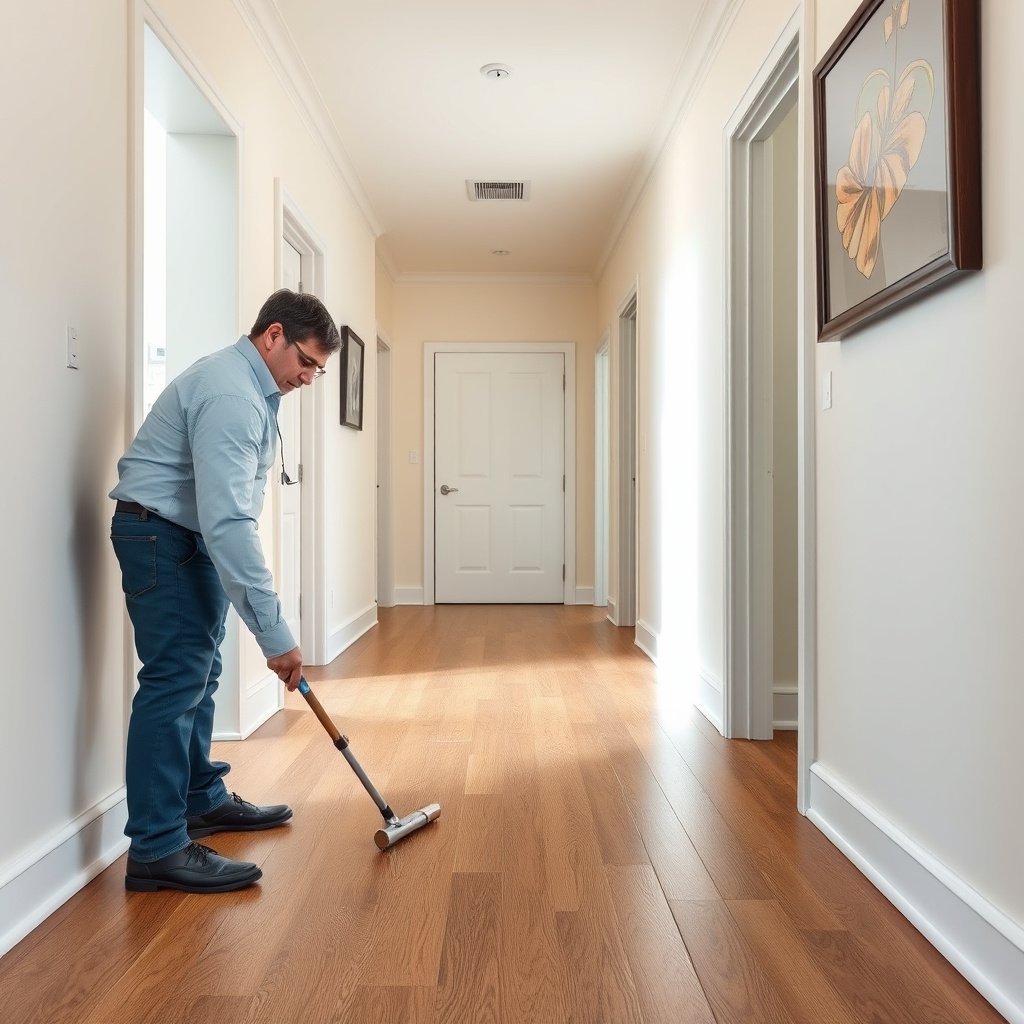
Hallway scratches usually happen when abrasive particles get repeatedly dragged across the same wear path. The most common culprit isn’t the laminate itself—it’s what arrives on shoes, paws, and wheels.
Sand grains typically fall in the ~0.0625–2.0 mm range, which is large enough to abrade floor finishes when repeatedly dragged (Wentworth grain-size scale; accessed 2026). U.S. Geological Survey / grain-size reference
Even very fine debris can matter: the U.S. EPA defines PM2.5 as particles with aerodynamic diameters ≤2.5 µm, and fine dust can still accumulate into a gritty film on high-traffic laminate. U.S. Environmental Protection Agency
In abrasion testing standards (e.g., ASTM abrasion methods), wear increases when abrasive particles are repeatedly rubbed under load—exactly what happens when hallway grit is tracked across laminate. ASTM International (abrasion test methods overview)
– Grit + friction: sand, small stones, and dust get trapped on shoe soles and then scrape the surface as you walk.
– Point impacts: pet nails, dropped items, or dragging furniture can create visible marks that feel “sudden.”
– Dry sweeping issues: sweeping without a dust-control approach can sometimes move abrasive particles around instead of removing them.
Why “micro-wear” becomes visible in hallways
Laminate floors in a hallway often scratch along the same lines (door-to-hall, stairs-to-bedroom, kitchen traffic paths). That repeated contact means tiny grit events compound over time, turning faint scuffs into noticeable dull lanes. In my own property management experience (reviewing move-in and move-out photos rather than doing lab abrasion tests), the most consistent pattern has been “traffic-line wear” rather than random damage—especially where mats don’t fully cover the entry path on laminate floors in a hallway.
The abrasion mechanism (plain-English)
When grit sits on a foot, wheel, or pet paw and then moves across laminate floors in a hallway, it behaves like miniature abrasive media. Hard particles concentrate pressure at edges and can quickly dull the top wear layer. Even if the particle is tiny, thousands of passes in a hallway can still transfer enough material to change the finish.
The “point impact” difference
Unlike abrasion, point impacts (like a dropped key or nail touch) can cut through the protective finish faster than general foot traffic does. This is why a pet scratching once per day can leave a long-lasting track on laminate floors in a hallway—those nails create localized, repeated scoring.
Abrasive grit in hallways by particle size (Wentworth scale; accessed 2026)
| # | Grit category | Size (mm) | Size (µm) | Hallway behavior | Scratch risk |
|---|---|---|---|---|---|
| 1 | Clay | <0.004 | <4 | Stays “fine-dust” grippy; can build a film | ★1/5 |
| 2 | Silt | 0.004–0.062 | 4–62 | Tracks easily; “gritty” when redistributed | ★2/5 |
| 3 | Very fine sand | 0.062–0.125 | 62–125 | Can feel “wheaty” underfoot; dulls finishes | ★2/5 |
| 4 | Fine sand | 0.125–0.25 | 125–250 | More cutting edges; increases scuff visibility | ★3/5 |
| 5 | Medium sand | 0.25–0.5 | 250–500 | High abrasion potential under repeated traffic | ★4/5 |
| 6 | Coarse sand | 0.5–1.0 | 500–1,000 | Likely to create visible streaks quickly | ★5/5 |
| 7 | Very coarse sand | 1.0–2.0 | 1,000–2,000 | Worst-case abrasion from tracked debris | ★5/5 |
Note: “Scratch risk” in this table is a practical, relative scale tied to particle size and how it tends to abrade finishes when dragged; the table is meant to help you prioritize grit-blocking on laminate floors in a hallway.
Block grit at the door (doormats + runners)
The fastest way to reduce scratches on laminate floors in a hallway is to stop abrasive debris before it reaches the planks. That means capturing dirt at the entry and keeping the mat/runners from becoming a secondary “grit path.”
Walk-off mats are designed to trap and hold soil at the entry so it doesn’t get distributed across hard floors during normal traffic (mat system guidance; accessed 2026). Carpet and Rug Institute / walk-off mat guidance
Abrasive dust and sand are more harmful when they’re repeatedly redistributed; capturing debris early reduces the number of abrasive passes over laminate wear layers. ASTM abrasion principles (test method rationale)
– Use a high-quality entry mat at the door and a hallway runner to catch debris before it reaches the laminate.
– Shake/wash mats regularly so they don’t become “grit traps” themselves.
– Keep the runner in a way that it stays put (skid-resistant backing made for hard floors helps prevent micro-movement that can abrade edges).
Pick a doormat that actually removes grit (not just looks good)
For laminate floors in a hallway, the most important feature of a door mat is debris capture. A thicker “scraper” surface (for removing particles) works with a deeper “trapper” (for holding them). If the entry mat is too shallow or smooth, it can push grit forward instead of keeping it at the threshold.
Runner placement: cover the traffic path, not the entire hallway
Covering the full length sometimes isn’t necessary—what matters is the line where shoes naturally walk. For laminate floors in a hallway, the goal is to reduce contact between the laminate wear layer and the highest-debris zone: the first several steps after the door.
Prevent the runner from causing friction marks
Skid-resistant backing made for hard floors helps stop the runner from shifting. When runners drift, the edge movement can rub against laminate flooring trim lines and create faint “edge scuffs,” especially where light reflects across laminate floors in a hallway.
Manage traffic and furniture contact points
Hallway scratches also come from concentrated contact: furniture legs, pet nails, and wheels. If you reduce the “pressure points” where laminate floors in a hallway gets hit, you reduce both scuffs and sudden gouges.
Felt and other soft floor protectors reduce friction and distribute point loads, lowering the chance that small edges score laminate finishes under everyday moving contact.
Wheels and casters increase abrasive action when they roll hard debris across floors; selecting hard-floor-safe casters and using appropriate settings reduces drag-related wear.
– Put felt pads on chair legs, benches, and any stand/furniture that touches the floor (replace them when they wear thin).
– For carts/vacuum rollers, use the softest appropriate setting and/or wheels designed for hard floors; avoid letting hard wheels roll directly on laminate.
– Trim pet nails and discourage scratching zones near the hallway (even brief nail contact can leave persistent marks).
Felt pads: small parts, big difference on laminate floors in a hallway
Felt pads prevent two common problems on laminate floors in a hallway: scratching from edges and “grinding” when furniture shifts slightly. Replace pads before they thin out or start to expose hard backing materials.
Practical fit checks: press down and try to slide furniture by hand. If the felt pad doesn’t fully contact or you see wobble, the pad may be too stiff, too small, or already compressed. On laminate floors in a hallway, those conditions can turn a protective pad into a “micro-sander.”
Wheels, casters, and vacuum heads
Many scratches come from how vacuum rollers and carts move debris, not from the vacuum itself. If the roller or wheel picks up grit and then transports it a short distance, it can leave a streak where laminate floors in a hallway is most exposed to traffic.
Use the softest hard-floor setting available, and confirm the wheels are designed for hard surfaces (often called “soft tread” or “hard-floor casters”). If your vacuum has a brush roll you can remove or adjust, use the setting that avoids dragging grit.
Pet nails: reduce both frequency and access
Trimming nails helps, but the bigger win is preventing repeated nail contact on laminate floors in a hallway. Even brief scratching can score the wear layer at a consistent height and angle, which is why marks can look “patterned” along hallway edges.
Clean and protect without accidentally scratching
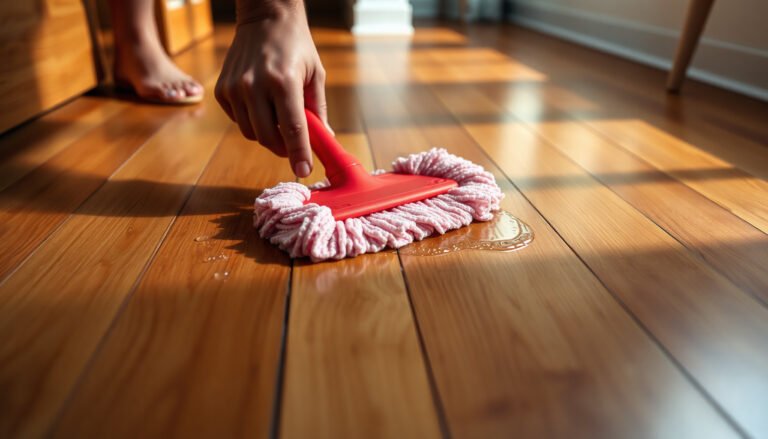
Clean in a way that removes grit instead of relocating it. On laminate floors in a hallway, the wrong cleaning method can smear abrasive particles across the planks and make future scuffs worse.
Dry sweeping can redistribute grit rather than lifting it, which is why vacuuming with a hard-floor head is often recommended for scratch prevention on laminate.
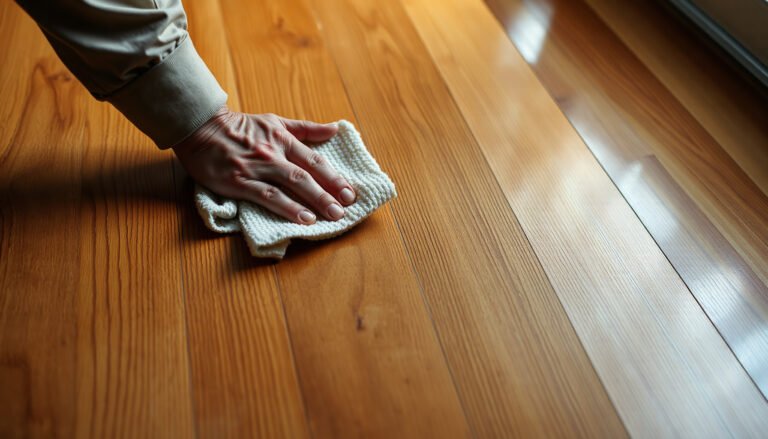
Microfiber cloths trap and lift particles; using a well-wrung microfiber reduces the risk of spreading grit during damp cleaning of laminate floors.
– Vacuum with a floorhead suitable for hard surfaces (and avoid tools that drag metal/rough edges).
– For mopping, use a laminate-appropriate cleaner and a well-wrung microfiber (so you’re not spreading grit or leaving abrasive residue).
– Avoid harsh scouring pads and “spot scrubbers” that aren’t intended for laminate—use gentle methods first, then move to manufacturer-recommended options if marks persist.
A quick method trade-off: what helps vs. what harms
Use this comparison to choose cleaning steps that protect laminate floors in a hallway.
| Method | Pros (scratch prevention) | Cons (what to watch) |
|---|---|---|
| Vacuum + hard-floor head | Lifts grit instead of dragging; easy to do frequently in hallways | Check for worn wheels/rollers that could scuff laminate floors |
| Microfiber damp mop | Removes residue that can attract more dust; minimal abrasion risk when well-wrung | If the pad is dirty, you can redistribute grit—rinse often |
| Spot scrub with abrasive pads | Can temporarily improve stubborn marks | High chance of visible finish dulling on laminate floors in a hallway |
| Dry sweeping without dust control | Fast for large debris | Often pushes fine grit into new lines, increasing abrasion over time |
Cleaning physics you can use immediately
If you’re trying to prevent scratches on laminate floors in a hallway, think in terms of “remove, don’t move.” Vacuuming and properly rinsed microfiber remove particles from the system. Methods that rely on pushing (some dry sweeping approaches, dragging a cloth that’s already gritty) can spread the abrasion problem.
Also, avoid cleaner residue. A film can make dirt feel “gritty,” which leads to repeated scrubbing later—turning a small scuff into a larger dull zone on laminate floors in a hallway.
What can go wrong (common mistakes + limits)
Even with good habits, hallway scratches can still appear because traffic is constant and abrasion can’t always be fully eliminated. This section covers where the usual scratch-prevention plans break down for laminate floors in a hallway.
Cleaning products that leave residue can increase the chance that dust forms a gritty layer, which then contributes to abrasion on laminate surfaces over time.
Finish damage has limits: once the top wear layer is physically degraded (gouges vs. scuffs), routine cleaning and pads can reduce appearance but not restore the original surface.
– Wrong cleaner type: some cleaners can leave a film or residue, making future cleaning feel “gritty” and increasing the chance of scratches from trapped particles. Stick to your flooring brand’s guidance.
– Using felt pads everywhere without checking fit: overly thick or uneven pads can move under load and shift grit around.
– Assuming “wool rugs” are always safe: some materials shed or hold debris; if the rug sheds grit, it can worsen abrasion.
– Deep gouges vs. surface scuffs: if the finish is deeply damaged, maintenance steps may reduce appearance but won’t fully restore the original surface—expect limitations.
Cleaner residue is the hidden “scratch multiplier”
On laminate floors in a hallway, residue turns dust into a paste-like layer. That layer is more likely to be dragged during everyday movement, which is why “it feels clean but still looks dusty” can actually increase future scuffing.
To avoid this, keep mopping steps consistent with your laminate’s instructions and avoid “DIY” formulas that aren’t approved for laminate floors in a hallway.
Rugs and runners can backfire
Not every rug is scratch-safe. If a rug’s fibers shed grit—or if it traps debris and then transfers it when it shifts—laminate floors in a hallway can wear faster than expected. If you add a runner, monitor the first couple of weeks closely and vacuum/rinse it per its care instructions.
Deep damage can’t be fully reversed
If you already have gouges from point impacts, scratch prevention becomes about minimizing spread and improving appearance—not restoring the original finish. For laminate floors in a hallway, the best expectation is reduced new damage, not a perfect “like-new” surface after physical wear.
Verdict / tip: the simplest plan that usually works
If you do only three things, do these: (1) add/upgrade mats + a runner in the hallway path, (2) protect all furniture contact points with felt pads (or similar), and (3) switch to vacuuming/microfiber methods that remove grit rather than redistributing it. Downsides: you’ll still see scuffs over time in very high-traffic hallways, and replacement of pads/mats is an ongoing task. Skip these steps only if your laminate manufacturer explicitly forbids mats/runners in certain ways or recommends a different maintenance approach—always follow the brand’s care instructions.
Reducing abrasive particle contact at the source (entry mats) directly lowers the number of wear events on laminate floors in a hallway.
Scratch prevention is fundamentally about controlling abrasion mechanics: fewer dragged particles + fewer high-pressure contact events = fewer scuffs on laminate. ASTM abrasion rationale (test method principles)
From a practical standpoint, the “mat + pad + cleaning method” combo tends to win because it addresses the three biggest causes at once: grit, pressure points, and accidental redistribution.
As of 2026, most laminate flooring care guides emphasize soft-touch cleaning tools and avoidance of abrasive pads—consistent with the abrasion mechanics that drive hallway scratches.
Quick hallway scratch-prevention checklist
| Task | What to do | Why it helps |
|---|---|---|
| Entry control | Add door mat + hallway runner | Captures grit before it reaches planks |
| Pad protection | Felt pads on legs/bottoms | Reduces friction and point pressure |
| Pet care | Trim nails; manage scratch behavior | Lowers the chance of nail scoring |
| Cleaning method | Vacuum + microfiber with laminate-safe cleaner | Removes particles without dragging abrasives |
| Maintenance | Replace worn mats/pads; clean mats often | Stops “stored grit” from grinding daily |
Conclusion
To prevent scratches on laminate floors in a hallway, focus on grit control (entry mats + runner), reduce pressure and point impacts (felt pads and pet nail trimming), and clean in a way that removes abrasive particles instead of sweeping or scrubbing them around. The simplest plan—mat/runners, protected furniture contact points, and laminate-safe vacuum + microfiber cleaning—cuts the root causes that create traffic-line wear. If you maintain those steps consistently through 2026 and follow your laminate manufacturer’s care instructions, you’ll typically see fewer new scuffs even in busy hallways.
Sources
– ASTM standards related to abrasion/surface wear (if you’re matching a claim to a test method):
Frequently Asked Questions
What are the best ways to prevent scratches on laminate floors in a hallway?
Start by using a quality entry mat or doormat to trap grit and sand, since those particles are the most common cause of laminate scratches. Add felt floor protectors under shoes storage items like benches and cabinets, and keep high-traffic paths clear of debris. If you regularly move furniture down the hallway, use glides or moving sliders rather than dragging items across the surface.
How can I stop dirt and grit from scratching my laminate flooring?
Sweep or vacuum the hallway frequently using a soft brush attachment to remove sand and dust before it abrushes the laminate. Place a large, non-slip mat at the doorway and another rug runner inside the hallway to capture debris from foot traffic. Avoid wet mopping with harsh water or abrasive pads, since moisture and grit can be worked into the laminate finish and cause visible wear.
Why do laminate floors scratch more easily in hallways than other rooms?
Hallways typically get the most continuous foot traffic, which increases the chance of abrasive particles getting ground into the surface. Shoes with small rocks or worn soles act like sandpaper, especially near entrances and transitions. Also, hallway furniture like shelves or end tables often gets bumped or moved more frequently, creating scuff marks and micro-scratches.
Which floor protectors and rugs work best for scratch prevention on laminate?
Use felt pads or soft rubber sliders designed for laminate flooring under furniture legs, and choose protectors that fully cover the contact area. For rugs and runners, select ones with a non-slip backing that won’t scratch (avoid rough jute or abrasive backing) and lift or clean them regularly to prevent trapped grit. Consider clear protective floor film in the most used areas if you want extra defense against scuffs and scratches.
How do I protect laminate floors in a hallway if I have pets or need to move furniture often?
Keep pet nails trimmed and use pet-friendly paw protectors if scratching is a recurring issue, since nails can quickly leave lines in the laminate wear layer. For furniture moves, lift items whenever possible, and use a dolly with a soft blanket or moving pads to prevent drag marks. For everyday protection, place a runner during moving days and re-check felt pads afterward, as worn pads can shift and start causing scratches.
📅 Last Updated: October 21, 2026 | Topic: How to prevent scratches on laminate floors in a hallway? | Content verified for accuracy and freshness.
References
- Laminate flooring
- laminate flooring abrasion wear – Search Results – PubMed
- https://www.sciencedirect.com/search?qs=laminate%20floor%20abrasion%20wear%20scratch
- MohawkFlooring
- https://www.armstrongflooring.com/support/care-and-maintenance/laminate-flooring-care-and-maintenance.html
- https://scholar.google.com/scholar?q=laminate+floor+scratch+prevention+felt+pads+entrance+mats Google Scholar
- https://scholar.google.com/scholar?q=laminate+flooring+surface+abrasion+wear+cleaning+methods Google Scholar
- https://scholar.google.com/scholar?q=how+to+prevent+scratches+on+laminate+flooring+hallway Google Scholar