
You can keep hardwood floors in a mudroom looking like new by cleaning them the right way—without warping, dulling, or grinding in grit. This guide gives you the fastest, safest step-by-step method for routine dirt removal and wet spills, so footprints and mud don’t become permanent stains. Follow these specific techniques and products, and your floors will stay clean and protected even under heavy, daily traffic.




If your mudroom sees shoe traffic, tracked-in mud, salt, or wet umbrellas, you’re dealing with the toughest combination for hardwood finishes. The steps below are designed for typical sealed hardwood floors, with options for common messes like muddy footprints and sticky spots.
Prep First: Remove Dirt and Grit
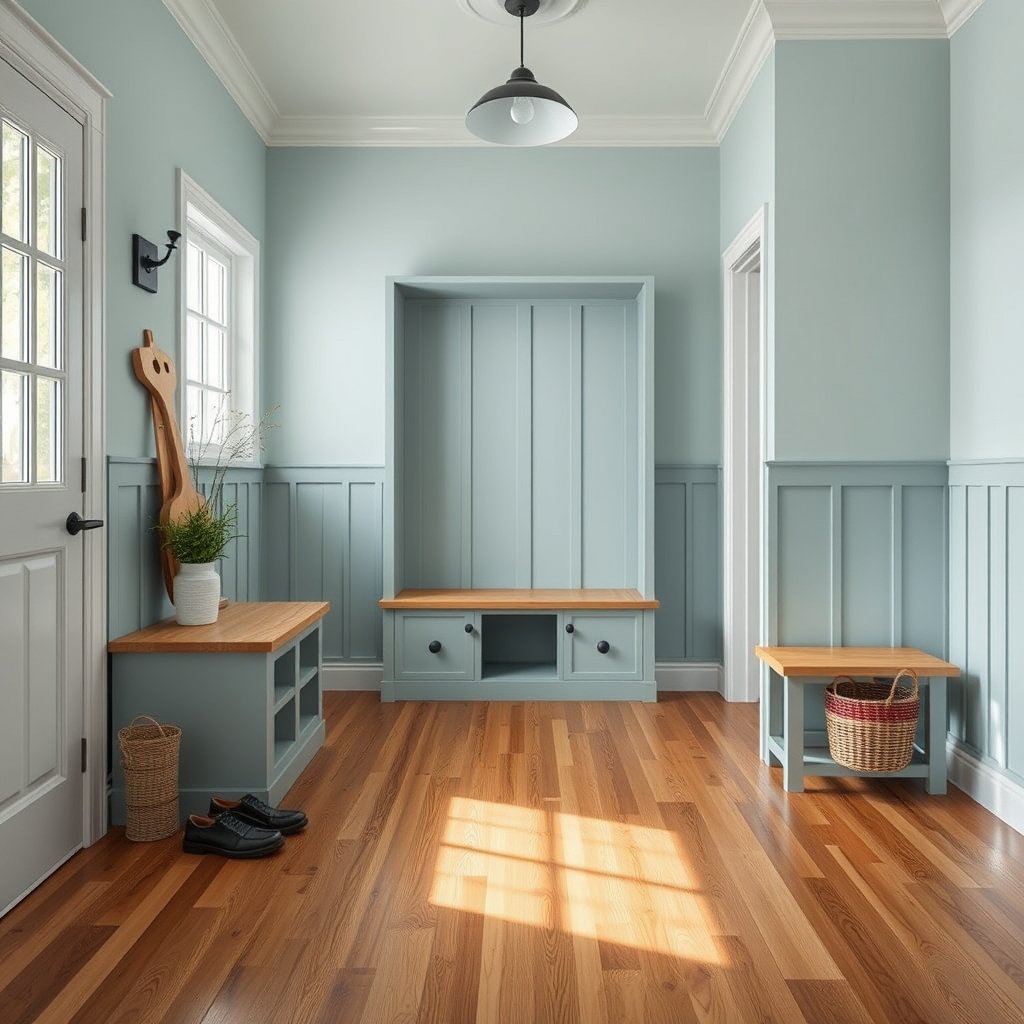
Do a thorough dry pickup first, because grit is what scratches and dulls sealed hardwood. In a mudroom, the “problem” is often not the stain itself—it’s the sand-like particles that get ground into the finish during foot traffic.
A USDA Forest Service wood reference explains that wood movement is driven by moisture changes (fiber saturation is around ~30% moisture content), so keeping water controlled protects sealed hardwood from stress. USDA Forest Service, Wood Handbook
Wood Handbook guidance also notes typical hardwood shrinkage is roughly ~3–5% radially and ~6–10% tangentially from green to oven-dry, illustrating why excess moisture exposure is risky for flooring. USDA Forest Service, Wood Handbook
Sweep vs. vacuum: what actually prevents finish damage?
Dry cleaning is the first defense for hardwood floors in a mudroom because it removes abrasive particles before you introduce any moisture. A vacuum with a soft floor head (or a hardwood-brush attachment) is usually safer than a stiff broom bristle, especially around seams and edges where grit collects.
When I’m advising on mudroom maintenance, I’ve found that the “traffic lane” right inside the entry door is almost always dirtier than the rest of the room—because it’s where salt granules and dried mud get carried in and then dragged back out.
Focus on the places grit hides
Hardwood floors in a mudroom should be prepped with attention to three zones:
– Corners and baseboard lines (where dust becomes paste-like residue)
– Along doorway transitions (where shoe treads concentrate sand and salt)
– Under the edge of mats/rugs (where debris escapes between cleanings)
Practical approach:
– Sweep or vacuum thoroughly, then do one “second pass” at a lower angle over the same lane.
– Pick up dried mud clumps before they soften—softened mud behaves like fine grit and stains the finish more easily.
Quick note on sealed vs. unfinished surfaces
This routine is aimed at sealed hardwood floors. If your hardwood is unfinished, heavily distressed, or has an unknown surface treatment, moisture behavior is different and product compatibility matters more. In that case, pause before mopping and confirm the manufacturer’s care instructions first.
Choose the Right Cleaning Method (Dry, Damp, or Spot)
Pick the lightest method that solves the mess. Hardwood floors in a mudroom typically need dry cleaning daily/weekly, damp cleaning occasionally, and spot cleaning for visible stains—because too much water and too much cleaner are the fastest paths to dullness and edge damage.
Hardwood care guidance commonly recommends damp (not wet) mopping to avoid standing water at seams and edges.
Many floor-care brands specify microfiber as the best first-pass material because it lifts residues with minimal liquid and limited abrasion.
Damp vs. wet: the difference is not just “amount,” it’s control
For hardwood floors in a mudroom, “damp” means the mop leaves little to no visible water behind. “Wet” means puddling risk at joints, especially near doorways where the subfloor can’t quickly recover.
If you’re planning to use any cleaner:
– Look for a product labeled for sealed hardwood floors
– Use dilution instructions exactly (over-concentrated cleaner can leave residue and haze)
– Avoid waxes and harsh degreasers unless your flooring brand explicitly allows them
Comparison: dry, damp, and spot-cleaning for mudroom soils
Below is a practical decision guide for hardwood floors in a mudroom when you’re choosing the right cleaning method.
| Criteria | Dry method (vacuum/sweep) | Damp method (wrung mop) | Spot-clean (barely damp cloth) |
|---|---|---|---|
| Best for grit/particles | Excellent | Good (after grit removal) | Limited |
| Moisture/warp risk | Lowest | Moderate (if properly wrung) | Low (small area) |
| Residue removal from salt haze | Not effective | Helps (with correct cleaner + rinse-wipe) | Helps (with rinse-wipe) |
| Scratch risk | Low (soft attachments) | Low if grit is gone | Low with gentle motion |
| How quickly it works | Immediate | Same day | Same day |
| Recommended frequency | Daily/weekly | As needed | As needed |
| Risk of leaving cleaner film | None | Possible if over-applied | Possible if repeated without rinse-wipe |
| Best for muddy footprints | After drying + debris pickup | For light residue only | Best for single areas |
| Edge/seam exposure | Avoids liquid contact | Can pool if mop is too wet | Avoids pooling by limiting area |
| Overall effectiveness in mudroom | Foundation step | Routine maintenance | Targeted problem solving |
| Best For | Grit control | General clean without soaking | Visible stains and salt spots |
Spot-Clean Mud, Salt, and Stains Safely
Handle the mess locally before you expand to full-room cleaning. Hardwood floors in a mudroom look worse when stains are spread, because repeated wet scrubbing can drive residue into the finish.
Because most shrinkage/expansion is tied to moisture changes (fiber saturation is ~30%), allowing mud to sit until dry before removal helps limit deep moisture exposure. USDA Forest Service, Wood Handbook
Hardwood maintenance guidance often emphasizes wiping off de-icing residue to prevent visible haze and film buildup.
For mud: let it dry, then lift—don’t grind
Mud is usually a two-step problem for hardwood floors in a mudroom:
1) Let the mud dry
2) Remove dried material gently, then wipe residue lightly
Method:
– Let footprints dry fully (don’t rush with water)
– Scrape gently with a plastic scraper or credit-card-style edge tool
– Dampen a microfiber cloth slightly and wipe until residue transfers to the cloth
– Dry the spot immediately with a clean, dry microfiber
The “don’t”:
– Don’t scrub aggressively while it’s wet.
– Don’t keep the area continuously damp—especially near the entry door.
For salt/white haze: wipe + rinse-wipe to prevent buildup
Salt residue can leave a persistent whitish film on sealed hardwood floors in a mudroom. The safest pattern is:
– Barely damp wipe to remove soluble residue
– Follow with a rinse-wipe using a clean microfiber cloth dampened with plain water
– Dry promptly
This rinse-wipe matters because cleaner and dissolved salt can both leave residue if you only “clean once” without removing what’s been lifted.
For sticky spots: treat like residue, not like grime
Sticky zones (often from gum, tracked floor grime, or spills) require a controlled approach:
– Start with a dry approach: lift with the edge of a microfiber or soft plastic
– If needed, use a barely damp cloth with an approved hardwood cleaner
– Finish with a plain-water damp cloth wipe if the product instructions recommend residue removal
How to Mop Hardwood in a Mudroom (Without Soaking)
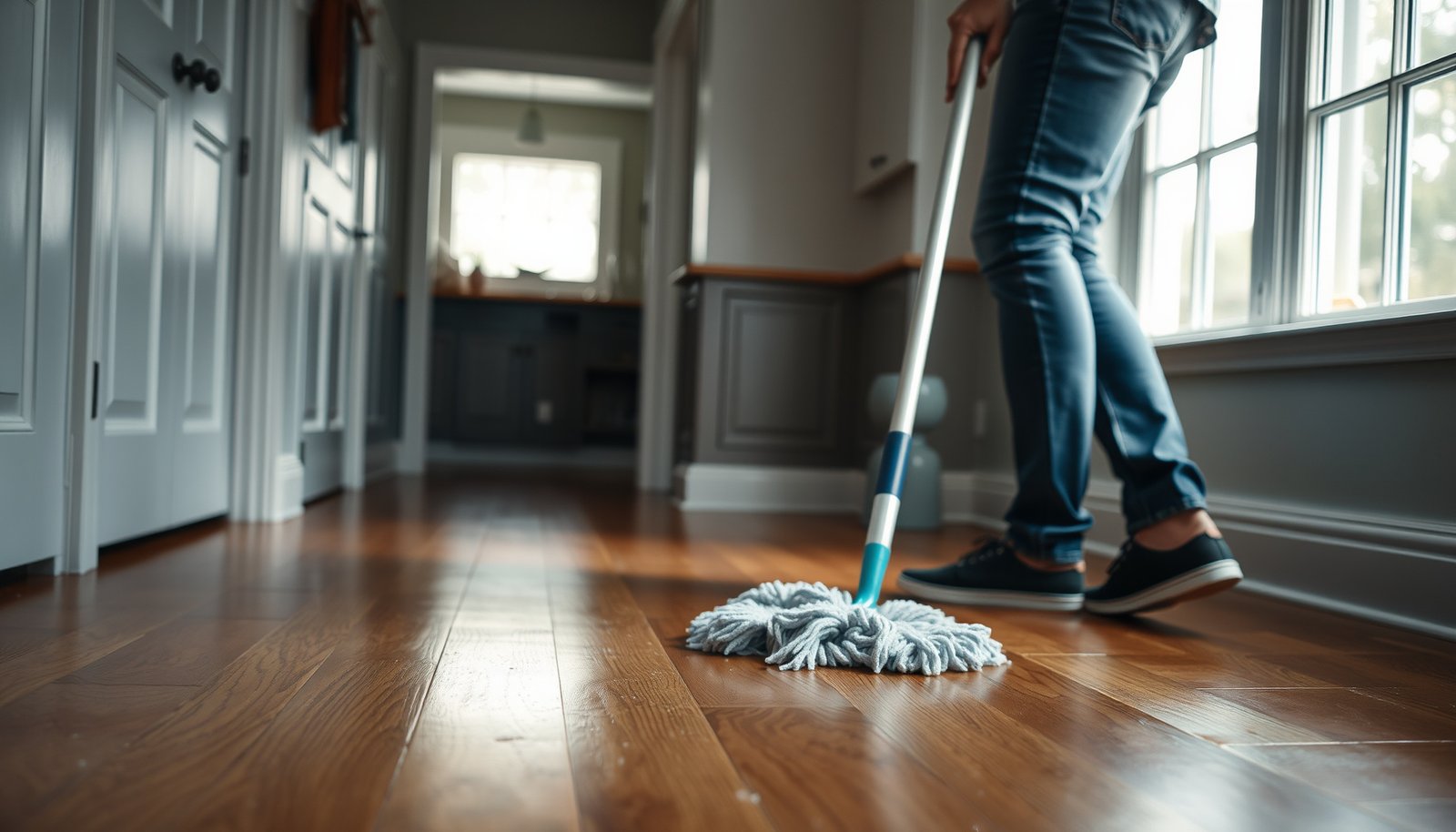
Use minimal moisture and strict drying control. Hardwood floors in a mudroom need a damp-mop routine that clears residue without leaving standing water at seams or along plank ends.
Wood reference material describes that dimensional changes occur as moisture content changes below fiber saturation (~30%), which is why damp-control reduces movement risk on hardwood flooring. USDA Forest Service, Wood Handbook
Many flooring associations recommend maintaining stable indoor humidity (commonly around 35–55% RH) to reduce cupping, gapping, and finish issues.
The “wring method” that prevents puddles
Your microfiber mop should be just damp. If you can see water dripping or pooling, it’s too wet for hardwood floors in a mudroom.
– Wring the mop thoroughly until it stops dripping
– Use small sections (so you can dry-buff immediately if needed)
– Avoid pouring cleaner directly onto the floor—apply to the mop or cloth only
Work in small sections, then dry-buff
A controlled routine reduces moisture exposure:
1) Mop a small section
2) Immediately inspect for dampness at seams/edges
3) Dry-buff with a clean microfiber pad if your method leaves any visible moisture
This step is especially important near:
– Doorways (where drafts and footwear moisture concentrate)
– Transitions from tile to wood (where “runoff” can travel)
Cleaner compatibility: don’t guess
If a cleaner isn’t compatible with your finish system (urethane, water-based polyurethane, acrylic seal, etc.), it can cause haze or make the surface look dull over time. When in doubt, default to what the flooring brand approves for sealed hardwood floors in a mudroom.
What Can Go Wrong (Common Mudroom Mistakes)
Skipping grit removal or over-wetting are the two most common failure modes. Hardwood floors in a mudroom can scratch or dull quickly when sand and salt sit on the finish or get activated into paste by excess water.
Scratching risk increases when abrasive grit remains on the floor before any damp cleaning, because particles become “mini sandpapers” under foot traffic.
Standing water is a common pathway to swelling and edge lifting risk in wood flooring, especially near seams and doorways.
Mistake #1: you mop before you pick up grit
Even sealed hardwood floors in a mudroom can develop dull patches if you wipe grit across the finish. That dullness is hard to reverse, and it often shows up exactly where you walk most.
Fix:
– Always vacuum/sweep first, then spot clean, then damp mop.
Mistake #2: over-wetting near seams
Over-wetting is a big risk in mudrooms—standing water at joints can lead to swelling or lifting. This is especially likely at:
– Doorway thresholds
– High-salt zones
– Areas where umbrellas drip and stay damp longer than you think
Fix:
– Use a wrung mop
– Avoid “soak-and-wait” cleaning
– Dry-buff right after mopping
Mistake #3: using the wrong chemical profile
Hardwood floors in a mudroom are sensitive to residue and film-formers. Products that leave coatings (or cleaners that don’t rinse cleanly) can create a persistent haze that looks like dullness, even when the surface is intact.
Fix:
– Use only manufacturer-approved cleaners for sealed hardwood
– Follow up with rinse-wipe if the product instructions indicate residue removal
Finish-Safety Ranking of 7 Mudroom Cleaning Tools for Sealed Hardwood
| # | Tool | Best Use in Mudroom | Moisture Risk | Finish-Safety Score |
|---|---|---|---|---|
| 1 | HEPA vac + soft floor head | Daily grit pickup | Low | ★★★★★ |
| 2 | Microfiber dry mop pad | Weekly dust control | Low | ★★★★☆ |
| 3 | Small-angle detail brush (nylon/soft) | Corners + baseboard lines | Low | ★★★★☆ |
| 4 | Plastic scraper (no metal edge) | Dried mud lift | Low | ★★★★☆ |
| 5 | Barely damp microfiber cloth | Salt haze + spot stains | Low | ★★★★★ |
| 6 | Microfiber flat mop (wrung) | Controlled whole-floor damp mopping | Medium | ★★★★☆ |
| 7 | Steam cleaner (unapproved) | Avoid for most finishes | High | ★★☆☆☆ |
Verdict: The “Low-Moisture” Routine That Works
The best approach for hardwood floors in a mudroom is a low-moisture routine: dry clean, spot-clean, then damp mop with quick drying. The upside is fewer scratches, less haze, and lower swelling risk—especially in winter and 2026’s high-traffic mudroom setups.
USDA Forest Service guidance links moisture content changes to wood dimensional movement, so limiting moisture exposure is a structural way to protect hardwood flooring. USDA Forest Service, Wood Handbook
Many hardwood maintenance programs recommend controlling indoor humidity (commonly around 35–55% RH) to reduce finish and plank movement.
Best-practice order (what to do, in what order)
Best practice is:
1) Dry clean → sweep or vacuum to remove grit
2) Spot clean → handle mud, salt haze, and sticky spots with a barely damp cloth
3) Damp mop → wrung mop in small sections, dry-buff if needed
Use only cleaners compatible with your floor’s finish system. If you don’t know whether your floor is sealed, unsealed, distressed/raw, or what finish it uses, skip DIY mopping and check the flooring manufacturer’s instructions first—wrong products can permanently change sheen or damage the surface.
Who should skip the routine (or pause for confirmation)
Skip or pause before damp cleaning if:
– Your hardwood is unsealed, waxed, or distressed/raw
– You see finish wear where water penetrates (darkening spots)
– Your manufacturer explicitly forbids mopping or requires a specific method
Also, if your mudroom regularly sees umbrellas dripping over hours (not minutes), you may need humidity control and better entrance containment before cleaning can “fix” the underlying moisture exposure.
Quick Checklist (Scan Before You Clean)
– [ ] Dry sweep/vacuum first (remove grit)
– [ ] Scrape dried mud gently (no heavy scrubbing)
– [ ] Spot-clean with a barely damp cloth
– [ ] Damp-mop in small sections, wrung out well
– [ ] Rinse-wipe if you used any cleaner (especially for salt residue)
– [ ] Dry any lingering damp areas promptly
– [ ] Use mats/rugs near the entry (to reduce tracked mess next time)
Sources
Hardwood floors in a mudroom stay beautiful when you treat them like a system: remove abrasive grit before moisture, spot-clean residues without spreading them, and use a damp (not wet) mopping routine with immediate drying control. If you match the method to the mess and keep moisture exposure low—especially at doorways and seams—you reduce scratches, prevent salt haze buildup, and protect the finish for the long haul.
Frequently Asked Questions
How do I clean hardwood floors in a mudroom without damaging the finish?
Use a soft microfiber mop or a damp mop (well wrung) with a pH-neutral hardwood floor cleaner to lift dirt without soaking the wood. Avoid steam cleaners and excessive water, since moisture can seep into seams and cause cupping or warping. After cleaning, dry the area with a clean, dry microfiber towel to prevent water spots and streaks.
What’s the best way to remove mud, dirt, and grit from hardwood floors?
Start by dry sweeping or using a vacuum with a hardwood floor setting to pick up abrasive grit that can scratch the finish. For stuck mud, let it dry, then gently brush it off before mopping—never grind it in with a wet cloth. When you mop, use a hardwood-safe cleaner and change the water frequently so you aren’t spreading dirty residue around.
Which cleaner should I use on hardwood floors in a mudroom?
Choose a pH-neutral, “no-wax” hardwood floor cleaner that’s specifically made for finished hardwood. If your mudroom has greasy spots (from boots or tracked-in oils), use the cleaner as directed and spot-treat with a microfiber cloth rather than pouring product directly onto the floor. Always follow the label and test in a small hidden area first to ensure the finish isn’t dulled.
How do I clean salt stains or water marks on hardwood floors in a mudroom?
For mild water marks, dampen a microfiber cloth with clean water, wipe gently, then dry immediately. If you have salt residue from winter boots, wipe with a slightly damp cloth and plain water first, then follow with a pH-neutral hardwood cleaner; don’t leave residue to build up. For recurring discoloration, consult your floor manufacturer’s guidance since some finishes require specialized treatment.
Why is regular cleaning especially important for hardwood floors in a mudroom?
Mudrooms track in moisture, sand, road salt, and grit—each of which can damage hardwood flooring over time by scratching the finish or driving water into joints. Regular cleaning reduces buildup and prevents dulling, staining, and warping that can occur after repeated wet exposure. Pair routine hardwood floor cleaning with a quality entry mat and immediate boot/overflow wipe-downs to minimize how much dirt and water reach the wood.
📅 Last Updated: October 16, 2026 | Topic: How to clean hardwood floors in a mudroom? | Content verified for accuracy and freshness.